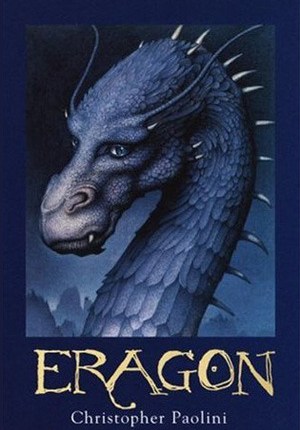
Eragon by Christopher Paolini

Eragon by Christopher Paolini

Eragon follows the exploits of a boy, a dragon, and their fight against an evil king, and his henchmen, who would plunge the world into darkness.

Prophecies of revenge, spoken in a wretched language only he knew, rolled from his tongue. He clenched his thin hands and glared at the sky. The cold stars stared back, unwinking, otherworldly watchers.” pg 14, ebook
Photo by carol wd on Pexels.com

Though it is written for children, Eragon is a charming tale that I thoroughly enjoyed as an adult reader. The pace was snappy, the characters were written quite well, and the story itself was a fun, adventure and fantasy.

“Eragon found the stone both beautiful and frightening. Where did it come from? Does it have a purpose? Then a more disturbing thought came to him: Was it sent here by accident, or am I meant to have it?” pg 16, ebook
Photo by Dids on Pexels.com

I did a little research about the author, Christopher Paolini, and was surprised to discover that this was one of the first books he published and he was in his teens when he wrote it. How impressive is that?

“Dragons will constantly amaze you. Thing… happen around them, mysterious things that are impossible anywhere else.”

There were a couple things I didn’t enjoy about Eragon, but they didn’t ruin my appreciation for the overall story. For example, I wanted Saphira the dragon to have a different personality. She has some character traits that I felt were incongruous with how an immensely powerful, magical being would act.

Photo by Andre Moura on Pexels.com

When I think carefully about it, what a silly quibble to have with a story based in fantasy. But readers will have their preferences, and I like to picture dragons as either wise and benevolent, Buddha-like beings or demonic treasure hoarders along the lines of Smaug.

Paolini’s version of them is different from both of these extremes. He makes dragons fallible, like humans. Which, at the end of the day, makes this a better story for children. A lesson like, even the most powerful among us can make mistakes or experience unpleasant emotions like jealousy, is a good lesson to learn.

“These books are my friends, my companions. They make me laugh and cry and find meaning in life.” pg 153, ebook

Photo by Pixabay on Pexels.com

Highly recommended for young adult fantasy readers or the young-at-heart.

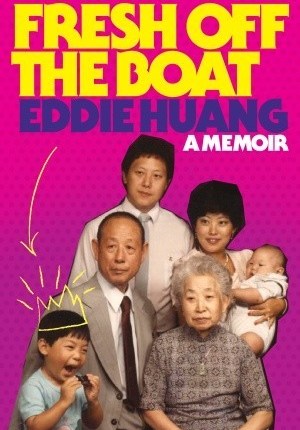
Fresh Off the Boat: A Memoir by Eddie Huang

Fresh Off the Boat: A Memoir by Eddie Huang

Fresh Off the Boat is the life story of Eddie Huang.

After learning about his various exploits, some of which were extremely dangerous, I was amazed that he’s still around to recount them.

I picked up this memoir because I’ve seen almost every episode of the network family comedy, “Fresh Off the Boat,” and wanted to read the source material behind it.

As sweet as the show is, I think it does Huang a disservice.

Photo by Prince Photos on Pexels.com

I guess because it’s on network television, writers have essentially edited Huang’s life story. In the television show, the character of Eddie loves rap music, basketball and eating, (like he did in real life) but it leaves out the more real portions of Huang’s history.

His classmates called him racial slurs on an almost daily basis. He was subjected to physical abuse from his parents. He got mixed up in drugs and selling name brand shoes. He was arrested for fighting.

Photo by king Siberia on Pexels.com

The reason why his grandmother is in a wheelchair, which is depicted on the show though the reason is never given, is because her feet were bound as a child.

All of that realness is completely missing from the television show. But it is so important to creating the man Huang is today.

Photo by Pixabay on Pexels.com

The differences between the book and the tv series aside, Huang has a fascinating voice. He’s, at turns, funny and real. He explains his more obscure slang references at the end of each chapter in footnotes.

“I think my mom is manic, but Chinese people don’t believe in psychologists. We just drink more tea when things go bad.” pg 12, ebook

The window Huang opens into his culture is an enlightening one. He’s the first generation of his family to be born in the United States, but he doesn’t ever really embrace being American. He exists in a realm in between because he is never truly accepted by his European peers.

Photo by Juan Pablo Serrano Arenas on Pexels.com

“Since kindergarten my parents had been sending me to Christian schools, where the teachers would feed me soap and made me use my right hand even though I’m a lefty, because we supposedly got a better education at parochial schools even if we weren’t actually Christians.” pg 26, ebook

In an effort to get along better with his teachers, Huang even acts as if he embraces Christianity when in reality he was just trying to survive. I felt sad that he had to pretend to be something other than who he was to make his way in the world.

Photo by Drigo Diniz on Pexels.com

“They’ll never let someone with a face like you on television.” To this day, I wake up at times, look in the mirror, and just stare, obsessed with the idea that the person I am in my head is something entirely different than what everyone else sees. pg 41

I highly recommend this memoir for readers who want to learn about another person’s life experience. Huang has penned an engrossing memoir about someone who took some unexpected turns on the way to his destiny — creating a wildly popular eatery in New York City. I enjoyed every story and learned so much.

The Three-Body Problem by Liu Cixin

The Three-Body Problem by Liu Cixin

The Three-Body Problem is an inventive science fiction read that suffers, in my opinion, from some translation issues. None of the characters feel quite right. Their dialogue seemed wooden and stilted. And, perhaps this was just my Western mind, I never really understood some of their motivations.

“She could no longer feel grief. She was now like a Geiger counter that had been subjected to too much radiation, no longer capable of giving any reaction, noiselessly displaying a reading of zero.” pg 22

Photo by Pixabay on Pexels.com

My quibbles with the characters aside, some of the concepts in this book were utterly fascinating.

There’s a mysterious government installation, video game with a deeper, hidden meaning, unexplained deaths, numbers appearing out of thin air, and, my favorite part, an in-depth imagining of what unfolding a proton in different dimensions might look like. For fans of the genre, I can see why the The Three-Body Problem would be appealing.

“All the evidence points to a single conclusion: Physics has never existed, and will never exist. I know what I’m doing is irresponsible. But I have no choice.” pg 61

Photo by Sourav Mishra on Pexels.com

In the library copy I read, some of the major cultural issues needed to understand the text are included in footnotes. It helped, but it made me wish I could read this in its original form.

“Everything that’s happening is coordinated by someone behind the scenes with one goal: to completely ruin scientific research.” pg 135

I particularly liked Liu Cixin’s descriptions of the landscapes contained in the video game of the story. The desolate vistas and civilization-ending weather were fascinating to explore.

The idea that there was a world where the law of physics didn’t apply was also mind-bending. Cixin has created a place where suns swirl through the sky in no discernible pattern and pendulums don’t swing in the expected pattern. In a world like that, anything could happen. And it does.

Photo by Pixabay on Pexels.com

“Even if God were here, it wouldn’t do any good. The entire human race has reached the point where no one is listening to their prayers.” pg 205

Recommended with reservations for fans of science fiction. There’s much to enjoy in this read, especially if you favor the “science” part of the genre.

For readers who enjoy book to screen adaptations, this novel has already been made into a film. It is also slated to become a television series.

Thanks for reading!

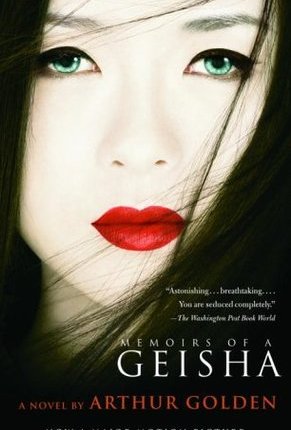
Memoirs of a Geisha by Arthur Golden

Memoirs of a Geisha by Arthur Golden

An engrossing historical fiction novel about a girl with extraordinary eyes named Chiyo and how she became a celebrated geisha named Sayuri. The path of her life was not always easy, but like water flowing over bumpy rocks, she braves the rapids and, eventually, reaches the ocean of her dreams.

“But the truth is the afternoon when I met Mr. Tanaka Ichiro really was the best and the worst of my life. He seemed so fascinating to me, even the fish smell on his hands was a kind of perfume. If I had never known him, I’m sure I would not have become a geisha.” pg 13, ebook

Photo by Anna Tarazevich on Pexels.com

It is a coming-of-age story but also a romance. Some have compared this book to the fairy tale of Cinderella. I see the comparison, but feel as if this historical fiction is better than Cinderella. Unlike the made-up fairy tale, the land and closed world of the geisha actually existed.

“After a block or two I worked up my courage and said to Mr. Bekku, “Won’t you please tell us where we’re going?” He didn’t look as if he would reply, but after a moment he said, “To your new home.” pg 41, ebook.

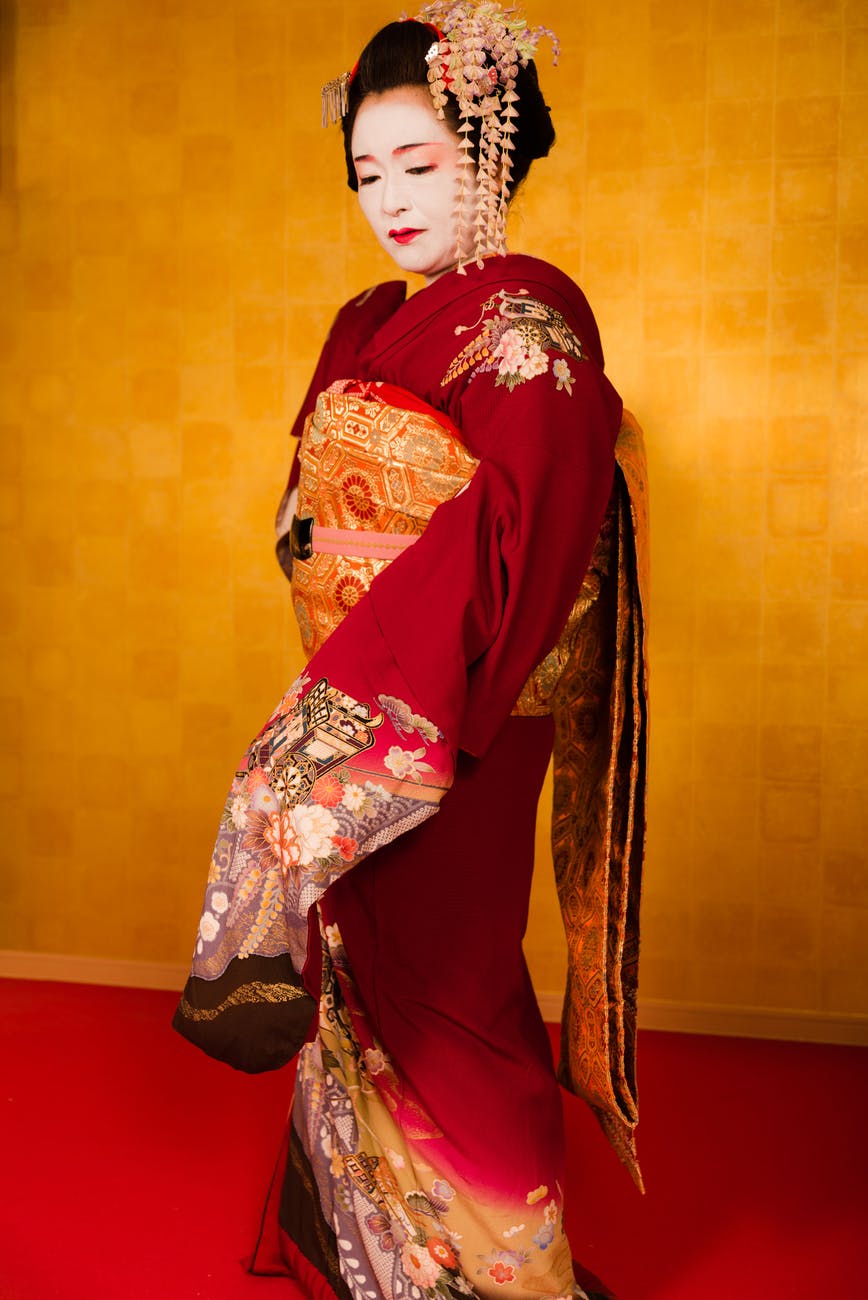
To be a geisha was to excel at the arts. It was to demonstrate excellence in dance, music and the art of conversation. It was a way of being, and dressing. As a geisha, Sayuri transports the men she is with to another world, the world of “Flowers and Willows”.

I did some research into the history of the geisha and what I found was fascinating. From what I read, the history portrayed in Memoirs of a Geisha was rather close to the truth, minus the made-up characters.

Photo by Ivan Siarbolin on Pexels.com

“Because, you see, when a geisha wakes up in the morning she is just like any other woman. … Only when she sits before her mirror to apply her makeup with care does she become a geisha. And I don’t mean that this is when she begins to look like one. This is when she begins to think like one too.” pg 67, ebook

The whole culture seems so exotic to me. This book is truly an escape into a different world. I, of course, adored the main character, Sayuri.

Years ago, I saw the film version of this book and remember enjoying it very much. Fortunately, I forgot most of it except for one critical moment towards the end. That, however, didn’t ruin my enjoyment of the book. It is better, much better.

There’s more character development, more battles with Hatsumomo, more to the conclusion. Sayuri’s life completes a circle in the written version of the story — I seem to remember that the story felt a bit stunted in the film. I think I’ll watch it again to see if I’m remembering it right.

“We lead our lives like water flowing down a hill, going more or less in one direction until we splash into something that forces us to find a new course. If I’d never met Mr. Tanaka, my life would have been a simple stream flowing from our tipsy house to the ocean.” pg 112, ebook

Photo by Dianne on Pexels.com

There’s also the development of the theme of water. The characters in the story attribute Sayuri’s startling blue eyes to an abundance of water in her soul. Throughout the book, she’s alluding to water — how it flows, bends and can wear down rocks. You really begin to view her life through this lens of watery inevitability.

“Here you are… a beautiful girl with nothing on earth to be ashamed of,” he said. “And yet you’re afraid to look at me. Someone has been cruel to you.. or perhaps life has been cruel.” “I don’t know, sir,” I said, though of course I knew perfectly well. pg 119, ebook.

Highly recommended for fans of historical fiction. Memoirs of a Geisha is a surprising treat, like a sudden rainbow glinting off the water into your eyes. Blink once, and it’s gone.

Thanks for reading!

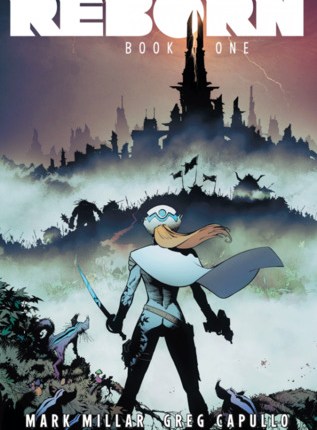
Reborn: Book One by Mark Millar

Reborn: Book One by Mark Millar

Beautiful artwork highlights a so-so story about a woman who dies, only to be reborn into a fantasy-themed world where a perpetual war of good versus evil rages on.

I think the basic idea of this graphic novel is fascinating. What happens to us after we die? We have faith, religion and all sorts of near-death experiences to fall back on, but who can say with any certainty.

From an interview in the back of the book with Greg Capullo, one of the creators: “What I loved about the story is that it deals with all of our fears about what happens when we die, but amidst the fear and the sorrow, we have this spectacular adventure that takes place in a fantastic and exciting world — a world I got to invent.”

Photo by Susanne Jutzeler on Pexels.com

Some of my quibbles with this story include that the good versus evil theme makes all of the characters seem so simplistic. You can predict almost exactly what they’re going to do before they do it — no gray areas. Also, everything is based around Bonnie, one character, and she becomes the savior archetype for the entire tale.

But, on the other hand, if you take this book, as a whole, for a metaphor of what happens after death, it works. Like so many near-death experiences, it all boils down to one view point, that of the newly departed. If you consider it like that, of course the story would be based around one person. She is seeing the next world entirely from her point of view, everything is interpreted through that lens.

It’s a curious phenomena, those who have had NDE’s, generally describe imagery and a storyline that makes sense to them culturally and fits within their framework of faith. Bonnie didn’t want to die, but when she does, she sees a world so similar to where she just came from, except it contains people who have died before she did.

Bonnie’s relationships with the people she knew before her death determine so many of the other character’s roles in the story. She has a curious relationship with the “faerie queen” which I found interesting.

Photo by Ferdinand Studio on Pexels.com

I can’t decide if I’m reading more into this story than is actually there, or if it was actually touching on some of the larger themes I mentioned. As I said, I got bogged down in the predictable characters.

At least the artwork is pretty…

I’m interested to see where Netflix goes with this, as I read in Variety that they’re developing it into a film starring Sandra Bullock.

Thanks for reading!

Room by Emma Donoghue

Room by Emma Donoghue

Told from a 5-year-old’s point of view, Room is the story of Jack, his mother and the room that they never leave.

To Jack’s mother, it is a prison. To Jack, it’s just the world.

Photo by Porapak Apichodilok on Pexels.com

“…it was a garden shed to begin with. Just a basic twelve-by-twelve, vinyl-coated steel. But he added a sound-proofed skylight, and lots of insulating foam inside the walls, plus a layer of sheet lead, because lead kills all sound. Oh, and a security door with a code. He boasts about what a neat job he made of it.” pg 85.

Jack and his mother have no contact with the outside world, except for ‘Old Nick’ who only comes at night, brings food and the occasional ‘Sunday treat.’

They are his prisoners.

“…we mustn’t try and hurt him again. When he came back the next night, he said, number one, nothing would ever make him tell me the code. And number two, if I ever tried a stunt like that again, he’d go away and I’d get hungrier and hungrier till I died.” pg 97.

Photo by Lucas Pezeta on Pexels.com

Though this book covers some seriously dark subject matter, it is told through the point-of-view and voice of a child.

At first, I didn’t like it, but then I realized- hearing the story from Jack made it bearable. I think if we had heard it from his mother’s point of view, it would have been too bleak.

Jack confuses television and reality because he’s never been outside ‘room’: “Women aren’t real like Ma is, and girls and boys not either. Men aren’t real except Old Nick, I’m not actually sure if he’s real for real. Maybe half? He brings groceries and Sunday treat and disappears the trash, but he’s not human like us. He only happens in the night, like bats. Maybe Door makes him up with a beep beep and the air changes. I think Ma doesn’t like to talk about him in case he gets realer.” pg 18.

Photo by George Becker on Pexels.com

The beauty of this story is in the resiliency of Jack and the love he and his mother have for each other. They keep each other going when life becomes unbearable.

There are also some surprising twists to the story too.

I loved it.

I took the time to watch the movie after I read the book and it is a great adaptation. Not, of course, as stellar as the book, but well worth the time.

https://www.imdb.com/title/tt3170832/

Highly recommended, but keep your tissue box close.

Thanks for reading!

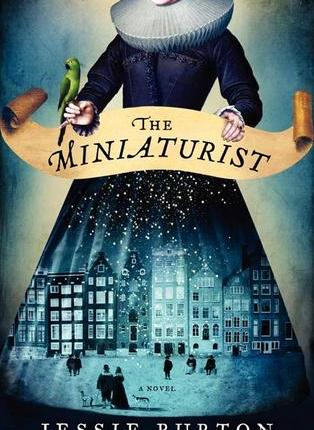
The Miniaturist by Jessie Burton

The Miniaturist by Jessie Burton
miniaturist

A young woman gets married to a man she’s never met. The household she enters is cold and uninviting. As a strange wedding present, her husband buys the woman a mock up of her household.

Against her wishes but wanting to please her husband, Nella hires a miniaturist to build furniture for the gift. The miniatures she receives are accurate enough to be scary. It seems that the miniaturist knows things about her life that Nella doesn’t.

This is a story about secrets, trust and unexpected magic.

What killed this story for me was the pacing. It dragged agonizingly along.

The bits about the miniaturist were fascinating. I loved the premise of it- a complete stranger seems to know more about your life than you do. How is that possible?

But, I found the rest of the story to be too slow to make up for the fun parts.

Also, I have so many unanswered questions. I felt like Jessie Burton didn’t answer most of the questions she raised in the story.

And, I found the ending to be completely unsatisfying.

I enjoyed learning about 17th century Amsterdam. I liked learning about the societal roles of men, women and the power that religion held over people’s lives.

I also liked Cornelia and Otto- the two servants in Nella’s new home. Any scene with either or both of them was charming.

Recommended for readers who have much more patience than me. The Miniaturist reveals its secrets slowly, if at all.

It sounds like The Miniaturist is going to appear on BBC the day after Christmas. I wonder if it will be better than the book: www.radiotimes.com/news/tv/2017-12-13…

Thanks for reading!

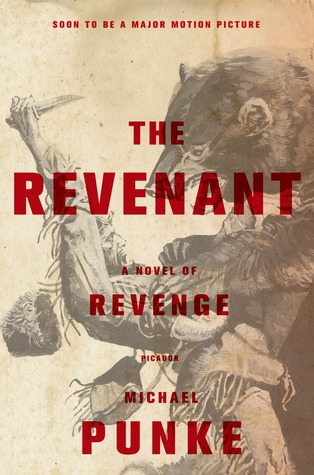
The Revenant by Michael Punke

The Revenant by Michael Punke
therevenant

The Revenant is a fictional tale based on the real life account of Hugh Glass, a trapper who was attacked by a grizzly bear and then left for dead by the men who had been left to care for him.

This story is so gripping. From the explosive opening moments until the very last page, the reader is practically swept up into the action.

Not only are the men in The Revenant struggling with each other, but Nature herself has a huge role in this survival tale. If the characters aren’t freezing, they’re starving or looking for a safe place to sleep.

This is a particularly excellent read for a cold winter night with a cup of something hot to drink near your elbow.

This would have been a five star read except for the ridiculously unsatisfying conclusion.

It felt like The Revenant suddenly turned from a survival/adventure/revenge story into a tame morality play.

I realize that it is a morality play the whole time, but with all the action and nail-biting tension, it doesn’t “feel” like one until the ending- which I won’t ruin for you, except to say that it was very lame.

My husband read a version of this story called Lord Grizzly when he was in college so, while I was into this one, we were comparing notes on the differences between the two works.

Photo by Pixabay on Pexels.com

Although varying in small details, the major arcs were the same. I felt as if The Revenant did a better job of building the tension than Lord Grizzly but we both agreed that the ending to the story (in both books) was a let-down.

If you enjoyed reading The Revenant, you may enjoy The Knife of Never Letting Go. Though not based on a true story, it shares the traveling-through-the-wilderness feel and tension of this book.

I received a free copy of this book through Goodreads First Reads. FTC guidelines: check!

And thanks for reading!

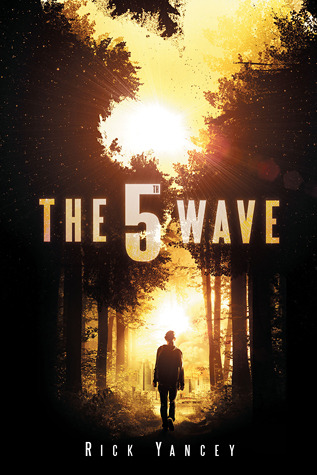
The 5th Wave (The 5th Wave, #1) by Rick Yancey

The 5th Wave (The 5th Wave, #1) by Rick Yancey
the5thwave

Major spoilers ahead. Please do not read if you haven’t read this book.

The 5th Wave is about the end of the world and aliens, yes, but it also explores why life is worth living.

Cassie didn’t know how good she had it until the alien spaceship appeared in the sky and life was never the same. First, there was chaos, but now it is clear that the aliens want to exterminate everyone. And, if they just want the planet for themselves, why are they waging war in such a sadistic manner? It is a mystery and Cassie is going to figure it out.

I was really into the narrative when Rick Yancey chose to change characters and continue the story from a different point of view. I felt that it was unnecessary and broke the flow.

Also, and this is another pet peeve of mine, must every young adult dystopian contain romance as a major part of the plot? The Hunger Games, Divergent, I could go on… and this. You’d think the teens would be far too busy staying alive to fall in love, but that’s clearly not the case from the literature.

I really liked the manner in which Yancey introduces his aliens. First, you get to see their results on humanity. Then, he drops breadcrumbs about how they got here. It’s creepy. “There will be no awakening. The sleeping woman will feel nothing the next morning, only a vague sense of unease and the unshakable feeling that someone is watching her. … And what the shadow has come for- the baby within the sleeping woman- will feel nothing. The intrusion breaks no skin, violates not a single cell of her or the baby’s body.” pg 17, ebook. So scary.

I read a few reviews in which this book was accused of being a copycat of The Host and I feel that it deserves a comment. They are similar in that they both contain aliens, both are dystopians and both have the alien consciousness inside human consciousness. But, those are very broad strokes. The details of the books are different enough and I feel that Yancey has his own plans for his story.

In The Host, the aliens feel more misunderstood and benevolent than the scary creatures in The 5th Wave. This book has a lot more action, The Host is more nuanced. To be fair, superficially, they seem too similar for that to be a coincidence. But in reality, they are as different as Star Wars and Dune. Wait a minute, bad comparison? 🙂

Here’s one of my favorite passages: “Forget about flying saucers and little green men and giant mechanical spiders spitting out death rays. Forget about epic battles with tanks and fighter jets and the final victory of us scrappy, unbroken, intrepid humans over the bug-eyed swarm. That’s about as far from the truth as their dying planet was from our living one. The truth is, once they found us, we were toast.” pg 19, ebook.

Also this one, for obvious reasons: “.. I have a thing about books. So did my father. … While the rest of us scrounged for potable water and food and stocked up on the weaponry for the last stand we were sure was coming, Daddy was out with my little brother’s Radio Flyer carting home books.” pg 33, ebook. Seriously. If the apocalypse ever comes, I’m going to camp out in the library, Station Eleven style. Who’s with me?

Recommended for people who like dystopians and intense survival scenes and aren’t annoyed by angst-y teen romance. The 5th Wave is one scary alien story. They’re here and they’re out to get you and everyone you know! And, so far, they’re doing a VERY good job.

Thanks for reading!