The Three-Body Problem by Liu Cixin

The Three-Body Problem by Liu Cixin

The Three-Body Problem is an inventive science fiction read that suffers, in my opinion, from some translation issues. None of the characters feel quite right. Their dialogue seemed wooden and stilted. And, perhaps this was just my Western mind, I never really understood some of their motivations.

“She could no longer feel grief. She was now like a Geiger counter that had been subjected to too much radiation, no longer capable of giving any reaction, noiselessly displaying a reading of zero.” pg 22

Photo by Pixabay on Pexels.com

My quibbles with the characters aside, some of the concepts in this book were utterly fascinating.

There’s a mysterious government installation, video game with a deeper, hidden meaning, unexplained deaths, numbers appearing out of thin air, and, my favorite part, an in-depth imagining of what unfolding a proton in different dimensions might look like. For fans of the genre, I can see why the The Three-Body Problem would be appealing.

“All the evidence points to a single conclusion: Physics has never existed, and will never exist. I know what I’m doing is irresponsible. But I have no choice.” pg 61

Photo by Sourav Mishra on Pexels.com

In the library copy I read, some of the major cultural issues needed to understand the text are included in footnotes. It helped, but it made me wish I could read this in its original form.

“Everything that’s happening is coordinated by someone behind the scenes with one goal: to completely ruin scientific research.” pg 135

I particularly liked Liu Cixin’s descriptions of the landscapes contained in the video game of the story. The desolate vistas and civilization-ending weather were fascinating to explore.

The idea that there was a world where the law of physics didn’t apply was also mind-bending. Cixin has created a place where suns swirl through the sky in no discernible pattern and pendulums don’t swing in the expected pattern. In a world like that, anything could happen. And it does.

Photo by Pixabay on Pexels.com

“Even if God were here, it wouldn’t do any good. The entire human race has reached the point where no one is listening to their prayers.” pg 205

Recommended with reservations for fans of science fiction. There’s much to enjoy in this read, especially if you favor the “science” part of the genre.

For readers who enjoy book to screen adaptations, this novel has already been made into a film. It is also slated to become a television series.

Thanks for reading!

The Just City (Thessaly, #1) by Jo Walton

The Just City (Thessaly, #1) by Jo Walton

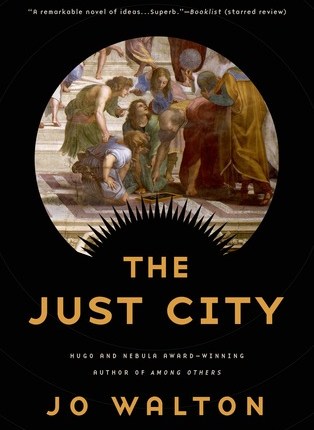
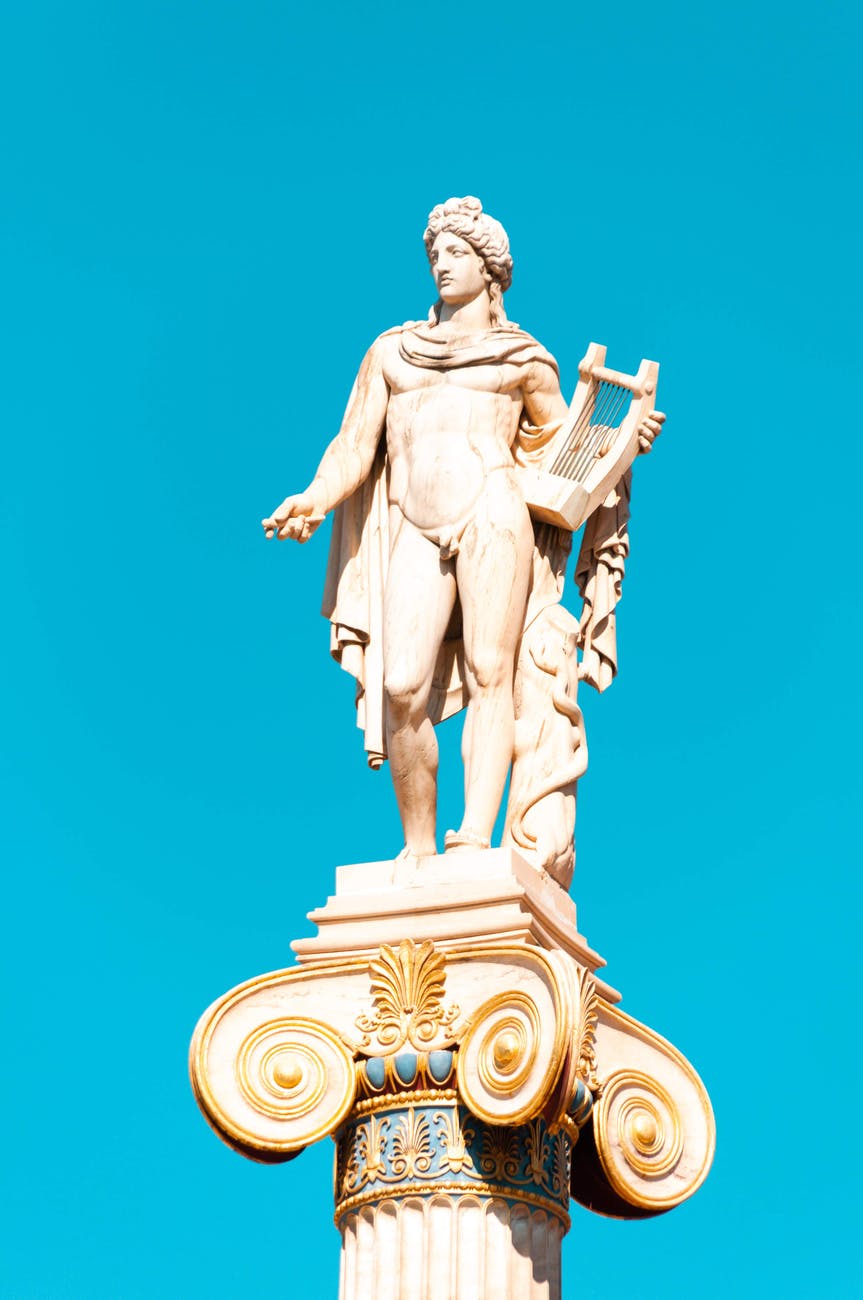
When the god Apollo seeks to understand the workings of the mortal mind and heart, he asks his sister, Athene to help him. She reveals a project in which she has gathered together philosophers from across time and space and put them in a settlement called, “The Just City”. In this city, set near a volcano that will one day explode and destroy all evidence of the project, a group of men, women and children will try to recreate the hypothetical state described in Plato’s “Republic”.

Apollo asks to join this group. And our story begins.

Photo by Hert Niks on Pexels.com

The city itself shone in the afternoon light. The pillars, the domes, the arches, all of it lay in the balance of light and shadow. Our souls know harmony and proportion before we are born, so although I had never seen anything like it, my soul resonated at once to the beauty of the city.” pgs 35-36

But what is perfect in theory turns out to be not-so-perfect in practice. Among the thornier problems, the city has shared marriages and children raised by the group, not families. This causes predictable jealousies and secret romances. There’s also something strange going on with the robotic workers Athene brought from a future time to help with the mundane tasks of civilization, like raking the roads and planting the vineyards.

“We are in a time before the fall of Troy. And we are on the doomed island of Kallisti, called by some Atlante.” Even I had heard of Atlantis.” pg 45

Photo by Travel Sourced on Pexels.com

Another major issue, caused because they were pulled from different points in history, are the different philosophers’ views on gender equality. Consent in the Renaissance doesn’t mean the same thing as consent in the Victorian Age.

“You love this city,” Pytheas said. That was what we had been debating that day. “I do,” I said, spreading out my arms as if I could hug the entire city. “I love it. But Sokrates has made me see that it’s only the visible manifestation and earthly approximation of what I really love, the city of the mind.” pg 131

Though I enjoyed this book, the pace was what spoiled it for me somewhat. It marches forward towards an inevitable conclusion far too slowly. The debate scenes are interesting, but simply too plodding.

Photo by Dominika Roseclay on Pexels.com

There’s also a rape, so please be aware if you have potential triggers.

Recommended tentatively for readers who love the classics or historical fiction and can stand a slower-paced read.

Thanks for reading!

Shades of Magic Vol. 1: The Steel Prince by V.E. Schwab

Shades of Magic Vol. 1: The Steel Prince by V.E. Schwab

V.E. Schwab has penned a graphic novel about Maxim Maresh, one of the ancillary characters from The Shades of Magic series.

I was very excited to read this. The tidbits Schwab dropped about Maxim in the trilogy were enticing. We learned he had a storied past. He fought notable outlaw figures. Somehow he developed an extraordinary control of his powers, which others had not been able to mimic.

Under his reign, a certain magician opened the doors between the worlds to act as emissaries and messengers. But also, exposed the worlds to the greatest danger that they had ever faced.

Photo by Aidan Roof on Pexels.com

“Before he was the King of Arnes, Maxim Maresh was a young, head strong prince with a penchant for metal magic and a lot to learn about the world beyond Red London. Banished by his own father to Verose, a city on the dangerous Blood Coast, Maxim was plunged into a world of danger and adventure.” Foreward, by V.E. Schwab.

So, who was this man? This graphic novel series sheds some light on an enigmatic figure.

“Why would you see those doors pried open again?” “Because sooner or later, all spells fail. And one day the doors to those worlds will open whether we wish it or not.”

What did I think of it? It was the first in a series. It’s hard to give all of the contextual information of a new story without it turning into an info dump or neglecting to develop the characters.

Schwab does a good job of avoiding these pitfalls, but I wanted more depth and development.

We do get to see something of “bone magic,” one of the more terrifying of the magics from Schwab’s stories. Bone magic, unlike the elemental basis of the other magics, allows the user to literally control the actions of those around them.

Photo by Pixabay on Pexels.com

Bone magicians can make you throw yourself onto their enemies or your friends. Hold still while you’re tortured. Stick a knife in your own eye.

Bone magic, the removal of free will, is the idea that has continued to haunt me from the Shades of Magic series and Schwab uses it to good effect in this story.

That being said, Maxim, at first, acts like a brat and doesn’t understand the complexities of real life, running headlong into the “royalty removed from the world” trope. This focus of his character doesn’t lend itself to likability. Perhaps that will change as the series goes along. Also, we get to see so very little of his extraordinarily abilities and more of his mediocrity.

However, the artwork is stunning. I hope to read and enjoy the next volume. But I can’t say I was knocked off my feet by this installment.

Recommended, of course, for fans of the Shades of Magic series.

Thanks for reading!

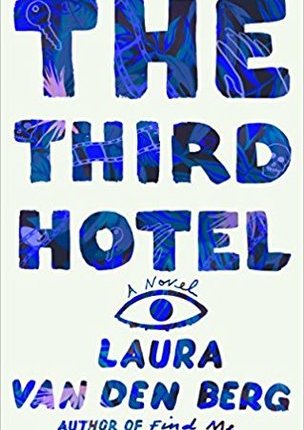
The Third Hotel by Laura van den Berg

The Third Hotel by Laura van den Berg

A strange and confusing ride through a world seen through the eyes of a grieving widow. A short time prior to attending a film festival in Cuba, Clare’s husband Richard was killed. Now, she sees him on the streets of Cuba.

“Clare had never before seen her husband operate a motorbike, but he navigated it like he had been riding one all his life, like he had been riding one in Havana all his life, like he had not been struck by a car and killed in the United States of America some five weeks ago.” pg 13

Photo by Valeriia Miller on Pexels.com

What is going on? The reader isn’t sure what’s real and what’s only in the mind of Clare. Laura van den Berg raises mammoth questions and leaves the interpretation to the reader.

My book club picked a heck of a read for March. Reactions to this book ranged from the disgusted to the mystified to the fascinated. I’d put myself somewhere in between.

I like having complex symbolism to pick apart and magical realism to consider in a story. I like having an open-ended mystery. I don’t need to have all the answers.

But I do like to have more hints at the possible interpretations than van den Berg gives us.

“She might have said, I am not who you think I am. She might have said, I am experiencing a dislocation of reality.” pg 3

Photo by cottonbro on Pexels.com

Or she might have said, I have no idea what’s going on in this story. A character in the novel itself explains this confusion (in the guise of talking about horror films), suggesting it’s purposefully created by the author, and says it is designed to create a sensation of “eels under the skin.” This book definitely had that type of impact on me.

“Besides, he added, raising a finger, the foundation of horror is a dislocation of reality, a dislocation designed to reveal the reality that has been there all along, and such dislocations happen all the time.” pg 9

As I said, it’s weird, but there’s something genius about it too. Van den Berg’s words are beautiful, but they don’t always make sense. I turned the last page and was infuriated at how confused I was.

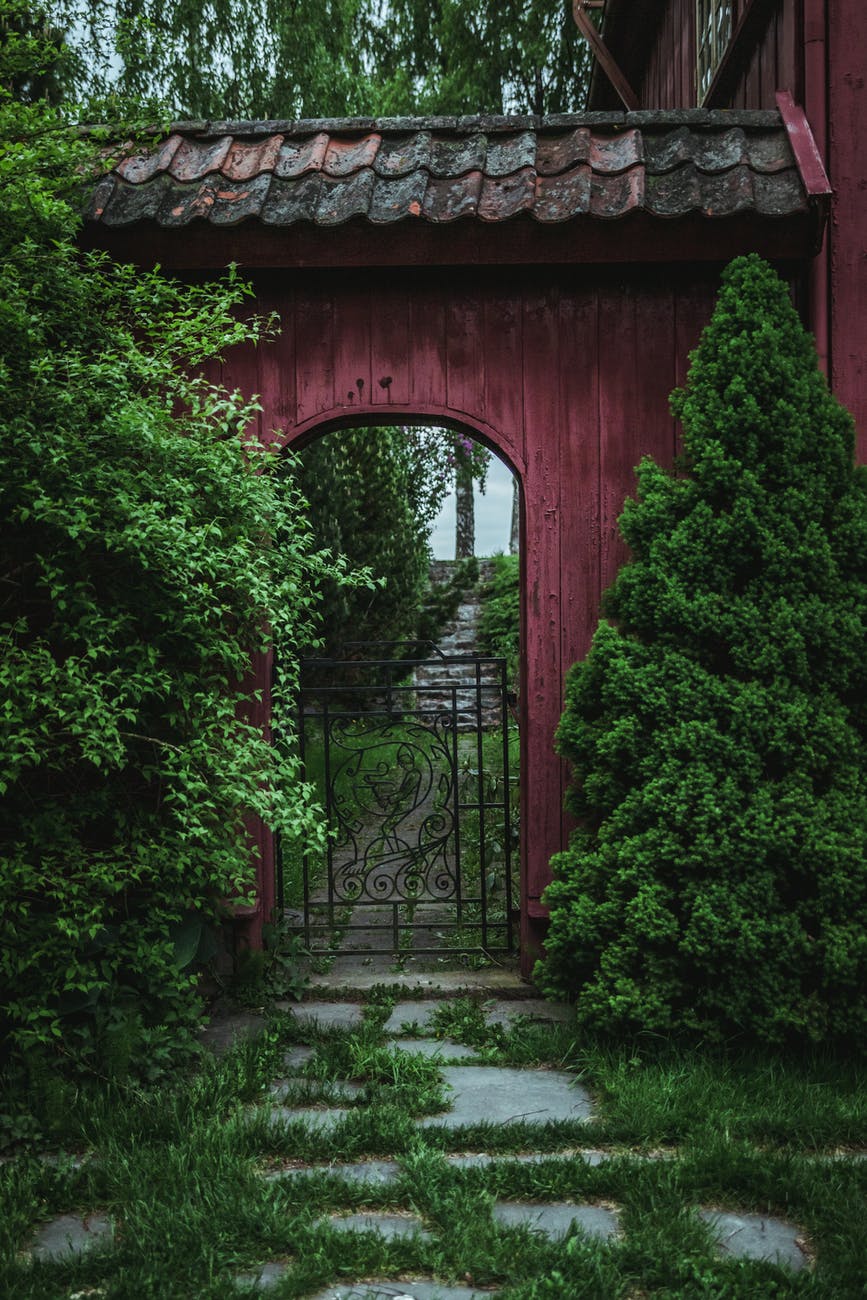
“She wondered what the eye would see and what she would see in what the eye saw. She imagined the suspension transforming into a warm flood of inevitability as the gate swung open and she stepped into whatever new dislocation of reality lay ahead.” pg 32

Photo by Tobias Bju00f8rkli on Pexels.com

In conclusion, it’s a hard book to read, but perfect for groups who are looking to spur a literary discussion. There’s so much to unpack.

Is she in an alternate reality or having a psychotic break? Or is she just grieving the whole time? What does her life now have to do with her childhood? What is the secret Clare shares with her father? Is there hidden meaning in her trip to the southern part of the island?

That’s just what pops into my head when considering the title of this book. Recommended for readers who don’t mind being totally confused and left with eels under their skin.

Thanks for reading!

The Gospel of Loki (Loki #1) by Joanne M. Harris

The Gospel of Loki (Loki #1) by Joanne M. Harris

Joanne M. Harris treats readers to episodes from Norse mythology from Loki’s point of view.

“No doubt about it, I told myself. These bastards really don’t like me.” pg 27

Born from literal Chaos and tricked into joining Odin’s forces of Order, Loki is perpetually a child of both worlds. From his first moments out of the world of Chaos, Loki is disliked by the other gods. That leads to some initial unpleasantness and he vows, no matter how long it takes, to get his revenge.

Photo by Gioele Fazzeri on Pexels.com

“Till then, I bided my time, and smiled as sweetly as my scarred lips would allow, until the day I would take my revenge and bring the gods down, one by one.” pg 67

And it is a long game. Through schemes, tricks and straight up cons, Loki weaves disorder throughout the worlds.

There’s the memorable time he convinces Thor to dress up as a bride in order to sneak into the home of their enemies: “I’ll be your handmaid, Thor,” I said. “Don’t worry, I won’t steal your thunder. You’ll make a gorgeous bride.” Thor growled. pg 118

As he becomes famous for his trickery, it becomes more difficult for Loki to pull off his tricks. He’s pushed into marriage by Odin, but it doesn’t fit who he is. It isn’t in his nature to settle.

“I began to see that celebrity wasn’t all hot girls and free beer. It’s also the curse of expectation — and the bitterness of falling short.”pg 141

Photo by Little Visuals on Pexels.com

We all know where the story is headed, but it’s a train wreck you can’t quite look away from.

My quibbles with this book included a disjointed feel to the overall story. Loki and company run from one disaster to the next. I realize that the source material is probably the reason for this, but it just doesn’t coalesce into something more than its parts.

Odin’s gods, the gods of Order, come off as rather one note. It’s interesting how Odin was able to see potential in Loki, enough so that he calls him from Chaos to begin with, but the other immortals share none of his vision.

Other than a few notable exceptions, they never extend an olive branch or give Loki the smallest chance to prove himself. In my mind, it’s easy to see why he wants them to fall. Who wouldn’t wish that on the people who are mistreating you?

Photo by Nick Bondarev on Pexels.com

I’ve read a few of Joanne Harris’ other books, and I remember they contained delightful twists in them, so that the plot wasn’t so straight forward. She’s somehow stuck in telling conventional mythology in this book.

If only she could have used this book to tell aspects of the story we haven’t heard before, or even imagined, using the voice of one of the most interesting of the gods to do so. That would have been something I may have enjoyed even more.

Recommended for readers who adore Loki. There’s plenty of him in here, and that’s it.

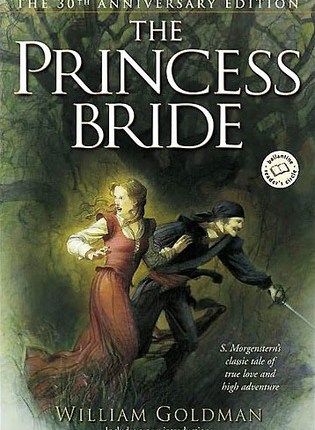
The Princess Bride by William Goldman

The Princess Bride by William Goldman

** spoiler alert ** Please be aware: major spoilers ahead if you have not read the book or watched the film. Consider yourself warned.

A new classic tale about a woman named Buttercup, the man she loves named Westley, a giant who loves to rhyme named Fezzik and Inigo, a Spanish swordsman out for revenge.

Of course, like many, I’ve seen the film The Princess Bride about a bajillion times, but I’d never read the book. It was time to rectify that error. Because the book is always better than the movie, right?

“I love you,” Buttercup said. “I know this must come as something of a surprise, since all I’ve ever done is scorn you and degrade you and taunt you, but I have loved you for several hours now, and every second, more.” pg 59, ebook.

Photo by Charles Pragnell on Pexels.com

But not this time, friends. I know, I was shocked too.

That’s not to say the book isn’t charming, because it is. There’s all of the characters you love and they deliver the classic lines from the film, plus you get the backstory and additional humorous injections from William Goldman. Goldman created a story within a story — he acts as if he’s simply editing a book by S. Morgenstern and has created an entire history around this idea.

He’s so convincing, in fact, that I immediately googled Goldman to make sure I hadn’t missed something.

My favorite part of the book was exploring Prince Humperdinck’s “Zoo of Death”, which we only get to see in passing in the movie.

“The fifth level was empty. The Prince constructed it in the hopes of someday finding something worthy, something as dangerous and fierce and powerful as he was. Unlikely. Still, he was an eternal optimist, so he kept the great cage of the fifth level always in readiness.” pg 68, ebook.

Photo by Daniel Torobekov on Pexels.com

Honestly, some of the scenes in the book go on a bit too long. The part where Westley challenges Prince Humperdinck “to the pain” instead of “to the death” comes off as creepy in the book, whereas, I felt, in the film it was kind of awesome. I’m not entirely certain what the difference is, except his speech is more to the point in the film.

“It means that I leave you to live in anguish, in humiliation, in freakish misery until you can stand it no more; so there you have it, pig, there you know, you miserable vomitous mass, and I say this now, and live or die, it’s up to you: Drop your sword!” pg 225

Those are all just quibbles compared to the ending, which was the most shocking point of all.

Ok, as we all know, in the movie, it ends with a kiss and they all live happily ever after.

In the book, not so! Here are the last lines in the “official story” not counting a few more comments by Goldman:

However, this was before Inigo’s wound reopened, and Westley relapsed again, and Fezzik took the wrong turn, and Buttercup’s horse threw a shoe. And the night behind them was filled with the crescendoing sound of pursuit… pg 228, ebook.

Photo by Min An on Pexels.com

That’s it. I nearly fell out of my chair when I read it. Here’s what our author said about it a few paragraphs later:

“I’m not trying to make this a downer, understand. I mean, I really do think that love is the best thing in the world, except for cough drops. But I also have to say, for the umpty-umpth time, that life isn’t fair. It’s just fairer than death, that’s all.”

It’s such an unsatisfying ending. I can see why they changed the film because I don’t think audiences would have stood for it, which probably says more about film-going audiences than readers, but still. Don’t readers deserve a happy ending too?

Thanks for reading!

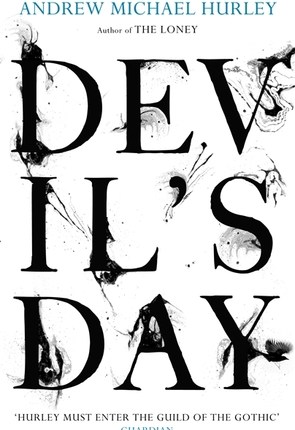
Devil’s Day by Andrew Michael Hurley

Devil’s Day by Andrew Michael Hurley

A slow-moving horror story that asks the reader to consider what may be the truth behind ancient customs and myths, and what secrets a small, isolated community may be hiding from the rest of the world.

“One late October day, just over a century ago, the farmers of the Endlands went to gather their sheep from the moors as they did every autumn. Only this year, while the shepherds were pulling a pair of wayward lambs from a peat bog, the Devil killed one of the ewes and tore off her fleece to hide himself among the flock.” pg 1

Photo by Snapwire on Pexels.com

The small gathering of farms, Underclough, is as much a character in this story as the actual characters.

“When the first buildings appeared, I could tell that Kat was disappointed. I think she’d expected to find Underclough nestled in the valley, not dark and cramped like something buried at the bottom of a bag.” pg 24

There’s a sense of inevitability about the whole thing. You’re not just born in this place. You live, work and die here, on the edge of the wilderness and the known world.

“Living on the farms was one endless round of maintenance. Nothing was ever finished. Nothing was ever settled. Nothing. Everyone here died in the midst of repairing something. Chores and damage were inherited.” pg 38

Photo by Karolina Grabowska on Pexels.com

John Pentecost knows from his childhood that there are forces in nature that cannot be explained. There are whispers in the woods and shadows beneath the trees that move with their own power. There’s a reason why the farmers have a “Devil’s Day” each year, to put the spirit to sleep while they gather their flocks in peace.

“As the Devil watched me, the same question ran through my mind as incessantly as the river. Did I like stories? Did I like stories? I answered yes.” pg 146

Andrew Michael Hurley uses the environment and setting to slowly create a feeling of dread, but then I felt like he never delivered on the story that he so painstakingly sets up. The pace is glacially slow.

Photo by Lucas Pezeta on Pexels.com

That being said, there are one or two scenes from Devil’s Day that haunted me when I read them. I just happened to be reading this the night a record-breaking windstorm blew through town. I heard eerie shrieks and groans coming from outside my windows throughout the evening.

I couldn’t help but wonder what I would say if the Devil asked me if I like stories…

Thanks for reading!

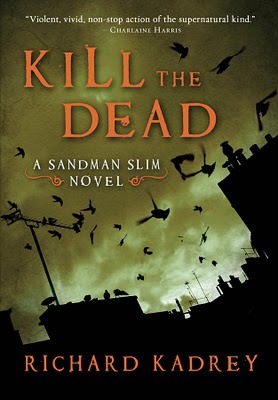
Kill the Dead (Sandman Slim, #2) by Richard Kadrey

Kill the Dead (Sandman Slim, #2) by Richard Kadrey

“Subtle hunting, acting like a grownup, I really miss Hell sometimes.” pg 4

First of all, don’t read the Goodreads description of Kill the Dead before you read it. It gives far too much away!

Here’s a Heidi-no-spoilers blurb that should serve you just as well: James Stark, the half-angel, half-human and one hundred percent pissed off anti-hero is back. Keeping an apartment in Los Angeles doesn’t pay for itself, so Stark is on the hook for contract work for a variety of agencies including Vigil (a super secret department of Homeland Security) and Lucifer, yes that Lucifer.

Photo by ROBERTO ZUNIGA on Pexels.com

Because of a small saving-the-world situation in the last book, Stark has become an underground local celebrity, which has its ups and downs. Part of the perks includes a upsurge in customers at the Bamboo House of Dolls, Stark’s favorite local dive.

“It’s good to have one thing that hasn’t changed much. We need a few anchors in our lives to keep us from floating away into the void. Like Mr. Muninn said the one time he came in. “Quid salvum est si Roma perit?” What is safe if Rome perishes?” pg 28

Trouble brews when people start to go missing in Los Angeles’ underground and some of the members of its leading magical families turn up dead. Looks like Stark is going to have to save the day again and he’s not happy about it.

“I didn’t save anyone. I just killed the bastards who needed killing. Get it? I don’t save good people. I murder bad ones.” pg 39

Photo by Julia Volk on Pexels.com

Why can’t the world just save itself? Hasn’t Stark suffered enough? But what’s a nephilim to do if not save the world while holding tightly to his fracturing sanity with both hands.

“You came back to get the people who hurt you and Alice and you did it. Great. Now you need to find the next thing to do with your life.” “Like learn the flute or maybe save the whales?” pg 57

Suffice to say, Stark finds a few new motivational factors in this book and we are treated to some fairly serious zombie action.

I enjoyed the second entry in the Sandman Slim series, but less than the first book. To start, I felt it was less focused. There’s a heck of a lot going on in Stark’s life and he doesn’t stop to ponder things. He’s always on the go. It makes for a book that you can’t put down, because if you do, you’ll forget who is doing what.

We see less of some of my favorite side characters, which was another bummer. Stark is so intense. He needs more comic relief than just his literal talking head roomie who is perpetually drunk and watching garbage on his computer.

Photo by Photography Maghradze PH on Pexels.com

“I know whose side I’m on. Mine.” pg 236

And there’s the darkness factor. Again, this is urban fantasy with a heavy dose of pessimism. No one is coming to save our intrepid hero. There may be angels in heaven but they couldn’t care less about what goes down on earth. At least Lucifer can be bothered to visit and throw some cash around to his favorites. How depressing is that.

That being said, of course I’m going to pick up the next volume. This is a revenge story primarily, but it is also a love story. I feel like, somewhere in the cosmos, Stark is going to find his Alice and they’re going to get the time together that he was denied. Won’t he be pleasantly surprised…

Thanks for reading!

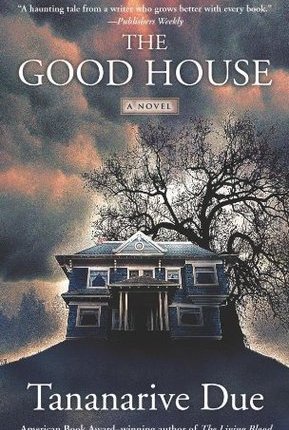
The Good House by Tananarive Due

The Good House by Tananarive Due

The Good House is a horror story spanning generations of the Toussaint family and their home. The family has a history of healing and mysterious vodun practices, or maybe they’re just extremely lucky. Take, for example, a mud slide that destroyed every home in their part of town, except theirs.

“The mud’s recent wrath had left their two-story house untouched, but sprays of buckshot fired at the house during cowardly moments, usually at night, had pocked and splintered the old door. The mere sight of the damaged door had always made her angry, and Marie Toussaint no longer trusted herself when she was angry.” pg 10, ebook.

Photo by Maria Orlova on Pexels.com

Sacajawea, the town where the Toussaints live, is small. Everyone knows each other and have long memories.

“Aside from the handful of vacationers who frequented the town’s two popular B&Bs, most people in Sacajawea had lived here for generations, earning hourly wages in the mills in Longview or taking down trees in the woods. And even if Sacajawea had been a more sometimey place, the rules would have been different for Angela, or anyone else who was kin to Marie Toussaint.” pgs 25-26, ebook.

Why is the Toussaint home called “the Good House”?

“…this house was built in 1907 by the town pharmacist, Elijah Goode. He chose this place because he said the land felt ‘blessed beyond all description,’ or in any case that’s what he wrote to his brother in Boston.” pg 30

After a tragic Fourth of July party, Angela Toussaint, the granddaughter of Marie Toussaint, thinks her family home may be mislabeled.

Photo by Tamas Marton on Pexels.com

What I enjoyed most about The Good House is the author Tananarive Due wrote an epic horror story around a family with characters I cared about. This wasn’t just a thrill-a-minute short story. Getting to know the residents of Sacajawea and the Toussaint family was a treat. Then, when things started to get scary, I was completely hooked.

This is a horror story for readers who enjoy a slow reveal and an extremely satisfying conclusion. Highly recommended.

Thanks for reading!