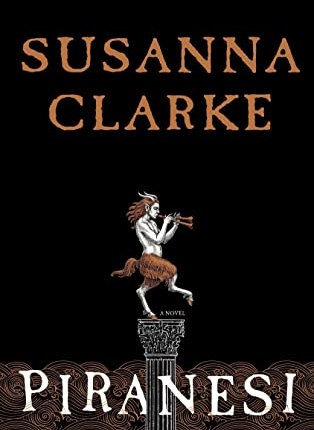
Piranesi by Susanna Clarke

Piranesi by Susanna Clarke

“I have begun a Catalogue in which I intend to record the Position, Size and Subject of each Statue, and any other points of interest.” pg 6, ebook.

Piranesi is an explorer of a strange world in which water runs through the ruins of Grecian-esque temples filled with statues both beautiful and grotesque. He calls this place: the House.

Photo by tyler hendy on Pexels.com

“Outside the House there are only the Celestial Objects: Sun, Moon and Stars.” pg 6, ebook

He doesn’t remember how he got there or a life prior to entering the House. The reader gets to discover his forgotten past along with him in this mystery/fantasy novel.

His only point of contact with a living, breathing person is a man Piranesi has nicknamed, ‘the Other’. He meets with the Other about twice a week. Despite this lack of community, Piranesi manages to survive and soldier forward with his explorations.

Photo by George Shervashidze on Pexels.com

“Perhaps even people you like and admire immensely can make you see the World in ways you would rather not.” pg 227, ebook

In that way, Piranesi is somewhat like an ode to introverts- a whole world to explore by yourself. In other ways, it feels like a nod to a lost world of crowded museums and libraries.

The recent pandemic has twisted the ideas of community and togetherness- sometimes I feel like Piranesi as I wander through stacks of books that people aren’t perusing as much anymore. Or hosting library events where no one shows.

Author Susanna Clarke has put her finger on a sore spot in the zeitgeist and the result is a compulsively readable book.

I was also pleased to observe she wrote a slightly shorter novel. After the brick that is Jonathan Strange & Mr Norrell, I was expecting this to be another 1000 page tale. Clarke tells her story, and tells it well.

Recommended for readers who love portal fantasies or any reader who dreams about worlds beyond the day-to-day. Thanks for reading!

Tree of Ages (Tree of Ages #1) by Sara C. Roethle

Tree of Ages (Tree of Ages #1) by Sara C. Roethle

Tree of Ages is a fantasy novel about a tree who becomes a girl… or is it a girl who becomes a tree and then reverts back into a girl?

Photo by Maria Orlova on Pexels.com

Finn is trying to figure out who she is and so is the rest of the world- which itself is on the verge of something big, something having to do with the magical creatures.  Author Sara Roethle calls these creatures, ‘Faie,’ who disappeared years ago and now are reappearing all over the place.

The group’s trip into the fairy forest was my favorite part. That whole section had me flying through the pages, I just had to know what was going to happen next!

Photo by mali maeder on Pexels.com

Sadly, this is only the first installment and I was left with so many questions: will Finn ever figure out who she is? Will Aed come to terms with his shadowy past? Will Iseult clear his family name?

Guess I’ll have to read the next novel to find out…

This book, the first in a series, reminded me of Katharine Kerr’s Deverry saga. We have an old, wizard type person in Aed (Nevyn in Deverry), who is trying to help a young female, Finn (Jill in Deverry), come into her powers. Then there’s the confused, tormented, perhaps love interest, Iseult (Rhodry in Deverry) and a whole cast of other characters who are along for the ride.

Photo by Athena on Pexels.com

And, like Kerr’s creation, the world that Roethle has crafted is very large and unexpected with, sometimes terrifying, creatures.

I’d recommend Tree of Ages for anyone who loves high fantasy.

If you like this, I’d also suggest Katharine Kerr’s Deverry (start with Daggerspell) and Kage Baker’s The Company series (start with In the Garden of Iden).

Baker’s world is more of a steam punk/historical fiction/low fantasy type place, but I think that the relationships that she has knit together were quite like what Roethle has made in Tree of Ages.

Here’s a short book trailer for “Tree of Ages” by Sara C Roethle. Available on all digital platforms for only 99 cents: https://books2read.com/u/bw8XAe

I received a free copy of this book through Goodreads First Reads. FTC guidelines: check! And thank you for reading.

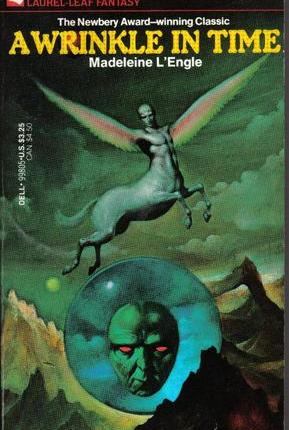
A Wrinkle in Time (Time Quintet, #1) by Madeleine L’Engle

A Wrinkle in Time (Time Quintet, #1) by Madeleine L’Engle

**Spoiler alert: for those who haven’t had the chance to read this classic tale. Please read before you enjoy this review!**

A Wrinkle in Time begins in a deceptively normal way: on a night with wind-tossed trees and a howling rain storm. From there, award-winning author Madeleine L’Engle takes readers literally to the stars and beyond in this extraordinary coming-of-age fantasy novel.

Photo by Lachlan Ross on Pexels.com

I first read about the adventures of Meg, Charles Wallace and Calvin when I was eleven or twelve years old. It was during my early bookworm phase, when I was still learning there were genres that I enjoyed more than others.

I was swept up in the adventure part of this story- facing down the shadows and ‘It’ in my subconscious mind and heart. I remember thinking the Aunt Beast portion of the story was boring and being disappointed Meg’s father was a real man with flaws rather than a superhero who could solve all of her problems.

Photo by Josh Willink on Pexels.com

Looking back on that interpretation now, I see my own burgeoning psychological development and the belief that my parents were some kind of godlike beings- something that most if not all children pass through at some point or another. When did you discover that your parents were real and fallible, just like you?

However, listening to the audiobook as a fully grown adult with a daughter of my own, I was struck by Meg’s strength and bravery. It takes a great deal of inner resolve to face down society’s expectations and the numbing experience of living soullessly every day, following someone else’s school or work schedule and agenda. (A real life version of the pulsing, all-encompassing brain of L’Engle’s fantasy world.)

Photo by SHVETS production on Pexels.com

How many days have I awoken only to race off to the hamster wheel of the work week- toiling away so the highly-paid minds of the CEOs could rest easy, knowing that the company was producing product (whatever industry that may be) and providing value for the shareholders? More than I’d care to admit, before I discovered the safe haven of the librarian’s world.

In my own effort to find my calling, I was reminded of Meg’s struggles to survive her encounter with It, not just survive but decide how her body and mind should function. In some ways, the modern work experience feels like someone else dictates how many breaths you should take per minute or what rhythm your heart should beat.

Photo by Designecologist on Pexels.com

I had the good fortune of listening to an audiobook that has L’Engle speaking a brief introduction and then an afterword read by one of L’Engle’s granddaughters.

The granddaughter (I’m embarrassed I don’t remember her name) shared the details and struggles of L’Engle’s life- including the rejection of her manuscript by numerous publishing houses and the shade some readers threw her way for their own interpretations of her story. Some claimed the book was too overly Christian while others thought it promoted witchcraft. Her granddaughter said L’Engle was baffled by the hate mail.

Photo by Abstrakt Xxcellence Studios on Pexels.com

Curious how a reader’s lens of perception shapes the experience you have with a book. As I mentioned earlier, as a child I thought this book was a grand adventure. As an adult, I see it as a metaphor for living in the modern world.

I’m keen to have my own reluctant reader try this book and share what she thinks about it.

Recommended for everyone but especially those who find themselves a beat or two out of step with the proverbial Its of the modern world. This book reminds you that you’re not alone.

I enjoyed the book more than the movie- but here’s the trailer for those who like movies more than books.

Thanks for reading!

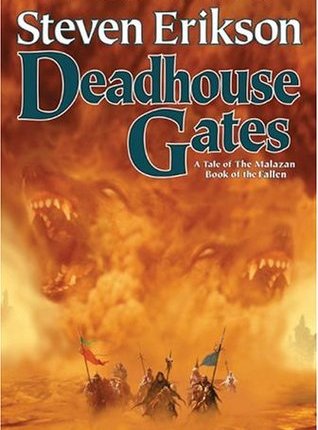
Deadhouse Gates (Malazan Book of the Fallen, #2) by Steven Erikson

Deadhouse Gates (Malazan Book of the Fallen, #2) by Steven Erikson

Since the end of August, I’ve been working on reading Deadhouse Gates, the second book of the massive series, Malazan Book of the Fallen.

What took me so long? Personal life issues aside, this book is a beast.

“Icarium turned to him with a faint smile. ‘I am my own curse, Mappo. I have lived centuries, yet what do I know of my own past? Where are my memories?” pg 22, ebook

Photo by Pixabay on Pexels.com

What is the book about? Here’s a summary from Goodreads: “In the vast dominion of Seven Cities, in the Holy Desert Raraku, the seer Sha’ik and her followers prepare for the long-prophesied uprising known as the Whirlwind. Unprecedented in size and savagery, this maelstrom of fanaticism and bloodlust will embroil the Malazan Empire in one of the bloodiest conflicts it has ever known, shaping destinies and giving birth to legends.”

In addition to a handful of characters from the previous book, readers are introduced to Felisin, Tavore, an entire host (two or three hosts really) of warriors and epic leaders, new magical warrens, monsters (some old, some new) inhabiting these warrens. And more, so much more.

My favorite character in this entry wasn’t even human, it is a house- Azath. It is one of a handful of magical places that connect worlds together and holds secrets that even the bravest among us do not dare to know.

Photo by Sean Kernerman on Pexels.com

I would get so much reading done in a place like that. :p

My other favorite character is a historian, Duiker. He’s living and remembering the history of a band of soldiers who are working to save refugees from a vengeful desert army.

“The historian stepped outside into the rain, drawing in lungfuls of clean, cool air as he once more wrapped a cloak about him.” pg 45

It is a march with no end in sight. In fact, it takes up much of the 834 pages of the ebook.

Photo by Pixabay on Pexels.com

Most of this story is occupied with war and it is very grim. For readers who like dark fantasy, this would be a good pick.

It was not a time to be alone, in the heart of slaughter, where every piece of wreckage or burnt and torn flesh seemed to cry out silent outrage. Sites of battle held on to a madness, as if the blood that had soaked into the soil remembered pain and terror and held locked within it the echoes of screams and death cries.” pg 225

I can’t say it was my cup of tea. I’m far too optimistic for dark books. But I made it through this one.

“The unknown pursues the ignorant, the truth assails every scholar wise enough to know his own ignorance, for that is the meaning of unknowable truths.” pg 512

Photo by Rachel Claire on Pexels.com

Besides the characters, my other favorite part of this book is the magic system which author Steven Erikson continues to reveal one measly crumb at a time.

“The Wickans know that the gift of power is never free. They know enough not to envy the chosen among them, for power is never a game, nor are glittering standards raised to glory and wealth. They disguise nothing in trappings, and so we all see what we’d rather not, that power is cruel, hard as iron and bone, and it thrives on destruction.” pg 556

I thought I had a map in my head of the warrens from Gardens of the Moon and how they all fit together. But Erikson upended that map in this book. I expect he’ll probably do it again in the next one- if I ever attempt it.

It is easy to see why, despite its difficulties, this series has a serious fan base. It is complex enough that you’re either totally into it, or totally out. I think I fall somewhere in-between.

Only recommended for fans of dark fantasy. Everyone else, steer clear.

Thanks for reading!

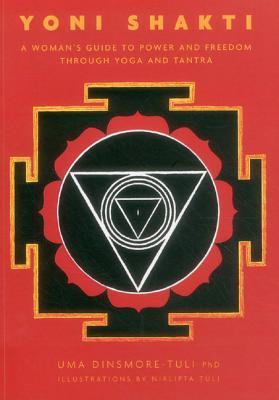
Yoni Shakti: A Woman’s Guide to Power and Freedom Through Yoga and Tantra by Uma Dinsmore-Tuli

Yoni Shakti: A Woman’s Guide to Power and Freedom Through Yoga and Tantra by Uma Dinsmore-Tuli

“When we unlock our sakti we re-connect with our capacity for inner joy and peace with ourselves: all our experiences begin to join up and make sense. Freeing our sakti in this way gives us the key back to our sexual selves, so that we may inhabit our whole being with authenticity and joy.” pg 508 ebook.

Author, yogini and tantrika, Uma Dinsmore-Tuli, shares yoga sequences, mantras, mudras and meditations to assist readers in becoming more aware of their inner selves.

Photo by Elina Fairytale on Pexels.com

What does this accomplish, you may be asking yourself. According to Dinsmore-Tuli, it’s the foundation of a mindful existence.

“All of the poses to unblock the life force energy are also very practical means to keep the creative and sexual energies in circulation so that they are available to nurture and enrich our creative, family, social and professional encounters.” pg 518, ebook

That sounds pretty good to me.

So, I tried some of the suggestions from this book which I had to cherry pick because there are dozens to try. And my results were unexpected and stunning.

Photo by Diego Madrigal on Pexels.com

After the first practice, I experienced an almost immediate increase in my sensitivity to my body’s energy and overall energy level. After the first week, this improved awareness led to some fascinating experiences during my meditations.

Apparently, practitioners of yoni shakti routinely encounter visions or spontaneous energy body knowledge. The goal is not to seek these experiences, but to be aware when they arise and dissipate, and then utilize them for greater self knowledge.

Using these teachings, I feel like I’m learning a whole new dimension to life- one that arises from practices of mindful awareness. Yoni Shakti is a good reference book for that journey.

Photo by Daniel Torobekov on Pexels.com

That being said, a majority of this book is repetitive to the point of unreadable. I realize Dinsmore-Tuli is passionate about the women’s movement in yoga, but she goes on so much about past abuses by gurus and organizations that it detracts from the delivery of the wisdom of the book.

I found myself skimming entire sections because they read the same in the previous chapter and the ones before it.

On the other hand, this book shines in its accounts of the women who were suffering and then rediscovered their power and ability to heal themselves through their yoga practice.

“There is a deep relief in knowing that other women have experienced the same losses, and a comfort in hearing others speak about what is so often unspoken. The sharing is healing.” pg 597

Recommended, with a few reservations, to spiritual seekers interested in yoga and tantra- particularly women.

Thanks for reading and namaste!

Blood of Elves (The Witcher, #1) by Andrzej Sapkowski

Blood of Elves (The Witcher, #1) by Andrzej Sapkowski

In a fantasy realm where the races of humankind, elves, dwarves, and gnomes have ceased to co-exist peacefully, there lives a princess whose inner power, if left uncontrolled, could destroy the world. Geralt of Rivia, also known as the Witcher, and his friends, are tasked with not only protecting this girl but also instructing her so that her abilities don’t destroy her mind from the inside-out.

“Ciri had heard such reassurances in the past. … Now she believed it. Because it was Geralt of Rivia, the White Wolf, the Witcher, who said it. The man who was her destiny.” pg 11, ebook

Photo by Lukas Hartmann on Pexels.com

But there are forces in this world who are seeking Ciri for other reasons. She has the potential to be a force for the greater good or a weapon of chaos.

“Difficult times are approaching,” she said quietly. “Difficult and dangerous. A time of change is coming. It would be a shame to grow old with the uncomfortable conviction that one had done nothing to ensure that these changes are for the better.” pg 23, ebook

I picked up Blood of Elves because I recently watched most of the Netflix show based on the video games and also these books. I thought Blood of Elves was the first in the series, but apparently I missed a short story collection prior to this book.

That didn’t lessen my enjoyment of this tale, but I do enjoy having context. Andrzej Sapkowski does a good job of dropping bread crumbs about who Witchers are, who Ciri is, and the complex interactions of the different powers in the world, so newcomers to the book-version of the story, like me, can keep up and it doesn’t feel like an information dump.

“You are not learning in order to kill and be killed. You are not learning to kill out of fear and hatred, but in order to save lives. Your own and those of others.” pg 59, ebook

Photo by Engin Akyurt on Pexels.com

A small complaint though, and I had this same comment about the Netflix show, is that the storyline bounces around quite a lot. If you’re not paying attention, or reading carefully, you’re in danger of losing the thread because this isn’t a simple world nor is it populated by one dimensional characters.

Sapkowski shines in the dialogue between these characters, especially during the action sequences. It is easy to see why a video game was created using this material.

“Remember,” she repeated. “magic is Chaos, Art and Science. It is a curse, a blessing and progress. It all depends on who uses magic, how they use it, and to what purpose.” pg 147, ebook

Highly recommended for fans of the genre, the games or show. Blood of Elves delivers.

Thanks for reading!

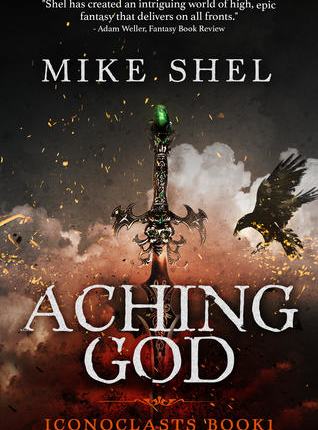
Aching God (Iconoclasts, #1) by Mike Shel

Aching God (Iconoclasts, #1) by Mike Shel

In the fantasy world of Aching God, a mysterious plague has emerged at the headquarters of the Syraeic League, an adventuring guild that explores the ruins of an ancient civilization. Their century-old quest is to retrieve relics from the ruins and to discover more information about its culture and gods.

Auric Manteo used to go on these quests for the League until a disastrous final foray led to an abrupt retirement and years of nightmares. But things have been looking up for the aging adventurer, until he receives a letter from the League requesting his help in banishing the plague.

Photo by John-Mark Smith on Pexels.com

“Three years of untroubled sleep, disturbed by this nightmare the very morning a summons to Boudun and the Citadel arrived? Was it a hateful premonition?” pg 28, ebook

Can Auric face the demons from his past in order to save the afflicted from the ravages of the Aching God?

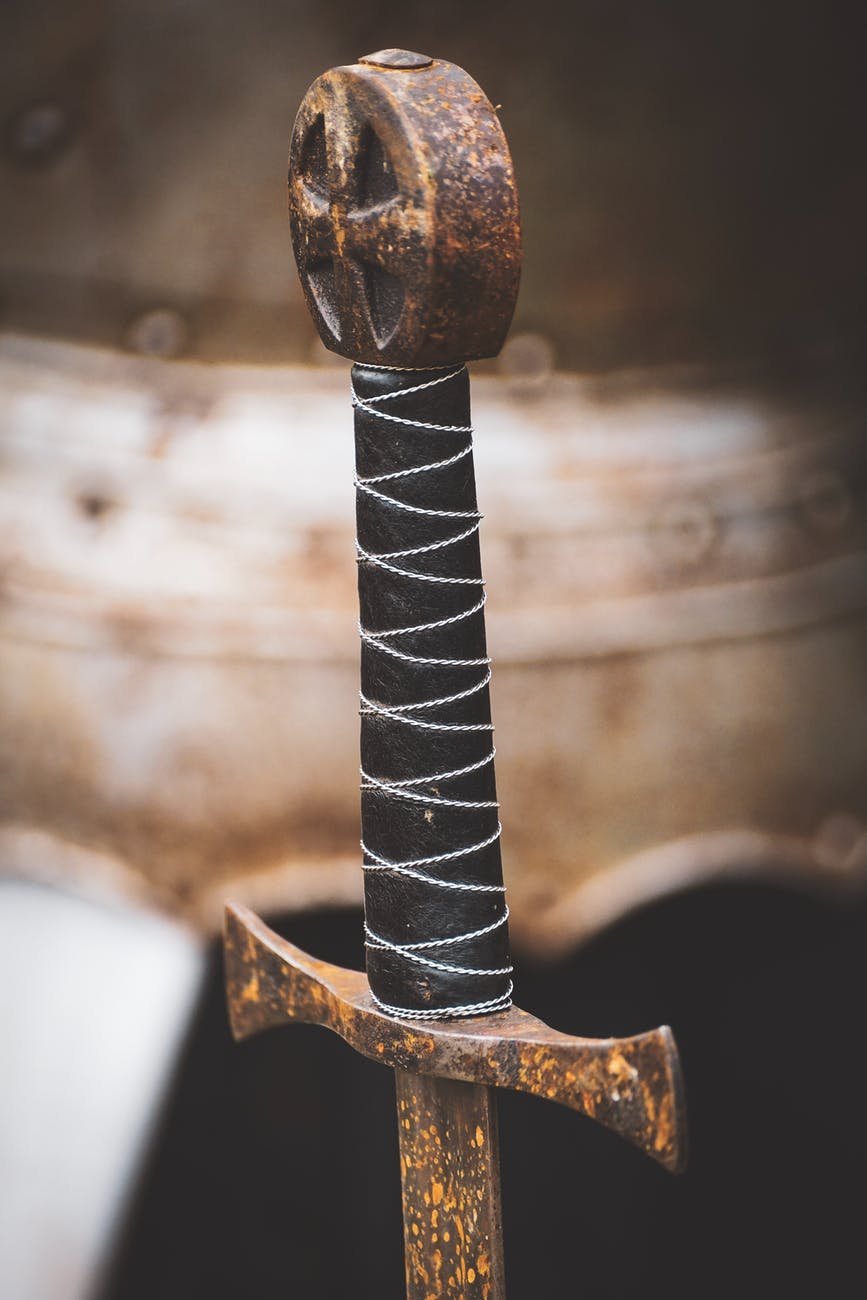
“His mind flashed to images from his tenacious nightmare: the corpses, the pit, Lenda’s raggedly severed head gaping at him in accusation. He rested a shaking hand on the pommel of his sword to steady it.” pg 73, ebook

Photo by Susanne Jutzeler on Pexels.com

Despite its promise, I think Aching God would be a better dungeon module than it is a story. Mike Shel begins to flesh out his characters, but they never get far beyond the basics of birthplace and motivation. I didn’t feel drawn to any of the characters because of this superficial depiction.

His magic system with its secretive sorcerers who embed gems in their foreheads in order to bind themselves to their magical powers and comrades was also interesting. But, again, Shel leaves a majority of the storytelling to the reader’s imagination rather than actually writing it.

The adventure itself is linear with few unexpected twists and turns. Even the reveal of the great mystery of the Aching God leaves something to be desired.

Only recommended for readers who adore the fantasy adventure genre. Otherwise I would give this a pass.

Thanks for reading!

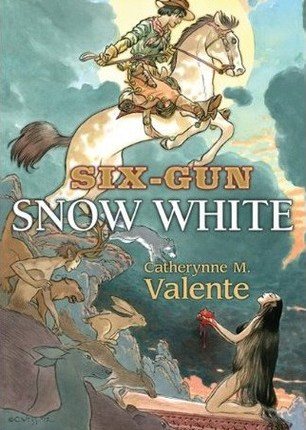
Six-Gun Snow White by Catherynne M. Valente

Six-Gun Snow White by Catherynne M. Valente

“I gradually understood the truth of my situation: I was a secret.” pg 14, ebook.

Catherynne Valente has penned a bewildering and ultimately disappointing western-tinged fairy tale retelling in Six-Gun Snow White. Her reimagining of the classic story has Snow White as an unloved daughter of a mine speculator and an abused, indigenous mother. When her mother ends her own life, Snow White’s father marries a mysterious woman from back East, the evil stepmother of fairytale infamy, whom the narrator calls Mrs. H.

“She named me a thing I could aspire to but never become, the one thing I was not and could never be: Snow White.” pg 27, ebook

Photo by John Finkelstein on Pexels.com

The disappointing part of the story is not the set up or general idea of Snow White as a western, both of which I thought were excellent. The trouble arrives in the magical portions of the story which are, in my opinion, not well written. They felt disjointed and tacked on.

It’s curious to me that I didn’t like this story because Valente is one of my favorite authors. There is no one like her when it comes to an interwoven story or mysterious magic. Maybe my issue with this tale is that it’s so short Valente didn’t have a chance to work her usual story telling magic? Perhaps.

The ending was an enormous let down as well.

Not recommended.

Thanks for reading!

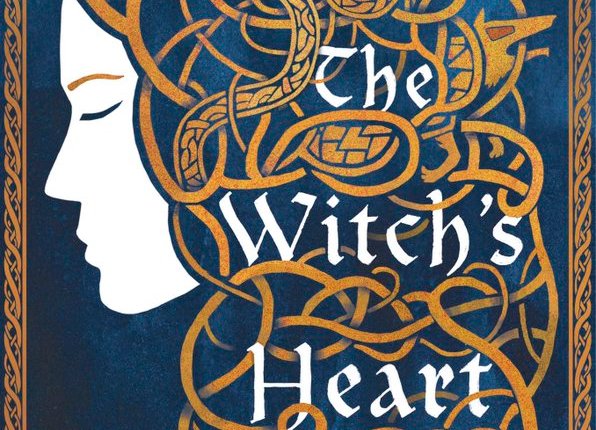
The Witch’s Heart by Genevieve Gornichec

The Witch’s Heart by Genevieve Gornichec

“The third time she was reborn, Gullveig fled, though she left something behind: her speared heart, still smoking on the pyre.” pg 4

Angrboda, the Norse witch formerly known as ‘Gullveig’, is hiding from the Aesir when the trickster god Loki finds her. And changes her life (or in her case: lives) forever.

“Although her memories as Gullveig were vague enough, she recalled feeling like she didn’t belong – and the moment they’d turned on her, burned her, she’d felt a lot of things. But the emotion she could recall most distinctly was not fear or anger, but the feeling of being used.” pg 43

Photo by Jeremy Bishop on Pexels.com

The gods kill Angrboda because of her refusal to share the secret of her scrying power, called ‘seid’. She will not look into the future and give Odin the mysteries that reside at the end of all things.

Odin does not take no for an answer.

Genevieve Gornichec reimagines the shadowy character of Angrboda in this Norse myth-filled retelling. Maybe it’s because I’m a classics major and gravitate towards mythology, but it seems to me that it has become somewhat popular to do so – think The Song of Achilles or Circe.

Photo by Bakr Magrabi on Pexels.com

In this case, I feel like Gornichec didn’t go far enough in her imagining. She gave Angrboda a voice, a rare talent, and a fierce love for her children, but, beyond that, the witch remains a fairly passive character.

Part of this could be due to the fact that the Aesir are such powerhouses in the old myths. They hog the spotlight and the action. But still, I believe there’s enough room around the stories to give a figure whose mythology has been largely forgotten a new legacy.

I think the biggest missed opportunity for this is in Angrboda’s relationship with Loki.

“She would do anything for him, she realized then… And for some reason, this scared her, as if the thought itself were a promise she knew that she couldn’t hope to keep.” pg 74

Photo by Liza Summer on Pexels.com

Like the other major players in the mythology, readers will be familiar with many of Loki’s hijinks. He is constantly in action, tricking people or becoming the victim of his own cleverness. What readers have never really gotten to see is his interior world. What is he thinking when he pulls his legendary stunts? What are his secret motivations?

One would think this is something he might share with a lover. But the storytelling never quite got there and I found The Witch’s Heart to be rather a disappointment in that way.

That being said, if you’re a reader who enjoys mythological retellings, there is still much to enjoy in this story. It is well-written if fairly limited in scope.

Thanks for reading!