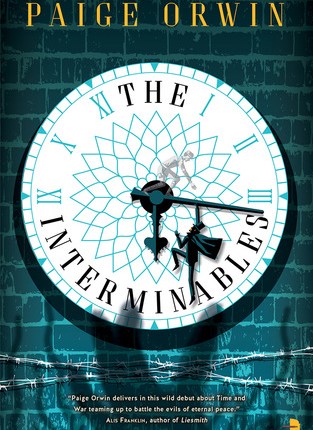
The Interminables by Paige Orwen

The Interminables by Paige Orwen

Interminable adjective. 1. Incapable of being terminated; unending  2. Monotonously or annoying protracted or continued; unceasing; incessant  3.  Having no limits.  (dictionary.com Unabridged.  Retrieved May 22, 2016 from dictionary.com website http://www.dictionary.com/browse/interminable)

The Interminables takes place in a world where magic is real and so are nightmares.  Prior to the events in this tale, an immortal being attacked all the cities on Earth and essentially destroyed civilization as we know it.  She was killed but for an extreme, unspecified magical cost.  Now, the scars left by this insane immortal dot the world and leak magic like radiation, producing strange items and twisted, dangerous creatures.  The Hour Thief, Edmund, and his best friend, an archtypical ghost of World War I named Istvan, struggle to bring order and heal those injured by the remains of this struggle.  Behind the scenes, an even greater evil begins to stir…

The Interminables is a type of science fiction/fantasy that I love.  It doesn’t dwell too much on the how’s of the situation, but jumps head first to the what’s, who’s, and why’s of the story.  And, this is an incredibly ambitious world in the sense that not only are the characters dealing with untamed and uncontrollable magic, but also the dimensions of alternate worlds have collided and merged with our own.  So, there are beings and powers in this place that are far beyond anything that exists in the real world.  It’s an exciting premise and the reader can almost feel the storytelling potential exploding from the very first page.

The Hour Thief is not only immortal, capable of teleportation, and able to move with super human speed through time- he’s also a librarian! : “…the Hour Thief was finally returning to real field duty, after fourteen months missing and then years of sticking to nothing more than librarian work and his usual mysterious excursions by night.”  My favorite kind of super hero.

Who is the Hour Thief? :  “He was, for all intents and purposes, a conman who dealt in stolen moments.  The hours that slipped away when no one was watching.  Lives, plain and simple.  He’d been thirty-five for seventy years and he could say that only because none of the time he’d lived since 1954 was originally his.”

I loved how Orwin described two beings, who are essentially immortal, dealing with technology. : “Edmund… fished the device responsible out of his other jacket pocket.  It was roughly the same size and shape as a pack of cards and combined the services of a clock, a calculator, a telephone, a radio, a camera, a film projector, a phonograph, a library, a dedicated staff of field researchers, an electric facsimile of the Delphic oracle, and a flashlight, but it was easier to call it a telephone.” When put that way, our devices really do seem to be magical.

Istvan, sends a text message, and it comes out more like a telegraph: “Istvan fiddled with the phone a moment longer… “I’ve sent a message to the Magister, I think, but I’m not certain it went through.”… Edmund glanced at it.  Recovered, it said, on our way presently stop.”

My favorite moment in the whole book, an interchange between Edmund and Istvan :  Edmund set the ritual knife down.  “Are we always this interesting?”  Istvan knelt and retrieved his own blade, wiping it on the hem of his uniform before handing it to him.  He was a doctor.  It would be all right.  “Oh yes.”

In the acknowledgments, Orwin says, “The original project grew out of a desire to preserve some of the characters developed by myself and my friends in the MMORPG City of Heroes…”  I also played that game!  The ability to customize and create your hero was so much fun, but the game itself became repetitive very quickly.  Orwin did such a great job taking a one dimensional idea and giving it a time piece, wings, and a limitless world to explore.  The Interminables is a lot of fun and not interminable to read, at all.

If you’re looking for read alikes, I’d recommend Triumff: Her Majesty’s Hero by Dan Abnett, The League of Extraordinary Gentlemen by Alan Moore (graphic novel), or Miss Peregrine’s Home for Peculiar Children by Ransom Riggs (young adult title).

Expected publication date: July 5, 2016.  A big thank you to NetGalley & Angry Robot Publishing for the opportunity to read and review a digital copy of this book.  And, thank you, for reading!
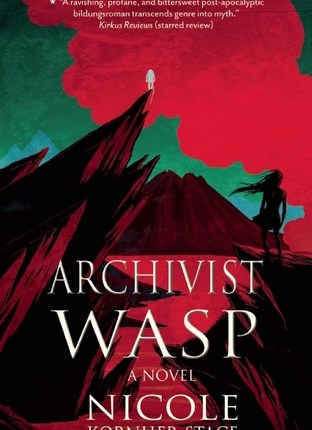
Archivist Wasp by Nicole Kornher-Stace

Archivist Wasp by Nicole Kornher-Stace

Overall, I enjoyed Kornher-Stace’s tale about a girl with claw marks on her face who traps and studies ghosts because she’s a priestess of a goddess who lives in the stars. I felt like Archivist Wasp was a combination of The Last Apprentice/Wardstone Chronicles by Joseph Delaney and What Dreams May Come by Richard Matheson. There’s also some dystopian and survival elements to it. There’s a few moments of rough language in here and some quick, brutal violence, but nothing worse than what a young adult would read in The Hunger Games.

Kornher-Stace throws the reader into an alien world with zero explanation or background info and it’s a lot of fun to pick out the story from the details. Take this passage describing a ritualistic painting in Wasp’s home:“The bones of the painting were nails, hammered straight into the wall to pick out the stars of Catchkeep’s constellation. And around them She had been outlined in thick black paint, all teeth and legs, Her back curved like a rainbow, caught in mid-leap over a shadowy abyss. … Catchkeep Herself was black and red. Stepping close to Her you could make out the outlines of handprints, darker where they overlapped. Wasp’s first day as Archivist, they’d rushed her here before the blood of the fallen Archivist could dry on her palms, and to the painting she had added the shape of her hand, which was the shape of her predecessor’s death.” pgs 14-15 ebook. Dark, eerie, awesome.

Wasp feels trapped in her role as priestess and lacks the confidence in herself to do anything else. Her personal development and stepping into her power is one of the main arcs of this story: “…beneath all her talk, she knew that what she was about to try would fail, as everything else she tried had failed, and then her life would go on as it had always done, pacing out the length of its leash, smashing into empty air at either end like a bird against a window. Take the knife out of the doorframe. Sweep the dust from the little house. Restock its jars with the useless dead.” pg 67 ebook. She’s a very strong, and believable, female main character. Think Buffy the Vampire Slayer… but with ghosts.

Kornher-Stace’s description of the afterlife was just like what is portrayed in What Dreams May Come or Otherwhere by Kurt Leland, the deceased shape their surroundings with the energy from their thoughts and emotions. In the ghost’s world, Wasp sees demon-like dogs that attack her again and again: “Still don’t believe the hunt is real?” Wasp shouted. She was having trouble modulating her voice. Her teeth were chattering too hard. She had never been so tired. “We bring our own monsters with us,” said the ghost. “It looks like these are yours.” pg 123 ebook. Goosebumps!

I liked the author’s description of what a ghost is: “You’re a ghost. You need answers. You need closure. You need them like the living need air to breathe. You think it’s just you, but from what I’ve seen, most of us die without getting either. And maybe that’s all a ghost is, in the end. Regret, grown legs, gone walking.” pg 155, ebook.

My favorite parts of the book are Kornher-Stace’s varied descriptions of the worlds through which Wasp travels with the ghosts. They are beautiful, desolate, bizarre, and, sometimes, scary:“They tromped through the snowfield for ages. They passed things that, to Wasp’s eye, might have been waypoints. A wind-shredded orange plastic tent. A cave hung with icicles that were mottled gray with ash. A distant huddle of dark birds circling and alighting on an unseen mass. A tiny pond, perfectly round, frozen into a mirror upon which no snow settled. The metal skeleton of something that had fallen from the sky and smashed there, its nose plowed deep into the earth. They walked on.” pg 172, ebook.

If you enjoyed Archivist Wasp and are looking for young adult read-alikes, you may want to try Fray by Joss Whedon (a graphic novel) or Revenge of the Witch (The Last Apprentice/Wardstone Chronicles, #1) by Joseph Delaney. If you’re looking for an adult read-alike, try The Library at Mount Char by Scott Hawking.

Thanks for reading!

When Crocs Fly by Stephan Pastis

When Crocs Fly by Stephan Pastis

My search for reading material that my daughter will enjoy continues.  I happened to stumble across When Crocs Fly by Stephan Pastis in the ‘Read Now’ section of NetGalley and gave it a read through.

When Crocs Fly combines the sarcastic put downs and delivery of Garfield with the physical humor of Looney Toons. The jokes are mainly puns, misunderstandings, or a combination of both. The longest scenes are only two pages, so Pastis never really writes a story- it is more a collection of vignettes, which could be perfect for readers with shorter attention spans.

But, if your child is reading this, make sure that they have strong language skills. Whenever the crocs speak, their voice is written phonetically, which could be problematic for beginner readers. I think it’s the equivalent of trying to read cursive handwriting… just different enough to cause a problem.

Some beloved characters from other comics make very brief cameos in this. I won’t say which ones because that would ruin the fun!

Though I didn’t have any laugh out loud moments in this one, my favorite page was ‘The Trophy from the Ping Pong League’ (pg 85) where it’s labeled as ‘Best Participation by Someone in our League who can Breathe and has Participated.’ When Crocs Fly has clever ways of skewering reality, but I’m afraid that the more subtle jokes will go over the kiddie’s heads and I don’t think that adults would really enjoy this one. It’s clearly aiming for a younger set.

I’d recommend it for ages 10+, personally, but it really depends on the maturity level of the child reading it. Big thanks to Netgalley for the free digital copy and thank you for reading!

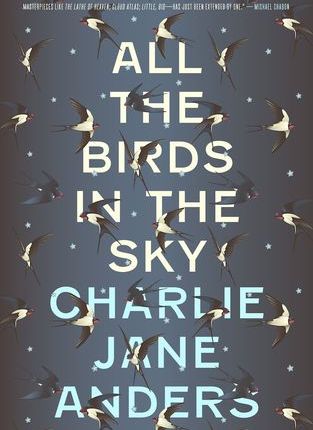
All the Birds in the Sky by Charlie Jane Anders

All the Birds in the Sky by Charlie Jane Anders

All the Birds in the Sky is about science vs nature, the end of the world, and love- in no particular order. Laurence and Patricia have two of the roughest childhoods that I’ve read so far this year. Their parents are duds, their school administrators are awful, and their peers are bullies and sadists. Somehow, despite these tragic beginnings, Laurence and Patricia manage to rise above and become something more, something extraordinary. And, together, they just might manage to save the world.

My favorite part of this book was the beginning- the development of the characters and the introduction to the extraordinary world of Laurence and Patricia. In this world, animals can talk! Here’s the “Parliament of Birds”:“Various other birds piped up, saying, “Point of order!” and a fidgety crow was listing important areas of Parliamentary procedure. One of them was so insistent that the eagle was forced to yield the branch to the Honorable Gentleman from Wide Oak- who then forgot what he was going to say.” pg 19 Politicians are politicians, no matter their species.

I loved Laurence’s internal dialogue: “Hey, Larry Fairy,” Brad Chomner said at school, “think fast.” Which was one of those phrases that never made sense to Laurence: People who told you to “think fast” were always those who thought much more slowly than you did. And they only said it when they were about to do something to contribute to the collective mental inertia.” pg 23

I also connected with Patricia. She’s imperfect, ruminative, and totally relatable: “Patricia felt jittery about throwing her first ever dinner party, because part of her clung to the fantasy of being someone who gathered cool people around her. A doyenne, someone who held witty salons. She cleaned the apartment for hours, made a playlist, and baked bread and bundt cake. … Patricia’s bread filled the marigold kitchenette with a yeasty warmth, and she took a deep breath. She was a grown-up. She had this.” pg 165 I’ve said that exact thing to myself when I’m stressed or trying to do something outside of my comfort zone. “I’m a grown-up. I have this.” Wish I was better at convincing myself of the truth of it. 🙂

Laurence contemplating reality: “I wonder how many other things in our world are just the shadows of things in other places,” Laurence said, forming the thought as he spoke. “I mean, we always suspected that gravity was so weak in our world because most of it was in another dimension. But what else? Light? Time? Some of our emotions? I mean, the longer I live, the more I feel like the stuff I see and feel is like a tracing of the outline of the real stuff that’s beyond our perceptions.” pg 186 I feel like that sometimes too.

Anders writes some very touching passages about love and being in love:“… Laurence watched her the whole way back up the block, wondering if she would look back at him over her shoulder, or turn to wave one last time. She didn’t. His heart skidded like a dirt bike on black ice as he watched her disappear. pg 213 You can really feel the emotions sliding around his chest, can’t you? I can.

I did not like some of Anders transitions in All the Birds in the Sky, particularly the jarring leap of time between the childhoods and then adulthoods of Laurence and Patricia. I also thought that Anders relied on synchronicity a bit too much to bring the two main characters together and keep the story rolling. But, life is strange and full of unexplainable moments. And, to be fair, I’m complaining about synchronicity in a world where magic and time travel are real and animals can talk. Maybe I need to check my own perception of reality…

If you enjoyed this book, maybe you should try The Many Selves of Katherine North by Emma Geen or A Monster Calls by Patrick Ness.

Thanks for reading!

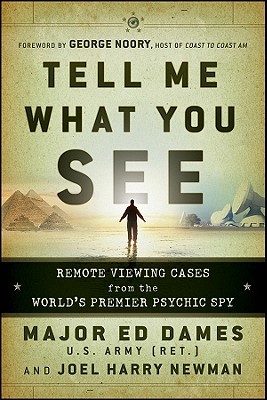
Tell Me What You See: Remote Viewing Cases from the World’s Premier Psychic Spy by Edward Dames

Tell Me What You See: Remote Viewing Cases from the World’s Premier Psychic Spy by Edward Dames

Tell Me What You See: Remote Viewing Cases from the World’s Premier Psychic Spy  is a book about remote viewing written by Edward Dames.

Remote viewing is a military protocol by which a “viewer” goes into a meditative state, sends his or her consciousness “out” to a target, and then reports on what he or she perceives while there.

In this book, Dames writes story after story about using this protocol for the government. And, later, cases that he and his group worked on, as a private company.

Confession time again: I love to read fringe-y non-fiction.  From the paranormal to the other worldly, I can’t get enough of it.

Books by former remote viewers from the military are such a trip to read.

These guys were/are on the cutting edge of consciousness exploration. It makes me wonder what humans are potentially capable of, but we don’t know it yet.

It also makes me wonder what else is out there to be perceived.

Don’t go to these books for feel good stories. I’m sure that it is because remote viewers were all trained as human weapons to root out threats to the government, but they all seem so dark and obsessed with shadows.

Even when Dames sets out to have a “fun” RV session on the Ark of the Covenant, his viewers see mainly blood shed and despair.

The methods used in Dames’ sessions were different from others that I’ve read.

David Morehouse and Lyn Buchanan, also former military RVers, described RV sessions in which separate viewers with handlers would run through coordinates. They would do this in completely secluded rooms. Later, the different sessions would be put together to try to create a complete picture.

Dames, on the other hand, described group RV sessions in which he’d act as the handler and give out the coordinates to the group. Then, his viewers would sit in a group setting and say what they were seeing, as they saw it.

I found this approach to be interesting. I wonder which technique had more accurate results.

What is RV?: “Remote viewing is about reaching beyond the five senses into the unconscious mind, to look inside and miraculously gather information stored like web pages on a cosmic computer. Even more miraculous is that we all have the innate potential to do this, a prescient sixth sense.” pg 16

The way the mainstream considers RV: “It’s part of my regular curriculum to discuss how badly the authorities treat remote viewing. … What people can’t pigeonhole they often reject. We were dealing with a system that treats what we do like watching someone have a seizure from behind a two-way mirror- uninvolved yet shamefully fascinated.” pg 27

Which is why I was surprised when he so vehemently rejects the contributions of the natural psychics, mediums, channelers to his military unit: “Gauvin and his broomstick pals were running us into the ground… Angela’s channeling was bound to be judged useless and scrapped and then maybe she’d go back to her crystal ball. … Who knew, by participating in an actual session maybe she’d catch on to how remote viewing really works. Maybe.” pg 120-121

Unlike mainstream folks, those types of spiritual “witches”, as Dames describes them, don’t need to be convinced that there are levels of perception beyond those utilized in day-to-day life.

If he had taken the time to look beyond their strange methods and encourage them to organize their natural talents within developed protocols, I think Dames could have found some powerful allies within the military RV program.

But, that’s not how he played it. Instead, you were either completely with Dames or against him. I suppose it goes back to his role as a soldier.

Dames’ comparison of RV to out-of-body experiences: “OBEs aren’t anything new. The concept has been around and practiced for thousands of years, dating back to the monks of ancient China and India. Their wizened mystics called it “astral projection,” a practice where, either awake or dreaming, certain adept individuals could cast off their earthly skin and propel their consciousness- astral body- into unknown spirit dimensions across time and space.” pg 153

And possibilities for RV in the future: “The ability to remote view is the next step in the evolution of the mind… What started out as a military tool based on the desperate need of warriors seeking to destroy their enemies in battle has now developed into an invaluable instrument in the search for enlightenment. Remote viewing is a teachable psychic-like skill anyone can learn. What is often overlooked is its potential to help us more deeply experience life.” pg 257 I would say so.

If you’re interested in more books like Tell Me What You See, you may want to look into The Seventh Sense: The Secrets of Remote Viewing as Told by a “Psychic Spy” for the U.S. Military by Lyn Buchanan or Remote Viewing: The Complete User’s Manual for Coordinate Remote Viewing by David Morehouse.

Thanks for reading!

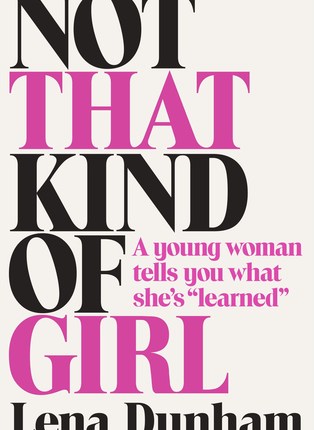
Not That Kind of Girl: A Young Woman Tells You What She’s ‘Learned’ by Lena Dunham

Not That Kind of Girl: A Young Woman Tells You What She’s ‘Learned’ by Lena Dunham
notthatkind

“Not that kind of Girl” is a non-fiction collection of essays by Lena Dunham.

In Not That Kind of Girl, Dunham has crafted a very raw and brave set of essays about growing up, her family, her success, her crushing anxiety, and what it’s like to be a woman in Hollywood.

Not That Kind of Girl and I got off to a rocky start.

I loved Dunham’s introduction but the next, seemingly endless, chapters, where she talks about her dysfunctional relationships, one after another, were awful.

She uses a stream-of-consciousness style writing so that, in the middle of telling one story, she puts in totally unrelated stuff.  Most of the time, it’s about another dude who she banged once or more, depends on the story. I was completely confused and not into it.

But then, once I was past that first part, the memoir picked up considerably.

So, if you can make it past the initial bit, I found the rest of Not That Kind of Girl to be well worth the read.

Here’s some parts I enjoyed:
For my husband, the DnD player, she’s talking about finding an eligible man on campus: “The pickings were slim, especially if, like me, you were over bisexuals. At least half the straight men on campus played Dungeons & Dragons, and another quarter eschewed footwear entirely.” pg 32 ebook. The horror! :p

How relationships end: “The end never comes when you think it will. It’s always ten steps past the worst moment, then a weird turn to the left.” pg 97 ebook. Kind of like the “Time Warp.”

I loved her reasons for writing. In this passage, she’s talking to a girl she admired, who had just asked Lena why she writes: “And in our work, we create a better or clearer universe,” I tell her breathlessly. “Or at least one that makes more sense.” pg 220 ebook.

Lena remembers a disturbing incident with a grade school teacher: “I was reminded again that there are so many things we need that can also hurt us: cars, knives, grown-ups. I was reminded how no one really listens to kids.” pg 267 ebook.

A true eccentric: “Isabel is a true eccentric- not the self-conscious kind who collects feathers and snow globes but the kind whose passions and predilections are so genuinely out of sync with the world at large that she herself becomes an object of fascination.” pg 282 ebook.

Finding her way in a “man’s world”: But the scariest thought of all is the one that pushed me to keep making contact well past the point that I became uncomfortable, to try and prove myself again and again. The reason I didn’t stop answering their calls, that I rushed to drink dates that were past my bedtime and had conversations that didn’t interest me and forced myself to sit at the table long after I’d grown uncomfortable. The thought I worked so vigilantly to ensure they would never entertain: She’s silly. She’s no threat.” pg 314 ebook.

I felt that passage, very deeply. There is the beauty of Dunham’s writing- she records her thoughts in such a way that the reader says to herself, “That’s me. I’ve been there. That’s all of us.” At least, I did.

If you enjoyed Not That Kind of Girl, you may want to read Spinster: Making a Life of One’s Own by Kate Bolick, Pigs Can’t Swim by Helen Peppe, or Furiously Happy: A Funny Book About Horrible Things by Jenny Lawson. All of those books take potentially uncomfortable topics and apply a honest and, sometimes amusing, lens to them.

Thanks for reading!

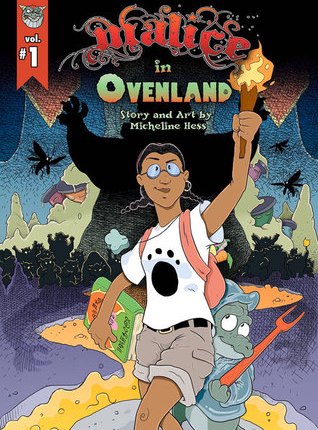
Malice in Ovenland: Volume 1 by Micheline Hess

Malice in Ovenland: Volume 1 by Micheline Hess

Malice in Ovenland by Micheline Hess is a graphic novel for children. Lily Brown’s mom tells her to clean the kitchen- and her adventure begins.

An excellent pick for reluctant readers, this story is a cute, gross, and, endearing romp through a fantastical world hidden behind an oven.

Lily’s heroic journey reminded me of the comic series, Princeless by Jeremy Whitley. In Princeless, the heroine tires of waiting for a prince to come save her, so, she sets about saving herself.

Lily is no wilting flower either, despite her name. 🙂

With art and a storyline appropriate for the pre-teen crowd and an empowered female protagonist, I could see this being a great addition to any juvenile’s graphic art collection.

What I enjoyed most about Malice in Ovenland were the homages to other great works of children’s literature.

The obvious one, of course, is to Alice in Wonderland but I also caught shades of the Lord of the Rings in the poem included at the end of Chapter 1.

The moment that Crumb comes to visit Lily in the dungeon reminded me of when Taran met Gurgi in the Black Cauldron.

The Queen’s advisor, named Crispodemus, reminded me of Nicodemus the rat from the classic children’s story, Mrs. Frisby and the Rats of NIMH by Robert O’Brien. (One of my all-time favorites, by the way)

And finally, The Royal Rangers reminded me of the Beagle Boys from Duck Tales– bumbling, minimally intelligent thugs, who would be harmless if they weren’t so determined to be bad.

Malice in Ovenland would be a great title for a reluctant reader or a reluctant eater. The story, in addition to the adventure, teaches kids to not be afraid to try new things- either food or life related.

It’s a message that can’t be repeated enough.

The humor is mainly gross-out or potty-related but, as a mother of a soon-to-be-10 year old, that’s exactly where her humor is at right now. It’s perfect for the audience that it is seeking.

Big thanks to NetGalley for providing me with a free digital edition of this title for review purposes and thanks for reading!

Welcome to The Help Desk! Book reviews and musings on life by Heidi Wiechert.

Welcome to The Help Desk! Book reviews and musings on life by Heidi Wiechert.

Hello world!  My name is Heidi and I’m a public librarian.  I work at a desk with a huge help sign over it.  Hence, the name of this blog.

I’m going to record my book reviews here.  I may also write some job related posts too, but nothing too serious or scholarly.

I love to read fiction, non-fiction, fantasy, memoirs, historical fiction, business books, and metaphysical or New Age books.  Frankly, if it’s been written, I’d probably read it and, most likely, love it.

I utilize Goodreads and, if you’re on there too, I’d love to connect.  See you there: https://www.goodreads.com/HeidiWiechert

Thanks for reading!