Zen Dogs by Alexandra Cearns

Zen Dogs by Alexandra Cearns
zendogscover

This unique book is a series of pictures of dogs in a ‘zen’ state. Even though I’m more of a cat than a dog person (gasp, I know!), I found it completely charming.

See more of the photos here: http://www.boredpanda.com/relaxed-pet…

zendogs1

Fun, aren’t they?

zendogs2

As I enjoyed the pictures, I found myself becoming more relaxed. Cearns reminds us in the introduction: “Like the dogs in these photos and the canine companion on your couch, we all need to stop, take a break, relax, and unwind- to breathe it all in and be fully present in each and every experience.” Preach.

The best part of the collection is comparing the ‘zen’ photos to the regular photos of each pooch. I couldn’t believe the difference that eyes opened vs eyes closed made. Check this book out and see for yourself! Recommended for everyone with two legs or four.

Thanks for reading!

Read This Before Our Next Meeting by Al Pittampalli

Read This Before Our Next Meeting by Al Pittampalli
readthis

Endless meetings have you down? Pittampalli has a solution to your woes. He claims that modern meetings should only be held to solve specific problems and the only people who should be required to attend are those who could take direct action to solve that problem.

I think that the idea is a solid one.

It does take some internal mindset changes by the folks who call meetings. The first step, like with any problem, is to admit that you even have a problem.

“Over time, we’ve become nonchalant about bad meetings. If an operating room were as sloppily run as our meetings, patients would die.” pg 7.

Overly dramatic, perhaps, but true. And also keep in mind: “Change is never met with open arms. Great decisions involve risk and risk scares people; it’s natural for great ideas to get attacked or, worse, ignored. I can think of no single great innovation that has ever happened without the presence of opposition.” pg 15

So, there may be an uphill battle over this, but, Pattampalli thinks, it is worth it.

The end goal: “Meetings need to be less like the endless commercial breaks during a football game and more like pit stops in the Daytona 500.” pg 20.

So, they’re necessary, but they should run quickly because: “Meetings are too expensive and disruptive to justify using them for the most common types of communication, such as making announcements, clarifying issues, or even gathering intelligence. Like war, meetings are a last resort.” pg 23

Photo by Christina Morillo on Pexels.com

This strict definition of a meeting means that there is going to be some major preparatory work since communication isn’t going to be a part of the show. The person calling the meeting has to distribute information about the issue so that those who are attending can contribute.

“Every meeting should require pre-meeting work. Any information for getting attendees up to speed should be given out beforehand. If the attendee doesn’t have time to read and prepare, she doesn’t have time to attend.” pg 37.

But, this preparation pays off when, after the meeting, the business should have created a concrete ‘action plan’ that includes: “What actions are we committing to? Who is responsible for each action? When will those actions be completed?” pg 39. Thus addressing the problem that the meeting was called to solve and serving its function.

Most of the meetings that I’ve attended in my life have been rambling, unfocused affairs that were called to fill the monthly meeting quota that was arbitrarily chosen by management- a touch-base, if you will.

Pittampalli is adamant that this is a waste of time. I never really saw it that way because I didn’t have any expectations that meetings were supposed to accomplish anything at all. We’d meet, then get on about our business. This book has shown me that I should expect more.

Recommended for anybody who wants to learn more about the benefits of “modern meetings”. This short book has everything that you need to start changing the world, one meeting at a time.

Thanks for reading!

Trance Dancing with the Jinn: The Ancient Art of Contacting Spirits Through Ecstatic Dance by Yasmin Henkesh

Trance Dancing with the Jinn: The Ancient Art of Contacting Spirits Through Ecstatic Dance by Yasmin Henkesh
trancedancing

I read The Golem and the Jinni a few months ago and realized that I knew next to nothing about the mythology of the Jinn. Not that I’m an expert on golems either, but I had at least been exposed to the idea.

Trance Dancing with the Jinn is a book about kinetic meditation (trance dancing) but it also documents the history of the Jinn as written in the Quran and other sources as well as the biological and historical reasons that humans go into trance.

In addition to the mythology and biology, I learned about how trance dancing at meetings called “zars” is an outlet for women who have very little control over any other aspect their lives in Northern Africa.

The author is clearly a believer in the existence of “the Invisibles” but, if you don’t share the same beliefs, this book still has plenty of fascinating information for those interested in cultural, religious, or feminist studies and ritual dance.

The author asks the reader to have an open mind: “Do you believe in Invisibles or do you consider them an outdated tradition from an ignorant past? What if you had a safe, drug-free way to see for yourself? Would you be curious enough to try it- even though the method takes practice and you probably won’t succeed on your first attempt?” loc 200.

Yeah, I’m down for that.

I don’t think it is that difficult to entertain the idea that there may be intelligences that exist that can’t be perceived in normal states of consciousness.

As Henkesh reminds us: “According to NASA’s website, “Everything on Earth, everything ever observed by all our instruments, all normal matter- adds up to less than 5% of the Universe… The rest is a complete mystery, but an important one. Roughly 68% of the Universe is dark energy, while dark matter makes up about 27%.” This energy and matter are called “dark” because they do not reflect light… or interact with electromagnetic forces. We only know they are there by their effects on gravity…” loc 233, ebook.

Photo by Pixabay on Pexels.com

Only 5% has been observed- that leaves a whole lot that we haven’t even looked at yet.

Western researchers are still discovering how and why trance works, but they at least acknowledge that it exists: “Neurologist Oliver Sacks once wrote, “Normal waking consciousness, rational consciousness as we call it, is but one special type of consciousness, whilst all about it, parted from it by the flimsiest of screens, live entirely different potential forms of consciousness.” loc 267.

The most fascinating part of this book was the emotional outlet that trance dancing has allowed women for hundreds of years: “… thousands of women in Egypt still turn to the zar when modern medicine fails them. If doctors cannot find the cause of their physical or mental ailments, they assume supernatural forces are involved. … Diagnostic zars can last anywhere from a day in Egypt to a week in Sudan and Ethiopia.” loc 2530-2548

I had never heard of this and looked up some examples of zar/trance dancing on YouTube. Go ahead, take a look:

I can see how such flowing, uninhibited movements would feel therapeutic now, so I can’t imagine the relief I’d feel if I was not allowed to have a job or leave the house without a male by my side. I’d probably be trance dancing non-stop.

Some further reading/listening for those interested in trance: Ecstatic Body Postures: An Alternate Reality Workbook, Seeking Heaven, or Brainwave Journey.

Thank you to NetGalley and Llewellyn Publications for a free digital copy of this book! And, thank you for reading.

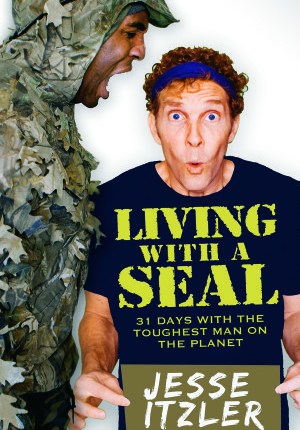
Living with a SEAL: 31 Days Training with the Toughest Man on the Planet by Jesse Itzler

Living with a SEAL: 31 Days Training with the Toughest Man on the Planet by Jesse Itzler
livingwithaseal

Jesse Itzler leads an interesting life. As a successful businessman and entrepreneur, his off-the-wall ideas for solving difficult situations and for stirring the pot have served him very well.

In this book, Living with a SEAL, he documents a month of training with a real life SEAL (who is called just “SEAL” throughout the book).

The workouts were insane, potentially life threatening, but Jesse achieved some astonishing results in a very short period of time. He also bonded with his trainer and learned, through daily interactions, that the sort of conditioning that it takes to make a killer like his SEAL, takes place mainly in the mind and such training can leave its marks on the psyche.

Jesse explains his motivation:“I don’t know if I was thinking about my mortality, or fretting over how many more peak years I had left, or anything like that. I think I was just thinking that now was as good a time as any to shake things up. You know, to break up that same routine.” loc 91, ebook.

SEAL thinks very carefully, bordering on obsessively, about safety and potential disaster scenarios for Jesse and his family. In this passage, he’s purchased an inflatable raft so that, if another 9/11 happens, that Jesse and crew could get out by taking the river.

Here’s what Jesse’s wife, Sara, thought of this: “I’m supposed to grab my son, strap a fifty-pound pack on my shoulders, carry four oars, walk a mile to the river, inflate this survival raft, and then paddle to New Jersey… in the middle of a national emergency?” There is dead silence in the room. … I think to myself, she has a point. Finally SEAL interjects. … “Sara, don’t EVER underestimate the power of adrenaline,” he says.” pg 961, ebook.

SEAL is a man who gets things done, sacrificing his own health to finish tasks that he’s started: “I found out SEAL once entered a race where you could either run for twenty-four or forty-eight hours. Shocker: SEAL signed up for the forty-eight-hour one. At around the twenty-three-hour mark, he’d run approximately 130 miles, but he’d also torn his quad. He asked the race officials if they could just clock him out at twenty-four hours. When he was told they couldn’t do that, he said, “ROGER THAT,” asked for a roll of tape, and wrapped his quad. He walked (limped) on a torn quad for the last twenty-four hours to finish the race and complete the entire forty-eight hours.” loc 1483, ebook.

Photo by Victor Freitas on Pexels.com

Amazing what people can accomplish when they set their minds to it. Personally, I would have stopped when I broke myself, but then, I suppose I wouldn’t make a very good SEAL.

The extreme exercise that SEAL demanded of Jesse had some surprising mindfulness benefits:“…with SEAL around, I’m learning how to be more present. It’s primarily because I have to. If I don’t, there is no way I will be able to finish the tasks at hand. I just go one step at a time. One rep at a time. And when I’m done, I worry about the next step or rep.” loc 1909

I was continually impressed by the physical displays of power and endurance from SEAL. But then, he’d have an interaction with Jesse or his family and I’d question the man’s paranoia levels and ability to function in society.

In this passage, he’s encouraging Sara to mix up the times that she goes to get the mail: “Sara, you need to mix up your pattern.” “Pattern?” “Yeah, your pattern. … The time you get the mail. That’s your pattern. It’s the same every day. It’s predictable.” “I get the mail after lunch,” she says, “That’s the most convenient time.”… “Exactly. You know that. And I know that. The mailman most definitely knows that. So I bet EVERYONE knows that.”… “Just do me a favor. Change up the pick up time.” loc 2161, ebook.

Photo by Element5 Digital on Pexels.com

Living with a SEAL is a lot of fun, but as I said, there are hints of a darker reality that SEAL has learned to endure. It is never graphic or spills over, but you can feel it boiling under the surface.

Recommended for runners, people who like to read memoirs, and those who are interested in the sheer power of the mind and body. Some read alikes: Born to Run: A Hidden Tribe, Superathletes, and the Greatest Race the World Has Never Seen by Christopher McDougall, Explorers of the Infinite: The Secret Spiritual Lives of Extreme Athletes–and What They Reveal About Near-Death Experiences, Psychic Communication, and Touching the Beyond by Maria Coffey, or if the extreme nature of these books are just too much, pick up Confessions of an Unlikely Runner: A Guide to Racing and Obstacle Courses for the Averagely Fit and Halfway Dedicated by Dana L. Ayers.

Thank you to NetGalley and Center Street Publishing for a free digital copy of this book!  And, thank you for reading.

Descender #1 by Jeff Lemire, Illustrated by Dustin Nguyen

Descender #1 by Jeff Lemire, Illustrated by Dustin Nguyen

descenderI’ve heard a lot of good buzz about Descender and I’m pleased to say that it lived up to all of it. It isn’t easy writing the first entries in a series without descending into character listing and lengthy explanations on setting.Descender manages to introduce itself completely without any of that boring stuff.

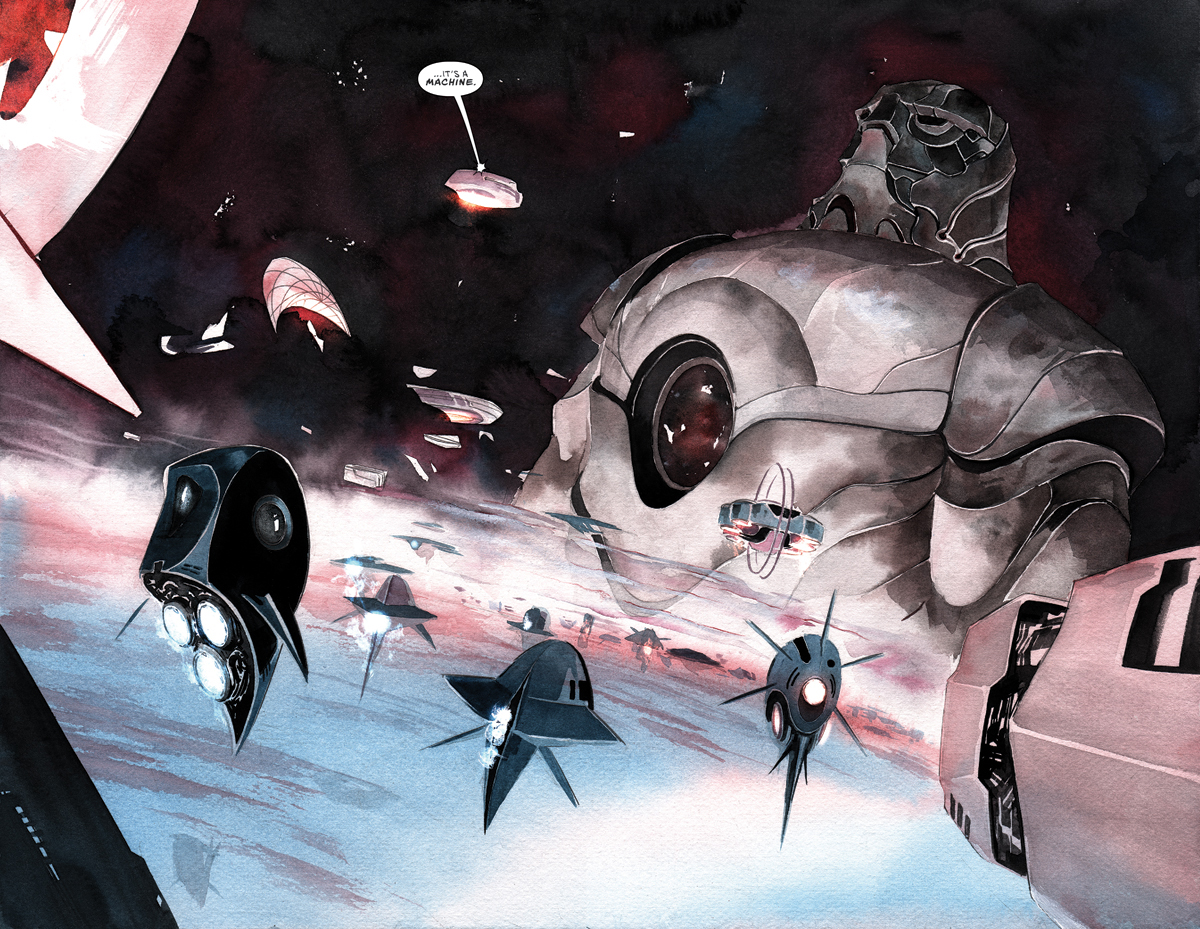
On a distant planet in a futuristic setting, an enormous robot lands on the government’s home world. Simultaneously, huge robots land on several other planets. These gigantic machines attack all at once without communication of any kind. Fast forward ten years. A child-like robot named Tim-21 awakens on a mining planet, but he is the only one there. The mining colony had an accident and he has been inactive for a very long time. Since then, all species have declared war on the robots because of the massive attack that occurred ten years previous. But, something about Tim’s operating system is special and now it is only a matter of time before he’s found by government scientists seeking answers or something worse… bounty hunters!

descender2

Photo from ew.com

Descender contains a lot of classic science fiction questions like: Can robots dream? Are they able to experience feelings? Do they have souls? And there is the mystery of where the giant killer robots came from and why they attacked. Actually, the beginning reminded me of Sleeping Giants bySylvain Neuvel but only for a moment… so if you didn’t enjoy that book, don’t let that turn you off of this graphic novel.
descender3

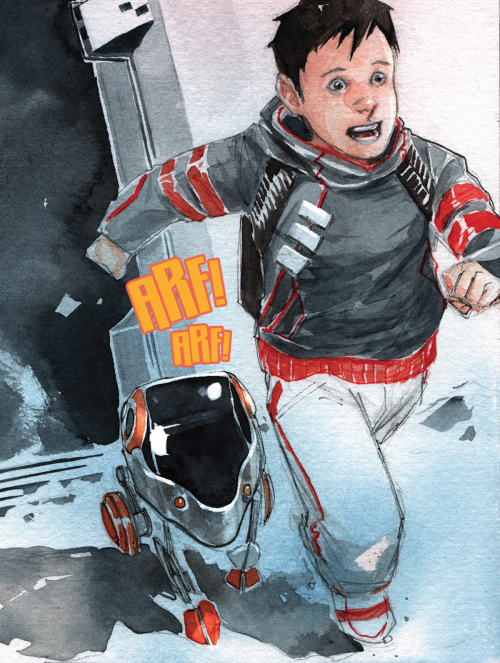
The artwork is rendered in (at least, it looks like to my very untrained eye) pencil and watercolors. It gives the panels a dreamy quality. I thought it was very pretty.
descender4

I highly recommend this graphic novel for fans of science fiction, ages 16+ because of some violence. Some read alikes: Saga, Volume 1 by Brian K. Vaughan (for adult audiences only) or Henni by Miss Lasko-Gross (ok for the teen set, similar themes but doesn’t take place in space).

Thanks for reading!

Finding Jake by Bryan Reardon

Finding Jake by Bryan Reardon

A heart-wrenching yet ultimately uplifting story of psychological suspense in which a parent is forced to confront what he does—and does not—know about his teenage son, in the vein of Reconstructing Amelia, Defending Jacob, and We Need to Talk about Kevin.

While his successful wife goes off to her law office each day, Simon Connolly takes care of their kids, Jake and Laney. Now that they are in high school, the angst-ridden father should feel more relaxed, but he doesn’t. He’s seen the statistics, read the headlines. And now, his darkest fear is coming true. There has been a shooting at school. -Goodreads

I wouldn’t have touched this title without the encouragement of the library book club. Books and Brew challenges me to read different books, which I like, but I don’t always enjoy the topics that are discussed.

At first, I did not like Finding Jake. I thought that Reardon was presenting the glaring differences between introverts and extroverts as traditional gender role difficulties. I didn’t think that Simon was avoiding playdates because he was a “guy” but because he was an introvert. But, I suppose, being a guy didn’t help him build any common ground with the stay-at-home moms, which Reardon discusses in depth.


Also, I never liked the way that Simon and Rachel treated each other. I think that all too often, marriages tank because of the careless way that couples stomp on each other’s emotions. Yes, it’s a legitimate topic to discuss, but I don’t like reading that kind of thing for fun. Because, it’s not really fun at all, is it?

I empathized with Simon’s feelings about staying home and taking care of Jake and, later, his daughter, Laney. I never planned on having a kid, so the assumption that I was going to stay home and care for her really blind sided me. It was never even discussed in any serious way just presented like- so this is your life now, full time caregiver. That part of the book was hard for me to get through, in addition to all of the obvious school shooting horror emotions, because it brought up a lot of old angst that I would have rather had stayed buried at the bottom of my subconscious: “I never realized how much I’d miss seeing the cast of characters that make up an office. I also did not realize how much I identified with my job, or how much my job identified me.” pg 15 Yeah, either did I.

Here’s part where I just wish Simon had admitted to himself that he was an introvert: “I, for one, could go days (maybe weeks) without talking to the neighbors. Not that I disliked them. There were days I could go without talking to anyone, a new trait that expressed itself since I’d left the office. Conversations at work, whether about the job or not, had been simple. In the suburbs, though, the same exchanges left me either confused or apologetic.” pg 19 Classic introvert. Business is one thing, but personal relationships are a whole other can of worms.

The mother in this story, Rachel, asks Simon to stay home and raise the children, but they never seem to make peace with that decision and it seriously bugged me: “The rest I (Simon) left unsaid. It presented itself like a hippo in my kitchen, though. She should have stayed home with the kids. I don’t think Rachel picked up on it, thankfully, or the rest of the conversation would have progressed very differently. pg 47 Tons of exchanges like that, peppered throughout the book. Not fun.

And why do teachers make parents sit on those child sized chairs at parent teacher conferences? I’ve always wondered: “Ms. Jenkins motioned toward a low, round table. One full-size chair rested on her side. An array of three miniaturized versions lined our side. … I tried to fit my rear on the tiny seat, teetering back and forth until I found a semblance of comfort. When I turned to Ms. Jenkins, I realized I had to look up at her. I instantly felt like a child, folding my hands in my lap and waiting to get in trouble.” pg 101 It’s ridiculous.

Simon was far too hard on himself for about the whole book: “The past hours lost all clarity. Inexcusably, I think about the movies. Those parents, caught up in some awful tragedy paralleling our own, act the heroes, persevere against all odds, track down the clues and find the answers, gun in hand, nursing a nonfatal wound to the shoulder. For me, it is nothing of the sort. Instead the tsunami of reality pushes me, all of us, along, forcing us down this path of inactivity, bureaucracy, and flashbulbs. It is a wave of staggering weight that holds us captive to the nothingness.” pg 113 He should have given himself some credit. Who among us could have done any differently in the same situation?

What I loved about Finding Jake is that it is so relatable. At almost any point in the story, I could put myself in Simon’s shoes: “Maybe life is just a series of banal moments punctuated by tragedy. … Rachel and Laney sat in the living room, both reading. Laney flipped through a People magazine while my wife read a brief on her iPad. A familiar yet diaphanous annoyance colored my vision of what could have been a nice family moment. Instead, I blamed my wife for being a workaholic and at the same time wondered why Laney wasn’t reading her assignment from school instead of a glossy periodical.” pg 221

In conclusion, Finding Jake wasn’t a walk in the park, but I’m glad I read it, because now I’ll have plenty to say tomorrow night at book club. And, I’m glad that we meet at a bar, because I’m going to want that drink in my hand to soften and fuzz the lines of the less palatable emotions that will inevitably arise while we talk about school shootings, raising kids, gender roles, and life.

Thanks for reading!

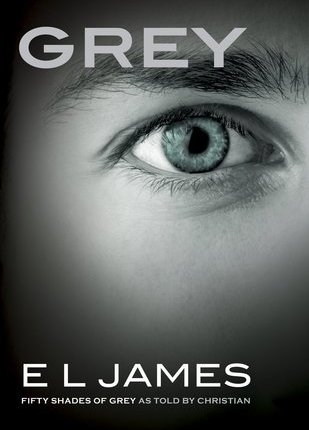
Grey by E.L. James

Grey by E.L. James

We all know what this book is about and why I didn’t like it. If you don’t have any idea what it is, here’s the Goodreads link.  Instead of writing a negative review about that, let me tell you a story about Fifty Shades of Grey and my first days as a librarian.

It was March of 2012. After being unemployed for four years to be a stay-at-home mom, I was hired to work behind the circulation desk at the public library in town. That particular day, a line formed at the front desk, which, as I would discover, happens all the time- but it’s stressful to have people waiting while you’re learning the ropes.

At the front of the line, a sweet, little elderly lady asked me, “Honey, do you have that book about the color grey?” I looked at my manager in confusion and he immediately answered, “Yes, ma’am, we do, but all SIX of our copies are currently checked out. Would you like me to put you on hold for it?” He walked me through the process of doing a hold request and then we were on to the next person in line. This time, a teenage girl giggled behind her hand as she asked me about, “That Fifty Shades book, do you have it?” I gave her the answer that we just gave the little old lady, and I put the girl on hold for it too.

All day long, for my first two weeks on the job, women, old/young and from all walks of life, asked me to get the book, Fifty Shades of Grey, for them. I still had no idea what this series was about… remember, this was before E.L. James did the talk show circuit in the states. After she made her appearances on Rachel Ray and, I can’t remember where else- was it Ellen?-, all hell broke lose. We couldn’t keep the books on the shelves and irate patrons were calling and storming the circ desk, wanting to know why the second book in the series arrived on their hold shelf before the first book did. (Short answer-the first book had four times as many holds on it as the others in the series.) To accommodate the demand, the library bought another six copies of the regular print books, bringing our own total copies to a dozen, not counting the audiobooks and large print versions. The library system that we take part in, owned nearly 500 copies of Fifty Shades of Grey, altogether. It was a literary phenomenon.

I decided, that even though it wasn’t my thing, I was going to read this trilogy that was blowing up the library world. So, I did. I wasn’t floored by it, but I could see how it appealed to a certain crowd. Erotica is very popular at the library, after all. Conscientiously, I read all three of the books, because that’s just the kind of professional reader that I am. :p After awhile, I started skipping the sex stuff because, frankly, it became repetitive and boring. I soldiered on because I wanted to know what happened to Ana. And, I found out.

In this book, on the other hand, I knew what was going to happen before I even picked it up so I didn’t bother to finish it when I discovered that it had nothing really new to offer. Grey is just for the true fans of the series and, unfortunately, I am not a true fan. I’ll always equate Fifty Shades with my first days on the job and my whirlwind introduction to the world of public libraries. I believe that it is a cultural touchstone for me in that regard. But, that doesn’t mean that I think it’s worth the ridiculous hype that it has garnered. Pick up Grey if you truly loved the original trilogy and wanted it to go on and on. I’d advise all other readers to steer clear.

Thanks for reading!

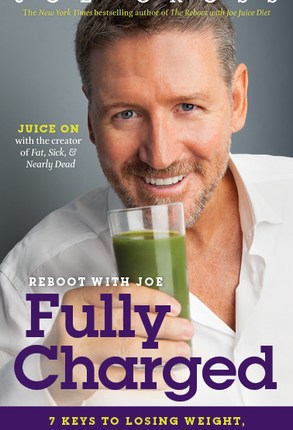
Reboot with Joe: Fully Charged: 7 Keys to Losing Weight, Staying Healthy and Thriving by Joe Cross

Reboot with Joe: Fully Charged: 7 Keys to Losing Weight, Staying Healthy and Thriving by Joe Cross

Fat, Sick, and Nearly Dead is one of the main reasons why I bought a juicer and have attempted to incorporate more plants into my diet. I’m not hardcore about it, but I try.

I didn’t know that Joe from that documentary is named Joe Cross and that he’s written multiple companion books for that film. This one, Reboot with Joe: Fully Charged, is excellent.

What I love about Joe is that he’s realistic. He doesn’t expect that he will eat perfectly for the rest of his life- he just wants to do the best that he can today then repeat the process tomorrow.

Photo by Wendy Wei on Pexels.com

He pushes the big lifestyle changers: diet, exercise, and rest but not in an extreme, unobtainable manner. In addition to common sense ideas about health and diet, Joe has spent years building an online community to support those who are working on major life changes. http://www.rebootwithjoe.com/weight-loss/

When you read this book, you also read examples of people who have turned their lives around with juicing and exercise. It’s inspiring and could be life changing for many people.

I also like that Joe included some of his go-to juicing recipes towards the back of the book. I’ve tried quite a few different juices, but I haven’t found any that I particularly liked. It’s always nice to have some new options that have appealed to other people in the past.

If you enjoyed Reboot with Joe: Fully Charged, I highly recommend his two documentaries: Fat, Sick, and Nearly Dead & Fat, Sick, and Nearly Dead 2. Also, I’d recommend the documentary Forks Over Knives which has a couple companion cookbooks out now.

A big thank you to the Goodreads First Reads program and NetGalley for free copies of this book.  And, thank you for reading!

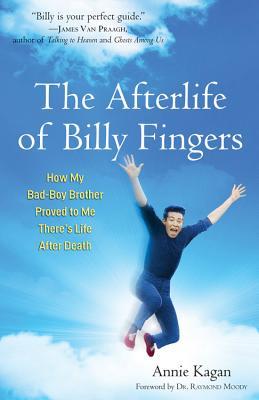
The Afterlife of Billy Fingers: How My Bad-Boy Brother Proved to Me There’s Life After Death by Annie Kagan

The Afterlife of Billy Fingers: How My Bad-Boy Brother Proved to Me There’s Life After Death by Annie Kagan

I think anyone who has lost a loved one wishes to talk to them again. Annie Kagan was granted that wish. She wasn’t a practicing channeler, so it came as a huge surprise to her when she heard her dead brother’s voice speaking to her from a spot above her head.

At the time that this happened, Annie was living a hermit’s life in New England only venturing out to kick ideas around at her writer’s group. So, that gave her the space and time to explore these communications rather than running to the doctor to have the voice medicated away.

Photo by William Alexander on Pexels.com

At first, she was reluctant to share what she was hearing, afraid that Billy’s voice was her mind’s way of holding the grief away or that other people would think she was going insane, but the information imparted became more and more specific until she couldn’t explain it away.

Through the experience and sharing it, Annie came to believe without a doubt that the spirit continues on after death. She took comfort from it and hopes, with this book, to share that comfort with others who may be grieving or afraid of death itself.

The Afterlife of Billy Fingers isn’t going to appeal to everyone. If you don’t believe that communications from beyond the grave are possible, I’d suggest passing on this book. And, towards the end of Billy’s travels into the afterlife, things get really far out as he lets go of his previous self and becomes the universe, embodying the entirety of reality.

Photo by Designecologist on Pexels.com

It reminded me of Be Here Now by Ram Dass, hippie to the extreme. But, that’s the type of spirituality I’m into, so I loved it.

The introduction by Raymond Moody describes Billy as a modern psychopomp, someone who guides the spirits of others through the afterlife: “The experiences Dr. Kagan relates are completely consistent with the kind of role walkers between the worlds played in antiquity. And that is no surprise to me. I think that such experiences are part of the collective psychological heritage of humankind- not artifacts of any one culture.” pg 11, ebook.

Billy was a drug addict and led a very hard life.

This is what he had to say about it: “How do I know my life wasn’t some punishment for my past transgressions? Well, because there’s no such thing. You’re not on earth to be punished. … That’s a human concept. Something man made up. Humans make up stuff and then they believe it”. pg 24, ebook.

A continuation along that line of thinking later in the book: “Beliefs are big on earth. People collect them. Some of these beliefs are helpful, but others just keep you running around trying to follow rules that others have laid down. They don’t have a lot of personal meaning. It’s a good idea to sort through your beliefs now and then and throw out the ones that don’t serve you.” pg 85, ebook

Photo by Pixabay on Pexels.com

Annie dealt with a bunch of her own issues in this book, like the fact that by writing this book, people were going to think she was “flaky”. At one point in the narrative, she has a toothache and starts to believe that she’s being punished for revealing universal truths that should be kept secret.

She eventually gets past that attitude, but, when it comes to the unknown, I think fear can be a major hurdle: “After my toothache and the painful root canal and awful infection that followed, I was scared. … who was I to be the one to prove there’s life after death? Maybe some secrets shouldn’t be revealed. Maybe I was breaking a sacred taboo, dabbling in a cosmic Pandora’s box.” pg 41, ebook.

Another of the Be Here Now moments: “In your world, as the earth moves around the sun, there’s nothing but shadow for a good part of the time. The mystery of life on earth cannot exist without the shadow element. You cannot have the sea without storms, the earth without quakes, the wind without tornados. … And sometimes- sometimes darkness is okay too. Don’t overlook the riches contained in the darkness. Life’s very temporary, so don’t let time just pass. Let the moments fill you- the ones you judge to be good as well as bad.” pg 77, ebook. Solid advice.

Let’s end with one more bit of wisdom: “People spend lots of time on things that make them unhappy- too much focus on the sand in the oyster. To cultivate joy, pay attention to what you like.” pg 116

Recommended for spiritual seekers and people who enjoy reading about near death experiences/channeled wisdom.

Some read alikes: Conversations with God: An Uncommon Dialogue, Vol. 1 by Neale Donald Walsch, My Son and the Afterlife: Conversations from the Other Side byElisa Medhus, Ask and It Is Given: Learning to Manifest Your Desires byEsther Hicks or, if you’re looking to introduce more joy into your life:Thank & Grow Rich: A 30-Day Experiment in Shameless Gratitude and Unabashed Joy by Pam Grout.

Thanks for reading!