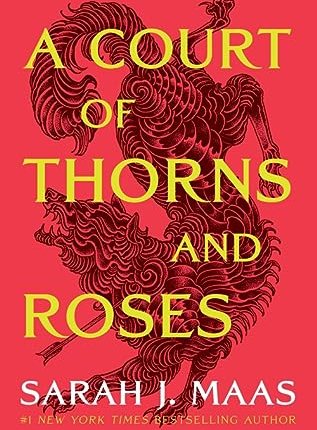
A Court of Thorns and Roses (A Court of Thorns and Roses, #1) by Sarah J. Maas

A Court of Thorns and Roses (A Court of Thorns and Roses, #1) by Sarah J. Maas

Feyre lives in a world where the fae are beyond a wall that separates them from the mortal world. Years and years ago, according to the myths, a great war was fought and a boundary was drawn between the two races.

When Feyre shoots an enormous wolf that is more than what it appears, she is drawn into the world beyond the wall which operates under magic and an entirely different set of rules than the world she knows.

Will she survive?

Photo by Luna Lovegood on Pexels.com

I chose to read A Court of Thorns and Roses because of the millions of positive ratings it received on Goodreads. It is an engaging read, but I don’t think I enjoyed it as much as some other readers.

“… any bit of information might help, and if I showed interest in them, perhaps they would warm to me.” pg 79, ebook

I enjoyed the heroine’s discovery of the magical world. I really liked the different creatures and situations that she found there. The exploration part of the book was my favorite part.

I did not enjoy the romance portion of the book and felt like it slowed the action down to a crawl in the middle of the story. Also, this should not be rated as a young adult book. Some of the relationship and sexual elements mark it clearly as new adult, in my mind.

I get that this is a “Beauty and the Beast” re-telling, but there are very few similarities between the two stories. If you’re looking for a fairy tale re-telling, you might want to keep looking.

And, occasionally, I found the actions of the heroine to be infuriating. She made decisions based on no reasoning that I could understand- much like a spoiled teenager. I suppose some could argue that that is exactly what Feyre is, but it wasn’t much fun to read.

Recommended for any readers who are looking for a light fantasy mixed with a lot of romance. Thanks for reading!

The Empire of Gold (The Daevabad Trilogy, #3) by S.A. Chakraborty

The Empire of Gold (The Daevabad Trilogy, #3) by S.A. Chakraborty

Author S.A. Chakraborty brings her epic Daevabad Trilogy to an end with The Empire of Gold.

In the last book, we saw the fall of Daevabad and a new powerful leader, Manizheh, taking the throne with Dara, the ancient daeva, at her side.

“Dara was so sick of despairing over his fate, of guilt eating him alive. Now he was just furious. Furious at being used, at letting himself be used again and again.” pg 105, ebook

Photo by Anne McCarthy on Pexels.com

Meanwhile, Nahri and the prince Ali found themselves magically transported to the human realm of Cairo. Nahri knows they have to go back to the magical world to save not just their friends and family, but also the city of Daevabad itself. However, the charms of her old life make her want to stay and live as a healer.

She enjoys the peace while she can.

Ali is racked with guilt about the fall of his city and the loss of magic throughout the djinn’s world. He’s still struggling to learn how to control his strange new water magic. How can he use it to help save his people?

“How much of his life, all their lives and their histories, unraveled the more it was examined?” pg 392, ebook

Photo by Andre Moura on Pexels.com

I thought the conclusion to this series was magical. Chakraborty gives her huge cast of characters not only beautiful but fitting endings. She ties up every thread she’s woven through the story to give the reader a satisfactory experience.

I liked how the endings weren’t necessarily happy or perfect. Throughout her books, Chakraborty has painted a complex world where the characters aren’t all good or bad, but some mix of each. The conclusion stays with this method of storytelling and manages to feel somewhat real, despite all of the fantasy elements it contains.

“There is a time to fight, and you are all fierce warriors, students I am deeply proud of. But there is also a time to put down your weapons and make peace.” pg 701, ebook

Not only are these books morally complex, the cultures she’s created feel deep and true. In this book, readers get to enjoy the culture of Ali’s mother and learn much more about the prince’s special abilities.

I don’t want to say much more about it because discovering this storyline is so much fun. It was my favorite part of the book, which had so many wonderful moments to it.

Very highly recommended for fantasy readers. Thanks for reading!

The Kingdom of Copper (The Daevabad Trilogy, #2) by S.A. Chakraborty

The Kingdom of Copper (The Daevabad Trilogy, #2) by S.A. Chakraborty

Readers return to the magical world of the city of Daevabad in The Kingdom of Copper, the second book in the Daevabad trilogy.

This story begins a few years after the conclusion of the last book. Nahri has solidified her place in Daevabad with a strategic marriage. Ali has been exiled to a far land because of his actions in the previous book. And Dara, one of my favorite characters, finds himself in service to a djinn whom he believed was long dead.

… goodness has gotten me nowhere in Daevabad. Everyone I try to help ends up worse off.” pg 202, ebook

Photo by Pixabay on Pexels.com

The characters continue to be neither right nor wrong in this entry in the series, but all end up in some gray place in-between. They all take actions that they believe are right and sometimes actions that they believe are necessary. Sometimes the outcome is good, but other times it turns out very, very badly.

I like that about this book. S.A. Chakraborty does a good job of distilling the messiness of life and the clash of four or five different cultures in one city. Even though this is a fantasy tale, I feel like this story could really happen, relationship-wise, out in the real world.

“You were created to burn, to exist between worlds- not to form yourself into armies and pledge your lives to leaders who would toss them away.” pg 396

Photo by Dhivakaran S on Pexels.com

Of all the storylines, I was most interested in Dara’s perspective and seeing where the author was going to take this ancient being who had suffered so much heartache in his past. That being said, I didn’t enjoy his part of the story.

He’s so passionate but he’s always being used and abused by the people around him. I’d like to see him having a bigger say over his life and who is around him. I suppose it remains to be seen in the third book if he is finally able to embrace the freedom that he longs for so badly.

I was fortunate that the entire series is published so I’m able to read the books one after another and am able to keep all of the intricacies of the story straight in my head. I can’t imagine having years between reading books in this series. It would be too hard to remember.

The build up of the story felt a little slow to me, especially in the middle of the book. But, towards the end, when things began happening, they all went at once. It made for a very exciting ending which I felt was well done for the large cast of characters.

Highly recommended for fantasy readers.

Thanks for reading!

The City of Brass (The Daevabad Trilogy, #1) by S.A. Chakraborty

The City of Brass (The Daevabad Trilogy, #1) by S.A. Chakraborty

Nahri lives alone in Cairo and makes her daily bread by targeting gullible citizens and stealing. But one night, during a false ritual to free a young woman from an evil spirit, Nahri draws the attention of something magical and powerful, and her life is never the same again.

“I have made them both content, but the djinn is a strong one and has likely been with her since birth.” pg 20, ebook

Photo by Boris Ulzibat on Pexels.com

Prince Alizayd al Qahtani, the second in line to the throne, lives in Daevabad. He works to better the lives of the humans who live there, along with the different tribes of djinn. This is perilous work as his father, the sultan, does not value human lives the same way.

“A city rose from the smoky map in Daevastana, in the center of a dark lake. Its walls gleamed like brass, beautiful against the dark sky.”

Photo by cottonbro studio on Pexels.com

The City of Brass is told from Nahri and Ali’s points of view. It is a beautiful, multi-layered story that combines elements of Islam and magic.

At first, I had trouble keeping track of all of the different types of djinn. But, after about a quarter of the story, things clicked into place and I really enjoyed the tale.

“We’re souled beings like humans, but we were created from fire, not earth.” pg 101, ebook

From enslaved djinn to the evil ifrit, this story keeps the reader guessing what is going to happen next. There’s a lot of politics in here as well as a magical history that slowly unfolds as the tale progresses.

The characters are neither entirely good nor bad, but instead are a realistic shade of gray. Everyone, it seems, has committed actions they are not proud of, and cling to beliefs that may not necessarily serve them.

It makes for an engaging story as these warring beliefs bump into each other.

Highly recommended for fantasy readers. Thanks for reading!

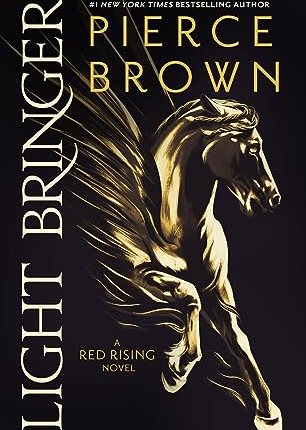
Light Bringer (Red Rising Saga, #6) by Pierce Brown

Light Bringer (Red Rising Saga, #6) by Pierce Brown

Darrow continues the fight against the Society in Light Bringer, the sixth entry in the Red Rising Saga.

The last book focused on the war in the Core especially around Mercury. This book takes readers out to “the Rim” and examines what is going on in the deeper parts of space.

“Cut off from communication with the outside world, I have no way of knowing the course of the war I began. No way of knowing if Virginia and Victra have managed to weather the united power of the Golds of the Rim and the Core.” pg 3, ebook.

Photo by Felix Mittermeier on Pexels.com

As usual, I loved Pierce Brown’s characters and pacing. His stories always seem to progress at a good clip and, after thousands of pages, I’m still invested in what is going on.

In this book, unlike the last, I feel like there were more light hearted moments. Dark Age, the previous book in the series, certainly lived up to its name.

“I have seen things a Red miner was never meant to see – unspeakable horrors, impossible beauty.” pg 6, ebook

Photo by Stefan Stefancik on Pexels.com

That being said, as this series continues forward, I think Brown has killed off so many beloved characters that it is going to be hard for me to continue to care what happens. I felt the same way about Game of Thrones after a few books.

He’s introduced a few new characters whom I love, Lyria being the top of that list. But he couldn’t possibly replace some of the names- that I won’t list here because spoilers.

“I just think you’re a good man and you have a huge heart and I don’t think people say that enough.” pg 465, ebook

I’m curious what other readers of the series think. Overall, I think this is a masterful work of fantasy and I can’t wait for the last book which should be epic. Highly recommended for fantasy readers.

Thanks for reading!

The Daughters of Ys by M.T. Anderson, Jo Rioux (illustrator)

The Daughters of Ys by M.T. Anderson, Jo Rioux (illustrator)

The Daughters of Ys opens with a father relating a story to his daughters. The story concerns the magical way he met his wife and their future mother on a dark stormy night in the middle of the sea. From there, the two carve a city from the sea and begin a new life.

But now, their mother is dead and, the king and his daughters (Rozenn and Dahut) have to figure out their lives and how to run their magical kingdom, Ys, without her.

Photo by Clem Onojeghuo on Pexels.com

In this coming-of-age tale, secrets run in every direction. The discovery of what those secrets are make this story fascinating.

Magic and living comes with a cost is one of the many lessons that could be learned from this fairy tale.

I loved the illustrations by Jo Rioux and feel like they really elevated the story. She uses mostly muted colors to weave shadows and magic throughout the tale. The brightest colors are reserved for Dahut, the younger and more magically inclined daughter.

I think this book is appropriate for young adults. There are some mature themes that are dealt with, but they’re not explicit. Highly recommended.

Thanks for reading!

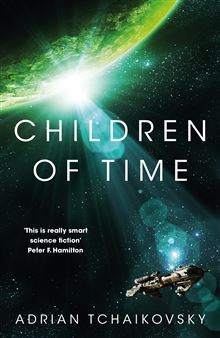
Children of Time (Children of Time, #1) by Adrian Tchaikovsky

Children of Time (Children of Time, #1) by Adrian Tchaikovsky

“And then the great bulk of the Gilgamesh is drawing close, at the end of its long deceleration, its ailing thrusters fighting to slow it to the point where the momentum of a dive past the planet will mesh with the reaching gravity and bring the ark ship into orbit.” pg 536, ebook

In Children of Time, humanity has poisoned Earth and needs to find a new home. An ark ship, the Gilgamesh, carries a cargo of sleeping humans as they search for a fresh planet to colonize.

In an earlier era, a scientist was working on elevating other species through an evolutionary vaccine. When her project goes awry, she does her best to salvage the situation, but not even she can predict what is going to happen next with her virus on an alien planet.

Photo by Jaymantri on Pexels.com

This story is told from a few different perspectives. Readers get to enjoy the story of the human colonists, the ancient scientist, and the species that is changed by her virus- the spiders.

The brilliance of this book is the spider portion of the story. I was amazed at how Adrian Tchaikovsky was able to make spiders relatable. (Not a huge fan myself, though not phobic.)

“For now they can only cling to their webs, as the extended senses their technology gives them track the approach of the end.” pg 536, ebook

Photo by Pixabay on Pexels.com

I was cheering for the spiders as they struggled and evolve throughout the tale.

That’s not to say the human portions are lacking, they are also fascinating to follow.

How would humanity fare, being many light years away from home and knowing that they have no fixed destination in mind? How long would a space ship hold together with millennia of use? I thought Tchaikovsky’s story nailed the problems that would arise in such a situation.

The ending of Children of Time is fantastic and definitely worth the build up to it. I don’t want to say too much here beyond that because I don’t want to ruin someone else’s enjoyment of such a great science fiction tale. Highly recommended.

Thanks for reading!

Black Orchid by Neil Gaiman (Author), Dave McKean (Illustrator)

Black Orchid by Neil Gaiman (Author), Dave McKean (Illustrator)

Shadowy art elevates this superhero graphic novel written by the incomparable Neil Gaiman.

Susan Linden is a crime fighter named the Black Orchid. In the first pages of the story, she is killed by gangsters. She spends the rest of the book trying to remember who she is and why she has extraordinary abilities- including reincarnation.

Photo by Pixabay on Pexels.com

The graphic novel brings in numerous heroes from the DC universe including Batman, Poison Ivy, and Lex Luthor. It was fun to read those interactions.

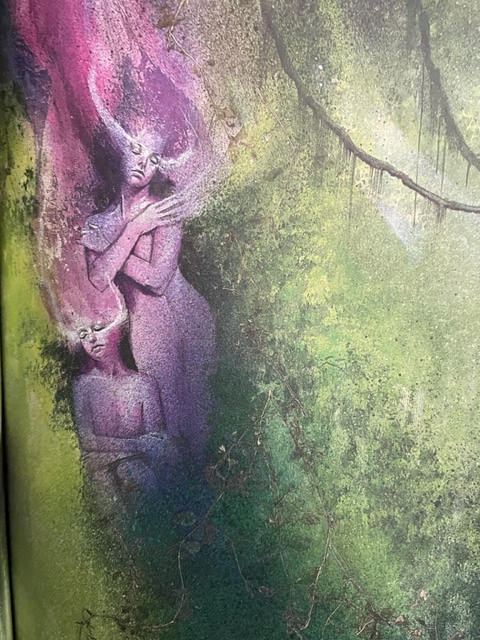
The overall feel of the story is very dark which makes the bright, almost electric purple of the Black Orchid panels stick out so much. Black Orchid and the other flower women are nude and it is handled tastefully throughout.

Here’s the Black Orchid and a friend from the graphic novel:

Before this graphic novel, I had never even heard of Black Orchid. This story makes a great introduction, but it doesn’t go fully into her abilities- some are still a mystery.

At first, I thought it didn’t fit the character that Black Orchid could fly because I associate plants with earth and being tied into the ground. However, in the supplemental materials at the back of the book, it explained that plants can change their density. Then, that particular superhero ability made more sense to me.

This isn’t a story for kids. I’d recommend it for readers 18+ because of the violence and some disturbing dialogue.

Cultish: The Language of Fanaticism by Amanda Montell

Cultish: The Language of Fanaticism by Amanda Montell

In Cultish: The Language of Fanaticism, author Amanda Montell examines groups, companies and individuals, and the way they use language to build communities, sometimes for harmless purposes and other times for more sinister.

“We need a more versatile way to talk about communities that are cult-like in one way or another but not necessarily connected to the supernatural. Which is why I like the word “cultish.” pg 39, ebook

Photo by Karolina Grabowska on Pexels.com

Before I read this book, I believed language was powerful. Montell showed me I had no idea about the life and death reality that carefully constructed words can have over people.

“Year after year, we ask: What makes people join cults like Jonestown and Heaven’s Gate? … Here’s where the answer starts: Using systematic techniques of conversation, conditioning, and coercion, with language as their ultimate power tool, Jones and Applewhite were able to inflict unforgettable violence on their followers without personally laying a finger on them.” pg 77, ebook

And the people affected by this language are not just vulnerable people, which is what some folks believe about the others who join cults. The targets of cultish organizations can be just like you and me.

Photo by Eva Bronzini on Pexels.com

“A common belief is that cult indoctrinators look for individuals who have ‘psychological problems’ because they are easier to deceive. But former cult recruiters say their ideal candidates were actually good-natured, service-minded, and sharp.” pg 96, ebook

It was rather scary thinking about how anyone might become prey to a cultish organization.

It was also eye-opening to see how common place this is as Montell talks about so many different organizations. There’s fitness groups, multi-level marketing groups, spiritual and new age groups, as well as more religious organizations. Once you know the tricks of language that are commonly used, you see this type of manipulation almost everywhere.

“A cult is like porn: You know it when you hear it.” pg 219, ebook

I picked up this read for my local book club- it wasn’t something that I would have necessarily chosen on my own. There’s plenty to talk about in here, from the different groups to the various types of language techniques they use.

After awhile, all of Montell’s examples begin to feel repetitive, which wasn’t that fun to read. Still, I’d recommend this book if you’re interested in cults or cultish language.

Thanks for reading!