Cultish: The Language of Fanaticism by Amanda Montell

Cultish: The Language of Fanaticism by Amanda Montell

In Cultish: The Language of Fanaticism, author Amanda Montell examines groups, companies and individuals, and the way they use language to build communities, sometimes for harmless purposes and other times for more sinister.

“We need a more versatile way to talk about communities that are cult-like in one way or another but not necessarily connected to the supernatural. Which is why I like the word “cultish.” pg 39, ebook

Photo by Karolina Grabowska on Pexels.com

Before I read this book, I believed language was powerful. Montell showed me I had no idea about the life and death reality that carefully constructed words can have over people.

“Year after year, we ask: What makes people join cults like Jonestown and Heaven’s Gate? … Here’s where the answer starts: Using systematic techniques of conversation, conditioning, and coercion, with language as their ultimate power tool, Jones and Applewhite were able to inflict unforgettable violence on their followers without personally laying a finger on them.” pg 77, ebook

And the people affected by this language are not just vulnerable people, which is what some folks believe about the others who join cults. The targets of cultish organizations can be just like you and me.

Photo by Eva Bronzini on Pexels.com

“A common belief is that cult indoctrinators look for individuals who have ‘psychological problems’ because they are easier to deceive. But former cult recruiters say their ideal candidates were actually good-natured, service-minded, and sharp.” pg 96, ebook

It was rather scary thinking about how anyone might become prey to a cultish organization.

It was also eye-opening to see how common place this is as Montell talks about so many different organizations. There’s fitness groups, multi-level marketing groups, spiritual and new age groups, as well as more religious organizations. Once you know the tricks of language that are commonly used, you see this type of manipulation almost everywhere.

“A cult is like porn: You know it when you hear it.” pg 219, ebook

I picked up this read for my local book club- it wasn’t something that I would have necessarily chosen on my own. There’s plenty to talk about in here, from the different groups to the various types of language techniques they use.

After awhile, all of Montell’s examples begin to feel repetitive, which wasn’t that fun to read. Still, I’d recommend this book if you’re interested in cults or cultish language.

Thanks for reading!

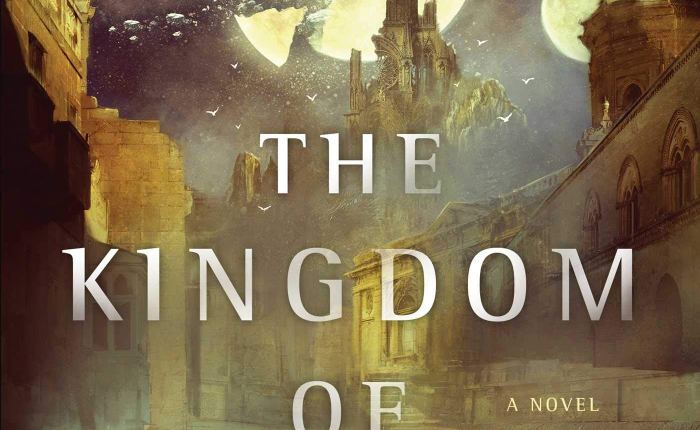
The Kingdom of Liars (The Legacy of the Mercenary Kings, #1) by Nick Martell

The Kingdom of Liars (The Legacy of the Mercenary Kings, #1) by Nick Martell

Michael Kingman carries a brand on his neck because of his father. Years ago, David Kingman, Michael’s dad, was accused of murdering the prince. His family was thrown out of court and have lived in disgrace ever since.

However, Michael believes in his father’s innocence and will do almost anything to prove it. When an opportunity comes his way to right the record, Michael takes it, but will he survive?

“It had been a sh*tty life at times, but it had been mine, and it had always been easier with friends and family at my side. Now someone always seemed to be pulling my strings.” pg 259

Photo by Luis Dalvan on Pexels.com

The world of The Kingdom of Liars is rich with magic users of various kinds, the moon falling from the sky, and warring factions within the city. The author, Nick Martell, explains very little of it. I lost my patience with the new elements after awhile.

I don’t mind complex worlds and characters, I just wanted a bit more background. The story races ahead without it.

“I wasn’t a noble, or a thief, or a con man, but I wasn’t some common citizen either. I was Michael… Michael Kingman.” pg 573

I didn’t mind the personality of the main character, Michael, though he often flounders in the past and failed plans at times. I think that someone who grew up the way he did would have a huge chip on his shoulder and that definitely comes through in the story.

Overall, I’d recommend the book for readers who like epic fantasy with a slow burn. Readers do receive the answers to most of their questions, though it takes awhile to get there.

Thanks for reading!

Dream Yoga: Illuminating Your Life Through Lucid Dreaming and the Tibetan Yogas of Sleep by Andrew Holecek

Dream Yoga: Illuminating Your Life Through Lucid Dreaming and the Tibetan Yogas of Sleep by Andrew Holecek

“Just as my experience joined day and night, this book will continue the theme of unity as I join the wisdom of the East with the knowledge of the West in an attempt to bring this wonderous world of the night into the crisp light of day.” pg 17, ebook

Andrew Holecek utilizes techniques from both the Western traditions and Eastern Buddhist traditions in this book about how to lucid dream.

“This book is like a tour into your innermost self.” pg 24

It’s been awhile since I read a non-fiction book about dreaming. Years ago I read: A Field Guide to Lucid Dreaming: Mastering the Art of Oneironautics, which introduced me to practices that assist the dreamer in becoming lucid.

Photo by Ylanite Koppens on Pexels.com

Some of those appear in this book like doing dream checks where you jump up and down and if you float that obviously means you’re dreaming.

I’ve had mild success with those techniques. But because of my prior reading, the most interesting parts of this book were the Eastern techniques which I’d never been exposed to.

“In this book we’re going to talk about how to strengthen the world of dreaming as a way to weaken the world of daily appearance, so that worldly things don’t have as much power over us.” pg 33, ebook

In addition to meditations and visualizations into lucid dreaming, Holecek shares some practices that can be done while dying. I thought that was fascinating.

I haven’t had much success with either the Western or Eastern practices… yet. I’m hopeful that progress will come in time. Holecek suggests using techniques for weeks before going on to something else, which gives you time to master whatever you’re trying.

So, we’ll see. Until then, friends, happy dreaming!

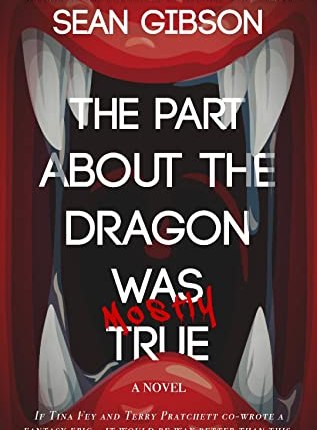
The Part About the Dragon Was (Mostly) True (Heloise the Bard, #1) by Sean Gibson 

The Part About the Dragon Was (Mostly) True (Heloise the Bard, #1) by Sean Gibson 

“The raging beast had no doubt that some foolhardy adventurers would soon come calling in the hope of righting this terrible wrong, but it would be ready.” pg 6, ebook

The Part About the Dragon was (Mostly) True is a fun and, at times, ridiculous romp through a fantasy world.

A band of adventurers is hired by a village (town!) to rid them of their dragon problem. Heloise the Bard is along for the ride, to tell their story so that they will live on in glory.

The tale she tells, which is written alongside the events as they actually happened, has very little relation to the other story. Sometimes the differences are hysterical.

Photo by Lum3n on Pexels.com

The songs we sing in taverns are the best bits of a story, but they’re not the whole story. pg 26, ebook

This book has been compared to those written by Terry Pratchett, which I would agree with. The bits that are written as asides in the story would be footnotes in the Pratchett books, but they feel very similar.

Another author I would compare Sean Gibson to is Nicholas Eames, who wrote Kings of the Wyld. It is another humorous fantasy tale that feels, in some ways, similar to this book. I would say The Part About the Dragon was (Mostly) True is raunchier, which some readers may love.

“There’s a saying amongst adventurers: it’s not a quest until you’re covered in snizzard pee and have sh*t on your knees.” pg 37, ebook

That being said, sometimes I felt like Gibson took the gags a step or two too far. But that could just be me.

Highly recommended for readers who love fantasy and adventure stories.

Also, thank you to NetGalley and the publisher for an advance reader copy of this story. I apologize that I only got around to reading it now. It’s excellent.

The Goblin Emperor (The Goblin Emperor, #1) by Katherine Addison

The Goblin Emperor (The Goblin Emperor, #1) by Katherine Addison

After an unexpected tragedy, Maia, the youngest son of the emperor, takes his throne. He grew up far from the court and has no idea who anyone is or how he should behave.

While trying to piece together the proper etiquette, he also has to be aware of those who want to depose him for their own various reasons.

Will Maia survive to become the emperor he is destined to be?

Photo by Pixabay on Pexels.com

“The Elflands have been ruled by the family Drazh for more than two thousand years, although it must be confessed that the continuity of this dynasty is in some ways a politic fiction due to strategic adoptions by the emperors of their chosen heirs.” pg 11, ebook

Adding to his woes, Maia’s mother was a goblin and he little resembles the court he rules over. This is another hurdle he has to overcome and it threatens his sense of belonging at every turn.

The genius of The Goblin Emperor is in the world Katherine Addison has created. She has crafted a multi-layered system of address and factions for her fictional realm.

That being said, sometimes these intricacies get in the way of the story. I found myself tripping over unfamiliar words and occasionally forgetting who was who in the crowded court of the Goblin Emperor.

I enjoyed Maia’s efforts to embrace his heritage and his struggles to rule over his realm. Most of the action of this book takes place in meetings, which were interesting for the greater part of the book.

Recommended for fantasy readers who enjoy mammoth world building and a slow burning plot.

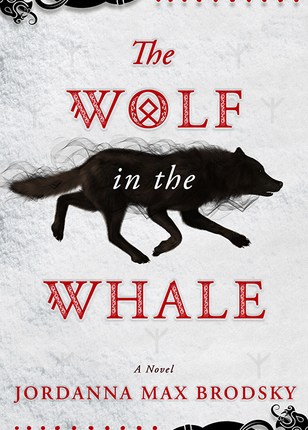
The Wolf in the Whale by Jordanna Max Brodsky

The Wolf in the Whale by Jordanna Max Brodsky

“You still have much to learn,” he agreed. “But you already carry a power in you that I can’t match.” pg 31, ebook

Omat is learning to become an angakkuq, a shaman for her tribe. This is a role that is traditionally filled by a male, so Omat considers herself a man for a long time.

“I drifted into dreams and visions for much of those three days, and soon I could not tell reality from imagination. Perhaps, I reasoned, in the end they are one and the same.” pg 70, ebook

Photo by Pixabay on Pexels.com

After repeated tragedies strike her tribe and Omat is captured by a vengeful hunter, her world changes. She goes on a quest to save her brother and best friend as well as herself.

This quest brings her into contact with gods and goddesses as well as the spirits of various arctic animals.

“Stories are ever changing, just like the gods. Assuming you understand either is a grave mistake.” pg 295, ebook

Photo by Jean-Christophe Andru00e9 on Pexels.com

I very much enjoyed this adventure tale. The main character, Omat, is quite complex in the way she communicates with others and grows throughout the story.

In the afterward, the author talks about the research into Inuit culture she completed to write this book and her work shows. I felt like Omat’s shamanistic journeys and methods could have actually happened the way she described- it’s that well written.

There is darkness in this story and I nearly stopped reading at first because I was afraid it was going to be too depressing. But I kept on and I’m so very glad I did.

“That which is dead can always come back. Men live in many worlds at once. So do gods.” pg 431, ebook

I enjoyed the fantasy elements of the gods and goddesses in this book. It reminded me of The Odyssey in some ways. The supernatural tries to control the world of humans and it results in a grand adventure.

Highly recommended for readers who like their historical fiction mixed with fantasy elements.

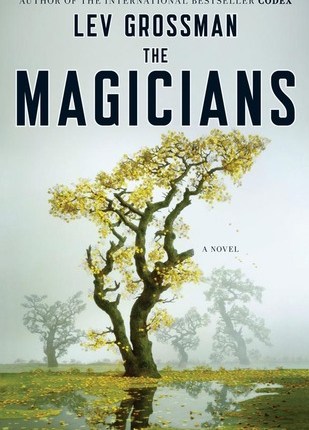
The Magicians (The Magicians, #1) by Lev Grossman

The Magicians (The Magicians, #1) by Lev Grossman

Quentin is miserable in the real world, but he’s unsure why. When he is suddenly recruited for a secret school and realizes magic is real, he thinks it will bring him happiness.

“… you will be a magician, Quentin. It is not the obvious career path, I know. … No one will know what you’re doing here. You would be leaving all that behind.” pg 37, ebook

When his training, new friends, and experiences fails to bring Quentin joy, he looks even further into magical theory and stories. What he discovers, the existence of other worlds, is more fascinating and terrifying than he ever could have imagined.

Photo by Ruvim on Pexels.com

“Most people carry that pain around inside them their whole lives, until they kill the pain by other means, or until it kills them. But you, my friends, you found another way: a way to use the pain. To burn it as fuel, for light and warmth.” pg 216, ebook

This was my second time reading The Magicians. I first read it about ten years ago and loved it then.

It stood up to the test of time for the most part, but I think I enjoyed it more the first time around because of the small reveals written into the story.

“Nobody wanted to admit they were frightened, so they took the only other option, which was to be irritable instead.” pg 298, ebook

I still loved Lev Grossman’s homage to The Chronicles of Narnia by C.S. Lewis. I also loved his magic system.

Photo by Aidan Roof on Pexels.com

The magical students all have different strengths and that affects how they are able to use magic to change the world around them.

The worlds Grossman has created are both fascinating and scary to explore. As you move through the book, you have a sense of uneasiness because you have no idea what is going to come next.

And when you juxtapose that feeling with reading The Chronicles of Narnia or the Harry Potter series, this story becomes something else.

Some readers have shared they couldn’t connect with Quentin. He was too moody and unlikeable for them.

I liked Quentin because he feels authentic like someone I could possibly know in the real world. Don’t we all sometimes wish there was more to life than there appears to be on the surface?

Don’t we all wish some of our favorite stories were real?

Highly recommended for fantasy readers. It doesn’t get much better than The Magicians.

Rick and Morty vs. Dungeons & Dragons: Deluxe Edition by Patrick Rothfuss, Jim Zub

Rick and Morty vs. Dungeons & Dragons: Deluxe Edition by Patrick Rothfuss, Jim Zub

Rick and Morty vs. Dungeons & Dragons is fun. I’m not a big fan of the Rick and Morty show, but even I found plenty to love in this graphic novel.

In this book, Rick, Morty, and their family explore different dimensions that represent various editions of the fantasy role-playing game, Dungeons and Dragons. If you have some experience playing the game, you’ll find lots of inside jokes to enjoy.

I personally have minimal game play time with Dungeons and Dragons, but again, it was still fun.

My favorite story from this collection was the last in the book, which dealt with a character named Mr. Meeseeks. He’s from the Rick and Morty show so those who have seen the episodes with him can probably guess what happens.

It still made a great impression on me.

There’s some vulgarity and language in this book, which might make it appropriate for teens and up. That’s for you all to decide.

Thanks for reading!

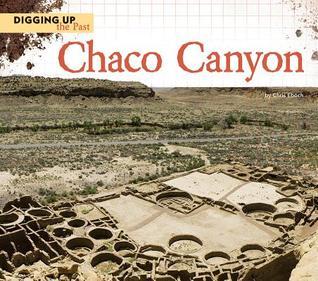
Chaco Canyon by Chris Eboch

Chaco Canyon by Chris Eboch

Chaco Canyon is among the most important archaeological sites in North America. pg 7

This non-fiction book for middle graders, part of the “Digging Up the Past” series, gives information about Chaco Canyon, a site that still holds mysteries to be discovered.

It was home to many people but at some point, it’s not clear exactly when, the population wandered away, leaving ruins behind.

According to one descendant, “They didn’t abandon this place. It is still occupied. We can still pray to the spirits living in these places from as far away as our pueblo.” pg 84

The book gives information about the history of digs at the site, which were not conducted with the care and documentation that such things require today. I found that part of the book quite sad. Imagine all of the history that has been lost.

It touches on the challenges researchers face today in their efforts to study Chaco Canyon. These include damage from the weather, large numbers of visitors, and looters.

Recommended for children interested in non-fiction.