The Invasion of the Tearling (The Queen of the Tearling, #2) by Erika Johansen

The Invasion of the Tearling (The Queen of the Tearling, #2) by Erika Johansen

The Invasion of the Tearling picked up where the last book left off. The Mort army is invading the Tear because of the actions of Kelsea, their new queen.

I won’t say what exactly those actions were, in case you didn’t read the last book. Let’s just say: she’s breaking with tradition in more ways than one.

Kelsea has started to embrace her power in this book. It suits her.

The girl who had been raised by Carlin Glynn would never have trusted in visions, but Kelsea’s world had broadened well beyond the width of Carlin’s library. The Mort would come, and the Tear army wouldn’t be able to stop them. All they could hope to do was slow them down.” pg 33, ebook.

I remember being rather unimpressed by the first book in this series. It felt cliched to me and predictable, except for the shadow creature and the introduction of the magic of the gems.

Photo by Magda Ehlers on Pexels.com

This book has more of both of those things. I approved.

Trigger warning in The Invasion of the Tearling for anyone who has had issues with cutting.

“Just the skin,” Kelsea whispered, staring at her arm, focusing all of her will on a tiny inch of flesh. She had borne worse; surely she could handle this. “Just a scratch.” A shallow line of red appeared on her forearm. Kelsea bore down, watching the line deepen, her breath hissing through her teeth as the skin parted with a sting, allowing a thin line of blood to well up and hold.” pg 117, ebook.

There’s also domestic violence, rape, non-graphic torture and some hints of sexual abuse. I suppose a young adult could read this, depending on their maturity level. 16+ may be appropriate. I would hesitate to go any younger.

Queen Kelsea has a lot on her plate: “My people are starving and uneducated. We have no true medicine. On the eastern border is an army that will crush us into dust. These are real problems, and so for a time I’ve let the others lie.” pg 208, ebook.
Photo by Carolina Basi on Pexels.com

Will she be able to save everybody?

“And Kelsea wondered suddenly whether humanity ever actually changed. Did people grow and learn at all as the centuries passed? Or was humanity merely like the tide, enlightenment advancing and then retreating as circumstances shifted?” pg 381, ebook.

I wonder that sometimes too.

Recommended for readers who enjoy their fantasies on the gritty side. I don’t feel like it ever veers into the truly “dark” but there are some disturbing elements to The Invasion of the Tearling.

Thanks for reading!

The Kingdom of Little Wounds by Susann Cokal

The Kingdom of Little Wounds by Susann Cokal

The Kingdom of Little Wounds is about a seamstress, a nursemaid and a royal family haunted by illness. It is a, sometimes very, adult tale about secrets, sex and power.

Confession: I picked this one out at the library for the cover.

I saw it and thought, “This must be a young adult fantasy of some kind about a princess who works magic with needles.” Sometimes it’s nice to indulge in a pleasant escape from the world.

So, this book is nothing like that.

In the afterword, Susann Cokal describes her work as “a syphilitic fairy tale.” There’s nothing wrong with that. It just really wasn’t what I expected and wanted it to be.

This tale has rape and madness to it. There’s also some torture, severing of body parts and other pretty gross stuff that goes on.

It is definitely geared towards an adult audience. Librarians, please put it in the proper collection. It is not young adult.

The main characters, Ava and Midi, are likeable but powerless. “I truly would like to think I’m in the middle of a fairy tale, facing the period of hardship that precedes a triumph. But I am not a likely heroine.” pg 9, ebook.

The king, Christian, is ridiculous and controlled by his courtiers. “Have you found any… any culprits?” Sir Georg hesitates, and the favorites tense. Who will be blamed? A Lutheran? … Or perhaps some cousin with a tenuous but plausible claim to succession – someone who should be removed for the health of the court anyway?” pg 77, ebook. Notice how they are unconcerned with justice.

Alliances and power shift quickly in this story like the tide. The characters never know who they can trust. “We are all, of course, in service of the Crown and King. Who is known for being liberal with his gratitude, no matter what the rank of the creditor.” I recall something my mother used to say: Be wary of a promise without a clear price.” pg 131, ebook.

Photo by Mike on Pexels.com

Also, in the afterword, Cokal shared that a piece of this story, the appearance of a star, actually happened in Europe in the late 1500’s, early 1600’s. “The new star has put all of us off balance. We’ve always expected things to change down below, in the canals, the streets, and so on, but the heavens have been constant in our memory. This star shines even in the daylight, as if to drive away the sun. It is so bright that it seems heavier than the rest; we have the impression that if we were to stand on tiptoes, we might touch it.” pg 192, ebook.

Recommended for readers who aren’t bothered by dark themes and are in the mood for a “syphilitic fairy tale.”

Thanks for reading!

Grendel by John Gardner

Grendel by John Gardner

Grendel is the ill-fated monster from the ancient story, Beowulf. This is his tale.

There are very few details shared about Grendel in Beowulf. I thought that this story would be an opportunity for the reader to get to know him.

Unfortunately, we spend most of the time in Grendel’s mind, circling endlessly around the ideas of time, brutality, nature and the meaninglessness of existence.

I wanted to know more about Grendel’s mother, but there was very little about her.

John Gardner wrote her as some kind of void-filled slug monster: “Behind my back, at the world’s end, my pale slightly glowing fat mother sleeps on, old, sick at heart, in our dingy underground room. Life-bloated, baffled, long-suffering hag. Guilty, she imagines, of some unremembered, perhaps ancestral crime. (She must have some human in her.) Not that she thinks. Not that she dissects and ponders the dusty mechanical bits of her miserable life’s curse.” pg 10, ebook.

Not like Grendel does, endlessly.

Photo by Laker on Pexels.com

“I understood that the world was nothing: a mechanical chaos of casual, brute enmity on which we stupidly impose our hopes and fears. I understood that, finally and absolutely, I alone exist.” pg 17, ebook.

I think that was the biggest reason I didn’t enjoy this read. I believe every moment in life is, or can be, filled with purpose, meaning and happiness. Grendel falls on the exact opposite end of the scale.

In that way, Grendel is one of the biggest downers you could ever read. He believes that life means nothing. He acts and kills from this empty center.

Out of this morass, the one part I kind of enjoyed was Grendel’s conversation with a dragon in its hoard.

The dragon lives for millennia and sees the world from a view so wide that it is almost outside of time. Again, there’s a nihilist bent to his view, but the dragon brought a weird bit of humor to an otherwise bleak story.

Photo by Suraphat Nuea-on on Pexels.com

“Don’t look so bored,” he (the dragon) said. He scowled, black as midnight. “Think how I must feel,” he said.” pg 43, ebook.

Yeah, think how I must feel. All I wanted was the story of Beowulf from a unique perspective and what I received was a vague feeling of depression about the meaninglessness of it all.

Thanks for reading.

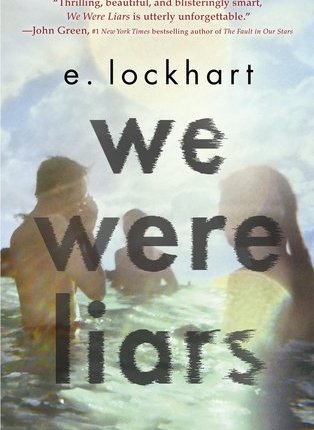
We Were Liars by E. Lockhart

We Were Liars by E. Lockhart

The Sinclair family is blonde, beautiful and wealthy. They gather together in the summer on a private island owned by the patriarch of the family.

Cadence Sinclair Eastman is ill. A terrible accident a few summers ago left her with debilitating migraines and a faulty memory.

Can she put together the pieces of what happened before she has to leave for the summer?

We were Liars is a fantastic coming-of-age book with an unreliable narrator, forbidden love and an excellent twist that I’ll bet you won’t see coming. (I know I didn’t.)

“We are Sinclairs. No one is needy. No one is wrong. We live, at least in the summertime, on a private island off the coast of Massachusetts. Perhaps that is all you need to know.” pg 26, ebook.

This is not a family who wears their hearts on their sleeve: “We believe in outdoor exercise. We believe that time heals. We believe, although we will not say so explicitly, in prescription drugs and the cocktail hour. We do not discuss our problems in restaurants. We do not believe in displays of distress. Our upper lips are stiff, and it is possible people are curious about us because we do not show them our hearts.” pg 55, ebook.

Photo by Matt Hardy on Pexels.com

Cadence, her cousins and Gat, the nephew of one of the boyfriends of a Sinclair daughter, call themselves, ‘The Liars’. Why they do so is one of the biggest mysteries in the story and I won’t ruin it for you.

I loved this book. I loved the tone, the mystery and the slow reveal.

I also loved how the reader gets to know Cadence so completely. This is not a story that leaves you wondering about character motivations.

Highly recommended for fans of young adult books, coming-of-age tales and stories with unreliable narrators. We were Liars may just be one of my favorite reads of 2017.

Thanks for reading!

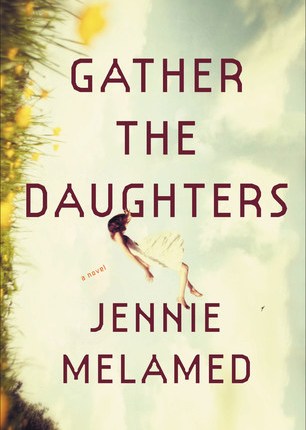
Gather the Daughters by Jennie Melamed

Gather the Daughters by Jennie Melamed

Gather the Daughters is about a small community that lives with no electricity or modern conveniences on an island. They have a church made of stone that sinks into the ground and a holy book written by “the ancestors.” These ancestors are saint-like founders who, according to tradition, fled the wider world to preserve the human race during an apocalypse.

Traditions are dark and strange on the island, but not questioned because they were written by the ancestors.

Photo by Ingo Joseph on Pexels.com

The tale is told from the viewpoint of four girls: Vanessa, Caitlin, Janey and Amanda.

From the fires of wickedness we grew forth, like a green branch from a rotten tree,” he reads. “From the wastelands of want came the hardworking men of industry and promise. From the war-stricken terror came our forefathers to keep us safe from harm.” Like everyone else, Vanessa mouths the words along with him. loc 122, ebook.

Because of the small number of people on the island, everyone has an assigned job- that they keep for life. Reproduction, meetings and courtships are also controlled by tradition.

Sometimes the way things are done seem irrational or cruel, but the community does not change. Take the perpetually sinking church: “Every ten years or so, when the roof is almost level with the ground, all the men on the island gather to build stone walls on top of it, and the roof becomes the new floor. Vanessa asked Mother why they couldn’t just use wood, but Mother said it was tradition, and it would be disrespectful to the ancestors to change it.” loc 229, ebook.

Photo by Zac Frith on Pexels.com

Similar to The Handmaiden’s Tale, Gather the Daughters is ultimately about what happens when society dictates and controls relationships, sexuality and education through religious doctrine. It is also examines the male/female balance of power.

Gather the Daughters is a gripping read. But not mysterious. It was fairly clear in my mind from the start where this story was headed, but I cared about the main characters. They have heart and I couldn’t help but want them to live in a better world than the one they were born into.

I could see this being a great choice for book clubs. There’s plenty to talk about, especially with character motivations and the structure of society.

Photo by David Bartus on Pexels.com

Reader warnings: survivors of childhood sexual abuse could be triggered by this read. There are also some domestic violence scenes.

Thank you to NetGalley and Little, Brown and Company for a free advance reader’s copy of this book. Reminder: the short quotations that I pulled for this review may vary in the final printed version.

Thanks for reading!

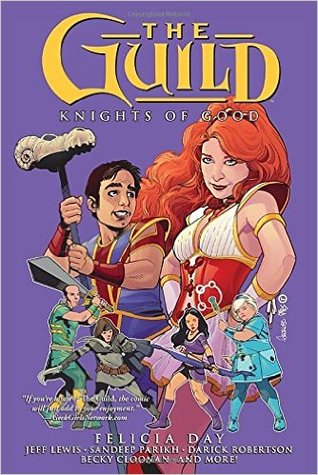
The Guild: Knights of Good (Guild v. 2) by Felicia Day

The Guild: Knights of Good (Guild v. 2) by Felicia Day
knightsofgood

A continuation of the first Guild comic. Please watch the show before you enjoy these comics!

If you don’t know what The Guild is about, let me give you a quick recap: Cyd likes to play videogames, specifically MMORPG’s. She spends much of her time avoiding reality and playing a character named Codex.

Codex is a member of an online guild, which is a group of other real life people who are also playing the computer game.

Together, they forge friendships and explore real life issues, online and off. It’s a heart-felt series and perfect for any fans of MMORPG’s or loved ones of computer players who want to understand their partners more.

On to the context of the comic itself: the first chapter/issue with Vork’s backstory and the story behind Bladezz’s infamous sausage photo were engaging but the rest was so-so.

I felt like all of the other characters were basically re-hashing what happens on the show rather than giving the reader any huge surprises. On the plus side, there are some more panels showing the characters in-game, which is more than we were ever given on screen.

If you’re going to read any of the Guild comic books, I recommend reading The Guild (the first one) and skipping this. Unless you’re a major fan of the show and you have to read every little piece of literature that is out there on it, by all means, borrow this from the nearest library.

Thanks for reading!

The Buried Giant by Kazuo Ishiguro

The Buried Giant by Kazuo Ishiguro

Axl and Beatrice are an aging married couple in the time of King Arthur. They’re on a quest to visit their son and face otherworldly threats like ogres and pixies as well as more regular dangers like Saxons on the road. They meet a boy named Edwin, who has a secret, and a warrior named Wistan, who is on a quest of his own.

Photo by Jimmy Chan on Pexels.com

Making matters even more difficult, there’s a mind-fogging mist covering the land that makes people forget things that just happened to them moments ago and the past is a puzzling blank. Axl and Beatrice would also like to solve the mystery of this mist, but first, they need to remember where their son lives.

This fantasy novel tackles the themes of love, forgiveness, and war- but, be warned, this is a ‘love it or hate it’ kind of read and will not appeal to everyone.

This is the first book I’ve read by Ishiguro and my feelings about it are complicated.

At first, I hated it because of the plodding pace and the fact that, although the author hinted at plenty of magical creatures and cryptic places, he didn’t do anything with them. But then, Ishiguro layered the themes on each other and brought the novel to a conclusion that I can’t stop thinking about… so I’m torn.

Photo by cottonbro on Pexels.com

Depending on where I was in the book, this was either a one star or a five star- so I’m going to come down right in the middle with three.

The mist is so pervasive throughout this story that it almost a character all of its own: “It’s queer the way the world’s forgetting people and things from only yesterday and the day before that. Like a sickness come over us all.” … She had said this while looking away into the mist-layered distance, but now she looked straight at him and he could see her eyes were filled with sadness and yearning.”pg 21, ebook.

A life lived without memories makes day-to-day living more simple, but remembering and appreciating the good times, almost impossible.

Throughout this story, I was cheering for Axl and Beatrice to remember their shared past. They’re my favorite characters in this tale.

Photo by Vlada Karpovich on Pexels.com

“Yet are you so certain, good mistress, you wish to be free of this mist? Is it not better some things remain hidden from our minds?” “It may be so for some, father, but not for us. Axl and I wish to have again the happy moments we shared together. To be robbed of them is as if a thief came in the night and took what’s most precious from us.” pg 113, ebook

Wistan is a Saxon warrior beyond compare, but he does not love Britons: “It was Britons under Arthur slaughtered our kind. … We’ve a duty to hate every man, woman and child of their blood. So promise me this. Should I fall before I pass to you my skills, promise me you’ll tend well this hatred in your heart. And should it ever flicker or threaten to die, shield it with care till the flame takes hold again.”pg 172, ebook.

Despite his efforts to remain detached, he develops a soft spot for Axl and Beatrice (Britons). Perhaps if he didn’t label people under blanket terms like “Britons” then he’d feel more kindly disposed towards them. Blind hate softens when you get to know someone and understand who they are. I think that is part of Ishiguro’s point… maybe.

Photo by Pixabay on Pexels.com

There were plenty of confusing moments in The Buried Giant for me.

What’s with the old lady slaughtering small animals in that ruin? What’s with the island where people go to live entirely by themselves? (Metaphor for death or a trip to fairyland?) What’s with Edwin’s memories? Or the priests who feed themselves to the vicious birds for things they can’t remember?

Or that ending? (Geez, that ending!)

I can see how this would make an excellent book club choice because there is so much that can be interpreted different ways and discussed.

Picking read alikes for this novel was tricky because the tone, pacing, and complexity of this book is so unique.

The Last Unicorn is a fairy tale with layers, like this read, but for young adults. Mythago Wood might be another solid choice, but it takes place in the modern era rather than the distant past. Or you could try: Suldrun’s Garden. I read that a long time ago and didn’t like it much, but it is a classic fantasy book set close to the same time as The Buried Giant.

Thanks for reading!

Uncharted: The Journey through Uncertainty to Infinite Possibility by Colette Baron-Reid

Uncharted: The Journey through Uncertainty to Infinite Possibility by Colette Baron-Reid
uncharted

In Uncharted, Colette Baron-Reid guides the reader with journaling, visualization, personal stories, and meditation exercises through unexplored realms of the spirit as a method for greater self knowing and actualization.

I enjoyed this book, but it felt a bit all over the place. Let me explain what I mean by examining some of the many subjects discussed:

In the introduction, Colette begins by giving some background information into what’s been going on with her for the past couple of years.

One of those big changes is that she is now channeling an group of beings, whereas, prior to this, she wasn’t.

In this passage, she’s talking about the entity helping her to write Uncharted: “It’s like “they” had the puzzle pieces, and when I was ready for them, they dropped them down on the page for me to discover. I’m not realizing that this is, in essence, what channeling an “entity” is. It’s something I never quite understood, and I’m afraid I didn’t respect its power as I should have. So I hereby surrender my inner critical cynic who doubted others when they shared their channeling stories. I get it now.” loc 55, ebook.

She calls this/these entities, Fred. Throughout the book, Fred pops up and shares a message or clarifies something. I felt as if the channeled messages could have composed a whole other book in addition to this one.

Plus, it’s clear that she’s still honing her ability to talk and understand to this inner knowing. Anyway, it “muddied the waters,” so to speak, of Uncharted from nearly the first page.

Colette doesn’t think much of the ego or what she calls the “small self”:“When you view the world through the limits of your small self, you see only the separated parts of the material world. You are guided by your personal narratives that tell you who you are based on your past experience, ambitions, and goals that were set within the Realm of Form. You’re oblivious to being part of one big matrix of interconnectedness. You forget where home is, and you feel lost.” loc 634, ebook.

Photo by Sachin C Nair on Pexels.com

I’ve read all sorts of different teachings about the ego, but I’ve started to lean towards Abraham Hick’s thoughts on the matter. They teach that the ego is the lens through which the divine within you perceives reality and that our desires are breadcrumbs along the path to eternal joy if we allow ourselves to realize them.

Hicks also says that (paraphrasing): “If you only remembered how much you wanted to be in these bodies, you wouldn’t be so quick to fault yourself and your desires. You are the leading edge of thought- you take spirit beyond which it has ever been before.”

In my mind, that is the function of ego: to express our unique personality. Isn’t the desire to be free of ego also a desire driven by the ego?

I did like Colette’s definition of co-creation, which is one I’d never heard before: “Here’s how it works between you and Spirit. You, as an individual, are always cocreating. The divine creative force is always there with you, along with spirits and allies who enthusiastically join in as you co-create reality. And you are never alone.” loc 712, ebook. Encouraging, I think.

Photo by Mayu on Pexels.com

I also liked the lesson on fate, our internal “stories” and the subconscious mind: “Listen, it’s not fun to admit that while your story about yourself has been influenced by other people and things that just seemed to happen “to” you, it was also co-written by you personally to a large degree. Fate played a role, to be sure, but you can take much greater control over your “fate.” As Carl Jung is supposed to have said, “Whatever is not brought from the unconscious into the awareness seemingly comes to us as fate.” loc 1568, ebook.

The fact that shadow dwells hand in hand with light is something that I’ve learned through my own meditation practice.

Here’s what Colette has to say about it: “In the Realm of Light, we recognize that light always exists in duality with a shadow- there’s no avoiding it. There is always a dark side to everything, a contrast between what is nourishing and loving and what is draining and entangled in fear, anger, or hatred. Those emotions will always exist, but they don’t have to overwhelm you or scare you away from the process of co-creation and transformation.” loc 1892, ebook. I believe that is true.

As for the movement through Colette’s “realms”, it reminded me of shamanistic work by Robert Moss. I’m not sure about the order in which she explores things (seems like every teacher has a different way to do it), but I think that, if your intention is greater self knowledge and if you practice what Colette teaches, you will find it.

In fact, if you try just a fraction of what she suggests in Uncharted, you will learn something about yourself. She gives plenty of exercises to attempt in here if one particular method doesn’t speak to you.

Recommended mainly for the New Age enthusiasts because of the subject matter, methods, and channeled material, but also for anyone who is curious about finding and embodying one’s authentic power.

Some similar reads: Thank & Grow Rich: A 30-Day Experiment in Shameless Gratitude and Unabashed Joy by Pam Grout, Ask and It Is Given: Learning to Manifest Your Desires by Esther Hicks, and Active Dreaming: Journeying Beyond Self-Limitation to a Life of Wild Freedom by Robert Moss.

A big thank you to Hay House and NetGalley for a free digital copy of this book!  And thank you for reading.

The Long Way to a Small, Angry Planet by Becky Chambers

The Long Way to a Small, Angry Planet by Becky Chambers

I recently finished The Long Way to a Small, Angry Planet for a second time and was again impressed by the author’s character building.

A small criticism I have is the lack of adventure in the tale. Becky Chambers does such a great job creating characters the reader cares about, but then does so little with them.

Still recommended for readers who enjoy light-hearted science fiction.

Photo by Pixabay on Pexels.com

Review from first read-through:
This is a charming, character driven, space opera-ish, science fiction novel about a crew, made of a bunch of different species, who man a ship that drills holes in space.

The focus of this story is on the relationships of the crew, their histories, and a big job that is going to take them to a distant part of space where very few have gone.

At first, I was concerned this book was going to be too heavy on the technology or psychics, but, have no fear readers, very little technical thinking is required in The Long Way to a Small, Angry Planet, which, after a few I’ve read lately, was just what I was looking for.

I loved the different species that Chambers imagined for this universe. From lizard-type aliens to a giant caterpillar with an otter head to a simian creature who shaves his blue fur into concentric shapes, there’s a lot of characters to keep track of but they’re so different that it’s not confusing. It is just plain fun.

Photo by David Selbert on Pexels.com

Even the AI of the ship, the Wayfarer, is a character named Lovelace: “There were other Lovelaces out there, of course. Her core software platform could be purchased through any AI dealer. There were probably dozens of versions of her traveling through the galaxy- maybe hundreds, who knew. But they weren’t her.” pg 58. Indeed.

The reader gets to learn about space travel and the various ports of call through the eyes of Rosemary, the newest member of the crew, who is carrying a dark secret about her past:

“Rosemary hurried after her crewmates, anxious to not get lost. … Getting lost wasn’t what scared her, exactly. It was more the prospect of getting mugged. Or harassed. Or stabbed. She’d seen a few people that definitely looked stabby.” pgs 109-110. “Looked stabby” made me giggle.

This bit had me laughing too. I had never taken the time to consider what might happen if a cold-blooded creature ate something that was freezing cold: “We’re grown-ups, we can have ice cream for lunch if we want.” “Let’s not,” Sissix said. “Right. I forgot,” Kizzy said, and laughed. “Ice cream makes her mouth go slack.” pg 140

Photo by Somben Chea on Pexels.com

There are a few bits of life advice hidden in this story: “All you can do, Rosemary- all any of us can do- is work to be something positive instead. That is a choice that every sapient must make every day of their life. The universe is what we make of it. It’s up to you to decide what part you will play.” pg 232.

This last section contains my favorite line from the entire book: “She lived up there, in that vast expanse of color. Every day, she saw planets and comets and stellar nurseries right up close, plain as weather. Yes, there was something about being planetside that made it feel different. Perhaps stars were supposed to be viewed from the ground. pg 291-292.

“Perhaps stars were supposed to be viewed from the ground” is it. I have never traveled in space and may never get the chance to, but The Long Way to a Small, Angry Planet transports you, if just for a short time, into worlds far beyond ours.

I highly recommend it for folks who enjoy light, character-driven science fiction as there is nothing too heavy or disturbing to be found here.

Thanks for reading!