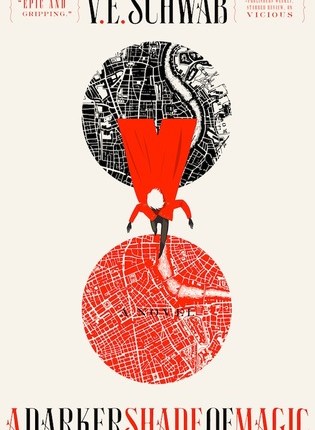
A Darker Shade of Magic by V.E. Schwab

A Darker Shade of Magic by V.E. Schwab

A Darker Shade of Magic is a young adult fantasy novel about a rare-type of powerful magician who can travel between worlds and who also has a penchant for smuggling items between these worlds. It also concerns a young woman from our world who may or may not have a secret relating to magic, who wants to be a pirate and find a life of adventure, far from the dreary and almost magic-free realm of the real world. Their worlds collide when Kell, the magician, secrets a particularly dangerous item from one of the worlds to another.

“So when Kell passed through the palace wall and into the anteroom, he took a moment to steady himself — it took its toll, moving between worlds— and then shrugged out of his red, high-collared coat and turned it inside out from right to left so that it became a simple black jacket.” pg 1
Photo by Elti Meshau on Pexels.com

I forgot to mention, he also sports a fabulous jacket with multiple “sides” and pockets, the extent of which he hasn’t even been able to discover. Wish I had one.

The worlds Kell moves between are different in almost every way, except there is a city called London in each of them.

“And so Kell — inspired by the lost city known to all as Black London — had given each remaining capital a color. Grey for the magic-less city. Red, for the healthy empire. White, for the starving world.” pg 15

Magic is something that can be dangerous in this universe, not just pretty sparkles. Because one of the worlds succumbed to magic and it ate their souls, the doors between the worlds have been severed. Only Kell, and magicians like him, can travel from place to place.

But the thing about magic,” added Kell, “is that it preys on the strong-minded and the weak-willed, and one of the worlds couldn’t stop itself. The people fed on the magic and the magic fed on them until it ate their bodies and their minds and then their souls.” “Black London,” whispered the Prince Regent. pg 23

Photo by Kit Zasloveskiy on Pexels.com

It’s actually a fascinating premise for a series. My quibble with this book, which I sometimes have with young adult fare, is that the characters never really came alive for me. They felt like a series of cliches.

“And Lila left feeling empty, hungry, and hollow in a new and terrifying way. Or maybe it was the same kind of hunger she’d always felt, and now the missing thing had a name: magic. She wasn’t sure.” pg 160

But even so, I think I’m going to pick up the next book to see how things go for them. Recommended for young adults. Other readers (ahem, older) may, like me, be left wanting more substance.

Thanks for reading!

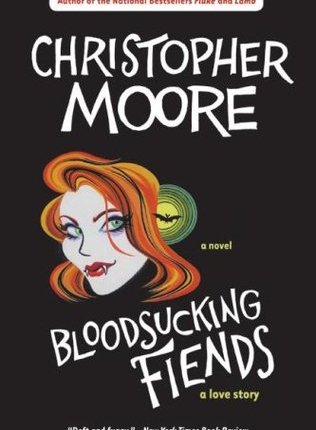
Bloodsucking Fiends (A Love Story, #1) by Christopher Moore

Bloodsucking Fiends (A Love Story, #1) by Christopher Moore

Jody was attacked by a man who bit her neck and left her for dead in an alleyway. She woke up a vampire. What is she going to do now?

“(Jody) was twenty-six and pretty in a way that made men want to tuck her into flannel sheets and kiss her on the forehead before leaving the room; cute but not beautiful.”

Photo by Mariah Green on Pexels.com

C. Thomas Flood wants to be an author, but where he comes from (Indiana) that’s not an acceptable trade for a man. He flees to San Francisco to “starve in the city.” After some misadventures with too many roommates and turkey bowling at the Safeway, he meets Jody and his life is never the same.

“Turkey bowing is not recognized by the NCAA or the Olympic Committee. There are no professional tournaments sponsored by the Poultry Farmers of America, and the footwear companies do not manufacture turkey bowling shoes. … Despite this lack of official recognition, the fine and noble tradition of ‘skidding the buzzard’ is practiced nightly by supermarket night crews all over the nation.”

Christopher Moore takes on the “vampire genre” and it’s not his best effort. If you’re going to read one of his books, I recommend Lamb: The Gospel According to Biff, Christ’s Childhood Pal.

It’s still ridiculous fictional literature, but I enjoyed the characters in Lamb more. In Blocksucking Fiends, everybody reads like one cliché after another.

Photo by cottonbro on Pexels.com

“In another time she would have called a girlfriend and spent the evening on the phone being comforted. She would have eaten a half gallon of ice cream and stayed up all night thinking about what she was going to do with her life. .. But that was another time, when she had been a person.”

And perhaps that was Moore’s point. It was as if he was mocking the sub-genre of vampire novels by his one-dimensional characters and thin plot.

Or maybe it is just a sub-par effort.

I don’t think I’ll be picking up the other books in this series.

Thanks for reading!

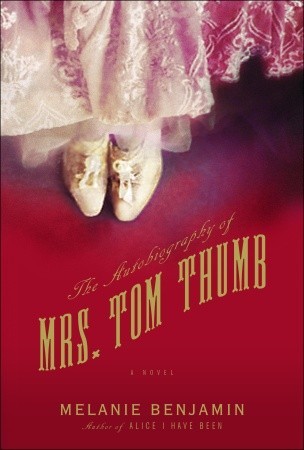
The Autobiography of Mrs. Tom Thumb by Melanie Benjamin

tomthumb

The Autobiography of Mrs. Tom Thumb is a historical fiction novel based on the real life of Lavinia Bump Warren, an extraordinarily small person.

Lavinia participated in P.T. Barnum’s museum, traveling acts and circus, becoming one of the most popular acts of her era. Her wedding to Charles Stratton, another little person, was such a huge story that it bumped the Civil War from the front pages for a time.

Melanie Benjamin speculates at the end of the book that Lavinia had a pituitary gland problem and today would receive appropriate treatment. But, in the 1800s, no such treatment existed.

As a journalist, I appreciated the actual stories and newspaper headlines from the time period. It shows just how far we’ve come and how the public appetite for sensational stories has never changed.

Benjamin writes a heroine that is so easy to love. Lavinia is different but determined, small and brave. She doesn’t let her size define her and always seeks to be a proper lady, even when those around her aren’t minding their manners.

This book was sad in that, because of her deformity, Lavinia had very few options. Early in her life, she felt as if she either had to display herself as a freak or depend upon her family in a backwater town where nothing ever happened.

In some ways, she never fit in to a world that was simply too big for her. I can’t imagine how difficult that must have been.

Photo by RODNAE Productions on Pexels.com

But in other ways, Lavinia traveled more than any woman of her era would be expected to. She experienced a world beyond the reach of all but the ultra-rich and privileged. There was a high price to be paid for it, but I don’t think Lavinia would have had it any other way.

Benjamin wrote in an unlikely twist in the story that I thought was unnecessary and it soured the ending of the book for me. I understand why she did it but it felt like a bridge too far, especially when the author admits at the end that there was nothing in the historical record to support her creative decision.

The Autobiography of Mrs. Tom Thumb becomes repetitive in Lavinia’s traveling years. I felt as if I was reading the same thing over and over again.

But I did learn a great deal about Lavinia Warren, Charles Stratton and P.T. Barnum. How extraordinary that these people even existed. It seems like a piece of American history that has been all but forgotten.

Recommended for readers who enjoy historical fiction novels about people overcoming adversity and about heroines who won’t give up, no matter the odds or size of the problem.

Thanks for reading!

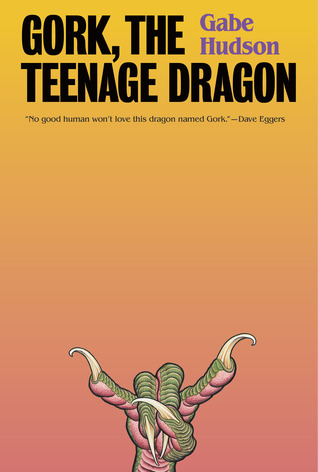
Gork, the Teenage Dragon by Gabe Hudson

Gork, the Teenage Dragon by Gabe Hudson
gork

Gork needs to crown his queen today and leave to take over a distant planet or suffer terrible consequences. He has a few major problems: he’s in love with one of the most popular females at the military academy, his heart is far too big, his horns are far too small, his class rating is too low and his grandfather, Doctor Terrible, has gone missing.

Nothing a teenage dragon can’t handle, right?

Gork, the Teenage Dragon is one of the most unique books I’ve read in a long time. It is a story about dragons, yes, but not just that. Gabe Hudson has created an entire dragon culture.

WarWings graduates continue to conquer the universe one planet at a time. We are the proud preservers of the EggHarvest tradition. Victory will always be ours! pg 30.

In some ways, WarWings reminded me of the military academy from Ender’s Game. It is dog eat dog, or dragon eat dragon.

My favorite part of the dragon culture is its use of poetry: “I don’t know why it is, but singing a poem out loud will always make you appear more repulsive and psychotic to those who you intend to enslave.” pg 56.

I also enjoyed the nudging of journalists: “The vibe in the room was definitely fiendish, and you should know that dragon journalists on Blegwethia are notoriously ruthless. Because on my home planet Blegwethia if a journalist shows up to report a story and they don’t like the situation they’re seeing, they’re not afraid to wade right in and get their claws and beak bloody. That’s dragon journalism for you.” pg 88.

If anything, Gork, the Teenage Dragon suffered from too many lovingly crafted details about dragon culture to the detriment of the story. It dragged as a result. And some of the gags didn’t quite work.

On the other hand, I was laughing out loud quite a lot at Gork’s antics: “… I study my scaly green reflection and see five nasty-looking slashes in my forehead from where that demon Torp has swiped me with his claws. ‘Not bad, Professor,’ I say, looking at the slashes. ‘This could make some nice scars.’ Now in case you don’t know, teenage dragons love scars.”

I was also not fond of the ending.

Recommended for readers with patience and the willingness to overlook some repetitious dialogue.

Gork, the Teenage Dragon won’t appeal to everyone, but I could see some die-hard dragon fans absolutely devouring this book.

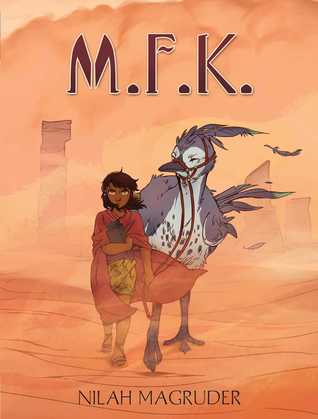
M.F.K.: Book One by Nilah Magruder

M.F.K.: Book One by Nilah Magruder
mfk

M.F.K. is an enigmatic, fantasy graphic novel about a girl from the desert, a boy from a beleaguered town and a journey to deliver an urn filled with ashes.

The Goodreads description of this book gave far more plot line than the book itself managed to deliver.

But, I feel this read was elevated by the beautiful, full-page, colorful artwork and the promise of a better storyline to come.

Jaime’s parents left him with relatives when he was only a child. But don’t pity him: “Sometimes I dream about seeing them again… and punching them in their faces.”

The desert town, where Jaime and his remaining family stay, is occasionally threatened by beings from the deeper desert. Their abilities seem to be a gift from desert gods.

“The devas gave us this strength to create and destroy to lead and conquer.”

In some ways, this book is like a fantasy western. You’ve got the obvious good guys, the obvious bad guys and the unlikely hero or heroine who saves the day.

I’m intrigued.

Recommended for readers who enjoy pretty graphic novels. Also recommended for young adults and reluctant readers.

This book has an interesting story and the women are drawn like people, not pin ups. I’m looking forward to the next installation.

Thanks for reading!

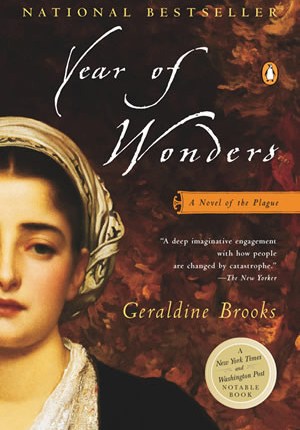
Year of Wonders: A Novel of the Plague by Geraldine Brooks

Year of Wonders: A Novel of the Plague by Geraldine Brooks
yearofwonders

Year of Wonders tells the story of Anna, a servant to a pastor, and how she emotionally and physically survives the plague while the majority of her village falls ill around her.

I was enthralled. I listened to the audiobook on my daily commute and it was fantastic.

You get the very real drama of life in a small village mixed with the the despair that must have accompanied the plague. There’s finger-pointing, people taking advantage of other’s need and, above all, the need to rationalize why all of the deaths were occurring.

My favorite part of this book was when Anna stopped in the middle of her hectic life to reconsider how she viewed God. She uses common sense reasoning to pick apart why a deity would allow such tragedy to occur and then wonders why the young are taken rather than the old.

She comes to the conclusion that what’s happening is a biological thing rather than a divine thing. Then, once she has that straight in her mind, she’s better equipped to handle everybody else’s irrational responses to the plague without being bogged down by her own.

Anna is a great heroine. She has her flaws- a flirtation with opium addiction to dull her grief and a crush on someone else’s husband- but she tries to be a good person. Mainly, she’s just overwhelmed by what’s going on and wants to feel loved and safe.

Photo by Nico Becker on Pexels.com

She cares for the ill, helps an orphaned child hold on to her family’s lead mine and tries to help her village keep body and soul together.

The ending of Year of Wonders was incredibly shocking to me, but in a good way. Geraldine Brooks stayed true to her characters but took the story in such an unexpected direction, that I had to turn it off for awhile to absorb what I had just heard.

Highly recommended for book clubs or people who love historical fiction. Year of Wonders is wonderous indeed.

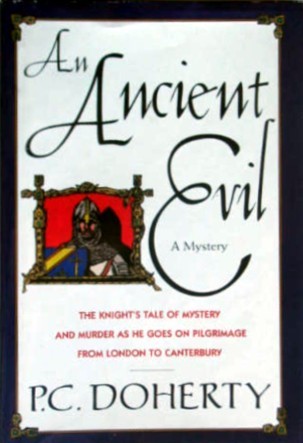
An Ancient Evil (Stories told on Pilgrimage from London to Canterbury, #1) by Paul Doherty

An Ancient Evil (Stories told on Pilgrimage from London to Canterbury, #1) by Paul Doherty
anancientmystery

An Ancient Evil is a charming historical fiction based loosely on the premise of The Canterbury Tales.

In the introduction, a knight tells a story to a group of pilgrims on their way to Canterbury. “My tale begins hundreds of years ago, just after the great Conqueror came here. So, gentles all, your attention as I describe these horrors sprung from the very pit of Hell.” pg 6.

In the story within the story, a menacing prologue introduces the reader to Sir Hugo, who buries alive the leader of a group of evil magic doers and burns the rest of his order. The evil leader who is buried alive doesn’t seem that upset about the whole thing. Which is weird.

Fast forward a couple hundred years into the future.

Sir Godfrey and a clerk, Alexander, are tasked by the king of England to discover the truth behind a series of mysterious and grisly murders in Oxford.

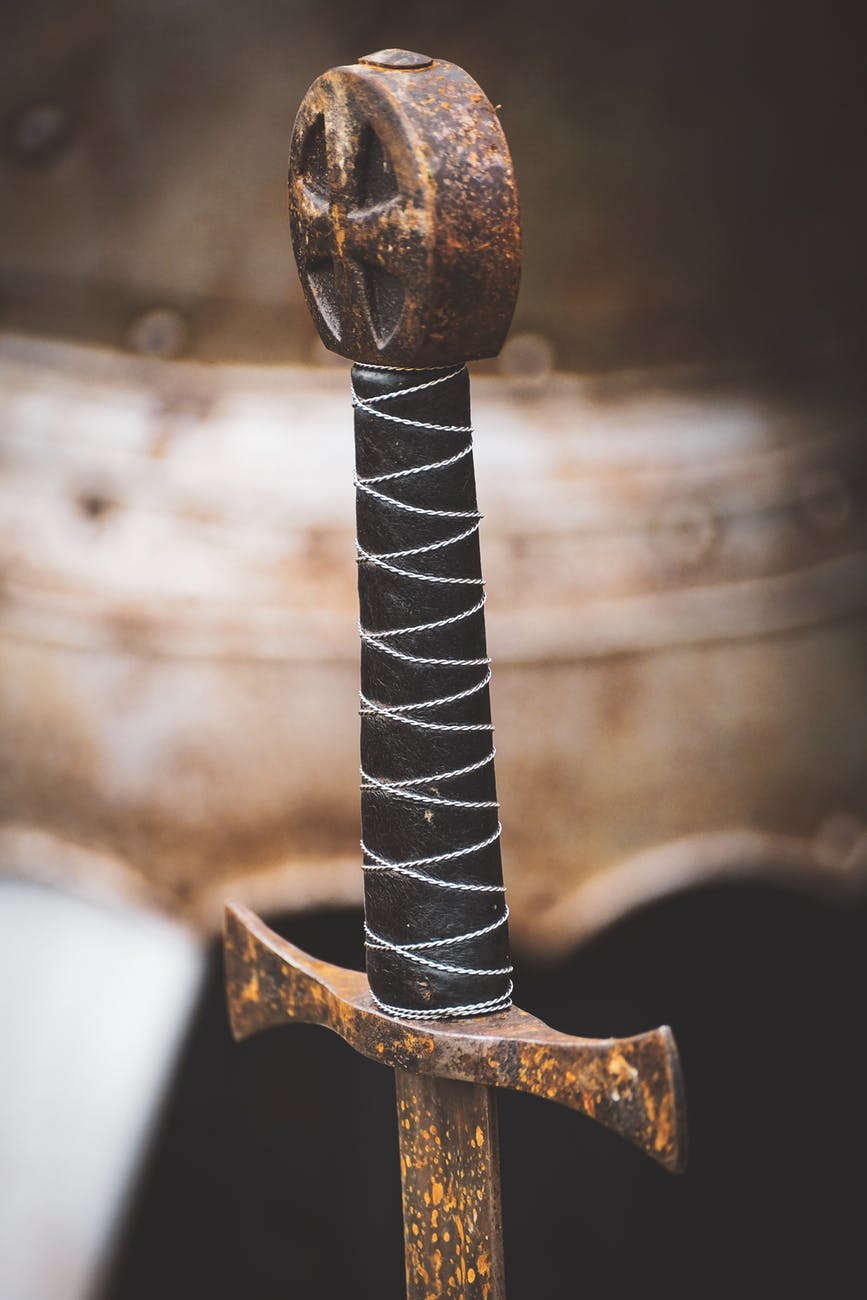
They are assisted in their task by Dame Edith, a blind anchorite who is known for her exorcism talents. ‘Sir Godfrey, whoever the killers are, we are about to enter the Valley of Death, but,’ Alexander couldn’t resist gentle banter, ‘we have your sword, my brains and the prayers of Dame Edith.’ ‘I think we might need more than that.’ pg 64.

I enjoyed this medieval, just a bit too bloody to be called “cozy”, mystery.

Photo by Susanne Jutzeler on Pexels.com

The characters are layered. The author drops enough hints to lead the reader towards the bad guy without giving the game away.

It reads a bit like a Nicholas Cage movie. We’ve got a battle between good and evil with some paranormal stuff and swords thrown in.

“Dame Edith tapped the side of her head. ‘Sir Godfrey, you are a soldier. You, of all people, should realize that a man is what he thinks he is. What causes one man to be a coward and another to be a hero? After all, they may be the same flesh and blood. They may even be brothers from the same womb. It’s what they think.” pg 170.

I also enjoyed the details about medieval life that are sprinkled throughout.

Recommended for readers who enjoyed The Thief Taker by C.S. Quinn or Mistress of the Art of Death by Ariana Franklin.

Thanks for reading!

The Fate of the Tearling (The Queen of the Tearling, #3) by Erika Johansen

The Fate of the Tearling (The Queen of the Tearling, #3) by Erika Johansen

The Fate of the Tearling ties up the series nicely. All questions of the founding of Tearling, the shadow and Mort are answered.

And we also learn all of the secrets of the Fetch. Finally! “For three long centuries… William Tear’s dream sunk further and further into the mire. No one in the Tearling could even see Tear’s better world any longer, let alone muster the courage to dig for it.”pg 6, ebook.

The path isn’t easy. Kelsea questions herself every step of the way. “Maybe we aren’t capable of being satisfied, Kelsea thought, and the idea seemed to open a chasm inside her. Maybe utopia is beyond us.” pg 90, ebook.

But she is determined to see things through to the end: “We can’t simply stay here, hiding, while the kingdom burns. What sort of queen would I be?” pg 273.

Though Erika Johansen writes a thorough ending, I found myself dissatisfied with it. Read it and let me know what you think. I’m still thinking about it, even though I finished this book last week.

Photo by Pixabay on Pexels.com

From a lackluster start, I think The Queen of the Tearling series turned out to be fairly enjoyable. I would classify it as adult because of some of the themes, imagery and language.

It uses fantasy to examine the human condition, society and what happens to communes after a charismatic leader dies.

I think Kelsea is one of the strongest female characters I’ve read. Bravery-wise, she fits right in with Katniss Everdeen. She doesn’t quit and isn’t afraid to admit when she’s wrong.

Throughout the series, we see her grow from uncertain child to warrior queen. Bookish and introverted, Kelsea may appeal to those who wish they could be something more than they currently are.

Recommended for readers who are willing to invest some time in a series to enjoy it and for fans of fantasy/dystopian worlds. The Queen of the Tearling grew on me. It has heart.

Thanks for reading!

See my review of the first book here: The Queen of the Tearling (The Queen of the Tearling, #1) by Erika Johansen

Second book here: The Invasion of the Tearling (The Queen of the Tearling, #2) by Erika Johansen

The Murders of Molly Southbourne by Tade Thompson

The Murders of Molly Southbourne by Tade Thompson

The Murders of Molly Southbourne is a short story about a girl who is born with a horrifying condition. Whenever she bleeds, the blood changes into a homicidal version of herself that won’t stop until it, or Molly, is dead.

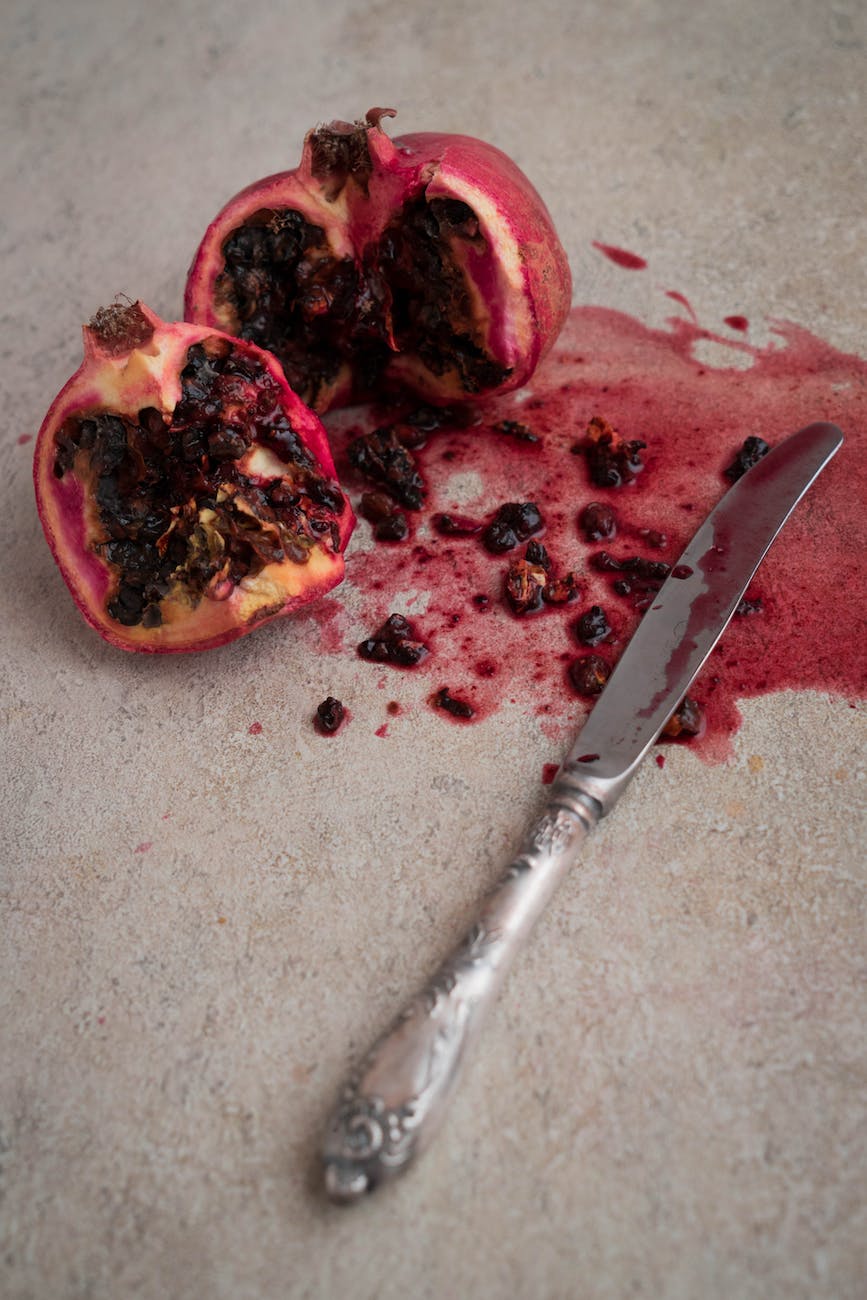
“The rules are simple. If you see a girl who looks like you, run and fight. Don’t bleed. If you bleed, blot, burn, and bleach. If you find a hole, find your parents. Molly recites the lines to herself many times.” pg 24.

I’m not sure I understood what the author was going for with this short story.

Yes, what happens to Molly is horrific. I guess I didn’t make the connection between what was happening to her and the broader meaning the story was reaching towards.

Photo by Badulescu Badulescu on Pexels.com

Because it was certainly reaching: “She cannot stand children. They remind her of the mollys, with their innocence and their half-formed personalities, and she expects them to burst into violence any minute. They never do, but they might.” pgs 63-64

Or, beyond the death-through-your-children angle, I could use this story to consider the futility of life itself. “How is it that humans bleed so much? Or maybe Molly herself bleeds more than the average human. The rule are useless, an attenuation at best. Lifeblood escapes all the time, minor hemorrhages, a little a day. Maybe that is how we age. Maybe that is how we die.” pg 91

It is creepy and could fit the bill if you’re looking for one more short and spooky pre-Halloween read. I just didn’t connect with it.

Thanks for reading!