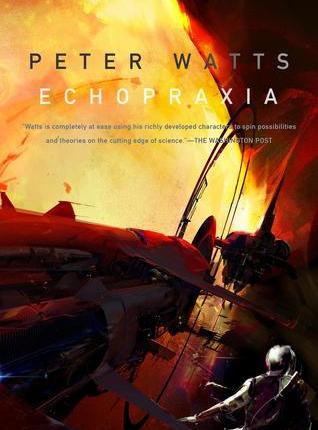
Echopraxia (Firefall, #2) by Peter Watts

Echopraxia (Firefall, #2) by Peter Watts

Peter Watts returns readers to the dystopian world of Firefall with Echopraxia, the second novel in the series.

Meet Daniel Bruks, an outcast biologist with a secret. He’s struggling to continue with his scientific studies in a world that has ceased to make sense after the alien contact in Firefall.

Photo by Pixabay on Pexels.com

“The Theseus mission would be well past Pluto by now. If it had found anything, Bruks hadn’t heard about it. For his part, he was sick of waiting. He was sick of life on hold, waiting for monsters or saviors to make an appearance. … He wished the world would just hurry up and end.” pg 15

His life quickly changes when he finds himself herded into an esoteric and technologically advanced cult’s desert compound while they’re under attack from weaponized zombies. (It makes more sense when you read it, I promise.) What follows is an exploration into the realms of religion, technology and faith.

“One day you’re minding your own business on your camping trip…” “Field research.” “… the next you’re in the crossfire of a Tran war, the day after that you wake up on a spaceship with a bull’s-eye painted on its hull.” “I do wonder what I’m doing here. Every thirty seconds or so.” pg 81

The same microscopic lens Watts used to take apart consciousness in the last book, he applies to a totally different topic, religion, in this one and it doesn’t quite work.

He doesn’t take any time to introduce readers to some of the more far-out concepts from the last book. If I had dived into Echopraxia without reading Firefall, I would have been totally lost. And as it was, I certainly was confused by the end.

Photo by Pixabay on Pexels.com

Where the last book was a space and science adventure, this one is a journey, both metaphorical and physical. The threats along the way are somewhat as scary, but the characters aren’t as well-fleshed out.

Maybe I was spoiled in the last book because I really enjoyed Siri, the narrator’s, character. Daniel Bruks is more difficult to love.

But it’s not just the characters. The science of the last book was more connected to the story line. In this book, it almost felt like a tacked-on after thought.

And as hard as I tried to put the pieces together, the ending never quite made sense. I put some serious thought into it too. It’s one thing to leave an ending somewhat ambiguous so the readers can hash it out, it’s another to give almost no clues at all.

That’s not to say Watts isn’t brilliant, because he is. However, if you have the choice between reading Firefall or Echopraxia, I would suggest the former rather than the latter.

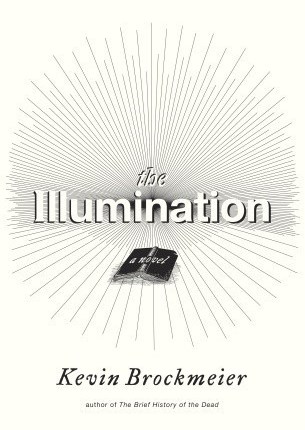
The Illumination by Kevin Brockmeier

The Illumination by Kevin Brockmeier

Humanity suddenly changes as emotional and physical pain begins to shine out of our bodies like light. How would a shift like that change culture? And what does it all mean?

Kevin Brockmeier examines these questions through six different lives that are tied together through a diary filled with love notes from a husband to his wife.

Rarely has a book stuck in my mind like The Illumination. Since putting it down, I’ve found myself thinking about it and asking myself what the author was saying.

Photo by Pixabay on Pexels.com

“Through the haze of drugs, it seemed to her that the light was not falling over her wound or even infusing it from the inside but radiating through it from another world. She thought that she could live there and be happy.” pg 8, ebook

Throughout the centuries, mystics and others considered “holy” or infused with spirit have been depicted with light shining from their bodies and hands. The ineffable connection to God or gods is shown in the artistic shorthand of light, an illumination in the dark.

In the day-to-day business of living, many of us are too busy with our individual lives to stop a second and ask ourselves, what is the purpose of this experience? It feels so random for the most part. Terrible things happen to good people, good things happen to terrible people. It feels arbitrary and, worst of all, meaningless.

So many are in pain and we can’t possibly heal them all. We don’t acknowledge that. But what if it became so obvious that we couldn’t ignore it.

Photo by Luis Dalvan on Pexels.com

“The world had changed in the wake of the Illumination. No one could disguise his pain anymore.” pg 29, ebook

The Illumination illustrates another of humanity’s foibles – the tendency to demote the miraculous to the mundane once it becomes a common place experience. Babies are born every day. People die every day. Life in its beginnings, endings, and everything in the middle, is extraordinary but I don’t think we appreciate the enormousness of it unless something unexpected or earth-shattering happens in our own lives.

“He watched with interest as his body was chafed and torn, thinking, Look what’s here inside me. Who ever would have guessed? pg 164, ebook

Maybe, if we truly tried to let it all in, we would all stand around paralyzed by awe.

“It turned out that the world at the end of time was just like the world at the beginning: a single set of footsteps printing the grass, everything lit with its own newness, a brighter and much, much emptier place.” pg 48, ebook

Photo by Stanislav Kondratiev on Pexels.com

In this world, the past is reexamined in the wake of the new light-filled reality. Historic photos are doctored to make the pain visible through light. Hospitals develop new protocols to address the change in reality. Communication and politeness take on new meaning as private pain becomes public knowledge.

“For a few months, church attendance spiked. Some of the seats at Fellowship Bible were taken by visitors, some by the Christmas-and-Easter set. It didn’t matter – each new face showed the guilt, fright, or confusion of someone confronted by a game whose rules had suddenly changed.” pg 104, ebook

The dystopian worlds of literature present authors’ various views on what the world would look like at the end of all things. Brockmeier’s world is so very much like ours except for one glaring difference. Perhaps that’s the point. The end of the world is much like today – light or no light, we’re all wandering around seeking meaning and bumping into each other and causing pain, intentional and unintentional.

Photo by Rodolfo Clix on Pexels.com

The spiritual and religious beg for illumination, a shining light through the confusion, a removal of a metaphysical blindfold. But what would we do if those prayers were answered in a concrete way? Probably nothing once the initial shock wore off.

Recommended for readers who seek the answers to unanswerable questions. Some trigger warnings for cutting, self mutilation, and violence.

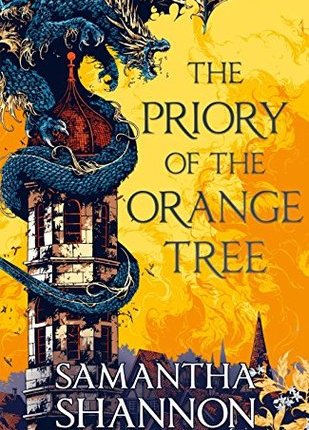
The Priory of the Orange Tree by Samantha Shannon

The Priory of the Orange Tree by Samantha Shannon

A cast of interesting and well-imagined characters stumble through poorly-written plot twists on their way to saving the world from “The Nameless One”.

“The House of Berethnet may protect us from the Nameless One, or it may not. There is no proof either way. … That is the problem with stories, child. The truth in them cannot be weighed.” pg 109

Photo by Suraphat Nuea-on on Pexels.com

I started out enjoying The Priory of the Orange Tree. The way the story builds is engaging and moves along at a fast clip.

My main quibble with this fantasy book is Samantha Shannon takes more than 800 pages to create her world with its countries, religions, magic systems, but then resolved major plot points in two to three sentences or less in some cases.

We learn about items that have been missing for a millennia and I thought, oh this is going to be interesting to figure out. But then, two pages later, through a series of ludicrous coincidences, two of the main characters have one of the items in their hands.

In one of the major confrontations of the book, Shannon doesn’t even write dialogue and played it out through the eyes of a character who had no idea what was going on. I wouldn’t have been so put off by it if she hadn’t spent literally hundreds of pages getting us to that point. That particular villain may not have been the focus of the tale, but I think she at least deserved a final monologue.

Photo by Snapwire on Pexels.com

When traveling from place to place, there aren’t tantalizing descriptions of the trip. Basically, the character gets in the conveyance and, boom, they’re at the destination. Shannon used more descriptive words when she talked about the food characters were eating than she did when her characters were moving from here-to-there.

The exception to this rule were her descriptions of “the Abyss”. The way she depicted the stars shining down from above and out of the depths was beautiful.

Complaints aside, there were plenty of things I liked about the book. I enjoyed the way Shannon took real life alchemical principles and wove them into something otherworldly for her story.

“What is below must be balanced by what is above, and in this is the precision of the universe. Fire ascends from the earth, light descends from the sky. Too much of one doth inflame the other, and in this is the extinction of the universe.” pg 150

Photo by Pixabay on Pexels.com

I also liked the secret order whose name graces the front cover of the book. The different cultures Shannon created were a treat a learn about. I thought her characters were, for the most part, quite relatable.

“So you see, Ead,” the queen said, “I do not sleep because I’m not only afraid of the monsters at my door, but also of the monsters my own mind can conjure. The ones that live within.” pg 203

The characters were diverse and, as I mentioned, well-written. A couple times in the story, particularly in the portions about the Abyss, I felt Shannon’s writing was elevated to something like prose.

“Love and fear do strange things to our souls. The dreams they bring, those dreams that leave us drenched in salt water and grasping for breath as if we might die – those, we call unquiet dreams. And only the scent of a rose can avert them.” pg 416

Photo by Irina Iriser on Pexels.com

I think this story could have been extraordinary if Shannon hadn’t been trying to fit so much into one volume. A trilogy with lingering descriptions of landscapes and nail-biting conclusions to the various story arcs would have been much more enjoyable.

Thanks for reading!

In a Cottage In a Wood by Cass Green

In a Cottage In a Wood by Cass Green

Neve’s life is a mess. She recently broke up with her boyfriend, has no place to go and an unfortunate drinking habit. Perpetually hung over and disappointed in her job, friends, and family, Neve experiences a shocking event on a London bridge that changes her life forever.

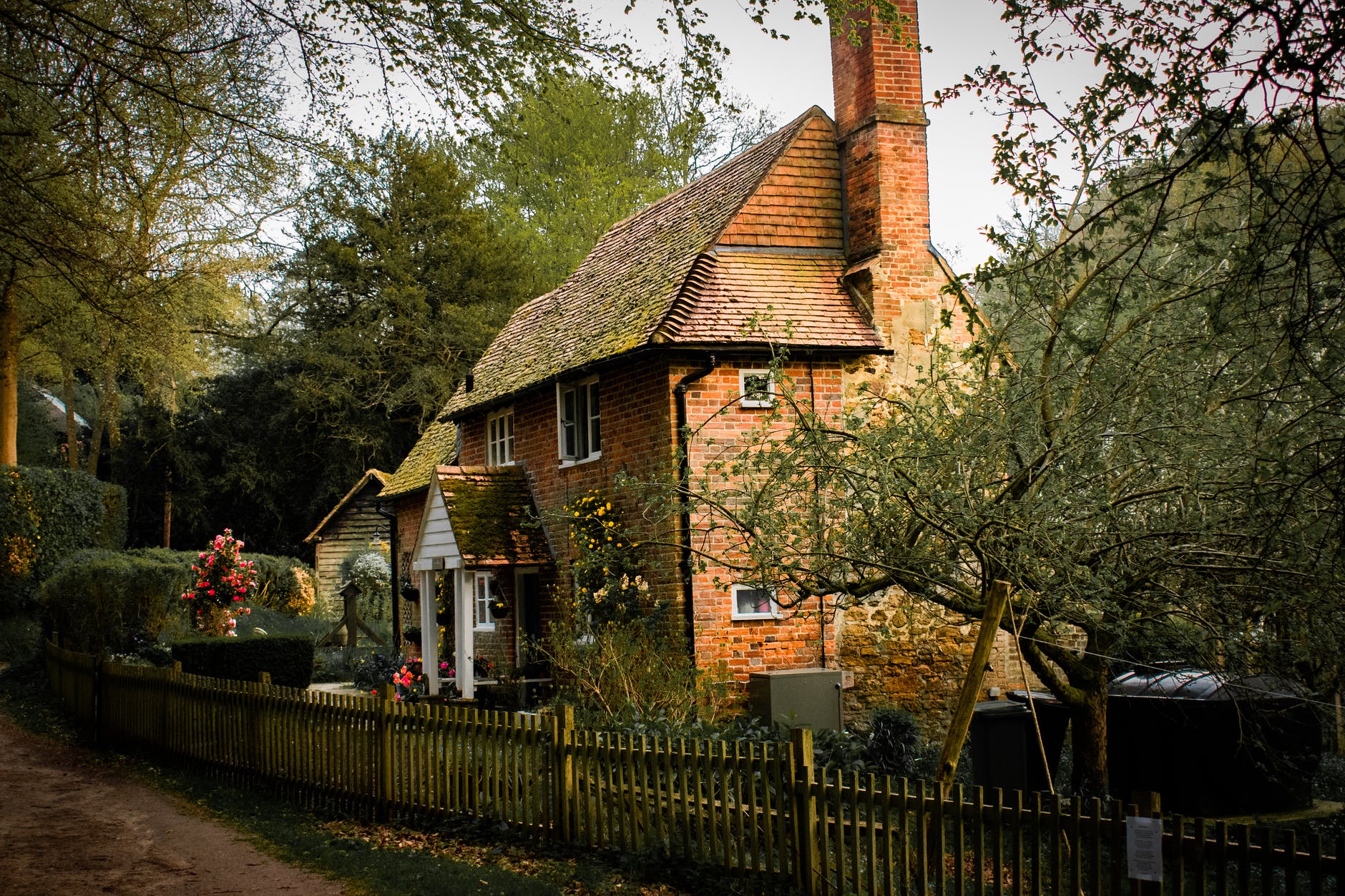
Now the proud owner of a cottage in the woods, Neve can hardly believe her good fortune. But when unexplained events begin to haunt her waking hours, she begins to question whether it was luck that led her to the bridge or something else entirely.

Photo by Tatiana Syrikova on Pexels.com

“This really is happening quite legally, Neve,” she says in a gentle voice. “You own Petty Whin Cottage and everything in it. It’s all yours now.” pg 48, ebook

Cass Green has crafted a suspenseful mystery with an unreliable narrator that holds your attention but doesn’t necessarily deliver on the thrills. But it is enjoyable enough for what it is.

I read In a Cottage In a Wood in just a few sittings with a mug of hot chocolate in my hand while a winter storm raged outside. I think the book is a good choice to pass a few hours and I could also see it being an interesting pick for book clubs.

Photo by Simon Sikorski on Pexels.com

Green is at her best when building a growing sense of isolation and Neve’s teeth-on-edge feelings at the cottage, all while utilizing every day events that could be completely innocuous. What’s so scary about power outages, a dead bird and a dog getting outside the fence? It’s in the timing and the incremental increase in emotional tension, which Green has down perfectly.

Neve is a relatable character even while making poor choices. I found myself cheering her on, hoping she finds whatever it is she’s looking for to bring some peace to her soul. But the unreliable narrator bit has been used a great deal lately, hasn’t it?

Photo by Tobi on Pexels.com

Recommended for readers who like to use suspenseful thrillers as a brief escape from reality.

Thanks for reading!

The Three-Body Problem by Liu Cixin

The Three-Body Problem by Liu Cixin

The Three-Body Problem is an inventive science fiction read that suffers, in my opinion, from some translation issues. None of the characters feel quite right. Their dialogue seemed wooden and stilted. And, perhaps this was just my Western mind, I never really understood some of their motivations.

“She could no longer feel grief. She was now like a Geiger counter that had been subjected to too much radiation, no longer capable of giving any reaction, noiselessly displaying a reading of zero.” pg 22

Photo by Pixabay on Pexels.com

My quibbles with the characters aside, some of the concepts in this book were utterly fascinating.

There’s a mysterious government installation, video game with a deeper, hidden meaning, unexplained deaths, numbers appearing out of thin air, and, my favorite part, an in-depth imagining of what unfolding a proton in different dimensions might look like. For fans of the genre, I can see why the The Three-Body Problem would be appealing.

“All the evidence points to a single conclusion: Physics has never existed, and will never exist. I know what I’m doing is irresponsible. But I have no choice.” pg 61

Photo by Sourav Mishra on Pexels.com

In the library copy I read, some of the major cultural issues needed to understand the text are included in footnotes. It helped, but it made me wish I could read this in its original form.

“Everything that’s happening is coordinated by someone behind the scenes with one goal: to completely ruin scientific research.” pg 135

I particularly liked Liu Cixin’s descriptions of the landscapes contained in the video game of the story. The desolate vistas and civilization-ending weather were fascinating to explore.

The idea that there was a world where the law of physics didn’t apply was also mind-bending. Cixin has created a place where suns swirl through the sky in no discernible pattern and pendulums don’t swing in the expected pattern. In a world like that, anything could happen. And it does.

Photo by Pixabay on Pexels.com

“Even if God were here, it wouldn’t do any good. The entire human race has reached the point where no one is listening to their prayers.” pg 205

Recommended with reservations for fans of science fiction. There’s much to enjoy in this read, especially if you favor the “science” part of the genre.

For readers who enjoy book to screen adaptations, this novel has already been made into a film. It is also slated to become a television series.

Thanks for reading!

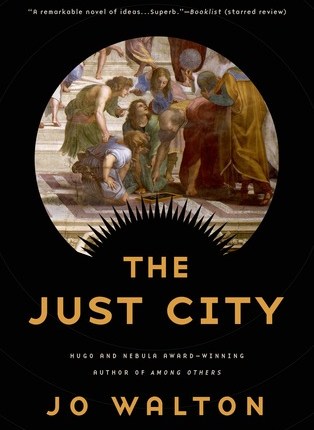
The Just City (Thessaly, #1) by Jo Walton

The Just City (Thessaly, #1) by Jo Walton

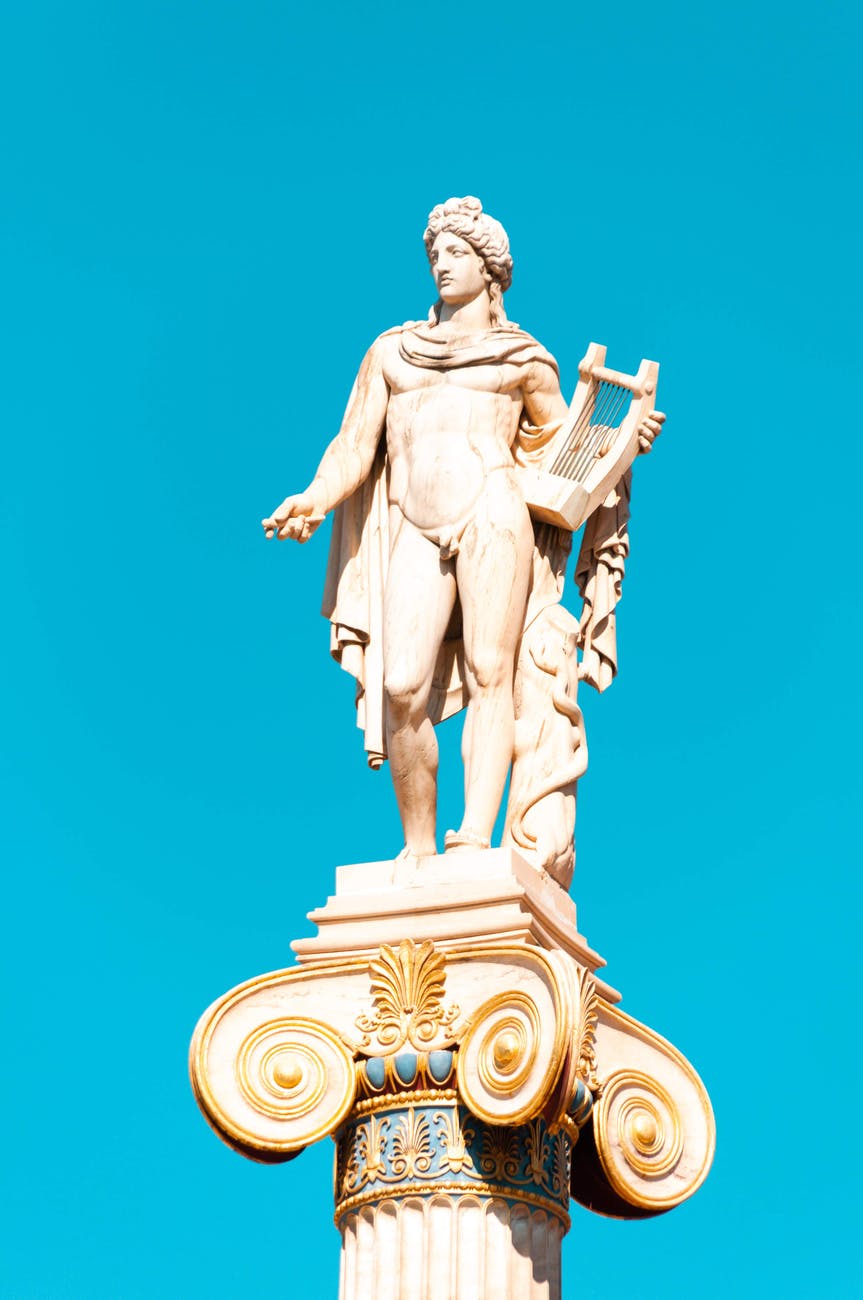
When the god Apollo seeks to understand the workings of the mortal mind and heart, he asks his sister, Athene to help him. She reveals a project in which she has gathered together philosophers from across time and space and put them in a settlement called, “The Just City”. In this city, set near a volcano that will one day explode and destroy all evidence of the project, a group of men, women and children will try to recreate the hypothetical state described in Plato’s “Republic”.

Apollo asks to join this group. And our story begins.

Photo by Hert Niks on Pexels.com

The city itself shone in the afternoon light. The pillars, the domes, the arches, all of it lay in the balance of light and shadow. Our souls know harmony and proportion before we are born, so although I had never seen anything like it, my soul resonated at once to the beauty of the city.” pgs 35-36

But what is perfect in theory turns out to be not-so-perfect in practice. Among the thornier problems, the city has shared marriages and children raised by the group, not families. This causes predictable jealousies and secret romances. There’s also something strange going on with the robotic workers Athene brought from a future time to help with the mundane tasks of civilization, like raking the roads and planting the vineyards.

“We are in a time before the fall of Troy. And we are on the doomed island of Kallisti, called by some Atlante.” Even I had heard of Atlantis.” pg 45

Photo by Travel Sourced on Pexels.com

Another major issue, caused because they were pulled from different points in history, are the different philosophers’ views on gender equality. Consent in the Renaissance doesn’t mean the same thing as consent in the Victorian Age.

“You love this city,” Pytheas said. That was what we had been debating that day. “I do,” I said, spreading out my arms as if I could hug the entire city. “I love it. But Sokrates has made me see that it’s only the visible manifestation and earthly approximation of what I really love, the city of the mind.” pg 131

Though I enjoyed this book, the pace was what spoiled it for me somewhat. It marches forward towards an inevitable conclusion far too slowly. The debate scenes are interesting, but simply too plodding.

Photo by Dominika Roseclay on Pexels.com

There’s also a rape, so please be aware if you have potential triggers.

Recommended tentatively for readers who love the classics or historical fiction and can stand a slower-paced read.

Thanks for reading!

Shades of Magic Vol. 1: The Steel Prince by V.E. Schwab

Shades of Magic Vol. 1: The Steel Prince by V.E. Schwab

V.E. Schwab has penned a graphic novel about Maxim Maresh, one of the ancillary characters from The Shades of Magic series.

I was very excited to read this. The tidbits Schwab dropped about Maxim in the trilogy were enticing. We learned he had a storied past. He fought notable outlaw figures. Somehow he developed an extraordinary control of his powers, which others had not been able to mimic.

Under his reign, a certain magician opened the doors between the worlds to act as emissaries and messengers. But also, exposed the worlds to the greatest danger that they had ever faced.

Photo by Aidan Roof on Pexels.com

“Before he was the King of Arnes, Maxim Maresh was a young, head strong prince with a penchant for metal magic and a lot to learn about the world beyond Red London. Banished by his own father to Verose, a city on the dangerous Blood Coast, Maxim was plunged into a world of danger and adventure.” Foreward, by V.E. Schwab.

So, who was this man? This graphic novel series sheds some light on an enigmatic figure.

“Why would you see those doors pried open again?” “Because sooner or later, all spells fail. And one day the doors to those worlds will open whether we wish it or not.”

What did I think of it? It was the first in a series. It’s hard to give all of the contextual information of a new story without it turning into an info dump or neglecting to develop the characters.

Schwab does a good job of avoiding these pitfalls, but I wanted more depth and development.

We do get to see something of “bone magic,” one of the more terrifying of the magics from Schwab’s stories. Bone magic, unlike the elemental basis of the other magics, allows the user to literally control the actions of those around them.

Photo by Pixabay on Pexels.com

Bone magicians can make you throw yourself onto their enemies or your friends. Hold still while you’re tortured. Stick a knife in your own eye.

Bone magic, the removal of free will, is the idea that has continued to haunt me from the Shades of Magic series and Schwab uses it to good effect in this story.

That being said, Maxim, at first, acts like a brat and doesn’t understand the complexities of real life, running headlong into the “royalty removed from the world” trope. This focus of his character doesn’t lend itself to likability. Perhaps that will change as the series goes along. Also, we get to see so very little of his extraordinarily abilities and more of his mediocrity.

However, the artwork is stunning. I hope to read and enjoy the next volume. But I can’t say I was knocked off my feet by this installment.

Recommended, of course, for fans of the Shades of Magic series.

Thanks for reading!

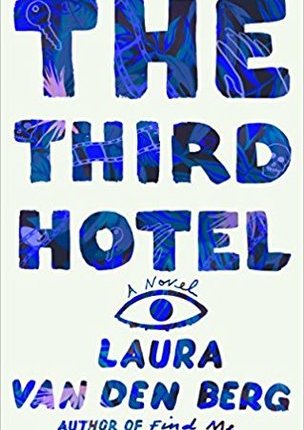
The Third Hotel by Laura van den Berg

The Third Hotel by Laura van den Berg

A strange and confusing ride through a world seen through the eyes of a grieving widow. A short time prior to attending a film festival in Cuba, Clare’s husband Richard was killed. Now, she sees him on the streets of Cuba.

“Clare had never before seen her husband operate a motorbike, but he navigated it like he had been riding one all his life, like he had been riding one in Havana all his life, like he had not been struck by a car and killed in the United States of America some five weeks ago.” pg 13

Photo by Valeriia Miller on Pexels.com

What is going on? The reader isn’t sure what’s real and what’s only in the mind of Clare. Laura van den Berg raises mammoth questions and leaves the interpretation to the reader.

My book club picked a heck of a read for March. Reactions to this book ranged from the disgusted to the mystified to the fascinated. I’d put myself somewhere in between.

I like having complex symbolism to pick apart and magical realism to consider in a story. I like having an open-ended mystery. I don’t need to have all the answers.

But I do like to have more hints at the possible interpretations than van den Berg gives us.

“She might have said, I am not who you think I am. She might have said, I am experiencing a dislocation of reality.” pg 3

Photo by cottonbro on Pexels.com

Or she might have said, I have no idea what’s going on in this story. A character in the novel itself explains this confusion (in the guise of talking about horror films), suggesting it’s purposefully created by the author, and says it is designed to create a sensation of “eels under the skin.” This book definitely had that type of impact on me.

“Besides, he added, raising a finger, the foundation of horror is a dislocation of reality, a dislocation designed to reveal the reality that has been there all along, and such dislocations happen all the time.” pg 9

As I said, it’s weird, but there’s something genius about it too. Van den Berg’s words are beautiful, but they don’t always make sense. I turned the last page and was infuriated at how confused I was.

“She wondered what the eye would see and what she would see in what the eye saw. She imagined the suspension transforming into a warm flood of inevitability as the gate swung open and she stepped into whatever new dislocation of reality lay ahead.” pg 32

Photo by Tobias Bju00f8rkli on Pexels.com

In conclusion, it’s a hard book to read, but perfect for groups who are looking to spur a literary discussion. There’s so much to unpack.

Is she in an alternate reality or having a psychotic break? Or is she just grieving the whole time? What does her life now have to do with her childhood? What is the secret Clare shares with her father? Is there hidden meaning in her trip to the southern part of the island?

That’s just what pops into my head when considering the title of this book. Recommended for readers who don’t mind being totally confused and left with eels under their skin.

Thanks for reading!

The Gospel of Loki (Loki #1) by Joanne M. Harris

The Gospel of Loki (Loki #1) by Joanne M. Harris

Joanne M. Harris treats readers to episodes from Norse mythology from Loki’s point of view.

“No doubt about it, I told myself. These bastards really don’t like me.” pg 27

Born from literal Chaos and tricked into joining Odin’s forces of Order, Loki is perpetually a child of both worlds. From his first moments out of the world of Chaos, Loki is disliked by the other gods. That leads to some initial unpleasantness and he vows, no matter how long it takes, to get his revenge.

Photo by Gioele Fazzeri on Pexels.com

“Till then, I bided my time, and smiled as sweetly as my scarred lips would allow, until the day I would take my revenge and bring the gods down, one by one.” pg 67

And it is a long game. Through schemes, tricks and straight up cons, Loki weaves disorder throughout the worlds.

There’s the memorable time he convinces Thor to dress up as a bride in order to sneak into the home of their enemies: “I’ll be your handmaid, Thor,” I said. “Don’t worry, I won’t steal your thunder. You’ll make a gorgeous bride.” Thor growled. pg 118

As he becomes famous for his trickery, it becomes more difficult for Loki to pull off his tricks. He’s pushed into marriage by Odin, but it doesn’t fit who he is. It isn’t in his nature to settle.

“I began to see that celebrity wasn’t all hot girls and free beer. It’s also the curse of expectation — and the bitterness of falling short.”pg 141

Photo by Little Visuals on Pexels.com

We all know where the story is headed, but it’s a train wreck you can’t quite look away from.

My quibbles with this book included a disjointed feel to the overall story. Loki and company run from one disaster to the next. I realize that the source material is probably the reason for this, but it just doesn’t coalesce into something more than its parts.

Odin’s gods, the gods of Order, come off as rather one note. It’s interesting how Odin was able to see potential in Loki, enough so that he calls him from Chaos to begin with, but the other immortals share none of his vision.

Other than a few notable exceptions, they never extend an olive branch or give Loki the smallest chance to prove himself. In my mind, it’s easy to see why he wants them to fall. Who wouldn’t wish that on the people who are mistreating you?

Photo by Nick Bondarev on Pexels.com

I’ve read a few of Joanne Harris’ other books, and I remember they contained delightful twists in them, so that the plot wasn’t so straight forward. She’s somehow stuck in telling conventional mythology in this book.

If only she could have used this book to tell aspects of the story we haven’t heard before, or even imagined, using the voice of one of the most interesting of the gods to do so. That would have been something I may have enjoyed even more.

Recommended for readers who adore Loki. There’s plenty of him in here, and that’s it.