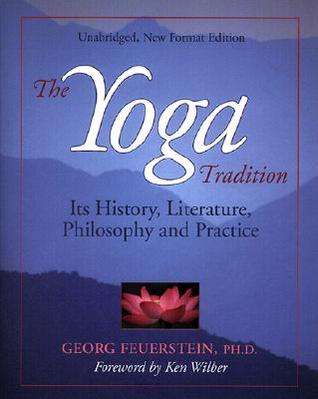
The Yoga Tradition: Its History, Literature, Philosophy and Practice by Georg Feuerstein

The Yoga Tradition: Its History, Literature, Philosophy and Practice by Georg Feuerstein

The Yoga Tradition is a reference book for the history and practical methods of yoga in its myriad forms throughout time and different religious traditions.

“In its oldest known form, Yoga appears to have been the practice of disciplined introspection, or meditative focusing, in conjunction with sacrificial rituals.” pg 27

Photo by Lucas Pezeta on Pexels.com

From these ancient beginnings, author Georg Feuerstein takes readers on a fantastical and spiritual journey through the various branches of yoga including Raja, Hatha, Bhakti, Jnana and more. He’s printed original texts, along with analysis of them, throughout the book to provide context and origin materials for each tradition.

What emerges in The Yoga Tradition is stunning in its complexity as well as sheer variety of methods, beliefs and practices.

“Long before the word yoga acquired its customary meaning of ‘spirituality’ or ‘spiritual discipline,’ the sages of India had developed a body of knowledge and techniques that aimed at the transformation and transcendence of ordinary consciousness. This stock of ideas and practices formed the matrix out of which grew the complex historical phenomenon that later came to be called Yoga.” pg 65

Photo by Karolina Grabowska on Pexels.com

Beyond sharing the history, philosophy, and practice of yoga, Feuerstein encourages modern scientists to look closely at the traditions in these pages to see what benefits could be gained from the ancient knowledge.

“Gradually, modern medicine and psychology, aided by advanced scientific concepts, methods, and instrumentation, are rediscovering some of the amazing facts that yogins have talked about and demonstrated for centuries.” pg 400

In my mind, that is one of the most exciting aspects of this book- what humanity could possibly learn about the enduring mystery of consciousness itself through the application of modern methods of study to ancient techniques.

Highly recommended for anyone interested in yoga and looking for a scholar’s thorough dissection of its history and forms. Your search can begin and end with this title.

Thanks for reading!

Machine (White Space, #2) by Elizabeth Bear

Machine (White Space, #2) by Elizabeth Bear

Dr. Jens, a rescue specialist for a medical group composed of different species from across the galaxy, is on a mission to save the lives of thousands of humans on an ancient ship, stranded among the stars. Something has gone terribly wrong with their computer system.

In addition, there’s a strange, and dangerous looking, machine in the hold of another, far more modern ship, that is attached to the archaic ship. Could it be the genesis of everything that went wrong or something more sinister?

“There could be people alive in there. We had to proceed as if there were, until we had proven otherwise.”

Photo by Pixabay on Pexels.com

Elizabeth Bear has created a fantastical, possible future in Machine where humanity has learned to manage some of our more troublesome brain chemistry through the use of sophisticated machines implanted in our heads.

I loved her imagining of what aliens (she calls them ‘systers’) may look like and how thousands of different people from worlds separated by both time and space would be able to come together and create something resembling a community.

It leads to some particularly interesting questions in this story as Dr. Jens is concerned primarily with the physical, and occasionally emotional, health of the beings, both flesh-bound and digital, whom she encounters.

“An AI couldn’t suffer a psychotic break, exactly. But they had their own varieties of sophipathology, and dissociation of their various subroutines into disparate personalities was definitely one that had been well-testified in the literature.”

I liked those aspects of the story- the exploration of a universe so far removed from my own.

Photo by Felix Mittermeier on Pexels.com

Unfortunately, I felt that this exploration was bogged down by long and meandering self reflection at key moments in the story. I realize that much of the development of the plot is an emotional journey for the characters, but it’s not fun to read about and occasionally comes off as a little preachy.

“We had to learn that there were more important things than being ‘right.’ Brilliant people are sometimes terrible at being people.”

And, as I said, it slowed the story down to a painful crawl through neurosis and the perpetual struggle Dr. Jens has between allowing her emotions or handling them through her technologically advanced and chemically-altering brain tech.

All that being said, Machine was an enjoyable sci-fi adventure and mystery, and I look forward to reading more from Elizabeth Bear in the future.

Thank you to NetGalley and the publisher for a free digital copy of this book for review purposes.

Patriarch Reliance (I Shall Seal the Heavens, #1) by Er Gen

Patriarch Reliance (I Shall Seal the Heavens, #1) by Er Gen

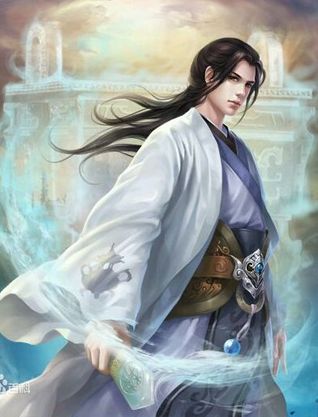
Meng Hao, an ambitious yet ultimately unsuccessful scholar, is kidnapped by a magically powerful woman and catapulted into a world of “cultivators”, mortals who grow their spiritual power in a never ending quest to become immortal. It is a dangerous world and Meng decides that the only way to stay alive is to become as powerful as he possibly can, as quickly as he can.

Photo by carol wd on Pexels.com

Patriarch Reliance was my first foray into the written world of the fascinating genre known as “wuxia”. I say ‘written’ because I this past summer I watched a show of the same genre on Netflix and thought it might be interesting to read a book. I Shall Seal the Heavens was one of the highest rated wuxia series available that has been translated into English.

What is wuxia? The definition from Google is: “a genre of Chinese fiction or cinema featuring itinerant warriors of ancient China, often depicted as capable of superhuman feats of martial arts.”

Patriarch Reliance is an adventure fantasy that uses many components of traditional Chinese medicine in its magic system or spiritual cultivation. Traditional Chinese medicine was a subject I’d never studied until I found myself looking up the topic to understand how the magic works in this book. It seems quite complex to me, but perhaps this is because I’m a newcomer to it.

Photo by Pietro Jeng on Pexels.com

The cultivators use a dizzying array of magical items with different abilities from a rain of swords to flying fans that turn into rays of light to almost anything imaginable. They are gathered and ordered by ability into sects with different legacies and secret attacks. The higher ups among the different groups fight as viciously as the newbies- perhaps more so because they have their reputations to maintain.

Despite the huge array of items and abilities, this book does become repetitious after two dozen chapters or so as Meng goes from one life threatening situation to another.

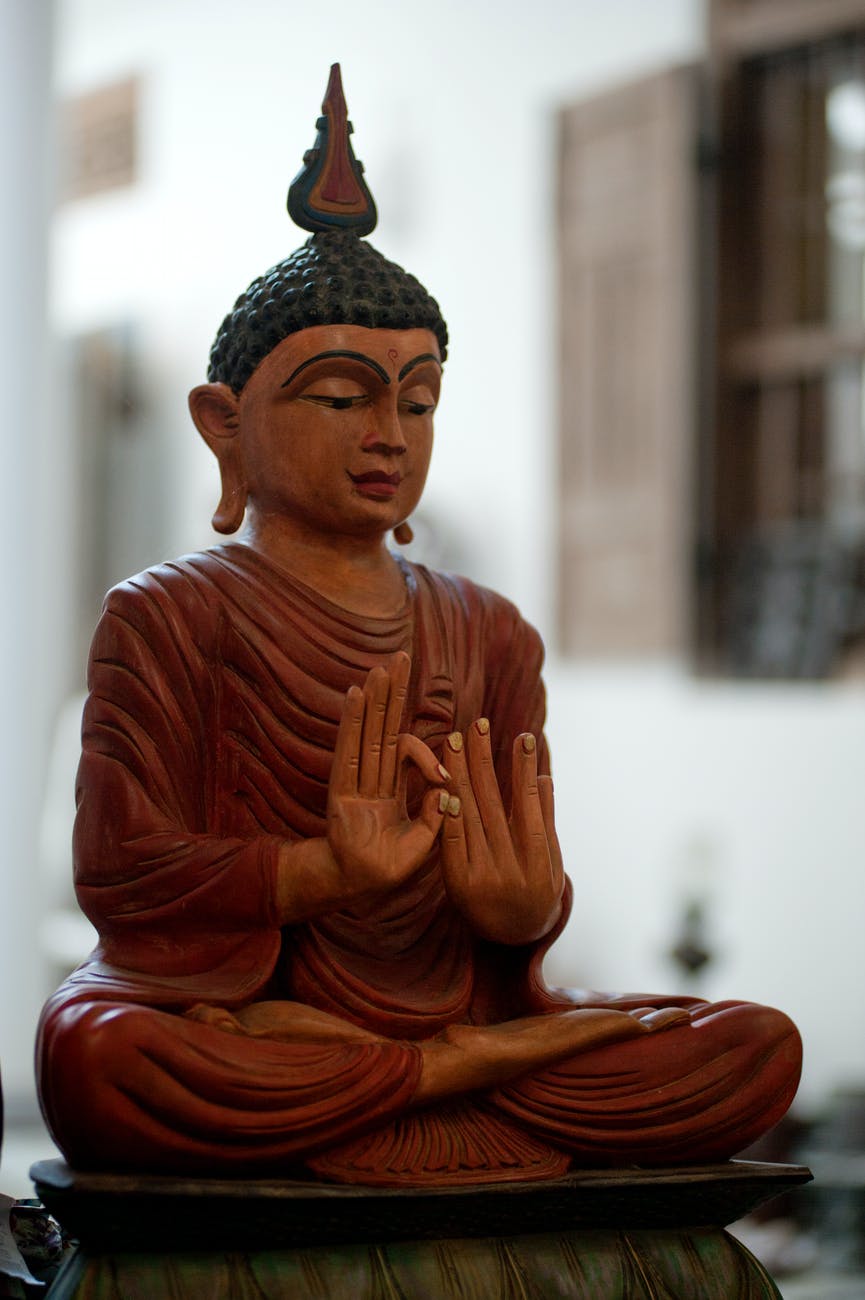
A curious aspect of the story was its deviation from my own expectations of what someone of higher spiritual power should act like. When I think of someone ‘spiritual’, I picture people like Mother Theresa, Dalai Lama, and Buddha.

Photo by Alexandr Podvalny on Pexels.com

The cultivators in Patriarch Reliance are nothing like that. They are, for the most part, violent, careless of life, and power-hungry. And they have to be. Or the people studying and meditating beside them will kill them!

I’m not sure what to make of the whole thing except that I’m going to continue on to the next book in the series. Because, despite my bewilderment, it is compulsively readable.

Recommended for fantasy readers who enjoy forays into completely unfamiliar worlds.

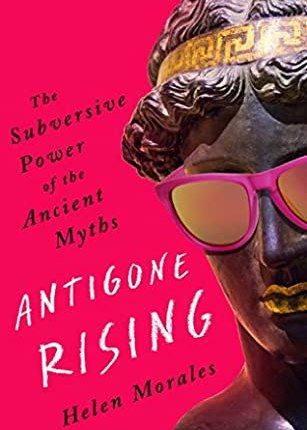
Antigone Rising: The Subversive Power of the Ancient Myths by Helen Morales

Antigone Rising: The Subversive Power of the Ancient Myths by Helen Morales

Helen Morales highlights troubling aspects of Greek and Roman mythology in a call-to-action to analyze and reimagine those myths for modern times.

As a classicist, I was familiar with most of the myths Morales examined. However, I was unaware of some of the toxic sub-context contained within them.

“My hope is that by tracing patterns and connections between ancient and modern beliefs and practices it will become easier to understand how misogyny operates and the ways in which classical antiquity plays a role (although it is not the only player and this is not its only role) in legitimating how misogyny operates today.” pg 14

Photo by Miggy Rivera on Pexels.com

The stories we tell ourselves are powerful. It shapes our expectations for our communities and the roles we occupy within them. Joseph Campbell pointed this out for the last generation. Perhaps Helen Morales will be the one to point it out for this one.

“The problem is that misogynist myths are more strongly culturally entrenched in our societies than myths that subvert them.” pg 148

But all hope is not lost. Creators from books to film to music videos are taking these myths and making them their own. With time, new interpretations will take hold.

Antigone is rising. Antigones (and Ismenes and Haemons) are rising.” pg 150

Photo by cottonbro on Pexels.com

Lest we forget, Morales reminds readers that ancient myths have been the inspiration for, among other things, “the Declaration of Independence and the US Constitution, trades union movements, Marxism, and the gay rights movement.”

It is all about how we interpret and tell the myths with each passing generation. Let’s choose carefully.

Thanks for reading!

The Highly Sensitive Person’s Survival Guide: Essential Skills for Living Well in an Overstimulating World by Ted Zeff

The Highly Sensitive Person’s Survival Guide: Essential Skills for Living Well in an Overstimulating World by Ted Zeff

“Approximately 15 to 20 percent of the population have trouble screening out stimuli and can be easily overwhelmed by noise, crowds, and time pressure.” pg 10, ebook

Ted Zeff, a self professed highly sensitive person or HSP, shares coping mechanisms he’s cultivated throughout his life-long struggle with the unique way he responds to every day life. Topics range from improving work environments, personal relationships with non-highly sensitive people, getting a good night’s sleep and more.

While you can’t live your life totally removed from the world’s jolts, you can create an environment that minimizes stimuli. If you can anchor yourself to a ship of tranquility, you won’t be tossed about by the waves of stimulation.” pg 22

Photo by Anna Shvets on Pexels.com

I am a highly sensitive person too. Most of the tips and habits Zeff suggests in this book are common sense and were not all that helpful to me. The material also becomes somewhat repetitive as the book goes on. But, if you’ve just discovered this about yourself, I could see this book being eye-opening.

“Since our aggressive society values non-HSP behavior, HSPs must learn to create boundaries and speak up. Unfortunately, many HSPs are shy and feel embarrassed to state what they want.” pg 63

Something I did learn about in this book is the highly sensitive person issue of “time pressure”. I know deadlines and meet up times stress me out, but I didn’t realize that was fairly typical of highly sensitive people.

Photo by David Bartus on Pexels.com

“Combined with your high sense of responsibility, functioning under time constraints can be one of the most difficult aspects of being a highly sensitive person. In this section you will learn specific techniques to successfully deal with the daily pressures of our fast-paced modern society.” pg 32

If you only have time to read one book about highly sensitive people, the author himself recommends The Highly Sensitive Person: How to Thrive When the World Overwhelms You multiple times throughout this text. You may want to pick that one up and give this a pass.

Thanks for reading!

Black Sun (Between Earth and Sky, #1) by Rebecca Roanhorse

Black Sun (Between Earth and Sky, #1) by Rebecca Roanhorse

Black Sun is a fascinating fantasy novel that examines religion, ritual, prophecy, and how all of those variables affect civilization and the balance of power between groups within that civilization.

“Just like their great ancestor, I have swallowed the shadow of the sun. They call me Grandfather Crow sometimes, although I am not so old.”

Photo by Tom Swinnen on Pexels.com

Much has already been said about Rebecca Roanhorse’s characters in Black Sun, which are phenomenal, so I will only add to the discussion by saying how much I enjoyed the differences that she created between the various cultural groups of this fictional world. I also liked how she built the hierarchies within the cities, especially Tova.

“It is said that thousands of years ago our world was once populated with gods. They are our ancestors. But there was a great war, the God War, and many were killed. Those who were not killed in the war began to die anyway.”

This spring, I took a course from Oxford University about ritual and religion in prehistory and it not only changed the way I view the role of religion within the creation of civilization, it also changed my analysis of books that contain religious themes, like this one. Matters of faith and spirit aside, there are compelling reasons to believe that religion started as a method of maintaining power and control within groups in prehistory.

Photo by freestocks.org on Pexels.com

Roanhorse’s work shows these connections clearly. There’s hints of a bloody night filled with warriors who set out to exterminate a particularly warlike cult for, what they say is, the good of all the other groups. The priestly-class carefully constructs rituals and remembrances to not only mark the passing of time and powerful individuals but also to demonstrate their enduring power over the groups they claim to represent.

The mysterious figure, Serapio, is manipulated from birth to fulfill a role that no one tells him about because of a specific prophecy of the Carrion Crows. The Sun Priestess Naranpa has difficulties holding her office because of the poverty of her birth family will always make her an outsider among the more privileged classes who traditionally gave their sons and daughters to the priests.

There are more examples of power struggles throughout the story and I don’t want to ruin anyone’s enjoyment of discovering them. Those were a few that came readily to mind.

Photo by Pixabay on Pexels.com

So, in addition to being an immersive fantasy read, Black Sun is also semi-educational about the potential development of religion in prehistory.

All that being said, and as much as I loved the character and plot development, I didn’t like the ending. No spoilers here though.

Thank you to NetGalley and the publisher for a free advance reader copy of this book.

Or What You Will by Jo Walton

Or What You Will by Jo Walton

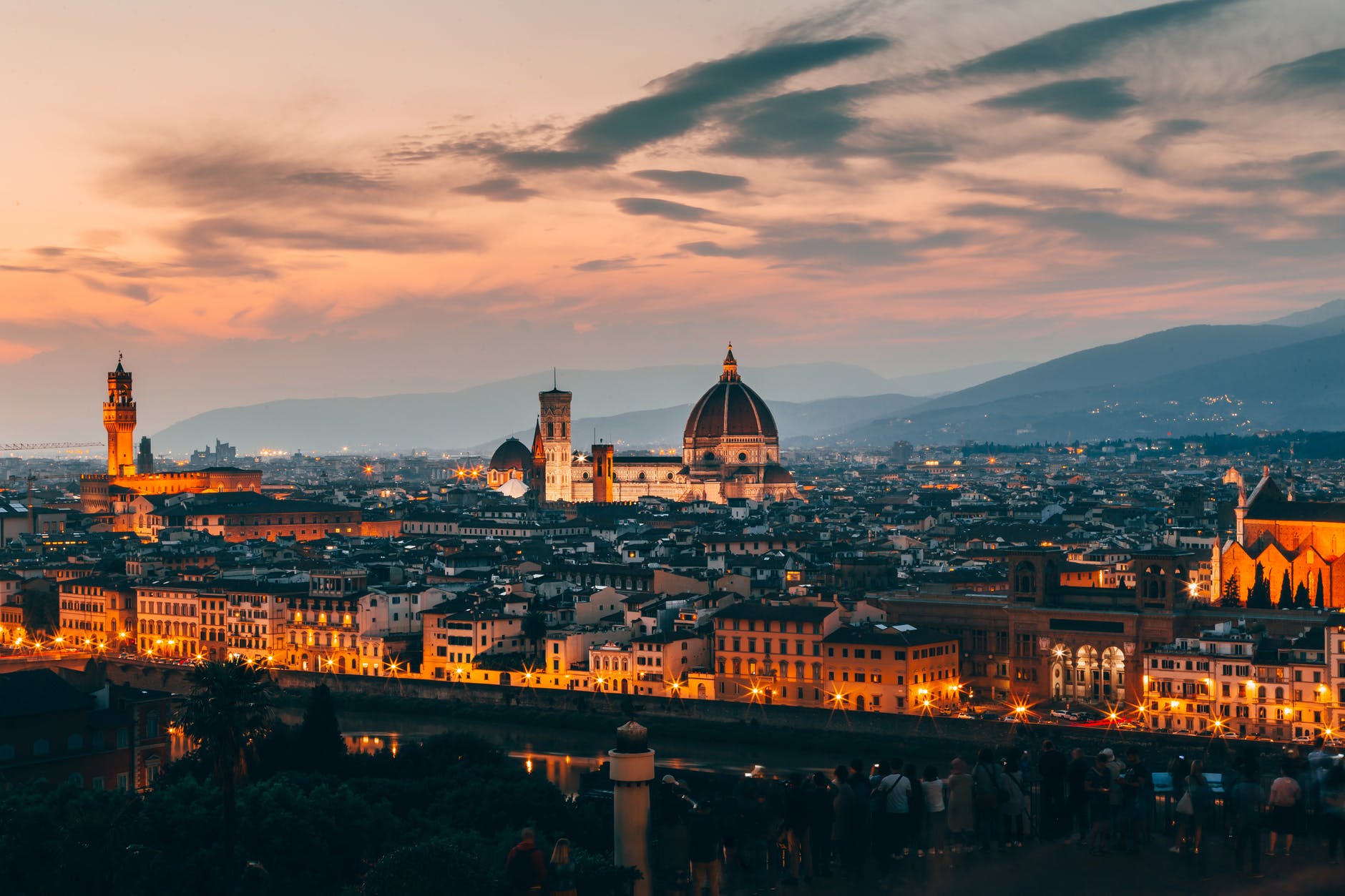
Or What You Will is a unique fantasy novel about a writer, one of her fictional characters, her real life, a final story she is writing, and her love affair with the city of Florence.

“I have been a character, and I have been a narrator, but now I don’t know what I am.” pg 8, ebook.

Photo by Tamara Velazquez on Pexels.com

Told from the point of view of a character inside another character’s mind and between flashbacks to real life and an on-going fictional story-within-the-story, Or What You Will sounds quite complex. But once I got into the flow of it, I enjoyed this quirky tale quite a lot.

“Readers remember you. So you’ll live on in the books. It’s the only form of immortality the real world has.” pg 53, ebook.

I loved learning about Sylvia (the fictional writer’s) life, loves, and writing process. Part of its charm is that this is a meta-filled book for readers who love the process of writing and the development of characters. It is also filled with surprising and entertaining tidbits of real history about Florence which appealed to the amateur historian in me.

Photo by Josh Hild on Pexels.com

There was plenty to enjoy in Or What You Will. My quibble with the book has to do with its ending.

After meticulously building an immersive world, or two, the author unceremoniously ends the story in a few paragraphs.

It was incredibly disappointing, especially when you consider the book is only 226 pages long (ebook). She had room to do more. In fact, I could have stayed in the world she created for twice as many pages.

That being said, the last few pages of the book made me cry. So, perhaps it was a satisfying ending in its way. I just wish it had been developed more fully.

Photo by Daria Shevtsova on Pexels.com

Other than the ending, this is a brilliant and totally unique story, unlike anything I’ve ever read. If you like Jo Walton’s other fantasies, you may want to give it a try.

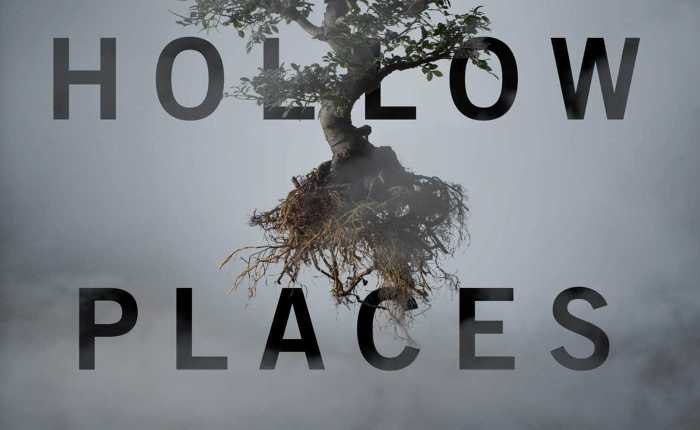
The Hollow Places by T. Kingfisher

The Hollow Places by T. Kingfisher

Kara is going through a hard time and is grateful for a chance to help out at her Uncle Earl’s museum. She has always loved it there.

“Nobody ever believes me when I tell them my uncle Earl owns a museum. They start to come around when I explain that it’s a little tiny museum in a storefront in Hog Chapel, North Carolina, although there’s so much stuff jumbled together that it looks bigger than it is.”

Photo by Tobias Bju00f8rkli on Pexels.com

But when Kara and Simon, the barista next door, attempt to repair a hole in the wall of the museum, they discover a hallway that shouldn’t be there.

“Frankly, I wasn’t even sure what you were supposed to do when you had an impossible hallway in the walls. Did you call the police to report that the laws of time and space were getting broken?”

What lies beyond the hallway? Kara and Simon are going to find out, and their lives are never going to be the same.

Photo by Elina Krima on Pexels.com

First, I am not a big fan of the horror genre. But, The Hollow Places, is horror done the way I like it best.

There’s an unknown world with as-yet unknown dangers. The story is one of exploration and carefully-crafted reveals so you feel as if you’re on an adventure.

The characters are fantastic. Kara and Simon are people I would walk down a mysterious and magical hallway with, no question.

The author slowly builds the tension of the story so, for the most part, the main emotion the reader feels is a growing sense of dread. It’s an emotion a reader with an anxiety disorder (like me) is familiar with and there’s something very satisfying about having that feeling validated and then resolved.

I believe life rarely gives the same kind of closure.

Photo by Elina Krima on Pexels.com

The voice of the main character, Kara, is down-to-earth and, occasionally, quite funny. I liked how the author gave her all sorts of relatable, every-day type problems and then, once the story started rolling, she re-evaluated the importance of issues that would have caused her major headaches prior to her life-changing experience.

I could see myself doing the same sort of thing if I was in her shoes.

The Hollow Places contains some nightmare-inducing moments but nothing I considered gratuitously violent. There’s some mild sexual references in the banter between the two main characters. This book might work for older teens who are looking for a spooky October read.

Highly recommended for readers of horror or who like their fantasies to have some thrills and chills.

Thank you to NetGalley and the publisher for a free digital copy of this book.

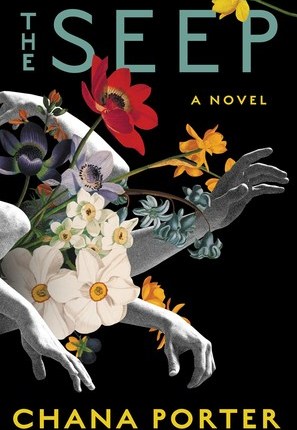
The Seep by Chana Porter

The Seep by Chana Porter

Warning: minor spoilers ahead that are listed in the book’s description on Goodreads. Do not read this review if you don’t want to know anything about the book’s plot before beginning it.

“They would soon realize that The Seep had already infiltrated their city’s water supply. They were already compromised, already bodily hosts to their new alien friends. It was through that connection they could hear one another’s thoughts, feel the same emotions, overlaid with the all-consuming adage that Everything Will Be All Right, No Matter What.” pg 10, ebook

The Seep by Chana Porter asks many questions like: what would humanity and society look like if thoughts could actually create reality, if physical material was permeated with the spiritual, if enlightenment was only a sip or two of alien-filled water away?

Photo by Arnie Watkins on Pexels.com

How would people live, work and raise their children? What would relationships look like? And how would it feel to adults who grew up with a whole other version of reality only to spend the last half of their lives in a world, that to them, feels turned upside-down?

Would they embrace it, fight against it or choose another as-yet unknown path?

Trina, a trans-woman from the time before alien technology, when humanity changed genders with surgery and hormone therapy, is in a happy and fulfilling marriage with her wife, Deeba, until the day when Deeba decides she wants to become a child and live her life again. She asks Trina to be her mother in this second life, still sharing her reality but in an entirely different way than as a lover. This desire is something that is within the realm of the possible now thanks to the alien invasion called, “The Seep”.

Trina does not take this revelation well.

“It felt akin to coming home one day to find that your wife had become a hawk, with dusty talons and a great golden eye. Your hawk-wife can’t live with you anymore. She wants to live in the sky and eat smaller birds, not drink coffee and read the newspaper in bed with you.” pg 26, ebook

Photo by Flickr on Pexels.com

The majority of this book reveals how Trina adjusts to her new reality.

“The main message I have for you today is that we don’t yet know what to call ourselves, as both human beings and symbionts of The Seep.” pg 46, ebook

I think this book does a good job, like other science fiction novels, of holding up a mirror to reality and saying, what if. It also makes a great metaphor for how older generations might feel out of touch with the generations who come after them.

Prior to the alien invasion, Trina was on the leading edge of society in both her self actualization and lifestyle. After, she feels abandoned in a landscape that no longer makes sense and unloved by the people in her life she valued the most.

There’s a palpable sense of isolation and ever-increasing paranoia in this story. If the aliens exist on a level of conscious thought, they know what you want before you even voice it. It’s disturbing, but with technology increasing the pace of life and guessing consumers’ wants and needs before they even know, how far off the mark are we from that sort of interaction, really.

Highly recommended for readers who enjoy short science fiction that makes you think.