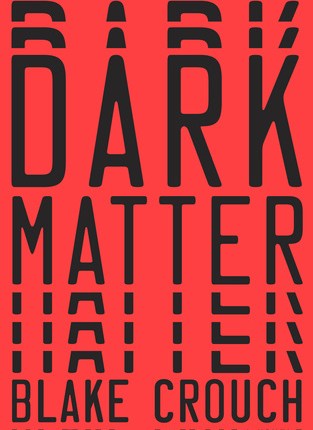
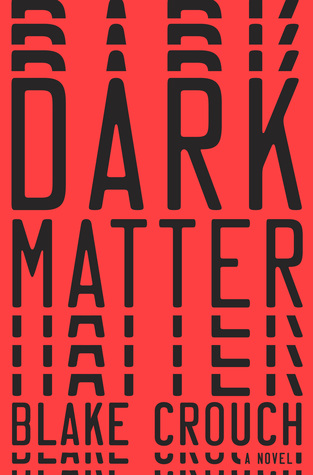
Dark Matter is a fantastic, sci-fi read about regret, love and quantum mechanics.
My book club picked this wild ride of a book and everybody took something different out of it.
We all enjoyed it, which is weird for us. Usually, we have opinions across the spectrum. This one, though, was universally loved. That’s saying something.
“In the shadow of this moment, my life is achingly beautiful. “I have an amazing family. A fulfilling job. We’re comfortable. Nobody’s sick.” pg 28. And then, something truly surprising happens. No spoilers!
I think that, as time passes, we grow comfortable in our lives, our marriages and relationships. Part of this book is about appreciating what you may take for granted. “He says, “It’s like we get so set in our ways, so entrenched in those grooves, we stop seeing our loved ones for who they are. But tonight, right now, I see you again, like the first time we met, when the sound of your voice and your smell was this new country.” pg 67.
The leader of my book club picked quotations that had to do about self-knowing and quantum mechanics. It was no surprise that mine were all about love. I’m one of the hopeless romantics of the group.
And one of the most open-minded: “We all live day to day completely oblivious to the fact that we’re a part of a much larger and stranger reality that we can possibly imagine.” pg 96. I truly believe that.
A local physics professor joined our circle and gave a short lecture on basic quantum mechanics and wave theory. But, you don’t have to be an expert on the subject to enjoy this story. It’s approachable science, like The Martian.
Recommended for book clubs, especially, but also anyone who wants an unbelievable story will probably love this too.
I heard that this is going to be made into a film- read the book anyway. It’s always better.
A so-so mystery with an unreliable narrator that takes place, for the most part, on a boat. It was ok thriller, but I would never have read it without the encouragement of my book club.
In the desperate search for “the next Gone Girl“, The Woman in Cabin 10was put forward as an option. I think that’s unfair. The next Gone Girlor Hunger Games will be so clearly original and ground-breaking that it couldn’t be titled the next fill-in-the-blank.
And, with that sort of hype, it put an expectation on this story that it didn’t live up to. But, that’s not The Woman in Cabin 10‘s fault.
It was clear to me that Ruth Ware had experience as a journalist. Her character, Lo Blacklock, is completely believable in that regard. But, I found that I didn’t like her much. She puts too much pressure on herself to succeed.
“I had to get myself together before I left for this trip. It was an unmissable, unrepeatable opportunity to prove myself after ten years at the coalface of boring cut-and-paste journalism. This was my chance to show I could hack it…” pg 20.
But, if she had taken the time to stay home and recover from her PTSD, what sort of thriller would that be? So, off she goes, onto a billionaire’s exclusive boat.
“…it was pretty nice. I guess you had to get something for the eight grand or whatever it was they were charging for this place. The amount was slightly obscene, in comparison to my salary- or even Rowan’s salary.” pg 47.
Then, in classic thriller fashion, she hears a scream in the night, sees something that no one, even she, believes and is now stuck in an enclosed space with a potential killer.
Even with that set-up, I didn’t get into the story. Lo is overly-dramatic and doesn’t take the time to think things through. I found myself wishing that she would slow down and start keeping a complete written record rather than running from one disastrous encounter to the next.
“I lay there, cudgeling my battered brain to try to work it out, but the more I tried to ram the bits of information together, the more it felt like a jigsaw with too many pieces to fit the frame.” pg 242.
She jumps to conclusions and accuses or dismisses people nearly on a whim. I’d read a passage and then say to myself, “Come on, is that really the best you could do?” Now, that’s hardly fair as she’s exhausted, terrified and traumatized. But still. That’s what I thought.
Plus, the “unreliable narrator” thing has been done. In this story, Lo’s unreliable because she has anxiety and drinks a lot to forget that fact. That sounds like almost everyone I know.
Recommended for fans of mystery. It is enjoyable, but don’t make my mistake and expect too much complexity from The Woman in Cabin 10.
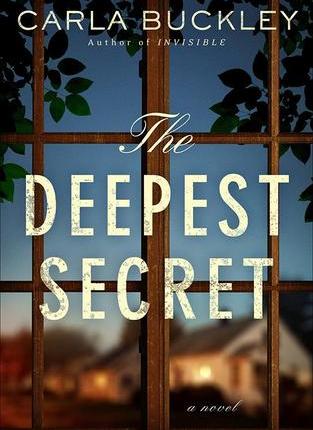
I enjoyed the conversation with my book club about The Deepest Secret more than I liked the book itself. Buckley has written a world in which everybody has secrets. Discovering what those secrets are is the point of this thriller about a cul-de-sac and its occupants.
Tyler, one of the main characters, has XP, a disease in which his skin can burn at the slightest exposure to UV rays. So, most of his portion of the story takes place at night, when he can safely go outside: “He goes over to the bridge and shines his flashlight down into the water. Minnows dart in every direction, shivery brown shapes. Rosemary had once told him that fish stayed awake all night, just like him. That had comforted him, knowing that someone else was awake besides him and the crickets.” pg 19 He sees all sorts of crazy stuff.
Tyler’s mom, Eve, has gone into mothering overdrive because of her son’s illness: “She misses the carefree person she used to be, that joyful girl. Being Tyler’s mother has turned her into someone who’s endlessly vigilant. She tortures herself with horrifying scenarios just so she can come up with a plan.” No fun.
Eve’s relationship with her husband is understandably screwed up because of the way she behaves about her son. He is generally absent and works in another city. Tyler has an older sister who doesn’t get the attention she needs because her bro is sick all the time.
And that’s just one family. Now add about a dozen other characters and you begin to get the feel of The Deepest Secret. I never had trouble keeping anyone straight, but there are a lot of characters.
The best part of the conversation with the book club centered around the idea of secrets and “normalcy.” One of our members said that if we could point to one person who was normal, then he could show us someone else who was not. The point being that “normal” doesn’t really exist. It’s just some sort of pie-in-the-sky ideal that we tell ourselves about each other.
The Deepest Secret had me questioning the unseen lives of those around me from others in my neighborhood to the people next door. It was an unnerving feeling but not necessarily unpleasant. Pick this one up if you want to shake your view of reality a bit. Or if you want to feel like someone is peeking through the windows of your home at all of your mundane moments. Because, it’s not like you have anything to hide… do you?
Well, that was different. A Good American is, at its heart, a story about a family who immigrates to America before World War I and how successive generations handle life, love, and what comes after. It strongly reminded me of the film, Fried Green Tomatoes, because of the family drama and some of the subject matter. This is an epic tale. Parts of it, I loved. Other parts… I could have lived my life without reading.
I loved Frederick’s attitude towards his new country. It’s exactly what I imagine my great-great grandfather was like when he came over from Poland. “…Frederick loved America. He loved its big open spaces, the sunsets that drenched the evening sky in blistering color. He loved the warmth of the people. Above all, he loved smell of promise that hung in the air. Europe, he could see now, was slowly suffocating under the weight of its own history. In America the future was the only thing that mattered.” pg 57. Frederick throws himself into the American Dream- earning money and providing for his family to the detriment of his relationship with his wife, Jette.
I also loved the parts about music. In this portion, Joseph, Frederick’s son, is taking voice lessons from a rather conservative side character named Frau Bloomberg: “…Bloomberg did not approve of most of opera’s greatest female characters, who were (in her opinion) either hysterical hotheads or dissolute fornicators. She was determined to protect Joseph from all that depravity. Whenever he asked the meaning of a particular foreign word, Frau Bloomberg said the first thing that came into her head. As a result, when Joseph wistfully sang about the imminent return of a long-lost lover from overseas, he believed that he was telling a touching story about penguins.” pg 70
We don’t really get to meet the narrator of the story until much later in the book and, I think, that’s where the story line became unfocused. A couple chapters deal mostly with young men’s coming-of-age and burgeoning sexuality, so there’s a lot about masturbation. Everyone does it, I get that, but really, did it have to be such a theme? As I read it, I was wondering what some of the more elderly members of my book club are going to say about it.
In my mind, the first part of the book was the strongest- the origin story of Jette and Frederick. “My grandmother’s life had been one long opera. There had been drama, heroes, villains, improbable plot twists, all that. But most of all there had been love, great big waves of it, crashing ceaselessly against the rocks of life, bearing us all back to grace.” pg 329. There is a sweetness to their story that the rest of the book is missing.
It may be that this story simply goes on too long, but the author was clearly caught up in his own tale. “Telling stories was still a means of escape. And so I put a fresh sheet of paper into the machine, ready to flee once again. This time I no longer thought about getting published, but just wrote for my own amusement. The journey, not the destination, became the thing, and I rediscovered the simple satisfaction of seeing my ideas materialize before me, sentence after sentence.” pg 344 Even though he was speaking through his character, I’m convinced that that bit right there was all Alex George- a manifesto of sorts, written right into the story.
A Good American is also about race, religion, brotherhood, honesty, marriage, fidelity and more. Plenty for a book club to take part and chew over. Recommended for folks who like their historical fiction long and meandering with, sometimes shocking, turns in the road. Thanks for reading!
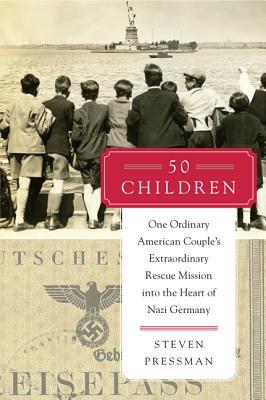
Extraordinary and true story about how Gil and Eleanor Kraus saved fifty Jewish children from the Nazi Holocaust.
I watched the HBO documentary after I read this and, though similar and emotionally powerful, I enjoyed the book more because it provides a detailed history for each child (that Pressman was able to locate).
My only complaint about the book is that, though the story is gripping, it moves very slowly. My book club had a fascinating and educational discussion about 50 Children and, all said, I am very glad that it was the final club pick of 2016.
Did you know about this episode from US history?: “The fifty boys and girls whose lives were saved by Gil and Eleanor Kraus comprised the largest single known group of children, traveling without their parents, who were legally admitted into the United States during the Holocaust.” pg 9, ebook.
I didn’t realize that in the late 1930’s, that Jewish people were allowed, and even violently encouraged, to leave the Third Reich. The trouble was that, like other large displaced populations more recently, no country on earth was prepared to let that many people in or provide the social services required.
Fortunately, Gil Kraus was a well-connected lawyer who was willing and able to work within existing immigration and labor laws to find a way to bring the children into the US.
I knew that the situation was awful for Jewish people in Europe before and during World War II, but, until I read this book, I didn’t realize the complete hopelessness that was experienced even before concentration camps became the ‘final solution’: “Within the first ten days of the Anschluss, the Viennese police reported nearly one hundred suicides throughout the city, virtually all of them Jews. By the end of April, the number of suicides had jumped to at least two thousand. Among the victims was Henny Wenkart’s pediatrician, who took his life by jumping out a window.” pg 42, ebook.
The American diplomats in Austria and Berlin had a front row seat to the horrors that the Jewish population were experiencing, but their hands were tied by national policy and immigration caps.
George Messersmith and Raymond Geist helped the Krauses as much as they could, within the law: “The Jews in Germany are being condemned to death. Their sentence will be slowly carried out, but probably too fast for the world to save them,” Geist (US foreign service officer in the Third Reich) wrote in a private letter to Messersmith (State Department secretary, stationed in Washington D.C.) in December 1938, less than a month after Kristallnacht.” pg 61, ebook.
Why was the American publication so anti-immigration?: “The United States still bore the scars of the Great Depression, and restricting immigration was seen as a way to protect jobs for Americans, who for years had been plagued with staggering unemployment rates. But challenging economic considerations were not the only factors at play in the immigration debate. The American public simply was not moved by the dire situation in Europe.” pg 68, ebook.
And, antisemitism was far more prevalent than it is today. All of these things made it difficult if not impossible for the Jewish people who were trying to escape the Nazis.
Even after the Krauses were able to get the children to the United States, they faced harsh criticism from other Jewish charity groups for their actions. I was absolutely blown away by that.
You’d think that people would have banded together and said, “Look what’s possible!”, but instead, they fractured and accused the Krauses of breaking immigration laws. “Was it envy that prompted others to criticize what had clearly been a stunningly unique and successful rescue? Whatever their motivation, some of these same people now wondered if they might simply duplicate Gil’s strategy. pg 201, ebook.
But, since this was the largest group to get out, clearly the others didn’t succeed.
At book club, we talked about how the 1939 situation is similar to what the world is facing today with the Syrian refugee crisis and, though we all thought that immigration policy needs to be re-examined, that the real tragedy is that the world still hasn’t found a way to respond to the wars and conflicts that cause such displacement in the first place.
Is humanity ever going to figure out a way to either co-exist peacefully or provide sanctuary for those displaced by the fighting? I don’t know, but it’s a question that we should think about.
Recommended for anyone interested in the Holocaust, immigration, or testimonies from World War II- as uplifting as it is unsettling, 50 Childrenis a timeless lesson for everyone about the evils that happen when those able to help choose not to or look away.
 Dark Matter is a fantastic, sci-fi read about regret, love and quantum mechanics.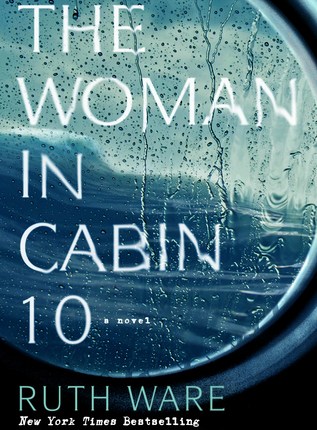

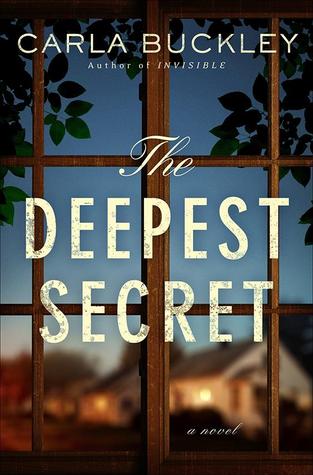 I enjoyed the conversation with my book club about The Deepest Secret more than I liked the book itself. Buckley has written a world in which everybody has secrets. Discovering what those secrets are is the point of this thriller about a cul-de-sac and its occupants.
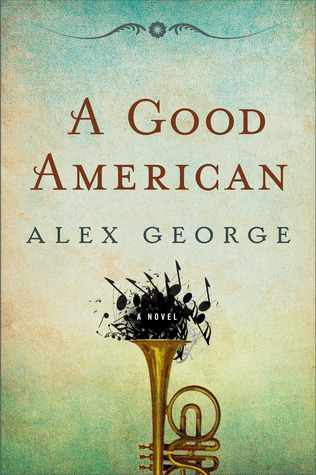 Well, that was different. A Good American is, at its heart, a story about a family who immigrates to America before World War I and how successive generations handle life, love, and what comes after. It strongly reminded me of the film, Fried Green Tomatoes, because of the family drama and some of the subject matter. This is an epic tale. Parts of it, I loved. Other parts… I could have lived my life without reading.


 The Help Desk Book Blog