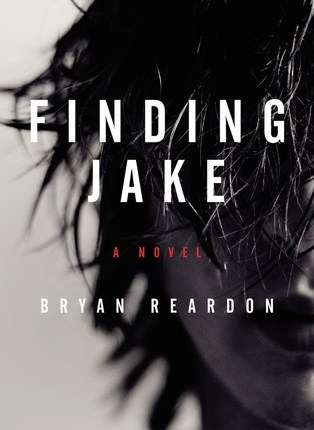
A heart-wrenching yet ultimately uplifting story of psychological suspense in which a parent is forced to confront what he does—and does not—know about his teenage son, in the vein of Reconstructing Amelia, Defending Jacob, and We Need to Talk about Kevin.
While his successful wife goes off to her law office each day, Simon Connolly takes care of their kids, Jake and Laney. Now that they are in high school, the angst-ridden father should feel more relaxed, but he doesn’t. He’s seen the statistics, read the headlines. And now, his darkest fear is coming true. There has been a shooting at school. -Goodreads
I wouldn’t have touched this title without the encouragement of the library book club. Books and Brew challenges me to read different books, which I like, but I don’t always enjoy the topics that are discussed.
At first, I did not like Finding Jake. I thought that Reardon was presenting the glaring differences between introverts and extroverts as traditional gender role difficulties. I didn’t think that Simon was avoiding playdates because he was a “guy” but because he was an introvert. But, I suppose, being a guy didn’t help him build any common ground with the stay-at-home moms, which Reardon discusses in depth.
Also, I never liked the way that Simon and Rachel treated each other. I think that all too often, marriages tank because of the careless way that couples stomp on each other’s emotions. Yes, it’s a legitimate topic to discuss, but I don’t like reading that kind of thing for fun. Because, it’s not really fun at all, is it?
I empathized with Simon’s feelings about staying home and taking care of Jake and, later, his daughter, Laney. I never planned on having a kid, so the assumption that I was going to stay home and care for her really blind sided me. It was never even discussed in any serious way just presented like- so this is your life now, full time caregiver. That part of the book was hard for me to get through, in addition to all of the obvious school shooting horror emotions, because it brought up a lot of old angst that I would have rather had stayed buried at the bottom of my subconscious: “I never realized how much I’d miss seeing the cast of characters that make up an office. I also did not realize how much I identified with my job, or how much my job identified me.” pg 15 Yeah, either did I.
Here’s part where I just wish Simon had admitted to himself that he was an introvert: “I, for one, could go days (maybe weeks) without talking to the neighbors. Not that I disliked them. There were days I could go without talking to anyone, a new trait that expressed itself since I’d left the office. Conversations at work, whether about the job or not, had been simple. In the suburbs, though, the same exchanges left me either confused or apologetic.” pg 19 Classic introvert. Business is one thing, but personal relationships are a whole other can of worms.
The mother in this story, Rachel, asks Simon to stay home and raise the children, but they never seem to make peace with that decision and it seriously bugged me: “The rest I (Simon) left unsaid. It presented itself like a hippo in my kitchen, though. She should have stayed home with the kids. I don’t think Rachel picked up on it, thankfully, or the rest of the conversation would have progressed very differently. pg 47 Tons of exchanges like that, peppered throughout the book. Not fun.
And why do teachers make parents sit on those child sized chairs at parent teacher conferences? I’ve always wondered: “Ms. Jenkins motioned toward a low, round table. One full-size chair rested on her side. An array of three miniaturized versions lined our side. … I tried to fit my rear on the tiny seat, teetering back and forth until I found a semblance of comfort. When I turned to Ms. Jenkins, I realized I had to look up at her. I instantly felt like a child, folding my hands in my lap and waiting to get in trouble.” pg 101 It’s ridiculous.
Simon was far too hard on himself for about the whole book: “The past hours lost all clarity. Inexcusably, I think about the movies. Those parents, caught up in some awful tragedy paralleling our own, act the heroes, persevere against all odds, track down the clues and find the answers, gun in hand, nursing a nonfatal wound to the shoulder. For me, it is nothing of the sort. Instead the tsunami of reality pushes me, all of us, along, forcing us down this path of inactivity, bureaucracy, and flashbulbs. It is a wave of staggering weight that holds us captive to the nothingness.” pg 113 He should have given himself some credit. Who among us could have done any differently in the same situation?
What I loved about Finding Jake is that it is so relatable. At almost any point in the story, I could put myself in Simon’s shoes: “Maybe life is just a series of banal moments punctuated by tragedy. … Rachel and Laney sat in the living room, both reading. Laney flipped through a People magazine while my wife read a brief on her iPad. A familiar yet diaphanous annoyance colored my vision of what could have been a nice family moment. Instead, I blamed my wife for being a workaholic and at the same time wondered why Laney wasn’t reading her assignment from school instead of a glossy periodical.” pg 221
In conclusion, Finding Jake wasn’t a walk in the park, but I’m glad I read it, because now I’ll have plenty to say tomorrow night at book club. And, I’m glad that we meet at a bar, because I’m going to want that drink in my hand to soften and fuzz the lines of the less palatable emotions that will inevitably arise while we talk about school shootings, raising kids, gender roles, and life.
Thanks for reading!


 The Help Desk Book Blog