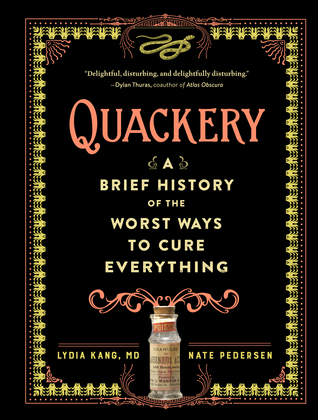
Quackery: A Brief History of the Worst Ways to Cure Everything by Lydia Kang

Quackery: A Brief History of the Worst Ways to Cure Everything by Lydia Kang

Quackery taught me that people have been desperately seeking cures for ailments, real and perceived, for ages. Sometimes that search takes them into disgusting or deadly treatments peddled by others who are taking advantage of that desperation for their own gain.

These human vultures have been called “quacks,” among other things.

Photo by Engin Akyurt on Pexels.com

“But quackery isn’t always about pure deception. Though the term is usually defined as the practice and promotion of intentionally fraudulent medical treatments, it also includes situations when people are touting what they truly believe works.” pg 1

Unfortunately, even those selling the “remedies” with the best of intentions still managed to kill people.

There seemed to be no end to the creative ways we’ve poisoned each other with various metals or concocted deadly and addicting brews in the name of health. We’ve burnt and blistered suffering unfortunates, taken pieces of their skull out to let the evil spirits out of their brains, or ground up human bone and ingested it.

The most disturbing chapter of this book, and there were some serious contenders, was the part about the development of anesthesia.
Photo by Mitja Juraja on Pexels.com

“Several chapters in the annals of anesthesia were written by some hard-partying, borderline sociopathic characters. So the next time you blissfully awaken from a surgery, remember to thank the child-stranglers, sponge-huffers, and ether frolickers of the past.”

Yeah, there have been some awful things done to both animals and people in the name of medicinal research.

The most amusing anecdote in Quackery goes to a section about creative uses of tobacco.

Photo by Aphiwat chuangchoem on Pexels.com

“You know the phrase ‘blowing smoke up your ass’? Well, you can disgust your next blind date with the true life medical origin of that phrase. Because literally blowing smoke up someone’s ass was a sanctioned resuscitation method in the eighteenth century.”

And now you know.

Recommended for readers with a strong stomach who are interested in strange and forgotten medical history.

My book club read this for our June pick but I missed the meeting. I expect an extraordinary conversation was had by all because this book is full of fascinating and disturbing topics of all sorts.

Thanks for reading!

All the Forgivenesses by Elizabeth Hardinger

All the Forgivenesses by Elizabeth Hardinger

From the front of the book: “As we know, forgiveness of oneself is the hardest of all the forgivenesses.” – Joan Baez

Bertie, the heroine of our tale, was the eldest girl born in a family of nine in rural Kentucky in the early 19th century. Because of her gender, her mother taught Bertie everything about keeping house and how to care for children, which Bertie ended up doing all the time to the detriment of everything else, including her education.

Photo by Lukas Kloeppel on Pexels.com

“We was living in the Appalachian hills in southeast Kentucky, but I didn’t know that then. It was just the place where we lived at. For all I knowed, it was the whole world.” pg 5

An early childhood tragedy cements in Bertie’s mind that she is unworthy of the trust and scant love her mother gives to her. She carries that burden in her subconscious mind throughout the tragedies that follow and it shapes everything in her life.

Elizabeth Hardinger has penned a beautiful historical fiction novel about family, secrets, struggles and the life-saving power of forgiveness, not just for yourself but for everyone around you. The characters in this book are complex and so flawed that sometimes I wanted to reach into the pages and hug them until they came to their senses.

That’s how you recognize an extraordinary author, they make you care.

“If you was a bawl-baby, you got shamed, you got teased, or people just ignored you like you’d embarrassed yourself, which I reckon bothered me the most of all. … So you learned to hide your feelings or wait till you was out behind the barn and nobody could hear you.” pg 8

Photo by Kristina Paukshtite on Pexels.com

The culture examined in All the Forgivenesses is rural, impoverished and male-dominated, mainly because of the time period. The reader is able to juxtapose Bertie’s tragic situation with her best friend Alta Bea, the daughter of a wealthy banker.

“For sure I hadn’t never met nobody like Alta Bea. I never knowed nobody that had that look in their eyes like she could see into you. It made a person tired and jangled, like somebody was shining an oil lamp in your eyes, but it also give you a feeling of glittering, fluttery things you couldn’t hardly not look at.” pg 52

The girls’ friendship is strained at times and built upon a foundation of mutual loneliness, though Bertie has little to no time in her day-to-day routine to just be a person. It’s fascinating to watch the two characters develop from children to adults and the character traits they drag along with them as well as the ones they leave behind.

The vernacular of All the Forgivenesses was distracting for a page or two, but it started to flow for me after that. I appreciated Hardinger’s skill in making Bertie’s rough-edges part of the story. She’s such a relatable character. You know she wants to live her own life, but with her family’s situation, she just can’t. And yet, for the most part, she loves them anyway.

“Read it, Bertie, you’ll like it,” she said. Hearing somebody use my name – and not to curse me out or ask me for something – I confess that made me glow a little bit.” pg 67

Photo by Andrea Piacquadio on Pexels.com

Highly recommended for readers who enjoy historical fiction or as a book club pick. My book club chose this and we had plenty to talk about – from gender roles to romance to families. Not everyone liked it as much as I did, but I absolutely loved the characters, Bertie being the top of my list.

And I do agree with the opening quotation of this book, “to forgive yourself can be the hardest of all the forgivenesses.” Funny that we, like Bertie, find it easier to extend that to others than to ourselves. I wonder what that ultimately says about us.

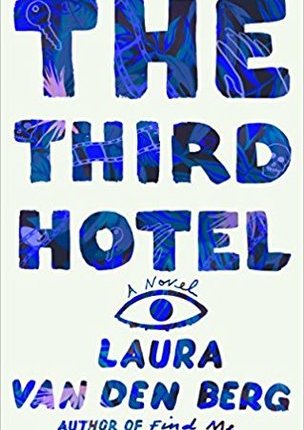
The Third Hotel by Laura van den Berg

The Third Hotel by Laura van den Berg

A strange and confusing ride through a world seen through the eyes of a grieving widow. A short time prior to attending a film festival in Cuba, Clare’s husband Richard was killed. Now, she sees him on the streets of Cuba.

“Clare had never before seen her husband operate a motorbike, but he navigated it like he had been riding one all his life, like he had been riding one in Havana all his life, like he had not been struck by a car and killed in the United States of America some five weeks ago.” pg 13

Photo by Valeriia Miller on Pexels.com

What is going on? The reader isn’t sure what’s real and what’s only in the mind of Clare. Laura van den Berg raises mammoth questions and leaves the interpretation to the reader.

My book club picked a heck of a read for March. Reactions to this book ranged from the disgusted to the mystified to the fascinated. I’d put myself somewhere in between.

I like having complex symbolism to pick apart and magical realism to consider in a story. I like having an open-ended mystery. I don’t need to have all the answers.

But I do like to have more hints at the possible interpretations than van den Berg gives us.

“She might have said, I am not who you think I am. She might have said, I am experiencing a dislocation of reality.” pg 3

Photo by cottonbro on Pexels.com

Or she might have said, I have no idea what’s going on in this story. A character in the novel itself explains this confusion (in the guise of talking about horror films), suggesting it’s purposefully created by the author, and says it is designed to create a sensation of “eels under the skin.” This book definitely had that type of impact on me.

“Besides, he added, raising a finger, the foundation of horror is a dislocation of reality, a dislocation designed to reveal the reality that has been there all along, and such dislocations happen all the time.” pg 9

As I said, it’s weird, but there’s something genius about it too. Van den Berg’s words are beautiful, but they don’t always make sense. I turned the last page and was infuriated at how confused I was.

“She wondered what the eye would see and what she would see in what the eye saw. She imagined the suspension transforming into a warm flood of inevitability as the gate swung open and she stepped into whatever new dislocation of reality lay ahead.” pg 32

Photo by Tobias Bju00f8rkli on Pexels.com

In conclusion, it’s a hard book to read, but perfect for groups who are looking to spur a literary discussion. There’s so much to unpack.

Is she in an alternate reality or having a psychotic break? Or is she just grieving the whole time? What does her life now have to do with her childhood? What is the secret Clare shares with her father? Is there hidden meaning in her trip to the southern part of the island?

That’s just what pops into my head when considering the title of this book. Recommended for readers who don’t mind being totally confused and left with eels under their skin.

Thanks for reading!

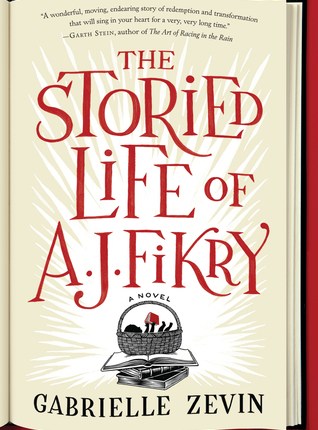
The Storied Life of A.J. Fikry by Gabrielle Zevin

The Storied Life of A.J. Fikry by Gabrielle Zevin

“The Storied Life of A.J. Fikry” is a contemporary fictional story about a book shop owner and how he handles the unexpected twists and turns that life has in store for him. If you are a reader who enjoys mulling over and applying what you read to your real life, you may really like this book. The main characters are all about that — learning lessons from books.

“Her mother likes to say that novels have ruined Amelia for real men. This observation insults Amelia because it implies that she only reads books with classically romantic heroes. She does not mind the occasional novel with a romantic hero but her reading tastes are far more varied than that.” pg 12, ebook.

Photo by cottonbro on Pexels.com

There’s some romance, some mystery, some heart break in this tale. There’s also fantastic book analysis of classic works written by the character A.J. Fikry that add dimension to the story as it unfolds. It is through these mini book reviews (and his actions) that the reader gets to know A.J., who is otherwise a rather introverted and sometimes curmudgeonly character.

“Despite the fact that he loves books and owns a bookstore, A.J. does not particularly care for writers. He finds them to be unkempt, narcissistic, silly and generally unpleasant people. He tries to avoid meeting the ones who’ve written books he loves for fear that they will ruin their books for him.” pg 39, ebook.

But he’s not unpleasant to the extent that I didn’t like him. In fact, A.J. was my favorite character. I felt like he lashed out at people or kept them at a distance because he was hurting. I think at one point or another in our lives, we’ve all been there.

“So it’s basically like a book party.” “Yeah, sure.” Lambiase has never been to a book party. “I hate book parties,” A.J. says. “But you run the bookstore,” Lambiase says. “It’s a problem,” A.J. admits. pgs 74-75, ebook

Photo by Nubia Navarro (nubikini) on Pexels.com

There’s plenty of relate-able moments in The Storied Life of A.J. Fikry. The characters feel real with all of their imperfections and dreams.

The thing is, though, sometimes people tell you you’re on one kind of trip, but it turns out to be another kind of trip, you know what I mean? I just want to know what kind of trip I’m on. Are we going to see topiaries, or are we going to see something else? Maybe that lady friend of yours, say? pg 118, ebook.

The trip this story takes you on is unexpected, very much like life. Who know where we’re all headed and what we’re going to do along the way. But, at the very least, I hope we all get to read as much enjoyable fiction as we want to before the trip ends.

Recommended for readers who enjoy contemporary fiction and book clubs.

Have you heard they’re making this into a film?

Thanks for reading!

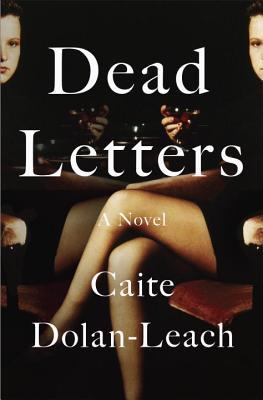
Dead Letters by Caite Dolan-Leach

Dead Letters by Caite Dolan-Leach

Dead Letters is a mystery and psychological thriller about a dysfunctional family and two unhealthily entwined twins. It is also about how relationships with those closest to us can be an unending source of unhappiness, if that is what we choose.

Ava has felt stifled by her family. Her mother has dementia, her father left them to start another family and conflict with her twin sister, Zelda, has dominated her existence. She now lives in Paris, when she receives an unexpected email from her mother… Zelda is dead.

The whole thing was so very Zelda. Too Zelda. When I finally reached my mother on the phone, she slurrily told me that the barn had caught fire with Zelda trapped inside. pg 8

Photo by Harrison Haines on Pexels.com

From the very beginning, Ava has her doubts about Zelda’s “accidental” death. Then, when the police reveal evidence that points towards a murder, things begin to spiral out of control.

Adding to the confusion, Ava and Zelda are/were identical. The whole community confuses one sister for the other. Even their own mother, whose mind is slipping away, calls Ava by her dead sister’s name.

Alcohol contributes its own fog to this story as Ava deals with her childhood demons while tangling with some new ones.

Not wanting to acknowledge consciousness in that desperate, dry-mouthed morning-after horror, I’m eventually forced to crack open my eyes. Jolted awake in suddenly sober distress, I blink owlishly and struggle to open my exhausted, quivering eyes, which are agonizingly dry, filched of liquid. … I should quit drinking, I reflect. It’s not the first time I’ve had this thought. pg 170

Photo by Charlotte May on Pexels.com

And, of course, there’s the highschool sweetheart hanging around and the relationship that ended very badly, as if Ava doesn’t have enough going on.

The mystery of this story isn’t all that mysterious, but the characters and the slow unwinding of the past are superb. I read this book almost in one sitting the day before Thanksgiving and it made me appreciate my own fairly-functional family much more.

Our mother had started her mimosas somewhat earlier, and I knew from her glassy eyes and gingery steps that Nadine was approaching the danger zone, the state between mildly and mindlessly drunk wherein she could marshal enough sobriety to do real damage but was uninhibited enough to not care how much damage was inflicted. pg 116

We can’t control what’s happened to us in the past, but moving forward, our lives are what we make of them. Look at the stories you tell yourself and examine why you do the things you do. You wouldn’t want, like the characters in this tale, to be controlled by incessant competition, booze or your weight on a scale, would you?

Photo by Charlotte May on Pexels.com

Caite Dolan-Leach doesn’t turn over every stone, leaving some of the characters’ pasts foggy. But she leaves hints everywhere and allows readers to fill in the blanks.

A criticism: some of the twists in the story are too perfectly orchestrated, and I doubted that such things would be possible, even with intricate planning and if you knew someone as well as you know yourself.

I’ll certainly have plenty to talk about at book club tonight. It was a good pick and I’d recommend it for other groups who read psychological thrillers. There’s a lot to unpack: the family dynamic, mystery, thrills, romance, layered characters and alcohol, so much alcohol.

Thanks for reading!

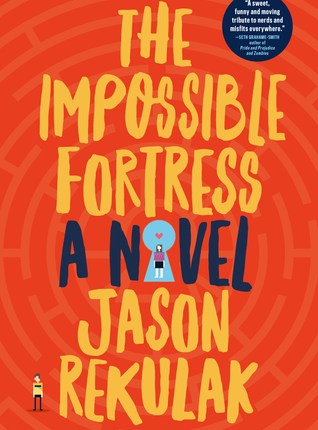
The Impossible Fortress by Jason Rekulak

The Impossible Fortress by Jason Rekulak

A cute coming-of-age novel about a boy, a computer, a Playboy magazine and first love.

Billy and his awkward friends are in love with Vanna White, the girl-next-door who flips the letters on Wheel of Fortune. When some pictures of Vanna appear in Playboy, they know they have to get that magazine, at any cost.

One problem, none of them are even close to eighteen years old.

This was the moment of truth- the moment I’d rehearsed with Alf and Clark again and again. They’d coached me to keep my pitch exactly the same- to speak the words like I used them all the time: “Just some Tic Tacs,” I said, “And a Playboy.” pg 29

Photo by Athena on Pexels.com

Part of this story is enjoying the humor and innocence of the boys in an era before the internet. The other part of this story, the one that occupied my book club, was reminiscing about technology and early computers.

We spent most of the time at book club talking about what our first computers were, who knew coding, and what were our favorite early games.

“If I was serious about Planet Will Software, I couldn’t work on a Commodore 64 much longer. Newer computers offered more memory and better graphics, and C64s would be obsolete in another year or two. I needed to upgrade to the latest technology, and the contest was my best chance to do it.” pg 43

Photo by Soumil Kumar on Pexels.com

That part of the evening seemed to entertain the older members of our book club more than me. It’s not that I didn’t have an early computer, I did, I was more interested in the coming-of-age part of this story and the heist-type scenarios the boys go through to get their dirty magazine.

I also enjoyed Billy’s struggles to understand Mary and the cute dynamic between them. I liked learning about his loyalty to his friends and his dreams for future computer programming greatness.

“I’m going to make video games,” I said. “I’m going to start my own company, and I’ll only hire cool people.” pg 81

Photo by Barik5ive on Pexels.com

If I ever start my own company, in whatever business sector that it may be (not computer programming), I’ll only hire cool people too.

Recommended for book clubs or if you just want a sweet, light read by the pool, The Impossible Fortress just may fit the bill.

Thanks for reading!

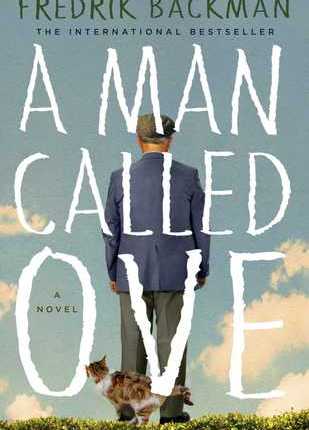
A Man Called Ove by Fredrik Backman

A Man Called Ove by Fredrik Backman

A Man Called Ove is indeed about a man named Ove. He’s depressed. His wife died and he wants nothing more than to join her.

But, somehow, life itself seems to be conspiring to keep him alive.

Photo by Brett Sayles on Pexels.com

To borrow a line from Shrek: Ove is like an onion.

On the outside, his personality is kinda smelly and makes people cry. But, he has layers.

This story takes apart those layers.

Highly recommended to me by one of my book club members and my mother-in-law. A Man Called Ove by Fredrik Bachman is a treat. I highly recommend it, now, too.

The novel has been made into a movie, which I enjoyed nearly as much as this book. That’s high praise.

Thanks for reading!

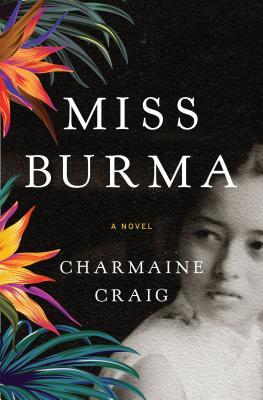
Miss Burma by Charmaine Craig

Miss Burma by Charmaine Craig

A layered and subtle historical fiction about a family in Burma and how they make it through all sorts of terrible things that happen there.

This is an incredibly dark book based on the true family history of Charmaine Craig. My book club had a tough time discussing it.

“Your problem is that you believe in right and wrong. Don’t you know evil will find you no matter what?” pg 11.

Photo by Charly Severino on Pexels.com

First of all, the introductory portion doesn’t make sense until the last half of the book. The pacing is glacially slow. A few of our club members couldn’t make it through the first couple of chapters.

Secondly, the constant warring and torture of innocents by the conquering forces is really difficult to read.

“We welcomed them because we’d been persecuted by the Burmans for centuries, we’d been their slaves – our villages perpetually attacked, our people perpetually preyed upon, stripped of everything from our clothing to our lives.” pg 37.

It is an important history, certainly, but the darkness of it made me feel sick.

A third problem club members had with Miss Burma is it feels disjointed.

Photo by Anthony Beck on Pexels.com

At first, readers thought Khin and Benny were the focus of the book. But then, the point of view drifted around to Louisa, their beautiful daughter, and her story took over.

We must find a way to rejoice in our circumstances. We must find a way to do more than endure.” pg 145

Basically, the Karen are an ethnic minority in Burma, now Myanmar. For centuries, the Karen have been enslaved by the Burmese. The underlying story is about how the Karen tried to unite against the ruling government to create a federation.

“Our modesty that runs so deep it is almost self-annihilating. But now.. our relative invisibility strikes me as very sad. … If you stand for a moment behind their eyes- behind the eyes of anyone for whom modesty is not an ultimate virtue- we appear to value our lives less than they do.” pg 168

Photo by AM wendy on Pexels.com

Against this background, the family of Khin and Benny tries to survive and do what they believe is right.

This story is full of flawed characters and whole passages where most of the action takes place in people’s minds.

There is fairly graphic torture, rape and violence. If any of those are triggers for you, beware.

Recommended for patient readers and those who can handle a very dark history. The book club certainly learned a lot about Burma from this book. And bullets still fly in Myanmar today.

Thanks for reading!

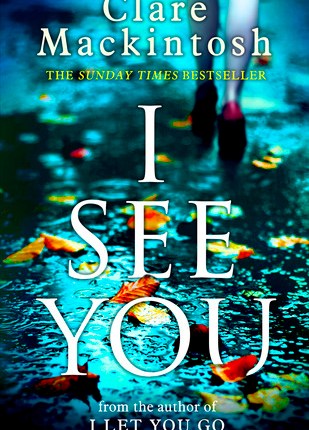
I See You by Clare Mackintosh

I See You by Clare Mackintosh

I See You is a tense thriller with fairly good execution that stumbles on its ending.

It takes place in London. The scary parts mainly take place on the public transport system.

“…I don’t know how you do this every day.” “You get used to it,” I say, although you don’t so much get used to it as simply put up with it. Standing up on a cramped, malodorous train is part and parcel of working in London.” pg 42.

Photo by Jean-Paul Wright from Pexels

Zoe Walker sees her photo, or what she believes is her photo, in the papers on her way to work. It’s weird and scary because she didn’t submit her photo to the press.

“Routine is comforting to you. It’s familiar, reassuring. Routine makes you feel safe. Routine will kill you.” pg 51.

Kelly is a member of the police. She has secrets in her past and reasons to prove herself.

“Kelly thought of all the crime prevention initiatives she’d seen rolled out over her nine years in the job. Poster campaigns, leaflet drops, attack alarms, education programs… Yet it was far simpler than that; they just had to listen to victims. Believe them.” pg 83.

Photo by sum+it from Pexels

When Zoe comes to Kelly with her concerns and her photo in the paper, she sounds crazy. But she finds a sympathetic ear with Kelly.

Can they figure out what is going on before its too late?

I read this title for book club. And even though I was disappointed in the ending, this story scared me. It also scared some members of the club.

I was frightened partly because I don’t usually read this type of book. But, it also felt so real to me.

Photo by Lennart Wittstock from Pexels

We are creatures of habit, after all. It certainly made me consider taking a different route to work. You never know who could be watching…

Recommended for brave readers who don’t shy away from unsatisfying endings. Thanks for reading!