Instrumental: A Memoir of Madness, Medication, and Music by James Rhodes

Instrumental: A Memoir of Madness, Medication, and Music by James Rhodes
instrumental

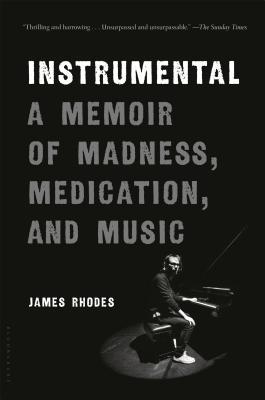
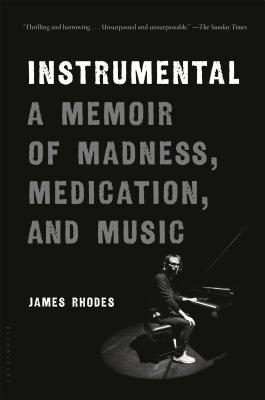
This is a shocking memoir about the horrific sexual abuse that James suffered as a child and how music saved him. It is raw, ragged and real.

The author is frank about describing what happened, how his life fell apart, and how he was able to finally begin putting it back together.

Not a book for the faint of heart, Instrumental makes the reader wonder why we’re all here and what might the purpose of suffering serve in the grand scheme of things. I don’t pretend to know the answers to these questions, but James has given us a powerhouse of a book and a place to start.

I am also a classically trained pianist but you don’t have to be one to appreciate Instrumental: “… the unassailable fact is that music has, quite literally, saved my life and, I believe, the lives of countless others. It provides company when there is none, understanding where there is confusion, comfort where there is distress, and sheer, unpolluted energy where there is a hollow shell of brokenness and fatigue.” loc 51, ebook.

James gives a poignant warning to readers: “…this book is likely to trigger you hugely if you’ve experienced sexual abuse, self-harm, psychiatric institutionalisation, getting high or suicidal ideation.” loc 112. So, friends, be aware before you pick this one up.

James has a child with his first wife and he adores the boy, only asking him to do what makes him happy.

Though James thinks he’s a poor father, he’s offering the child more than some people are able to manage, even coming from a stable and emotionally healthy place: “I want him to know the secret of happiness. It is so simple that it seems to have eluded many people. The trick is to do whatever you want to do that makes you happy, as long as you’re not hurting those around you. Not to do what you think you should be doing. Nor what you think other people believe you should be doing. But simply to act in a way that brings you immense joy.” loc 986.

Photo by uncoveredlens on Pexels.com

How wise is that.

James introduces each chapter with a suggested classical music track to listen to as you read as well as some juicy tidbits about the musicians who wrote the pieces: “Beethoven… was clumsy, badly coordinated, couldn’t dance, cut himself while shaving. … Schubert, nicknamed ‘Little Mushroom’ on account of his being 5 foot nothing and violently ugly, was spectacularly unsuccessful with girls and, on one of the very rare occasions he did manage to score, he caught syphilis. … From Schumann (who died alone and miserable in a mental asylum) to Ravel (whose experiences driving trucks and ambulances in the First World War changed him forever), the great composers were basket-case geniuses…” locs 2040-2058, ebook.

He reminds us that these men we’ve set on a pedestal because of the art they produced were nothing but human with all of the failings that people have today. James makes classical music and musicians interesting to the average person. It’s a gift and one that the genre really needed to bring a new generation into the fold. This book really made me wish that I could see James Rhodes in concert. I think I would love it.

Recommended for the music enthusiast and survivors of childhood abuse, anxiety, addictions, and cutting. Some similar reads: I’m Just a Person, My Booky Wook, or Kasher in the Rye: The True Tale of a White Boy from Oakland Who Became a Drug Addict, Criminal, Mental Patient, and Then Turned 16.

Thank you to NetGalley and Bloomsbury USA for a free digital copy of this book. Thank you for reading.

The Mourning After by Edward Fahey

The Mourning After by Edward Fahey

mourningafterA New Age romance that takes place in the modern era. This is a story about reincarnation, missed chances, and the eternalness of love.


The Mourning After is very dark- so much so that at first I wasn’t sure that I was going to make it through the book. I eventually did, but I was depressed the rest of the day after I finished it. Reader, you have been warned. This book reminded me of Wuthering Heights in that the main characters just can’t seem to get their act together, romantically, but with some metaphysical twists like reincarnation thrown into the plot.

Take this bit, when Denis is about to have a psychotic break/break through to remembering his past lives: “Waters; I…” I looked up. The world was filled with his eyes. So dark, so piercing; and yet so tender. He was only trying to help. “You’re right, Buddy, I’m sorry. It’s just, my brain’s fried and I can’t do this tonight. I should, and I’d like to, but I can’t. I’m so awfully tired.” “Which is exactly when a spirit can break through.” pg 66  The scene builds from there. It’s very intense but true to how, at least how I’ve experienced, those types of things go in real life.

I also liked this part- where the main character is practicing channeled writing: “I began writing bits and pieces of a fictional story around Emma and Squire… Then something else kicked in that seemed joyful and sure of itself. I wrote faster and faster, scribbling down notes, piling them up in boxes, binders, and pocket scraps… Ideas and images kept popping out of nowhere; I had to get them down before they vanished for another hundred years. Or maybe forever.” pg 100

Very accurate and lovely. That is definitely one of Fahey’s strengths- a descriptive narrative. One last part that I thought was beautiful: “I still remember things M told me when we were small… Like the time she said, “Adults don’t know some things kids know. They don’t remember, I guess. They don’t listen inside each other anymore. Maybe they’ve just forgotten how; they’re just too busy doing big people stuff; I don’t know.” pg 115

Childhood is like that, yes?

If you enjoyed The Mourning After, I’d suggest reading Angels on Overtime by Ann Crawford. It is also a romance with metaphysical/New Age overtones, but its overall feel is a lot more playful than this read. I received a free copy of this book through the GoodReads First Reads program. Thanks for reading!

Dude Making a Difference: Bamboo Bikes, Dumpster Dives and Other Extreme Adventures Across America by Rob Greenfield

Dude Making a Difference: Bamboo Bikes, Dumpster Dives and Other Extreme Adventures Across America by Rob Greenfield

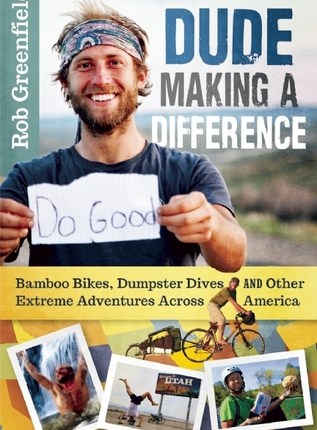
In Dude Making a Difference, Rob Greenfield has some interesting ideas about how to conserve resources, promote sustainability, and how to educate others on natural resources, transportation, personal hygiene, and more.

I don’t think that many of the methods that Rob uses will work for everyone, but they seem to make him feel better about his lifestyle.

In his quest to save the planet, Rob fights with the photographer who comes along on the 4,000+ mile bike ride (though he omits the details of these misunderstandings). I found that small detail to be ironic. It seems as if Rob cares more about the planet than he does about getting along with the people on it.

Photo by Leandro Boogalu on Pexels.com

I think that if he embraced working within the system rather than getting under other folk’s skin and bucking the system, then he might make more headway with convincing others to his point of view.

As it is, Rob runs afoul of multiple municipalities on his trip because of his dumpster diving and naked hi-jinks. I’m not saying that the system is perfect or that one shouldn’t question authority if you believe that the status quo is bogus — what I am saying is that I feel as if Rob pushes the issue just to see what he can get away with and to tell the story afterwards.

I learned quite a lot about small changes that I can make to my current lifestyle to save resources like changing out my faucets or utilizing a PowerPot (that particular product seemed exceptionally cool). But, the majority of this book felt repetitive and somewhat preachy.

Photo by Elina Fairytale on Pexels.com

Rob gets up from wherever he crashed for the night (rarely from a real bed, of course), he either feels energized or not, he scavenges for food from local dumpsters, gets yelled at for that or not, gets on the road where he either feels energized or not, promotes his sustainability initiative for the day- be that biking barefooted, or going without the seat on his bike, or using only leaky faucets to get drinking water- then he rides for awhile, finds somewhere to sleep, pops on social media while either plugging his computer into the grid or not- but justifying it either way- and then goes to sleep either energized by his day or not.

Repeat, repeat, repeat. For 104 days.

It’s interesting how Rob relies on waste to get by for much of the time because, if he succeeds in his quest to lower waste, he wouldn’t be able to live the lifestyle that he’s promoting anymore.

The cognitive dissonance in such a position would drive me bonkers, but Rob seems ok with it. I admire what he’s doing, but I just don’t believe in his methods.

If you enjoyed Dude Making a Different, you may want to read Outsmart Waste: The Modern Idea of Garbage and How to Think Our Way Out of It by Tom Szaky or The Art of Non-Conformity: Set Your Own Rules, Live the Life You Want, and Change the World by Chris Guillebeau.

I received a free copy of this book from the GoodReads First Reads Giveaway program. Thanks for reading!

The Office Sutras: Exercises for Your Soul at Work by Marcia Menter

The Office Sutras: Exercises for Your Soul at Work by Marcia Menter
officesutras

The Office Sutras sums itself up in the first couple of pages: “The basic premise of this book is that we’re on a spiritual journey every second of our lives, not just during those times we set aside to contemplate the cosmos. The job you have right now, no matter how frustrating, no matter how screamingly imperfect, is part of your spiritual path.”pg 3

Every page there after pretty much repeats the same theme.

This book just wasn’t for me. Every chapter presents a common problem that one can encounter at work and then gives exercises that you can use to come to an understanding about it.

I realized that I was never going to do any of the exercises and I didn’t regret that in any way. Big fail.

If you’re going to read a self help book that deals with work and has a Buddhist vibe, I’d suggest Peace Is Every Breath: A Practice for Our Busy Lives.

Thich Nhat Hanh is brilliant and I find his writing to be more appealing than this offering. Thanks for reading!

A Good American by Alex George

A Good American by Alex George

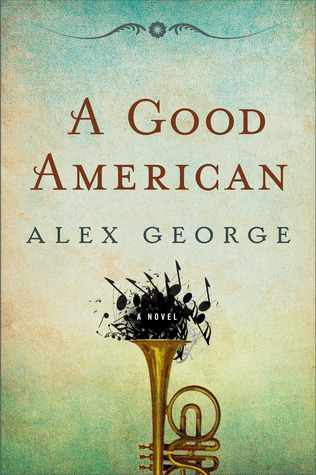
a-good-americanWell, that was different. A Good American is, at its heart, a story about a family who immigrates to America before World War I and how successive generations handle life, love, and what comes after. It strongly reminded me of the film, Fried Green Tomatoes, because of the family drama and some of the subject matter. This is an epic tale. Parts of it, I loved. Other parts… I could have lived my life without reading.
I loved Frederick’s attitude towards his new country. It’s exactly what I imagine my great-great grandfather was like when he came over from Poland. “…Frederick loved America. He loved its big open spaces, the sunsets that drenched the evening sky in blistering color. He loved the warmth of the people. Above all, he loved smell of promise that hung in the air. Europe, he could see now, was slowly suffocating under the weight of its own history. In America the future was the only thing that mattered.” pg 57. Frederick throws himself into the American Dream- earning money and providing for his family to the detriment of his relationship with his wife, Jette.

I also loved the parts about music. In this portion, Joseph, Frederick’s son, is taking voice lessons from a rather conservative side character named Frau Bloomberg: “…Bloomberg did not approve of most of opera’s greatest female characters, who were (in her opinion) either hysterical hotheads or dissolute fornicators. She was determined to protect Joseph from all that depravity. Whenever he asked the meaning of a particular foreign word, Frau Bloomberg said the first thing that came into her head. As a result, when Joseph wistfully sang about the imminent return of a long-lost lover from overseas, he believed that he was telling a touching story about penguins.” pg 70

We don’t really get to meet the narrator of the story until much later in the book and, I think, that’s where the story line became unfocused. A couple chapters deal mostly with young men’s coming-of-age and burgeoning sexuality, so there’s a lot about masturbation. Everyone does it, I get that, but really, did it have to be such a theme? As I read it, I was wondering what some of the more elderly members of my book club are going to say about it.

In my mind, the first part of the book was the strongest- the origin story of Jette and Frederick. “My grandmother’s life had been one long opera. There had been drama, heroes, villains, improbable plot twists, all that. But most of all there had been love, great big waves of it, crashing ceaselessly against the rocks of life, bearing us all back to grace.” pg 329. There is a sweetness to their story that the rest of the book is missing.

It may be that this story simply goes on too long, but the author was clearly caught up in his own tale. “Telling stories was still a means of escape. And so I put a fresh sheet of paper into the machine, ready to flee once again. This time I no longer thought about getting published, but just wrote for my own amusement. The journey, not the destination, became the thing, and I rediscovered the simple satisfaction of seeing my ideas materialize before me, sentence after sentence.” pg 344 Even though he was speaking through his character, I’m convinced that that bit right there was all Alex George- a manifesto of sorts, written right into the story.

A Good American is also about race, religion, brotherhood, honesty, marriage, fidelity and more. Plenty for a book club to take part and chew over. Recommended for folks who like their historical fiction long and meandering with, sometimes shocking, turns in the road. Thanks for reading!

Storm Front (The Dresden Files, #1) by Jim Butcher

Storm Front (The Dresden Files, #1)  by Jim Butcher

stormfrontUrban fantasy about a modern day wizard who acts as a consultant for the Chicago police. Candy in book form but I enjoyed it. The narrator for the audio book managed to sound world weary and dour the entire time, which was actually rather impressive.
My favorite part is when Bob, the spirit of intellect that Harry keeps around as a sort of wizard computer/database, advised using tequila as the base for a love potion. Harry argues for the more traditional champagne but Bob shuts him down, saying something to the effect that tequila is more Harry’s style and he would know because he’d been alive and courting women since before Harry was a twinkle in his great grandmother’s eye. It’s a great scene. If you read or listen to this one, watch for it.

The mystery itself isn’t all that mysterious, but the fantasy portions of the story are excellent. We get to meet a fairy, who acts very much like I imagine one would, demons, a wizard guardian, vampires, and more. Through it all, there’s Harry, trying to keep a roof over his head and bread on his table, while everything mechanical falls to pieces around him because of his magic. Like I said, a lot of fun.

Recommended for fans of Kevin Hearne’s Iron Druid chronicles (starts with Hounded) or Stacia Kane’s Downside Ghosts (starts with Unholy Ghosts). Thanks for reading!

The Conqueror’s Wife: A Novel of Alexander the Great by Stephanie Thornton

The Conqueror’s Wife: A Novel of Alexander the Great by Stephanie Thornton

theconquerorswifeA historical fiction about Alexander the Great from the viewpoint of the women in his life.
I have mixed feelings about this one. I read it, well devoured it really, in just a few sittings. It falls right into the type of historical fiction that I love: pre-1700’s time period about mythological/royal persons. The Conqueror’s Wife is very readable.

The thing is, and the author wrote this too in her afterword, Alexander’s personal life, outside of his military conquests, generals, and favorite horse, is so shadowy that Thornton could have written this book really however she wanted. I loved that she focused on the females in Alexander’s life because, of all of the people from that time period, they received the least attention from historians. However, I feel that she did some of them, Roxana and Olympias in particular, a great disservice in her interpretation.

Remember, women had no rights at this time. Marriage was either a matter of wealth or position. Love didn’t enter the equation until the medieval troubadour tales of the 1200’s.

After his many, many successes on the battlefield, somewhere very far from home, Alexander takes a wife from among the ‘barbarians’ that he and his friends were working very hard to conquer. All that we know about this woman (Roxana) was written down or remembered by the very people who killed her after Alexander’s untimely demise. Why earth would he have married a woman with no connections or a ‘whore’? He wouldn’t have.

Let’s just take the facts: Alexander dies and then most of his wives are dead soon thereafter. From that, I would say that Roxana is one of the least likely people to have committed either of those crimes because all of her power stemmed from Alexander. I suspect strongly that Alexander’s Companions, the ones who were left after years of campaigning had taken its toll, were the culprits. How easy would it have been for them to spread the rumors about Olympias and Roxana as Dionysian witches and whores to explain to posterity why they were slaughtered. Alexander’s generals had the most to gain, an entire empire, by discrediting these women.

And, if Olympias was the master manipulator that she is portrayed as in this, then why wasn’t she able to protect herself or her grandson after Alexander’s death? I think it is because she had neither the resources nor the ability to do so, which means, that she wasn’t what history recorded her to be at all. She was a victim of the fallout after her son’s death just like Alexander’s wives.

Anyway, if I had been Thornton and written this book, I would have made each and every female character a hero. History is recorded by the victors and the powerful. The women deserved, if not a happy, then at least an honorable ending.

If you enjoyed this book, you may want to read The Red Tent by Anita Diamant or anything by Kate Quinn or Margaret George.

I received this book through the Good Reads First Reads program. Thanks for reading!

Under the Empyrean Sky (The Heartland Trilogy #1) by Chuck Wendig

Under the Empyrean Sky (The Heartland Trilogy #1) by Chuck Wendig

undertheempUnder the Empyrean Sky is the story of Cael and his friends, Rigo and Lane. They live in the Heartland, an agrarian world of genetically modified corn where no other crops thrive because of the aggressiveness of the new crop. There is little to no opportunity for education or work because the Empyreans, a separate section of their society that cruises overhead on their giant, flying machines, controls every aspect of their life from the food that they eat to who they can marry. Cael is the head of a scavenger crew who, in the course of their work day, stumbles across a forbidden garden and their lives change course forever.
This story was exciting. From the first scene of a race between scavenger crews for a malfunctioning piece of farm equipment to the end with an inevitable clash with the Empyrean, the story unfolds at a breakneck pace. If Cael isn’t dodging the local Overseers, he’s sneaking into quarantined cities or trying to harvest illicit vegetables. I loved how this novel was nearly constant action.

The dystopian world that Wendig creates feels scary and out of control. The plants, that the Heartlanders are forced to cultivate, attack them. The Empyreans, who aren’t properly introduced in this novel but I assume that they will be in future books, are outlandishly rich, extremely powerful through their advanced technology, and completely removed from the reality on the ground. The local authorities take advantage of the power of their position to line their own pockets at the expense of their neighbors. The reader feels Cael’s fury at his inability to control his life and the unfairness of the situation into which he was born.

It’s a small thing, but I didn’t like how the first half of the book was told nearly exclusively from Cael’s point of view and then towards the second half, the viewpoint began to bounce around between Cael and his friends. I think I would have enjoyed the story more if the narrator had remained the same throughout or had switched around from the beginning.

Another small complaint about the story is that the Empyrean lottery to join the ruling class on their air ships felt a lot like The Hunger Games or The Giver but with the outcome being presumably positive instead of a death match. Maybe it’s time for YA dystopian literature to move away from the lottery scenario.

That being said, fans of The Hunger Games or other survival/dystopian stories may really enjoy Under the Empyrean Sky. It’s fast-paced and surprising in its twists and turns. I sincerely hope that Cael’s story turns out well, but with the enormous odds stacked against him, it seems almost impossible that it could. I guess I’ll have to read the next book and find out.

I received this book as part of the Goodreads First Reads giveaway program.

Thanks for reading!

The Devourers by Indra Das

The Devourers by Indra Das

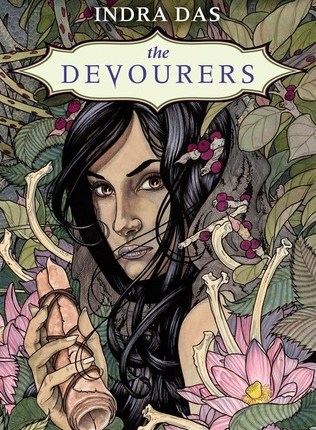
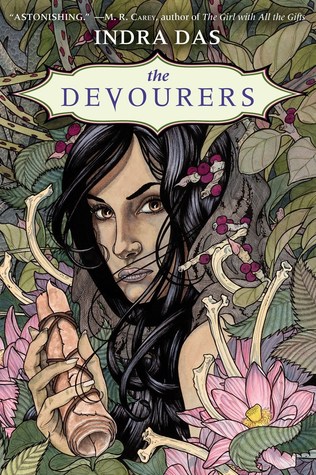
devourersA wholly original shape-shifter tale that also delves into identity, gender roles, and love. Alok is a college professor who is approached one night by a person who claims to be more than a man. Alok doesn’t believe the stranger until an unbelievable vision, caused by the man’s hypnotic words, appears in Alok’s mind. Suddenly, the stranger’s claims that he’s a werewolf don’t seem so far fetched. The stranger, who won’t reveal his name, has a job for Alok, the transcription of an ancient narrative that was written by a shape-shifter, a creature of magic and blood that consumes humans like prey. Through his work on the story, Alok comes to know the stranger and a world that is beyond anything he ever dreamed.

If rape, gore, or graphic sex bother you- you may want to pass on The Devourers as it contains much of all of those things. The heart of the story, about what makes a man, a man and a monster, a monster, are worth the read, but I can see how this book may not be for everyone. “Listen,” he repeats. He is not looking at me. “I am going to tell you a story, and it is true.” pg 8. Personally, I thought that The Devourers was magical, but repetitive. I understand why the author took us in loops and it did lend a beautiful symmetry to the work, but I thought, in a couple different places, that yet another gory kill or another description of blood or urine running down someone’s leg wasn’t needed. “And here where we stand, long before India, before its empires and kingdoms, there were human tribes who identified with dogs and wolves, with wild animals. And there were, and still are, tribes who are not human, who identify with humans in similar ways. Who take the shape of humans, just as humans took the shape of animals by wearing skins.” pg 16.

Indra Das’ vision of shape-shifters as different from each other as people from different cultures was fascinating. By presenting his magical creatures in the manner that they were remembered by the humans they fed upon, he fit the mythologies of a myriad of different countries into one story and it was a perfect fit- the shape-shifters in deserts became the djinn, the ones from Europe were werewolves or vampires, the ones in India were tigers or demons. “To me, to my kind. You are prey. … Something to kill, and sustain us.” “You are cannibals then.” “No, we do not eat our own kind. We eat you, little Cyrah. You keep forgetting-we are not human.” We are the devouring, not the creative.” pg 126

It was in the “devouring, not the creative” mindset of the shape-shifters that Indra explores the traditional roles and balance of power between men and women: “Women create. Men inflict violence on you, envious and fearful, desperate to share in that ability. And it is this hateful battle that keeps your kind extant. You have taught me that your race’s love is just a beautifully woven veil, to make pretty shadows out of a brutal war.” pg 213. One of the main points of this story is that this particular view is not true, but you can see how a creature that only continues to exist through constant violence, could interpret the relationship between the sexes like that. Love and hate are opposite sides to the same coin after all. “I’ve never loved a man in my life, but I’m not fool enough to think that there are no men and women in this world who truly love each other, and love their children together, and did not conceive them through violence and pain.” pg 225.

I haven’t begun to plumb the depths of what The Devourers is about, but I don’t want to ruin this complex fantasy for anyone who’s interested in experiencing it for him or herself. Recommended for readers who like their fantasies to have an adult edge and a grittiness to them. Some similar reads: In the Night Garden, The Last Werewolf, or Hyde.

Thanks for reading.