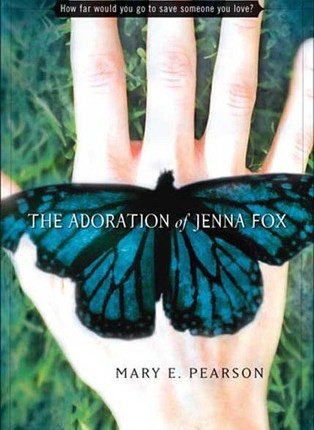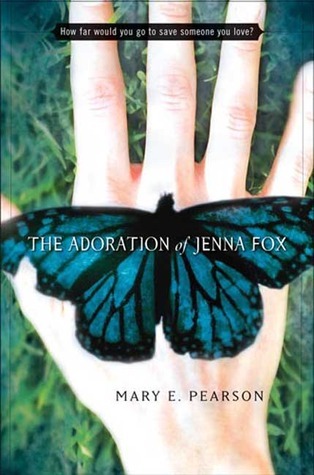
The Adoration of Jenna Fox (Jenna Fox Chronicles, #1) by Mary E. Pearson

The Adoration of Jenna Fox (Jenna Fox Chronicles, #1)  by Mary E. Pearson
jennafox

Warning: minor spoilers ahead if you are not familiar with the topic of this book.

The Adoration of Jenna Fox fits nicely into a science fiction/medical category that includes films like Gattaca or books like Starters. As medicine advances, ethical questions begin to develop about treatment, life and death and humanity needs to answer them. But, one thing that remains the same throughout all of these technical changes, is the power of the love that parents have for their child.

Even now, people sign do not resuscitate orders so that medicine won’t keep them in a vegetative state for indeterminate periods of time. The occurrence of near-death experiences has exploded since CPR and other life-saving techniques have developed.

Imagine sometime in the near future, when bio-implants can be used to stop or even reverse internal damage. What if we figure out how to turn the aging gene off? How then will we handle death with dignity? Or will we even be able to accept death at all?

I listened to an interview with the author in which she said that she wrote this book because her own teenager was diagnosed with cancer. She went through the terror and did whatever was necessary to save her child. Along the way, she ran into parents whose children were terminally ill but had no viable treatment options. Pearson realized how lucky she and her daughter were and it sparked her imagination.

It’s a worthy a question: how far would you go to save someone you love? I recommend this book to anyone who wants to consider the possible answer.

Thanks for reading!

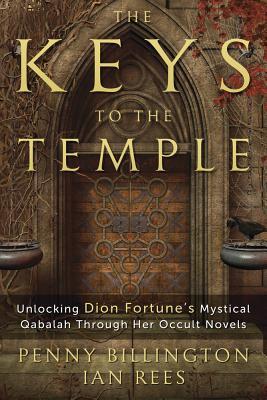
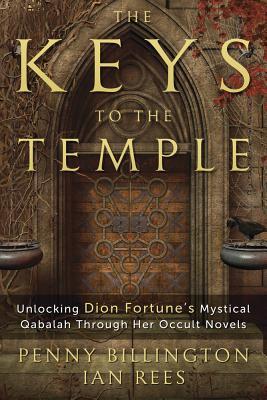
The Keys to the Temple: Unlocking Dion Fortune’s Mystical Qabalah Through Her Occult Novels by Penny Billington, Ian Rees

The Keys to the Temple: Unlocking Dion Fortune’s Mystical Qabalah Through Her Occult Novels by Penny Billington, Ian Rees
keystothetemple

I’d recommend The Keys to the Temple for mid-level to advanced students of the Qabalah. As simple as the authors have made it, they still assume that you know the worlds, paths and general theory. If you haven’t studied The Mystical Qabalah, this won’t make any sense at all.

If you have the background and the interest, The Keys to the Temple may be of great interest to you. This book contains one of the clearest explanations of the path of the spiritual journey that I have ever read.

Let’s start from the top. What is the Qabalah? “The Qabalah is a spiritual system that has been practiced secretly in Europe since at least the 12th century though it draws on deep roots within Judeo Christian tradition. loc 3117.

The Mystical Qabalah and Israel Regardie’s classic A Garden of Pomegranates: Skrying on the Tree of Life were my stepping stones into another way of viewing reality.

I have read criticisms of the books, that they’re too cerebral or dry theory. “However when most people encounter the book they are confronted by a dense-seeming text with long lists of apparently unrelated facts: the idea that this is linked with the vivid imagery and dynamism of the novels can be difficult to understand.” loc 172. I agree that it is “dense” but since it was my introduction to the stuff, I didn’t know any better.

Photo by Matheus Bertelli on Pexels.com

Dion Fortune went a step further and wrote fictional novels to put Qabalistic theory into the real world. The Keys to the Temple takes these books apart by plot, character, theory and then gives practical exercises for personal meditation on the works.

That last part, the practical exercises, is the most important in my mind. It’s like learning to ride a bike. You can read books about it and watch other people riding bikes or talk about riding bikes. But, it’s not until you ride yourself that you get the experience and thrill of it.

With this book, the authors have handed you a bike and shown you the door of the garage. It’s just up to you to ride out there. “Anyone can read this book, but only those who do the work will gain anything from it. The secret of magic is that it is experiential.” loc 2374.

Photo by Pixabay on Pexels.com

Fortune was also deep into Jungian psychology. “She came to significant conclusions when contrasting psychological and magical approaches in prompting change. Fortune was a forward thinker, and the first to acknowledge that ideas and theories could develop for the better. Her stories seem almost to anticipate the direction psychology would travel, into area that might now be described as spiritual psychology.” loc 3117. And this was in the early part of the 19th century. She truly was a woman ahead of her time.

I’m excited about this book and its potential. The Western Mystery tradition never gets its own shelf in the book stores. The new textbooks, what few there are, are mixed in with the New Age/New Thought works. But, that’s not quite right. It’s truly a category all of its own.

I think the time has come for these practices to be re-introduced to the world. The Keys to the Temple is a step in the right direction.

Thank you to NetGalley and Llewellyn Publications for a free digital copy of this book.

Thanks for reading!

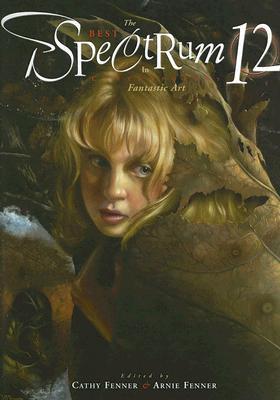
Spectrum 12: The Best in Contemporary Fantastic Art by Cathy Fenner, Arnie Fenner

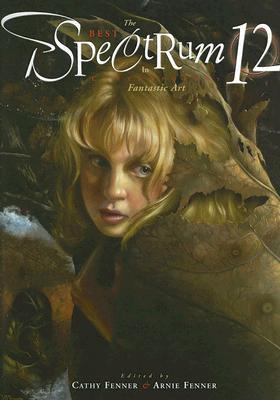
Spectrum 12: The Best in Contemporary Fantastic Art by Cathy Fenner, Arnie Fenner

spectrum12Weird, wild and wonderful. This is a collection of the best in science fiction and fantasy art from 2004. From giant robots in apocalyptic landscapes to hooded figures seated on thrones of skulls, to a normal looking boy encountering a monster in the forest and an ice skating rabbit watching pixies fly away with treasures- the art is beyond description in most cases.
My favorites were the pages in which Dave DeVries took a child’s drawing and brought it to life through his mastery. See “Old Scratch and the Fish,” by Dave DeVries and Kimberly (age 7) on pg 119 or “Big Fat Footie,” by Dave Devries and Chelsea (age 7) on page 158. It makes me want to take some of my child’s drawings and hire an artist to do the same.

There is fear and love in these pages, beauty and grotesqueness. Some of the images are scary, others are compellingly beautiful.

I loved trying to find the reason for the title of each piece. Some weren’t readily apparent. For example, I thought at first that “The Trophy” by Charles Keegan on page 178 was referring to the beautiful naked woman in the light but then I looked closer and discovered… a surprise 🙂 No spoilers. Go find out for yourself.

Because of the nudity and disturbing nature of some of these images, parental discretion is advised. Personally, I think that this collection would be acceptable for +18, maybe as young as 16 if the teen is mature.

Thanks for reading!

Winter (The Lunar Chronicles, #4) by Marissa Meyer

Winter (The Lunar Chronicles, #4) by Marissa Meyer

winterWarning: There are spoilers in this review. Please do not read further if you have not read this book.
Winter is the disappointing final installment of the promising Lunar Chronicles. Coming in at over 800 pages, I thought that this was going to be an epic conclusion. Sadly, I found it to be uninspired and far too repetitive.

Cress was my favorite of this series. In it, Meyer is at her best. Her fairy tale re-telling of Rapunzel was brilliant. She took the elements of the classic tale and gave it a science fiction twist. There’s adventure, danger and an inspiring heroine.

Winter reaches for that mix with the re-telling of Snow White, but it never makes it.

I started going through the stages of mourning with the ending of this series.

First, I was in denial. This couldn’t be the last of it. That’s not how the story ends… it can’t be!

Then, I was angry. These were characters I cared about. They deserved inventive and unique endings and not necessarily all perfectly happy ones wrapped in a bow. I know this isn’t a popular opinion but, sometimes there isn’t a happily ever after. Every single one of the protagonists ends up together. How predictable and trite.

On to bargaining. I thought that maybe if I waited to write my review, that I’d like it more. Perhaps time passing would blunt the edges of my disappointment. Perhaps I needed to accept that this book was written for the young adult audience and look at it from that point of view.

Then depression. So many readers loved this series, maybe my opinion was just wrong. Maybe I wouldn’t know what a good story was if it punched me in the face. Maybe I disliked this series just to be contrary to popular opinion.

Finally, acceptance. I did not like Winter. I didn’t like its emphasis on physical appearance and connecting that to internal characteristics. How many times did we have to hear how ugly Levana was under her glamour? And don’t we find out in this book that it wasn’t her fault? That she was physically abused and then taunted because of her appearance? So, yeah, let’s talk more about how repulsive she is.

I didn’t like how the worst thing that Meyer could think to write of her antagonists was “He/she was INSANE.” We get it.

I didn’t like how the characters would turn to each other and talk through obvious motivations. Do you think she/he did that/this because she knows we’re coming/going/trying to escape? Yeah, I do! Now stop talking and go face your destiny. We could have saved almost 200 pages if the characters would have acted instead of talked endlessly about acting.

And Iko’s happy ending was that she got a bunch of dresses and color-changing eyes? That was the final straw for me. She was my favorite character and she deserved an ending that matched her unflagging spirit, loyalty and optimism.

I listened to this entire series on audiobook. Was it worth the hours of my time? I guess that depends on what which book we’re talking about. If this series had ended on a book the quality of Cress, this would be a very different review.

My apologies if this is your favorite series. No book appeals to every reader. Winter just wasn’t for me.

Thanks for reading!

The Collector of Lost Things by Jeremy Page

The Collector of Lost Things by Jeremy Page

thecollectoroflostthingsWhen I picked up The Collector of Lost Things, I expected an adventure-filled historical fiction. The audiobook delivered a heavy-handed treatment of man vs. nature with some truly disturbing scenes of mass animal slaughter. Not for the faint of heart or stomach.
The story beyond these stomach churning scenes was nothing to write home about. I was very disappointed.

I found myself drawing parallels between The Collector of Lost Things and James Fenimore Cooper’s Leatherstocking Tales, particularly the book, The Pioneers.

In The Pioneers, Chapter 3 depicts settlers shooting a cloud of pigeons so vast that it nearly blocks out the sky. They fire repeatedly into the flock, killing far beyond what they’ll need or consume. The mindless slaughter is categorized as sport.

The hero of the story, Natty Bumppo, expresses disgust at the behavior. The reader understands the author’s point and the story moves on.

In this book, not only is there an homage to the pigeon scene, but the reader has to endure the repeated abuse of whales, walruses (walrii?), seals, and the possible extinction of an entire species of bird. I felt like the point wasn’t just driven home- it smashed me in the face.

My stomach was so turned by the slaughter that I couldn’t enjoy the book anymore. It was a shame because the prose used to describe the arctic scenery was some of the most expressive and beautiful that I have ever read. It puts you there, but then it drowns you in seas of blood.

If you enjoyed this book, you should read James Fenimore Cooper. The topic is the same, but the treatment in Cooper’s novels is far superior.

Thanks for reading!

The Circle (The Engelsfors Trilogy, #1) by Mats Strandberg. Translated by Sara Bergmark Elfgren

The Circle (The Engelsfors Trilogy, #1)  by Mats Strandberg. Translated by Sara Bergmark Elfgren

thecircleThe Circle was an excellent and gritty urban fantasy. It was dark enough that I would hesitate to classify it as young adult. It is about a group of close friends and magic.

It reminded me of that 1996 film, The Craft, which, as you will recall, is about a group of angst-y high school friends who find out that they’re witches and have to deal with all of the issues that go along with that. There’s drama, danger and magic… oh my!

For such a large cast of characters, Strandberg does an amazing job fleshing them all out. Each has their own unique feel, story, and interests. At first, I was concerned that I wouldn’t be able to tell Vanessa from Linnea from Minoo but that never happened.

Strandberg also deftly captures the high school girls’ attitudes and hang ups. He makes you love each one of them with their failures and unrealized potential. I believed in the characters and was cheering for them the whole time. It takes talent to create that level of emotional bonding with a cast of protagonists. Strandberg nails it.

There’s a lot of surprises in store for the readers who pick this up. Not to spoil anything, but you may want to have some tissues around if you’re a sensitive type.

I think that the best part about this trilogy is that all three books have already been published. They were originally written in Swedish. It took a couple years to be translated into English, but aren’t we lucky?

Also, in early 2015, this book was made into a film so there’s no waiting on that either. Awesome.

For people with triggers or appropriate reading material concerns, there’s some intense murder and cutting scenes, bullying, language, a near rape and a bunch of underage sex (but not overly graphic like Paper Princess). Mature young adults could probably handle it, probably 16+. It’s up to the parents, but read responsibly.

If you enjoyed The Circle, you may enjoy The Magicians by Lev Grossman or Bitter Seeds by Ian Tregillis.

I received a free copy of this book through Goodreads First Reads. FTC guidelines: check!

And, thanks for reading!

The Mommy Shorts Guide to Remarkably Average Parenting by Ilana Wiles

The Mommy Shorts Guide to Remarkably Average Parenting by Ilana Wiles
remarkably average

The Mommy Shorts Guide to Remarkably Average Parenting is one of the best books about parenthood I’ve ever read. It is an honesty, funny and poignant look at the un-glamorous side of parenting. I loved the pictures. I loved the stories. I wish that this book had been around when I had my baby. Between this read and How Not to Hate Your Husband After Kids, mothers-to-be have all their bases covered.

Ilana warns mothers about the perils of choosing rare names: “… if you want to name your child something odd, I support you. I like odd names. I think odd names make the world a more interesting place. But you should be prepared to hear some criticism when you are at your most vulnerable.” pg 19. I didn’t even pick something that weird for my child (Willow) but I still faced criticism. When I told my grandpa the name I picked for his first female great-grandkid, he told me that it was the stupidest thing he’d ever heard. And there I was, heavily pregnant. Yeah, I cried. Wish someone had warned me.

I empathized with the idea that parents have no clue what they’re doing and we’re all secretly terrified that we’re going to screw up our kids in some irreparable way. Over a decade later and I still feel that: “In hindsight, the newborn phase wouldn’t be that hard if new parents weren’t so worried about messing up in such a way that it would ruin their newborn’s life forever.” pg 33.

The page entitled, My two-year-old’s rules for eating a banana pg 76, had me in stitches. Kids are so weird about food. My daughter is currently on a mac-n-cheese, ramen and ice cream kick. This time last year, all she would eat was homemade pancakes and grilled cheese with the crusts cut off. I’m sure that in another year, we’ll be somewhere else. And it’s not just about the “what”, there’s also the “how.” If you cut the crusts off the grilled cheese, but then don’t cut it diagonally, then no dice. You may as well throw it out because my kid won’t eat it. It’s absurd, but true. Poor Ilana suffers through the same thing but with bananas.

Photo by Aleksandar Pasaric on Pexels.com

The other funniest mini-chapter is: “Totally Butchered Words: Even if you do stop cursing and shield your kids’ ears from swearwords outside the home, your kids will probably still end up saying a few unfortunate things anyway. This is because toddlers might be trying to say one thing, but then it comes out sounding like another word entirely.” pg 116. I can’t even quote what she prints on the next pages because it is too filthy but, in my opinion, it is absolutely hilarious.

Ilana’s parenting philosophy is fantastic: “It’s not a matter of high or low expectations- it’s a matter of no expectations. Discover who your kid is as you go. Your kids will not be who you expect, but the things that amaze us most in life are never the things we expect.” pg 215 Mine amazes me all the time.

Highly recommended to own or give as a gift, The Mommy Shorts Guide to Remarkably Average Parenting is a cut-above average.

Thanks for reading!

The Deepest Secret by Carla Buckley

The Deepest Secret by Carla Buckley

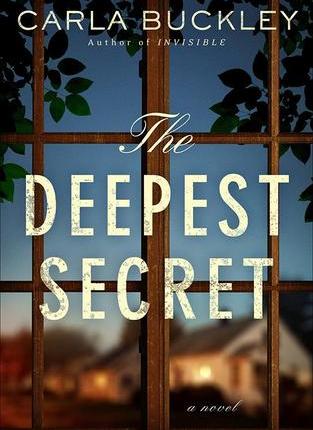
thedeepestsecretI enjoyed the conversation with my book club about The Deepest Secret more than I liked the book itself. Buckley has written a world in which everybody has secrets. Discovering what those secrets are is the point of this thriller about a cul-de-sac and its occupants.
Tyler, one of the main characters, has XP, a disease in which his skin can burn at the slightest exposure to UV rays. So, most of his portion of the story takes place at night, when he can safely go outside: “He goes over to the bridge and shines his flashlight down into the water. Minnows dart in every direction, shivery brown shapes. Rosemary had once told him that fish stayed awake all night, just like him. That had comforted him, knowing that someone else was awake besides him and the crickets.” pg 19 He sees all sorts of crazy stuff.

Tyler’s mom, Eve, has gone into mothering overdrive because of her son’s illness: “She misses the carefree person she used to be, that joyful girl. Being Tyler’s mother has turned her into someone who’s endlessly vigilant. She tortures herself with horrifying scenarios just so she can come up with a plan.” No fun.

Eve’s relationship with her husband is understandably screwed up because of the way she behaves about her son. He is generally absent and works in another city. Tyler has an older sister who doesn’t get the attention she needs because her bro is sick all the time.

And that’s just one family. Now add about a dozen other characters and you begin to get the feel of The Deepest Secret. I never had trouble keeping anyone straight, but there are a lot of characters.

The best part of the conversation with the book club centered around the idea of secrets and “normalcy.” One of our members said that if we could point to one person who was normal, then he could show us someone else who was not. The point being that “normal” doesn’t really exist. It’s just some sort of pie-in-the-sky ideal that we tell ourselves about each other.

The Deepest Secret had me questioning the unseen lives of those around me from others in my neighborhood to the people next door. It was an unnerving feeling but not necessarily unpleasant. Pick this one up if you want to shake your view of reality a bit. Or if you want to feel like someone is peeking through the windows of your home at all of your mundane moments. Because, it’s not like you have anything to hide… do you?

Thanks for reading!

Animal Farm by George Orwell

Animal Farm by George Orwell

animalfarmContinuing my series on ‘books I should have read in school, but didn’t,’ I tackled Animal Farm, a short story that is not just a political metaphor, but also a fable about what can happen to even good-intentioned revolutionaries as, after a successful rebellion, they slide slowly but inexorably back towards everything that they fought against in the first place.

Here’s a simplified run-down of the plot: so, there’s a farm. The animals rise up against the farmer and take the place for themselves. They work hard, starve themselves even to succeed, and, despite all obstacles, keep moving forward. The pigs are the smartest, can read and set up the morality of the farm in the form of commandments which are written on the side of a barn in white paint.

Most of the animals can’t read, but they think they remember what the commandments say. Then, as the pigs become more like the humans they overthrew, they find that the commandments are changing to fit the behavior of the pigs. And finally, after much hardship, things come full circle and the pigs have set themselves up as the farmer used to be and everything starts over again.

This is from the preface by Russell Baker: “Orwell called the book “a fairy story.” Like Voltaire’s Candide, however, with which it bears comparison, it is too many other things to be so handily classified. It is also a political tract, a satire on human folly, a loud hee-haw at all who yearn for Utopia, an allegorical lesson, and a pretty good fable in the Aesop tradition.” introduction vi. Also, I would call it a warning. Think for yourselves or others will think for you. Educate yourselves or others will tell you what the words say and will re-write them to benefit themselves or their friends.

Please read everything you can get your hands on. Here’s what can happen if you don’t: None of the other animals on the farm could get further than the letter A. It was also found that the stupider animals, such as the sheep, hens, and ducks, were unable to learn the Seven Commandments by heart. After much thought Snowball declared that the Seven Commandments could in effect be reduced to a single maxim, namely: “Four legs good, two legs bad.” This, he said, contained the essential principle of Animalism.” pg 50.

How do traditions get started?: “Mr. Jones’s gun had been found lying in the mud, and it was known that there was a supply of cartridges in the farmhouse. It was decided to set the gun up at the foot of the flagstaff, like a piece of artillery, and to fire it twice a year- once on October the twelfth, the anniversary of the Battle of the Cowshed, and once on Midsummer Day, the anniversary of the Rebellion.” pg 60 The brilliance of this story is the way that Orwell takes completely human tendencies like remembrances, parades and political speeches and reveals them for the manipulating tools that they can potentially be in the hands of the selfishly motivated.

Or how about the archetype of the ‘reluctant’ leader? : “Comrades,” he said, “I trust that every animal here appreciates the sacrifice that Comrade Napolean has made in taking this extra labour upon himself. Do not imagine, comrades, that leadership is a pleasure! On the contrary, it is a deep and heavy responsibility.” pg 69. The superior housing, connections, salaries and kick-backs… leadership is indeed a heavy and nearly impossible to bear responsibility. It’s a wonder that anyone volunteers for it.

And finally, the poignancy in the memories of Clover, one of the longest lived animals on the farm: “If she herself had had any picture of the future, it had been of a society of animals set free from hunger and the whip, all equal, each working according to his capacity, the strong protecting the weak, as she had protected the lost brood of ducklings with her foreleg on the night of Major’s speech. Instead- she did not know why- they had come to a time when no one dared to speak his mind, when fierce, growling dogs roamed everywhere, and when you had to watch your comrades torn to pieces after confessing to shocking crimes.” pg 95 How did it all happen? Was it the grasping of the pigs? The helplessness of the illiterate but good-hearted animals? What was it? Fate?

The greatest lesson of Animal Farm is that I could imagine this tragedy happening in a town/state/country near me. Couldn’t you?

Thanks for reading.