The Thief Taker (The Thief Taker #1) by C.S. Quinn

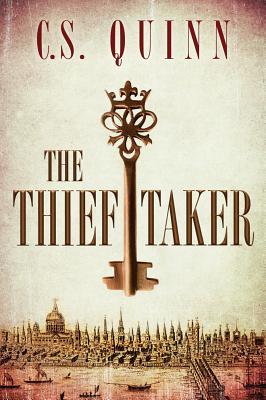
The Thief Taker (The Thief Taker #1) by C.S. Quinn

In the 1660s, thief takers solved the cases that were beneath the dignity of the typical London watchmen.

The poorer sort of people, who had experienced a crime or theft, would come to men like the title character in this story for justice. He would attempt to track down the perpetrator by finding the property that they took and fenced.

Photo by Wallace Chuck on Pexels.com

Usually, the thief taker could either get the property back for his client or turn the thief in to the higher authorities. But, the punishments back then were so barbaric- chopping off a hand, splitting noses- that the thief taker would usually just let the criminal go with a warning to not steal again or advise him to find a different clientele.

Charlie Tuesday is a thief taker in London. One day, a beautiful young woman comes to him for help in solving her sister’s murder. Normally, he doesn’t work on any cases larger than theft but the money that is offered is more than he can refuse.

From the strange mutilation of the body, he determines that there’s more to this crime than meets the eye. As the plague descends on London, he and Anna-Maria race to stop the murderer from striking again and, perhaps, even threatening the throne of England itself.

Photo by Yoss Cinematic on Pexels.com

The Thief Taker‘s scenery is lush. The customs, clothing, and food from 1665 are so different from what we have now. The reader is whisked away to a world that is the same in some ways (human behavior and emotions) and so different in other ways (social structures and occupations). I didn’t even know what a thief taker was until I read this book.

The story is an intricate mystery with the murders, possible witchcraft, and treason. I didn’t see the ending coming at all. It could be that I don’t read that many mysteries, but I thought that it was really well done.

Another fascinating piece to this story are the plague victims. The horrific conditions that the author describes, like bodies rotting in the streets and the Thames becoming clogged with corpses around London Bridge, actually took place.

Photo by Yoss Cinematic on Pexels.com

Because of these icky details, The Thief Taker occasionally veers towards the horror genre but never really crosses that line.

I kept picturing the rotting plague victims as zombies. In some ways, they’re similar. Contact with a plague victim could bring infection. Sometimes, the main character would come across a body that would appear dead, but wasn’t dead.

At one point in the story, a character describes the plague victims who are wandering the streets in search of mercy as the “walking dead.” It was very creepy.

Photo by Renato Danyi on Pexels.com

Also, the societal breakdown that accompanied the plague was so quick. Every moment the characters were in the London streets was filled with tension. The reader didn’t know if a plague victim was going to pop out of a quarantined house or if a thug was going to try to commit a robbery in a dark alley.

Readers who like the historical fiction of Philippa Gregory, Judith Merkle Riley, and Sarah Dunant may enjoy this.

I received a free copy of this book through Goodreads First Reads program.

Thanks for reading!

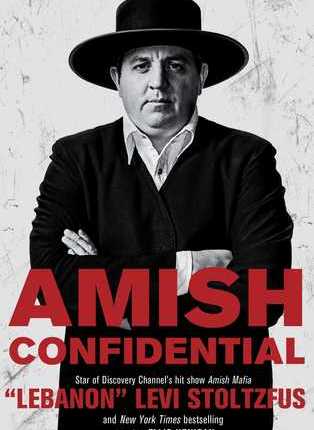
Amish Confidential by “Lebanon” Levi Stoltzfus and Ellis Henican

Amish Confidential by “Lebanon” Levi Stoltzfus and Ellis Henican

I wasn’t expecting much from Amish Confidential, a tell-all memoir, by Amish mafia reality television star, Lebanon Levi Stoltzfus. Despite my expectations, it was quite good.

I picked it up because watching The Amish Mafia is one of my guilty pleasures. It is a reality, cultural, crime-syndicate show with horses.

Photo by Pixabay on Pexels.com

The Amish, like other insular communities, have plenty to teach the outside world about they live their lives. Levi definitely has the inside scoop, having been raised Old Order Amish, a more conservative branch of the culture.

I loved learning about how the Amish were formed and the historical background of his people. I ate up the bits about Amish marriage ceremonies and the social customs surrounding the party afterwards. Celery, apparently, is huge. Who knew, right?

I wish he had talked more how he fell into the world of “Amish mafia” itself. It’s clear from his narrative that he feels the Amish are taken advantage of because of their religious pacifism. He believes that they desire to deal with potentially criminal matters among themselves rather than going to the authorities. That is the basis of the mafia. For legal reasons, he probably couldn’t be that transparent. But it would have been excellent if he had.

Photo by Brandon Randolph on Pexels.com

If you enjoy the television show, you may not like this as much because it lacks some of the moment to moment tension and drama that one gets from watching the show. But, if you go into it with an open mind to learn more about the Amish in general, it certainly accomplishes that.

If you enjoyed Amish Confidential, I’d recommend The Terrorist’s Son: A Story of Choice (a Muslim boy is raised one way but chooses to live another) or License to Pawn: Deals, Steals, and My Life at the Gold & Silver (a memoir by a pawn shop owner who has his own reality television show).

Thanks for reading!

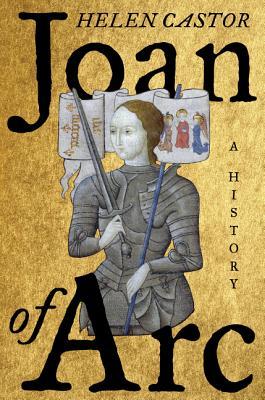
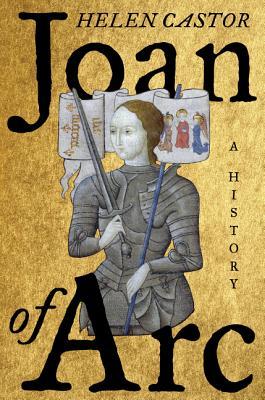
Joan of Arc: A History by Helen Castor

Joan of Arc: A History by Helen Castor
joanofarc

The review that I’m about to give Joan of Arc: A History has nothing to do with the historical accuracy of the book. On the contrary, I found this to be an extraordinarily well researched and cited biography.

Unfortunately, that mega-effort did not lend itself to a readable or enjoyable book.

The general idea behind Joan of Arc is sound. Helen Castor wanted to present Joan’s story in context with an extended history of France for years before and after her appearance on the world stage.

In that way, she thought that the legend of the woman could be separated away from the reality. The reader could appreciate the main players, the attitude towards spiritual visions, the belief of divine will in war and the monarchy, and capture the overall general flavor of the time period.

It was a good premise, but it just didn’t work. Maybe this was a doctoral thesis that Castor tweaked a bit and published? It reads like that.

Why is it that experts on topics are rarely able to translate that interest and depth of knowledge into stories that the general public would enjoy? I love medieval history, especially the backgrounds of the handful of female figures who made it into print during that period. This should have been right up my alley.

Photo by Pixabay on Pexels.com

Joan of Arc: A History read like a school textbook- the dull kind.

Actually, it reminded me of translating Livy’s History of Rome from Latin into English during college. It should have been fascinating stuff as he was writing about a particularly exciting period in Roman history when Hannibal was crossing the Alps to invade. But, sadly, Livy got caught up in listing endless details, particularly the size and shape of the elephants. Through description after description, the pace of Hannibal’s army slowed to a trickle and then it turned into a snooze-fest.

That also happened in this book.

If you enjoy scholarly research to the point that you just have to have it and nothing else will do, read this book. If you want history to come alive and punch you in the face, pick up something (anything really) by Margaret George or Bernard Cornwell.

I particularly liked The Memoirs of Cleopatra or The Autobiography of Henry VIII: With Notes by His Fool, Will Somers. George may not have the exacting research standards of this biography, but her historical fictions are informative in addition to a delight to read.

I received a free copy of this book through Goodreads First Reads. Thanks for reading!

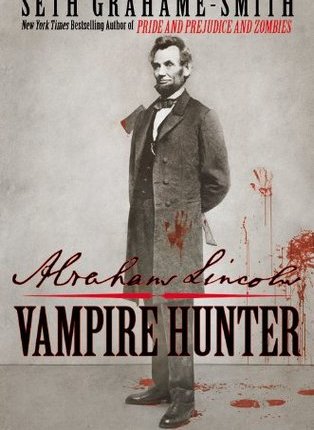
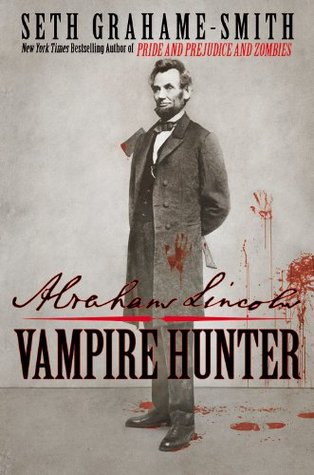
Abraham Lincoln: Vampire Hunter by Seth Grahame-Smith

Abraham Lincoln: Vampire Hunter by Seth Grahame-Smith

vampirehunterTake Abraham Lincoln and his famous rail-splitting ax, add a dash of vampires and voila: Abraham Lincoln: Vampire Hunter.

Fans of horror may enjoy this creative re-mix of history more than I did. Though I enjoyed learning about Lincoln, the moments of gore inbetween weren’t for me.

I listened to the audiobook and my favorite parts were the Americana inspired musical interludes between some of the chapters. Banjos or plaintive violins shepherded readers into the next section. It was beautiful.

As for the story itself, I suppose I didn’t realize how easy it was to introduce vampires into every moment of a person’s life.

Example: Last night I had trouble sleeping. I opened my eyes at 3:45 a.m. and whispered to myself, “The vampires must be closer than I thought.”

Or, another real example, there was a terrible accident yesterday in which one of the bar owners in my small hometown was killed riding her motorcycle. I turned to my coworker with a grim look and said, “Vampires.”

See? You can vampire-ize anything!

Food goes bad in the refrigerator? Vampires. Cat pukes behind the bed? Vampires. Traffic is bad? Vampires.

Though it was fun at first, it became ridiculous.

But don’t let me deter you- if you like horror, you may love this. I enjoyed it but, I confess, I’ve had enough vampires to last me for the foreseeable future.

Thanks for reading!

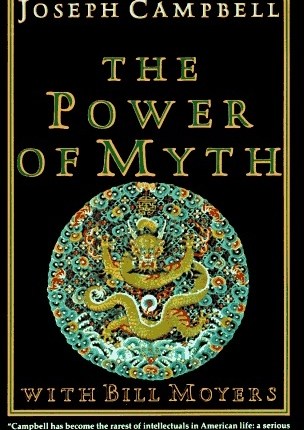
The Power of Myth by Joseph Campbell

The Power of Myth by Joseph Campbell

Though a bit rambling at times, The Power of Myth is a great introductory text on archetypes found within all world mythologies from almost every time period.

Photo by Plato Terentev on Pexels.com

In it, Joseph Campbell explains why the underlying stories are the same from all over the world and what they mean in both cultural, personal, and world contexts.

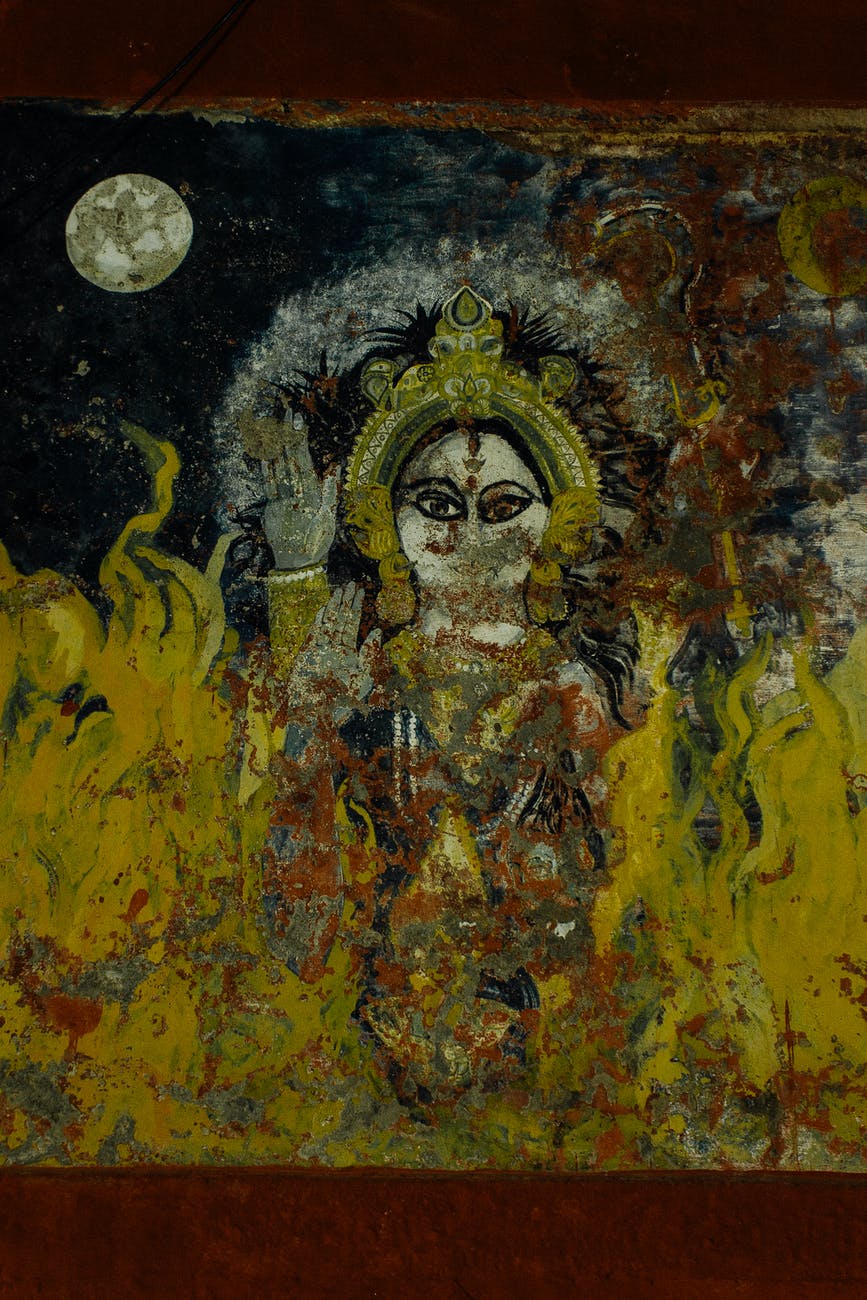
He breaks down some of the major archetypes like the sacrificed god and resurrection, virgin births, goddesses, trees, snakes, and more. As someone who has studied tarot and The Tree of Life extensively, I found it to be an illumination.

Photo by Alex Conchillos on Pexels.com

I particularly liked learning about the mythology of Star Wars. With the release of the new film, that particular series is back in the top of the pop culture charts. I think that The Power of Myth explains why it has such enduring appeal.

If you liked The Power of Myth, you may want to try Hero with a Thousand Faces or Pathways to Bliss: Mythology and Personal Transformation, both of which are also by Joseph Campbell.

Or pick up any of the many books about mythology from any country you’d like. If you immerse yourself in enough of the stories, you will pick up on the reoccurring patterns yourself.

I believe that one of the many purposes of mythology, beyond its entertainment value, is to teach us about what we have in common with each other, and also, the hidden dimensions of ourselves.

As the doorway to the Delphic Oracle said, “Know Thyself.” And, really, that is the greatest power there is. Mythology helps you do that.

Thanks for reading!

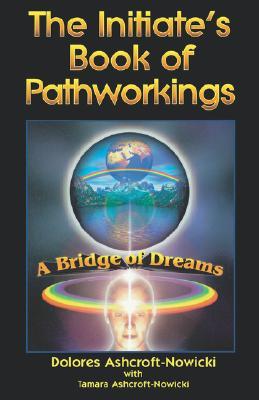
Initiate’s Book of Pathworking: A Bridge of Dreams by Dolores Ashcroft-Nowicki

Initiate’s Book of Pathworking: A Bridge of Dreams by Dolores Ashcroft-Nowicki
initiate's book

Dolores Ashcroft-Nowicki shares meditations which she calls pathworkings as a method of self actualization.

I understand that directed pathworkings are an actual technique that has been used by mystery schools for centuries to explore consciousness. I just don’t see its usefulness beyond a sort of tourist trip through what “may” be in your mind rather than what “is”.

Let’s compare it to riding a bike. Directed pathworkings are like watching a video of someone riding a bike. Passive pathworkings are like hopping on that bike and riding it all over your neighborhood. You get the visceral experience of being there.

If you’ve never ridden a bike before, watching the video might be safer, but it certainly isn’t more fun.

If we look at the Initiate’s Book of Pathworking as a journal of an adept’s inner work, it feels rather rehearsed and stilted as opposed to the out of body work that was chronicled in Multidimensional Man by Jurgen Ziewe.

Photo by Rahul Pandit on Pexels.com

If we consider the different approaches between Ashcroft-Nowicki and Ziewe, it also makes more sense that these pathworkings have a clear beginning, middle, and end as opposed to Ziewe’s offerings which are more like real life: random and, at times, nonsensical.

Because (I’m assuming) an adept from The Servants of Light School created these pathworkings through actual experiences on the inner planes, it has the curious side effect of unfolding like a structured lesson plan.

In Nick Ferrell’s book, Magical Pathworking, he discusses the importance of writing pathworkings like a story with a beginning, middle, and end for its consciousness shaping potential, but he never talks about how naturally occurring pathworkings or passive pathworkings, present themselves in that manner, organically. At least, that has been my experience.

I suspect that mystery schools experienced some pathworkings through their consciousness research, recorded the patterns that occur, and then sought to imitate that inner perfection by scripting pathworkings like the ones found in this book.

Photo by Pixabay on Pexels.com

There is value to be found in this book as it provides a nice introduction to pathworking in general: “What is a pathworking? It is similar to a virtual reality trip. Pathworkings are perfectly natural and can occur spontaneously in the form of daydreams. Used as a structured series of visualizations, they hold many possibilities for the student.” Introduction, pg x

I found some of this book silly like the Healing Spring (Women only) pathworking on page 61. Women only? We’re dealing with consciousness here which is neither male or female, but pure being. If a guy wants to run the Healing Spring pathworking, I’m not going to be the one to say no.

Some of the poetry in the pathworkings is very beautiful and felt authentic, which again made me wonder who wrote these for the SOL. W.E. Butler? Dion Fortune? So curious:

“Forest Lord, with twelve-tined crown,
Now we come to bed thee down.
Rest content when sleeping deep,
Leave the Summer Queen to weep.

Rest thee well till comes the Spring
When harebells in the wood do ring;
Then rouse thee up the maid to wed
And seek the joy of the greenwood bed.

Hunter, blessed be thy sleep;
Choose a maid thy bed to keep.
Dreams of silver, dreams of gold
Will guard against the winter’s cold.” pg 190

To give you a comparison, here is a chant from some pixies in a passive pathworking that I experienced a couple of months ago:

“Awake the trees, awake the night, awake the shining moon.
Feed the plants, free the life that dwells within the bloom.
To keep the forest growing tall, the pixie people sing,
We bring the song and dance the call to wake the Forest King.

Awake the night, awake the moon, awake the powers old,
We’re the ones that call upon the Spirit of the fold.
Dance the dance, sing the songs, make the forest wake,
In our stead, these plants have fed the thirst that never slakes.

Feels very similar, yes? That’s the fascinating thing about consciousness research to me. It feels so familiar but, at the same time, infinitely unknown.

Photo by Luca Dross on Pexels.com

It’s just my opinion but, I think, in addition to space, our own minds are the next frontier of human exploration.

“These “serial” workings will grow with you as you explore them, and can bring about many strange events, both in your astral life and in your physical existence. They are more potent than they seem, so take them slowly.” pg 214. One a week has worked pretty well for me. I feel like I’m learning and growing but not being overwhelmed by the changes.

A dated portion of this book that I found rather amusing, especially since the recent kerfluffle over the year 2012: “As the year 2000 comes ever closer, speculation as to the future of the world gets wilder. Exactly the same kind of hysteria hit the known world in the year 1000… The year 2000 will usher in a time of adventure, opportunity, and yes, a lot of changes. But we will survive. Things may be very different a hundred years from now, but we have survived big changes before and will do so again.” pg 231 Amen.

“One of the things an initiate learns is that every man and woman is essentially a “multi-versal” being. That is, we exist simultaneously in many dimensions and parallel universes. We have a consciousness in each one, a life in each one, a purpose and destiny in each one. But each is minutely different. With every passing moment in time, we change our future in each universe by constantly making decisions that affect the course of that future.” pg 240. I don’t know that I agree with everything in that passage, but isn’t it a beautiful view of reality? Layers within layers of truth, all interacting and changing each other, eternally.

If you liked the guided pathworkings in this book, you may want to read: Magical Pathworking: Techniques of Active Imagination by Nick Farrell, Pathworking and the Tree of Life: A Qabala Guide to Empowerment & Initiation by Ted Andrews, or the second half of A Garden of Pomegranates: Skrying on the Tree of Life by Israel Regardie. If you want examples of (mostly) passive, out of body experiences, read: Multidimensional Man by Jurgen Ziewe or Psychic Warrior: The True Story of America’s Foremost Psychic Spy and the Cover-Up of the CIA’s Top-Secret Stargate Program by David Morehouse.

Thanks for reading!

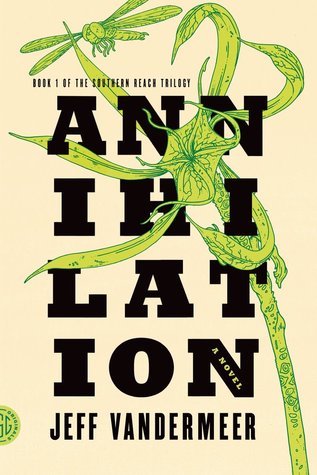
Annihilation (Southern Reach #1) by Jeff VanderMeer

Annihilation (Southern Reach #1) by Jeff VanderMeer
annihilation

A group of female scientists and professionals are sent to explore a region that is not like the world they know. Annihilation is a hypnotic science fiction/thriller that weaves its spell slowly. Then, all at once, it has your complete attention and you find yourself hanging on every word. I loved it.

Isolation from the modern world and technology places this tale in an anachronistic bubble: “One rule for an expedition into Area X was that we were to attempt no outside contact, for fear of some irrevocable contamination.” pg 7, ebook. It harkens back to the idea that, “In space, no one can hear you scream.”

They’re far from home in a surprisingly deadly world. It has already claimed eleven groups of explorers. But, we don’t know what killed most of them: “We were scientists, trained to observe natural phenomena and the results of human activity. We had not been trained to encounter what appeared to be the uncanny.” pg 46, ebook. Extraordinary things begin to happen, almost from the moment the team sets foot in Area X.

“When Area X first appeared, there was vagueness and confusion, and it is still true that out in the world not many people know that is exists. The government’s version of events emphasized a localized environmental catastrophe stemming from experimental military research.” pg 61, ebook. The government has reasons to cover this place up. But why? What is it really and what does it contain?

Creepy and enthralling, Annihilation is a treat. It is easy to see why this won the Nebula Award for Best Novel. I highly recommend it for science fiction lovers and those who enjoy experiencing a world that doesn’t behave by the usual rules.

Thanks for reading!

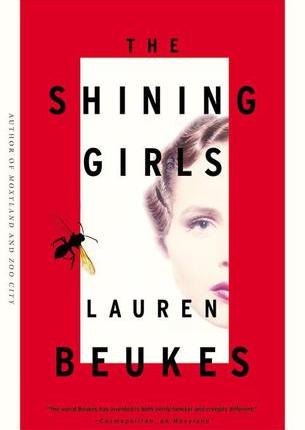
The Shining Girls by Lauren Beukes

The Shining Girls by Lauren Beukes
theshininggirls

A killer travels through time picking his victims and leaving mementos behind.

I thought I’d venture outside of my comfort zone with The Shining Girls and I certainly managed that. It was far too gory and violent for me.

The trouble is that almost half of the story is told from the killer’s point of view. The reader gets a front row seat at the crimes, usually immediately after a series of passages describing the girl so that an emotional connection is formed with the victim.

I was on a run listening to the audiobook… now, let me be honest. I was on a mildly taxing walk listening to the audiobook and I had to turn it off when he attacked Kirby. It was simply too much with all of the horror, violence and the bit with the animal too.

Perhaps if I had been reading a physical book, I could have skimmed the awful bits. But even then, I think it would be safe to say that this was not the book for me.

I was really excited when Beukes introduced the reader to the newsroom of the Chicago newspaper. Her description of the reporter’s cubes all stacked up on one another with the sports and feature writers off to the side was eerily accurate to where I work.

I also enjoyed the interactions between Dan and Kirby- those two were snappy and fun.

Overall though, the gore of the story was too much for me. Only recommended for readers who can handle that type of thing.

Thanks for reading!

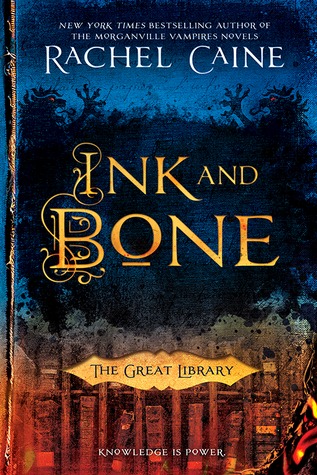
Ink and Bone (The Great Library #1) by Rachel Caine

Ink and Bone (The Great Library #1) by Rachel Caine
inkandbone

In Ink and Bone, knowledge and power is the name of the game.

“The Library holds itself to be the keeper of both knowledge and wisdom, but it is not true. So much should never be held in the hands of so few, for it is a natural, venal habit of men to hold to power. And knowledge is the purest form of power.” pg 51

Printed books, called originals, are now highly prized and illegal to own without a dispensation from the Library. The Library is an entity without borders as powerful as the church or a country, with soldiers and animated machines called automatons, protecting its buildings, holdings and librarians.

Not everyone follows the Library’s restrictions and a black market has formed for books. Jess and his family of smugglers runs and sells books at great threat to life and limb. Other factions also resist the Library. They’re called Burners and they destroy books with Greek fire, a dangerous and deadly concoction that burns flesh as easily as paper.

“The original scroll had been destroyed by a Burner at the Alexandrian Library ages ago, but there had been one copy made. … Owning it carried a death penalty. When you steal a book, you steal from the world, the Library propaganda said, and Jess supposed it might be true.” pg 22, ebook.

Jess’ smuggler father decides that he needs eyes and ears on the inside of the most powerful institute in the world, so he arranges an opportunity for Jess to join the Library. And that is where this story really begins.

The beginning of Ink and Bone bothered me because of its obvious parallels to Harry Potter. A promising young boy on his way to a magical school boards a train and meets a slightly bumbling, shy boy and the smartest girl in his class. But after that cliche “train introduction”, the story improves.

While reading this story, I was reminded of the divide between those who love holding traditional books in their hands and ebook readers. The Library has discovered a magical method to use tablets and change the words on the page, very similar to ebooks: “Do you agree it should be wrong to own original works?” Of course, Jess knew he ought to say; it was the standard answer. The Library was never wrong. But something made him say, “I’m not sure.” That woke a glint in Wolfe’s eyes. “Why not?” “I’d like to hold one,” Jess said, quite honestly. “To feel the weight and history of it in my hands. A blank can’t be the same, sir.” “No,” Wolfe agreed. “A blank is a poor, pale imitation, though the words are arranged in precisely the same order; it is the difference between an idea and a physical thing.” pg 61, ebook. I enjoy both books and ebooks, but I can see why a reader would prefer one over another.

I enjoyed the general ideas of this book, but between the warring factions, actual wars, magic, alchemy, Library history, twin brother, character backgrounds, book burners or eaters, teenage romance and angst, the story lost its cohesiveness. Caine could have written three different stories with the material contained in one.

Beyond simplifying the story elements, I just couldn’t get over the fact that the librarians weren’t good guys. Yes, I’m biased. 🙂 But every librarian I’ve ever known has been a guardian of knowledge, not gate-keeping tyrants.

Recommended for readers who enjoy their young adult fantasy a little scattered and who are open to the idea of sinister librarian-types.