#GIRLBOSS by Sophia Amoruso

#GIRLBOSS by Sophia Amoruso

#GIRLBOSS is Sophia Amoruso’s story about her wild childhood, unlikely and extraordinarily successful business venture and her treatise on how to be yourself and bring what is unique to you to your professional life.

I googled Sophia after I finished this book and was dismayed to discover she has declared bankruptcy.

It seems she still has a successful motivational speaker program going on, but, for whatever reason, her business hasn’t worked out.

I suspect, she will land on her feet and start again. That is a large part of the philosophy contained in #GIRLBOSS.

Photo by Sam Lion from Pexels

“In about eight years, I went from a broke, anarchist ‘freegan’ dead set on smashing the system to a millionaire businesswoman who today is as at home in the boardroom as she is in the dressing room. I never intended to be a role model, but there are parts of my story, and the lessons I’ve learned from it, that I want to share.” pg 23, ebook.

Sophia believes in being yourself. Let your freak flag fly. Embrace your weirdness- because that is what ultimately makes you great.

“#GIRLBOSS is a feminist book, and Nasty Gal is a feminist brand in the sense that I encourage you, as a girl, to be who you are and do what you want. Being a Girlboss is as much about being the boss of your career as it is of your home.” pg 29, ebook.
Photo by Skylar Kang from Pexels

Between Sophia’s business tips and memoir, she includes quotations. Such as: “It was the straying that found the path direct – Austin Osman Spare.” pg 56

In her case, that was absolutely true. Sophia wanted a job where she didn’t have to work and could get paid for doing, essentially, nothing.

She found that job and surfed the internet most of the time. In doing so, she studied online communities like MySpace and eBay and concluded that she could network and sell items with the best of them.

And she did.

Photo by cottonbro from Pexels

Sophia is a believer in creating your own reality: “… there’s also the everyday kind of magic that we make for ourselves. And that’s really not magic at all. It’s just recognizing the fact that we control our thoughts and our thoughts control our lives. This is an extremely simple, totally straightforward concept, but for a lot of people, it’s so alien that it might as well be magic.” ebook, pg 109.

Sophia, like Obi Wan Kenobi, does not believe in luck. She believes in hard work, action and selective focus.

“Focus on the positive things in your life and you’ll be shocked at how many more positive things start happening. But before you start to think you just got lucky, remember that it’s magic, and you made it yourself.” ebook, pg 115.

Come bankruptcies and whatever else, I believe Sophia Amoruso will be just fine. Don’t you? 🙂

And have you watched the #GIRLBOSS series on Netflix? I did and it didn’t appeal to me as much as this book did. Not recommended.

Thanks for reading!

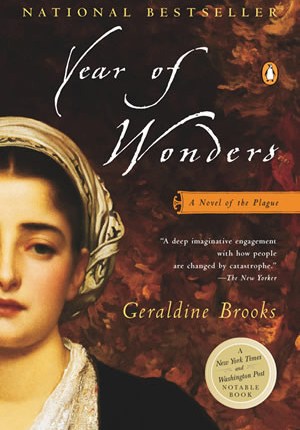
Year of Wonders: A Novel of the Plague by Geraldine Brooks

Year of Wonders: A Novel of the Plague by Geraldine Brooks
yearofwonders

Year of Wonders tells the story of Anna, a servant to a pastor, and how she emotionally and physically survives the plague while the majority of her village falls ill around her.

I was enthralled. I listened to the audiobook on my daily commute and it was fantastic.

You get the very real drama of life in a small village mixed with the the despair that must have accompanied the plague. There’s finger-pointing, people taking advantage of other’s need and, above all, the need to rationalize why all of the deaths were occurring.

My favorite part of this book was when Anna stopped in the middle of her hectic life to reconsider how she viewed God. She uses common sense reasoning to pick apart why a deity would allow such tragedy to occur and then wonders why the young are taken rather than the old.

She comes to the conclusion that what’s happening is a biological thing rather than a divine thing. Then, once she has that straight in her mind, she’s better equipped to handle everybody else’s irrational responses to the plague without being bogged down by her own.

Anna is a great heroine. She has her flaws- a flirtation with opium addiction to dull her grief and a crush on someone else’s husband- but she tries to be a good person. Mainly, she’s just overwhelmed by what’s going on and wants to feel loved and safe.

Photo by Nico Becker on Pexels.com

She cares for the ill, helps an orphaned child hold on to her family’s lead mine and tries to help her village keep body and soul together.

The ending of Year of Wonders was incredibly shocking to me, but in a good way. Geraldine Brooks stayed true to her characters but took the story in such an unexpected direction, that I had to turn it off for awhile to absorb what I had just heard.

Highly recommended for book clubs or people who love historical fiction. Year of Wonders is wonderous indeed.

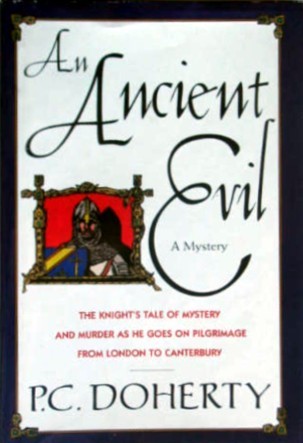
An Ancient Evil (Stories told on Pilgrimage from London to Canterbury, #1) by Paul Doherty

An Ancient Evil (Stories told on Pilgrimage from London to Canterbury, #1) by Paul Doherty
anancientmystery

An Ancient Evil is a charming historical fiction based loosely on the premise of The Canterbury Tales.

In the introduction, a knight tells a story to a group of pilgrims on their way to Canterbury. “My tale begins hundreds of years ago, just after the great Conqueror came here. So, gentles all, your attention as I describe these horrors sprung from the very pit of Hell.” pg 6.

In the story within the story, a menacing prologue introduces the reader to Sir Hugo, who buries alive the leader of a group of evil magic doers and burns the rest of his order. The evil leader who is buried alive doesn’t seem that upset about the whole thing. Which is weird.

Fast forward a couple hundred years into the future.

Sir Godfrey and a clerk, Alexander, are tasked by the king of England to discover the truth behind a series of mysterious and grisly murders in Oxford.

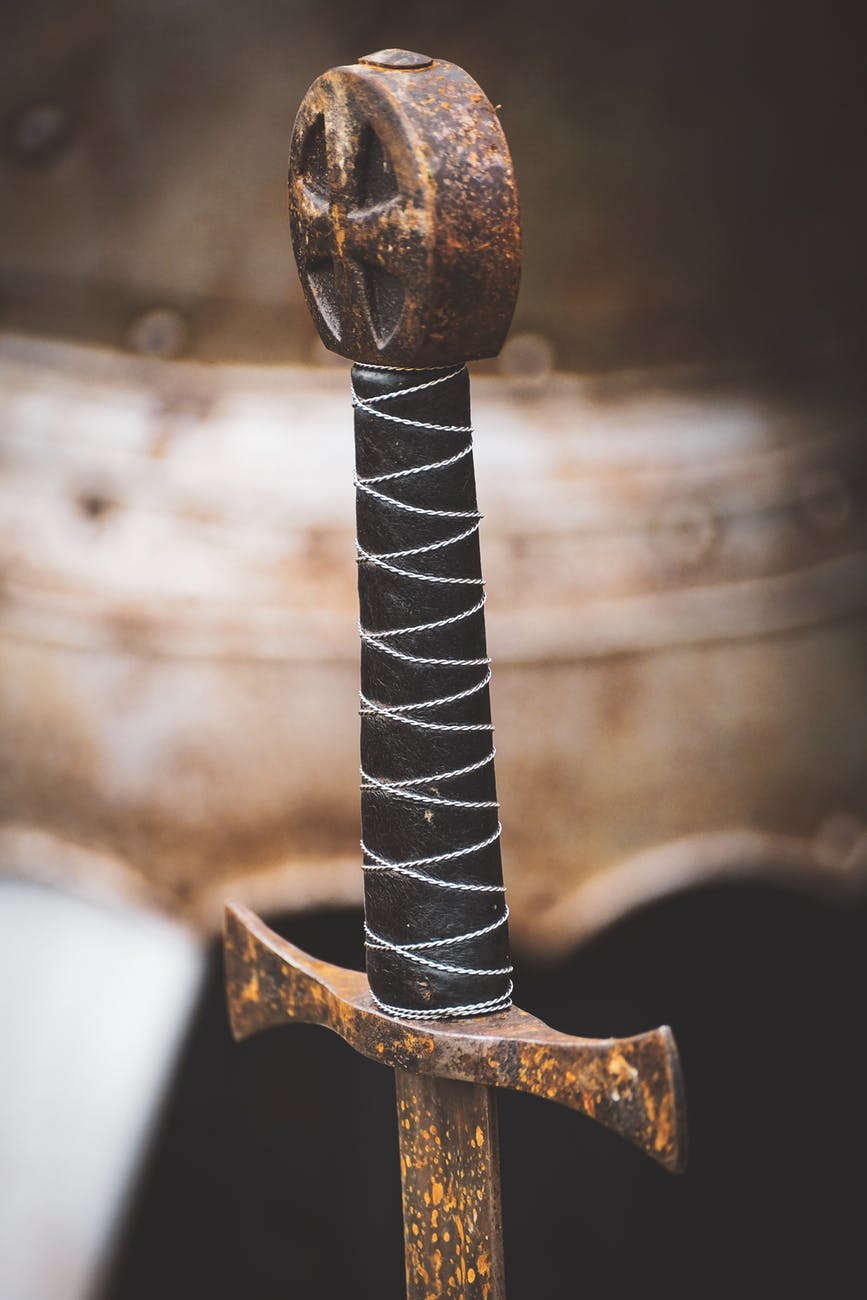
They are assisted in their task by Dame Edith, a blind anchorite who is known for her exorcism talents. ‘Sir Godfrey, whoever the killers are, we are about to enter the Valley of Death, but,’ Alexander couldn’t resist gentle banter, ‘we have your sword, my brains and the prayers of Dame Edith.’ ‘I think we might need more than that.’ pg 64.

I enjoyed this medieval, just a bit too bloody to be called “cozy”, mystery.

Photo by Susanne Jutzeler on Pexels.com

The characters are layered. The author drops enough hints to lead the reader towards the bad guy without giving the game away.

It reads a bit like a Nicholas Cage movie. We’ve got a battle between good and evil with some paranormal stuff and swords thrown in.

“Dame Edith tapped the side of her head. ‘Sir Godfrey, you are a soldier. You, of all people, should realize that a man is what he thinks he is. What causes one man to be a coward and another to be a hero? After all, they may be the same flesh and blood. They may even be brothers from the same womb. It’s what they think.” pg 170.

I also enjoyed the details about medieval life that are sprinkled throughout.

Recommended for readers who enjoyed The Thief Taker by C.S. Quinn or Mistress of the Art of Death by Ariana Franklin.

Thanks for reading!

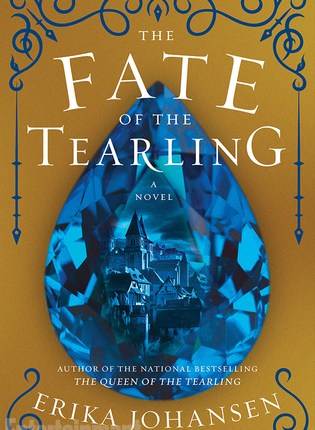
The Fate of the Tearling (The Queen of the Tearling, #3) by Erika Johansen

The Fate of the Tearling (The Queen of the Tearling, #3) by Erika Johansen

The Fate of the Tearling ties up the series nicely. All questions of the founding of Tearling, the shadow and Mort are answered.

And we also learn all of the secrets of the Fetch. Finally! “For three long centuries… William Tear’s dream sunk further and further into the mire. No one in the Tearling could even see Tear’s better world any longer, let alone muster the courage to dig for it.”pg 6, ebook.

The path isn’t easy. Kelsea questions herself every step of the way. “Maybe we aren’t capable of being satisfied, Kelsea thought, and the idea seemed to open a chasm inside her. Maybe utopia is beyond us.” pg 90, ebook.

But she is determined to see things through to the end: “We can’t simply stay here, hiding, while the kingdom burns. What sort of queen would I be?” pg 273.

Though Erika Johansen writes a thorough ending, I found myself dissatisfied with it. Read it and let me know what you think. I’m still thinking about it, even though I finished this book last week.

Photo by Pixabay on Pexels.com

From a lackluster start, I think The Queen of the Tearling series turned out to be fairly enjoyable. I would classify it as adult because of some of the themes, imagery and language.

It uses fantasy to examine the human condition, society and what happens to communes after a charismatic leader dies.

I think Kelsea is one of the strongest female characters I’ve read. Bravery-wise, she fits right in with Katniss Everdeen. She doesn’t quit and isn’t afraid to admit when she’s wrong.

Throughout the series, we see her grow from uncertain child to warrior queen. Bookish and introverted, Kelsea may appeal to those who wish they could be something more than they currently are.

Recommended for readers who are willing to invest some time in a series to enjoy it and for fans of fantasy/dystopian worlds. The Queen of the Tearling grew on me. It has heart.

Thanks for reading!

See my review of the first book here: The Queen of the Tearling (The Queen of the Tearling, #1) by Erika Johansen

Second book here: The Invasion of the Tearling (The Queen of the Tearling, #2) by Erika Johansen

The Murders of Molly Southbourne by Tade Thompson

The Murders of Molly Southbourne by Tade Thompson

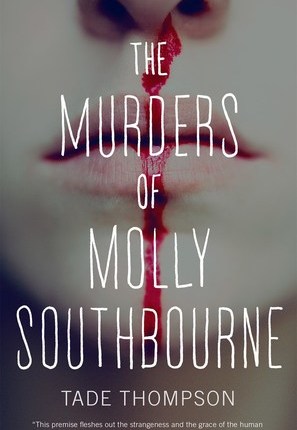
The Murders of Molly Southbourne is a short story about a girl who is born with a horrifying condition. Whenever she bleeds, the blood changes into a homicidal version of herself that won’t stop until it, or Molly, is dead.

“The rules are simple. If you see a girl who looks like you, run and fight. Don’t bleed. If you bleed, blot, burn, and bleach. If you find a hole, find your parents. Molly recites the lines to herself many times.” pg 24.

I’m not sure I understood what the author was going for with this short story.

Yes, what happens to Molly is horrific. I guess I didn’t make the connection between what was happening to her and the broader meaning the story was reaching towards.

Photo by Badulescu Badulescu on Pexels.com

Because it was certainly reaching: “She cannot stand children. They remind her of the mollys, with their innocence and their half-formed personalities, and she expects them to burst into violence any minute. They never do, but they might.” pgs 63-64

Or, beyond the death-through-your-children angle, I could use this story to consider the futility of life itself. “How is it that humans bleed so much? Or maybe Molly herself bleeds more than the average human. The rule are useless, an attenuation at best. Lifeblood escapes all the time, minor hemorrhages, a little a day. Maybe that is how we age. Maybe that is how we die.” pg 91

It is creepy and could fit the bill if you’re looking for one more short and spooky pre-Halloween read. I just didn’t connect with it.

Thanks for reading!

The Invasion of the Tearling (The Queen of the Tearling, #2) by Erika Johansen

The Invasion of the Tearling (The Queen of the Tearling, #2) by Erika Johansen

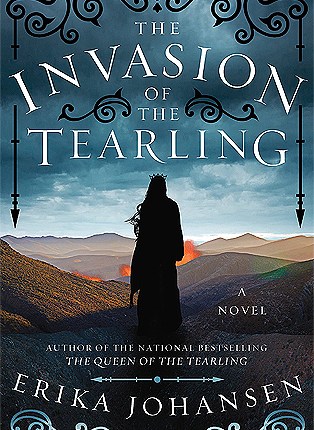
The Invasion of the Tearling picked up where the last book left off. The Mort army is invading the Tear because of the actions of Kelsea, their new queen.

I won’t say what exactly those actions were, in case you didn’t read the last book. Let’s just say: she’s breaking with tradition in more ways than one.

Kelsea has started to embrace her power in this book. It suits her.

The girl who had been raised by Carlin Glynn would never have trusted in visions, but Kelsea’s world had broadened well beyond the width of Carlin’s library. The Mort would come, and the Tear army wouldn’t be able to stop them. All they could hope to do was slow them down.” pg 33, ebook.

I remember being rather unimpressed by the first book in this series. It felt cliched to me and predictable, except for the shadow creature and the introduction of the magic of the gems.

Photo by Magda Ehlers on Pexels.com

This book has more of both of those things. I approved.

Trigger warning in The Invasion of the Tearling for anyone who has had issues with cutting.

“Just the skin,” Kelsea whispered, staring at her arm, focusing all of her will on a tiny inch of flesh. She had borne worse; surely she could handle this. “Just a scratch.” A shallow line of red appeared on her forearm. Kelsea bore down, watching the line deepen, her breath hissing through her teeth as the skin parted with a sting, allowing a thin line of blood to well up and hold.” pg 117, ebook.

There’s also domestic violence, rape, non-graphic torture and some hints of sexual abuse. I suppose a young adult could read this, depending on their maturity level. 16+ may be appropriate. I would hesitate to go any younger.

Queen Kelsea has a lot on her plate: “My people are starving and uneducated. We have no true medicine. On the eastern border is an army that will crush us into dust. These are real problems, and so for a time I’ve let the others lie.” pg 208, ebook.

Photo by Carolina Basi on Pexels.com

Will she be able to save everybody?

“And Kelsea wondered suddenly whether humanity ever actually changed. Did people grow and learn at all as the centuries passed? Or was humanity merely like the tide, enlightenment advancing and then retreating as circumstances shifted?” pg 381, ebook.

I wonder that sometimes too.

Recommended for readers who enjoy their fantasies on the gritty side. I don’t feel like it ever veers into the truly “dark” but there are some disturbing elements to The Invasion of the Tearling.

Thanks for reading!

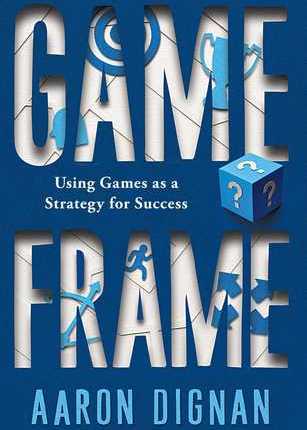
Game Frame: Using Games as a Strategy for Success by Aaron Dignan

Game Frame: Using Games as a Strategy for Success by Aaron Dignan

In Game Frame, Aaron Dignan outlines what games are, their components and how to create behavioral games to change your own and others behavior.

He clearly states his goals for the book in the introduction: “The truth is, we are born knowing how to play, and how to invent games where none exist. I’m convinced that there is a role for games and play in reshaping the world around us.” introduction, xiii.

Photo by lilartsy on Pexels.com

Dignan goes on to do just that. His detailed breakdown of the components of games and why we think they’re fun was particularly good.

I also agreed with his assertion that “play is a state of mind”: “…when a chef cooks something new, it feels like play. When I cook something new, it feels like work. Both of us are making a meal, but we’re not experiencing the same thing. Play is a state of mind.” pg 26.

Photo by Malidate Van on Pexels.com

My quibble with this book is that he didn’t convince me that games are the best way to change behavior. In Level 5 (Chapter 5), Dignan describes a speech given by Professor Jesse Schell at the D.I.C.E. conference in 2010 that scared the crap out of me.

Essentially, Professor Schell outlines how businesses and the government could use behavioral games to create a dystopian world in which our every action is analyzed and nudged towards consumerism.

“You’ll get up in the morning to brush your teeth and the toothbrush can sense that you’re brushing your teeth. So hey, good job for you, 10 points for brushing your teeth. And it can measure how long, and you’re supposed to brush your teeth for 3 minutes. You did! Good job! … And who cares? The toothpaste company. The toothbrush company. The more you brush, the more toothpaste you use. They have a vested financial interest.” pg 58

Photo by Karolina Grabowska on Pexels.com

After that chapter, I couldn’t shake the feeling that Dignan is inviting us to open a Pandora’s box.

“My challenge to you is simple: I believe that a million behavioral games could change everything, but they must be imagined and realized soon.” pg 169.

Hypothetically, say I design a game with the best intentions, but then, at some point, it’s taken over by the government and forced on people. Suddenly, it stops becoming a game and ruins the world.

Who wants to take the risk to potentially be the person who destroys society because of an ill-conceived behavioral game? Not me.

Recommended only for the truly brave gamers.

Thanks for reading!

The Kingdom of Little Wounds by Susann Cokal

The Kingdom of Little Wounds by Susann Cokal

The Kingdom of Little Wounds is about a seamstress, a nursemaid and a royal family haunted by illness. It is a, sometimes very, adult tale about secrets, sex and power.

Confession: I picked this one out at the library for the cover.

I saw it and thought, “This must be a young adult fantasy of some kind about a princess who works magic with needles.” Sometimes it’s nice to indulge in a pleasant escape from the world.

So, this book is nothing like that.

In the afterword, Susann Cokal describes her work as “a syphilitic fairy tale.” There’s nothing wrong with that. It just really wasn’t what I expected and wanted it to be.

This tale has rape and madness to it. There’s also some torture, severing of body parts and other pretty gross stuff that goes on.

It is definitely geared towards an adult audience. Librarians, please put it in the proper collection. It is not young adult.

The main characters, Ava and Midi, are likeable but powerless. “I truly would like to think I’m in the middle of a fairy tale, facing the period of hardship that precedes a triumph. But I am not a likely heroine.” pg 9, ebook.

The king, Christian, is ridiculous and controlled by his courtiers. “Have you found any… any culprits?” Sir Georg hesitates, and the favorites tense. Who will be blamed? A Lutheran? … Or perhaps some cousin with a tenuous but plausible claim to succession – someone who should be removed for the health of the court anyway?” pg 77, ebook. Notice how they are unconcerned with justice.

Alliances and power shift quickly in this story like the tide. The characters never know who they can trust. “We are all, of course, in service of the Crown and King. Who is known for being liberal with his gratitude, no matter what the rank of the creditor.” I recall something my mother used to say: Be wary of a promise without a clear price.” pg 131, ebook.

Photo by Mike on Pexels.com

Also, in the afterword, Cokal shared that a piece of this story, the appearance of a star, actually happened in Europe in the late 1500’s, early 1600’s. “The new star has put all of us off balance. We’ve always expected things to change down below, in the canals, the streets, and so on, but the heavens have been constant in our memory. This star shines even in the daylight, as if to drive away the sun. It is so bright that it seems heavier than the rest; we have the impression that if we were to stand on tiptoes, we might touch it.” pg 192, ebook.

Recommended for readers who aren’t bothered by dark themes and are in the mood for a “syphilitic fairy tale.”

Thanks for reading!

Grendel by John Gardner

Grendel by John Gardner

Grendel is the ill-fated monster from the ancient story, Beowulf. This is his tale.

There are very few details shared about Grendel in Beowulf. I thought that this story would be an opportunity for the reader to get to know him.

Unfortunately, we spend most of the time in Grendel’s mind, circling endlessly around the ideas of time, brutality, nature and the meaninglessness of existence.

I wanted to know more about Grendel’s mother, but there was very little about her.

John Gardner wrote her as some kind of void-filled slug monster: “Behind my back, at the world’s end, my pale slightly glowing fat mother sleeps on, old, sick at heart, in our dingy underground room. Life-bloated, baffled, long-suffering hag. Guilty, she imagines, of some unremembered, perhaps ancestral crime. (She must have some human in her.) Not that she thinks. Not that she dissects and ponders the dusty mechanical bits of her miserable life’s curse.” pg 10, ebook.

Not like Grendel does, endlessly.

Photo by Laker on Pexels.com

“I understood that the world was nothing: a mechanical chaos of casual, brute enmity on which we stupidly impose our hopes and fears. I understood that, finally and absolutely, I alone exist.” pg 17, ebook.

I think that was the biggest reason I didn’t enjoy this read. I believe every moment in life is, or can be, filled with purpose, meaning and happiness. Grendel falls on the exact opposite end of the scale.

In that way, Grendel is one of the biggest downers you could ever read. He believes that life means nothing. He acts and kills from this empty center.

Out of this morass, the one part I kind of enjoyed was Grendel’s conversation with a dragon in its hoard.

The dragon lives for millennia and sees the world from a view so wide that it is almost outside of time. Again, there’s a nihilist bent to his view, but the dragon brought a weird bit of humor to an otherwise bleak story.

Photo by Suraphat Nuea-on on Pexels.com

“Don’t look so bored,” he (the dragon) said. He scowled, black as midnight. “Think how I must feel,” he said.” pg 43, ebook.

Yeah, think how I must feel. All I wanted was the story of Beowulf from a unique perspective and what I received was a vague feeling of depression about the meaninglessness of it all.

Thanks for reading.