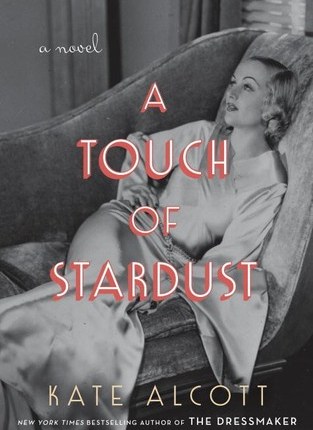
A girl from Indiana goes to Hollywood and ends up taking care of Hollywood royalty in A Touch of Stardust.
The reader gets a behind the scenes look at the making of Gone With the Wind and the private, slightly dysfunctional lives of Carol Lombard and Clarke Gable.
It was fun learning about what went into the creation of Gone With the Wind. Those parts of the book sort of read like a Hollywood-fan magazine, but better written.
The dialogue in this book is snappy and smart, like a Bogie and Bacall film.
I loved the heroine and how she pulled herself up by the bootstraps to make it in Hollywood at a time when very few women did.
The Lost City of Z is a well-researched tale by journalist David Grann about Percy Fawcett, the intrepid explorer who disappeared in the Amazon jungle on his search for the city he called ‘Z’.
The part in this book that I appreciated the most was Fawcett’s struggle to learn about and appreciate the cultures of the people he discovered in the Amazon, while at the same time, juggling his own biases against any culture other than his own.
In some ways, he was a product of his time, but the fact that Fawcett at least tried to understand different cultures made him different than other explorers of his age.
It’s only a small part in a larger tale full of adventure, exploration and discovery.
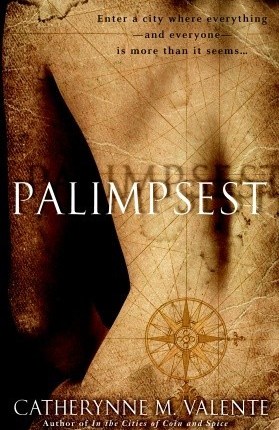
Sex and sleep with a marked individual is the way to the city of Palimpsest, a mystical and deadly place that exists beyond the borders of our world.
The first time you cross over, your spirit is bound with four other travelers. For what purpose, no one knows.
“Where you go in Palimpsest, you are bound to these strangers who happened onto Orlande’s salon just when you did, and you will go nowhere, eat no capon or dormouse, drink no oversweet port that they do not also taste, and they will visit no whore that you do not also feel beneath you, and until that ink washes from your feet… you cannot breathe but that they breathe also.” pgs 4-5, ebook.
A visit to the city leaves a visible mark on your skin, a map of the location you visited. You cannot travel beyond the borders of where you have already been, unless you sleep with someone who has a different map.
“It’s like a ticket. And once you’ve bought your ticket, and been to the circus, ridden the little red train, then you can sort of see other people who’ve done it, too. They walk a certain way. Smell a certain way. Their whole body becomes like an accent.” pg 42, ebook.
Palimpsest is so beyond belief, some people who have been there can’t believe it is more than a dream, at first.
“But it’s a dream,” Oleg insists. “It was fun. We won’t even remember it in the morning.” “You don’t know anything, Oleg,” sighs Gabriel. pg 73, ebook.
But, no one has ever woken up from a dream covered in blood.
Palimpsest showcases Catherynne Valente’s mammoth imagination and descriptive powers. The pieces of the city she allows readers to glimpse draw you in and make you want to see more.
Each location is unique, has its own backstory and feel. It’s an extraordinary work of urban fantasy.
The gates of sleep are two, a gate of ivory and a gate of horn. He had been horrified as a child, picturing a great door of tangled antlers and tusks. Surely that was the gate of Palimpsest.” pg 144, ebook.
It’s disturbing to read the main characters become more and more desperate to re-enter Palimpsest.
The way they seek out sex with strangers reminded me of a drug addict’s desperate search. The cost of entering the city is too high.
It ruins peoples’ lives.
I read Palimpsest years ago and couldn’t finish it then because the narration made me feel sick.
I think the trouble was that I used to put myself into the stories I read, imagining myself as the hero, villain, every part.
I’ve ceased doing that, at the cost of some grand adventures. But, in hindsight, it also allows me to navigate my way through stories I would not have been able to touch back then.
Because of its content, I’d recommend Palimpsest only for mature readers and fans of urban fiction. It’s a strange trip, but full of wonders if you can endure the cost to get there.
He has trouble relating exactly how his guru changed his life. He also has trouble expressing his life changing spiritual insights.
This could perhaps be because of all the LSD he experimented with, but no judgement here.
I think Dass could have added another couple hundred pages to the first part and still probably not fully described his experience.
The next section of the book is block text printed on, what seems to be, brown paper bags. Monty Python-esque photos are drawn in, and sometimes behind, the text.
If you have a question about how an enlightened person lives, it’s probably included in there.
Dass elucidates how he believes you should eat, sleep, breathe, interact with others, think, meditate, raise a family, form a commune and so on.
I didn’t like it because it felt too brain-washy, cult-ish.
Dass attempts to put the reader’s mind at ease to all of the strictures. He mentions that one needn’t be concerned about family or social responsibilities because, once you reach the ultimate level, you’ll realize that none of those things are real anyway.
Looking back on my review, it seems as if I don’t like Ram Dass, but I do.
I don’t buy into the idea that life has to be lived a certain way to get certain results.
And, perhaps because I haven’t personally had the experience yet, I don’t get the whole guru relationship thing. I know it’s my western background speaking, but there you have it.
Recommended for spiritual seekers, but don’t forget to trust your own inner guidance.
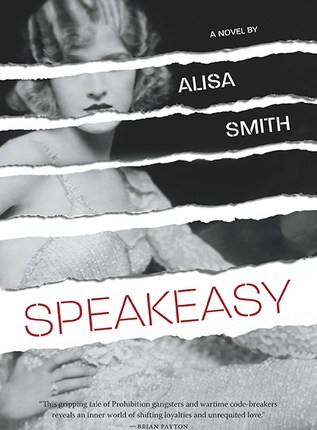
Speakeasy had some interesting elements, but the story suffered from a back and forth narrative and flat characters.
“I spread my papers out in front of me, and at first they all looked the same: a random mix of roman letters divided always into five characters with a space between each set, so no word lengths were revealed. I was searching for any repetitions.” loc 15, ebook.
The story is told from Lena’s perspective and diary entries of one of the members of her old gang.
“Bill Bagley was being punished because he had failed at something for which he possessed genius.” loc 80, ebook.
The back-and-forth storytelling was jarring. I liked the stories separately, but together, it didn’t really work.
They interrupted the flow of each other. I think it might have fit together more smoothly in a Part I/Part II presentation rather than interspersed.
I think Bill Bagley, one of the central characters, didn’t have the depth required to pull off this story.
He’s supposed to be this charismatic, brilliant criminal who inspires the men to risk their lives again and again, and also captures Lena’s heart.
Bagley has some failings, but, initially, there must have been something to him to draw the gang together.
Instead, from the start, he comes off as a volatile jerk.
We meet Bagley as he’s denying the parentage of a child who looks just like him: “This un ain’t mine and don’t tell me again that it is,” he said, thrusting the baby back to a lady with burning red cheeks.” loc 80, ebook.
“I returned from a visit with Bill, received a threatening note from him, and now this. He must have a copy of it and wanted to hold it over my head.” loc 741, ebook.
I guess I just never understood what Lena saw in him.
Also, for a genius code breaker, she doesn’t seem to be able to puzzle out the people around her very well.
“My morals were just not like other people’s, because unlike the somnolent majority I saw society’s problems. In my youth I had been misguided, and picked the wrong way of lashing out against an unfair system. But I had left the gang behind, and found a greater ease in my soul.” loc 1781, ebook.
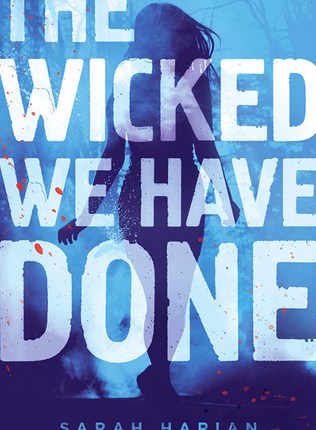
In a not-too-distant future, humanity has developed the technology to see inside the mind of criminals. Through simulations and tracking responses, the law claims to have the ability to measure motivation and “goodness.”
Evalyn Ibarra says she is guilty, but not of the crime she is on trial for. Rather than rely on a jury to prove her innocence, she chooses the “compass room,” the new technology, to prove her innocence.
If she is truly evil, the compass room will kill her. If she is innocent, she will walk free.
“My throat tightens, but there is no time to reflect. I had months to imagine this moment, months to mourn. That time is over, because today is the beginning of my inevitable execution in the Compass Room.”pg 7, ebook.
I found the premise of this book to be interesting, but it suffered in its execution and characterizations. Both were rather flat.
“The tension after Stella leaves is awkward and volatile. … We’ve been given provisions, so it’s obvious that, if this is the Compass Room, we are meant to head out. It’s either that or stay in a house full of psychopaths.” pg 25, ebook.
Did I mention that the compass room tries more than one criminal at a time? Very Hunger Games-esque.
“The one thing I do know about the Compass Room is that this test is supposed to see who you truly are, despite your research. Despite good acting or the lies you tell yourself.” pg 27, ebook.
Wouldn’t it be something if detecting evil was as simple as marking a chemical or hormonal response of the brain?
But then, of course, you wander into the problem: what if the technology gets it wrong? Or glitches?
“A terrorist attack finally convinced the Supreme Court. All charged in the bombing were forced to undergo the Compass Room’s exam. And they were all found to be, as reporters said on the news, ‘morally tarnished.'” pg 12, ebook.
The thing about execution is that there are no second chances or second guesses. Evalyn believes herself to be innocent. Will the room think so too?
I think if the author had fully explored the compass room and the psyches of those involved, I may have enjoyed it more.
As it was, I felt like we only skimmed the surface of what was possible. It lacked complexity because of the number of characters she wrote into the story.
Also, the author includes some half-baked romances, perhaps to prove this is in the “new adult” genre? I don’t believe it added much.
There’s also some non-spooky horror elements, that are meant to evoke the harrowing nature of the compass room. They felt overdone.
If you must read The Wicked We Have Done, I recommend borrowing it from the library.
A beautiful, magic-tinged tale of an aging couple, the bleak Alaskan wilderness and a child who appears one day in the wood.
Mabel and Jack always wanted a child, but after suffering a miscarriage, they begin to lose hope of ever conceiving. Mabel suffers in female society without a child of her own.
She begs Jack to take her to Alaska for a fresh start. He agrees. But it doesn’t work.
The weather is dark and freezing. The ground is hard and takes more effort than Jack can give. They aren’t thriving.
“All her life she had believed in something more, in the mystery that shape-shifted at the edge of her senses. It was the flutter of moth wings on glass and the promise of river nymphs in the dappled creek beds. … Mabel could not remember the last time she caught such a flicker.” pg 6, ebook.
Then, out of the blue, a child magically appears during a snow storm.
She is so light on her feet and silent, Jack and Mabel don’t at first believe their eyes. The child travels with a fox and barely leaves prints to follow on the snow.
“What did he expect to find? A fairy-tale beast that holds young girls captive in a mountain cave? … Or nothing at all, no child, no tracks, no door, only insanity bared in the untouched snow? That is perhaps what he feared the most, that he would discover he had followed nothing more than an illusion.” pg 72, ebook.
Mabel remembers a Russian fairy tale from her childhood, of a couple who builds a girl out of snow. In the story within the story, the girl becomes real.
Could Jack and Mabel have created the child they have always dreamed of?
“I am sorry to say no matter which version, the story ends badly. The little snow girl comes and goes with winter, but in the end she always melts.” pg 96, ebook.
How will Jack and Mabel’s story end?
Recommended for fans of historical fiction and tales that contain magical realism.
“In my old age, I see that life itself is often more fantastic and terrible than the stories we believed as children, and that perhaps there is no harm in finding magic among the trees.” pg 189, ebook.
I thought The Snow Child was beautiful and well-told. Highly recommended.
I don’t think The Snow Child has been made into a film, yet, but it has been staged as a musical play.
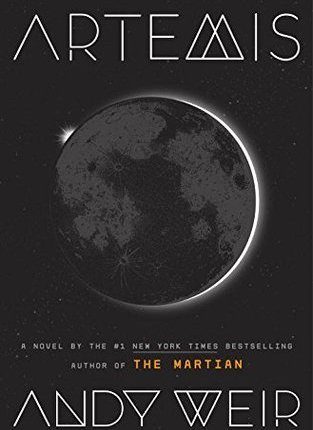
Jazz lives on Artemis, the first city on the moon. She delivers packages to eek out a living as well as other, more shady, methods of income.
“I live in Artemis, the first (and so far, only) city on the moon. It’s made of five huge spheres called “bubbles.” They’re half underground, so Artemis looks exactly like old sci-fi books said a moon city should look: a bunch of domes.” pg 5
One day, one of the richest men on the moon makes her an offer far too lucrative for her to refuse… all she has to do is something very dangerous and illegal. No problem, right?
“I’m sorry, but this isn’t my thing,” I said. “You’ll have to find someone else.” “I’ll give you a million slugs.” “Deal.” pg 46.
Andy Weir’s follow-up to The Martian was disappointing to me.
Unlike his first book, the science is watered down. It’s not as educational and quirky. In my mind, the exceptional science was what separated The Martian from other science fiction offerings.
The characterizations are one dimensional, like The Martian, but it was less of a problem in the first book. In that one, you were mainly dealing with one person, alone.
In Artemis, Weir tries to build a city of characters and I didn’t buy into it.
The main character, a female narrator, is particularly problematic. She just didn’t sound like a woman to me.
“I landed like a sack of sh*t. But I landed on the other side of the alcove and didn’t break anything. … Whatever. A clumsy, awkward success is still a success.” pg 124.
But beyond those small problems, Artemis is still enjoyable.
Weir put a huge amount of thought into how an economy on the moon would work. It is the most realistic I’ve ever read.
He also nails the human condition, the drive for novelty and tourism.
Weir describes the trouble with travel: Even when it’s a once-in-a-lifetime vacation. You leak money like a sieve. You’re jet-lagged. You’re exhausted all the time. You’re homesick even though you’re on vacation.” pg 152.
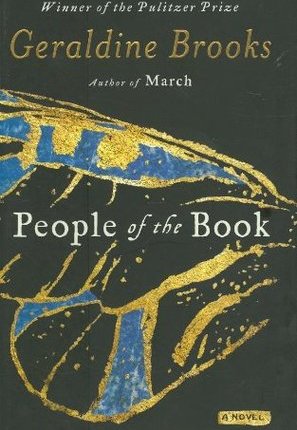
I think the problem is fairly simple- never connected with the main character. I loved Anna from Year of Wonders. I couldn’t stand Hanna.
The small details of her work that she found so absorbing, I didn’t enjoy.
I didn’t like how she treated people sometimes. I thought she seemed rather arrogant.
I also didn’t like how the timelines bounced around from character to character. I was listening to People of the Book as an audiobook. Without being able to look back and check, I found myself getting confused when I stopped in the middle of a passage and picked it up again after a work day.