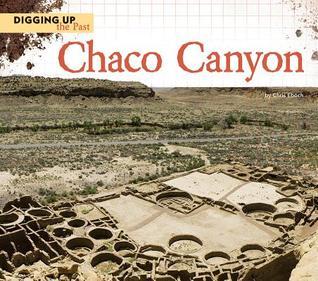
Chaco Canyon is among the most important archaeological sites in North America. pg 7
This non-fiction book for middle graders, part of the “Digging Up the Past” series, gives information about Chaco Canyon, a site that still holds mysteries to be discovered.
It was home to many people but at some point, it’s not clear exactly when, the population wandered away, leaving ruins behind.
According to one descendant, “They didn’t abandon this place. It is still occupied. We can still pray to the spirits living in these places from as far away as our pueblo.” pg 84
The book gives information about the history of digs at the site, which were not conducted with the care and documentation that such things require today. I found that part of the book quite sad. Imagine all of the history that has been lost.
It touches on the challenges researchers face today in their efforts to study Chaco Canyon. These include damage from the weather, large numbers of visitors, and looters.
Recommended for children interested in non-fiction.
The bone house did not speak. They never did. But still, Ryn felt obligated to say something. “Sorry about this,” said Ryn. And then she swung the axe at the dead woman’s knees. pg 14, ebook
In addition to her wandering dead problem, Ryn’s father went on a work outing and never returned. When a stranger comes to her village with a proposition to explore the lands around her home, Ryn decides to find him.
That is where the story really picks up.
Author Emily Lloyd-Jones explores Welsh myth and legend in this young adult fantasy. I enjoyed the story but the big twists were sign-posted so well that I guessed them before they occurred, something that I never manage to do.
This is probably because I’m not the intended audience for the story, but that’s fine. It is well-written other than that small quibble.
I liked the main character, Ryn, quite a lot. She’s strong, brave, and unafraid to venture into enchanted forests.
Reluctant readers might enjoy this book because the pace is quite fast. Recommended for readers who like young adult fantasy stories.
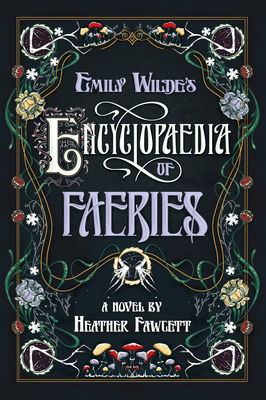
Emily Wilde’s Encyclopaedia of Faeries is a charming fantasy story about a fairy researcher and her efforts to study a group of fae in a country far from her own.
I loved everything about this story. The characters, the plot, the pacing- they were all excellent.
I particularly enjoyed the fairy lore that author Heather Fawcett created for the story. It felt true. If fairies actually existed, I think they would be something like how they are described in this tale.
“I wish to accomplish two objectives- firstly, to identify the species of Folk that dwell here, and second, to describe their interactions with the mortal inhabitants.” pg 71, ebook
Not only was the main character wonderfully crafted, but the secondary characters were great too. Wendell, Emily’s co-researcher, is compelling and really adds to the story.
I won’t say much more about Wendell because discovering what is special about him is part of the charm of the book.
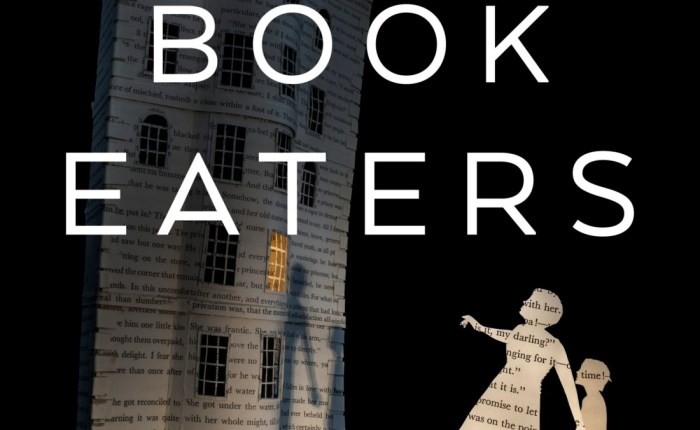
In the world of The Book Eaters, there are supernatural people who exist by consuming books, the content of which then stick with them throughout the rest of their lives. This small group has other members who, instead of books, eat other people’s minds. This second group they call, “dragons”.
Devon, a member of the first group, is a young woman who is married off to produce children. Once she completes this task, she is sent back to her home, only to do it all again a few years later.
The marriages and child-bearing are carefully managed by society because the book eaters are a dying race. This is intolerable to Devon, who wants to remain close to her children, but who is instead cruelly separated from them like the other young mothers.
The story begins with Devon and her young son, Cai, on the run from the knights- book eaters who control the dragons and facilitate the book eater manner of life. It develops into a life and death struggle for Devon. How can she save her children when she can’t manage to save herself?
“Love doesn’t have a cost. It’s just a choice you make.” pg 205, ebook
I really liked Sunyi Dean’s imaginative creation of people who eat books. The descriptions of what she imagined literature tasted like were fascinating and my favorite part of the story. I also liked the idea of carrying around every book one has ever read in your mind like some sort of living library.
The book was well-written, but I didn’t care for what Dean did with her characters once she established them. I just didn’t connect with it.
As a mother myself, it was difficult to read about children being taken away and/or treated poorly. The story turned out to be a lot darker than I initially thought it would be.
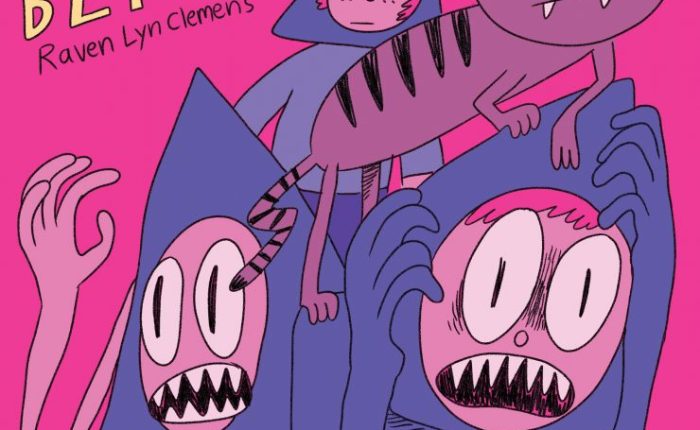
The Paradox of Getting Better is about a young person who is struggling with mental health issues. These struggles are symbolized in the comic by strangely shaped bodies and surreal art.
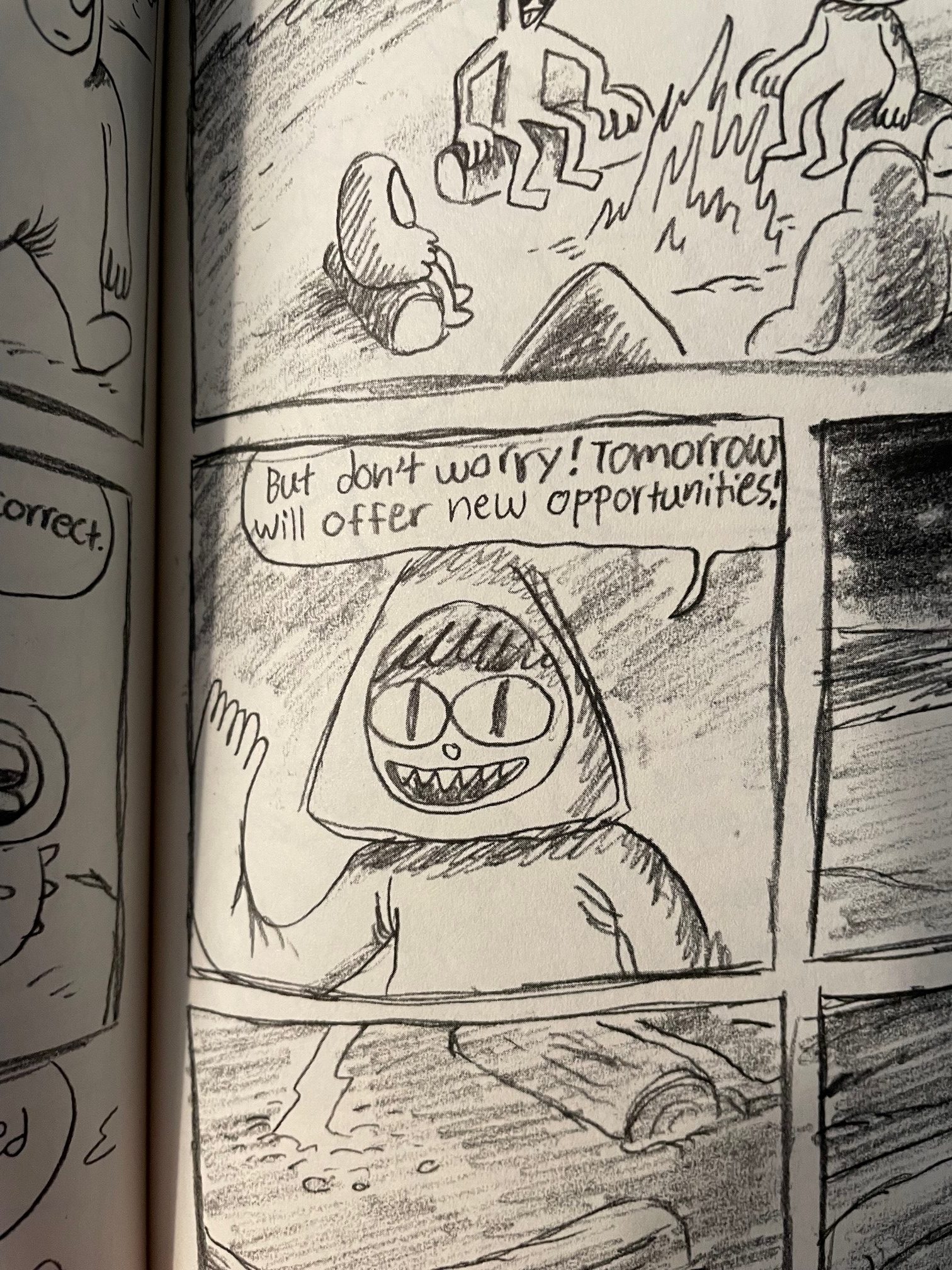
The artwork itself is done in pencil with words crossed out and rough edges with lines coming off of it. There’s a definite style to this comic. It didn’t resonate with me.
I understand this is an indie comic, but I wanted to see a little more polish to the presentation. As it is, the book felt like an art project in its early stages- more like a book proposal than a finished project.
The writing in this comic is fantastic by the end. However, at the beginning, the main character can’t even speak in words. They just keep saying, “XXXX”, over and over.
I get this is supposed to represent an inability to communicate in the midst of a mental health crisis, but it didn’t quite work. The family members of the individual were able to understand what the sufferer was saying, but the readers weren’t. It didn’t feel fair. I wanted to understand that person too.
This work is very imaginative. I liked the shapes the author incorporated and I also liked the message in the final panels.
If you’re going to read this one, I recommend borrowing it from your local library. Thanks for reading!
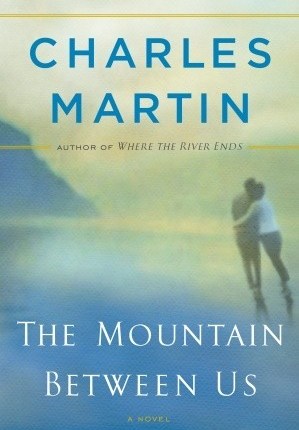
In The Mountain Between Us Ben Payne and Ashley Knox are in a plane crash in the middle of nowhere. As they fight to survive, the reader learns about their pasts and probable futures.
It is a survival story and also a romance.
“I dumped the bottle and looked around as best I could. Nothing but snow and mountains.” pg 65, ebook
I picked up this book because my book club is going to be discussing it on Monday. It’s not my usual type of read, which veers strongly towards science fiction and fantasy.
That being said, I expected more from this book- more adventure, more near death moments.
At first, I was reminded strongly of Hatchet by Gary Paulson, which I read in grade school. I remember enjoying that book quite a lot and learning about survival techniques along with the protagonist.
The Mountain Between Us has some of that, it’s true, but it is mainly about what’s going on in Ben’s mind. I found the story to be repetitive after the first hundred pages or so.
The romance in this story is way over the top, which I suppose romance readers may like. As for me, an occasional romance reader if at all, I found myself cringing at some of Ben’s revelations.
There’s a twist at the end which I won’t spoil here, but I saw it coming from the way author Charles Martin wrote some of the passages. I wish it had been sign-posted a little less.
Overall, there’s quite a few things for book clubs to dissect. There’s the survival aspect, relationships, the beauty of the outdoors, the disconnect between modern society and nature, and what it means to be human. I think we’ll have a lively discussion.
Recommended for readers who like their romances syrupy with a wilderness aspect thrown in.
This book has been made into a movie. I’m curious as to how they adapted the story.
“I love my Mother Country, and I love my family, and I always will. I just wish, at the second-darkest moment of my life, they’d both been there for me. And I believe they’ll look back one day and wish they had too.” pg 386
I didn’t know what to expect from Spare, Prince Harry’s memoir. In the days after its release, it seemed like readers were quickly scanning the pages, looking for the most shocking details to smear in headlines.
What they left out in favor of the more salacious details, in my opinion, were the tender and intimate moments that really mattered.
What do I mean?
I mean the countless, quiet and unremarkable moments Harry shared with his friends and family.
I mean things like the fact that Harry struggled with mental health and chose to seek out treatments again and again in an effort to find healing and peace.
He paints the picture of not an out-of-touch prince, but as a flawed yet hopeful person trying to find his place in the world.
Harry’s grief for his mother and love for his family form the large part of his narrative. Almost the entire book is a beautiful dedication to them.
I liked how Harry took widely reported events and shared his own feelings about what happened, from an unfortunate costume choice to the rumors swirling around about his out-of-control behavior.
He takes responsibility for his actions and doesn’t seek to lay blame at the feet of others. Which, let’s be honest, he could have.
Some kinds of fame provide extra freedom, maybe, I suppose, but royal fame was fancy captivity. pg 199
Harry could have focused on the bubble he was raised in and put every decision he ever made into the hands of others. But, in this book, he doesn’t.
I came away from reading Spare with a new found respect for Prince Harry. I hope that his new life, away from the flashing lights, is everything that he hopes and dreams it will be.
Highly recommended for readers who enjoy memoirs. Thanks for reading!
Additional thoughts added February 11, 2026. Original review posted February 21, 2023.
Almost three years on from my initial review of this book, I find I have a few more things to add.
The biggest fallout of the publication of Spare, which I’m aware of, are efforts made on the part of certain political elements in the United States to have Prince Harry’s visa reviewed in light of his confession to minor drug use in his youth.
The hypocrisy of the whole thing boggles my mind. Not only did we (as recently as last year) have an unelected someone who carried a “pill box” of ketamine and various other substances (I don’t pretend to know exactly what) around the White House, we gave this same someone the reigns of power, encouraging them to “doge” our various government institutions while hopped up on God only knows what.
Not only was this someone born in another country, they were actively taking drugs and moving through our systems of government.
Prince Harry, on the other hand, is not seeking to move through government circles. He is not, as far as I’m aware, currently running around with a pill box. He only wants to raise his children and live a life of peace with his wife away from the invasive cameras who profit upon his every smile and frown.
Why do we persecute some while giving others the keys to the kingdom? Hypocrisy and hate, that’s why. He has different values than some and these some ones seek to drive him away.
I call shenanigans.
In addition, other famous people from various areas of society have also written memoirs where they own up to drug use, some in a very major way, and we don’t drag them through the court system to answer for their past.
One prime example of this is Chelsea Handler’s latest I’ll Have What She’s Having. You can read my review of it here:
Not to get her in trouble too, but in her latest she writes about experimenting with various substances while at her vacation place in Canada. Are the Canadians chasing Ms. Handler, demanding she leave the country for her behavior? Heck, no. Why can’t we be more like Canadians?
Then, Charlie Sheen’s awesome multi-part documentary on Netflix also comes to mind. I haven’t written a review about that yet but perhaps in the future I will. In it, he talks about crazy drug use. Are we going after him for owning up to his past mistakes? No, we’re celebrating his rehabilitation and hard-won sobriety.
Prince Harry didn’t even remotely approach Charlie’s drug use and yet see above for all the crap he took for a few lines written about experimentation in his younger years.
Anyway, I think you get my point. Take the good and learn hard-learned lessons from those who have the bravery to share their lives with us rather than using their openness to harass them. Please.
One final thought, here is a chapter from my forth-coming book, The Light Congress, that I am dedicating to Prince Harry. I send my best wishes and desires for happiness and prosperity his way. May we all find what we seek in this life, the peace to live the way we deem best for ourselves and our children, and may the world learn to handle our own shadows.
“Here is something I learned in Empis: good people shine brighter in dark times.” pg 250
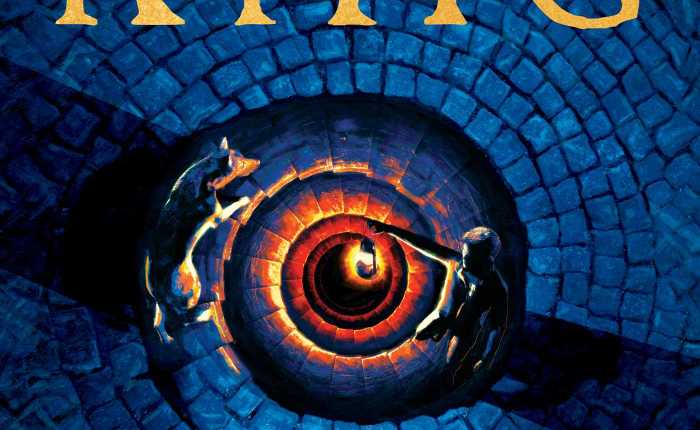
Charlie is a typical teen- plays sports and helps his father out around the house. But one day, after helping a neighbor after an accident, Charlie enters a world that is not our own. And discovers an adventure that he wasn’t looking for.
The incomparable Stephen King has written a mammoth fairy tale (600 pages in my digital version!). I thought it was too long.
Not that I mind long books. It sort of felt like King started the book thinking it was going to be about something different than it turned into.
The reason I feel that way is because the first quarter of the book takes so long to establish Charlie’s character and real world connections.
I wanted to just get on with it. Then, when we finally made it to Empis, events went too quickly!
King uses quite a lot of foreshadowing which was ok at first, but then it started to become too much. I realize he was trying to build tension- it was just over-used.
“Remember when I said at the outset that no one would believe my story?” pg 494, ebook
I enjoyed any part of the story that had Radar the dog in it. She was my favorite character. King really took his time developing her and her reactions to the world around her, which was fun.
King is at his best when he’s describing the eerie atmosphere of the other world and its unfortunate denizens. Like I said, those parts went too quickly.
Other than my small gripes, this was a well-written story and worthy of its Good Reads nomination. Readers who like Stephen King for his horror should read a different book. This is definitely more fantasy than horror.
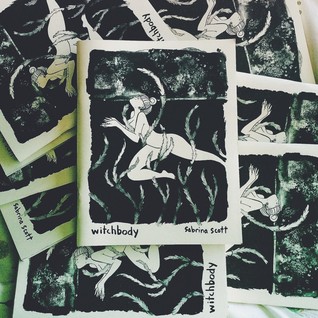
Sabrina Scott defines this nebulous concept in graphic novel format.
Basically, to have a witchbody, the spiritual practitioner uses his or her senses and whole body to connect with everything in the world around her- be that a polluted parking lot or a clear mountain lake.
Scott touches on this idea that sometimes in our spiritual practices we only consider “pure” and “unpolluted” things as holy. They put forward the theory that, if we continue down this path, there may be nothing left to connect with as everything in existence mixes and mingles with everything else.
The spiritual is in the here and now, in the interaction of all things. I heartily agreed.
They wander through philosophy and other theories in the delivery of this message, which some readers may enjoy. I found myself wishing the text had a little more organization to it.
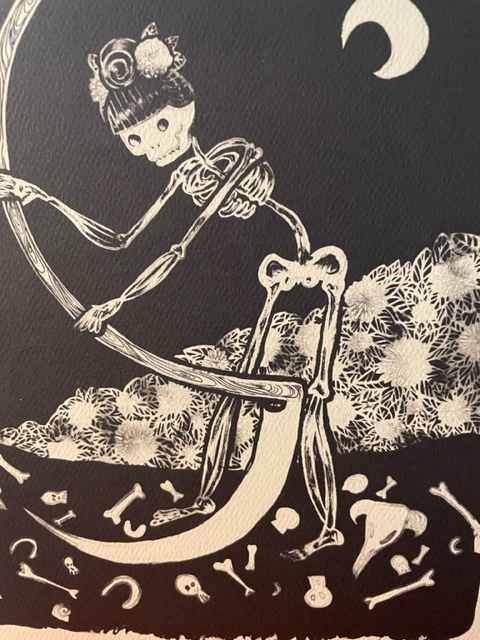
The art in this black and white graphic novel is beautiful. There is some non-graphic nudity- for librarians looking to categorize this book, I’d suggest in the adult graphic novel section.
As lovely as the art is, the lettering is close together and difficult to read in places. I think the author was going for the obviously hand drawn look, but I think they went one step too far. Otherwise, this book was enjoyable.



 The Help Desk Book Blog