High Self-Esteem and Unshakable Confidence: The Science of Feeling Great! by various authors

High Self-Esteem and Unshakable Confidence: The Science of Feeling Great! by various authors

High Self-Esteem and Unshakable Confidence is a mixed bag of self help and psychology tips from half a dozen different speakers. Some of the speakers are good, but some are mediocre at best. Almost all talked about common sense things.

Larry Iverson approaches this topic from a psychologist’s point of view. He wants you to get up from your desk and get exercise. Watch how you talk to yourself.

Photo by Tirachard Kumtanom on Pexels.com

Bob Proctor, one of the featured speakers from the new age blockbuster The Secret, is more of a motivational speaker who uses anecdotal stories to encourage listeners towards their goals of self confidence. If I had to pick a favorite out of the bunch, I think Proctor would be my pick. I like how approachable he sounds and as if he’s just having a chat with a friend or mentor.

Lorraine Howell uses visualization techniques to nurture self confidence. It’s very short and some-what helpful if you have trouble picturing yourself as a confident person.

Laura Stack’s disc is about “Stopping Your Stinking Thinking” and it kind of felt like the type of speech you’d hear at a motivational meeting for women. It was cutsie, but not necessarily my favorite.

Kimberly Alyn reminded me of Stack. It was a good motivational speech, but I didn’t get much out of “Stress Management for Better Life Balance”. In fact, the two were rather similar in my mind.
Photo by Olya Kobruseva on Pexels.com

Crystal Dwyer’s contribution is a guided hypnosis and new age take on confidence and life creation. She had the most “hippie” feel of the group. I’m rather fond of both hypnosis and new age topics, but for those who are looking for a straight business presentation, this may come off as too granola or religious. She reminds listeners that our ability to create our own reality is a gift from God and we’ll find our confidence by embracing our own power.

Finally, Dr. Mache Seibel, now at Harvard Medical School (not certain where he was during the recording of this CD), presents common psychological problems through song. I’m not going to lie — very cringey. The spoken parts between the songs were actually very informative and managed to convey what could be complex topics in a simple and understandable manner.

The songs themselves were just painful and I found myself skipping through most of them. Dr. Seibel explains that he prefers to sing songs because sometimes that helps people recall what to do when they’re triggered and it brings a smile to people’s faces. His method just wasn’t for me. Maybe it’ll work for you.

Thanks for reading!

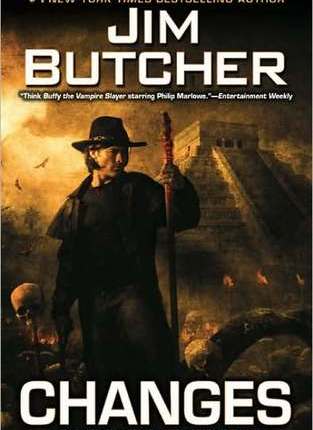
Changes (The Dresden Files, #12) by Jim Butcher

Changes (The Dresden Files, #12) by Jim Butcher

Changes was, in my opinion, the best of The Dresden Files so far. We have Harry with his usual hang-ups but the problem is more thorny than anything he’s faced so far. Susan Rodriguez, an old flame who’s been turned into a half-vampire, kept a major secret. Now Harry’s enemies know it and they’re out for revenge.

… I could feel the emotions that were stirring somewhere deep inside me, gathering power like a storm far out to sea. I couldn’t see them. I could only feel their effects, but it was enough to know that whatever was rising inside me was potent. Violent. Dangerous. pg 19, ebook

Photo by Frank Cone on Pexels.com

Because of the nature of the secret, Harry is going to need to call in all the favors he’s owed. And, maybe, make a few bargains he’d rather not make.

The man once wrote: Do not meddle in the affairs of wizards, for they are subtle and quick to anger. Tolkien had that one mostly right. I stepped forward, let the door bang closed, and snarled, “F*ck subtle.” pg 46

In the past few books, Harry has become more powerful but also has more responsibilities. What will happen to his apprentice Molly if he goes off the deep end? There’s also Mister, Mouse and Bob to consider.

Photo by Mitchell Luo on Pexels.com

So we do what a good wizard always does when the odds are stacked up against us: We cheat. pg 95, ebook

Readers are treated to more information about Harry’s murky past and a cliffhanger of an ending that will have you immediately reaching for the next book. Highly recommended for fans of urban fantasy. I loved it.

Thanks for reading!

Mrs. Sherlock Holmes by Brad Ricca

Mrs. Sherlock Holmes by Brad Ricca

In the era before women could vote, an extraordinary detective and lawyer was solving crimes the police couldn’t and defending those who couldn’t afford it. Her name was Grace Humiston and this is her story.

Grace was admitted to the bar in the state of New York in 1905, becoming one of only a thousand female lawyers in the whole United States. pg 29

Photo by Taryn Elliott on Pexels.com

Readers, this lady was incredible. Though she fell out of public favor later in her career, Grace accomplished so much. She was the first woman to become a consulting detective for the New York Police Department. They formed a missing persons bureau because of her work to reform how they searched for victims of crimes.

Grace was even the first woman to serve as a Special Assistant U.S. District Attorney. She brought down businesses that were abusing immigrants through peonage practices. I’m telling you, this lady was hardcore.

The case that catapulted her into the limelight was the disappearance of Ruth Cruger, a teenager who went to get her ice skates sharpened in New York City and never returned. Her family insisted Ruth wouldn’t have run away, as the authorities suggested when they reported her disappearance.

“My girl has been kidnapped,” Henry said to the reporters. “This talk about her having gone away voluntarily is an unwarranted insult to her and to us. It is nothing more than a screen for police shirking.” pg 47

So who did he call? Grace Humiston.

Photo by Wallace Chuck on Pexels.com

When a reporter asked about how she had solved the case so quickly after the police had given up, Grace did not couch her words. “To begin with, the police are no good,” Grace told the reporter. “They had all the facts to start on that I had and did nothing.” pg 71

Savage.

The facts of this story merit a five-star rating but how they are organized brought down my rating of this book. Brad Ricca opens with the Ruth Cruger case and puts chapters inbetween detailing Grace’s history. It disturbs the flow of the story. I think if he had gone from an opening, gripping chapter about Ruth into a chronologically organized history, I may have enjoyed it more.

Another gripe some readers had with Mrs. Sherlock Holmes is that it had an unsatisfying conclusion. I’m not of that opinion. Often, life doesn’t end stories with a bowtie or an ending worthy of their beginning. In non-fiction, especially when careers rise and then fall as in this book, there isn’t a satisfying ending to be had.

I enjoyed learning about this extraordinary lady and I appreciate the level of research Ricca put into these pages. One can feel, especially in the conclusion, how this was a labor of love for him. Not just to bring Grace back into the public’s mind and heart, but also to remind readers about how people still go missing today and, sometimes, they’re never found.

Photo by Ylanite Koppens on Pexels.com

I wanted to reprint all the people gone missing in the last year here, at the end, but it would not have been ‘cost effective’, they told me, even in the smallest type. So think of one name for me. Maybe it is someone you know. Or someone you saw on a show or a flier once. Or maybe it is your name, or a name you once had. Whoever it is, write that name here…. pgs 362-363

We are solving more and more cold cases with the advent of DNA databases. Perhaps some day this issue will be a thing of the past. Until then, we’ll rely on the Graces of today to lead us, clue by clue, to wherever the trail ends.

Thanks for reading!

Here’s the History Guy episode I wrote about Grace Humiston:

Converse With Charisma!: How To Talk To Anyone And Enjoy Networking by Made for Success

Converse With Charisma!: How To Talk To Anyone And Enjoy Networking by Made for Success

Converse with Charisma is an audiobook collection of business speakers and experts who each offer different suggestions for how to improve your speaking skills, networking, presentation and improvisational speaking styles.

My big takeaway from this, besides some very helpful hints, is that speaking and networking is a skill that can be learned. It’s not something that some people are just born with and others aren’t. That being said, it would certainly be a step out of my comfort zone to try some of these suggestions.

Photo by bongkarn thanyakij on Pexels.com

For example, one of the sections was a meditative visualization where you see yourself going to a networking event and successfully exchanging business cards with 25 contacts. I’m game for most any meditation, but in this middle of this one, my mind was screaming at me combinations of “WHAT ARE YOU DOING?” and “NOOOOOOO”.

But then again, I’m a self-confessed introvert. I’m trying to step up my presentation game for filming an episode of my family’s YouTube channel and also taking a bigger part in marketing it. These are both skills I think I can master, but it’s scary to try new things, you know?

Anyway, back to Converse with Charisma.

My favorite section was Jim Rohn’s fun, motivational speech on the first disc. As I’ve expressed in a few other reviews, Rohn is a master storyteller and life coach. He lifts you up, empowers you, makes you believe in life-long learning and goal setting. I think this collection may be worth borrowing from the library just to hear his contribution.

Photo by Christina Morillo on Pexels.com

As for new material, the presentation on disc 8 “Thinking on Your Feet” contained a bunch of information I hadn’t heard before. It gives suggestions for soliciting questions from a crowd and leading programs. It also gave a formula for organizing speeches to make a higher impact. I think I’m going to have to listen to that part a couple times to get everything I can out of it.

Recommended for people looking to step up their speaking and presentation game… fellow introverts I’m looking at you.

Thanks for reading!

The 25 Best World War II Sites, European Theater: The Ultimate Traveler’s Guide to Battlefields, Monuments and Museums by Chuck Thompson

The 25 Best World War II Sites, European Theater: The Ultimate Traveler’s Guide to Battlefields, Monuments and Museums by Chuck Thompson

Excruciatingly detailed travel guide for those interested in World War II. My husband, The History Guy on YouTube, thought it was amazing.

I’m married to someone who is obsessed with war, war machines, war documentaries, military uniforms and, well, you get the idea. This one time, I went to England just to wander around a tank museum with him. A tank museum. This is true love, people. Was I bored? Yeah. Did I care about any of the tanks? No. Could I think of a million other things I’d rather be doing? Yeah. And yet, there I was- the hippie in the tank museum.

Me at the Tank Museum. Really, it’s me.

So, my plan is: convince him that he needs to go on a tour of the European Theater- all of the battle fields in order. It will probably take him two, three months, say, six months to do it right. I will suck it up and go with him, somehow finding a way to survive half a year in Europe. HALF A YEAR!

Think of the libraries, the museums… oh my God, the pubs! The art! The culture!

This book is step one. 🙂 Check back with me in twenty years or so and I’ll let you know how the war lover and the hippie’s European tour went. Maybe we’ll end up writing a tour guide of our own. Half of the book will be war stuff, the other half will be a tree-hugging, far-out love fest. Heck, I’d read it.

If you’re interested in reading another book by Chuck Thompson, I’d recommend Smile When You’re Lying: Confessions of a Rogue Travel Writer. It is more of a collection of stories than a travel guide, like this one, but more amusing in my opinion.

Thanks for reading!

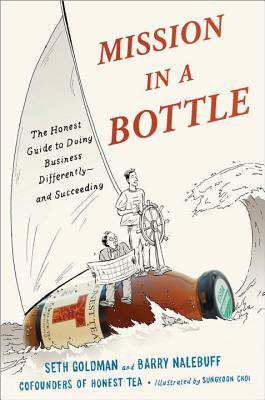
Mission in a Bottle: The Honest Guide to Doing Business Differently – And Succeeding by Seth Goldman, Barry J. Nalebuff

Mission in a Bottle: The Honest Guide to Doing Business Differently – And Succeeding by Seth Goldman,  Barry J. Nalebuff

Barry Nalebuff and Seth Goldman, who are the cofounders of Honest Tea, tell how they created their bottled tea business and grew it into something more.

Photo by Cup of Couple on Pexels.com

I understand what they were trying to accomplish with telling their business story in a graphic novel format but it didn’t work for me.

Graphic novels are great platforms to tell stories with a lot of action, colorful figures, and fantastic backgrounds. The story of founding a business, any business, seems to take place mostly in rooms with a bunch of people in business attire. The creation of a mission statement is mainly words on a page with little to show, action-wise. That doesn’t make it less important, but simply less exciting than a superhero comic.

Even the tense moments of Mission in a Bottle, like the time when a guy thought he found a piece of a male body part in one of the brands that they were renting their bottling facility out to, just didn’t translate in a meaningful way to a cartoon format.

Photo by Pixabay on Pexels.com

Overall, I enjoyed the business story and found it inspiring. I wish Goldman and Nalebuff had written it as a traditional book rather than a graphic novel.

Thanks for reading!

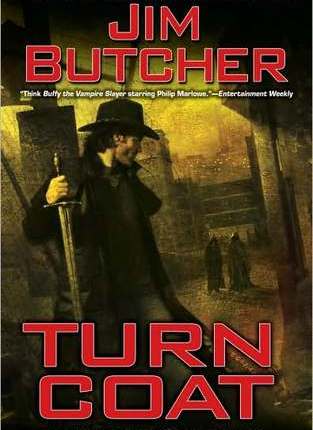
Turn Coat (The Dresden Files, #11) by Jim Butcher

Turn Coat (The Dresden Files, #11) by Jim Butcher

For once, Harry Dresden was minding his own business when trouble showed up at his doorstep. Morgan, one of the wardens of the White Council who has hounded Harry for nearly his entire life, needs saving… from the wardens of the White Council. Oh how the mighty have fallen.

Why would Harry stick his neck out for one of the few men on the planet who has never liked him?

“Because Morgan wouldn’t break the Laws of Magic,” I said quietly. “Not even if it cost him his life.” pg 19, ebook.

Photo by Suvan Chowdhury on Pexels.com

Something strange is going on and, as usual, Harry’s going to get to the bottom of it. But, this time, the solution comes at great personal cost and Harry’s life may never be the same.

Excellent entry in the Dresden Files which, despite concerns that after 11 books it may have become repetitive or go off the rails, continues to impress. Jim Butcher seems to have found a sweet spot between bringing in old characters and plot lines while introducing new twists. It is an urban fantasy reader’s treat.

There are bad things in the world. There’s no getting away from that. But that doesn’t mean nothing can be done about them. You can’t abandon life just because it’s scary, and just because sometimes you get hurt.” pg 45, ebook.

The lines between good and evil are truly becoming blurred as the White Council continues to be assaulted from the outside. As a reader, I thought of the wizards of the highest council as unassailable gods, but in Turn Coat, they are revealed to be as human as the next person. They can be confused, manipulated and used for other ends.

Harry’s sardonic humor is in evidence throughout this tale, delivering his one-liners with his usual flair: “They always have good coffee here,” Ebenezar said a few moments later. “And they don’t call it funny names,” I said. “It’s just coffee. Not frappalattegrandechino.” pg 138

Photo by Juan Vargas on Pexels.com

But as the story lines get darker, I can’t help but wonder how much more Harry can take before he snaps. Or the bad guys finally win the day.

“Everyone dies, honey,” I said, very quietly. “Everyone. There’s no ‘if.’ There’s only ‘when.’… When you die, do you want to feel ashamed of what you’ve done with your life? Feel ashamed of what your life meant?” pg 338, ebook.

Highly recommended for fantasy fans.

Thanks for reading!

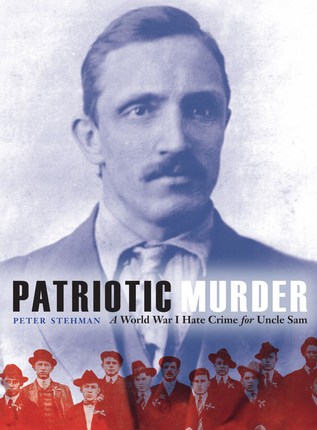
Patriotic Murder: A World War I Hate Crime for Uncle Sam by Peter Stehman

Patriotic Murder: A World War I Hate Crime for Uncle Sam by Peter Stehman

A well-researched and shocking account of the only (according to the author) German immigrant lynched on U.S. soil during World War I.

This non-fiction work is important for a number of reasons. First, it reminds readers of the time period of the Great War. Very few, unless they were just born, are even alive from that period.

Photo by Pixabay on Pexels.com

We’ve forgotten the Committee of Public Information, a federal committee created by President Woodrow Wilson, and its purpose to educate but also manipulate the public in support of an unpopular war. We’ve forgotten the Liberty Bond drives, a nation-wide push that raised billions of dollars to support the war effort. And we’ve also forgotten how a nation built largely of immigrants, of which Germans were the largest group at that time, were able to demonize an entire country and population to convince ourselves that the war was not only acceptable but just.

After Congress approved war legislation, the task remained of how to convince a splintered nation that entering the conflict was necessary. More than a third of the population was either immigrant or had at least one parent who was. Germans had been the predominant immigrant group for decades, and they had mixed feelings at best about waging war against the Fatherland.pg 17

The propaganda posters, some of which Peter Stehman has included for readers, are chilling. In some, “the hun” is shown as a bloody-thirsty creature, covered in the blood of Americans. Prior to this period, the German immigrant was seen as hard working and industrious. It took image manipulation to make the public believe otherwise.

Their patriotic themes promoted such things as buying war bonds, conserving food, or fuel or vilified Germany’s leaders or its army.pg 43

Robert Paul Prager was a patriotic German immigrant who wanted to work in the mines of Southern Illinois. The miners union not only rejected him for his lack of experience, but also because of who he was, German. He spoke up against their rejection and posted notices on the mines and saloons all around town. A drunken mob formed, took umbrage to his objection, and killed him.

They untied the line and let the body fall three times before jerking the rope to try to break his neck. “One for the red, one for the white, and one for the blue,” someone said, proclaiming their patriotic work done for now. pg 9

Photo by Rachel Claire on Pexels.com

Scholars talk a big line about remembering the past so we don’t repeat it in the future, but sometimes I feel like humanity has learned very little. We are still formed of nations and large tribes, seeking the benefit of our members and creating rules to keep others out. We still create an “us vs. them” mentality, think violence is an acceptable solution to disagreements and occasionally bow to the terrible mindless vengeance of the mob.

This book is a timely reminder, and also warning. It is a reminder of the dangers of nationalism and the mob. And, ultimately, the biggest danger of all, of convincing ourselves that others are not people like us, but something else and less valuable and sacred because of that.

I interviewed the author, Peter Stehman, for my former job at the Belleville News-Democrat. Here’s a link to the article I wrote from that hour and a half long interview, if you’re interested: https://www.bnd.com/news/local/articl…

The publisher kindly sent me a free copy of Stehman’s book. I am not being paid for this review.

He was, at least he was then, the president of the Collinsville Historical Museum and this book was a labor of love for him. Stehman was both fascinated and horrified by the fact that this event took place in his home town. For decades, no one wanted to talk about what happened on that April night. It was a matter of embarrassment and shame.

But now, that so much time has passed, people are more willing to talk about it and examine its causes as well as its cost. The tree where they hanged Prager is gone, but the memory remains. Do we learn from it or run from it? The choice is ours.

I’ll end with a quotation by Stehman from his acknowledgments section which comes at the beginning of the book: “Like so much forgotten history, the story of Robert Prager’s demise merits telling for the lessons it offers to today’s world. Patriotism is a wonderful thing, but propaganda, nationalism, and xenophobia have no place in great societies. Sadly, a reminder of that message is as relevant today as it was in 1918.”

Sadly, indeed.

Thank you for reading!

Here’s the History Guy episode I wrote about Robert Prager:

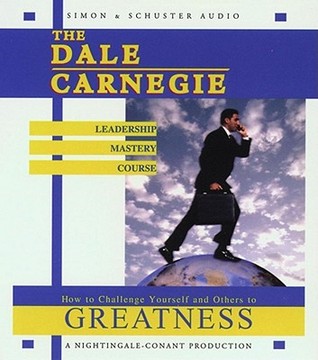
The Dale Carnegie Leadership Mastery Course: How To Challenge Yourself and Others To Greatness by Dale Carnegie

The Dale Carnegie Leadership Mastery Course: How To Challenge Yourself and Others To Greatness by Dale Carnegie

The version I listened to of The Dale Carnegie Leadership Mastery Course, published in 2001, has not necessarily aged well, but still had some applicable lessons for business leaders.

On the positive side, this audio program encouraged me to examine my own leadership style, something I’d never considered before. Are you a innovative or organizational leader? Do you bring people together or drive them apart, intentionally or unintentionally? What is your risk tolerance and why?

Photo by RODNAE Productions on Pexels.com

In addition to introspection, this program asks you to plan for the future based on your strengths and take steps towards those dreams. What are your goals, personally, professionally and for your current company? What would you like to see happen to your company after you die?

It also examines a leader’s entire life with the idea of success isn’t success if you lose your family and important relationships while building your career or vice versa. Are you capable of taking time off? Do you devote time to those who are most important to you at home and at work?

Those are just a few of the positive aspects of this program. On the other end of the spectrum, the music between sections is hilariously dated, almost like motivational elevator music. And there seemed to be what amounted to hero-worship of Dale Carnegie slipped in between the lessons or at the end of sections.

For example, in the lesson on handling disasters and poor decisions as a leader, the program was discussing a CEO’s almost universally hated idea of putting a thermometer on soda dispensers and having the price of a drink go up as the temperatures rose. The narrator closed the section with a statement like: “If Dale Carnegie had been at that meeting, he would have suggested the price of a drink go down as the temperatures went up.” (Cue motivational elevator music.)

Photo by Karolina Grabowska on Pexels.com

I don’t want to dismiss Carnegie’s extensive contributions to the realm of business and leadership skills, but he was human too. To assume he would have been able to turn around some spectacularly bad corporate decisions with just his mere presence struck me as a bit ridiculous.

In that same vein, some of the fable-like stories put into the lessons for emphasis felt heavy-handed, particularly one where a father expected too much of his son. It was a lesson about empathy but it was over the top.

As I said, I did learn some valuable skills from this audiobook and continue to ponder some of the lessons it presented. At the same time, I did have a few giggles at material that, I don’t believe, was ever intended to be satirical. Recommended for those interested in building their leadership acumen, but prepare yourself for a few misses in the presentation.

If you’re interested in non-fiction, business and self improvement books, here are a few I’ve recently reviewed:

Eat That Frog!: 21 Great Ways to Stop Procrastinating and Get More Done in Less Time by Brian Tracy

The Lost Prosperity Secrets of Napoleon Hill by Napoleon Hill

The Art of Exceptional Living by Jim Rohn

Thanks for reading!