Barracoon: The Story of the Last “Black Cargo” by Zora Neale Hurston

Barracoon: The Story of the Last “Black Cargo” by Zora Neale Hurston

Zora Neale Hurston interviewed Oluale Kossola before he died in the 1930’s to create this first-person narrative by one of the last people to be transported to the United States through the middle passage. It is interesting in that, among the existing records of that period in time, it is written from the perspective of someone who lived slavery rather than perpetuated it. It wasn’t written with an agenda. It is a record of a history.

It is a story of a culture and a life lived far from home and family because of human greed.

“I hailed him by his African name as I walked up the steps to his porch, and he looked up into my face as I stood in the door in surprise.” pg 17

Photo by Johannes Plenio on Pexels.com

Hurston records Kossola’s responses to her questions phonetically, which makes you feel like you’re sitting there with her, listening to the remembrances of Kossola as he says them.

In the introduction by Deborah G. Plant, she captures this feeling: “The narrative space she creates for Kossula’s unburdening is sacred. Rather than insert herself into the narrative as the learned and probing cultural anthropologist, the investigating ethnographer, or the authorial writer, Zora Neale Hurston, in her still listening, assumes the office of a priest.” pg xxv

I think, as someone looking back, it’s important to understand the transportation of slaves into the U.S. was made illegal in 1808, fifty years before Kossula was taken from his home. It’s a piece of American history that has been almost entirely forgotten.

“Of the thousands of Africans smuggled into American after 1808, only one man was held accountable and hanged, and even he died proclaiming his innocence.” pg 132
Photo by GEORGE DESIPRIS on Pexels.com

In Barracoon, not only are we given the story of Kossula’s transportation in life in the U.S., but also, he shares fascinating details of his life in Africa. There’s information about the justice system, social structure, rites of initiation and more.

In addition to his life story, Kossula shares fables he created to share his feeling of loss about his family as he outlived all of his children and wife. I enjoyed this folk lore part of the book the most.

There’s some controversy surrounding this book. Apparently, Hurston published a magazine article about Kossula early in the last century and was accused by later scholars of plagiarism.

“Of the sixty-seven paragraphs in Hurston’s essay,” Hemenway relates, “only eighteen are exclusively her own prose.” pg 120

Photo by Pixabay on Pexels.com

The text in question is Emma Langdon Roche’s Historic Sketches of the South, that was published in 1917. The full text is available from the U.S. Library of Congress and can be accessed online. That’s how I read it and was able to see some of the similarities in the writing.

However, the interview portions of this book, written in Kossola’s distinctive style of speaking, are entirely unique. As the editor of this book points out, Hurston was never accused of plagiarism in her works after writing about Kossola and it was very early in her career. We all make mistakes.

Recommended for any readers interested in history. Barracoon is a treasure.

Thanks for reading!

Here’s the History Guy episode I wrote about Oluale Kossola:

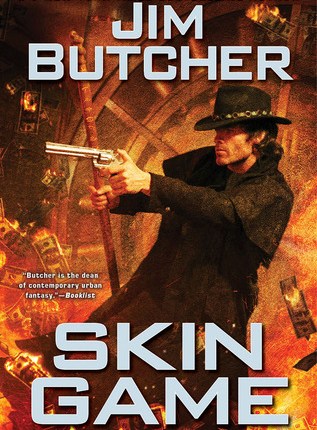
Skin Game (The Dresden Files, #15) by Jim Butcher

Skin Game (The Dresden Files, #15) by Jim Butcher

Harry Dresden, wizard-for-hire and Winter Knight, joins a group of unsavory characters to pay off a debt owed by Mab and to steal something incredibly valuable from a god. And he thought he had bad days before this. At least he still has a way with words.

“… Nicodemus is a murderous murdering murderer,” I said. “And if he’s picking a crew, they’re going to be just as bad.” pg 26, ebook

Photo by Aidan Roof on Pexels.com

Is there anyone he can trust? Can he even trust himself with the strange “parasite”-thing growing in his head?

“Sometimes when you find yourself alone, for whatever reason, you review every little thing you know about someone, searching your memory for small, subtle things that you may have missed about them.”pg 10, ebook.

Any guesses on what they’re going to be stealing?

“My sources say he’s the collector of the supernatural world. He’s famous for it. Art, treasure, gems, jewels, antiques, you name.” pg 37, ebook.

Photo by Suzy Hazelwood on Pexels.com

Skin Game is a clever mix of heist and The Dresden Files. I thoroughly enjoyed it. And now my heart is broken because the next book isn’t written yet.

We were finally getting somewhere with Harry’s relationships with his friends and a certain someone in particular. (No spoilers!) Harry was learning how to juggle his “mantle of power”. Molly was coming into her own unique situation.

We’ve learned about angels, demons, fairies, pixies, gods and more in this series. I’ve really come to enjoy the world and the strange things that happen in it. I love the shifting balance of power and how when Harry’s up, he’s really up. And when he’s down… well…

“And since when had I become the guy that things happened to ten years ago?” pg 49, ebook.

Photo by Maria Orlova on Pexels.com

I think all of the readers are wondering that too. Not that we’re complaining because this series seems to have such staying power. I really wish it would keep going for awhile longer, just spit-balling here, how about another 15 books? 🙂 Or, at least, perhaps we could tie up the loose ends.

“I know that things happen to people,” he said. “And maybe you’ve got excellent and real reasons for doing what you’ve done. But… at the end of the day, there’s just no replacement for being here.” pg 84, ebook.

I like being in this world and I think plenty of other readers do too. Jim Butcher, give the people what they want. Write, please. Write now!

Thanks for reading.

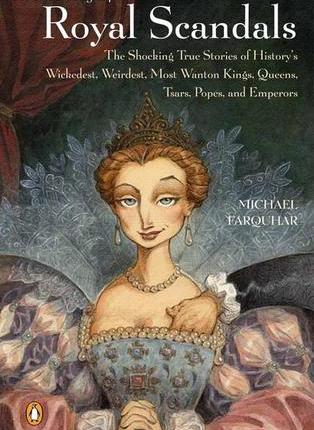
A Treasury of Royal Scandals: The Shocking True Stories of History’s Wickedest, Weirdest, Most Wanton Kings, Queens, Tsars, Popes, and Emperors by Michael Farquhar

A Treasury of Royal Scandals: The Shocking True Stories of History’s Wickedest, Weirdest, Most Wanton Kings, Queens, Tsars, Popes, and Emperors by Michael Farquhar

Michael Farquhar takes readers through different time periods and countries to remember some of the most scandalous royal persons who have ever lived.

All of the stories showcase the rich assortment of scandals that once flourished across Europe. And, thanks to the generations of royals who unwittingly created them, they remain immensely entertaining. pg 11, ebook.

Photo by Romu00e9o on Pexels.com

There is a rich assortment indeed. Almost any kind of depravity can be found in these pages. But the most shocking of the lot, in my mind, were the Roman emperors or the medieval Popes.

I guess those stuck with me the most because the emperors were stunning in how far they would go into their own personal madness, whatever that happened to be. And the Popes because, frankly, you’d think they’d know better.

For example, Tiberius, a Roman emperor, when he wasn’t raping young people on the island where he built a castle expressly for that purpose, he was torturing and killing anybody he felt like.

To Tiberius, death was a relatively light punishment. What he really enjoyed was the slow process of getting there. pg 184 Yikes.

Photo by Pixabay on Pexels.com

As for the Popes, in a cast of colorful characters, the one I remember the most was Benedict Gaetani or Pope Boniface VIII. Not necessarily because of how awful he was, but because how he was so determined to be Pope. Gaetani thought he should hold the office even when someone else was elected. He came up with a creative scheme to get that Pope to resign.

By some accounts, Gaetani installed a hidden tube in Celestine’s room. During the night as the pope slept, he would whisper into it, “Celestine, Celestine, lay down your office. It is too much for you.” Only too glad to oblige what he believed was the voice of God, Celestine V dutifully resigned and Benedict Gaetani was immediately elected Pope Boniface VIII. pg 217, ebook.

As interesting as this book was, I enjoyed Farquhar’s Bad Days in History: A Gleefully Grim Chronicle of Misfortune, Mayhem, and Misery for Every Day of the Year more because I knew fewer of the stories in that book. In fact, some of what he wrote in this book was printed nearly verbatim in the other. (Not that there’s anything against that, it is his own writing after all.) But if you only have time to read one non-fiction book full of historical trivia, I’d recommended Bad Days in History.

However, if you’re specifically interested in the misbehavior of royal people throughout history, this is the book for you.

Thanks for reading!

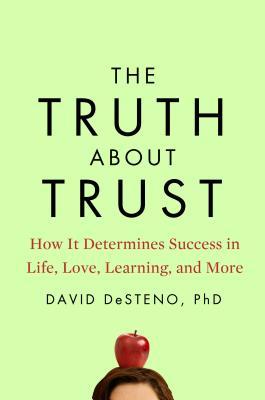
The Truth About Trust: How It Determines Success in Life, Love, Learning, and More by David DeSteno

The Truth About Trust: How It Determines Success in Life, Love, Learning, and More by David DeSteno

“Deciding to trust someone, more than almost any other decision we make, holds the keys to how resilient we, both as individuals and as a society, will be.” pg 241

Trust is one of the things that makes society work. We trust that our taxes will go towards making our society better. We trust we will be paid for the jobs we perform. We trust in contracts, news agencies and family members. Sometimes it seems this trust is misplaced. David DeSteno examines trust, what is it and how or why you decide to give someone all your trust or not.

Photo by Karolina Grabowska on Pexels.com

I held as true many of the fallacies that DeSteno deconstructs in The Truth About Trust. That was disturbing, in a way, but I also enjoyed it because I learned new ways to approach trust issues and even to define what trust is. Although it may seem like a simple concept, I realized that I didn’t know the basic definition of trust. I knew what it felt like, but not the mechanics behind it.

Tell me: what do you think trust is?

“There are two facets to trust: integrity and competence. Some of the best partners or teachers you may ever have had may not be the warmest people in the world, but they knew their stuff.” pg 33

DeSteno reminds readers that beyond examining a new business or potential romantic partner to determine their trustworthiness, you need to remember your own perceptions color your reality.

If you want to be able to trust as you should, take a moment before negotiating with someone new to allow any feelings from a previous event to dissipate. pg 60

Photo by fauxels on Pexels.com

I liked that DeSteno waded into the potentially thorny world of cyberspace and who or what to give your trust to in the technological age. It seems that is going to be the future — programs, applications and machines.

…the basic issue of whether to trust technology has in fact been around for thousands of years. What makes it feel new now, however, is that technology is beginning to encroach on what had until recently been a solely human domain — sociality. pg 183

DeSteno gave me plenty to think about including why I sometimes place great trust where it has not necessarily been earned. Recommended for readers who want to ask themselves the same types of questions.

If you enjoyed The Truth About Trust, I’d suggest also picking up Terms of Service: Social Media and the Price of Constant Connection (DeSteno deals with trust in cyberspace and the two books complement each other nicely) or The Happiness Advantage: The Seven Principles of Positive Psychology That Fuel Success and Performance at Work (which discusses the issue of trusting yourself to do the things that will benefit you most in the future and why we don’t always do those things).

Thanks for reading!

Titanic Thompson: The Man Who Bet on Everything by Kevin Cook

Titanic Thompson: The Man Who Bet on Everything by Kevin Cook

“Are you a gambling man?” he’d ask. “Because I am.” Prologue.

A non-fiction biography that reads like fiction, this is the life story of Titanic Thompson. According to author Kevin Cook, Titanic’s life was the model for the gambler Sky Masterson in the musical “Guys and Dolls.” This poker and golf-playing phenomenon bet and propositioned his way across the country. In addition to all of the fun anecdotes about bets he made, Titanic was a star witness in the trial for the murder of the man accused of “fixing” the World Series.

Seriously folks, history doesn’t get much more interesting than this.

As Alvin collected his winnings, someone asked Snow Clark the stranger’s name. “I don’t rightly know but it ought to be ‘Titanic,'” Clark said. “He sinks everybody.” pg 3

Photo by Pixabay on Pexels.com

Alvin Clarence Thomas was born in 1893 in rural Missouri near the small town of Monett. The last name, Thompson, that he would adopt for most of his adult life, came from a later newspaper misprint that he embraced as his own.

Later in life, Thompson said he couldn’t read, but numbers and odds always made sense to him. He spent hours sitting alone in his room, teaching himself to adeptly shuffle cards, practicing dealing from the bottom of the deck more quickly than the eye could follow. Thompson developed a method of marking cards that some still use today, like putting dots on the back or notching the edges to be able to tell a face cards from the lower ones.

He was quite popular with the ladies and married 5 times to women significantly younger than him. Scandalous!

Photo by Irina Iriser on Pexels.com

“He was fun,” said a woman who knew him. “He took his hat off when he spoke to you. Alvin was slim like a willow, and he didn’t walk, he sauntered.” pg 21

When he was drafted into the army, he was made a sergeant and taught the men under him how to gamble.

“Sergeant Thomas spent hours dealing demonstration stud hands, providing a running commentary on each hand, training his men to calculate the odds of an opponent’s having an ace or king or deuce in the hole, telling them when to bet harder and when to fold their tents, so they could beat all the poor dumb soldiers who trusted to luck.” pg 53

Photo by Anna Shvets on Pexels.com

There are so many interesting stories in this book. My favorite was when he swindled Al Capone. Yes, THE Al Capone.

Highly recommended for fans of history or historical fiction. As I said, this guy’s life reads like a story.

Thanks for reading!

Here’s the History Guy episode I wrote about Titanic Thompson:

inGenius: A Crash Course on Creativity by Tina Seelig

inGenius: A Crash Course on Creativity by Tina Seelig

As my mentor pointed out to me a couple years ago, creativity is one of the most important skills to master and develop throughout your career. No matter what you’re doing, in your professional or personal life, creativity provides the answers and greases your wheels to whatever goal you desire.

inGenius is Tina Seelig’s offering to those interested in learning about creativity. She is a professor at Stanford University and these chapters are like talking points from her class.

Photo by Tima Miroshnichenko on Pexels.com

Granted, some of these tips seem like common sense. But if that’s the case, then why aren’t we all creative geniuses who have solved all of our problems? In my mind, there’s plenty still to be learned from the topic or, if you’ve already heard it, reiterating the important points.

What is that saying… your thoughts become actions, become habits, become your life? Or some such. Well, it’s true.

“With enhanced creativity, instead of problems you see potential, instead of obstacles you see opportunities, and instead of challenges you see a chance to create breakthrough solutions.” pg 4

Photo by Allan Mas on Pexels.com

It’s more than a positive mind-set, it’s a way of viewing your reality. And, as Seelig points out in this book, your attitude at any given moment affects your creativity. You have to view any problem as solvable — you just haven’t found the solution yet.

Seelig says anyone can be creative: “There is a concrete set of methods and environmental factors that can be used to enhance your imagination, and by optimizing these variables your creativity naturally increases.” pg 9

I figure it’s a bit like exercise. Flex those creative muscles on a regular basis and they’ll get stronger.

Photo by nappy on Pexels.com

Seelig brought my attention to the fact that our environment affects our creativity. She cites studies with the way classrooms are set up and how those changed the results of experiments. I had no idea.

She also reminded me that one does not have to re-invent the wheel to be creative: “Building upon existing ideas and inventions is another way to foster innovation.” pg 41

inGenius offers readers a clear path to creativity. Recommended for anybody who wants to up their creative game.

Thanks for reading!

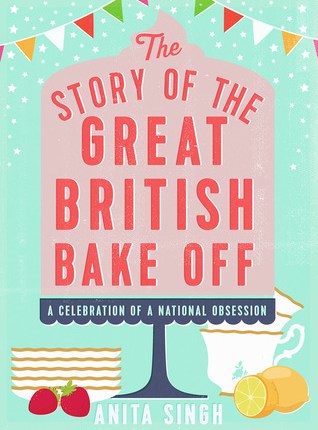
The Story of the Great British Bake Off by Anita Singh

The Story of the Great British Bake Off by Anita Singh

A sparkling and fun book for fans of the television program, The Great British Bake Off. It is my favorite show to binge watch when I have some free time. Or when I’m not reading. Which, let’s be honest, is not all that often but it does happen.

You wouldn’t think another competition-type show would be engaging, but this one is. The contestants are so kind to each other and earnest in their presentations. Not only do you cheer for all of them, but it makes you want to emulate them in your own kitchen.

Photo by Taryn Elliott on Pexels.com

Why don’t I go bang up a bread sculpture that looks like a lion? Oh, that’s right. Because it’s really hard to do, that’s why. But these guys all make it look so easy. Chocolate lava cakes, frosted buns and towers made out of spun sugar seem to magically flow out of the kitchen. We all know it’s not that simple.

Anita Singh takes readers from the creation of the show to the change in most of its hosts in the most recent episodes. We are also treated to funny anecdotes from some of the contestants and assorted behind-the-scenes gossip.

As an American reader, I enjoyed learning more about Paul and Mary’s backgrounds before they joined the show. I mean, perhaps they had enjoyed some success across the pond, but I had never heard of them. I have more context now.

Photo by cottonbro on Pexels.com

My favorite part of this fan book were Mel and Sue’s confessions about practical jokes they’ve pulled on Paul. I won’t spoil it for you, but one of them involved his Aston Martin. Le gasp.

Recommended for readers who have watched most, if not all, of the seasons of The Great British Baking Show. I suppose you could still enjoy it without doing so, but all of that viewing time helps you to enjoy this book even more.

Thanks for reading!

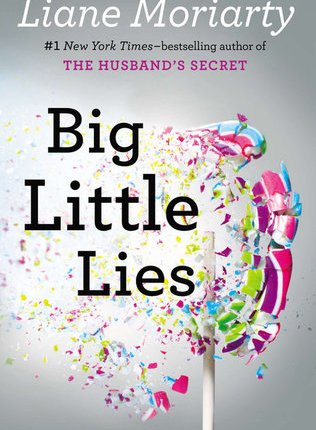
Big Little Lies by Liane Moriarty

Big Little Lies by Liane Moriarty

Big Little Lies follows three different women who all have children starting kindergarten. It is a mystery, drama and satire about the pressures of parenthood, modern motherhood especially, all rolled into one.

“Should I call the police?” wondered Mrs. Ponder out loud, but then she heard the wail of a siren in the distance, at the same time as a woman on the balcony began to scream and scream. pg 19, ebook.

Photo by 112 Uttar Pradesh on Pexels.com

I couldn’t put the book down. I don’t know people who are as intense as the parents are in this book, but with a little push, I could see some of the PTO members making that leap and fitting right in. You know they care about their kids, but it makes them a bit competitive and unapproachable. This book made me wonder what may be going on at home if that’s the face they choose to display in public…

My favorite character in Big Little Lies was Jane, the youngest of the mothers and one who is carrying a devastating secret. She allows her intense love for her son, Ziggy, to keep her going through her anxiety.

If it weren’t for Ziggy she would have driven off. She would have been so focused on her goal of getting him to his kindergarten orientation that she would have left a woman sitting on the road, writhing in pain. pg 28, ebook.

But a close second for favorite character was Madeline, a fiery mother of three children, one from her first marriage and two from her second. She doesn’t let anybody push her around and she stands up for those she takes under her wing. It’s nice to have friends like that.

Photo by Ketut Subiyanto on Pexels.com

Madeline saw Celeste and her face lit up. One of the nicest things about Madeline was the way her face transformed when she saw you, as if there were no one else in the world she’d rather see. pg 40, ebook.

Madeline is also the cause of much of the drama in this story. She has a tendency to cause trouble when she’s upset rather than back away from it. Also, gossip seems to follow her around.

Madeline, she realized, was one of those slightly dangerous people who jumped right in defending their friends and stirred up far bigger waves than the first tiny ripple. pg 90, ebook.

Mysterious and beautiful Celeste is the last of the main characters in this story. She’s so easy to love, but, like Jane, also has a terrible secret. And while all of this drama is going on in their personal lives, their children are trying to make it through kindergarten in one piece.

Photo by Anete Lusina on Pexels.com

Highly recommended for readers who like their mysteries interlaced with some backstabbing parents and heartbreaking secrets. I’m interested to see the HBO series now and see how true they were to the book.

Thanks for reading!

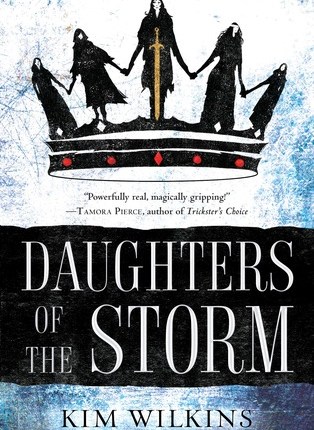
Daughters of the Storm (Blood and Gold, #1) by Kim Wilkins

Daughters of the Storm (Blood and Gold, #1) by Kim Wilkins

Something is wrong with the king. His five daughters rush home from various parts of the world to try to figure out what is going on. No one likes a power vacuum.

Meanwhile, there’s problems in the marriage of one of the sisters, whose alliance with the kingdom next door helps keep war to a minimum. Also, there’s raiders who have a mysterious crow-shaped tattoo accosting people on the roads. So, there’s a lot going on.

And that doesn’t even take into account everything that is happening to the twins, the sister whose magic is awakening and the eldest, who stands to inherit the throne if her father dies.

Photo by willsantt on Pexels.com

“Bluebell wasn’t a child. She knew one day her father would die and she would take his place. She had prepared her whole life for the moment, but it had always been abstract, like a story.” pgs 17-18 ebook

The number of characters in this book may seem daunting at first, but Kim Wilkins introduces them slowly. It makes it easy to keep track of who is who.

“Her father was dying — and her father was the king of Almissia, the largest and most powerful kingdom in Thyrsland. And when he was dead… Well, what would they say? They could not caution her if she was grieving. A counselor’s first law was that compassion comes before all else.” pg 34, ebook.

That being said, the characters are rather flat. As for the sisters, we have the violent one, amorous one, magical one, religious one and promiscuous one. The “bad guys” feel rather the same too — fixated on achieving their goals at any cost, killing indiscriminately. There is very little gray area or layered meaning in this tale. (With one notable exception, but no spoilers!)

Photo by Dan Galvani Sommavilla on Pexels.com

“Now everything had been twisted out of shape, the threads of his destiny balled in a hopeless knot. It would be a measure of the kind of man he was if he could smooth things out, take charge of his future, shape the world to his will.” pg 191

Despite the simplistic characters, I would not classify this read as young adult. There’s some violent and sexual situations that younger readers may find confusing. Also, one of the characters, when she can’t think of anything else to say, just uses the f-word, which was disappointing. There are so many different ways to express frustration…

Honestly, I wanted more action in this story and better dialogue. I wanted more magic and less brooding angst. I wanted the sisters to band together and rage across the land like avenging Valkyries. I guess we don’t always get what we want.

Photo by Anete Lusina on Pexels.com

“Rose was silent, sulking. Bluebell responded by pretending she didn’t notice. Ash lost herself in thoughts about her power, her Becoming, and how she was to try to make a future for herself.” pg 203

The description of Daughters of the Storm says this book is “Norse-like” but I felt like it was more generic fantasy. I think the author was leaning towards a tale of warriors and gods, but we never quite got there. It was more of a promise unfulfilled.

For what it is though, it is engaging. Readers who like fantasy, large casts of characters and broad story lines may enjoy this book. As an added bonus, the second entry in the series, Sisters of the Fire came out this month, so you don’t have to wait to read what happens next.

Thanks for reading!