A Beginner’s Guide to the End: Practical Advice for Living Life and Facing Death by B.J. Miller, Shoshana Berger

A Beginner’s Guide to the End: Practical Advice for Living Life and Facing Death by B.J. Miller, Shoshana Berger

A Beginner’s Guide to the End is a definitive guide about death and how to handle it, both for yourself and your loved ones.

Topics range from planning your estate and dealing with life-ending illnesses all the way through to what to do in the first 24 hours after someone dies and how to liquidate an estate.
Photo by KoolShooters on Pexels.com

I could see this book being incredibly useful to anyone who has received a terminal diagnosis, their family or caregivers of all types.

I picked this book up because my father-in-law recently died and I was looking for information on how to help myself and others with grief.

“Grief is a force of nature. Though it can feel problematic as hell, bereavement is an essential piece of the human picture, whichever way it surfaces. pg 420

Photo by Alex Green on Pexels.com

I learned all about that, but also a bunch of other helpful end-of-life details. For example, I knew nothing about the legalities of transporting and spreading cremated remains. Now, I know.

“A friend snuck down to the field of the Oakland-Alameda County Coliseum at half-time and dumped some of his father’s dust at the fifteen-yard line. His pop, a doctor, had been a hard-core Raiders fan, and though his son knew he was doing something illegal, he felt a jolt of joy, knowing that part of his father would always be in that stadium.” pg 459

The text in this book is printed slightly larger than normal, which could be exactly what is needed for elderly readers.

Highly recommended for anyone who needs some guidance about death-related issues.

Thanks for reading.

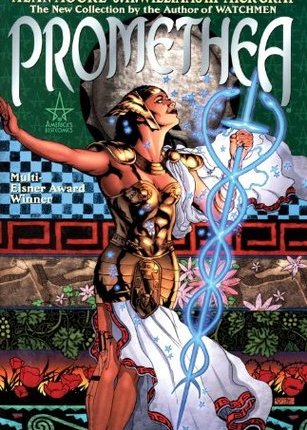
Promethea, Vol. 1 by Alan Moore

Promethea, Vol. 1 by Alan Moore

Promethea is a brilliant fantasy graphic novel by the legendary Alan Moore. It follows a woman who is researching a story for her thesis, only to discover that the story actually lives in the imagination and can explode into the real world in surprising and mystical ways.

“Tell me, child, what is your name?” “Promethea.”

Photo by Hert Niks on Pexels.com

It is a clever, gender-bent retelling of Prometheus. But, it presents the exploration and knowledge of the mystical worlds of the qabalah as Prometheus’ gift to the world, instead of the usual literal interpretation of the gift of fire to light the night.

It seems to be Promethea’s destiny to bring fire and knowledge back to the imagination of humanity in order to change the world forever for the better.

“I am Promethea, the rumored one, the mythic bough that reason strains to bend. I am that voice left, once the book is done… I am the dream that waking does not end.”

Photo by Suvan Chowdhury on Pexels.com

To free her conditioned mind from the limitations of this reality, the woman, now bearing the incarnation of Promethea, needs to learn from her previous incarnations. If she doesn’t quickly grasp the secrets of the four sacred weapons, the cup, sword, pentacle and wand, Promethea’s ancient enemies will rip her to pieces.

“Humans are amphibious, Sophie. That means they live in two worlds at once: matter and mind. Yet many people only notice the solid world they have been conditioned to think of as more real while all about them diamond glaciers creak and star-volcanoes thunder.”

This graphic novel is pretty far out there. I really liked the mythic and occult themes, and strong female characters.

Photo by Erik Mclean on Pexels.com

There’s some near nudity, but nothing too ridiculous. One of the incarnations of Promethea was brought into being by an author who used words and his imagination to shape his mistress into something more. Because of this sexual-themed awakening, she only wears a sheet, but it covers all the wobbly bits. Barely.

Highly recommended for adult readers who like fantasy graphic novels. There are few authors who write such themes better than Alan Moore.

Thanks for reading!

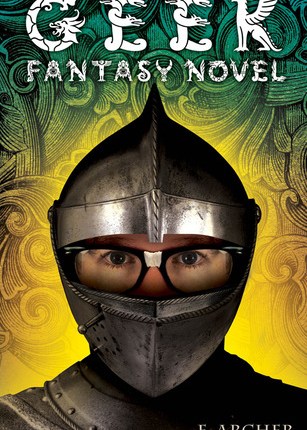
Geek Fantasy Novel by E. Archer

Geek Fantasy Novel by E. Archer

This book is a meandering, young adult novel that takes the reader into weird fantasy worlds through the power of wishes and on an epic quest by an unexpected hero who strives to make everything right, when things continually go wrong.

Along the way, you experience fairies, snow queens, the undead, and plenty of teen angst.

“(Ralph’s parents) were, in fact, endlessly tolerant — except when it came to their one ironclad rule: Ralph must never, ever, make a wish. Not under any circumstances whatsoever.” pg IV

Photo by Isabella Mariana on Pexels.com

I thought I would enjoy this story more than I did. The trouble is I don’t feel like the author successfully managed to tie the different pieces of the story together. It was disjointed and strange, but not in a good way.

That might appeal to some readers, but not me.

“I think she really wants to be the characters she reads about.” “Well, I guess that’s the point of it all,” Ralph said, out of dork solidarity. pg XXIV

Some of the details of the fantasy worlds were amusing and most certainly will appeal to young adult and reluctant readers.

“These tree-homes are lovely to look at, but so intricate that fairies spend almost all of their waking hours building and maintaining and getting lost in them. Which is a shame, really, since that leaves them so much less time for gamboling about meadows, visiting wishing wells, leaving money in return for teeth, and such.” pg CVII

Photo by Javon Swaby on Pexels.com

In the way it wandered through completely different fantasy worlds, it reminded me of The 13½ Lives of Captain Bluebear… until the unexpected ending.

“In a wish, when one is pursuing one’s greatest desires, one isn’t killed by microbes. One is killed by monsters. That’s what makes it so great.” pg CXXII

Recommended, with reservations, for young adult readers who are more interested in the journey than character building.

Thanks for reading!

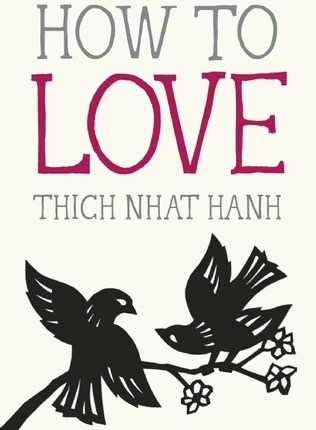
How to Love (Mindfulness Essentials, #3) by Thich Nhat Hanh

How to Love (Mindfulness Essentials, #3) by Thich Nhat Hanh

Thich Nhat Hanh, monk and spiritual leader, has written a short series of books he calls “Mindfulness Essentials.” This entry is all about love. You might ask yourself, what could a monk possibly know about love? Turns out, plenty.

Hanh applies the mindfulness techniques he’s learned over his lifetime of spiritual practice to the potentially thorny pathways of love, and the result is a gem of a read.

Photo by Asad Photo Maldives on Pexels.com

He counsels lovers to bring happiness to each other through being present in the moment and sharing your appreciation with each other. For example, if someone is distracted or worried, Hanh says you should draw their attention to the physical beauty of the world around them. In this way, you anchor the other in the present moment and ease the suffering of their busy mind.

This type of presence is a gift that you can give to anyone at anytime. And it doesn’t cost anything.

Hahn describes four defining traits of love as loving-kindness, joy, compassion, and equanimity. Then he examines these traits in detail so readers can ponder the mystery of love and see where, potentially, we may be falling short of these ideals.

Photo by Jasmine Carter on Pexels.com

He teaches all love begins with self love and walks hand-in-hand with spiritual practice. Through deep listening and the establishment of intimacy, Hahn believes love heals through empathy and “karuna,” a term that describes suffering with another and then doing what you can to end that suffering.

In addition, don’t take the other person for granted or make assumptions about what they may need. It is only through open communication that, Hahn believes, love lives.

He makes it sound so easy. I wish it was.

Photo by Pixabay on Pexels.com

Recommended for readers looking to learn about the spiritual side of love in a quick and easy read. Hanh doesn’t waste words and I am always in awe of what teachings he has to impart.

Thanks for reading!

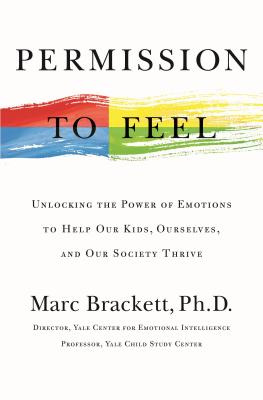
Permission to Feel: Unlocking the Power of Emotions to Help Our Kids, Ourselves, and Our Society Thrive by Marc Brackett

Permission to Feel: Unlocking the Power of Emotions to Help Our Kids, Ourselves, and Our Society Thrive by Marc Brackett

“And when we can’t recognize, understand, or put into words what we feel, it’s impossible for us to do anything about it: to master our feelings — not to deny them but to accept them all, even embrace them — and learn to make our emotions work for us, not against us.” pg 2

Marc Brackett, Ph.D., is the director of the Yale Center for Emotional Intelligence. In this book, Permission to Feel, he has given the world a new set of tools to learn more about ourselves through our emotions, to facilitate communication, and to teach the next generation how to do the same.

Photo by Andrea Piacquadio on Pexels.com

I really appreciated this book as I am someone who has trouble sharing emotions.

I am probably like this because, as Brackett explains, we learn our communication styles from our parents. My mother had a lot of kids and, though I know she cares, never had much time for one-on-one interaction.

My father is so introverted he barely speaks to his family. I have spent entire car rides with my dad while sitting in absolute silence, which sounds like it could be desperately uncomfortable, but with him it’s not. That’s just the way he is.

And what I have become. It can take time to coax anything like an intimate conversation out of me and few have ever bothered to try.

But I want to be better at sharing what’s going on in my inner world. This book has shown me a way I can move towards making that happen.

Photo by August de Richelieu on Pexels.com

“Feelings are a form of information. They’re like news reports from inside our psyches, sending messages about what’s going on inside the unique person that is each of us in response to whatever internal or external events we’re experiencing. We need to access that information and then figure out what it’s telling us.”

Brackett first outlines why emotions are important as they affect everything from “where we direction our attention” to decision making, relationships, creativity and our physical health.

He then explains how to become “emotion scientists,” which he says are more desirable than “emotion judges.” The scientist listens and seeks clues to tease out what is going on in order to help. The judge does the same, but then, rather than helping, he strangles any potential improvement by putting the smack down on what they discover.

“We all want our lives, and the lives of the people we love, to be free of hardship and troubling events. We can never make that happen. We all want our lives to be filled with healthy relationships, compassion, and a sense of purpose. That we can make happen.” pg 21

Photo by Daria Shevtsova on Pexels.com

Then, he gives the tool kit he has spent years honing in workshops and studies, and shares how to apply it in various areas of your life.

I could see this book being useful to parents, educators, leaders or people like me. I knew I had room for improvement in accessing my emotions, but no idea how to go about it. Now, I know.

Thank you to the publisher for a free advance reader copy of this book. The short quotations I cited in my review may change or be omitted in the final print copy. Permission to Feel should be published in early September 2019.

Thanks for reading!

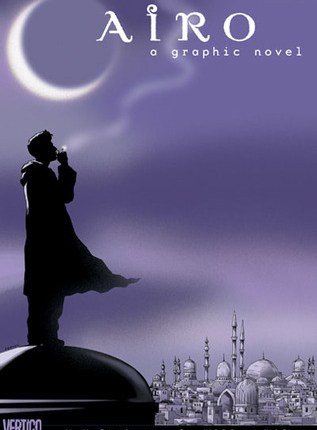
Cairo by G. Willow Wilson

Cairo by G. Willow Wilson

Cairo is an urban fantasy graphic novel set against the backdrop of the desert city of the same name. It has magical creatures, confused young men, drug dealers, magicians, Israeli soldiers and more.

Everyone in this story is looking for something. If it’s not a magical hookah, it is a search for love, truth, their higher self or more power. I suppose the entire story could be used as a reminder that “wherever you go, there you are”.

Photo by Alex Azabache on Pexels.com

“I wanted to do something. Get away from self-obsessed first world crap. I felt like the monoculture was suffocating me. I didn’t want to get stuck where I was. You know that feeling?” “I know it. But I do not think you’ll find what you are looking for in Cairo.” “Why’s that?” “Because a lot of us are stuck here.”

I was drawn to this graphic novel because of the teasers that promised mythology mixed with fantasy. It does contain that, but everything felt so rushed. Readers didn’t get the context of any of it. We’re just thrust into a world that doesn’t make much sense and spend much of the story grasping at straws of understanding.

In a way, it is much like real life. However, I prefer my graphic novels to be more of an exercise in escapism than a mirror for real life.

Give me layered worlds, complex story lines, nuanced characters and deep-seated meaning. I felt Cairo reaching for those things, but not quite getting there.

Photo by Deep Kumar on Pexels.com

We do have quite a number of main characters, which, by its nature, makes the story more complex. But, in this case, I felt that more was not better because all of the characters felt so one-note.

The exception to this classification was Shams, the jinn. We get glimpses into his millennias-long life, relationships to other storied characters, guardianship of a sacred object and spiritual leanings. Even then, I wanted more.

“Welcome to your new home, oh jinn. We’ll talk again when you are more reasonable. Take all the time you need.”

The illustrations are done in black and white, and feel rather gritty. I imagine the whole thing could have taken on a completely different character with a couple good punches of color.

Photo by Olha Ruskykh on Pexels.com

My favorite part was when one of the main characters reaches for a hero’s sword in a test of faith. G. Willow Wilson, the author, uses a poem by Hafiz to put words in the hero’s mouth as he strives to touch another reality and lay claim to the magical blade.

“The place where I am right now… was circled on a map for me.”

Though the translation Wilson used varies from the version I am familiar with, which reads: “This place where you are now, God circled on a map for you.”

Still, it is a beautiful sentiment. Rather like the intention, if not execution, of this graphic novel.

Thanks for reading.

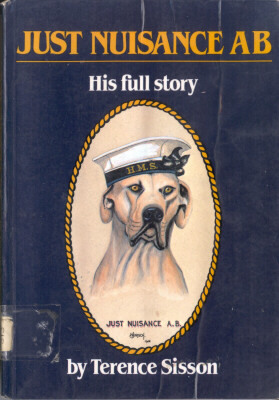
Just Nuisance A.B.: His Full Story by Terence Sisson

Just Nuisance A.B.: His Full Story by Terence Sisson

This is a biography about a very special dog, Just Nuisance, the only dog in history to be enlisted in the Royal Navy.

He was a great dane who befriended the sailors around the port of Simon’s Town, South Africa, in the days before the outbreak of the Second World War. The sailors fed the enormous dog and even gave him portions of their lager. In turn, he guided drunken sailors home and protected them from any ruffians on the street.

Just Nuisance received his name because he loved to fall asleep on the gangplanks leading to the decks and so the sailors would have to choose another way to board the ship, because they couldn’t move the enormous animal. So, they called him, “Nuisance,” as well as a variety of other colorful adjectives.

Photo by Laura Stanley on Pexels.com

He was enlisted in the navy because Just Nuisance was causing an issue on the train. He liked the ride the train to and fro with the sailors, but the officials running the line said the great dane was taking up a space that could be filled by paying passengers. They threatened to put Just Nuisance down if the sailors couldn’t keep him off the train.

However, sailors in the Royal Navy were allowed to ride the train for free. So, they came up with a creative solution to their problem. Just Nuisance would join their ranks and be issued a pass. Then he too could ride the train for free.

And so he was.

“The first problem arose when it came to filling in the heading listed as Christian Name. … “No dog has a Christian name, what the hell should I put here?” … “Well I can’t see any other way out than to leave it blank and give the name as just Nuisance.” The petty officer looked at the lieutenant with a broad smile on his face: “That’s it, sir, his Christian name, write ‘Just’ in that column.”pg 26

Photo by David Jakab on Pexels.com

This is a very sweet book. It is composed of the reminiscences of sailors who served with the great dane and shares how he affected each of their lives. He had a prodigious appetite, multiple “wives,” and took his service in the navy seriously, showing up at fundraisers and participating in parades.

But his broader legacy, how he raised the spirits of the men of the Royal Navy prior to one of humankind’s darkest sagas, deserves to be remembered.

I recommend this biography for readers who like small, forgotten moments of history and enjoy reading about the extraordinary way our canine companions can make our lives so much better.

Thanks for reading!

Here’s The History Guy’s video about Just Nuisance (I didn’t write the script for this one, Lance did.):

Last Ones Left Alive by Sarah Davis-Goff

Last Ones Left Alive by Sarah Davis-Goff

Last Ones Left Alive brings the zombie-genre to Ireland. Orpen, the daughter of Muireann and Maeve, spends her life training, running, and learning to throw knives. The end has come and humanity has, for the most part, been wiped out by zombie-like creatures called “skrake.”

“I’m to put away the stories about the monsters that are not real and to hear about the others. They’ve got worse as I got older; heroes are caught, turned, burned, throttled, they die of hunger and cold. Children same as me.” pg 33

Photo by tom balabaud on Pexels.com

Orpen lives a sheltered existence on an island. But she dreams of going to the mainland, once-Ireland, and finding the fabled “Phoenix City,” which she learned about through flyers rotting in abandoned buildings. Phoenix City is touted as a paradise with women warriors protecting the walls and weak from the encroaching skrake.

Orpen’s mother and Maeve have drilled rules into her head since the day she turned seven. Some of these rules are: Don’t go near tall buildings. Count your ‘Just-in-Cases’. and Beware people.

“Beware people. I can’t stay on my own, though, I can’t. If they’re men, I will run.” pg 71

Photo by Ricardo Esquivel on Pexels.com

But is life worth living without the interaction of other people? Orpen doesn’t think so. She dreams of the day she’ll leave the island… and wanders the land with the skrake.

I enjoyed Last Ones Left Alive but it felt like more of an homage to Ireland than a truly scary horror novel. Much of the gore and scares felt done as readers have been exposed to them all before in such series as The Walking Dead, Book One or Saga, Vol. 1.

The narration is related in two parallel lines with the past woven among the present by alternating chapter. It’s not my favorite way to read a story, but I can see how it could appeal to some readers.

The female characters in this broken world are unapologetically strong. Readers looking for books with self-reliant female characters may really enjoy this read. It may also be a great pick for a book club to pick apart and discuss.

Photo by Khoa Vu00f5 on Pexels.com

Personally, I wanted more details about the dangers this world had to offer rather than focusing on Orpen’s journey, which is the main part of the story. There’s something to be said for unknown horrors… true. But when you peer deeply into the darkness, there’s the feeling that it looks back into you. 

That’s what I felt was missing in this excellent debut novel by Sarah Davis-Goff. I wanted more looking into the shadows.

Thank you to the publisher for an advance reader copy of this book. The short quotations I cited in this review may vary in the final printed version, which I believe is available today (August 27, 2019).

Thanks for reading!

A Rule Against Murder (Chief Inspector Armand Gamache, #4) by Louise Penny

A Rule Against Murder (Chief Inspector Armand Gamache, #4) by Louise Penny

When a body is discovered near a retreat in the woods, Chief Inspector Armand Gamache happens to be staying at the Manoir Bellechasse, the lodge, with his lovely wife, Reine-Marie. Now, their peaceful get-away has devolved into a murder investigation. Someone at the hotel is a killer.

Can Gamache figure out who before it’s too late?

“But just as their waffles arrived they heard a faraway sound, something so unexpected it took Gamache a moment to recognize it. It was a scream.” pg 84

Photo by karthik reddy on Pexels.com

As delightful as this entry is in the Chief Inspector Armand Gamache series, I had trouble getting into the story. It has Louise Penny’s usual eccentric characters and thoughtful insights into universal emotions like love and despair.

And, as usual, I guessed completely wrong on the resolution and enjoyed the nail-biting conclusion.

“His team had a near perfect record, and they did it by sorting facts from fancy from wishful thinking. They did it by collecting clues and evidence. And emotions.” pg 95

I think what I was missing from the mystery was the setting of Three Pines itself. Honestly, it was nice to branch out a little and see many of Penny’s beloved characters in a different place, but Three Pines is so delightful that I missed it.

Photo by Sasha Prasastika on Pexels.com

To be fair, it does make a bit of a cameo with a village festival, but it wasn’t the same. The irascable poet, Ruth Zardo, is almost completely absent, except for a one-liner, and I missed her. I’m also inordinately fond of the bed and breakfast owners, Oliver and Gabri. But we didn’t see much of them because the action was taking place at a different hotel.

Here’s hoping the next book takes place back in Three Pines. I’d still recommend this one to readers who love cozy mysteries. Louise Penny has a gift for writing them.

Thanks for reading!