Machine (White Space, #2) by Elizabeth Bear

Machine (White Space, #2) by Elizabeth Bear

Dr. Jens, a rescue specialist for a medical group composed of different species from across the galaxy, is on a mission to save the lives of thousands of humans on an ancient ship, stranded among the stars. Something has gone terribly wrong with their computer system.

In addition, there’s a strange, and dangerous looking, machine in the hold of another, far more modern ship, that is attached to the archaic ship. Could it be the genesis of everything that went wrong or something more sinister?

“There could be people alive in there. We had to proceed as if there were, until we had proven otherwise.”

Photo by Pixabay on Pexels.com

Elizabeth Bear has created a fantastical, possible future in Machine where humanity has learned to manage some of our more troublesome brain chemistry through the use of sophisticated machines implanted in our heads.

I loved her imagining of what aliens (she calls them ‘systers’) may look like and how thousands of different people from worlds separated by both time and space would be able to come together and create something resembling a community.

It leads to some particularly interesting questions in this story as Dr. Jens is concerned primarily with the physical, and occasionally emotional, health of the beings, both flesh-bound and digital, whom she encounters.

“An AI couldn’t suffer a psychotic break, exactly. But they had their own varieties of sophipathology, and dissociation of their various subroutines into disparate personalities was definitely one that had been well-testified in the literature.”

I liked those aspects of the story- the exploration of a universe so far removed from my own.

Photo by Felix Mittermeier on Pexels.com

Unfortunately, I felt that this exploration was bogged down by long and meandering self reflection at key moments in the story. I realize that much of the development of the plot is an emotional journey for the characters, but it’s not fun to read about and occasionally comes off as a little preachy.

“We had to learn that there were more important things than being ‘right.’ Brilliant people are sometimes terrible at being people.”

And, as I said, it slowed the story down to a painful crawl through neurosis and the perpetual struggle Dr. Jens has between allowing her emotions or handling them through her technologically advanced and chemically-altering brain tech.

All that being said, Machine was an enjoyable sci-fi adventure and mystery, and I look forward to reading more from Elizabeth Bear in the future.

Thank you to NetGalley and the publisher for a free digital copy of this book for review purposes.

Patriarch Reliance (I Shall Seal the Heavens, #1) by Er Gen

Patriarch Reliance (I Shall Seal the Heavens, #1) by Er Gen

Meng Hao, an ambitious yet ultimately unsuccessful scholar, is kidnapped by a magically powerful woman and catapulted into a world of “cultivators”, mortals who grow their spiritual power in a never ending quest to become immortal. It is a dangerous world and Meng decides that the only way to stay alive is to become as powerful as he possibly can, as quickly as he can.

Photo by carol wd on Pexels.com

Patriarch Reliance was my first foray into the written world of the fascinating genre known as “wuxia”. I say ‘written’ because I this past summer I watched a show of the same genre on Netflix and thought it might be interesting to read a book. I Shall Seal the Heavens was one of the highest rated wuxia series available that has been translated into English.

What is wuxia? The definition from Google is: “a genre of Chinese fiction or cinema featuring itinerant warriors of ancient China, often depicted as capable of superhuman feats of martial arts.”

Patriarch Reliance is an adventure fantasy that uses many components of traditional Chinese medicine in its magic system or spiritual cultivation. Traditional Chinese medicine was a subject I’d never studied until I found myself looking up the topic to understand how the magic works in this book. It seems quite complex to me, but perhaps this is because I’m a newcomer to it.

Photo by Pietro Jeng on Pexels.com

The cultivators use a dizzying array of magical items with different abilities from a rain of swords to flying fans that turn into rays of light to almost anything imaginable. They are gathered and ordered by ability into sects with different legacies and secret attacks. The higher ups among the different groups fight as viciously as the newbies- perhaps more so because they have their reputations to maintain.

Despite the huge array of items and abilities, this book does become repetitious after two dozen chapters or so as Meng goes from one life threatening situation to another.

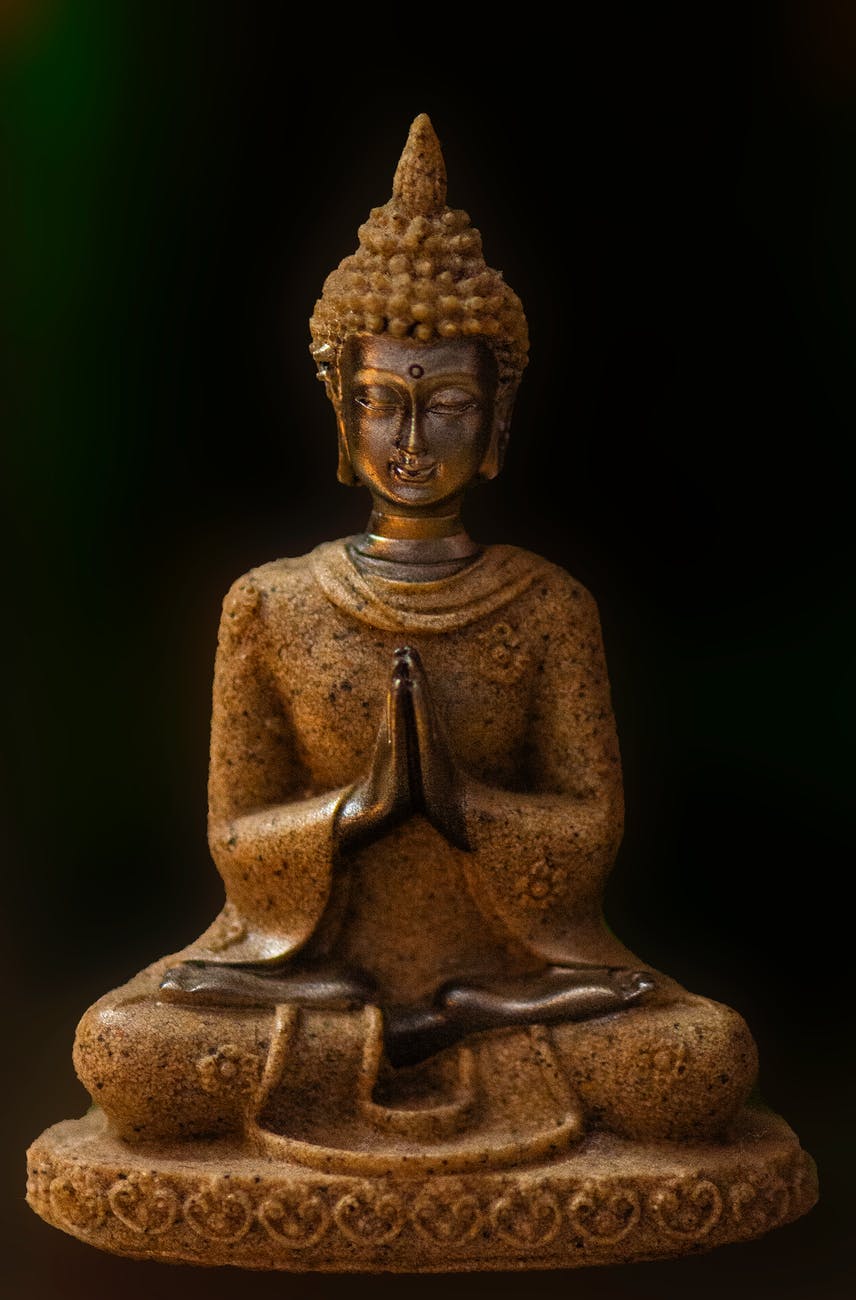
A curious aspect of the story was its deviation from my own expectations of what someone of higher spiritual power should act like. When I think of someone ‘spiritual’, I picture people like Mother Theresa, Dalai Lama, and Buddha.

Photo by Alexandr Podvalny on Pexels.com

The cultivators in Patriarch Reliance are nothing like that. They are, for the most part, violent, careless of life, and power-hungry. And they have to be. Or the people studying and meditating beside them will kill them!

I’m not sure what to make of the whole thing except that I’m going to continue on to the next book in the series. Because, despite my bewilderment, it is compulsively readable.

Recommended for fantasy readers who enjoy forays into completely unfamiliar worlds.

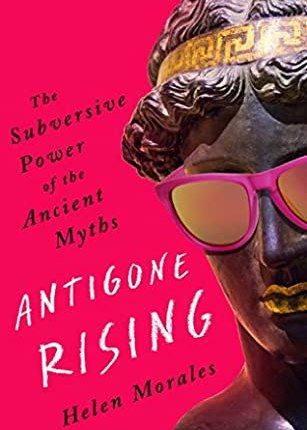
Antigone Rising: The Subversive Power of the Ancient Myths by Helen Morales

Antigone Rising: The Subversive Power of the Ancient Myths by Helen Morales

Helen Morales highlights troubling aspects of Greek and Roman mythology in a call-to-action to analyze and reimagine those myths for modern times.

As a classicist, I was familiar with most of the myths Morales examined. However, I was unaware of some of the toxic sub-context contained within them.

“My hope is that by tracing patterns and connections between ancient and modern beliefs and practices it will become easier to understand how misogyny operates and the ways in which classical antiquity plays a role (although it is not the only player and this is not its only role) in legitimating how misogyny operates today.” pg 14

Photo by Miggy Rivera on Pexels.com

The stories we tell ourselves are powerful. It shapes our expectations for our communities and the roles we occupy within them. Joseph Campbell pointed this out for the last generation. Perhaps Helen Morales will be the one to point it out for this one.

“The problem is that misogynist myths are more strongly culturally entrenched in our societies than myths that subvert them.” pg 148

But all hope is not lost. Creators from books to film to music videos are taking these myths and making them their own. With time, new interpretations will take hold.

Antigone is rising. Antigones (and Ismenes and Haemons) are rising.” pg 150

Photo by cottonbro on Pexels.com

Lest we forget, Morales reminds readers that ancient myths have been the inspiration for, among other things, “the Declaration of Independence and the US Constitution, trades union movements, Marxism, and the gay rights movement.”

It is all about how we interpret and tell the myths with each passing generation. Let’s choose carefully.

Thanks for reading!

The Highly Sensitive Person’s Survival Guide: Essential Skills for Living Well in an Overstimulating World by Ted Zeff

The Highly Sensitive Person’s Survival Guide: Essential Skills for Living Well in an Overstimulating World by Ted Zeff

“Approximately 15 to 20 percent of the population have trouble screening out stimuli and can be easily overwhelmed by noise, crowds, and time pressure.” pg 10, ebook

Ted Zeff, a self professed highly sensitive person or HSP, shares coping mechanisms he’s cultivated throughout his life-long struggle with the unique way he responds to every day life. Topics range from improving work environments, personal relationships with non-highly sensitive people, getting a good night’s sleep and more.

While you can’t live your life totally removed from the world’s jolts, you can create an environment that minimizes stimuli. If you can anchor yourself to a ship of tranquility, you won’t be tossed about by the waves of stimulation.” pg 22

Photo by Anna Shvets on Pexels.com

I am a highly sensitive person too. Most of the tips and habits Zeff suggests in this book are common sense and were not all that helpful to me. The material also becomes somewhat repetitive as the book goes on. But, if you’ve just discovered this about yourself, I could see this book being eye-opening.

“Since our aggressive society values non-HSP behavior, HSPs must learn to create boundaries and speak up. Unfortunately, many HSPs are shy and feel embarrassed to state what they want.” pg 63

Something I did learn about in this book is the highly sensitive person issue of “time pressure”. I know deadlines and meet up times stress me out, but I didn’t realize that was fairly typical of highly sensitive people.

Photo by David Bartus on Pexels.com

“Combined with your high sense of responsibility, functioning under time constraints can be one of the most difficult aspects of being a highly sensitive person. In this section you will learn specific techniques to successfully deal with the daily pressures of our fast-paced modern society.” pg 32

If you only have time to read one book about highly sensitive people, the author himself recommends The Highly Sensitive Person: How to Thrive When the World Overwhelms You multiple times throughout this text. You may want to pick that one up and give this a pass.

Thanks for reading!

The Untethered Soul: The Journey Beyond Yourself by Michael A. Singer

The Untethered Soul: The Journey Beyond Yourself by Michael A. Singer

Michael Singer reminds readers that we are not the thoughts that we habitually think or the bodies that we walk around in. He gives multiple tips on how to access the spiritual strength inside ourselves and how to view life through the wide lens of this non-attached perspective.

Singer writes that it is through this new way of looking at life that one can find enlightenment.

Photo by Supriyo Ghoshal on Pexels.com

The ideas that are shared in Untethered Soul can be found in countless other books on spiritual studies. This isn’t new information. But, I think, there is always room on my bookshelf for a book that reminds me of spiritual truths.

It is all too easy to get caught up in the day-to-day trivialities of life with its stresses and constant demands on our attention. If you take a breath and a step back, it’s surprising what you can see.

Photo by Engin Akyurt on Pexels.com

Perhaps the mammoth success of The Untethered Soul over other books in its genre is the exposure it received on The Oprah Winfrey show. Whatever the case, it is quite accessible to readers who haven’t considered these concepts before.

Recommended for spiritual seekers both seasoned and not.

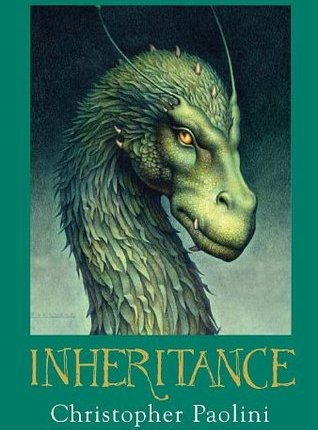
Inheritance (The Inheritance Cycle, #4) by Christopher Paolini

Inheritance (The Inheritance Cycle, #4) by Christopher Paolini

Christopher Paolini brings his fantasy series for young adults to an end with Inheritance, the fourth and final book in The Inheritance Cycle.

Eragon, Saphira, the Varden and their various allies including elves, dwarves and urgals, make their way to Uru-baen, the capital of the evil Galbatorix’s empire, in a thrilling set of battles that bring a conclusion to the struggle between the characters of this world.

Photo by Rene Asmussen on Pexels.com

If you’ve been following my reviews as I made my way through this series, you’ll note that this is the highest rating (four stars) I’ve given any of the books. I could tell that Paolini brought all of the skills that he learned in writing the first three books to this one.

The characters are well-developed as he’s had thousands of pages to make them that way. The battles are nail-bitingly awesome.

The fallout after the main confrontation is long enough to tie up loose ends, but not so long that I was tired of reading about the world.

And it is a fun world to visit. Paolini took his cues from the classics of fantasy to craft his own world so that it feels familiar in a comforting way to fans of fantasy fiction.

Photo by Lukas Rodriguez on Pexels.com

But that familiarity cuts both ways. Paolini doesn’t move far from the expected tropes in the creation of his story. There were a few large reveals in Inheritance that I wanted to be more imaginative than the twists that Paolini crafted.

That being said, I did enjoy this book more than all the others. Once I started the final hundred pages, I couldn’t put the book down.

I think this series could be a lot of fun for young readers. Despite its predictability, there is much to enjoy in The Inheritance Cycle. Older readers or the young at heart might want something that veers a little more off of the expected paths.

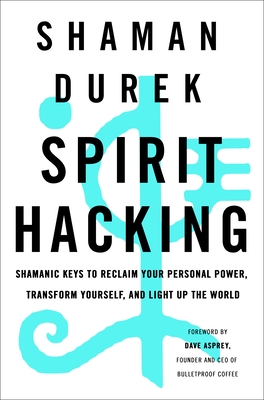
Spirit Hacking: Shamanic Keys to Reclaim Your Personal Power, Transform Yourself, and Light Up the World by Shaman Durek

Spirit Hacking: Shamanic Keys to Reclaim Your Personal Power, Transform Yourself, and Light Up the World by Shaman Durek

Shaman Durek offers practices to spiritual seekers who are looking for ways to improve their lives through the use of shamanistic techniques. Like most new age or spiritual books, not everything in here resonated with me. But I will take a few key concepts and jettison the rest.

Photo by Abet Llacer on Pexels.com

For starters, I took issue with the title of this book, “Spirit Hacking”. It implies that there are some sort of tested and proven short cuts to bringing spiritual dimensions into one’s life. I think most readers are wise enough to know that such a thing doesn’t exist. To put that sort of label on a work is false advertising to delusional, depending, I suppose, on how much one believes one’s own hype.

On the other hand, if “Spirit Hacking” was simply an effort to connect with readers who sincerely want to believe in such spiritual short cuts then this book will probably fill some sort of gap in his or her journey to a desired “goal”.

Personally, I took the title as a type of warning flag before I read it. Tread softly here, Heidi, I said to myself. And question everything.

Photo by Darius Krause on Pexels.com

Shamanism, like other semi-organized movements, varies greatly depending upon who is imparting the wisdom and from what tradition. Shaman Durek touches upon topics I’ve studied from other sources such as there are different types of spirits, various rituals or practices to interact with these spirits and time isn’t as fixed as some imagine it may be. But he puts his own unique spin on the information.

I like the empowering side to shamanism. If you have lingering physical or emotional pain, these practices suggest that you can do something about it, today if you’d like. If you’d like to change the world, go within and change yourself, then the rest will follow.

I also like the idea that everything on the planet from plants to animals to places has a guiding spirit or intelligence. If only one knew the way to interact with these intelligences, life itself could become a guide into the mysteries of the spirit. That part of shamanism is pretty cool.

Photo by Aleksandar Pasaric on Pexels.com

On the other hand, I don’t like how some shamanistic movements act like established religions, insisting that their ways or traditions are the only way to go. In addition to the snobbery, I take issue with the manner in which some shaman teach their methods. They fail to distinguish between the real world and visionary space, leading adherents to confuse one with the other or worse, not draw any dividing lines at all.

Shaman Durek’s tone can be somewhat abrasive, but if readers are looking for basic shamanistic ideas, they can be found here. Recommended with reservations for new age spiritual seekers.

Other titles about shamanism that you may want to explore if you’ve read this: This Trip Will Change Your Life: A Shaman’s Story of Spirit EvolutionThe Way of the ShamanActive Dreaming: Journeying Beyond Self-Limitation to a Life of Wild Freedom or The Flying Witches of Veracruz: A Shaman’s True Story of Indigenous Witchcraft, Devil’s Weed, and Trance Healing in Aztec Brujeria.

The Wild Woman’s Way: Unlock Your Full Potential for Pleasure, Power, and Fulfillment by Michaela Boehm

The Wild Woman’s Way: Unlock Your Full Potential for Pleasure, Power, and Fulfillment by Michaela Boehm

“This book is a call to come back to our wild, undomesticated ‘original nature,’ which, combined with an untamed heart, knows what is true for each of us. It is a call to return to the inborn genius that guides our passion, whispers in our ear with longing, and reveals itself abundantly when we allow our bodies to show us the way.” pg 8, ebook

Michaela Boehm utilizes her years of therapeutic practice and tantric training in this self help book designed for the modern woman.

Photo by Gabriela Cheloni on Pexels.com

There are so many choices and life paths from high-powered careers to motherhood, that many women try to do it all.

“The good news: amidst such a multitude of options we are free to choose what resonates with us. The bad news: it’s confusing, overwhelming, time-consuming, fraught with many pitfalls, and requires constant discernment.” pg 9, ebook

It’s not possible to do and have it all, Boehm writes, and while they attempt it, women cut themselves off from their sensual natures. She has written this book to give women practices and rituals to bring them back from this disconnection into the power and knowledge of their bodies.

Photo by Maria Orlova on Pexels.com

“Relaxing the body; engaging with life, beauty, and nature; and gentle, nonlinear movement and dance are some of those physical practices we’ll be engaging in throughout this book.” pg 34, ebook

I didn’t connect with all of Boehm’s writing, but I have begun to practice a version of her “formless dancing” every day. The practice itself is simple. Turn on music with no words and a beat, and move your body however it feels like moving. It’s designed to release tension and unconscious clenching that happens when one becomes disconnected from their physical form.

“Once you understand your own reasons for any numbness, tension, and strain that you may carry in your body, you can easily undo the related habitual body patterns and restore yourself to a state of pleasurable aliveness and sensual well-being.” pg 50

Photo by Engin Akyurt on Pexels.com

I find it extremely relaxing. I probably look mad, shimmying and bouncing and swaying around, but it feels really good so who cares. 🙂

Highly recommended for readers looking to reconnect with their body’s innate intelligence or who are interested in different spiritual practices.

Brisingr (The Inheritance Cycle, #3) by Christopher Paolini

Brisingr (The Inheritance Cycle, #3) by Christopher Paolini

In Book 3 of The Inheritance Cycle, our hero Eragon and his numerous allies continue to inch their way towards the final confrontation with Galbatorix and his dragon, Shruikan.

Photo by Dapo Abideen on Pexels.com

Unlike the first two books in the series, I felt Paolini’s pacing was off. Everything is moving much too slowly. And then, when one of the leaders of the Varden sends Eragon off on a secret mission after the armies finally begin engaging each other, I actually groaned. 

Yes, I realize there’s more to this fantasy story than endless battles and sieges. But they’re the fun part!

I also realize that I’m not the intended audience for this series, crafted for young adults. But that’s never stopped me from reading a book that looks entertaining. And these targeted young adult readers deserve better plot development than the sudden appearance of ancient artifacts or obscure dragon anatomy that changes the entire course of the story in the final chapters of a 600+ page book.

Photo by Pixabay on Pexels.com

I think that is my main quibble with this series. It was written over such a long period of time that Paolini wasn’t able to build levels into his tale with foreshadowing. Important elements like Eragon’s mysterious parentage feel almost tacked on or added as after thoughts.

On the other hand, I do like the way Paolini has continued to develop the Rider/dragon relationship between Eragon and Saphira and her growing maturity as a character. And, despite my complaints with some story elements and pacing, I will continue on to the final book in the series.

I hope he does the ending justice.