Psychic Dreamwalking: Explorations at the Edge of Self by Michelle Belanger

Psychic Dreamwalking: Explorations at the Edge of Self by Michelle Belanger

Psychic Dreamwalking has some instruction on lucid dreaming, but it is interspersed with a lot of personal background information and some psychic vampire stuff. That didn’t bother me, even though it isn’t my particular realm of study. I’ve found that the mind is a very powerful tool for interpreting reality and people seem to believe all sorts of things that I find to not be compatible with my life experience. But, if that kind of thing annoys you, just stop reading Psychic Dreamwalking before Chapter 9 and you’ll avoid most of it.

I rather liked author Michelle Belanger’s opening dedication, “Prayer of the Dreaming”: “I commit myself to you, Lord Morpheus! Open wide the Gates of Dream. Grant me safe passage in your realm So I may return with tales to tell. -from the Introduction. She mentions that this prayer is based on The Dream King from Neil Gaiman’s Sandman series. I haven’t read that comic yet, but it has a great reputation. I’ll have to get to it sometime.

What is dreamwalking anyway?: “Dreamwalking is the art of sending forth a part of the self in order to make contact with others through the medium of dreams. Anyone can learn how to dreamwalk, and, as we explore the concept throughout this book, you will find that most people already do. … The lack of available information on dreamwalking exists in part because there is no consistent nomenclature for the technique. There are accounts of dreamwalking mixed in with experiments in astral projection, dream telepathy, and lucid dreaming, but they are rarely identified as such.” pg 1

It is so difficult in consciousness experimentation to come up with a vocabulary to discuss not only your experiences but to be able to communicate something very personal and individual with someone else who may have had completely different experiences and who are approaching the same topic from a different background. The name of the game in this book is “dreamwalking” which I find to be a rather poetic way to describe a universal phenomenon.

“But this the fundamental premise of dreamwalking: on some level, the dreamspace is real. It is not real in the sense that the physical world it (sic) real, but it is certainly as real as the astral planes described by writers like Madame Blavatsky and Dion Fortune. Like the astral planes, the dreamspace is a subjective reality. As much as it is a place we can go to, it is also a place that we shape with out (sic) hopes, desires, and fears.” pg 25

I think this is a part of the human experience that deserves a far broader investigation than experts and laypersons have given it so far. But there’s always time to get started! Who’s with me?

Belanger talks about Carl Jung a lot in this book. I wonder what he would think about dreamwalking…: “Jung’s concept of the collective unconscious, a layer of myth and symbol deep within each of our minds that connects all of us in mysterious ways, hearkens back to the ancient notions that the dreamspace is a realm unto itself, a hazy place of twilight where men can sometimes meet with gods.” pg 36

It reminds me a great deal of the Dreamtime of the First Nations of Australia. This is not a new concept but one which, as I said before, deserves more experimental research than it has yet received.

The main technique that Belanger uses to access this world within dreams is one that I am very familiar with, namely building a gate: “The Gates of Dream are an archetypal image that I return to again and again in this book. Archetypes and symbols have some objective reality within the realm of dreams, and the Gates of Dream represent the point of passage from your personal dreams to the wider territory of the dreamspace. You can harness this archetypal image in your dream haven, creating a crossing-over point that can later serve as a focus for when you seek to dreamwalk.” pg 51

If you’d like to learn about my experiences with walking through gates, I invite you to explore my blog: https://thelightcongress.com/

Belanger touches a bit on shamanic practices, but not in depth: The shamanic dreamtime, as a realm of myths and images that is peopled by animal totems and celestial teachers, can very easily be equated to Jung’s collective unconscious, the psychological repository of humanity’s collective myths, dreams, and symbols. Many of the totems and other mythic figures encountered in the shamanic realms are Jungian archetypes transported from their existence as simple concepts to vivid, potent entities. … There is a kind of travel that occurs in dreamwalking, but it is, at first, an inward journey. This inward journey, however, can lead the dreamwalker elsewhere. Traveling within can sometimes lead you out. pg 67

I’ve explored a few books about shamanism. You can read those reviews here:

In this passage, Belanger discusses the importance of lucid dreaming in various religious traditions: “From the monks of Buddhist Tibet to the 12th century Spanish Sufi Ibn El-Arabi, mystics the world over have proclaimed the benefits of lucid dreaming. For religious thinkers, lucid dreaming has long been seen as a way to illuminate both the nature of the Self and the nature of reality. Tibetan Buddhists were pursuing lucid dreams as early as the eighth century C.E. According to their philosophy, the mastery of lucid dreams was a necessary step in the pursuit of enlightenment. The ability to recognize the illusory nature of the dreamstate directly correlated to the ability to recognize the illusory nature of all things. pg 139 Fascinating in how the study of dreams can be applied to other areas of your life!

Belanger captured my feelings about psychic vampires very well in this passage: “Ultimately, you and you alone can judge the validity of your experiences. You should never surrender this right, but you should also not use it as an excuse to indulge in wish fulfillment. Make a thorough investigation of every experience and decide for yourself. pg 181. Cura te ipsum.

Though I feel that Psychic Dreamwalking contained a lot of superfluous information, there are some solid dreamwalking techniques in here. I think that the main hurdle to this practice is simply becoming lucid while dreaming in the first place. So, for now, I’ll stick with going into trance. But, for those who already have the ability to lucid dream, this may be something that you’ll want to investigate. Pick up Otherwhere by Kurt Leland for a first person account of dreamwalking or Multidimensional Man by Jurgen Ziewe.

Thanks for reading!

Archetypes on the Tree of Life: The Tarot as Pathwork by Madonna Compton

Archetypes on the Tree of Life: The Tarot as Pathwork by Madonna Compton

Archetypes on the Tree of Life is a dense spiritual text exploring the Tree of Life through the use of Tarot cards.

It’s kind of funny- I think my favorite part of this book wasn’t actually the book at all but instead the brief introduction which was written by Hans Nintzel. Nintzel was a student of the western mysteries who describes himself as “living down the street from Israel Regardie.” As I used the writings of Israel Regardie to do my own explorations into the Tree of Life, I found my mind blown right there. How cool would that have been, to have lived on the occult teacher’s own street? Too cool.

Here’s what Nintzel had to say that was so compelling:
As Qabalah evolved, it was discovered that, using this glyph or map called the Tree of Life, one could move around the geography of the consciousness, so to speak, contacting or balancing various personal energies by contemplating various aspects of the God energy using myths, legends, visions, and dreams, represented by the archetypes of the Tarot.”pg 4

I have yet to see a more concise description of what pathworking is than that. Now why Nintzel didn’t write his own book, I simply don’t know. Being the librarian that I am, I did a bit of digging into his background and it seems that he was a prolific lecturer and a translator of alchemical texts, but didn’t write his own. Disappointing. Here’s a link that I found of works that he helped to bring to the US which were listed in his obituary: https://www.alchemywebsite.com/rams.html

As for Compton’s 300 or so page contribution, I found myself to be disappointed. Archetypes on the Tree of Life is in the main, rather obscure Qabalistic/Kaballistic theory. It reads almost exactly like Regardie’s Garden of Pomegranates or Fortune’s The Mystical Qabalah. That’s not to say that it doesn’t have some gems of interest, but mostly it’s slow going and not as accessible as the publisher (Llewellyn) promised it to be in the page where it described the goals of its Spiritual Perspectives Series.

Compton’s most interesting point has nothing to do with traditional pathworking but is instead a hypothesis that she and her meditation partner have constructed about potential alternate paths across Daath. They’ve chosen a five pointed star to create the paths, but I would perhaps lean more towards a six pointed star, which still sort of works. The six pointed star is a combination of an upwards and downwards facing triangle, an ancient alchemical symbol for self actualization. Though, admittedly, the five pointed star has definite Tiphareth associations… and so the debate continues I suppose. 🙂 Anyway, if you’re interested in Compton’s theory, turn to page 304 to save yourself some time digging through the other stuff.

If you enjoyed this book, may I recommend reading either of the two books I mentioned earlier: The Garden of Pomegranates by Israel Regardie or The Mystical Qabalah by Dion Fortune. If you want more examples of modern pathworking, see my book: https://thelightcongress.com

Thanks for reading!

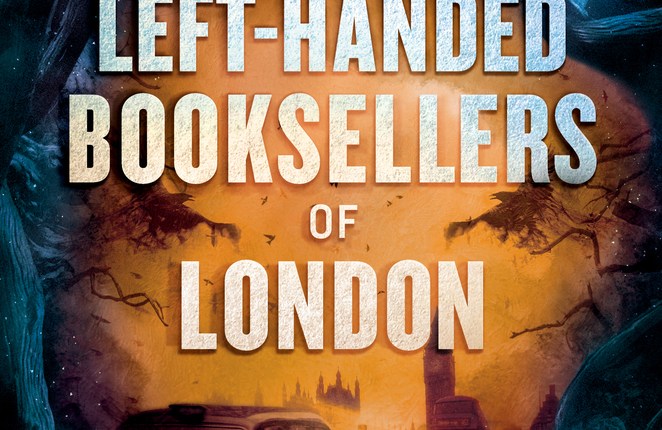
The Left-Handed Booksellers of London by Garth Nix

The Left-Handed Booksellers of London by Garth Nix

Susan, the heroine of The Left-Handed Booksellers of London, has never met her father. But she wants to.

“I think I’ll go up to London early. Get acclimatized. There’s bound to be pub work I can get. And I… I’ll try to find my dad.” pg 8, ebook

Photo by Dominika Greguu0161ovu00e1 on Pexels.com

Her search takes her to London where, after a night of violence and supernatural scares, she discovers a whole other world existing alongside the every day one.

This is a world of magic and legend, and mysterious, ultra-cool booksellers.

“Susan hesitated and looked back. The monstrous bug was still writhing, but something else was happening now. A dark fog was flowing up the stairs.”

Photo by cottonbro on Pexels.com

Enter a teen named Merlin and his sister, Vivien.

“Children’s writers,” said Merlin. “Dangerous bunch. They cause us a lot of trouble. … They don’t do it on purpose… But quite often they discover the key to raise some ancient myth, or release something that should have stayed imprisoned, and they share that knowledge via their writing. Stories aren’t always stories, you know.” pg 59, book

The characters and their sparkling dialogue are the high points in this fantasy tale for young adults.

I was also fond of the heroes being a bunch of booksellers. The only change that would have raised that, in my opinion, was if author Garth Nix had made them librarians. But that’s just me. 🙂

Photo by Nubia Navarro (nubikini) on Pexels.com

The world Nix has imagined, though intriguing, never moves beyond the entirely predictable. I suppose I wasn’t the intended audience for the story, but I believe a great book entertains all ages.

“I never knew anything about the Old World or any of this stuff before I met Merlin.” pg 67, ebook.

Although, now that the world is created, I could see this being the first entry in a fun, light-hearted series. We shall see.

Only recommended for young adults who are looking for fantasy reads. Adults readers may find themselves longing for more complexity.

Thanks for reading!

Big Book of Family Games: 101 Original Family Group Games that Don’t Need Charging by Brad Berger

Big Book of Family Games: 101 Original Family Group Games that Don’t Need Charging by Brad Berger

The title, Big Book of Family Games: 101 Original Family Group Games that Don’t Need Charging, pretty much says it all.

The games are divided into different categories: predictions, discovery, creativity, performance, deception, strategy, speed, memory, puzzle solving, and athletic. So, you can pick the game that the group is feeling like playing or is appropriate for your work, classroom, etc.

Others have gone on about the disconnected scourge of modern living, especially since the advent of this pesky virus. These games build bridges and help players get to know each other and themselves, if he or she is really honest about it.

Photo by Tima Miroshnichenko on Pexels.com

“What you have in your possession is a book of games that accomplishes three of my main goals when bringing people together: disconnection from technology… convenience… adaptability.” pg 6, ebook.

I’d like to add – this book of games only works if others are really into it. Otherwise, you just ask the question, which is most of these games, and get met with a blank stare.

I think one of the next challenges facing society after the pandemic will be reestablishing social conventions. Or perhaps we will all be forever changed. Here’s hoping it’s for the better.

Thanks for reading!

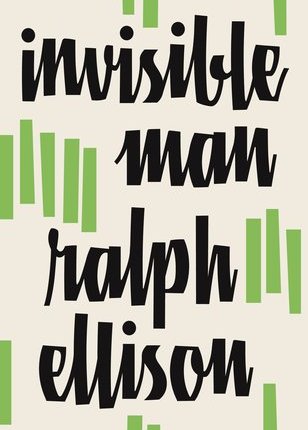
Invisible Man by Ralph Ellison

Invisible Man by Ralph Ellison

In Invisible Man, an unnamed narrator moves through a series of events that highlight racism and inequality both in the society and in the people within the system.

This is a book that is difficult to describe and may need to be experienced.

Photo by Anna Shvets on Pexels.com

The writing is powerful and builds like a punch in sections. I listened to the audiobook while on a walk through the woods so maybe that’s why I was so sensitive to the rhythms.

I’m not a black man and I’ve never walked a mile in his shoes, but this book gives a short sojourn into another person’s life.

The material is sobering and shocking, at times, lyrical and beautiful in others. Rather like life.

Photo by Zack Jarosz on Pexels.com

At the end of the book, I found myself hopeful for the narrator. Hopeful that he would move forward from all of the challenges that he faced into a new dawn of understanding and racial equality.

I’m always hopeful for improvement. Always.

I think society sometimes uses aspects of our lives (like gender, race, social status, level of education, sexual orientation) to place people into tidy boxes or make them invisible like the narrator in Ellison’s novel.

One way to combat this evil is to know that we’re not alone as we travel through life. We’re all in this together. We see each other and acknowledge each other’s strengths and weaknesses.

Photo by RODNAE Productions on Pexels.com

We are seen and appreciated for our uniqueness by the communities we create. It’s a big responsibility.

I read this classic because it is painted on the staircase of the library where I work. I’m trying to read all of the classics recorded there in an effort to become “classically” well-read.

What do I mean by classics? The most-tagged classics on Goodreads.com include such notable books as “1984” by George Orwell, “The Catcher in the Rye” by J.D. Salinger, and “Of Mice and Men” by John Steinbeck.

Of those three, dear readers, I’ve only read one.

Photo by Pixabay on Pexels.com

So, the next problem with this aspiration of mine is — Where do I start? Who is the definitive voice when it comes to choosing classics?

Who better than a library, I thought, literally.

I had the privilege of working at O’Fallon Public Library during the Great Renovation of 2015 to 2016. One of my favorite pieces of improved library space (other than the bubble wall!) are the book spines that were painted on our stairs.

I’d like to invite everyone to read along with me as I “climb the stairs” by reading the classics listed there. The goal is to share the books our community deemed important enough to preserve in our library space for all time.

The next title on the steps is Watership Down, another classic that I have not had the pleasure of reading. (Portions of this review first appeared on the O’Fallon Public Library’s blog.)

Thanks for reading!

Cutting Into the Southern Domain (I Shall Seal the Heavens, #2) by Er Gen

Cutting Into the Southern Domain (I Shall Seal the Heavens, #2) by Er Gen

“In the Cultivation world, respect is delivered to the powerful.”

Meng Hao, the failed scholar turned spiritual cultivator, continues his quest to become the most powerful magical practitioner in the Southern Domain.

Photo by Clive Kim on Pexels.com

Shedding his old identity and values, Meng Hao is becoming someone even his old sect members do not recognize. By utilizing secret methods, he has created a source of power within himself that is an anathema to the will of the heavens.

But he no longer cares. Because even though these methods are forbidden, it has brought Meng Hao incredible power. And that, for now, is his ultimate goal.

Despite the epic storytelling potential of I Shall Seal the Heavens, my complaints with the last book continued in this one- the repetition, predictability, and the slow slide of the hero into deeper darkness rather than enlightenment.

Photo by Elias Tigiser on Pexels.com

I keep wondering if that isn’t the point of these books, the idea that even the spiritually inclined among us can become corrupted in their search for power over themselves and others. If that is the case, Er Gen is taking readers there, but incredibly slowly.

The manner in which the author depicts women in this world is particularly troubling to this female reader. In addition to making the women all about their appearance, every one Meng Hao meets inevitably falls in love with him despite his egregious and sometimes abusive behavior. It definitively fails the Bechdel Test.

I think the most engaging characters in Cutting Into the Southern Domain aren’t human. Readers are introduced to a ferocious spirit creature as well as a chatty mystical shape changer. The lightness they bring to the table doesn’t offset the otherwise repetitive and depressing nature of the story, but they help.

Photo by Ryutaro Tsukata on Pexels.com

I hope the next book moves out of the themes the author has fully explored in the first two book entries in the series. The world he has built is so fantastical and full of potential. It’s just a shame it isn’t a better story.

Only recommended for fans of the genre.

Thanks for reading!

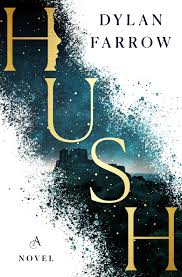
Hush (Hush, #1) by Dylan Farrow

Hush (Hush, #1) by Dylan Farrow

In the world of Hush, ink, the suspected origin of a deadly plague, has been declared the enemy of humankind and outlawed. The keepers of the law, High House and its magical soldiers called bards, roam the world, rooting out those who break the law and rewarding those who bend to their will.

“Our history shows that vigilance and caution are tantamount to survival. Burn the ink from the page. Turn away from forbidden words, toxic tales, and deadly symbols. Cleanse the country of this malignant blight. Join us.”

Photo by Dids on Pexels.com

Shae lost her brother to the mysterious plague early in her life and her family has been outcast from her small village since. When tragedy once again darkens her family’s doorstep, what will Shae do not only to seek justice for her brother but, potentially, the whole world?

The premise of Hush had some interesting ideas, but this debut, young adult novel suffers from wooden characters and predictable plot twists.

“The Bards arrive today.” The Bards. Suddenly I feel as though the house has been encased in ice. The town elders say there’s power in words- that certain phrases can change the world around you.”

Photo by Polina Zimmerman on Pexels.com

Weakness in the character development aside, Shae is a strong protagonist who struggles to create her own reality which differs quite markedly from the reality that her small town has imagined for her. Teens might connect with her more strongly than I did, which is to say, not at all.

I’m not sure what it was. Maybe I’m suffering from YA dystopian reading burnout?

Instead of appreciating Shae for her flaws which include falling in love too quickly, trusting everybody and pushing all her friends away the moment she could really use their help, I found myself annoyed with her.

“I spent countless nights lying awake, staring at the austere wooden beams of the ceiling, trying to figure out if I was mad or cursed- or both.”

Photo by Joshua on Pexels.com

Be smarter, I thought. The odds are stacked against you, and you need to pay attention, not fall for the first stranger you meet who has a dreamy pair of eyes.

But as I said, I’m definitely not the intended audience for the book.

Here’s the author, Dylan Farrow, talking about Hush:

Thank you to NetGalley and the publisher for an advance reader copy. And thank you for reading!

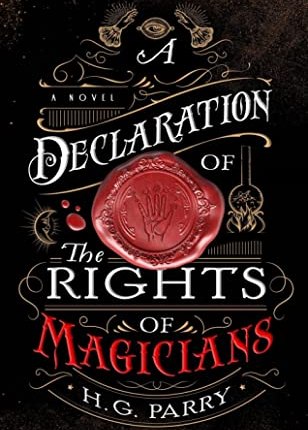
A Declaration of the Rights of Magicians by H.G. Parry

A Declaration of the Rights of Magicians by H.G. Parry

In a world where magic is real and controlled by government authorities, H.G. Parry re-imagines true historical events and people, inviting readers to add an additional layer of conspiracy to movements that changed the course of history like the French Revolution or the slave rebellion in the Caribbean.

Photo by Andreea Ch on Pexels.com

The premise didn’t work for me for a couple reasons.

I felt like this book minimized the atrocities that were committed during the era. The slave trade and the French Revolution’s cost in both human lives and suffering is immeasurable, and it felt somewhat flippant to take those events and say, “Well, magic,” as the main driving force behind the conflicts.

I felt the same could be said for the subtle twisting of the lives of historic figures.

“His quiet voice spoke of a country built on Enlightenment principles, whose people were virtuous, where magic was a free resource to be used for the betterment of all, where food was well distributed and plentiful, where courts were in the hands of the people and not the talons of the Aristocracy, where the poorest Commoner was free to vote and grow and be educated.” pg 155

Photo by Dominika Greguu0161ovu00e1 on Pexels.com

That is not to say that history or historic personages couldn’t or shouldn’t be in fantasy novels. It is a hallmark of the genre to take a reality, change the rules of that reality, and then tell the story with the new rules. Though if that was what the author was going for, perhaps she should have staged her story in another world or made the focus of the story characters she invented with the real people living their lives in the backgrounds.

Taking real events, real people and real world locations to drive the story didn’t coalesce into the fantasy novel I believe she was reaching for.

I think fantasy, alternative-historical fiction is something that can be done successfully, but I have yet to see its promise fulfilled. This may be an unpopular opinion, but I had the same issues with this story that I had with Abraham Lincoln: Vampire Hunter.

Photo by eberhard grossgasteiger on Pexels.com

Students of history may find themselves frustrated by A Declaration of the Rights of Magicians because of the way the true events are spun. I didn’t have any specialized knowledge of the era, but a friend who is somewhat of an expert told me the complexity of the time period is so dumbed down that he was distracted by it.

“It had seemed so simple after the fall of the Bastille. The National Assembly of Magicians had risen up, exactly as Robespierre had hoped. They had issued a proclamation declaring it the right of all citizens to be free to practice their own magic: a Declaration of the Rights of Magicians.” pg 179

Setting my concerns with fantasy clumsily applied to horrific real life events aside, my biggest issue with this book was the glacial pacing. Readers sit through meeting after meeting, and it’s incredibly dull. But with the time period we were in, it should have been gripping. I told myself that a big payoff for all of this story building was coming, as the book clocks in at over 500 pages, but I felt like it never materialized.

I don’t mind a long book. But please, tell the story.

Nobody Wants to Read Your Sh*t: Why That Is And What You Can Do About It by Steven Pressfield

Nobody Wants to Read Your Sh*t: Why That Is And What You Can Do About It by Steven Pressfield

Steven Pressfield shares the applicable lessons he’s learned from a lifetime of different writing jobs. The most important one is the title of this non-fiction, self help book.

Photo by Suzy Hazelwood on Pexels.com

“Sometimes young writers acquire the idea from their years in school that the world is waiting to read what they’ve written. They get this idea because their teachers had to read their essays or term papers or dissertations. In the real world, no one is waiting to read what you’ve written. pg 16, ebook

Along the way, Pressfield discovered the importance of writing for yourself rather than as a ghost writer, the necessity of structuring each piece whether it is a screen play or a novel, the enduring popularity of the hero’s journey and more.

Photo by Kun Fotografi on Pexels.com

He also addresses the inner demons that may prevent fledging writers from finishing what they begin, a topic that Pressfield also discusses at length in his other book, The War of Art: Break Through the Blocks & Win Your Inner Creative Battles

“I did not know that there existed inside my head an invisible, insidious, intractable, indefatigable force whose sole object was to keep me from doing my work, i.e., finishing the book I had been trying to write for seven years- and ultimately to destroy me, physically, psychologically, and spiritually. All I knew was that I couldn’t finish anything.” pg 49

Photo by bongkarn thanyakij on Pexels.com

I found all of his advice helpful, and the manner in which Pressfield delivers it as both approachable and entertaining.

“The writer must know what genre he is working in and the conventions of that genre, just as the bridge builder must understand the science of foundational integrity and the means of mitigating stress on strung steel.” pg 66, ebook

He closes the book with a humorous anecdote about writing for a pornographic film. Even in that tale, Pressfield managed to teach me something about story construction and storytelling. I only mention it in case any potential reader finds such things offensive. Here’s your warning.

Highly recommended for writers at any level. Pressfield knows his stuff.