Leaving Tinkertown by Tanya Ward Goodman

Leaving Tinkertown by Tanya Ward Goodman

This is Tanya Ward Goodman‘s memoir about how she loses her father and grandmother- first through Alzheimer’s and then to death. Leaving Tinkertown is a powerful look at end-of-life issues and family love.

It is an incredibly raw and straight forward account of a period of unimaginable change in the author’s life.

Photo by Matthias Zomer on Pexels.com

Tanya handles the deterioration of her father very well. I suspect that this ability to quickly and seamlessly accustom herself to change probably evolved from her childhood experiences with her father at carnivals and on road trips. With the background changing continuously, she had to change too but hold on to some essential part of herself. This characteristic served her well during her adult years.

Tanya’s father was a prolific artist. Because of his extreme creativity, I think that she was exposed to his mercurial moods long before he began losing his battle with Alzheimer’s. Artistic types seem to walk a fine line between logical thinking and madness. Their families get to walk that journey with them. That doesn’t mean that his descent into darkness didn’t hurt Tanya, but that she was more able to cope with his moment to moment shifts in behavior because she had experienced them before.

Photo by Shelagh Murphy on Pexels.com

Through this adversity, she grows closer to her brother, step-mom, and mother as they work together to care for her dad.

Tanya doesn’t gloss over her family’s shortcomings but comes to accept everything that each person brings to the table: “… I am starting to understand that doing all you can do, even if it doesn’t seem like very much, is enough.” pg 193.

When a strong, vital person in your life is no longer able to care for themselves, it’s heartbreaking.

My own grandfather, a force of nature, lost some of his heart when the family had to take the keys to the car away because he didn’t have the strength to drive safely anymore. This book was hard for me to read because Tanya knows what it feels like to cause that type of pain too.

Photo by Pixabay on Pexels.com

It brought back so many small moments when I was in a care-taking position for him. You want to provide the best quality of life that you can, but when the person can no longer clean, feed, or clothe themselves, then the really difficult decision making begins. Tanya and her relatives seem to make the process relatively simple even though I know that it is anything but that.

We all know that we’re not going to live forever but when you’re dealing with loss of physical strength or mental capacity in your own life or the lives of those you love, you get very close to that idea. It’s like the difference between looking through a window and having your face smashed up against the glass. When it’s right there, you can’t look away.

I’d recommend this for anyone who is caring for an aging or ill family member and needs a reminder that it’s all going to turn out alright. As Tanya reminds us, we just need to do all that we can do even if it doesn’t seem like it is very much.

I received a free copy of this book through Goodreads First Reads program. Thanks for reading!

Pigs Can’t Swim: A Memoir by Helen Peppe

Pigs Can’t Swim: A Memoir by Helen Peppe

Pigs Can’t Swim is a collection of essays based on Helen Peppe‘s childhood memories. Frankly, it is amazing that she managed to live to adulthood.

The youngest of nine children, she was by turns ignored or over-directed. Her family lived on a farm in Maine on a dead end road in the middle of nowhere.

Photo by Pixabay on Pexels.com

Helen tells her tale, all of it, without flinching from what she perceives the truth to be: her family’s wild behavior, prejudices, poverty, dysfunction, and an episode with a child predator that was truly horrific.

I had to keep reminding myself that she made it out alive and, at least, managed to write a book because this memoir had some truly terrifying bits in it.

I think Pigs Can’t Swim is an amazing piece of non-fiction writing not only for its content but also for its execution.

Photo by Eva Elijas on Pexels.com

Helen’s parents weren’t perfect but she doesn’t seem to blame or justify their behavior. In Pigs Can’t Swim, she just tells what happened and leaves a majority of the interpretation in the hands of the reader.

I couldn’t put this book down.

Its flowing narration reminded me of a much grittier version of Life Among the Savages.

Its personal and tell-all style reminded me of She Got Up Off the Couch: And Other Heroic Acts from Mooreland, Indiana. Similar to She Got Up Off the Couch, this book talks about overcoming poverty and adversity to become something more.

If you enjoyed either of these books, you’ll probably love Pigs Can’t Swim.

I received a free copy of this book through Goodreads First Reads program. Thanks for reading!

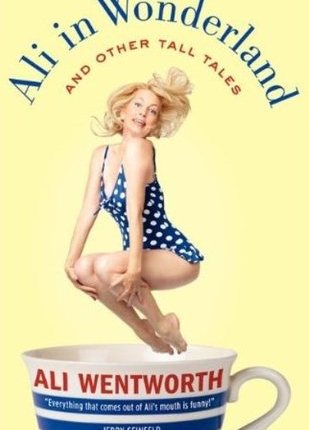
Ali in Wonderland: And Other Tall Tales by Ali Wentworth

Ali in Wonderland: And Other Tall Tales  by Ali Wentworth
aliinwonderland

Ali in Wonderland is Ali Wentworth‘s collection of stories from her childhood in Washington D.C. with her mother and stepfather all the way to her marriage and becoming a mother herself.

Ali is at her best when she’s remembering teenage hi-jinks. Some of her memories with her sister and boarding school pals are hysterical.

Other stories are terrifying. Ali recounts walking to her car one night and being accosted by a gang. Or there was the time she hitched a ride with a man who was apparently very drunk.

But, once Ali moves from her childhood into adulthood, this memoir loses some of its luster.

The chapters about meeting her husband for the first time, barfing continuously during pregnancy and why her children are special don’t have the same draw as the rest of the tales.

Maybe she started to run out of ideas? I don’t know. But the last few chapters felt tacked on to me.

Only recommended for big fans of Ali Wentworth. Side note: the author reads the audiobook herself.

Thanks for reading!

Night by Elie Wiesel

Night by Elie Wiesel

Night is Elie Wiesel’s memoir about his experiences during the Holocaust. It is shocking and sad, but worth reading because of the power of Wiesel’s witnessing one of humanity’s darkest chapters and his confession on how it changed him.

Photo by Pixabay on Pexels.com

In the new introduction to the ebook version I read, Wiesel talked about the difficulty he had putting words to his experience. “Convinced that this period in history would be judged one day, I knew that I must bear witness. I also knew that, while I had many things to say, I did not have the words to say them.” pg. 7, introduction

The original version of Night was written in Yiddish. I wish I knew enough Yiddish to read it. There’s something powerful about reading books in their original form.

Wiesel closes his introduction with his reasons for writing this book:“For the survivor who chooses to testify, it is clear: his duty is to bear witness for the dead and for the living. … To forget would be not only dangerous but offensive; to forget the dead would be akin to killing them a second time.” pg 12, introduction.

Even though a member of his community warned Wiesel’s village about the horrors that awaited them, they didn’t believe him.

Photo by Engin Akyurt on Pexels.com

After they were placed in a ghetto, the Jewish population of Sighet thought that the worst was behind them. “Most people thought that we would remain in the ghetto until the end of the war, until the arrival of the Red Army. Afterward everything would be as before. The ghetto was ruled by neither German nor Jew; it was ruled by delusion.” pg 26, ebook.

If I had been in their place, I don’t think that I would have acted any differently. How could one possibly imagine the horrors that they were going to face?

Wiesel is starved, overworked and beaten in the concentration camps. He loses more than his family and faith: “One day when I was able to get up, I decided to look at myself in the mirror on the opposite wall. I had not seen myself since the ghetto. From the depths of the mirror, a corpse was contemplating me. The look in his eyes as he gazed at me has never left me.”pgs 110-111 ebook.

Another Holocaust survivor’s memoir that I highly recommend is Man’s Search for Meaning by Viktor Frankl. Never forget.

Thank you for reading.

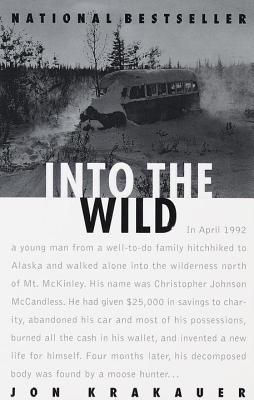
Into the Wild by Jon Krakauer

into-the-wild

“Not all those who wander are lost” seems to be the focus of this non-fiction biography by Krakauer about a young man named Chris McCandless who went into the Alaskan wilderness, but never came out again.

Jon Krakauer examines McCandless’ history, friendships, and probable motivations while also comparing his case to other young men who died or disappeared in the wilderness.

He also gets very personal and recounts a solo mountain climbing adventure of his own that nearly went south, but didn’t- crediting his survival to luck rather than skill.

Into the Wild paints McCandless as a man with a brilliant mind and the soul of an artist, who didn’t fit in to the modern world’s or his family’s view of how he was supposed to be.

“In April 1992, a young man from a well-to-do East Coast family hitchhiked to Alaska and walked alone into the wilderness north of Mt. McKinley. Four months later his decomposed body was found by a party of moose hunters.” pg 10, ebook.

For much of the book, Krakauer tries to figure out what ultimately ended McCandless’s life. In the edition I read, he had a new afterword that he penned in April 2015, talking about his definitive theory for why McCandless died.

Photo by eberhard grossgasteiger on Pexels.com

If you haven’t read the book since it was published, I really recommend picking up a new edition if only to read that.

Krakauer includes actual journal entries from McCandless’s wanderings, which I thought gave us a pretty clear window into the man’s mind: “It is the experiences, the memories, the great triumphant joy of living to the fullest extent in which real meaning is found. God it’s great to be alive! Thank you. Thank you.” pg 37, ebook.

We saw a man who cared about life, about the way he was living, and about the way he interacted with others.

Photo by Pixabay on Pexels.com

It is curious to me that his relationship with his parents wasn’t better, but I’ll let Krakauer tell you all about it: “McCandless’s personality was puzzling in its complexity. He was intensely private but could be convivial and gregarious in the extreme. And despite his overdeveloped social conscience, he was no tight-lipped, perpetually grim do-gooder who frowned on fun. To the contrary, he enjoyed tipping a glass now and then and was an incorrigible ham.” pg 95

As interesting as McCandless’s story is, my favorite part of this book was Krakauer’s experience solo climbing the Devil’s Thumb in Alaska.

“By and by your attention becomes so intensely focused that you no longer notice the raw knuckles, the cramping thighs, the strain of maintaining nonstop concentration. A trancelike state settles over your efforts; the climb becomes a clear-eyed dream. Hours slide by like minutes. The accumulated clutter of day-to-day existence- the lapses of conscience, the unpaid bills, the bungled opportunities, the dust under the couch, the inescapable prison of your genes- all of it is temporarily forgotten, crowded from your thoughts by an overpowering clarity of purpose and by the seriousness of the task at hand.” pg 115, ebook.

That passage made me wonder- what sorts of things do I like to do in my life as much as Krakauer loves climbing? It seems to me, that the state of flow he’s describing there, would be a place that I would like to dwell in as much as possible.

Recommended for folks who like to read about people with unconventional life styles or if you’re looking for a book about the human spirit. Into the Wild is a book about why people wander, what they may find, and, sadly, the loved ones they leave behind. Some further reading: Naked and Marooned: One Man. One Island., Man’s Search for Meaning, or A Death on Diamond Mountain: A True Story of Obsession, Madness, and the Path to Enlightenment.

Thanks for reading!

When Breath Becomes Air by Paul Kalanithi

When Breath Becomes Air by Paul Kalanithi
whenbreath

This is Paul Kalanithi’s life story. He relates how he got into neuroscience, his exhausting and life consuming training, his illness, and his eventual transition out of this world into the next.

At first, Paul didn’t even want to become a surgeon because his own father was one and he saw how hard it was to balance work and family: “When we did see him, late at night or on weekends, he was an amalgam of sweet affections and austere diktats, hugs and kisses mixed with stony pronouncements … He had reached some compromise in his mind that fatherhood could be distilled; short, concentrated (but sincere) bursts of high intensity could equal.. whatever it was that other fathers did. All I knew was, if that was the price of medicine, it was simply too high.” pgs 24-25, ebook.

But, even though he started out as an English major, Paul’s own interests led him towards the profession. He was passionate about medicine and making the best decisions for patients. He was interested in what makes life worth living and how the brain’s functions effect quality of life.

kalanithi.interior-ata-photo---suszi-lurie-mcfadden
Dr. Lucy Kalanithi and Dr. Paul Kalanithi with their daughter, Elizabeth Acadia.

This is what he had to say after a sobering visit to a home for people who had suffered severe brain injuries as children: “Only later would I realize that our trip had added a new dimension to my understanding of the fact that brains give rise to our ability to form relationships and make life meaningful. Sometimes, they break.” pg 34

It was really difficult for me, personally, to read the parts of this memoir that dealt with Paul learning how to make life and death decisions for ailing patients. He talks in depth about taking people off of life support because they didn’t want their bodies to be kept alive while their brains were gone. I was reminded of how my grandfather, though he never suffered any debilitating brain injury, was kept alive through endless medicines and machines to reduce the water around his heart. He eventually refused to eat and refused a feeding tube, so he slowly withered away.. this from a man who lived for eating and described the joys of consuming a fresh peach in summer as one of his favorite memories. It was heartbreaking.

In this passage, one of Paul’s professors is talking about the same type of situation with his own grandma: “But “what was most evident,” he continued, “was the slow drawing away from life… By the time Bubbeh stopped praying, she had stopped virtually everything else as well.” pg 41 ebook. Eating was my grandpa’s form of prayer. So, you may want to avoid this memoir if you have any fresh grief that you’re dealing with, as this book brings it all bubbling to the surface.

kalanithi3

Photo from timeshighereducation.com

Paul studies so hard to become a doctor to learn the secrets of life and death. But, he begins to realize, that as a doctor, he’ll constantly deal with these moments but never truly understand them: “I began to suspect that being so close to the fiery light of such moments only blinded me to their nature, like trying to learn astronomy by staring directly at the sun. I was not yet with patients in their pivotal moments, I was merely at those pivotal moments.” pg 56

Then, he has his own illness and realizes that, even though he’s seen death and suffering, he really knew nothing about it: “It occurred to me that my relationship with statistics changed as soon as I became one.” pg 82. The rest of the book is so very sad, but one thing is clear, Paul Kalanithi finally found the moment when breath becomes air, what he had been searching for his whole life.

Neurosurgeons write really fine memoirs. At least, that’s been the case for nearly every one I’ve come across.

Some read alikes, if you’re interested: A Thousand Naked Strangers: A Paramedic’s Wild Ride to the Edge and Back by Kevin Hazzard (not a neurosurgeon, but Kevin talks about the burnout that comes in the medical community), Medicine, Miracles, and Manifestations: A Doctor’s Journey Through the Worlds of Divine Intervention, Near-death Experiences, and Universal Energy by John L. Turner (neurosurgeon), Into the Magic Shop: A Neurosurgeon’s Quest to Discover the Mysteries of the Brain and the Secrets of the Heart by James R. Doty (neurosurgeon), or Proof of Heaven: A Neurosurgeon’s Journey into the Afterlife by Eben Alexander.

Thanks for reading!

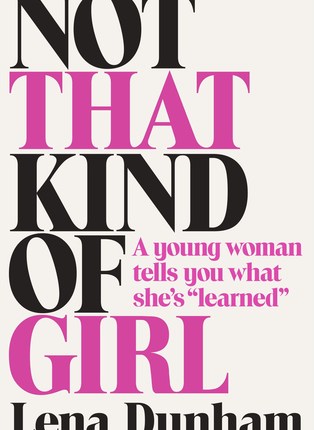
Not That Kind of Girl: A Young Woman Tells You What She’s ‘Learned’ by Lena Dunham

Not That Kind of Girl: A Young Woman Tells You What She’s ‘Learned’ by Lena Dunham
notthatkind

“Not that kind of Girl” is a non-fiction collection of essays by Lena Dunham.

In Not That Kind of Girl, Dunham has crafted a very raw and brave set of essays about growing up, her family, her success, her crushing anxiety, and what it’s like to be a woman in Hollywood.

Not That Kind of Girl and I got off to a rocky start.

I loved Dunham’s introduction but the next, seemingly endless, chapters, where she talks about her dysfunctional relationships, one after another, were awful.

She uses a stream-of-consciousness style writing so that, in the middle of telling one story, she puts in totally unrelated stuff.  Most of the time, it’s about another dude who she banged once or more, depends on the story. I was completely confused and not into it.

But then, once I was past that first part, the memoir picked up considerably.

So, if you can make it past the initial bit, I found the rest of Not That Kind of Girl to be well worth the read.

Here’s some parts I enjoyed:
For my husband, the DnD player, she’s talking about finding an eligible man on campus: “The pickings were slim, especially if, like me, you were over bisexuals. At least half the straight men on campus played Dungeons & Dragons, and another quarter eschewed footwear entirely.” pg 32 ebook. The horror! :p

How relationships end: “The end never comes when you think it will. It’s always ten steps past the worst moment, then a weird turn to the left.” pg 97 ebook. Kind of like the “Time Warp.”

I loved her reasons for writing. In this passage, she’s talking to a girl she admired, who had just asked Lena why she writes: “And in our work, we create a better or clearer universe,” I tell her breathlessly. “Or at least one that makes more sense.” pg 220 ebook.

Lena remembers a disturbing incident with a grade school teacher: “I was reminded again that there are so many things we need that can also hurt us: cars, knives, grown-ups. I was reminded how no one really listens to kids.” pg 267 ebook.

A true eccentric: “Isabel is a true eccentric- not the self-conscious kind who collects feathers and snow globes but the kind whose passions and predilections are so genuinely out of sync with the world at large that she herself becomes an object of fascination.” pg 282 ebook.

Finding her way in a “man’s world”: But the scariest thought of all is the one that pushed me to keep making contact well past the point that I became uncomfortable, to try and prove myself again and again. The reason I didn’t stop answering their calls, that I rushed to drink dates that were past my bedtime and had conversations that didn’t interest me and forced myself to sit at the table long after I’d grown uncomfortable. The thought I worked so vigilantly to ensure they would never entertain: She’s silly. She’s no threat.” pg 314 ebook.

I felt that passage, very deeply. There is the beauty of Dunham’s writing- she records her thoughts in such a way that the reader says to herself, “That’s me. I’ve been there. That’s all of us.” At least, I did.

If you enjoyed Not That Kind of Girl, you may want to read Spinster: Making a Life of One’s Own by Kate Bolick, Pigs Can’t Swim by Helen Peppe, or Furiously Happy: A Funny Book About Horrible Things by Jenny Lawson. All of those books take potentially uncomfortable topics and apply a honest and, sometimes amusing, lens to them.

Thanks for reading!