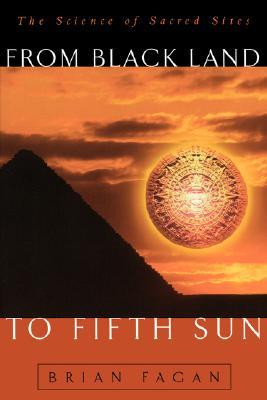
From Black Land to Fifth Sun is the textbook for an online course I’m taking from Oxford University about ritual and religion in prehistory.
The opening chapter to the book seems promising, offering readers a glimpse into the hidden worlds of what could be called the “archaeology of the mind.”
“The emerging ‘archaeology of mind’ is a marriage of cultural systems theory, settlement archaeology, environmental reconstruction, contextual archaeology, and the decipherment of written records.” pg 11

Unfortunately, the text then becomes bogged down by the author’s lengthy descriptions of archaeological sites he visited during the course of his life and his interactions with some of the giants of the field, who, as he so helpfully notes, are dead now. One of my classmates described it as “perhaps the most boring travelogue ever.”
“I have not seen the Chauvet paintings: few outsiders have yet had the chance. Nor should they, for our primary concern must be to protect them from harm.” pg 50
Some of the most interesting parts of this were the author’s descriptions of rituals from modern peoples, such as the San. But there are perils galore to using any of this modern information to decipher rituals in prehistory. The culture and society is not the same. The hierarchies are not the same. The tools and materials available are not the same. The meanings assigned to the ritual movements may have changed if we even knew what those movements were, which in most cases we don’t. There may have been a charismatic figure at the center of the cult or religion, and who knows what they may have been like. I could go on and on.
“As they activated their potency, the medicine men trembled, then sweated, then bled from the nose, as the potency took hold of them – an eerie sight to behold. Many white hunters have seen dying eland, trembling with wide-open mouths, sweating profusely, with melted fat gushing like blood from their nostrils. Perhaps the San likened this phenomenon to ‘death’ in a medicine man’s trance.” pg 61
The fact that I find this book so dull truly is a shame. This topic could come alive with a little updating. Perhaps if the text had a digital component, where you could digitally “walk” through the sites the author is describing as he describes it, it might hold the attention.
Also, From Black Land to Fifth Sun was published in 1998, twenty-two years ago for those keeping score. It purports to be on the cutting edge of archaeological research but I find that extremely dubious when I consider how far technology has developed since then. One need only look at the state of our handheld devices to know it couldn’t possibly be true.
In addition to the meandering yet somehow dry descriptions and outdated technology, somehow the author has managed to suck the life out of a topic I find extremely compelling. What did ritual and religion look like during prehistory? I don’t know, but I can imagine so many different scenarios. So many!
I feel like this field could use people who use their intuition and imaginations in addition to scientific techniques to bring the past to life- almost like a shamanistic version of Indiana Jones.

Instead, we have either scientists putting locks and fences around sites to maintain each dust molecule in context and then droning on for hours about when the human brain may have become capable of religious thought or arguing about whether religion developed as a societal control for hunter-gatherers or agricultural people. On the other hand, there’s the spaced-out new agers who want to camp among the ruins of Stonehenge or wherever and commune with whatever spirits they claim are living in the rock, divorced from any kind of scientific evidence whatsoever.
Can’t we have some sort of happy medium?
Only recommended for the readers who are taking the same course I am. Otherwise, seekers are advised to steer clear.
- The Ballad of a Small Player: a Metaphysical Movie Review
- Otherwhere: A Field Guide to Nonphysical Reality for the Out-Of-Body Traveler by Kurt Leland
- Psychic Dreamwalking: Explorations at the Edge of Self by Michelle Belanger
- Archetypes on the Tree of Life: The Tarot as Pathwork by Madonna Compton
- The Goddess and the Shaman: The Art & Science of Magical Healing by J.A. Kent
 The Help Desk Book Blog