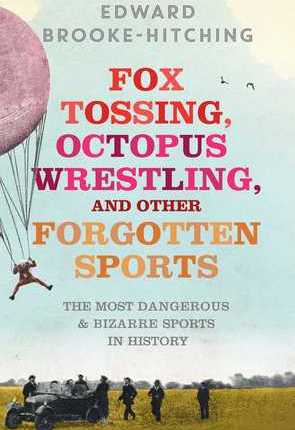
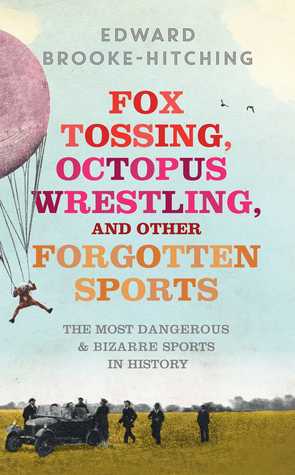
 The moral of today’s story is that people used to do terrible things to animals in the name of “sport.” Interspersed with fascinating tidbits about dueling with rubber bullets and auto polo, Fox Tossing, Octopus Wrestling and Other Forgotten Sports documents the nauseating practices of bear, dog and monkey baiting and more- so much more.
It describes mass hunts conducted in arenas by royalty and nobles were hundreds, if not thousands, of animals were slaughtered as entertainment. From shooting arrows at roosters to breaking apart a barrel with a cat inside, I could not believe the brutality.
If you can make it through the animal abuse sports, and I confess that I skimmed most of those, what’s left is amazing. “… from learning about how our ancestors entertained themselves we gain a unique insight into broader contemporary attitudes towards morality, humor, and the trials of daily existence.” pg 3. “The reasons why these forgotten sports fell out of favor are, of course, many and varied, but broadly speaking can be divided into three categories: cruelty, danger, and ridiculousness.” pg 5.
Ah, balloon jumping. This is a sport where a dude would attach a huge balloon to himself and leap across the landscape like a superhero. Why did we quit balloon jumping? “He did nearly clear the electrified cables, but unfortunately his feet became entangled, and when he tried to extract himself by grabbing one of the wires he was blown to the ground in a hail of sparks, dying instantly. Alas, balloon jumpers never quite managed to refine the sport to a level of safety below “frequently lethal”…” pg 24.
Then there was dwile flonking: “In mid-1960’s Norfolk, it became a favorite activity of locals to gather in a large group, dance to an accordion, and hit each other in the face with beer-soaked rags.” pg 87. What fun.
I would say that the practice of “flyting” is alive and well in some online forums: “Flytings were extemporary swearing matches that placed a value on the imagination and verbal dexterity of the participants, who would exchange insults with impressive wordplay in a sense similar to modern rap battles, but with an intensity of vitriol and florid vocabulary that is hard to fully comprehend by modern standards.” pg 101. But not on Goodreads, where civil discourse rules the day. 🙂
Recommended for trivia hounds and those interested in obscure history, Fox Tossing is full of hilarious and heart-breaking facts about some of mankind’s forgotten pastimes. Those who are triggered by animal cruelty would be best served by picking a different book.
Thanks for reading!
 When I picked up The Collector of Lost Things, I expected an adventure-filled historical fiction. The audiobook delivered a heavy-handed treatment of man vs. nature with some truly disturbing scenes of mass animal slaughter. Not for the faint of heart or stomach.
 The Help Desk Book Blog