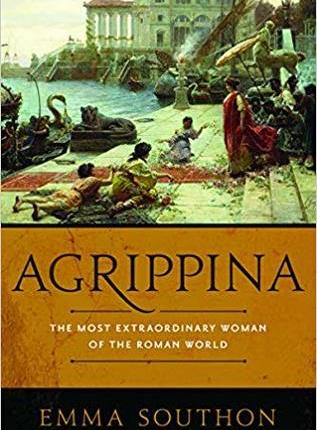
Agrippina: The Most Extraordinary Woman of the Roman World by Emma Southon

Agrippina: The Most Extraordinary Woman of the Roman World by Emma Southon

Emma Southon gives us a fascinating look at a complex woman whom history has perhaps treated unfairly.

She starts by giving the reader reasons why the study of historical women is so difficult.

… we have just three major literary sources that mention Agrippina with any detail, and a total of seven literary sources from the entire corpus of Latin literature that think she was interesting or significant enough to deserve a single line; one of which is a play.”
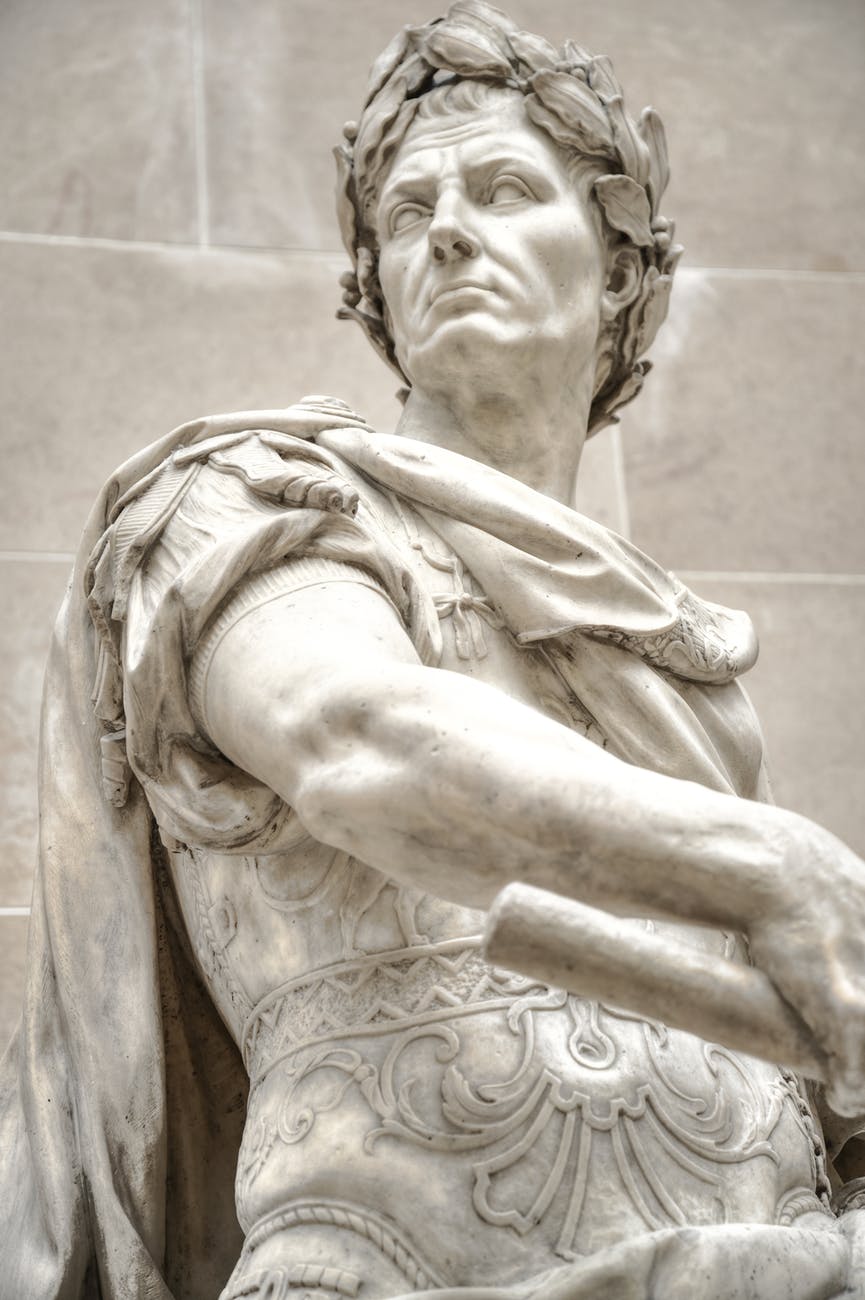
Photo by Octoptimist on Pexels.com

Like most women from history, Agrippina was mainly written about when she orbited important men. There’s also the difficulty of potential bias in the few sources we have.

“She can be seen only through the distorting lens of her relationship to other people and how well or badly she performed the ideal form of that relationship. It’s mostly badly, which is why we get to see so much of her.”

But what’s left when you take all of that into consideration is extraordinary. As the author points out, Agrippina was “the sister, niece, wife, and mother of emperors.” There are few from history who can claim the same.
Photo by Francesco Ungaro on Pexels.com

Southon uses an informal style and words like “stabby” and “murdery”. I found her delivery rather hilarious and enjoyed it. If you’re turned off by this type of writing, you may want to choose another, more serious author.

She doesn’t neglect to remind readers of the context of every bit of Agrippina’s history or point out when the record is missing or falls silent. Sometimes, the gaps in the record speak even louder than what was written.

“The next year, however, Agrippina came roaring back into historical narratives in the most confusing possible way.”

I liked how Southon took complex concepts from Roman history and gave them to the reader in digestible chunks. For example, we get a glimpse of what portions of Agrippina’s wedding ceremony may have been like:

“First, Agrippina the Younger anointed the doorway with fat and wool. Basically, she smeared some kind of animal fat onto the door frame and then strung wool between the door posts, sticking the ends to the fat. Obviously that sounds both disgusting and bizarre, which it is, but this is very symbolic and serious. Probably as these things were brought out, the party atmosphere would die down and everyone would watch reverently as this little girl covered the door in goo.”
Photo by Mathias P.R. Reding on Pexels.com

She goes on to examine the superstition of carrying the bride across the threshold of her new home which was another important part of the ceremony and nothing like the laughing, fun time it is today. It was interesting to me to juxtapose the modern viewpoint on these ancient traditions and see the glaring differences between the two.

Highly recommended for readers who like their non-fiction to sound like a conversation between friends. Southon makes the past come alive in a delightful read filled with scandals, power struggles and, of course, Rome.

Thank you to NetGalley and the publisher for an advance reader copy of this book, which is slated to go on sale tomorrow, August 6, 2019. The brief quotations I cited in this review may change or be omitted in the final copy.

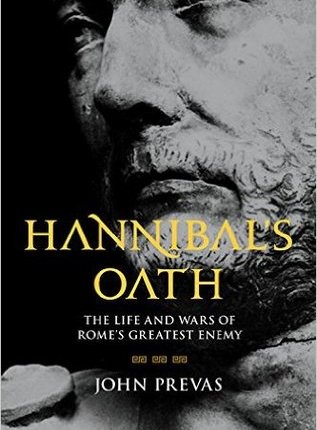
Hannibal’s Oath: The Life and Wars of Rome’s Greatest Enemy by John Prevas

Hannibal’s Oath: The Life and Wars of Rome’s Greatest Enemy by John Prevas

A fascinating and true study of Hannibal, one of ancient Rome’s greatest enemies, a brilliant general and, according to John Prevas, a “larger-than-life action hero from the past.”

Prevas did the translations from period and later documents, historical research and traveled to the places where Hannibal went, to create one of the most insightful, non-fiction examinations of Hannibal that I’ve ever read.

It all started with Hannibal’s father, Hamilcar. “Hamilcar was furious at what he saw as Roman bad faith, but powerless to intervene at the moment, he chose to bide his time and find another way to even the score.” loc 290, ebook.

Photo by Skitterphoto on Pexels.com

Spoiler alert (if you don’t know ancient history): Hamilcar had a bunch of kids and made them swear to destroy Rome. The boys, he groomed as warriors; the girls, he married off advantageously to help his sons.

“As the rituals neared completion, Hamilcar called for Hannibal, then only nine years of age, to join him at the altar. There, the young boy begged his father to take him to Spain, and Hamilcar consented on the condition that Hannibal pledge to the god he would always be an enemy to Rome and to anyone who stood with Rome.” loc 323, ebook. No pressure or anything.

The Barcas, Hamilcar’s family, create a foothold in Spain. It is from there, that Hannibal will eventually attack the Romans by, famously, crossing the Alps- with elephants in tow.

Anything to do with Hannibal’s elephants were my favorite parts of this book. “The elephants were often plied with wine before battle to stimulate their aggression, and while the wine might have done that to some degree, it also seems to have contributed to their tendency to panic and then rampage during the mayhem of the fighting.” loc 713, ebook.

Drunk, rampaging elephants! It doesn’t get much more dramatic than that.

Though written more like a textbook than a historical fiction (which is my favorite way to learn about history), I still learned a lot from Hannibal’s Oath and enjoyed it.

Recommended for classic majors, elephant lovers and fans of ancient history.

Photo by NADExRioTic on Pexels.com

Reminder: the short quotations I cited in this review may change in the final printed version. Thank you to NetGalley and Da Capo Press for a free advance reader’s copy of this book.

Thanks for reading!

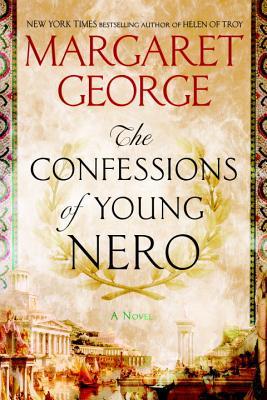
The Confessions of Young Nero (Nero #1) by Margaret George

The Confessions of Young Nero (Nero #1)  by Margaret George

margaretgeorge**Warning: minor spoilers ahead unless you’re familiar with Roman history.**

Margaret George has done it again and produced yet another triumph of historical fiction. This one follows the much maligned Nero from his humble beginnings in a lower branch of the imperial family tree to the prize itself, Roman emperor. Then, it ends on an epic cliff hanger, but I forgive her because it is so awesome. If you can’t handle that kind of wait, you may want to hold off on reading this until the next installment is out.

All I knew about Nero (before this book) was that he “fiddled while Rome burned.” George combines the research of a scientist with the storytelling ability of a master writer to bring this man’s story to life. I have to admit- I actually felt sorry for the guy. Yes, despite the orgies, outlandish expenditures, palatial living, and god-like status, poor Nero, like all of us, just wanted to be loved. At least, so says Margaret George.

“It was hard to keep the family… straight. There was so much intermarrying that everyone seemed related to everyone else.” loc 219. Like British aristocracy, the upper echelons of Roman society were actually quite small and so everyone actually knew each other very well. Their children married, they frequently divorced and remarried each other, and excuses were made for the very close marriages. Nero’s mother, for instance, marries her uncle.  Abhorrent to modern eyes, perhaps, but like royalty from many different ages, somehow the rules were bent and it was allowed.

From his very earliest days, Nero watches others scheme, poison, and claw their way towards power. It really messes him up. “It was my first, and most brutal, lesson in what lengths to which evil people will go, and for what flimsy reasons. I have never forgotten it, nor let down my guard since. Let them call me cruel. Better that than dead.” loc 544, ebook. Just to put it into perspective, Nero’s uncle, the Emperor Caligula, once declared war on the god, Poseidon, and had his soldiers run into the ocean and stab the waves with their swords- totally bonkers. George suggests throughout the story that Nero is not only trying to outshine his relatives because of natural ambition, but also because he believes there is a curse in his blood. With an extended family like that, I can see his point.

George also does a good job bringing Rome and her curious attitudes about everyone not Roman to life. Nero is fond of the Greeks- their music, poetry, and athleticism. But, to the Romans, that sort of cultural appreciation is unmanly and unnatural. I think it was just an extension of the very human attitude of “us vs them” but Romans took it very badly when Nero wanted to perform music in public (gasp), wear a tunic rather than a toga (double gasp), and race a chariot in the Coliseum (passes out on the floor). These things were not done but Nero insisted on doing them. Compared to the things that celebrities get away with today, those behavioral peculiarities seem so tame.

“I learned to live with the knowledge I had; people can get used to anything, even horror, and it begins to feel normal. And the thought that I had inherited the blood of murderers seemed less threatening than that my mother… might kill me. Thus we make peace with ourselves and our weaknesses, for there is always someone worse to focus on.” loc 1732, ebook. Poor, poor Nero. Can you imagine being afraid that you’d die at the hand of your mother? It really makes one feel like her anxieties are rather trivial. Stressed about a dirty house? Yeah, Nero’s mom might kill him today or tomorrow or the next time he’s not paying attention. Get over it!

Highly recommended for fans of historical fiction, ancient Rome, or people who want to get lost in a story. Margaret George is amazing. I own four of her books and, when this is published, I just may have to pick it up too. Coming from a (former) librarian, this is really one of the highest compliments I can give to an author. Do yourself a favor, if you like this genre and haven’t tried her yet, pick up Margaret George.

Thank you to NetGalley and Berkley Publishing for a free advance reader copy of this book.