Passport to Magonia: On UFOs, Folklore, and Parallel Worlds by Jacques F. Vallée

Passport to Magonia: On UFOs, Folklore, and Parallel Worlds by Jacques F. Vallée

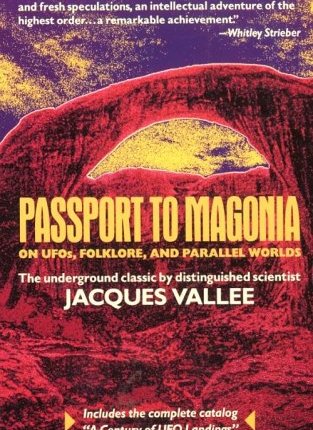
Jacques F. Vallee was one of the first scientists to closely study UFO phenomenon. He goes beyond a simple examination and compares it to the fairy religions and mythologies from the past. Passport to Magonia is one of his most well-known works.

Vallee also mentions, in the new preface that he wrote for the book in the early ’90s, of the difficulties that he had compiling the thousands of eyewitness accounts that are included in Passport to Magonia. I suppose with the easy connections to the internet that are available now, that I hadn’t considered how laborious it would be to gather all of that information together in the time before computers.

Photo by Cliford Mervil on Pexels.com

At the very least, Passport to Magonia can be admired for its thoroughness in the section: “A Century of UFO Landings.” It is approximately 150 pages of account after account of UFO encounters. The amount of information, types of witnesses and manner of UFO phenomena is truly mind-boggling.

Some of the standout examples for me are: Juan Diego’s tilma and the sky anchor that was left behind in 1211 a.d. at a church in Cloera, Ireland. And, Aleister Crowley’s run in with two gnomes or aliens.

Vallee cites the book, Magick Without Tears, for the Crowley experience. It makes me so curious- I may just have to look into it.

So many of these accounts are beyond belief, which makes for great reading, but which Vallee reminds the reader, cannot be taken at face value.

He reminds us of our inability to understand the accounts even as he seeks to understand them. Futility, thy name is Passport to Magonia?
Photo by Felix Mittermeier on Pexels.com

Readers who enjoy UFO literature will probably enjoy this classic book. Vallee doesn’t provide the answers, but he has crafted a framework for UFO exploration beyond the usual acceptance or denial of a puzzling and reoccurring phenomena.

Thanks for reading!

Tin Star by Cecil Castellucci

Tin Star by Cecil Castellucci

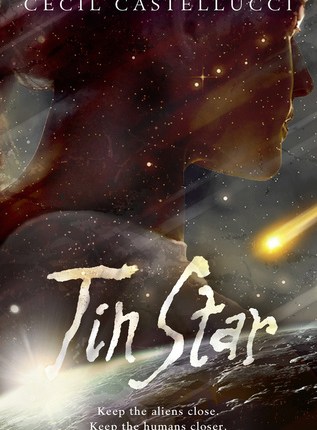
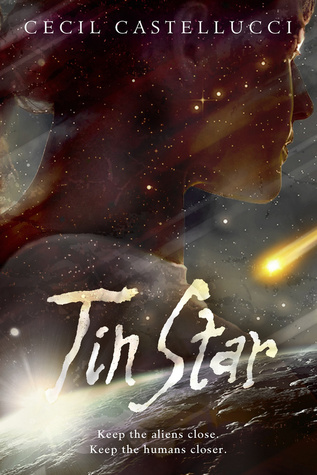
tinstarTin Star is the story of Tula Bane, a teenager who joined a space colonizing cult from Earth. She is abandoned on a way station near the edge of the known universe on the way to her new home.

How will Tula Bane survive among aliens who think human beings are the worst? Will she ever be able to go home to Earth or the colony’s planet? How will she manage to put bread on the table?

I love a good space opera and I thought that I would enjoy Tin Star more than I did.

The promise of books set in space, in my opinion, is the opportunity for unique interstellar exploration and worlds created entirely from the author’s imagination. Because of Tula’s unique plight- being stuck in what is essentially a space gas station- the author left herself very little room to write a creative story.

Mainly, Tin Star deals with character development and social struggles, not adventuring in new places.

The villain of the tale was charismatic and creepy. Take this description: “He had his hand on my shoulder in a way that he had a million times before. Only before it was comforting, encouraging, affectionate. Now it was menacing. He was looking at me and his face was smiling. To anyone looking from afar, he seemed to be pleased with me, but it was just a mask. His attitude shifted from concerned leader to unknowable monster.” pg 4

Tula manages to befriend a shady, insect-like alien named Heckleck. He’s my favorite character.

In this passage, Heckleck explains the problems Tula will face in trying to leave the station: “I know about you,” Heckleck said. “Everyone does. And you will never get off this station. You are nobody. And worse, you’re a Human. Even if you did not get on a ship that would take one of your kind, you’d have nowhere to go but to roam like the others of your kind do.” pg 35.

Keeping it real: with Heckleck.

I thought Cecil Castellucci could have done more with the cultural differences between Tula and the others on the station.

One of the most interesting exchanges in the book was between Tula and Tournour, the head of the outpost. She’s trying to figure out how old he is and, because they’re from different planets/species, it’s a surreal conversation. More of that would have been nice.

But Castellucci wrote cultural and language barriers out of the story by introducing nanites into Tula’s bloodstream to translate alien languages for her.

Something that Castellucci did well was writing profound silences between characters into her story. For much of this story, Tula finds herself standing around with Heckleck and Tournour and having nothing to say. But, somehow, it works.

I liked how Castellucci wrote the thoughts spinning through Tula’s mind at these moments. It reminded me of myself when I can’t think of anything to say: “It was a silent agreement between us that if we spoke too much then we would have to talk about the practical things. … If we ever spoke of the things that truly pressed up against us, our very real worries, our seemingly impossibly plans for escape, our divergent hopes for the future, our bubble would blow apart.” pg 184

This book in three lines: “In the end, good must win over evil. The trouble is trying to figure out which is which. Sometimes they look so much alike.” pg 204

Read this book if you enjoy light, young adult drama in space. If you’re looking for a meaty, space adventure, you’ll need to find another title.

Some read-alikes are: The Knife of Never Letting Go (teen trying to survive on an alien planet) or Gated (teen trying to leave a cult).

Thank you to Roaring Brook Press for sending an advance reader copy of this book. And, thank you for reading!