A Golden Fury by Samantha Cohoe

A Golden Fury by Samantha Cohoe

“Do you think I do not know why you wish to send me away? But I will not let you, not when we are near to making the White Elixir! I will not be erased from our achievement!”
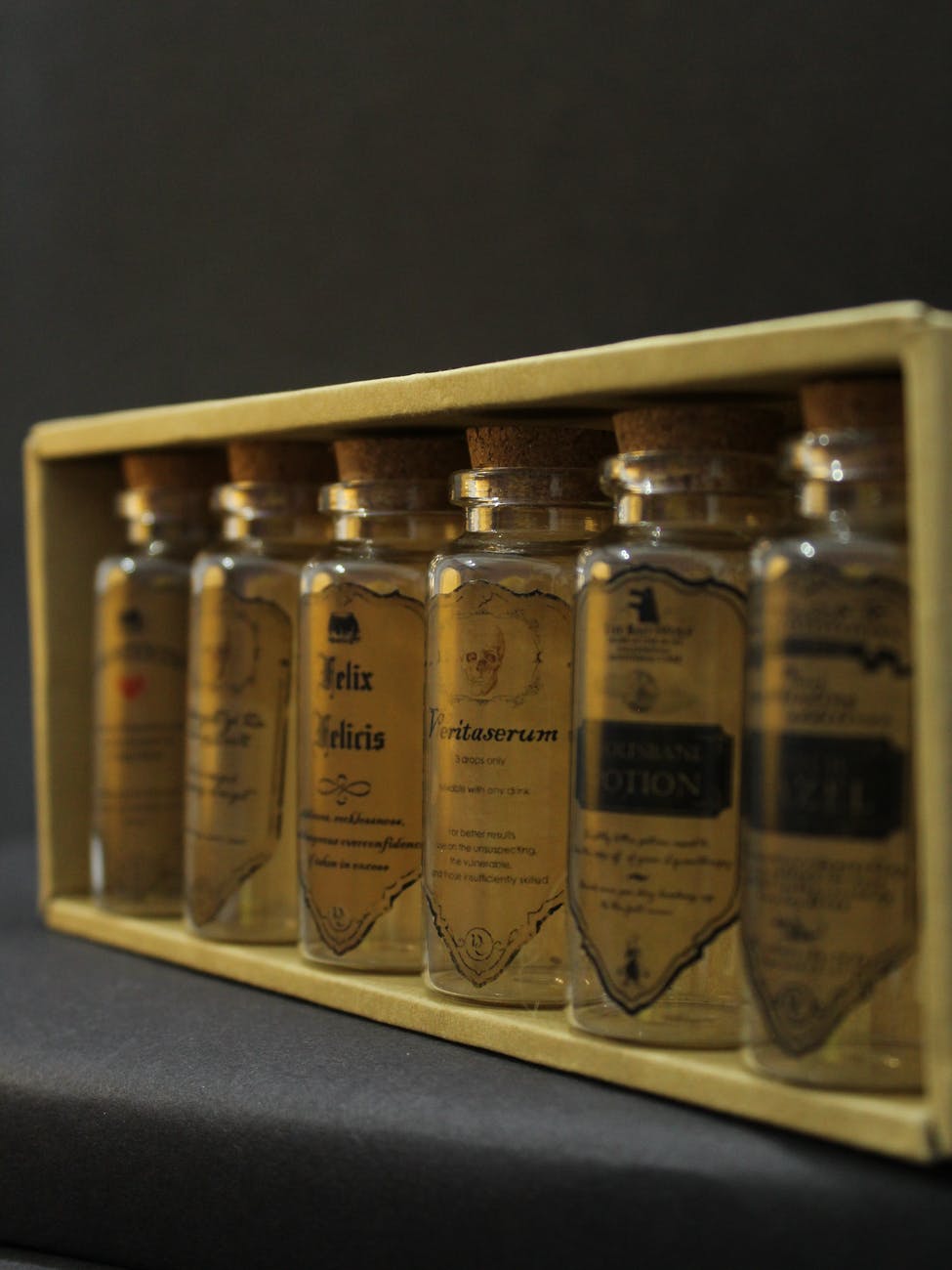
Photo by Designdrunkard on Pexels.com

Thea has worked her entire life in her mother’s alchemist laboratory. Now, she’s in love with a former apprentice and ready to begin a laboratory of her own, but her mother is acting strangely. Could it be because her mother is near to the breakthrough of a lifetime or is she having a breakdown? Thea is going to find out.

This young adult, coming-of-age story weaves alchemy and romance in a slow paced foot race to a predictable ending.

The thing that I find so compelling about alchemy, which I felt the author didn’t use to its maximum effect, is the spiritual side of the practice. Perhaps, historically speaking, most concerned themselves with alchemy for its elusive promises of immortality and unending wealth. But it is the spiritual treasures of the practice that most interest me and that I feel have the most untapped storytelling potential.

Though there were a few spiritual elements in A Golden Fury, I wanted there to be much more.
Photo by Matheus Bertelli on Pexels.com

“The Philosopher’s Stone gave everything humankind wanted but did not believe we could have in this life. With such a reward, it was not hard to see how so many great minds had wrecked themselves in its pursuit.”

To be fair, I think the intended audience for this book is younger than I am. However, I believe even young adults can appreciate a story with a little more complexity than A Golden Fury dishes up, especially in the development of the main character, Thea, and the various antagonists.

Thank you to NetGalley and the publisher for a free digital copy of this book.

The Alchemist’s Kitchen: Extraordinary Potions & Curious Notions by Guy Ogilvy

The Alchemist’s Kitchen: Extraordinary Potions & Curious Notions by Guy Ogilvy

The Alchemist’s Kitchen is an examination of alchemy — what it is, what symbols it uses and includes a cookbook of various recipes to use and practice the art on your own.

For as confusing a topic as alchemy is for me, Guy Ogilvy has put together the most succinct explanation of it I have ever read. I still don’t completely get it, but for the first time I was able to follow the general idea of it from beginning to end rather becoming completely lost and giving up in the middle.

Photo by Rodolfo Clix on Pexels.com

“The story of alchemy, at least in the West, is, in a nutshell, the story of gold and our relationship with it.” pg 2

Let’s not forget spiritual gold. The search for the Philosopher’s Stone seems to entail something of both the physical and the mystical, a curious mixture of both.

Ogilvy uses each section, which consists of one page, to completely explain a concept and then, on the opposite page, provides alchemical artwork to illustrate the concept. It is clear, concise, and it makes me crazy that I still don’t get most of it.

The most fascinating part to me was the author’s description of colors, planetary correspondences, and their purposeful arrangement in famous works of art like Raphael’s “The Crucifixion”. You can see it here: 
https://www.nationalgallery.org.uk/paintings/raphael-the-mond-crucifixion

Who knew Raphael was an alchemist? I didn’t.

Photo by Steve Johnson on Pexels.com

“There is a way of manipulating matter and energy so as to create what modern science calls a force-field. This force-field acts upon the observer and puts him in a privileged position in relation to the universe. From this privileged position, he has access to realities which are normally concealed from us by time and space, matter and energy. This is what we call the Great Work.” pg 38

Some of this book sounds like nonsense. But then I wonder why so many people have been obsessed with these practices for so long if there’s nothing to them? Oh right, probably because of the creating gold from dross part of it.

Photo by NaMaKuKi on Pexels.com

I’m still not one hundred percent convinced that alchemy isn’t anything other than a misunderstood metaphor for purely spiritual practices. But I’m still willing to dream and explore and entertain the idea that the magical might be concretely possible.

Recommended for readers who are dreamers, like me.

Thanks for reading!

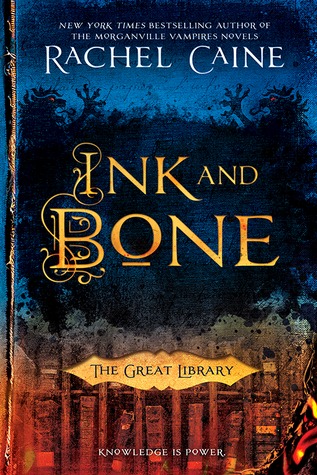
Ink and Bone (The Great Library #1) by Rachel Caine

Ink and Bone (The Great Library #1) by Rachel Caine
inkandbone

In Ink and Bone, knowledge and power is the name of the game.

“The Library holds itself to be the keeper of both knowledge and wisdom, but it is not true. So much should never be held in the hands of so few, for it is a natural, venal habit of men to hold to power. And knowledge is the purest form of power.” pg 51

Printed books, called originals, are now highly prized and illegal to own without a dispensation from the Library. The Library is an entity without borders as powerful as the church or a country, with soldiers and animated machines called automatons, protecting its buildings, holdings and librarians.

Not everyone follows the Library’s restrictions and a black market has formed for books. Jess and his family of smugglers runs and sells books at great threat to life and limb. Other factions also resist the Library. They’re called Burners and they destroy books with Greek fire, a dangerous and deadly concoction that burns flesh as easily as paper.

“The original scroll had been destroyed by a Burner at the Alexandrian Library ages ago, but there had been one copy made. … Owning it carried a death penalty. When you steal a book, you steal from the world, the Library propaganda said, and Jess supposed it might be true.” pg 22, ebook.

Jess’ smuggler father decides that he needs eyes and ears on the inside of the most powerful institute in the world, so he arranges an opportunity for Jess to join the Library. And that is where this story really begins.

The beginning of Ink and Bone bothered me because of its obvious parallels to Harry Potter. A promising young boy on his way to a magical school boards a train and meets a slightly bumbling, shy boy and the smartest girl in his class. But after that cliche “train introduction”, the story improves.

While reading this story, I was reminded of the divide between those who love holding traditional books in their hands and ebook readers. The Library has discovered a magical method to use tablets and change the words on the page, very similar to ebooks: “Do you agree it should be wrong to own original works?” Of course, Jess knew he ought to say; it was the standard answer. The Library was never wrong. But something made him say, “I’m not sure.” That woke a glint in Wolfe’s eyes. “Why not?” “I’d like to hold one,” Jess said, quite honestly. “To feel the weight and history of it in my hands. A blank can’t be the same, sir.” “No,” Wolfe agreed. “A blank is a poor, pale imitation, though the words are arranged in precisely the same order; it is the difference between an idea and a physical thing.” pg 61, ebook. I enjoy both books and ebooks, but I can see why a reader would prefer one over another.

I enjoyed the general ideas of this book, but between the warring factions, actual wars, magic, alchemy, Library history, twin brother, character backgrounds, book burners or eaters, teenage romance and angst, the story lost its cohesiveness. Caine could have written three different stories with the material contained in one.

Beyond simplifying the story elements, I just couldn’t get over the fact that the librarians weren’t good guys. Yes, I’m biased. 🙂 But every librarian I’ve ever known has been a guardian of knowledge, not gate-keeping tyrants.

Recommended for readers who enjoy their young adult fantasy a little scattered and who are open to the idea of sinister librarian-types.

The Alchemy of Freedom: The Philosophers’ Stone and the Secrets of Existence by A.H. Almaas

The Alchemy of Freedom: The Philosophers’ Stone and the Secrets of Existence by A.H. Almaas

I picked up The Alchemy of Freedom because I was looking for an accessible book about alchemy. Unfortunately, it wasn’t actually about alchemy nor was it accessible in my opinion.

Photo by Evgeny Tchebotarev on Pexels.com

But, everybody is ready at different times for different manners of spiritual teachings. Don’t let my incomprehension deter you if you find the description intriguing.

I’m neither a genius nor a guru, just someone who studies religions and spirituality in a comparative, curious, meandering way. This could be the book that opens a door for you.

It simply wasn’t that for me.

There are some gems hidden in these pages but I found it mainly to be a labyrinth of words. I’ve had a similar feeling when listening or reading the works of Eckhart Tolle.

I feel like what Almaas is saying is worthwhile, so I made my way through it. But I just didn’t get the majority of it. Puzzling my way through this book was like grasping a cloud.

Photo by Rok Romih on Pexels.com

I had finished this book last week in preparation for writing a review the day it came out, but when I sat down to write yesterday, the words wouldn’t come. Rarely does reading a book leave me speechless.

I’ll pull some highlights to give you a feel for it. Reminder: this was a digital advance reader’s copy so the final published version could be slightly different.

I was able to comprehend Almaas’ thoughts about our “true nature” and most of the passages I highlighted talk about it: “Whether we recognize it as presence or awareness or emptiness, true nature is crucial to the process of awakening, realization, enlightenment, and liberation. It is the source of all spiritual experiences, insights, and transformations.” loc 116-133.

The bits of alchemy that Almaas did discuss were illuminating: “When we are experiencing ourselves as true nature, we realize that a human being is really the alchemical laboratory. The human being, the human consciousness, the human mind, the human heart are the instruments through which the magician works.” loc 186.

Photo by Vinu00edcius Vieira ft on Pexels.com

Most books that discuss alchemy are symbols heaped upon symbols. Perhaps it’s just the nature of the topic, but it’s frustrating.

About the philosophers’ stone: “The alchemists spent millennia trying to find it. They considered it the final result of the magnum opus, the great work of spiritual and material transmutation. Some alchemists thought they could make it, others believed it had to be discovered. … I am not teaching anything about alchemy here; I am borrowing the idea because it fits with what I am trying to say about true nature. … We can only experience true nature in the manifold ways it presents itself, and yet it is always one thing.” loc 666

I felt like this next quotation encompassed my experience of this book: “Sometimes we can rapidly absorb a teaching, and other times we can’t get very far with it for a long time. But we don’t need to get into a mental struggle with the ideas and the notions. Although understanding is an important part of awakening, it need not happen immediately.” loc 922.

So, that’s a relief. Perhaps my awakening is still on its way. Until then, I’ll just chill where I am.

Photo by Jill Wellington on Pexels.com

Thank you to NetGalley and Shambhala Publications for a free advance reader’s copy of this book.

And thank you for reading!