The Part About the Dragon Was (Mostly) True (Heloise the Bard, #1) by Sean Gibson 

The Part About the Dragon Was (Mostly) True (Heloise the Bard, #1) by Sean Gibson 

“The raging beast had no doubt that some foolhardy adventurers would soon come calling in the hope of righting this terrible wrong, but it would be ready.” pg 6, ebook

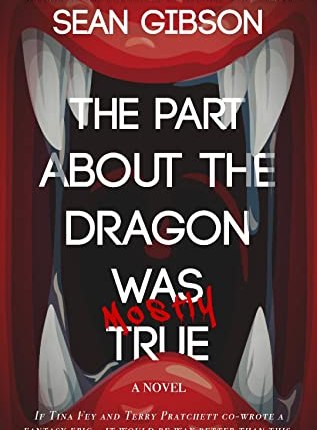
The Part About the Dragon was (Mostly) True is a fun and, at times, ridiculous romp through a fantasy world.

A band of adventurers is hired by a village (town!) to rid them of their dragon problem. Heloise the Bard is along for the ride, to tell their story so that they will live on in glory.

The tale she tells, which is written alongside the events as they actually happened, has very little relation to the other story. Sometimes the differences are hysterical.

Photo by Lum3n on Pexels.com

The songs we sing in taverns are the best bits of a story, but they’re not the whole story. pg 26, ebook

This book has been compared to those written by Terry Pratchett, which I would agree with. The bits that are written as asides in the story would be footnotes in the Pratchett books, but they feel very similar.

Another author I would compare Sean Gibson to is Nicholas Eames, who wrote Kings of the Wyld. It is another humorous fantasy tale that feels, in some ways, similar to this book. I would say The Part About the Dragon was (Mostly) True is raunchier, which some readers may love.

“There’s a saying amongst adventurers: it’s not a quest until you’re covered in snizzard pee and have sh*t on your knees.” pg 37, ebook

That being said, sometimes I felt like Gibson took the gags a step or two too far. But that could just be me.

Highly recommended for readers who love fantasy and adventure stories.

Also, thank you to NetGalley and the publisher for an advance reader copy of this story. I apologize that I only got around to reading it now. It’s excellent.

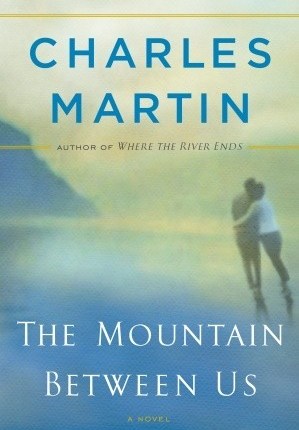
The Mountain Between Us by Charles Martin

The Mountain Between Us by Charles Martin

In The Mountain Between Us Ben Payne and Ashley Knox are in a plane crash in the middle of nowhere. As they fight to survive, the reader learns about their pasts and probable futures.

It is a survival story and also a romance.

“I dumped the bottle and looked around as best I could. Nothing but snow and mountains.” pg 65, ebook

I picked up this book because my book club is going to be discussing it on Monday. It’s not my usual type of read, which veers strongly towards science fiction and fantasy.

That being said, I expected more from this book- more adventure, more near death moments.

At first, I was reminded strongly of Hatchet by Gary Paulson, which I read in grade school. I remember enjoying that book quite a lot and learning about survival techniques along with the protagonist.

The Mountain Between Us has some of that, it’s true, but it is mainly about what’s going on in Ben’s mind. I found the story to be repetitive after the first hundred pages or so.

The romance in this story is way over the top, which I suppose romance readers may like. As for me, an occasional romance reader if at all, I found myself cringing at some of Ben’s revelations.

There’s a twist at the end which I won’t spoil here, but I saw it coming from the way author Charles Martin wrote some of the passages. I wish it had been sign-posted a little less.

Overall, there’s quite a few things for book clubs to dissect. There’s the survival aspect, relationships, the beauty of the outdoors, the disconnect between modern society and nature, and what it means to be human. I think we’ll have a lively discussion.

Recommended for readers who like their romances syrupy with a wilderness aspect thrown in.

This book has been made into a movie. I’m curious as to how they adapted the story.

Thanks for reading!

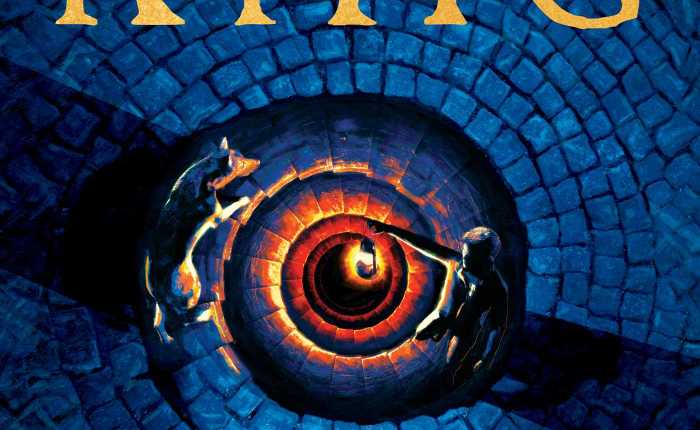
Fairy Tale by Stephen King

Fairy Tale by Stephen King

“Here is something I learned in Empis: good people shine brighter in dark times.” pg 250

Charlie is a typical teen- plays sports and helps his father out around the house. But one day, after helping a neighbor after an accident, Charlie enters a world that is not our own. And discovers an adventure that he wasn’t looking for.

The incomparable Stephen King has written a mammoth fairy tale (600 pages in my digital version!). I thought it was too long.

Not that I mind long books. It sort of felt like King started the book thinking it was going to be about something different than it turned into.

The reason I feel that way is because the first quarter of the book takes so long to establish Charlie’s character and real world connections.

Photo by Alesia Kozik on Pexels.com

I wanted to just get on with it. Then, when we finally made it to Empis, events went too quickly!

King uses quite a lot of foreshadowing which was ok at first, but then it started to become too much. I realize he was trying to build tension- it was just over-used.

“Remember when I said at the outset that no one would believe my story?” pg 494, ebook

I enjoyed any part of the story that had Radar the dog in it. She was my favorite character. King really took his time developing her and her reactions to the world around her, which was fun.

King is at his best when he’s describing the eerie atmosphere of the other world and its unfortunate denizens. Like I said, those parts went too quickly.

Other than my small gripes, this was a well-written story and worthy of its Good Reads nomination. Readers who like Stephen King for his horror should read a different book. This is definitely more fantasy than horror.

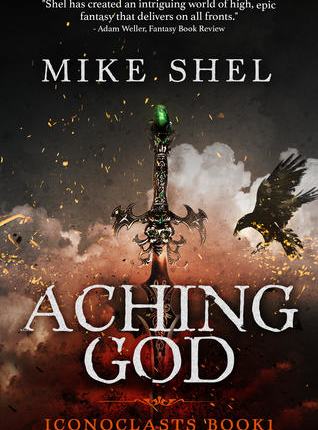
Aching God (Iconoclasts, #1) by Mike Shel

Aching God (Iconoclasts, #1) by Mike Shel

In the fantasy world of Aching God, a mysterious plague has emerged at the headquarters of the Syraeic League, an adventuring guild that explores the ruins of an ancient civilization. Their century-old quest is to retrieve relics from the ruins and to discover more information about its culture and gods.

Auric Manteo used to go on these quests for the League until a disastrous final foray led to an abrupt retirement and years of nightmares. But things have been looking up for the aging adventurer, until he receives a letter from the League requesting his help in banishing the plague.

Photo by John-Mark Smith on Pexels.com

“Three years of untroubled sleep, disturbed by this nightmare the very morning a summons to Boudun and the Citadel arrived? Was it a hateful premonition?” pg 28, ebook

Can Auric face the demons from his past in order to save the afflicted from the ravages of the Aching God?

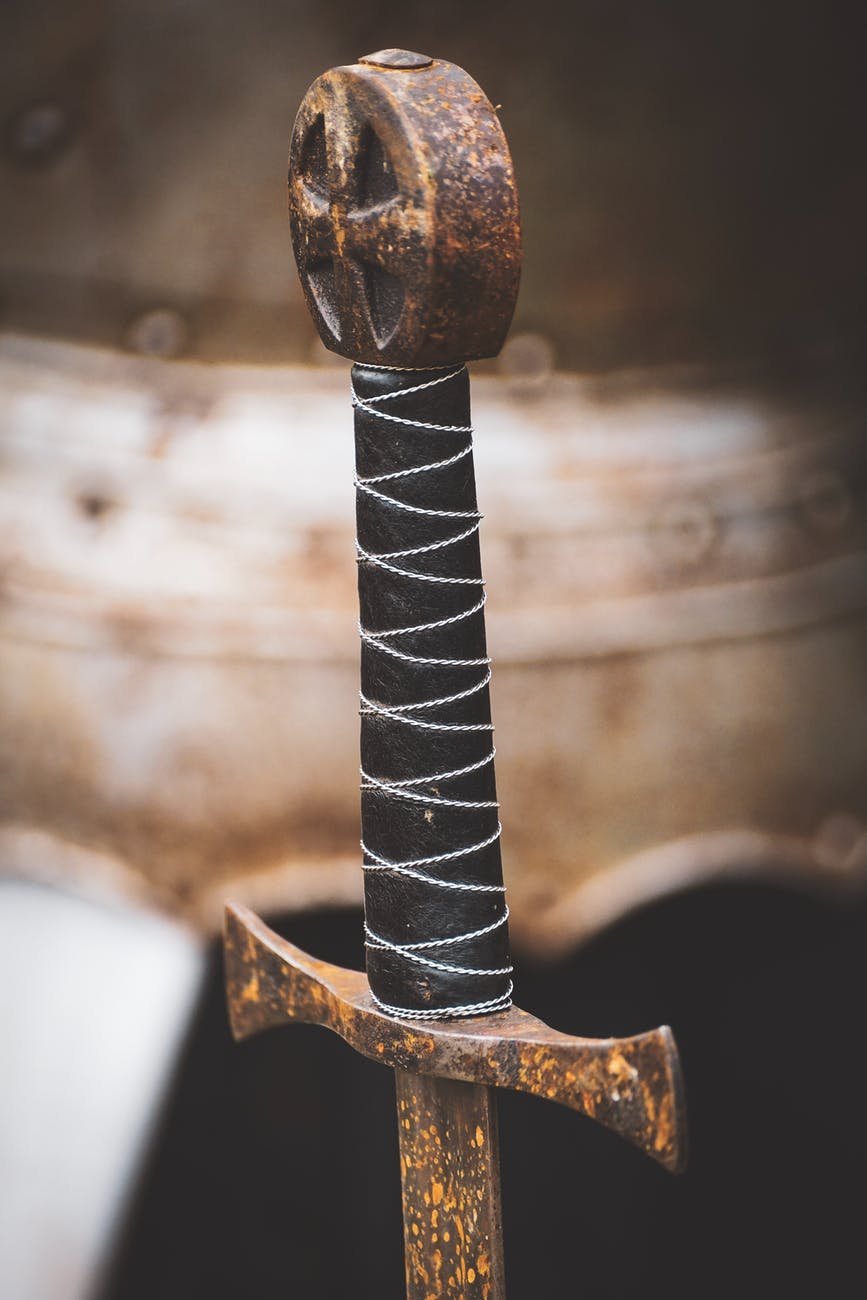
“His mind flashed to images from his tenacious nightmare: the corpses, the pit, Lenda’s raggedly severed head gaping at him in accusation. He rested a shaking hand on the pommel of his sword to steady it.” pg 73, ebook

Photo by Susanne Jutzeler on Pexels.com

Despite its promise, I think Aching God would be a better dungeon module than it is a story. Mike Shel begins to flesh out his characters, but they never get far beyond the basics of birthplace and motivation. I didn’t feel drawn to any of the characters because of this superficial depiction.

His magic system with its secretive sorcerers who embed gems in their foreheads in order to bind themselves to their magical powers and comrades was also interesting. But, again, Shel leaves a majority of the storytelling to the reader’s imagination rather than actually writing it.

The adventure itself is linear with few unexpected twists and turns. Even the reveal of the great mystery of the Aching God leaves something to be desired.

Only recommended for readers who adore the fantasy adventure genre. Otherwise I would give this a pass.

Thanks for reading!

Sixteen Ways to Defend a Walled City (The Siege, #1) by K.J. Parker

Sixteen Ways to Defend a Walled City (The Siege, #1) by K.J. Parker

“Orhan.” Nobody called me that. “You’re a clever man and you use your brain, which makes you unique in this man’s town, but you’ve got to do something about your attitude.” “Attitude? Me?” pg 16

Through a series of unfortunate events, Orhan, the leader of a group of military engineers, finds himself in charge of the defense of “the City”, the capital of the Robur empire. The Robur empire seems to have been loosely based on the Roman empire, which, in its conquering of the world, took diverse sets of people and organized them into useful groups under its overarching control.

Orhan is one of these conquered peoples. But he has a unique set of skills, all of which will be put into use during the siege that is to come.

“My meteoric rise, from illiterate barbarian serf to commander of an Imperial regiment, is due to the Hus, the Sherden, the Echmen and, last but not least, the Robur, who are proud of the fact that over the last hundred years they’ve slaughtered in excess of a million of my people.” pg 5

Photo by Maria Orlova on Pexels.com

The story is told entirely from Orhan’s point of view in first-person narrative. This invites the reader to step into Orhan’s shoes and makes the tale quite exciting and immediate.

On the other hand, Orhan is emotionally bereft and runs his life through merciless logic, which doesn’t always serve him, or the people around him, very well.

“That’s one thing about human beings I don’t see the point in: love. It does nobody any good. You love someone, and either they let you down or they die. Either way, you end up crucified.” pg 55

He is an impatient and, occasionally, violent character, who literally punches people when they don’t conform to his view of the world fast enough.

In other words, wearing Orhan’s shoes for the length of the story is an uncomfortable ride for anyone who uses a modicum of emotional intelligence in their lives.

Photo by Miquel Rossellu00f3 Calafell on Pexels.com

That being said, K.J. Parker (pen name for Tom Holt) has done a brilliant job of creating an unforgettable, if unpleasant, narrator. By the end of the book, even though I didn’t like him, I found myself rooting for Orhan anyway because that’s the kind of reader I am.

But if you have trouble connecting with stories where you don’t like the characters, this might not be the book for you.

The one moment where I did connect with the narrator was when he discovers his importance in the siege that is to come.

“If, as I was horribly afraid, I was the senior military officer in the City, I needed confirmation or a warrant or something. If there was someone higher up than me, I desperately wanted to hear about him and ask him for orders.” pg 78

I used to have similar feelings when I first started working as a reference librarian at the library. Prior to that, as a circulation assistant, if I had any question about anything having to do with the library or technology or research, I’d call up whoever was sitting at the reference desk and they’d supply me with the answer.

Photo by Olenka Sergienko on Pexels.com

It was my own version of chain-of-command. There was an unspoken faith that I carried- if I didn’t know the answer, the reference librarian would so there was never any reason to worry.

The day that my training was done, my supervisor went home, and I was left alone at the reference desk, that was my Orhan moment. If I didn’t know or couldn’t find the answer, there was no one else for me to turn to.

It is humbling to realize that it all rests on your shoulders, but it is also a character making moment. How you respond to the pressure says so much about you. And that is the strength of this story, the slow revelation of Orhan’s character under pressure.

Recommended for readers who enjoy historical fiction. Though this is classified as a fantasy too, I feel like it veers more into a parallel universe than a true fantasy world where magic is real and otherworldly creatures are running around. I’d be curious to know what other readers think about its genre.

Thanks for reading!

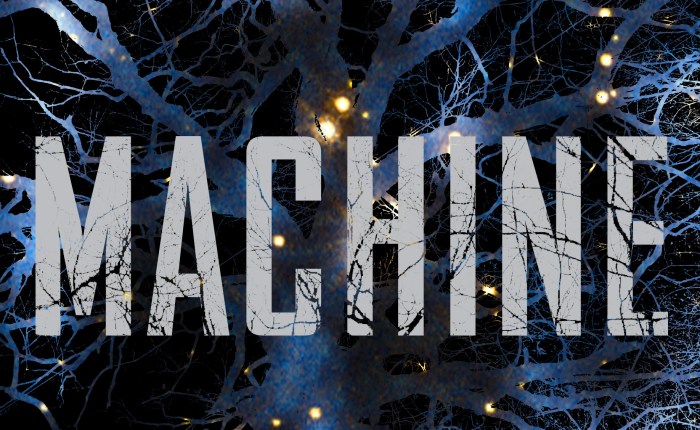
Machine (White Space, #2) by Elizabeth Bear

Machine (White Space, #2) by Elizabeth Bear

Dr. Jens, a rescue specialist for a medical group composed of different species from across the galaxy, is on a mission to save the lives of thousands of humans on an ancient ship, stranded among the stars. Something has gone terribly wrong with their computer system.

In addition, there’s a strange, and dangerous looking, machine in the hold of another, far more modern ship, that is attached to the archaic ship. Could it be the genesis of everything that went wrong or something more sinister?

“There could be people alive in there. We had to proceed as if there were, until we had proven otherwise.”

Photo by Pixabay on Pexels.com

Elizabeth Bear has created a fantastical, possible future in Machine where humanity has learned to manage some of our more troublesome brain chemistry through the use of sophisticated machines implanted in our heads.

I loved her imagining of what aliens (she calls them ‘systers’) may look like and how thousands of different people from worlds separated by both time and space would be able to come together and create something resembling a community.

It leads to some particularly interesting questions in this story as Dr. Jens is concerned primarily with the physical, and occasionally emotional, health of the beings, both flesh-bound and digital, whom she encounters.

“An AI couldn’t suffer a psychotic break, exactly. But they had their own varieties of sophipathology, and dissociation of their various subroutines into disparate personalities was definitely one that had been well-testified in the literature.”

I liked those aspects of the story- the exploration of a universe so far removed from my own.

Photo by Felix Mittermeier on Pexels.com

Unfortunately, I felt that this exploration was bogged down by long and meandering self reflection at key moments in the story. I realize that much of the development of the plot is an emotional journey for the characters, but it’s not fun to read about and occasionally comes off as a little preachy.

“We had to learn that there were more important things than being ‘right.’ Brilliant people are sometimes terrible at being people.”

And, as I said, it slowed the story down to a painful crawl through neurosis and the perpetual struggle Dr. Jens has between allowing her emotions or handling them through her technologically advanced and chemically-altering brain tech.

All that being said, Machine was an enjoyable sci-fi adventure and mystery, and I look forward to reading more from Elizabeth Bear in the future.

Thank you to NetGalley and the publisher for a free digital copy of this book for review purposes.

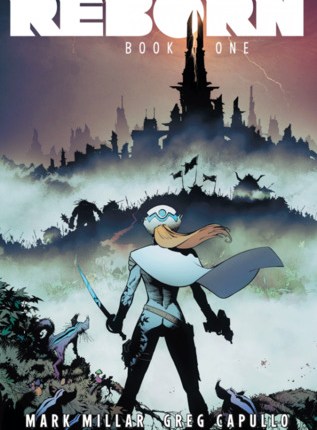
Reborn: Book One by Mark Millar

Reborn: Book One by Mark Millar

Beautiful artwork highlights a so-so story about a woman who dies, only to be reborn into a fantasy-themed world where a perpetual war of good versus evil rages on.

I think the basic idea of this graphic novel is fascinating. What happens to us after we die? We have faith, religion and all sorts of near-death experiences to fall back on, but who can say with any certainty.

From an interview in the back of the book with Greg Capullo, one of the creators: “What I loved about the story is that it deals with all of our fears about what happens when we die, but amidst the fear and the sorrow, we have this spectacular adventure that takes place in a fantastic and exciting world — a world I got to invent.”

Photo by Susanne Jutzeler on Pexels.com

Some of my quibbles with this story include that the good versus evil theme makes all of the characters seem so simplistic. You can predict almost exactly what they’re going to do before they do it — no gray areas. Also, everything is based around Bonnie, one character, and she becomes the savior archetype for the entire tale.

But, on the other hand, if you take this book, as a whole, for a metaphor of what happens after death, it works. Like so many near-death experiences, it all boils down to one view point, that of the newly departed. If you consider it like that, of course the story would be based around one person. She is seeing the next world entirely from her point of view, everything is interpreted through that lens.

It’s a curious phenomena, those who have had NDE’s, generally describe imagery and a storyline that makes sense to them culturally and fits within their framework of faith. Bonnie didn’t want to die, but when she does, she sees a world so similar to where she just came from, except it contains people who have died before she did.

Bonnie’s relationships with the people she knew before her death determine so many of the other character’s roles in the story. She has a curious relationship with the “faerie queen” which I found interesting.

Photo by Ferdinand Studio on Pexels.com

I can’t decide if I’m reading more into this story than is actually there, or if it was actually touching on some of the larger themes I mentioned. As I said, I got bogged down in the predictable characters.

At least the artwork is pretty…

I’m interested to see where Netflix goes with this, as I read in Variety that they’re developing it into a film starring Sandra Bullock.

Thanks for reading!

Bloody Rose (The Band, #2) by Nicholas Eames

Bloody Rose (The Band, #2) by Nicholas Eames

Readers get the opportunity to return to the adventure-filled world of bands and monsters, Grandual, in Bloody Rose. Nicholas Eames second book in The Band series, the sequel to The Kings of the Wyld takes place years after the first book. It follows the exploits of a band called Fable, a bard named Tam and Bloody Rose, the daughter of Golden Gabe, one of the members of a band called Saga, who readers got to know and love in Kings of the Wyld.

The world is on the brink of annihilation, again.

“Hey, did you hear the news? There’s another Horde, apparently. North of Cragmoor, in the Brumal Wastes. Fifty thousand monsters hell-bent on invading Grandual.” pg 5

Photo by Lisa Fotios on Pexels.com

Tam wants to see the world, but her father is a retired mercenary. He doesn’t want Tam to have the life he led, risking life and limb to battle monsters. He also doesn’t want to lose her, like he lost her mother.

“To Tam, there was nothing worse than the prospect of never leaving home, of being cooped up in Ardburg until her dreams froze and her Wyld Heart withered in its cage.” pg 20

Bloody Rose, Gabriel’s daughter, has never quite left her father’s shadow, even though she’s a formidable fighter and bandleader in her own right.

“She’s got something to prove — whether it’s to herself, or her father, or the world in general, I don’t know. I can’t have been easy growing up the daughter of Golden Gabe. The man’s got boots even a giant could wriggle its toes in, but that doesn’t stop Rose from trying to fill them.” pg 63

The other members of Rose’s band include Brune (a shaman), Cura (an inkmage) and Freecloud (a mighty druin fighter). They have their own burdens to bear and shadows to face down. A large part of this story is getting to know them through the band’s adventures.

“And yet here they all were: at the cold edge of the world — each of them vying to be worthy of one another, to protect one another, to prove themselves a part of something to which they already, irrevocably belonged.” pg 265

Photo by eberhard grossgasteiger on Pexels.com

Like the first book, the world has become more civilized and bands fight in contrived battles against captive-bred monsters in arenas to the cheers from bloody-thirsty crowds. It is more show than substance.

“She began to question every song she’d ever heard about heroic mercenaries and vile monsters doing battle on the arena floor. If those so-called battles were anything like the one-sided slaughter she watched from the comfort of the Lair’s armory, then the work of a bard was even more difficult than she’d been led to believe.” pg 103

I enjoyed Bloody Rose, but I missed the characters from the first book. Eames writes an ripping tale, but my favorite parts of this book included cameos (and one rather large story arc) of people from the last one.

That being said, there is still the snappy dialogue, epic fights and breath-stealing finale that characterized Eames’ debut novel. Highly recommended for fantasy readers and I look forward to his next one.

Thanks for reading!

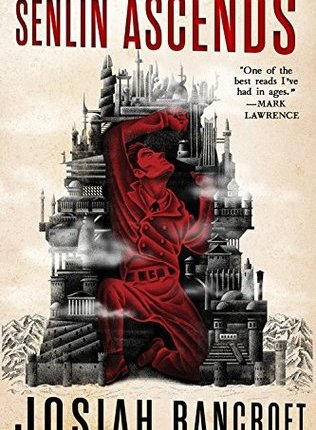
Senlin Ascends (The Books of Babel, #1) by Josiah Bancroft

Senlin Ascends (The Books of Babel, #1)  by Josiah Bancroft

Senlin Ascends is a steampunk adventure novel wherein our hero, Thomas Senlin, ventures into the mythical and massive Tower of Babel to reunite with his new wife and love of his life, Marya.

Sounds simple? It’s not.

Each ring of the tower is a different country with tyrannical and ruthless rulers who run their circle of influence with an iron fist. And as Senlin ascends, the technology becomes more and more advanced to the point where, even to an educated man like Senlin, it looks like magic.

Photo by Pixabay on Pexels.com

“There is a lot of debate over how many levels there are. Some scholars say there are fifty-two, others say as many as sixty. It’s impossible to judge from the ground.” pg 4

And their married life had started out so well…

“Their honeymoon was ruined, that much seemed certain. They would have to fabricate some fable of luxury to tell their friends, and he would, of course, make it all up to her with a quiet weekend in a pastoral cottage, but for the rest of their marriage she would remember what a terrible trial their honeymoon had been.” pg 16

Senlin is no fool in love though. He’s introverted, introspective and thoughtful. His wife, Marya, is younger and impulsive. Together, they make a great team. If only he could figure out which direction she went.

The character of Senlin is one of the delights of this fantasy novel. He’s prickly and doesn’t seem lovable right off the bat. But as you get to know him, you realize, he’s one-of-a-kind.

Photo by Enric Cruz Lu00f3pez on Pexels.com

“The subtext was obvious: Love, pure and eternal, reigned supreme. Senlin did not believe in that sort of love: sudden and selfish and insatiable. … He believed true love was more like an education: It was deep and subtle and never complete.” pg 59

Senlin is still hopeful he’ll find his wife until he discovers what the tower really is and what it does to the unknowing who venture within its walls.

“I am upset because we have pooled out human genius into the building of an elaborate Tower and have filled it up with the same tyrants that have plagued our race since we crawled from the sea. Why does our innovation never extend to our conscience?” pg 142.

Why indeed.

Photo by Navneet Shanu on Pexels.com

Highly recommended for fans of fantasy and adventure fiction. Senlin Ascends is a masterful debut novel and start of a unique series.

Thanks for reading!