The Spiritual Gift of Madness: The Failure of Psychiatry and the Rise of the Mad Pride Movement by Seth Farber

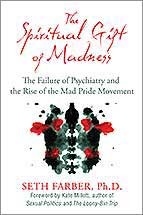
The Spiritual Gift of Madness: The Failure of Psychiatry and the Rise of the Mad Pride Movement by Seth Farber

In The Spiritual Gift of Madness, Seth Farber interviews half a dozen people who have had negative experiences with western psychology as well as experts in mental health. His thesis is the mental health system as it is values medication over other types of therapy and, because of this misguided focus, harms the very people it is attempting to help.

He is a champion of the Mad Pride movement, a group that seeks to celebrate and assist those suffering from mental health issues to embrace who they are rather than medicating it away.

Photo by Engin Akyurt on Pexels.com

“… helping the mad does not mean drugging or coaxing them into a state of “adjustment,” but rather appreciating the state of madness for what it is: an existential clearing in the jungle of our insane modern society that potentially leads into the realm of true sanity, which, in the world today, means a state of creative maladjustment.” pg 124

I should mention that Farber doesn’t use “mad” in a negative way, rather he uses it to highlight how individuals with different viewpoints from the rest of society are marginalized and sedated into silence. He puts forward the idea that insanity is believing everyone must view the world in the same manner or be ostracized for it. He holds up society’s repeated failures to handle issues like global warming to racial and gender equality as evidence of the insanity of the world.

“Now one of the things that’s so detrimental about the hospitalization is the power impact of being treated like a patient – people end up believing they’re chronically mentally ill.” pg 44

Farber believes mental illness is a transition to a new, potentially powerful state of being that, as a modern society, we quash before it’s completed. He points out that many of the great prophets and visionaries from history had, what we would now call, complete breakdowns before their epic breakthroughs.

Photo by Ryan Millier on Pexels.com

“… a few weeks of mania could give one access to a sense of understanding that it could take ‘years of meditation’ to achieve, access to visions of ‘the wholeness’ of the universe and ‘the interconnected nature of love, access to a sense of time and space that allows one to discern what is and what is not important.'” pg 21

Instead of medication and psychiatric facilities, Farber would like to see the creation of safe havens for people going through this process so they could assimilate whatever is going on in their minds before going back to the rest of society. That would be for the experiencer’s protection as well as the public.

I think Farber brings up important issues in this book. As someone who has struggled with mental illness, I’ve viewed the system from the inside and recognize some of the problems he points out. There’s the stigma of the diagnosis and the embarrassment of feeling separated from “normal”. There’s the expectation you will take your meds from the day you’re labeled until you die, no matter the side effects.

But, worst of all, is feeling like you can’t trust what’s going on in your head because it went so spectacularly wrong before and what’s to prevent it from going sideways again.

I agree some changes need to be made to the system and, as a society, perhaps we can do a better job minimizing stigma, maximizing communication, and helping people live in a happy and healthy manner that they choose.

However, I feel like Farber goes too far in his insistence that the “mad” are the future. That somehow they hold the keys to a paradise on earth if only we’d let them share their messages unfettered.

Photo by Oliver Sjöström on Pexels.com

In the midst of my psychosis in 2009, I wouldn’t have wanted any of the nightmares in my head to permanently affect my future or my family. If there are lessons to be learned from it, maybe it’s an individual message for the people undergoing the change rather than expecting it to be universal lessons, applicable for everyone.

But, that’s my two cents. I certainly don’t have all the answers, but The Spiritual Gift of Madness asks some interesting questions.

Recommended for seekers who are interested in a different way to both approach and treat those with mental illnesses or for those who have gone “through the looking glass” and are now viewing the world from the other side, like me and the people in this book and many, many others.

Thanks for reading!

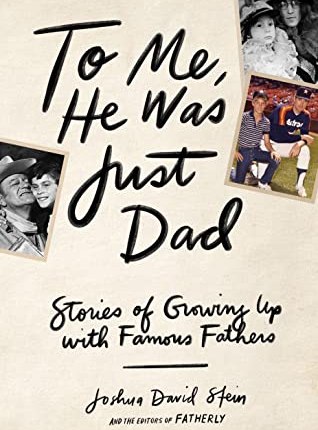
To Me, He Was Just Dad: Stories of Growing Up with Famous Fathers by Joshua David Stein

To Me, He Was Just Dad: Stories of Growing Up with Famous Fathers by Joshua David Stein

To Me, He Was Just Dad is a collection of essays written by the grown children of famous or otherwise notable men. From scientists to musicians, actors to drug lords, the vocations of the featured fathers runs the gamut. There’s even one Catholic priest.

“How wide, we wondered, is the gap between what the public thinks of notable men and what the sons or daughters of those men experience? Do great men make for great fathers?” pg 6

Photo by Ketut Subiyanto on Pexels.com

The essays themselves are intimate portraits into the private lives of all of these people who, because of their success at whatever they chose to do, the world acts like we already “know.” The fascinating part of this book is how little we know them at all.

We venerate famous people. This book is a great reminder that, at the end of the day, they’re just people and put their pants on one leg at a time like the rest of us.

Though, admittedly, some are much more talented at cooking eggs, like Claudine Pepin’s dad, the famed chef, Jacques Pepin“I feel like Papa taught half of America how to make an omelet. He taught me how to make an omelet, too, and also how to walk, ski, and drive (that one was a touch stressful). But one of the most important things he taught me was how to be part of a deep and enduring friendship.” pg 35

Photo by ROMAN ODINTSOV on Pexels.com

Fame is such a strange lens. Through it, some qualities are magnified while others are lost in the glare.

The same is true for infamy. The two who stuck out to me in that particular category were “My Father the Cult Leader, Saul B. Newton” and “My Father the Drug Lord, Pablo Escobar“.

Here’s Newton’s daughter, Esther: “My dad was an amazing, complicated, brilliant individual. It was important to me that he wasn’t remembered only as a nutjob with a cult.” pg 52

Escobar’s son remembers how his father, the drug lord, implored him not to do drugs. He also recalled living much of his early life on the run.

I think the small details add such dimension to these famous lives.

Take, for example, the fact that Evel Knievel, of daredevil fame, didn’t want any of his children to follow in his footsteps because he thought it was going to get them killed. It was fine for him to risk his life, but not ok for his beloved children.

Photo by Mridul Pradeep on Pexels.com

Makes you view him just a little bit differently, doesn’t it? He seems like a multi-dimensional individual to me now and not just a fearless dude on a motorcycle.

Highly recommended for non-fiction readers. This book is a treat.

Thanks for reading!

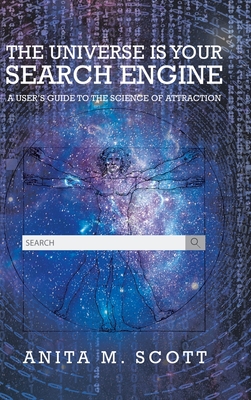
The Universe Is Your Search Engine: A User’s Guide to the Science of Attraction by Anita M Scott

The Universe Is Your Search Engine: A User’s Guide to the Science of Attraction by Anita M Scott

The Universe is Your Search Engine is a new age, metaphysical book with anecdotes, suggestions and exercises to assist readers in utilizing the law of attraction in his or her own life.

Anita Scott compares the law of attraction to a universal “search engine.” What you put in, comes back to you kind of like Google for the mind.

Photo by Pixabay on Pexels.com

“While the Universe’s Search Engine delivers real-life experiences, it is not responsible for your quality of life. You are, because no one else can use your mind to think thoughts. You alone are the thinker of your mind, and it is your thoughts alone that trigger the search and the ensuing return of life experiences.” loc 310, ebook

The book is divided into three sections: the first handles different aspects of the law of attraction from science to energy and quantum physics. The next part goes into metaphysics, the body, purpose and more. The third part is a workbook that ties the first two sections together and is also scattered throughout the text.

“Fighting against what is elongates suffering, makes an issue bigger, and squanders your valuable energy.” loc 428, ebook

Photo by Jill Wellington on Pexels.com

I’ve read quite a few books like this- new age materials that teach your thoughts create your reality. I was honestly surprised how much I enjoyed this version of the teaching.

The publisher sent me an email offering a free digital copy of this book through NetGalley, I didn’t request it. And, I’m going to be blunt here, I was feeling rather unsure about it. I simply wasn’t in the right head space to read and review a new age book. But then, I thought, why not give it a chance and I’m glad I did.

This year, 2020, has been the worst. Prior to this mega-disaster of a year, I would have described myself as someone who created her own reality sometimes successfully, other times not so much, but I felt like I always had at least a glimpse of where my life was going.

This year has changed all of that. Now, I’m not certain I create my reality at all.

Current angst aside, I liked The Universe is Your Search Engine. I liked the empowering messages it shares. I like the exercises that encourage readers to find their purpose, focus their thoughts and joyfully move into a future of their own design.

Photo by Dina Nasyrova on Pexels.com

I’m just not sure I believe in it myself anymore. Maybe I’ll get back there some day.

Recommended for readers and seekers who are looking for information on the law of attraction. Anita Scott has written a beautiful, modern book about it. Give it a shot and see if it’s for you.

Thank you to NetGalley and the publisher for a free digital copy of this book. And thanks for reading!

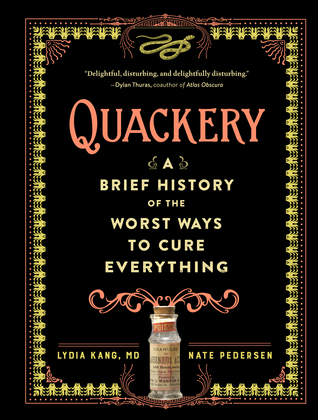
Quackery: A Brief History of the Worst Ways to Cure Everything by Lydia Kang

Quackery: A Brief History of the Worst Ways to Cure Everything by Lydia Kang

Quackery taught me that people have been desperately seeking cures for ailments, real and perceived, for ages. Sometimes that search takes them into disgusting or deadly treatments peddled by others who are taking advantage of that desperation for their own gain.

These human vultures have been called “quacks,” among other things.

Photo by Engin Akyurt on Pexels.com

“But quackery isn’t always about pure deception. Though the term is usually defined as the practice and promotion of intentionally fraudulent medical treatments, it also includes situations when people are touting what they truly believe works.” pg 1

Unfortunately, even those selling the “remedies” with the best of intentions still managed to kill people.

There seemed to be no end to the creative ways we’ve poisoned each other with various metals or concocted deadly and addicting brews in the name of health. We’ve burnt and blistered suffering unfortunates, taken pieces of their skull out to let the evil spirits out of their brains, or ground up human bone and ingested it.

The most disturbing chapter of this book, and there were some serious contenders, was the part about the development of anesthesia.

Photo by Mitja Juraja on Pexels.com

“Several chapters in the annals of anesthesia were written by some hard-partying, borderline sociopathic characters. So the next time you blissfully awaken from a surgery, remember to thank the child-stranglers, sponge-huffers, and ether frolickers of the past.”

Yeah, there have been some awful things done to both animals and people in the name of medicinal research.

The most amusing anecdote in Quackery goes to a section about creative uses of tobacco.

Photo by Aphiwat chuangchoem on Pexels.com

“You know the phrase ‘blowing smoke up your ass’? Well, you can disgust your next blind date with the true life medical origin of that phrase. Because literally blowing smoke up someone’s ass was a sanctioned resuscitation method in the eighteenth century.”

And now you know.

Recommended for readers with a strong stomach who are interested in strange and forgotten medical history.

My book club read this for our June pick but I missed the meeting. I expect an extraordinary conversation was had by all because this book is full of fascinating and disturbing topics of all sorts.

Thanks for reading!

Eight Skilled Gentlemen (The Chronicles of Master Li and Number Ten Ox, #3) by Barry Hughart

Eight Skilled Gentlemen (The Chronicles of Master Li and Number Ten Ox, #3) by Barry Hughart

“My experience with the old man has taught me to keep my mouth shut when the wrinkles around his eyes squeeze up in tight concentric circles, so I waited until his mind relaxed along with the wrinkles, and then he shook himself and turned toward me.” “Ox, have you ever visited the Forbidden City?”

Photo by David Yu on Pexels.com

Eight Skilled Gentlemen is the final book of The Chronicles of Master Li and Number Ten Ox series. I feel it missed the mark somewhat.

Like the previous two books, it has some beautiful imagery and fantastical magic sequences based in an ancient fictional China of Barry Hughart, the author’s, own creation. As usual, I liked the interactions between our two heroes. I also liked riding along while Master Li and Ox attempt to solve the murder mystery.

“All we can do now is go down that list of involved mandarins and find the weak link. You may have you break a few of the bastard’s bones, my boy, but one way or another he’s going to enable us to toss the rest of them in jail,” the sage said grimly.”

Unlike the rest of the series, the overarching story for this entry felt scattered, so much so, that the ending felt almost tacked on. Which seems like a harsh criticism, except those final scenes were my favorite of the book.

Photo by Magda Ehlers on Pexels.com

If only it had felt more connected to the rest of the tale…

Like some of the other readers of this series, I noticed some repetition in Hughart’s storytelling by the third book. Formulaic can still be brilliant, but I’m not certain this book reached that bar.

There was also Hughart’s unfortunate tendency to have his characters launch into song or prose within the story. This should have added to the immersive feeling of the reading experience, but I found myself skimming when I reached those sections. Again, it felt more repetitive this time around than magical.

Adding to my disappointment, Eight Skilled Gentlemen was clearly supposed to be part of a longer series. The final few lines of the book offer no satisfying conclusion for characters whom I have come to love during the 850 pages I spent with them.

The little bit I have researched about the author seems to indicate Hughart had a disagreement with his publisher and then tired of writing it. He passed away in August of last year.

It is incredibly sad because the books are so lovely and Hughart deserved the chance to finish them in a manner he saw fit. I think it’s a loss not just for the author’s family but for the entire fantasy-reading world.

Photo by Magda Ehlers on Pexels.com

In conclusion, if you haven’t read this series and like fantasy, you must give it a try. Just be aware it is a work of art with an abrupt end.

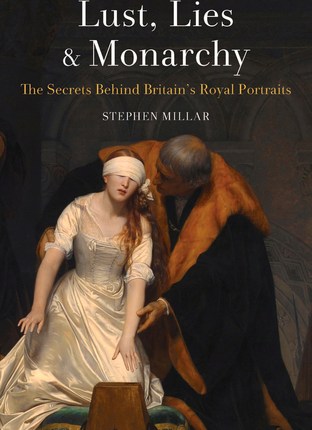
Lust, Lies and Monarchy: The Secrets Behind Britain’s Royal Portraits by Stephen Millar

Lust, Lies and Monarchy: The Secrets Behind Britain’s Royal Portraits by Stephen Millar

Stephen Millar examines British royal portraits and artwork created about royalty throughout history. In examining the small details and the context around the art, he shines the light on so many moments of forgotten history.

Through the strategic use of art, royals have controlled their images and used those images to maintain or increase their power. Take, for example, how the famous portrait of Henry VIII by Hans Holbein the Younger affected viewers:

“Strategically placed in the Palace of Whitehall and measuring three metres by four, the wall painting dominated the privy chamber where it was located. The effect on visitors was dramatic, one writing it was so ‘lifelike that the spectator felt abashed, annihilated in its presence.'” loc 444, ebook

Millar examines postures, costuming, setting and more so readers feel as if they have a new appreciation of these classic works of art. We’re also given an insider’s view and able to appreciate nuances that we might otherwise have missed.

“Why was Holbein’s depiction of Henry so influential? The stance taken by the king in the painting was radical, unashamedly masculine and defiant, with Henry staring directly at the viewer in a way that was highly unusual in royal portraiture in the early 16th century.” loc 457, ebook

My favorite of the art discussions is “The Rainbow Portrait” of Elizabeth I by Marcus Gheeraerts the Younger or Isaac Oliver. There is so much symbolism packed into one portrait. It’s fun to take it all apart.

Plus, Elizabeth I is one of my favorite historical figures. I go on about that in my review of Elizabeth I by Margaret George.

Millar helpfully includes the family tree of the royals every couple of chapters so its easy to keep track of who is who. And after the art, there’s a whole section of walking tours through London. At first, the two parts of the book seem unrelated, but when you go through the tours, you notice that he brought forward some of the history from the art and tied it to real world locations.

Talk about making history come alive.

Highly recommended for fans of history, especially forgotten history. Though some of the figures and events are well known, this book contained a few I had never heard of, which is always exciting to discover.

Thank you to NetGalley and the publisher for a free copy of this ebook.

The Story of the Stone (The Chronicles of Master Li and Number Ten Ox, #2) by Barry Hughart

The Story of the Stone (The Chronicles of Master Li and Number Ten Ox, #2) by Barry Hughart

“Ox,” he said, “the writing of your memoirs is doing wonders for your calligraphy, but I must question the content. Why do you choose the rare cases in which matters run melodramatically amok?” I heroically refrained from saying, “They always do.”

The Story of Stone, Barry Hughart

Master Li and Number Ten Ox are at it again.

There’s an unexplained murder, puzzling fragment of a poorly-finished forgery, and nature herself is leaving clues behind with whole swathes of plants dying in a strange pattern.

Photo by carol wd on Pexels.com

“I wasn’t sure that any autopsy could be delightful, but I didn’t care. The old fire had returned to Master Li’s eyes, and I felt like a warhorse who was being called back into battle.”

In the course of solving the mystery, Li and Ox encounter ghosts, hidden torture chambers, and make a journey down to the depths of hell. It is one of the finest homages to Dante’s Inferno that I’ve ever had the pleasure to read.

“Ox, what do you smell in the air?” he asked. “Wet earth, pine needles, pork fat, donkey manure, and perfume from Mother Ho’s House of Joy,” I said. “Wrong. You smell destiny,” Master Li said happily.

And, as usual, readers get to enjoy the sometimes hilarious, and always entertaining, interplay between a brilliant scholar and his surprisingly strong sidekick.

Recommended for readers who enjoy a blend of fantasy, mystery and historical fiction.

Nobilis by R. Sean Borgstrom, Bruce Baugh

Nobilis by R. Sean Borgstrom, Bruce Baugh

Though not a traditional “book”, the rules and world-building instructions for the fantasy role-playing game, Nobilis, has more than 300 pages in it. And reads like a beautiful work of fiction.

“His eyes open, black as night. A star falls through them. ‘It is strange,’ he says, ‘how humans need but a taste of power to grow arrogant. You walk in a world of things greater than you can imagine, and you speak defiance.”

Nobilis by R. Sean Borgstrom, Bruce Baugh
Photo by Achraf Alan on Pexels.com

The game itself has been labeled so complex that, after reading the rules book, some gamers don’t bother to try it. Therefore, I think it’s fair to rate it on Goodreads where it can be appreciated more for its fantastic literature rather than its playability as an actual game.

“The Imperator Ananda rules Murder, the Infinite, and (some say) the Fourth Age that is to come. His glory is terrible: humans and Powers weak in spirit dare not face him, lest his countenance drive them mad with joy.”

The basic premise is there are major forces behind the every day reality that we all know. These forces are striving to either preserve the universe or end it.

Photo by Engin Akyurt on Pexels.com

They work through intermediaries and lesser servants to influence what goes on in the real world. The point of the game is to create a story with levels and nuances rather than to brute force your will into existence.

“More beautiful than the angels are the Excrucians, whose eyes show darkness full of ever-falling stars. It is said that the Creator bargained with them long ago, that he or she might capture a touch of this beauty in the world of Ygg- and then failed to carry out his or her end of the bargain. It is said that this is why the Excrucians on their pale horses seek the destruction of all that there is…”

Photo by Anastasia Zhenina on Pexels.com

The rules book describes all of these powers in extraordinary detail, or the manner for choosing a custom name and backstory of your own. There’s no limit to what you can create except your imagination.

The players embody the ruling powers and all of their minions simultaneously. So, a game scene can go from the real world, to the divine, to a place where a god resides and back again.

And you begin to see why so few people attempt this game in the first place… 🙂

“Powers bridge divine nature and human nature, the supernatural and the natural. They fight battles on all those levels, facing the challenges of gods and ordinary humans alike. They must learn to move fluidly from a world of spirits and myths to a polluted world of highways and computers, and from their Imperator’s custom reality to the broad Earth.”

Recommended for gamers who are looking for an incredibly detailed fantasy world to romp around in or readers who like open-ended works of fantasy. Beyond simple enjoyment as a game or work of literature, I could see Nobilis being a useful tool as a writing prompt for fantasy authors.

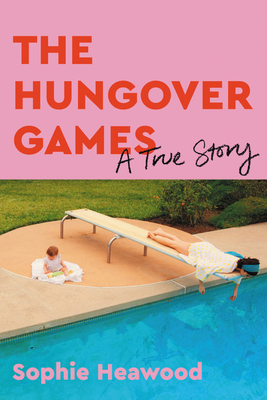
The Hungover Games: A True Story by Sophie Heawood

The Hungover Games: A True Story by Sophie Heawood

The Hungover Games is an amusing and poignant glimpse into the world of a woman who didn’t mean to become a mother, but who found her life’s path when she got there.

“It had all happened by accident. I hadn’t meant to have a baby at all. I hadn’t meant not to have a baby either, by which I mean I always thought I’d have children one day.”

Sophie Heawood

Sophie Heawood was barely scraping by, living from paycheck to paycheck as a journalist in Hollywood. After a misadventure in Mexico, which had nothing to do with her reproductive health, she discovers in a round-about way that if she ever does decide to have children, it may be impossible without fertility treatments.

“In my life, it was as if I was the captain of a magnificent ship but was somehow, always, at this moment, just this one perpetual moment, in a dinghy buffeted about in the ship’s wake, always about to catch up with myself. Up ahead on the magnificent ship, I was organised and sober and slim and shiny-haired, all of which was always coming soon, like a trailer in the multiplex that ran in my head twenty-four hours a day.”

Photo by Lukas Kloeppel on Pexels.com

But she never seemed to get there.

And then, after a one-night stand with the man she had been one-night-standing with for years, Heawood becomes pregnant. What happens next, her journey into parenthood but also the adjustment of dreams she held her entire life, is a fantastic story.

I think part of what I enjoyed so much about this book is the nature of Heawood’s job. In the short time I spent as a reporter, I loved talking to people, learning what they had to teach me about life, and seeing who they really were behind whatever public persona they were projecting.

Heawood had the opportunity to interview Hollywood A-listers and she gives you an inside view of what that was like. Goldie Hawn, Jodie Foster, and Amy Adams are a few of the names who pop up in the memoir.

In addition to the peek behind the curtain into the mystical world of Hollywood fame, Heawood doesn’t shy away from faithfully recording the sometimes harsh reality of becoming a parent.

“My introduction to being a mother involves being told off by other women, again and again. Told that I am not doing it right, that there are rules. … When I do get home, it only takes me a couple of weeks to recover from the surgery, but it takes me about a year to recover from the few days in the hospital when I was supposed to be recovering, and to regain the caring instincts to protect this tiny creature, the ones that were crushed before they had even dared to begin.”

Photo by Pixabay on Pexels.com

She faces difficulties not just with the newness of being a parent, but from her path as a single mother. Heawood has trouble finding housing as a single mother and going to prenatal classes alone. In this life transition that can be difficult at the best of times, she faces it on her own.

But her attitude is not woe-is-me. Heawood keeps the positive and empowered spin up throughout most of her challenges and, when she can’t manage it, she still appreciates the gift she has been given through her relationship with her daughter.

I enjoyed this memoir very much and read it in about two sittings. Recommended for readers who enjoy humorous memoirs about parenthood, Hollywood, dating, night-clubbing and the inevitable spiritual evolution that comes from finding the place in life that you were always meant to be.

Thank you to NetGalley and the publisher for a free advance reader copy of this book. The brief quotations cited in this review may change or be omitted in the final print version.