Witches Abroad (Discworld, #12; Witches #3) by Terry Pratchett

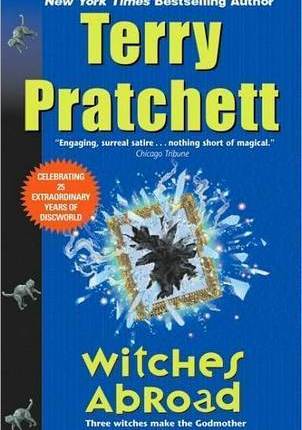
Witches Abroad (Discworld, #12; Witches #3) by Terry Pratchett

When Magrat is designated as the next Fairy Godmother (a legacy from her mentor), Granny Weatherwax and Nanny Ogg feel compelled to help her straighten out the troubles of her new fairy goddaughter.

“I don’t trust that wand,” said Granny. “I looks wizardly to me.” “Oh, come on,” said Magrat, “generations of fairy godmothers have used it.” pg 47

Photo by Ksenia Chernaya on Pexels.com

Unfortunately, the city where this young woman resides is quite far away. That means a roadtrip- something that some of the witches tolerate better than others.

Complicating matters is the fact that Fairy Godmothers always come in pairs, a good one and a bad one. We all know that Magrat is good so…

The other Godmother works her magic through the power of stories. She may have some unique ideas about what constitutes a happy ending.

“People think that stories are shaped by people. In fact, it’s the other way around. Stories exist independently of their players. If you know that, the knowledge is power.” pg 8

Photo by Suzy Hazelwood on Pexels.com

Terry Pratchett has crafted three unforgettable characters in the witches. Their traveling, as well as evil-fighting, hijinks are amusing, like in the previous entries in this series.

But let’s talk about Magrat for a minute.

“Magrat would be the first to admit that she had an open mind. It was as open as a field, as open as the sky. No mind could be more open without special surgical implements.” pg 28

Though he’s writing it humorously, the elder witches constantly bully Magrat not only for her youth but also for her progressive ideas about what witchcraft should be. In addition, her open-mindedness makes her a target for derision.

Despite her efforts to look mysterious through the use of various pieces of “occult” jewelry, Magrat is teased by other characters (and the narrator) for her funny hair and ridiculous appearance.

It makes me want to reach through the pages and say, just lay off her already, people. She’s trying to do the best she can with what she has, where she’s at. Can’t say the same for everyone else here.

Photo by Valeriia Miller on Pexels.com

“There’s nothing wrong with happy endings,” said Magrat hotly. “Listen, happy endings is fine if they turn out happy,” said Granny, glaring at the sky. “But you can’t make ’em for other people…” pg 103

The denigration of Magrat makes me view the other characters negatively. Because, even though Granny and Nanny are considered experts in witchcraft as well as wise (in their respective spheres), I don’t think they’re worthy of respect from others when they treat their young colleague like garbage.

I’m not sure why this dynamic between the witches is bothering me more on the second read-through than it did the first, which was eight or so years ago. But it does.

I still consider Witches Abroad an excellent read when I look past the treatment-of-Magrat issues. Highly recommended for readers who enjoy humorous fantasy.

Thanks for reading!

Why Good People Do Bad Things: Understanding Our Darker Selves by James Hollis

Why Good People Do Bad Things: Understanding Our Darker Selves by James Hollis

“Expressed in its most functional way, the Shadow is composed of all those aspects of ourselves that have a tendency to make us uncomfortable with ourselves.” pg 9

Jungian analyst James Hollis examines “shadow work” from the perspective of an individual to couples then communities and all the way up to the collective unconscious.

He’s at his best when he’s illuminating how the Shadow works at an individual level. When he goes beyond that into couples or groups, I thought he began to generalize to the point where the book was no longer helpful on a practical level and moved more into the realm of philosophy.

Photo by Sunsetoned on Pexels.com

Hollis brought the book back into the self help genre by providing a final chapter full of questions for “reflection” by the reader. The purpose of this inner gazing is not just self knowledge, says Hollis, but also wholeness at a soul level.

“This book operates from a central thesis that is relatively unknown to the general public but is a truism for depth psychology, namely, that the human psyche is not a single, unitary, or unified thing, as the ego wants to believe. It is diverse, multiplicitous, and divided… always divided.” pg xi, preface.

I read Why Good People Do Bad Things in conjunction with a philosophy class off of The Great Courses Plus (Wondrium) called “Understanding the Dark Side of Human Nature” by Daniel Breyer. The two complemented each other quite well.

“Can the reader imagine that something inside you wishes to ‘talk’ to us? As a result of this conversation, consciousness is strengthened, new energies are available, and each person lives a richer life, one that is more authentically one’s own.” pg 192

Photo by Bianca Salgado on Pexels.com

This isn’t what I would call a ‘fun’ read. In fact, I had to take Why Good People Do Bad Things in sections, put it down for awhile, and come back to it, again and again.

I don’t mind self knowledge. I’ve done dozens of meditations where I look at aspects of myself and come back with a different understanding of who I am than before I started.

The difficulty is looking into the bits that I don’t want to see. Like I said, I can manage it in small doses. It isn’t somewhere I’d want to live.

It is understandable why so few attempt Shadow work. It is much easier to scapegoat others, blame, and feel superior to them.” pg 203

Photo by Umberto Shaw on Pexels.com

Recommended for any seekers who are looking for a psychologist’s take on Shadow work. This book might be the push that you need to brave that darkness. But beware, there’s someone in there who may have been waiting to talk to you for a long time and you might not like what they have to say.

Thanks for reading!

Battle Ground (The Dresden Files, #17) by Jim Butcher

Battle Ground (The Dresden Files, #17) by Jim Butcher

I saw her study my face and then ask, “How bad does it have to be for you not to be making jokes?” pg 3

The last book in the series, Peace Talks, set up the epic battle for Chicago between the wizard Harry Dresden and his various allies against a relic of the old world and her vassals.

Jim Butcher delivers that battle in a very major way in Battle Ground.

“I hadn’t even seen what was coming for Chicago, and I was already bloodied and exhausted. This was going to be a long night.” pg 17

Photo by Alex Powell on Pexels.com

As per usual, Butcher is heavy on the puns and pop culture references, but I thought he did a fantastic job with this installment. Long-time readers of the series get to enjoy scenes from characters who haven’t made an appearance for awhile.

There are also some serious consequences from this book which, I thought, would have made an epic conclusion to the whole thing. However, Butcher teases more to come at the end of the novel, so I suppose it will continue.

“But whatever happened, after tonight there would be walls coming down between the mortal world and the supernatural one that had stood solidly for centuries. Stars and stones, I didn’t think anyone knew what that might mean.” pg 72

Photo by Laker on Pexels.com

Which I’m not opposed to. You’d think I’d be sick of Harry Dresden and his constant, and ever increasingly powerful, problems. But I’m not. I enjoy this urban fantasy series very much.

Part of that is because of the writing and the characters. Despite the fantasy setting, Butcher manages to make everybody feel very real. I like to imagine that if magic were real, that it would function similarly to how Butcher has crafted it in his books.

The other reason I probably enjoy it so much is because I’m a big nerd. Whenever Harry gets into a bind and makes a cheesy joke to relieve his tension, I always get the feeling that I’d do something similarly silly. When the end of the world is staring you in the face, what else is there to do but smile?

Photo by Matheus Bertelli on Pexels.com

Battle Ground is a must-read for fans of the series. If you haven’t read any of the other books yet, please do yourself a favor and start from the beginning.

Thanks for reading!

1Q84 by Haruki Murakami

1Q84 by Haruki Murakami

Things are not what they seem, Aomame repeated mentally. “What do you mean by that?” she asked with knitted brows. pg 28, ebook

Yes, what do you mean by that, I found myself asking over and over throughout 1Q84, my first foray into Haruki Murakami’s fictional works.

A few years ago, I read and enjoyed Murakami’s What I Talk About When I Talk About Running, a non-fiction book about the author’s creative process and long distance running habit. The way his mind works is fascinating.

He talks about how writing a novel is like participating in a marathon. It takes effort and discipline to go from page one to the end. In addition, the break throughs that he makes in his writing he attributes, in part, to the flow state he experiences during his physical exertions.

Photo by Samuel Silitonga on Pexels.com

This creates a detail-filled and highly introspective world in his novels that some readers can’t get enough of.

But that approach didn’t appeal to me in this book.

The story develops slowly, so so slowly. We are in the characters’ minds for nearly every thought. We learn their eating and drinking habits, sleeping problems, past history, sexual preferences ad infinitum.

The magical realism portions of the story, my favorite parts by the way, were fleeting and infuriatingly uninformative. This is another draw, or so I have gathered, for some readers who like having major unanswered plot points by the end of the story.

This could lead to some interesting book club meetings, but I’m not one of those readers. If you’re going to tell a story, for heaven’s sake, tell the story.

Photo by JV Buenconcejo on Pexels.com

On one hand, the introspective nature of the storytelling gives deep insight into the characters. By the time you’re through, you feel like you could write what Tengo and Aomame are going to do next. It is introversion to the extreme. On the other hand, it crushed my interest in caring what was going to happen next.

Why? Personal preference, I suppose.

Legions of readers love this book. I’m curious as to why, but it might be as simple as how readers like to experience and absorb stories.

Final note: Trigger warnings for domestic violence and sexual abuse.

On Having No Head: Zen and the Rediscovery of the Obvious by Douglas E. Harding

On Having No Head: Zen and the Rediscovery of the Obvious by Douglas E. Harding

Douglas Harding had a strange experience when he was a young man. As he was hiking in the Himalayas, Harding had a moment he would later describe as of “no thought”, and where he perceived his body as having no head. In addition, he had a vision of his body as a house with a single window, but inside the house, there was nothing looking out at the world.

That nothingness is where Harding envisioned his consciousness resides.

Trippy, I thought. If that had happened to me, I might have been pretty freaked out.

Photo by Asep Syaeful Bahri on Pexels.com

Not necessarily so for Harding, who described the experience as incredibly peaceful and enlightening. When he came back from this experience, he applied his insight to various Eastern schools of philosophy, notably Zen.

The result is this book- a discussion of not only what happened to him, but an examination of consciousness itself. Where does consciousness reside? Where is the ‘me’ of our constant thoughts and emotions?

It’s somewhat of a winding path to get there, but Harding eventually points to the idea that consciousness is space in which reality is perceived.

When I first hopped into this book, I thought, how ridiculous. We all have heads attached to our necks. We can see them and feel them. Not only that, we can see and feel the heads of other people if we really wanted to.

Photo by Gabby K on Pexels.com

Harding takes this idea of ‘seeing’ and ‘touch,’ and questions what it is that people actually perceive. Yes, he says, you can see your head in a mirror. But that is a reflection of your head and not the head itself.

Everybody says these constructs are the thing itself. However, as Harding points out, they’re not really, are they? If you look down your own face, you can usually ‘see’ your nose as a series of splotches and shapes. Is that your nose though, or just splotches?

And he goes on from there.

By the end of the book, I was nodding my head a little and felt like I could understand something of what he was saying. But now that I’m trying to write a portion of it down, it just sounds like nonsense.

Photo by Olya Kobruseva on Pexels.com

Perhaps this is a book to be experienced rather than described. Rather, I might humbly suggest, like consciousness itself?

Recommended for spiritual seekers or anybody who enjoys pondering koans.

Thanks for reading!

Wyrd Sisters (Discworld, #6; Witches #2) by Terry Pratchett

Wyrd Sisters (Discworld, #6; Witches #2) by Terry Pratchett

Granny Weatherwax, Nanny Ogg, and Magrat are not witches who meddle in the affairs of a kingdom- there’s rules against that, after all. But then one stormy night, when they’re having a simple coven meeting, a desperate and pursued royal courier hands Granny a baby.

Now, some of the rules might have to be broken.

Photo by Thirdman on Pexels.com

“The child gurgled in its sleep. Granny Weatherwax didn’t hold with looking at the future, but now she could feel the future looking at her. She didn’t like its expression at all.” pg 13

I first read Wyrd Sisters in April 2014 as part of a general read-through of the Discworld series (which I didn’t finish, but that is neither here nor there.) Now, I’m going back and reading the Witches series on its own which sits comfortably within the larger collection.

They’re quite good, of course.

“As the cauldron bubbled an eldritch voice shrieked: “When shall we three meet again?” There was a pause. Finally another voice said, in far more ordinary tones: “Well, I can do next Tuesday.” pg 1

Photo by Hashtag Melvin on Pexels.com

The three witches, as well as the ancillary cast of humorous and villainous characters, are a delight to read and really make the story. Terry Pratchett’s tone goes deftly from playful to quite serious and back again as Granny Weatherwax practices her ‘headology’ or Magrat, the youngest witch of the three, accidentally finds romance.

“Extremely worrying developments of magical tendency are even now afoot,” she said loudly. pg 62

Something that I didn’t mention in the last review, but struck me again on the re-read, was the excellent development of the mad Duke and his evil Queen. These are not simple, two-dimensional villains. These are complex characters with neuroses and nightmares and nefarious histories.

Photo by Phil on Pexels.com

The reason why I was so surprised by the ending of the story on the first read-through was the fate of the villains. Which they entirely deserve, I think, but was creative enough that I didn’t see it coming.

Highly recommended for readers who love light-hearted fantasy and humor.

First review: April 2014
This was a fun read. Pratchett takes the witch stereotype and bends it. We are reintroduced to Granny Weatherwax, the wise witch from Equal Rites. I liked her in that tale and I enjoyed seeing her again. Her character had time to be fleshed out even more and it’s a delight.

The ending to this novel really managed to surprise me. I was expecting a completely different ending but I loved Pratchett’s invention even more.

My favorite part of this story was Granny’s introduction to theater performance. The whole scene is incredibly funny but also integral to the plot so it wasn’t just tacked on like an after thought.

Overall, it’s an excellent fantasy. No one can write quite like Terry Pratchett.

Thanks for reading!

Cutting Into the Southern Domain (I Shall Seal the Heavens, #2) by Er Gen

Cutting Into the Southern Domain (I Shall Seal the Heavens, #2) by Er Gen

“In the Cultivation world, respect is delivered to the powerful.”

Meng Hao, the failed scholar turned spiritual cultivator, continues his quest to become the most powerful magical practitioner in the Southern Domain.

Photo by Clive Kim on Pexels.com

Shedding his old identity and values, Meng Hao is becoming someone even his old sect members do not recognize. By utilizing secret methods, he has created a source of power within himself that is an anathema to the will of the heavens.

But he no longer cares. Because even though these methods are forbidden, it has brought Meng Hao incredible power. And that, for now, is his ultimate goal.

Despite the epic storytelling potential of I Shall Seal the Heavens, my complaints with the last book continued in this one- the repetition, predictability, and the slow slide of the hero into deeper darkness rather than enlightenment.

Photo by Elias Tigiser on Pexels.com

I keep wondering if that isn’t the point of these books, the idea that even the spiritually inclined among us can become corrupted in their search for power over themselves and others. If that is the case, Er Gen is taking readers there, but incredibly slowly.

The manner in which the author depicts women in this world is particularly troubling to this female reader. In addition to making the women all about their appearance, every one Meng Hao meets inevitably falls in love with him despite his egregious and sometimes abusive behavior. It definitively fails the Bechdel Test.

I think the most engaging characters in Cutting Into the Southern Domain aren’t human. Readers are introduced to a ferocious spirit creature as well as a chatty mystical shape changer. The lightness they bring to the table doesn’t offset the otherwise repetitive and depressing nature of the story, but they help.

Photo by Ryutaro Tsukata on Pexels.com

I hope the next book moves out of the themes the author has fully explored in the first two book entries in the series. The world he has built is so fantastical and full of potential. It’s just a shame it isn’t a better story.

Only recommended for fans of the genre.

Thanks for reading!

Fluent in 3 Months: How Anyone at Any Age Can Learn to Speak Any Language from Anywhere in the World by Benny Lewis

Fluent in 3 Months: How Anyone at Any Age Can Learn to Speak Any Language from Anywhere in the World by Benny Lewis

Fluent in 3 Months is a self help guide for anyone who aspires to speak more than one language.

Though it’s mainly filled with common sense ideas, I liked how the author, Benny Lewis, put it all together.

Lewis begins by sharing his own life experience with readers- that he felt he failed in his early attempts to learn another language through the traditional method of high school class. He also details how he spent six months in Spain with the idea that he’d absorb language like a sponge but then didn’t learn any Spanish.

Photo by RODNAE Productions on Pexels.com

The reasons why he feels like he was unsuccessful, because he was lacking the passion to learn and also didn’t speak the language to native speakers, are his main suggestions for language learning in this book.

“When it comes to language learning, there is no room for doubt: you decide your own success.” pg 24

Beyond those two main tips, Lewis shares shortcuts for learning tons of vocabulary quickly (visualization methods) and practicing immersion without going to the actual country. The latter, as he points out, has been made much easier since technology has brought distant countries into the comfort of your own home.

Through Skype calls or internet programs or even Netflix, language learners can interact with and immerse themselves in their target language.

Photo by Anna Nekrashevich on Pexels.com

“You must speak the language with other human beings.” pg 87

The task facing language learners has now become putting in the work to do so rather than traveling the distance for the opportunity.

I think Lewis is on to something with his insistence on speaking your target language from the start.

“As a result of speaking the language right away, students start to acquire the language rather than learn it as they would other academic subjects.” pg 6

I have a friend who’s niece majored in Spanish. But when they visited Spain together, she lacked the confidence to speak it when ordering dinner.

Photo by Adrianna Calvo on Pexels.com

If, from the first stages, learners were able to clear that initial hurdle, day-to-day use, and the successive ones of perfectionism or uncertainty, I agree that the whole language learning process would flow more easily.

Because, as Lewis points out, language is meant for communication with others. We’re rather missing the point if we acquire skills on paper that can’t be put to real life use.

Highly recommended for language learners of any age.

And thanks for reading!

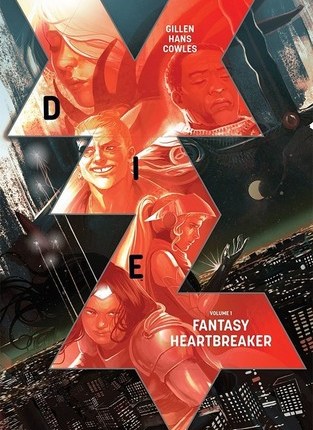
Die, Vol. 1: Fantasy Heartbreaker by Kieron Gillen, Stephanie Hans

Die, Vol. 1: Fantasy Heartbreaker by Kieron Gillen, Stephanie Hans

In Die, six teens enter a fantasy role-playing game, disappearing from the mundane world for two years. When they reappear, they are missing one of their members and carrying scars, both physical and emotional, from their ordeal.

Fast forward twenty five years, and a blood stained die shows up on someone’s birthday, mirroring the date when they last entered the game. The group has to face the fantasy world that has given them nightmares for decades in order to put the past to rest. But some things are easier said than done.

Readers of this series seem heavily divided on its quality. I thought it was brilliant.

Photo by Armando Are on Pexels.com

This isn’t because of the fantasy elements which, as many have noted, rely heavily on tropes and the established world building of touchstone series like The Lord of the Rings and The Chronicles of Narnia.

What I loved was the character development and its relatability for aging gamers.

The author shares a series of essays in the back of the graphic novel about the development of the story and characters as well as their associations with classic rpgs. He nails the reasons why I loved the book so much:

“… the simple idea of six forty-something adults contrasting their teenage fantasies with the realities of where their lives ended up. It’s a pure midlife crisis scream of a book. And the bit that got me? The idea that maybe part of me did disappear into a fantasy world at the age of sixteen and never came out.”

In the hero’s journey, we venture forth into trials and return changed but bearing gifts from the experiences we went through. That format- there and back again- seems so clear cut and simple in many of the “through the looking glass” fantasy stories.

Photo by Thiago Matos on Pexels.com

It is not so simple in this one.

In Fantasy Heartbreaker, the journey isn’t finished when the characters return to where they started and they aren’t bearing gifts, but a curse. It is only through the natural passage of time and the development of the adolescent into the adult, that the heroes in this story can finish their journey or, unbeknownst to them, begin an entirely new one.

This delayed emotional development speaks to any manner of gamers, both video or tabletop, who may find themselves, for a variety of reasons, gaming with a dysfunctional group of people over and over again each week. Perhaps this is because there are only a few people in their lives who love to game as much as they do.

For whatever reason, from the outside, such intense and conflict-prone relationships can seem confusing at best or borderline abusive at worst. But from inside the group itself, the bonds created through the traversing of realms of the imagination and overcoming obstacles as a team are real and important.

Photo by Plato Terentev on Pexels.com

The members of the group form a family of sorts- one that they chose rather than one they were born with. It can be beautiful but bewildering. Something that one has to experience to truly understand.

Sort of like visiting a different world, and never really coming home again.

In addition to the peek into gamer culture, the artwork in Fantasy Heartbreaker is gorgeous, one of the most beautiful I’ve ever seen in a comic.

Highly recommended for readers, and gamers, who like fantasy graphic novels.