The Wild Woman’s Way: Unlock Your Full Potential for Pleasure, Power, and Fulfillment by Michaela Boehm

The Wild Woman’s Way: Unlock Your Full Potential for Pleasure, Power, and Fulfillment by Michaela Boehm

“This book is a call to come back to our wild, undomesticated ‘original nature,’ which, combined with an untamed heart, knows what is true for each of us. It is a call to return to the inborn genius that guides our passion, whispers in our ear with longing, and reveals itself abundantly when we allow our bodies to show us the way.” pg 8, ebook

Michaela Boehm utilizes her years of therapeutic practice and tantric training in this self help book designed for the modern woman.

Photo by Gabriela Cheloni on Pexels.com

There are so many choices and life paths from high-powered careers to motherhood, that many women try to do it all.

“The good news: amidst such a multitude of options we are free to choose what resonates with us. The bad news: it’s confusing, overwhelming, time-consuming, fraught with many pitfalls, and requires constant discernment.” pg 9, ebook

It’s not possible to do and have it all, Boehm writes, and while they attempt it, women cut themselves off from their sensual natures. She has written this book to give women practices and rituals to bring them back from this disconnection into the power and knowledge of their bodies.

Photo by Maria Orlova on Pexels.com

“Relaxing the body; engaging with life, beauty, and nature; and gentle, nonlinear movement and dance are some of those physical practices we’ll be engaging in throughout this book.” pg 34, ebook

I didn’t connect with all of Boehm’s writing, but I have begun to practice a version of her “formless dancing” every day. The practice itself is simple. Turn on music with no words and a beat, and move your body however it feels like moving. It’s designed to release tension and unconscious clenching that happens when one becomes disconnected from their physical form.

“Once you understand your own reasons for any numbness, tension, and strain that you may carry in your body, you can easily undo the related habitual body patterns and restore yourself to a state of pleasurable aliveness and sensual well-being.” pg 50

Photo by Engin Akyurt on Pexels.com

I find it extremely relaxing. I probably look mad, shimmying and bouncing and swaying around, but it feels really good so who cares. 🙂

Highly recommended for readers looking to reconnect with their body’s innate intelligence or who are interested in different spiritual practices.

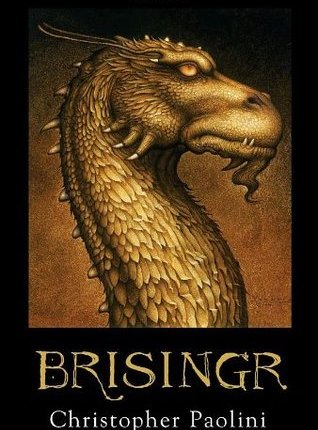
Brisingr (The Inheritance Cycle, #3) by Christopher Paolini

Brisingr (The Inheritance Cycle, #3) by Christopher Paolini

In Book 3 of The Inheritance Cycle, our hero Eragon and his numerous allies continue to inch their way towards the final confrontation with Galbatorix and his dragon, Shruikan.

Photo by Dapo Abideen on Pexels.com

Unlike the first two books in the series, I felt Paolini’s pacing was off. Everything is moving much too slowly. And then, when one of the leaders of the Varden sends Eragon off on a secret mission after the armies finally begin engaging each other, I actually groaned. 

Yes, I realize there’s more to this fantasy story than endless battles and sieges. But they’re the fun part!

I also realize that I’m not the intended audience for this series, crafted for young adults. But that’s never stopped me from reading a book that looks entertaining. And these targeted young adult readers deserve better plot development than the sudden appearance of ancient artifacts or obscure dragon anatomy that changes the entire course of the story in the final chapters of a 600+ page book.

Photo by Pixabay on Pexels.com

I think that is my main quibble with this series. It was written over such a long period of time that Paolini wasn’t able to build levels into his tale with foreshadowing. Important elements like Eragon’s mysterious parentage feel almost tacked on or added as after thoughts.

On the other hand, I do like the way Paolini has continued to develop the Rider/dragon relationship between Eragon and Saphira and her growing maturity as a character. And, despite my complaints with some story elements and pacing, I will continue on to the final book in the series.

I hope he does the ending justice.

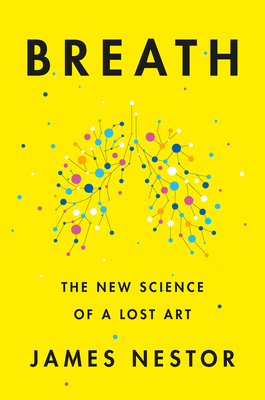
Breath: The New Science of a Lost Art by James Nestor

Breath: The New Science of a Lost Art by James Nestor

James Nestor takes a deep dive into the fascinating and surprisingly mysterious world of breathing. “How mysterious could it be, Heidi?” I hear you ask. It’s something everyone does without thinking literally a few times every minute every day of their lives.

Photo by Daisa TJ on Pexels.com

Well, there’s a lot of mysteriousness, as Nestor discovered through his journey from terrible breathing to consciousness-shifting, bone-building, better breathing.

“I do as instructed, and listen as the rushing wind that was pouring through my lungs suddenly stops and is replaced by pure silence, the kind of jarring quietude a skydiver feels the moment a parachute opens. But this stillness is coming from inside.” pg 143, ebook

He talks to researchers and mystics from around the globe to access both cutting edge research as well as ancient teachings from such exalted texts as The Upanishads.

What he’s discussing here isn’t new, but it feels new, perhaps because of the chronic disconnect between the mind and body that seems to haunt modern humanity.

Photo by Craig Adderley on Pexels.com

From breathing slower to exhaling more, the dangerous of mouth breathing and the astonishing connection carbon dioxide inhalation has to panic attacks, there’s a lot to explore.

And, despite all of the observed benefits and ten years of extensive research, Nestor doesn’t forget to mention that breathing isn’t a panacea. I appreciated that part as well.

“… what I’d like to make clear now, is that breathing, like any therapy or medication, can’t do everything. Breathing fast, slow, or not at all can’t make an embolism go away. … No breathing can heal stage IV cancer. These severe problems require urgent medical attention.” pg 184-185, ebook

Photo by Daria Shevtsova on Pexels.com

I bookmarked all of the exercises Nestor gathers together from the text and lists at the end of the book. Each has similar yet slightly different affects according to practitioners of the methods. I may have to try every one to see for myself.

Highly recommended.

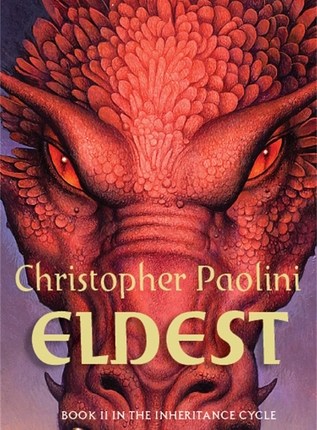
Eldest (The Inheritance Cycle, #2) by Christopher Paolini

Eldest (The Inheritance Cycle, #2) by Christopher Paolini

Eldest is an enjoyable follow up to Eragon, a fantasy tale about a young man, his dragon, and a desperate fight to save the world from an evil immortal.

The best part about this entry of The Inheritance Cycle is that portions of it follow Roran, Eragon’s non-magical cousin, as he struggles to keep his village alive during the fall out of Eragon’s actions from the previous book.

“As he walked, he continued to order his thoughts. After Garrow’s death, Roran had abandoned his job at Dempton’s mill in Therinsford and returned to Carvahall.” pg 37, ebook

Photo by Spencer Selover on Pexels.com

I’ve often wondered about the relatives and neighbors of the magical heroes that are featured in most fantasy tales. What happens to them while earth-shattering events are going on, rings are being melted, and orcs, or ‘urgals’ in this tale, plunder and pillage?

Eldest begins to tell that forgotten story through Roran’s eyes.

“After the last mournful note faded into silence, family members praised the feats and traits of those they had lost. Then the bodies were buried.” pg 111, ebook

Photo by sergio souza on Pexels.com

Christopher Paolini writes at a pace that engages younger readers but doesn’t leave adult readers, like myself, wanting more depth. He carefully constructs scenes and backstories for characters with enough context to make you care about what happens next.

“A tingle of awe and joy shuddered along Eragon’s spine. This was where he belonged, as a Rider. Of all the things in Alagaesia, he had been lucky enough to be joined with this. pg 132, ebook

A funny quibble I have with this book, like in the last one, is I don’t particularly like how Paolini writes the character of Eragon’s dragon, Saphira. He makes her out to be occasionally insecure or jealous, and I’ve always pictured dragons as wise, free and powerful spirits of nature. But those are my preconceived visions of what dragons should be like and I understand how not every reader will have my sort of view on the matter.

Photo by Lachlan Ross on Pexels.com

I also don’t like Paolini’s take on elves. In some ways, the elves in Eldest come off as pretentious and pompous jerks. I get that he was going for a type of removed, immortal elegance, but it didn’t quite work for me.

All that being said, I will be continuing on to the next book. Young adult fantasy readers will most likely enjoy this read too.

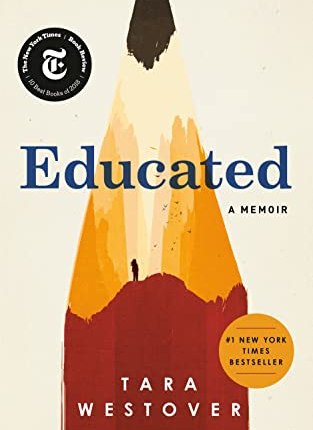
Educated by Tara Westover

Educated by Tara Westover

Educated is a gripping memoir by Tara Westover about her unconventional upbringing in remote Idaho, how she left that life, and discovered both physical and emotional freedom through a world class education.

“(My father) never told me what to do if I left the mountain, if I crossed oceans and continents and found myself in strange terrain, where I could no longer search the horizon… He never told me how I’d know when it was time to come home.”

Photo by Bri Schneiter on Pexels.com

This not a simplistic life story and Tara takes the time to look at what happened as truthfully and clearly as she can. This has led her to some difficult conclusions.

For example, Tara’s father embraced a survivalist lifestyle not only because of his religious convictions, but also because of a deep-seated paranoia. It wasn’t until Tara attended a college level psychology class that she realized her father’s particular way of thinking could be indicative of a mental disorder.

In addition to his erratic and paranoid behavior, the conservative nature of her father’s view on the roles for women has had a long-lasting impact on Tara. It led her to minimize physical abuse that took place in her childhood home as well as struggle to find her own place in the world. And, until a life-changing accident affects her father’s health permanently, Tara never saw her mother as an equal in her parents’ relationship, which, in turn, seriously affected how she viewed herself in relationship to the people around her.

Photo by Rachel Claire on Pexels.com

All of the various events and family members Tara describes have far reaching consequences for her eventual life away from her family’s mountain home. Her journey from the past to the future was extraordinary and makes for a great read.

I had heard a lot of bookish chatter about Educated over the last two years and was skeptical about how good it might actually be. Those fears were ill founded- I thoroughly enjoyed this memoir, reading it in only a handful of days. I highly recommend it.

There are some trigger warnings for readers who have struggled with mental disorders or been victims of physical abuse. This book also contains some slightly graphic descriptions of life threatening injuries.

A Golden Fury by Samantha Cohoe

A Golden Fury by Samantha Cohoe

“Do you think I do not know why you wish to send me away? But I will not let you, not when we are near to making the White Elixir! I will not be erased from our achievement!”

Photo by Designdrunkard on Pexels.com

Thea has worked her entire life in her mother’s alchemist laboratory. Now, she’s in love with a former apprentice and ready to begin a laboratory of her own, but her mother is acting strangely. Could it be because her mother is near to the breakthrough of a lifetime or is she having a breakdown? Thea is going to find out.

This young adult, coming-of-age story weaves alchemy and romance in a slow paced foot race to a predictable ending.

The thing that I find so compelling about alchemy, which I felt the author didn’t use to its maximum effect, is the spiritual side of the practice. Perhaps, historically speaking, most concerned themselves with alchemy for its elusive promises of immortality and unending wealth. But it is the spiritual treasures of the practice that most interest me and that I feel have the most untapped storytelling potential.

Though there were a few spiritual elements in A Golden Fury, I wanted there to be much more.

Photo by Matheus Bertelli on Pexels.com

“The Philosopher’s Stone gave everything humankind wanted but did not believe we could have in this life. With such a reward, it was not hard to see how so many great minds had wrecked themselves in its pursuit.”

To be fair, I think the intended audience for this book is younger than I am. However, I believe even young adults can appreciate a story with a little more complexity than A Golden Fury dishes up, especially in the development of the main character, Thea, and the various antagonists.

Thank you to NetGalley and the publisher for a free digital copy of this book.

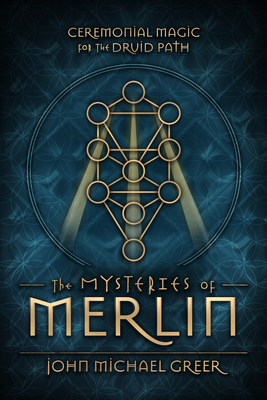
The Mysteries of Merlin: Ceremonial Magic for the Druid Path by John Michael Greer

The Mysteries of Merlin: Ceremonial Magic for the Druid Path by John Michael Greer

John Michael Greer, one of the most influential authors on Druidism in the modern age, takes a crack at reviving ancient traditions through ceremonies involving the mysterious figure of Merlin. As for his success at this integration, I think that’s up to individual readers to decide for themselves.

Photo by Carol Lemos on Pexels.com

I didn’t connect with the rituals myself, but the first part of this book which details the author’s research into mystery cults and mythology in general, was fascinating to me.

“… myths are things that never happened but always are. They express spiritual truths too profound to be communicated in any more direct way.” pg 12

Though this topic has been covered by a variety of different authors, perhaps most notably Joseph Campbell, Greer’s take on the subject is welcome and refreshing. His focus in this book is piecing together what the Pagan Celtic religion of Britain may have looked like through the fragmentary records and mythology that remain behind.

“Was Merlin, then, purely a god, and his appearances as a Dark Age prophet and wizard only garbled mythology? That is a surprisingly difficult question to answer.” pg 27

Photo by cottonbro on Pexels.com

Greer’s writing is accessible even for those who may not have a background of western occultism or paganism to draw upon. But, this book might be most useful for those who feel drawn to those spiritual paths because, as I mentioned before, the majority of this book is dedicated to detailing rituals that Greer has created for those traditions.

Seekers interested in the forgotten history of paganism in Europe, as I am, might be better served with another book. If I find one, I’ll let you know.

“Vortigern ordered the workmen to dig into the hill and they found the lake; once the water was drained away, the rocks appeared, and the dragons leapt out of them and began to fight each other. As they struggled, Vortigern asked Merlin what the combat meant, and the boy burst into tears and began to prophesy.” pg 22

Photo by Dimitry Anikin on Pexels.com

As for the actual historical personage of ‘Merlin,’ I think Greer’s interpretation of the sparse evidence is as good as any I’ve read which, admittedly, isn’t very much because there’s not much to go on.

And as for the retrieval of ancient traditions and mystery cults, perhaps new mythologies, like this book, need to be written. The old lineages may simply be lost forever.

Further Tales of the City (Tales of the City, #3) by Armistead Maupin

Further Tales of the City (Tales of the City, #3) by Armistead Maupin

Having read the two previous books in this series, Further Tales of the City was exactly what I’ve come to expect from Armistead Maupin. It’s a dramatic, fast-paced soap opera with unexpected twists and turns, and diverse characters whom I enjoy reading about.

In fact, my only quibble with this book is that one of my favorites, Mona, wasn’t in it. I’m hoping she makes a reappearance in the next story.

Photo by picjumbo.com on Pexels.com

Further Tales of the City is an easy escape from reality as the characters work, enjoy their leisure time, and navigate the difficult paths of relationships in the modern era. If you’re looking for a getaway from the real world, this might be a good choice for you.

If you can, do start with book one, Tales of the City. It is possible to enjoy each book as a stand alone, but Maupin weaves previous incidents from his characters lives seamlessly into the new stories. I feel like readers might miss out on the full experience if you don’t pick the tale up from the beginning.

Highly recommended.

Here are my reviews of the other two books in the series:

Tales of the City: https://thehelpdeskbookblog.wordpress.com/2020/08/04/tales-of-the-city-by-armistead-maupin/

More Tales of the City: https://thehelpdeskbookblog.wordpress.com/2020/08/17/more-tales-of-the-city-tales-of-the-city-2-by-armistead-maupin/

Black Sun (Between Earth and Sky, #1) by Rebecca Roanhorse

Black Sun (Between Earth and Sky, #1) by Rebecca Roanhorse

Black Sun is a fascinating fantasy novel that examines religion, ritual, prophecy, and how all of those variables affect civilization and the balance of power between groups within that civilization.

“Just like their great ancestor, I have swallowed the shadow of the sun. They call me Grandfather Crow sometimes, although I am not so old.”

Photo by Tom Swinnen on Pexels.com

Much has already been said about Rebecca Roanhorse’s characters in Black Sun, which are phenomenal, so I will only add to the discussion by saying how much I enjoyed the differences that she created between the various cultural groups of this fictional world. I also liked how she built the hierarchies within the cities, especially Tova.

“It is said that thousands of years ago our world was once populated with gods. They are our ancestors. But there was a great war, the God War, and many were killed. Those who were not killed in the war began to die anyway.”

This spring, I took a course from Oxford University about ritual and religion in prehistory and it not only changed the way I view the role of religion within the creation of civilization, it also changed my analysis of books that contain religious themes, like this one. Matters of faith and spirit aside, there are compelling reasons to believe that religion started as a method of maintaining power and control within groups in prehistory.

Photo by freestocks.org on Pexels.com

Roanhorse’s work shows these connections clearly. There’s hints of a bloody night filled with warriors who set out to exterminate a particularly warlike cult for, what they say is, the good of all the other groups. The priestly-class carefully constructs rituals and remembrances to not only mark the passing of time and powerful individuals but also to demonstrate their enduring power over the groups they claim to represent.

The mysterious figure, Serapio, is manipulated from birth to fulfill a role that no one tells him about because of a specific prophecy of the Carrion Crows. The Sun Priestess Naranpa has difficulties holding her office because of the poverty of her birth family will always make her an outsider among the more privileged classes who traditionally gave their sons and daughters to the priests.

There are more examples of power struggles throughout the story and I don’t want to ruin anyone’s enjoyment of discovering them. Those were a few that came readily to mind.

Photo by Pixabay on Pexels.com

So, in addition to being an immersive fantasy read, Black Sun is also semi-educational about the potential development of religion in prehistory.

All that being said, and as much as I loved the character and plot development, I didn’t like the ending. No spoilers here though.

Thank you to NetGalley and the publisher for a free advance reader copy of this book.