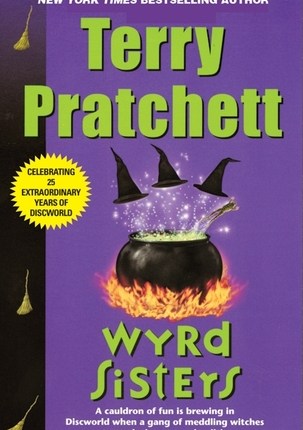
Wyrd Sisters (Discworld, #6; Witches #2) by Terry Pratchett

Wyrd Sisters (Discworld, #6; Witches #2) by Terry Pratchett

Granny Weatherwax, Nanny Ogg, and Magrat are not witches who meddle in the affairs of a kingdom- there’s rules against that, after all. But then one stormy night, when they’re having a simple coven meeting, a desperate and pursued royal courier hands Granny a baby.

Now, some of the rules might have to be broken.
Photo by Thirdman on Pexels.com

“The child gurgled in its sleep. Granny Weatherwax didn’t hold with looking at the future, but now she could feel the future looking at her. She didn’t like its expression at all.” pg 13

I first read Wyrd Sisters in April 2014 as part of a general read-through of the Discworld series (which I didn’t finish, but that is neither here nor there.) Now, I’m going back and reading the Witches series on its own which sits comfortably within the larger collection.

They’re quite good, of course.

“As the cauldron bubbled an eldritch voice shrieked: “When shall we three meet again?” There was a pause. Finally another voice said, in far more ordinary tones: “Well, I can do next Tuesday.” pg 1

Photo by Hashtag Melvin on Pexels.com

The three witches, as well as the ancillary cast of humorous and villainous characters, are a delight to read and really make the story. Terry Pratchett’s tone goes deftly from playful to quite serious and back again as Granny Weatherwax practices her ‘headology’ or Magrat, the youngest witch of the three, accidentally finds romance.

“Extremely worrying developments of magical tendency are even now afoot,” she said loudly. pg 62

Something that I didn’t mention in the last review, but struck me again on the re-read, was the excellent development of the mad Duke and his evil Queen. These are not simple, two-dimensional villains. These are complex characters with neuroses and nightmares and nefarious histories.

Photo by Phil on Pexels.com

The reason why I was so surprised by the ending of the story on the first read-through was the fate of the villains. Which they entirely deserve, I think, but was creative enough that I didn’t see it coming.

Highly recommended for readers who love light-hearted fantasy and humor.

First review: April 2014
This was a fun read. Pratchett takes the witch stereotype and bends it. We are reintroduced to Granny Weatherwax, the wise witch from Equal Rites. I liked her in that tale and I enjoyed seeing her again. Her character had time to be fleshed out even more and it’s a delight.

The ending to this novel really managed to surprise me. I was expecting a completely different ending but I loved Pratchett’s invention even more.

My favorite part of this story was Granny’s introduction to theater performance. The whole scene is incredibly funny but also integral to the plot so it wasn’t just tacked on like an after thought.

Overall, it’s an excellent fantasy. No one can write quite like Terry Pratchett.

Thanks for reading!

Cutting Into the Southern Domain (I Shall Seal the Heavens, #2) by Er Gen

Cutting Into the Southern Domain (I Shall Seal the Heavens, #2) by Er Gen

“In the Cultivation world, respect is delivered to the powerful.”

Meng Hao, the failed scholar turned spiritual cultivator, continues his quest to become the most powerful magical practitioner in the Southern Domain.

Photo by Clive Kim on Pexels.com

Shedding his old identity and values, Meng Hao is becoming someone even his old sect members do not recognize. By utilizing secret methods, he has created a source of power within himself that is an anathema to the will of the heavens.

But he no longer cares. Because even though these methods are forbidden, it has brought Meng Hao incredible power. And that, for now, is his ultimate goal.

Despite the epic storytelling potential of I Shall Seal the Heavens, my complaints with the last book continued in this one- the repetition, predictability, and the slow slide of the hero into deeper darkness rather than enlightenment.

Photo by Elias Tigiser on Pexels.com

I keep wondering if that isn’t the point of these books, the idea that even the spiritually inclined among us can become corrupted in their search for power over themselves and others. If that is the case, Er Gen is taking readers there, but incredibly slowly.

The manner in which the author depicts women in this world is particularly troubling to this female reader. In addition to making the women all about their appearance, every one Meng Hao meets inevitably falls in love with him despite his egregious and sometimes abusive behavior. It definitively fails the Bechdel Test.

I think the most engaging characters in Cutting Into the Southern Domain aren’t human. Readers are introduced to a ferocious spirit creature as well as a chatty mystical shape changer. The lightness they bring to the table doesn’t offset the otherwise repetitive and depressing nature of the story, but they help.

Photo by Ryutaro Tsukata on Pexels.com

I hope the next book moves out of the themes the author has fully explored in the first two book entries in the series. The world he has built is so fantastical and full of potential. It’s just a shame it isn’t a better story.

Only recommended for fans of the genre.

Thanks for reading!

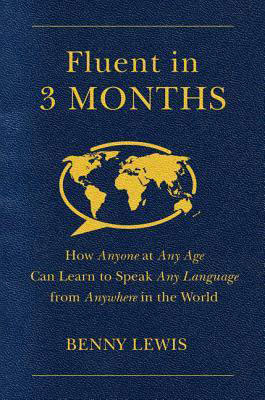
Fluent in 3 Months: How Anyone at Any Age Can Learn to Speak Any Language from Anywhere in the World by Benny Lewis

Fluent in 3 Months: How Anyone at Any Age Can Learn to Speak Any Language from Anywhere in the World by Benny Lewis

Fluent in 3 Months is a self help guide for anyone who aspires to speak more than one language.

Though it’s mainly filled with common sense ideas, I liked how the author, Benny Lewis, put it all together.

Lewis begins by sharing his own life experience with readers- that he felt he failed in his early attempts to learn another language through the traditional method of high school class. He also details how he spent six months in Spain with the idea that he’d absorb language like a sponge but then didn’t learn any Spanish.

Photo by RODNAE Productions on Pexels.com

The reasons why he feels like he was unsuccessful, because he was lacking the passion to learn and also didn’t speak the language to native speakers, are his main suggestions for language learning in this book.

“When it comes to language learning, there is no room for doubt: you decide your own success.” pg 24

Beyond those two main tips, Lewis shares shortcuts for learning tons of vocabulary quickly (visualization methods) and practicing immersion without going to the actual country. The latter, as he points out, has been made much easier since technology has brought distant countries into the comfort of your own home.

Through Skype calls or internet programs or even Netflix, language learners can interact with and immerse themselves in their target language.

Photo by Anna Nekrashevich on Pexels.com

“You must speak the language with other human beings.” pg 87

The task facing language learners has now become putting in the work to do so rather than traveling the distance for the opportunity.

I think Lewis is on to something with his insistence on speaking your target language from the start.

“As a result of speaking the language right away, students start to acquire the language rather than learn it as they would other academic subjects.” pg 6

I have a friend who’s niece majored in Spanish. But when they visited Spain together, she lacked the confidence to speak it when ordering dinner.

Photo by Adrianna Calvo on Pexels.com

If, from the first stages, learners were able to clear that initial hurdle, day-to-day use, and the successive ones of perfectionism or uncertainty, I agree that the whole language learning process would flow more easily.

Because, as Lewis points out, language is meant for communication with others. We’re rather missing the point if we acquire skills on paper that can’t be put to real life use.

Highly recommended for language learners of any age.

And thanks for reading!

Die, Vol. 1: Fantasy Heartbreaker by Kieron Gillen, Stephanie Hans

Die, Vol. 1: Fantasy Heartbreaker by Kieron Gillen, Stephanie Hans

In Die, six teens enter a fantasy role-playing game, disappearing from the mundane world for two years. When they reappear, they are missing one of their members and carrying scars, both physical and emotional, from their ordeal.

Fast forward twenty five years, and a blood stained die shows up on someone’s birthday, mirroring the date when they last entered the game. The group has to face the fantasy world that has given them nightmares for decades in order to put the past to rest. But some things are easier said than done.

Readers of this series seem heavily divided on its quality. I thought it was brilliant.

Photo by Armando Are on Pexels.com

This isn’t because of the fantasy elements which, as many have noted, rely heavily on tropes and the established world building of touchstone series like The Lord of the Rings and The Chronicles of Narnia.

What I loved was the character development and its relatability for aging gamers.

The author shares a series of essays in the back of the graphic novel about the development of the story and characters as well as their associations with classic rpgs. He nails the reasons why I loved the book so much:

“… the simple idea of six forty-something adults contrasting their teenage fantasies with the realities of where their lives ended up. It’s a pure midlife crisis scream of a book. And the bit that got me? The idea that maybe part of me did disappear into a fantasy world at the age of sixteen and never came out.”

In the hero’s journey, we venture forth into trials and return changed but bearing gifts from the experiences we went through. That format- there and back again- seems so clear cut and simple in many of the “through the looking glass” fantasy stories.

Photo by Thiago Matos on Pexels.com

It is not so simple in this one.

In Fantasy Heartbreaker, the journey isn’t finished when the characters return to where they started and they aren’t bearing gifts, but a curse. It is only through the natural passage of time and the development of the adolescent into the adult, that the heroes in this story can finish their journey or, unbeknownst to them, begin an entirely new one.

This delayed emotional development speaks to any manner of gamers, both video or tabletop, who may find themselves, for a variety of reasons, gaming with a dysfunctional group of people over and over again each week. Perhaps this is because there are only a few people in their lives who love to game as much as they do.

For whatever reason, from the outside, such intense and conflict-prone relationships can seem confusing at best or borderline abusive at worst. But from inside the group itself, the bonds created through the traversing of realms of the imagination and overcoming obstacles as a team are real and important.

Photo by Plato Terentev on Pexels.com

The members of the group form a family of sorts- one that they chose rather than one they were born with. It can be beautiful but bewildering. Something that one has to experience to truly understand.

Sort of like visiting a different world, and never really coming home again.

In addition to the peek into gamer culture, the artwork in Fantasy Heartbreaker is gorgeous, one of the most beautiful I’ve ever seen in a comic.

Highly recommended for readers, and gamers, who like fantasy graphic novels.

Equal Rites (Discworld, #3; Witches, #1) by Terry Pratchett

Equal Rites (Discworld, #3; Witches, #1) by Terry Pratchett

In Discworld, there are unwritten rules that govern magic. One of these is- guys are wizards and girls are witches. Wizards have staffs. Witches have pointy hats and work with nature.

When the eighth son of an eighth son has a daughter who is mistaken for a boy at her birth, a wizard leaving his legacy to someone who is destined to be incredibly powerful becomes somewhat of a problem. Untrained wizards are dangerous. But who is going to take responsibility for Esk, a girl who wants to be a wizard?

Photo by murat esibatir on Pexels.com

“They say a little knowledge is a dangerous thing, but it is not one half so bad as a lot of ignorance.” pg 37, ebook

Granny Weatherwax, that’s who, the local witch and an all-around no-nonsense kind of person.

What follows is a rollicking adventure through Discworld but also an examination of assumptions from our ordinary world.

“Esk, of course, had not been trained, and it is well known that a vital ingredient of success is not knowing that what you’re attempting can’t be done.” pg 61, ebook.

Photo by Min An on Pexels.com

It is also a delightful skewering of gender roles and what society expects from each.

“Granny had counted the temples with a thoughtful look in her eyes; gods were always demanding that their followers acted other than according to their true natures, and the human fallout this caused made plenty of work for witches.” pg 76, ebook

Highly recommended for fantasy readers who enjoy heaping helpings of humor with their stories.

This was my second read-through for Equal Rites. I first enjoyed this book several years ago. And here is my review from the first go-round:
I was afraid that I wouldn’t like this, the third book in the Discworld series, as much as the previous books since it wasn’t starring Rincewind and Twoflower, but I shouldn’t have worried. Granny Weatherwax and Esk were excellent heroines and just as fun to read about as the boys.

Photo by Gantas Vaiu010diulu0117nas on Pexels.com

Pratchett’s Discworld is such a fantastic and surprising place, so different from structured reality, that it was really interesting to explore native prejudices and expectations among the inhabitants. Girls are witches and boys are wizards until Esk is born and turns those expectations on their head. Her struggles to find her place in the magical world and Granny’s attempts to teach her are slightly reminiscent of The Once and Future King, but with a feminine twist.

This is a fun read that fans of fantasy will certainly enjoy.

Thanks for reading!

Peace Talks (The Dresden Files, #16) by Jim Butcher

Peace Talks (The Dresden Files, #16) by Jim Butcher

Harry Dresden’s life has become infinitely more complicated since the beginning of The Dresden Files. He constantly struggles to balance his responsibilities as a member of the Winter Court, the White Council, and familial concerns.

Not to mention his role as a warden of an island that protects the world from dangerous magical creatures.

“I slung the weighted vest over my shoulder and started trudging back to the car. I had that sinking feeling that things were about to get hectic again.” pg 8

Photo by Jess Vide on Pexels.com

He’s developed a little bit emotionally since his carefree days of “wizard for hire,” but, in other ways, his personality has remained exactly the same.

“…you can’t ignore things that are real just because they’re uncomfortable.” pg 4

The Dresden Files is a fun escape into a fantasy world of magic (one could call it ‘book candy’) but part of the problem with the series is that it has built to a major crescendo. What can one person really do against powers of the universe that are so strong that they can be described as “gods”?

“I think someone you don’t expect is going to stab you in the back, Hoss.” pg 30

Another issue is how often the “winter mantle” takes over Harry’s mind so that he’s constantly thinking about strutting his stuff in front of the opposite sex. I get that it’s a reoccurring problem for him, but it gets repetitive after the first half dozen incidents.

It doesn’t help that he hangs out with a literal queen of the succubus, but I digress. 🙂

Some of my Goodreads friends pointed out that the start of this book is somewhat ridiculous- hanging on the idea that the fairies always repay their debts though readers aren’t given the reason why a debt was needing to be repaid. I agree the setup could have been more carefully constructed.

Photo by Myicahel Tamburini on Pexels.com

That being said, I read the entire book in two days. (Book candy strikes again!) So there’s something very enjoyable about the whole thing even with the balance of power problems, repetitive sexual fantasies, and suspension of belief required to get in to it.

Highly recommended for readers who have enjoyed the previous books in the series or folks who like urban fantasy reads without too much complexity.

Thanks for reading!

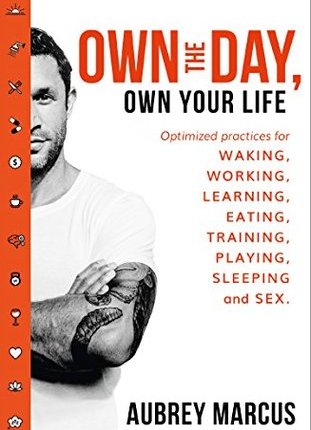
Own the Day, Own Your Life: Optimised practices for waking, working, learning, eating, training, playing, sleeping and sex by Aubrey Marcus

Own the Day, Own Your Life: Optimised practices for waking, working, learning, eating, training, playing, sleeping and sex by Aubrey Marcus

Aubrey Marcus shares different life hacks in an effort to improve your day. Because, as he reminds us: “To live one day well is the same as to live ten thousand days well. To master twenty-four hours is to master your life.” pg 7, ebook

There’s not a lot of new information here, especially not for aficionados of the self help genre. But there are some interesting strategies to try that I enjoyed.

One is to use your commute time to listen to a book or a podcast. As Aubrey points out, if you’re going to be spending the time anyway, you may as well use it to invest in yourself.

“These minutes are precious things. They are the only currency we spend every day whose value fluctuates wildly. Spend your minutes investing in your future self, filling your emotional coffers, and building value and enjoyment, or spend minutes depleting your emotional bank account.” pg 82, ebook

Photo by Stas Knop on Pexels.com

Nothing new, as I said, and also it doesn’t take too much encouragement to get me to read. 🙂 But for anybody who hasn’t tried it yet, I highly recommend incorporating this into your morning commute.

Another strategy suggested in Own the Day, Own Your Life that I attempted to hilarious, yet effective, results was a method for waking yourself up. Basically, you practice deep breathing and then stand under cold water in your shower.

The basic principle behind it, if I understand it correctly, is that our bodies have evolved to handle stress in ways that are completely outdated in the modern world. We react to an emotional email or digital comment as if a tiger was running at us. But it’s not.

All of those chemicals go into us and have no where to go, leading to chronic stress and all of the symptoms that go along with that. The deep breathing and cold water cause a stress reaction too, but it’s one that you control and can switch off at will. The exposure teaches your body how to handle it when you can’t switch it off.

Photo by Gratisography on Pexels.com

In addition to these other supposed benefits, it wakes you the heck up. I can vouch for that. Come on, Heidi, I can hear you say. You really needed a book to tell you to take a cold shower? Well, apparently I did. And that part really works as promised.

If you’ve already got your diet and exercise routines locked down, you’re already well on your way to living your best life and probably don’t need this book. But, for anybody looking for a few pointers or are willing to try new things, this could be the book you’re looking for.

The Song of Achilles by Madeline Miller

The Song of Achilles by Madeline Miller

Madeline Miller brings her incomparable talent for rewriting ancient myths for the modern audience to the tale of the Greek hero, Achilles, and his lover, Patroclus.

“For many years now, Achilles, I have urged companions on you and you have turned them away. Why this boy?” … “He is surprising.” pg 26, ebook

Photo by Bakr Magrabi on Pexels.com

Readers don’t have to be familiar with the mythology behind the story to enjoy it. In addition, Miller includes a helpful guide of figures from classical myth at the back of the book in case you are in need of a refresher course.

Here’s a brief summary: Helen, the most beautiful woman in the world, is kidnapped (or leaves of her own accord, it’s unclear) and taken to Troy. Warriors around the globe gather to fight on one side or another because of this inciting incident, and the gods do as well.

As told in The Illiad, it is a struggle between mortals, immortals, and those who stand inbetween those two- the demi-gods, children of both worlds.

Among this special group, there is the son of Thetis, a sea nymph, and Peleus, the king of a small Grecian country. His name is Achilles. There is a prophecy, a couple in fact, about Achilles and that plays a large part in the story that follows.

Photo by GEORGE DESIPRIS on Pexels.com

The part of the story that has not been told before, and that Miller illustrates with such brilliance, is the life of Patroclus, the man whose death is so central in the myth but who is rather ancillary to the other heroes in the original telling.

“This was more of the gods than I had ever seen in my life. He made it look beautiful, this sweating, hacking art of ours.” pg 32, ebook

Miller also brings attention to the shadowy figure of Thetis, Achilles’ mother. Her role in the story was marginalized as well, but in The Song of Achilles she comes to the forefront.

Like parents throughout history, she wants her son to succeed to the best of his ability. In this particular case, she thinks he should shed his mortality take his place among the gods.

To do so, he has to achieve godlike status on earth. Falling in love with a mortal does not fit into Thetis’ plan for Achilles’ future.

Photo by Hernan Pauccara on Pexels.com

“There is no law that gods must be fair, Achilles,” Chiron said. pg 55

I read Miller’s Circe prior to this story and so wasn’t surprised that I enjoyed this tale as much as I did. As I mentioned before, she excels at taking old themes and making them feel new again.

This cultural development is important for humanity, as I recently read in Antigone Rising: The Subversive Power of the Ancient Myths. There is power in the stories we tell and the manner in which we tell them. It helps to shape the future.

Highly recommended for readers who enjoy mythology or a simply well-told tale.

Thanks for reading!

The Art of Comforting: What to Say and Do for People in Distress by Val Walker

The Art of Comforting: What to Say and Do for People in Distress by Val Walker

“Qualities like gentleness, patience, warmth, and empathy can be so undervalued in this day and age that when we need to sit down with someone devastated by a loss or turbulent change in their lives, we often feel unsure about what to say or do.” pg 7, ebook.

Author Val Walker discovered first-hand that there is a lack of knowledge about offering comfort in the modern age. She was going through a divorce and relocation, and had no one to confide in. She said her friends and family members were either too busy to give her some of their time or they gave her a type of attention she didn’t desire- like mouthing platitudes or giving unwelcome advice.

Photo by Nikita Khandelwal on Pexels.com

Walker realized that society has lost its ability to do something as simple as listen and be present. She wrote this book to help others offer this gift to those around them.

“Presence. Unshakable, steady, tender, and empathic presence. Soft strength. That was comfort.” pg 10, ebook

She dispels many myths about what comforting may look like, including my concern that I never know what to say when someone shares their inner turmoil with me.

“Myth: Comforters always know what to say. We don’t have to know the right thing to say. Sometimes there is really nothing that can be said.” pg 21, ebook

Photo by cottonbro on Pexels.com

After that, Walker interviews mental health professionals from many different modalities, offering different ways that these comforters approach and soothe those around them. From creating art to writing to simply watching television together, there are so many opportunities to spend time and connect with someone in need.

“The language of comforting is a language like any other- it can be learned but, once mastered, can become as effortless as breathing. And if our words and gestures are warm, empathic, and respectful, they will help to create a safe space for the comforter and the one being comforted to inhabit.” pg 81

Photo by Jonathan Borba on Pexels.com

The past year has been devastating for so many. I picked up this book because I never know what to say when someone comes to me with pain or disappointment or heartbreak.

Walker has reassured me that sometimes the best help anyone can give another is to say nothing at all but to offer the gift of your presence and attention. Because at the end of the day, another word for ‘comfort’ is ‘love’. And we all know how to do that already, right?

Thanks for reading!