/rɪˈvjuː/ noun. a report in a newspaper or magazine, or on the internet, television or radio, in which somebody gives their opinion of a book, play, film, product, etc.; the act of writing this kind of report
The title, Big Book of Family Games: 101 Original Family Group Games that Don’t Need Charging, pretty much says it all.
The games are divided into different categories: predictions, discovery, creativity, performance, deception, strategy, speed, memory, puzzle solving, and athletic. So, you can pick the game that the group is feeling like playing or is appropriate for your work, classroom, etc.
Others have gone on about the disconnected scourge of modern living, especially since the advent of this pesky virus. These games build bridges and help players get to know each other and themselves, if he or she is really honest about it.
“What you have in your possession is a book of games that accomplishes three of my main goals when bringing people together: disconnection from technology… convenience… adaptability.” pg 6, ebook.
I’d like to add – this book of games only works if others are really into it. Otherwise, you just ask the question, which is most of these games, and get met with a blank stare.
I think one of the next challenges facing society after the pandemic will be reestablishing social conventions. Or perhaps we will all be forever changed. Here’s hoping it’s for the better.
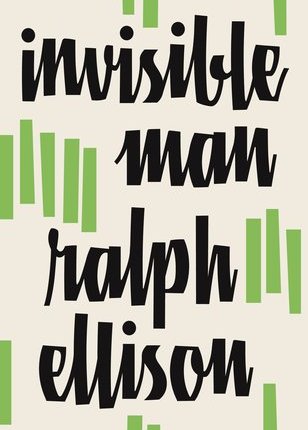
In Invisible Man, an unnamed narrator moves through a series of events that highlight racism and inequality both in the society and in the people within the system.
This is a book that is difficult to describe and may need to be experienced.
The writing is powerful and builds like a punch in sections. I listened to the audiobook while on a walk through the woods so maybe that’s why I was so sensitive to the rhythms.
I’m not a black man and I’ve never walked a mile in his shoes, but this book gives a short sojourn into another person’s life.
The material is sobering and shocking, at times, lyrical and beautiful in others. Rather like life.
At the end of the book, I found myself hopeful for the narrator. Hopeful that he would move forward from all of the challenges that he faced into a new dawn of understanding and racial equality.
I’m always hopeful for improvement. Always.
I think society sometimes uses aspects of our lives (like gender, race, social status, level of education, sexual orientation) to place people into tidy boxes or make them invisible like the narrator in Ellison’s novel.
One way to combat this evil is to know that we’re not alone as we travel through life. We’re all in this together. We see each other and acknowledge each other’s strengths and weaknesses.
We are seen and appreciated for our uniqueness by the communities we create. It’s a big responsibility.
I read this classic because it is painted on the staircase of the library where I work. I’m trying to read all of the classics recorded there in an effort to become “classically” well-read.
What do I mean by classics? The most-tagged classics on Goodreads.com include such notable books as “1984” by George Orwell, “The Catcher in the Rye” by J.D. Salinger, and “Of Mice and Men” by John Steinbeck.
So, the next problem with this aspiration of mine is — Where do I start? Who is the definitive voice when it comes to choosing classics?
Who better than a library, I thought, literally.
I had the privilege of working at O’Fallon Public Library during the Great Renovation of 2015 to 2016. One of my favorite pieces of improved library space (other than the bubble wall!) are the book spines that were painted on our stairs.
I’d like to invite everyone to read along with me as I “climb the stairs” by reading the classics listed there. The goal is to share the books our community deemed important enough to preserve in our library space for all time.
The next title on the steps is Watership Down, another classic that I have not had the pleasure of reading. (Portions of this review first appeared on the O’Fallon Public Library’s blog.)
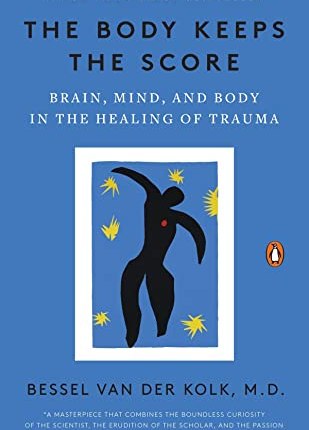
The Body Keeps the Score is a non-fiction book about how the body stores trauma and what you can do about it.
My most distressing take-away from this book was how common trauma is. Author Bessel van der Kolk discusses how people from all walks of life suffer from trauma.
People suffering from these kinds of afflictions believe they’re the only ones. They try to numb the pain with drugs or alcohol and are easily triggered which brings back the pain of the traumatic events again and again.
This affects their lives, relationships and ability to trust others.
Kolk details how traumatic memories can be triggered by smells, touch and taste. He explains how powerful emotions remain behind, even after the logical mind has processed the event.
He suggests you can’t think your way out of strong emotions.
What do we do about this?
Form a strong community around yourself with supportive relationships. Practice mindfulness and yoga- exercises that explore the mind and body connection.
Also, find a therapist who practices eye movement desensitization and reprocessing (EMDR). The author records amazing recoveries by sufferers who utilized this therapy.
Personally, I’ve practiced EMDR with a therapist and the results were astounding. I left the session feeling lighter than I have in years, having released trauma I didn’t realize I was carrying.
But, like others, I still struggle with powerful emotions stored in my body. It is a process, not a cure. And I’ve learned to take life one day at a time.
Highly recommended for readers looking for scientifically-proven ways to handle trauma.
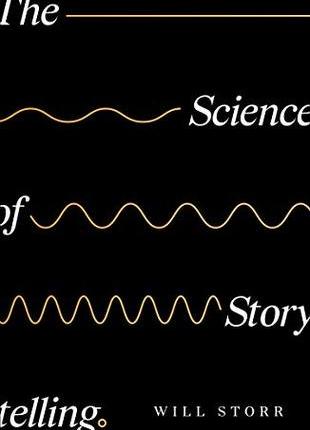
In The Science of Storytelling, Will Storr reminds readers our brains are hard-wired for stories and how best to utilize this in our own writing endeavors.
Through the use of various writing tools based on scientific research, Storr demonstrates how to appeal to an audience, keep them hooked and connected to the characters.
For example, Storr writes the use of change in storytelling grabs readers’ attention because human beings are always on the look out for it. Change can be good or bad- it’s life itself. Our brains look for change as a survival mechanism and this trait can be used to entice readers so they come back for more story.
“This is what storytellers do. They create moments of unexpected change that seize the attention of their protagonists and, by extension, their readers and viewers.” pg 13, ebook
Change is also something that people try to control (they can’t but they try). This universal pattern is called, ‘the theory of control’. When readers see traits they share with characters in stories, they become invested in the outcome which keeps them reading. Or when readers see traits they don’t believe they have, but do, they’re hooked.
There’s a lot of hooking going on, which is a good thing when you’re writing a story. 🙂
“A character in fiction, like a character in life, inhabits their own unique hallucinated world in which everything they see and touch comes with its own unique personal meaning.” pg 41, ebook
Storr suggests creating complex characters and writes that the story almost creates itself with a properly drawn character. A complex character has flaws, a personality, misunderstandings with others in the story.
Also, going back to the ‘change’ theme, complex characters are generally passing through a ‘change of status’ of some kind. This ignites curiosity in the reader. It makes readers ask themselves, ‘What’s going to happen next?!’
“The place of maximum curiosity- the zone in which storytellers play- is when people think they have some idea but aren’t quite sure.” pg 18, ebook
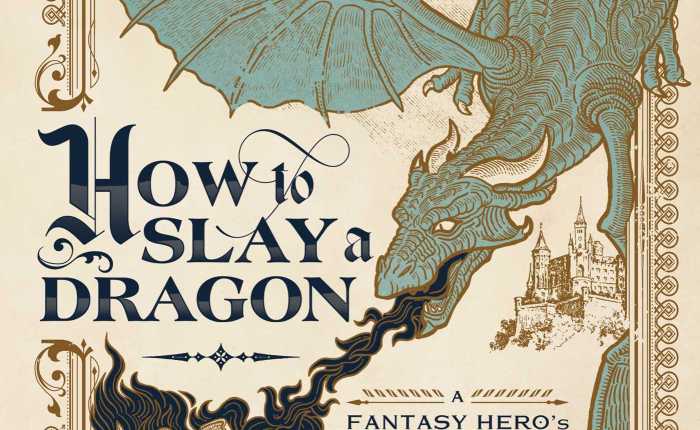
How to Slay a Dragon is a humorous look at medieval history with a running, stand up-esque commentary by a nameless narrator.
“…this is still a book to guide heroes who are setting off to slay a dragon, steal the throne, and defeat a few hordes of supernaturally evil creatures along the way.” pg xv, capitulum infodumpium. (Not real Latin, but amusing all the same.)
Cait Stevenson divides the history into broad categories like: preparing for your quest, hazards along the way and winning the war. Then there are subcategories like: how to not marry the prince, how to win the bar fight, and how to outwit a genie.
My favorite was “How to Put Up with the Bard” because I tend to play that class of character in role-playing games. 🙂
“When William Porland recorded the names of fifty taverns in the fifteenth century, six of them were called the Swan. … There was no reason to distinguish an inn by a written-out name when literacy rates maxed out in the 30 to 40 percent range, which meant a 60 to 70 percent chance that the clientele couldn’t read… pg 27 How to Find the Inn
Cait uses actual events and historical figures to make the past come alive. I found the whole book very entertaining and I learned so much- a hallmark of a successful history book.
She even includes fantastical beliefs and superstitions like: “The most important thing to know is that medieval dragons usually kill with venom, not fire. They breathe thick clouds of deadly smoke in all directions at once.” pg 93
In the modern era, I think we dismiss historical figures as unapproachably different from us because technology wasn’t as developed as it is now. This book makes readers realize that there is very little difference between a historical figure and a modern one. People are people- with their flaws and strengths.
Now, they just happen to walk around with iPhones.
“Snowball fights in fifteenth-century Germany were apparently so common that priests classified them as a sin. Or perhaps the real problem was that priests were getting smacked in the face with snowballs.” pg 117
Highly recommended for readers who love history and humor in one convenient package. This book might fit the bill for reluctant readers as well.
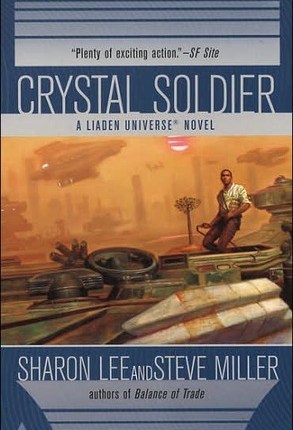
Pilot Jela has crashed on a lonely world where great forests once stood. He was in a fight in space against a highly advanced robotic society that seeks to destroy life itself.
The sheriekas, for that’s what the enemy are called, have done a number on this world with its endless, lifeless forests. Until, after days of hardship, Jela finds a sign of life.
“The sheriekas (eliminated life) wherever they could, as if life itself was anathema. Overt signs of sheriekas action were an indication that a planet or system held something worthwhile… pg 23, ebook.
Cantra is a pilot whose hauls are generally on the up-and-up. She crosses paths one night with Jela. And that’s where the story truly begins.
The first entry in the Liaden Universe was written later as sometimes happens with these mammoth science fiction series. As the authors explain in the prologue, they felt creating Jela and Cantra’s story took a type of maturity that they did not yet have in the 1980’s, when they began writing the series.
“The problem we face,” he murmured, “is that someone- and we must assume that someone equals the Enemy- is experimenting with dismantling the universe.” pg 63
I’ve been considering what to think about that. Certainly, authors don’t have to experience everything they write- imagine Suzanne Collins and her “Hunger Games.” But every artist has her process so, whatever works for them.
This is a well-written book, if a bit plodding at times. The pacing problem is offset with sparkling dialogue between Jela and Cantra. They converse in both words and a type of sign language called “pilot speak.”
It gives a different dimension to the communication between them. I liked that a lot.
The universe itself, like other science fiction works I’ve read, is full of promise for both adventures and exploration. The nemesis- a group seeking to destroy life itself- is a fitting metaphor for industrialization run amok with its climate change implications.
I’m sure there are other comparisons that can be drawn. That’s simply the first one to pop into my mind.
I also liked that one of the main characters in this story is a tree. Wouldn’t life be fun if you could take a walk and talk to the trees lining your path? I think so.
Highly recommended for readers who enjoy science fiction and don’t mind an occasional pacing problem. Thanks for reading!
Author Elaine Aron defines “highly sensitive persons” (HSPs) and gives a plethora of coping mechanisms as well as case studies to support the definition. She also includes tests so you can discover where you are in the HSP world.
“The trait was always there, of course, just called by other names. But its essential elements were not known, so it was described by external behaviors only, such as ‘shy’ or ‘introverted.'” pg 54, ebook
This was only the second book I’ve read about HSPs. Prior to this, I have heard HSPs being described as having sensory processing disorders, which exist on a spectrum like most everything else in the psychology universe, or simple shyness.
“My term for it is sensory processing sensitivity, but the same trait is also called environmental sensitivity or reactivity; biological sensitivity to context; differential susceptibility or vantage sensitivity; or identified by the names of certain genetic variations or as in animals, sometimes termed behavioral plasticity or flexibility.” pg 82, ebook
Despite my lack of background in the topic, there was very little new information in this book. A big take-away was to improve your communication style and keep in touch with the people in your life who love you. So many problems can be cleared up with clear, concise communication.
Also, attempt to address any troubles you may have from a dysfunctional childhood or relationships prior to embarking on a new relationship. Healer, heal thyself.
Another coping mechanism I use regularly, but didn’t realize I did, is handling over arousal. Whenever I find myself being overwhelmed by life, I find a backroom and take a minute or two to myself. Sometimes I just breathe. If I’m not at work, I pick up a book or get a hot drink.
“Anger is a highly stimulating emotion. HSPs are strongly affected by it, even when we just witness it. pg 77, ebook
Aron encourages readers to find their “optimal level of arousal” since it varies from person to person. Know yourself and your limits, and tell your loved ones. Also, give yourself permission to turn off your sensitivity. It may seem silly- but that never occurred to me.
“All HSPs, men or women, are more aware of what other people are feeling, what they want and need. Thanks to your spontaneous deep processing, you also can sense what will happen if others don’t receive what they need- they may suffer, fail at what they want to do, become angry with you, feel disappointed with you. And being more sensitive, when they feel bad, you will be bothered too… pg 56, ebook
I tried to treat everyone the same and it led to some serious problems in my personal as well as professional life.
One of the most helpful parts of this book was Aron’s invitation to reframe my past in light of my new self knowledge. Prior to learning about HSPs, I was barely functioning in a world that didn’t necessary make room for me. Now I know I’m not alone in this- and have more tools in my metaphorical belt to help me get through the day.
I’m not entirely convinced by the final section of The Highly Sensitive Person in Love that discusses HSPs being more spiritual or falling harder in love than non-HSPs. It’s a romantic sentiment perhaps, but I was unconvinced by the evidence. I think we’re all in this love game together.
Recommended for readers who are or have a loved one who is a highly sensitive person. I’m curious to know what others in the community think about this book. If you do have a chance to pick it up, please write a review and let me know. 🙂
Israel Regardie is a little-known thought leader of western occultism. In this book, “The Art of Healing,” Dr. Regardie explains a few meditation techniques in a way that anyone from beginners to advanced practitioners can understand.
I remember reading somewhere (not this book) about Dr. Regardie’s internship with Aleister Crowley and how he realized Crowley wasn’t teaching him anything beyond the superficial when it came to occult matters.
He ended up breaking away and being one of the leaders of a new approach to occultism- which brings me back to this book.
The meditation techniques will feel quite familiar to anyone who has practiced chakra meditations or color visualizations on the body.
“By these means, the healing force is distributed to every part of the body. No single atom or cell in any organ or limb is omitted from the influence of its healing, regenerative power.”
The curious part of this book is that Dr. Regardie uses five centers of energy down the center of the body instead of the more standard seven of eastern occultism.
Of course, as Dr. Regardie states, these exercises are in no way a substitution for competent medical care or therapy when necessary – but they are a wonderful addition to it, for they are able to aid the healing process in a great many mysterious, profound, and positive ways. intro
I’m not entirely sure why he does this though I am familiar with the Middle Pillar exercise (which is what the technique is called). Perhaps he’s basing the whole practice off of a teaching Crowley created for his occult studies.
Dr. Israel Regardie and the Middle Pillar exercise.
Whatever the reason, I think it is a noteworthy and definite change from other meditations I’ve practiced.
“I have begun a Catalogue in which I intend to record the Position, Size and Subject of each Statue, and any other points of interest.” pg 6, ebook.
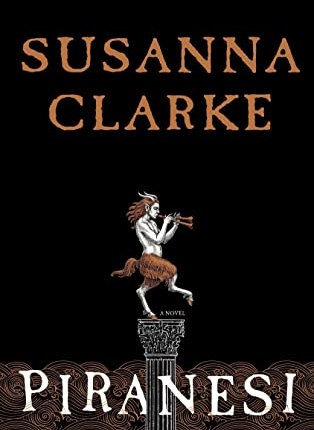
Piranesi is an explorer of a strange world in which water runs through the ruins of Grecian-esque temples filled with statues both beautiful and grotesque. He calls this place: the House.
“Outside the House there are only the Celestial Objects: Sun, Moon and Stars.” pg 6, ebook
He doesn’t remember how he got there or a life prior to entering the House. The reader gets to discover his forgotten past along with him in this mystery/fantasy novel.
His only point of contact with a living, breathing person is a man Piranesi has nicknamed, ‘the Other’. He meets with the Other about twice a week. Despite this lack of community, Piranesi manages to survive and soldier forward with his explorations.
“Perhaps even people you like and admire immensely can make you see the World in ways you would rather not.” pg 227, ebook
In that way, Piranesi is somewhat like an ode to introverts- a whole world to explore by yourself. In other ways, it feels like a nod to a lost world of crowded museums and libraries.
The recent pandemic has twisted the ideas of community and togetherness- sometimes I feel like Piranesi as I wander through stacks of books that people aren’t perusing as much anymore. Or hosting library events where no one shows.
Author Susanna Clarke has put her finger on a sore spot in the zeitgeist and the result is a compulsively readable book.
I was also pleased to observe she wrote a slightly shorter novel. After the brick that is Jonathan Strange & Mr Norrell, I was expecting this to be another 1000 page tale. Clarke tells her story, and tells it well.
Recommended for readers who love portal fantasies or any reader who dreams about worlds beyond the day-to-day. Thanks for reading!




























 The Help Desk Book Blog