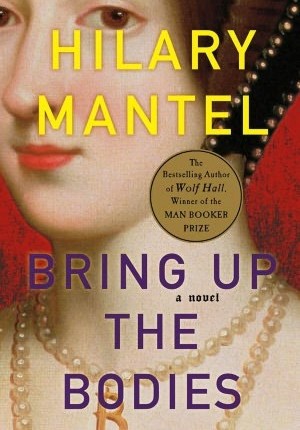
Bring Up the Bodies by Hilary Mantel

Bring Up the Bodies by Hilary Mantel

Hilary Mantel’s brilliant and Man Booker Prize-winning books about Thomas Cromwell continue with Bring Up the Bodies.

Cromwell is the right-hand man of Henry the VIII. His masterful manipulation of people and circumstances to make the world as Henry wants it has brought Cromwell wealth and power.

Getting Anne Boleyn on the throne was a struggle. Now he has to get her off of it without losing his own head in the process.

Mantel doesn’t just tell history, she makes it come alive.

Photo by Daria Shevtsova on Pexels.com

In one scene I can’t get out of my head: Henry has a temper tantrum because of the Spanish ambassador’s continued disrespect towards his new wife, Anne, and the repeated requests from the Spanish crown for money owed. The king blows his top at Cromwell and screams in his face.

He says he believes Cromwell has always manipulated him and laughed at him. But he is king and he will not be steered.

And, even though I knew the history, I thought for a moment Cromwell was going to be taken to the Tower in that instant.

Instead, he quietly apologizes to the king and dismisses himself, then goes to a different room to take a drink. With shaking hands, Cromwell spills a drop of the wine on himself and sits there, contemplating the small stain on his shirt.

Photo by Polina Tankilevitch on Pexels.com

And I said to myself, “Mantel is a genius.”

In that passage, it was as if I was in that room, living the moment. She makes you forget you’re reading a book. It’s so immersive. It’s almost magical.

Cromwell’s efforts to collect evidence against Queen Anne fills much of this book. As he tightens his net around her, you can almost feel it tighten around yourself.

Cromwell jokes with his sworn men to ease some of the tension, but it is always there, buzzing beneath the surface.

Highly recommended for historical fiction readers. Bring Up the Bodies is one of the best books I’ve read this year.
Photo by Rachel Claire on Pexels.com

To see my review of Mantel’s Wolf Hall, click here.

If you enjoyed Wolf Hall or Bring Up The Bodies, you may also enjoy Elizabeth I by Margaret George.

Thanks for reading!

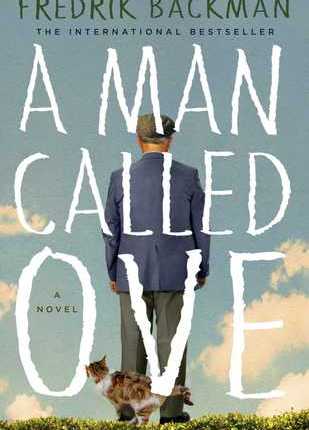
A Man Called Ove by Fredrik Backman

A Man Called Ove by Fredrik Backman

A Man Called Ove is indeed about a man named Ove. He’s depressed. His wife died and he wants nothing more than to join her.

But, somehow, life itself seems to be conspiring to keep him alive.

Photo by Brett Sayles on Pexels.com

To borrow a line from Shrek: Ove is like an onion.

On the outside, his personality is kinda smelly and makes people cry. But, he has layers.

This story takes apart those layers.

Highly recommended to me by one of my book club members and my mother-in-law. A Man Called Ove by Fredrik Bachman is a treat. I highly recommend it, now, too.

The novel has been made into a movie, which I enjoyed nearly as much as this book. That’s high praise.

Thanks for reading!

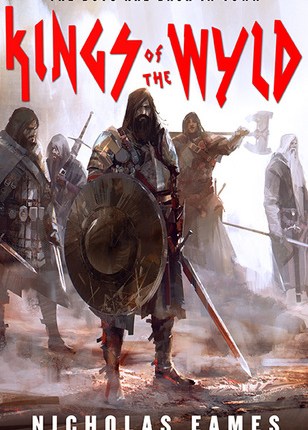
Kings of the Wyld (The Band #1) by Nicholas Eames

Kings of the Wyld (The Band #1) by Nicholas Eames

An incandescent debut novel about an aging group of warriors who have to come out of retirement to save the child of one of their members.

It is reminiscent of a dungeons and dragons campaign: you have the tanks (or front men), cleric (or shield), thief and wizard.

The band also featured a rotating series of bards because they kept losing them in various, horrific ways. It’s a continuing gag throughout the tale.

Photo by Josh Sorenson on Pexels.com

The humor is my favorite part of the story. Some of it is juvenile, but most of it is incredibly funny.

“Tell us a tale, will ya, Clay? About when you did for that necromancer up in Oddsford. Or when you rescued that princess from… that place… remember?” Which one? Clay wondered. They’d rescued several princesses, in fact, and if he’d killed one necromancer he’d killed a dozen.” pg 4

The warriors are past their prime. They were glorious monster killers once, now they’ve got bad backs, tricky knees and families who depend on them.

“But life, Clay knew, didn’t work that way. It wasn’t a circle; you didn’t go round and round again. It was an arc, its course as inexorable as the sun’s trek across the sky, destined at its highest, brightest moment to begin its fall.”pg 8.

Photo by Tobias Bju00f8rkli on Pexels.com

In many ways, the group in this story reminded me of my own group of gaming friends. Yes, maybe we’re all getting on in years, but oh the glorious adventures we have had and perhaps will still have… if we can just manage to get out the door.

“If there was anything scarier than a Heartwyld Horde, the wrath of a vengeful ex-wife might just be it.” pg 36

The humor in this story was only matched by the clever analogy of a “band of warriors” compared to a “band of musicians”.

“Fantastic. Clay mused. A spiteful queen and a vengeful booker to watch out for. As if heading into a monster-infested forest on our way to a hopelessly besieged city wasn’t trouble enough. Whoever wants us dead should just sit back and let us kill ourselves.” pg 129

Photo by Alex Fu on Pexels.com

I couldn’t help but cheer them on, every step of the way.

Highly recommended for epic fantasy fans, gamers and anyone who has shared adventures, real or imagined, with a group of friends. This book has heart and I loved it.

Thanks for reading!

The Last to See Me by M. Dressler

The Last to See Me by M. Dressler

The Last to See Me is a fascinating story set in a world where ghosts are real and if they’re hanging around, they can bring down property values.

So, if you find you have an unruly poltergeist in your closet, you call a hunter to put them into the “eternal sleep.”

The tale is told from Emma, a ghost’s, point of view.

“My hearing is so much finer than when I walked alive and with a heartbeat. It’s something I’ve had a century to ponder: how much does the beating heart of one creature drown out the heart of another?” pg 6

Photo by cottonbro on Pexels.com

I found this story to be absolutely captivating.

“At the turn of the millennium, when the hunts began, I was as scared as any ghost could be. But fear, in the end, does a body no good. If you let yourself be afraid of what can kill you, it weakens you. So you can’t let yourself be afraid.” pg 21.

Inbetween Emma’s fight to remain alive, in a manner of speaking, we get to learn about her life before her death. So, there’s a bit of historical fiction thrown in the mix.

I think M. Dressler has written a fantastic ghost story.

“But I can tell you that the reason you felt something was hiding under your bed, all those years ago, is precisely because it was. It just knew better than to show itself to you.” pg 102

Photo by Diogo Cacito on Pexels.com

I found myself cheering for Emma, even when the story takes a few surprisingly dark turns.

“But understand and hear me, my friend. Nothing dead, no matter how interesting or difficult, is worth keeping.” pg 129.

Also, I was amazed at how Dressler managed to weave various elements of the story into its conclusion.

Take your time and read carefully, I think you’ll be as delighted with this tale as I was.

Highly recommended for those who like not-so-scary stories or slightly spooky historical fiction.

Thanks for reading!

The Snow Child by Eowyn Ivey

The Snow Child by Eowyn Ivey

A beautiful, magic-tinged tale of an aging couple, the bleak Alaskan wilderness and a child who appears one day in the wood.

Mabel and Jack always wanted a child, but after suffering a miscarriage, they begin to lose hope of ever conceiving. Mabel suffers in female society without a child of her own.

She begs Jack to take her to Alaska for a fresh start. He agrees. But it doesn’t work.

The weather is dark and freezing. The ground is hard and takes more effort than Jack can give. They aren’t thriving.

“All her life she had believed in something more, in the mystery that shape-shifted at the edge of her senses. It was the flutter of moth wings on glass and the promise of river nymphs in the dappled creek beds. … Mabel could not remember the last time she caught such a flicker.” pg 6, ebook.

Photo by Sara Loeffler on Pexels.com

Then, out of the blue, a child magically appears during a snow storm.

She is so light on her feet and silent, Jack and Mabel don’t at first believe their eyes. The child travels with a fox and barely leaves prints to follow on the snow.

“What did he expect to find? A fairy-tale beast that holds young girls captive in a mountain cave? … Or nothing at all, no child, no tracks, no door, only insanity bared in the untouched snow? That is perhaps what he feared the most, that he would discover he had followed nothing more than an illusion.” pg 72, ebook.

Mabel remembers a Russian fairy tale from her childhood, of a couple who builds a girl out of snow. In the story within the story, the girl becomes real.

Photo by Ramirez Cooper on Pexels.com

Could Jack and Mabel have created the child they have always dreamed of?

“I am sorry to say no matter which version, the story ends badly. The little snow girl comes and goes with winter, but in the end she always melts.” pg 96, ebook.

How will Jack and Mabel’s story end?

Recommended for fans of historical fiction and tales that contain magical realism.

Photo by Gantas Vaiu010diulu0117nas on Pexels.com

“In my old age, I see that life itself is often more fantastic and terrible than the stories we believed as children, and that perhaps there is no harm in finding magic among the trees.” pg 189, ebook.

I thought The Snow Child was beautiful and well-told. Highly recommended.

I don’t think The Snow Child has been made into a film, yet, but it has been staged as a musical play.

Thanks for reading!

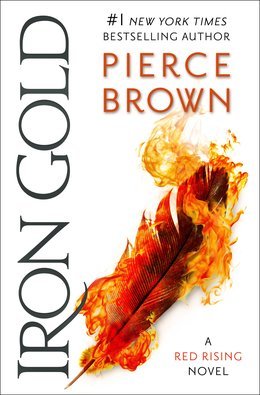
Iron Gold (Red Rising Saga #4) by Pierce Brown

Iron Gold (Red Rising Saga #4) by Pierce Brown

Darrow led an uprising and smashed the hierarchy that had held the worlds in its thrall. Now, ten years later, he is discovering the difficulties of maintaining rule and stamping out the last of the old regime.

More than anything else, Darrow is sick of war. Yet, unrest dogs his every step.

“I remember when you told me I was a good man who’d have to do bad things,” I say. “Your stomach go soft? Or have you spent so much time with politicians that you’ve forgotten what the enemy looks like?” pg 21.

Photo by Plato Terentev on Pexels.com

The government Darrow and his allies have crafted out of the former rebellion is divided in how to proceed. The enemy is entrenched on the planets nearest the sun… and also the planets furthest from it.

“Like you, I wish for nothing more than peace. I wish for a world where the machine of war does not swallow our young. … Our enemies have held dominion over us for too long. First as slaves, then adversaries. And what stability, what harmony can we bring to the worlds we have freed while they continue to define us?” pg 89.

Pierce Brown has crafted a satisfying return to his dystopian world with characters readers loved from his first three books.

We also get to meet a few new ones like a wily thief who gets in over his head and a kind, young Red who discovers The Reaper’s new world isn’t anything like it was portrayed on the holos.

Photo by Marek Piwnicki on Pexels.com

There’s sweeping speeches and heart-pounding battle scenes. Brown’s newest book is incredibly entertaining.

I have two regrets though.

The first is I read the other books so long ago, I forgot many of the small details. If I had it to do over again, I’d re-read the first trilogy before hopping into this one.

“It is our duty to embrace the scars our choices give us, to embrace and remember our mistakes, else we live believing our own myth.”pg 316.

Photo by Rachel Claire on Pexels.com

The second is Brown hasn’t written his next book yet and he ends on, what seems to be for him, a signature cliffhanger.

I refused to read the first three books until the trilogy was complete because I really don’t like waiting for the next entry in a series.

“The key to learning, to power, to having the final say in everything, is observation. By all means, be a storm inside, but save your movement and wind till you know your purpose.” pg 355.

It’s a nod to Brown’s genius that I purchased this new title from the book store. I’m a library patron through and through, but this is one that is worth owning.

Here’s hoping Brown writes really fast.

Highly recommended for science fiction and dystopian fans. Start with Red Rising.

Thanks for reading!

Lost in Translation: An Illustrated Compendium of Untranslatable Words from Around the World by Ella Frances Sanders

Lost in Translation: An Illustrated Compendium of Untranslatable Words from Around the World by Ella Frances Sanders

Lost in Translation is a slim volume of doodles with accompanying definitions of untranslatable words from many languages around the globe. It’s a treat.

There are words for feelings that I’m certain everyone has experienced… we just lacked the language to describe it appropriately.

This book showed me how universal emotions and perceptions can be and the difficulty of capturing the indescribable in words.

Photo by KoolShooters on Pexels.com

But we’ve certainly given it a good try.

I liked the words that described fleeting moments of beauty in nature the most. All of the following are from Lost in Translation but the pages are un-numbered so you’ll just have to trust me that they’re in there:

Komorebi: (Japanese noun) The sunlight that filters through the leaves of the trees.

Waldeninsamkeit: (German noun) The feeling of being alone in the woods, an easy solitude and a connectedness to nature.

Photo by Ian Beckley on Pexels.com

Mangata: (Swedish noun) The road-like reflection of the moon in the water.

And, finally, a word that perfectly describes one of my vices:

Tsundoku: (Japanese noun) Leaving a book unread after buying it, typically piled up together with other unread books.

Photo by fotografierende on Pexels.com

I didn’t realize that was actually a thing.

Ah, the joys of reading and cluttering up my house with tsundoku. 🙂

Thanks for reading!

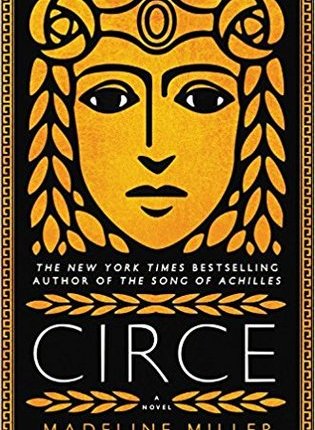
Circe by Madeline Miller

Circe by Madeline Miller

Circe is an epic fantasy that reads like a historical fiction novel, based on the Greek mythology of the witch of Aiaia, the daugher of a Titan- Circe.

I minored in the classics at university and one of my favorite classes was mythology. I love taking apart stories that mirror humanity’s foibles and try to explain the origin of some of life’s harder truths.

Photo by jimmy teoh on Pexels.com

In the war between the Titans and the Olympians, a creation story that could be interpreted to mean the ascension of modern culture over more ancient superstitions, the Olympians triumph. But the Titans are not wiped off the face of the earth.

“Beneath the smooth, familiar face of things is another that waits to tear the world in two.” loc 272, ebook.

Some of the Titans’ powerful and mysterious children play central roles in the great mythological stories. Circe is one of those.

“They called me nymph, assuming I would be like my mother and aunts and cousins. Least of the lesser goddesses, our powers were so modest they could scarcely ensure our eternities. We spoke to fish and nurtured flowers, coaxed drops from the clouds or salt from the waves.” loc 102, ebook.

Photo by ArtHouse Studio on Pexels.com

She began her life in the halls of Helios, a Titanic deity who was a god of the sun, much like Apollo.

“At my father’s feet, the whole world was made of gold. The light came from everywhere at once, his yellow skin, his lambent eyes, the bronze flashing of his hair. His flesh was as hot as a brazier, and I pressed as close as he would let me, like a lizard to noonday rocks.” loc 158, ebook.

Compared to her great father and gorgeous, manipulative mother, Circe was nothing- one of the many faceless children of the greater gods, whose future was destined to be a wife and then mother to more godlings.

Circe’s future is not as simple as all that.

She, and her brothers and sister, have a unique power that no other gods possess. They have the ability to harness the plants and power of the earth, to create potions and salves with miraculous effects. They call it: pharmakeia.

Photo by Daria Shevtsova on Pexels.com

Modern readers can recognize the roots of the word “pharmacy” in the name.

“Pharmakeia, such arts are called, for they deal in pharmaka, those herbs with the power to work changes upon the world, both those sprung from the blood of gods, as well as those which grow common upon the earth.” loc 909.

It is a power no one understands and, because of its mysteriousness, it makes even the gods afraid.

There is more to Circe’s story than pharmakeia. She also interacts with Hermes, Daedalus and Odysseus. She creates a god and a monster. She shakes the foundation of the oceans.

Photo by Kevin Menajang on Pexels.com

Highly recommended for those who enjoy mythology or historical fiction. It will transport you to a world where gods and goddesses walk the earth and humanity can do nothing but tremble in their shadows.

Thank you to NetGalley and Little, Brown and Company for an advance, digital copy of this book.

Thanks for reading!

The Lady Who Plucked Red Flowers Beneath the Queen’s Window by Rachel Swirsky

The Lady Who Plucked Red Flowers Beneath the Queen’s Window by Rachel Swirsky

The Lady Who Plucked Red Flowers Beneath the Queen’s Windowis a fantasy short story about how much one’s world view is shaped by culture, the time period in which one lives, and love.

The main character, Naeva, is a powerful magician. She serves the queen of a matriarchal society to the best of her capability.

Naeva’s love for the queen is used to trap her soul, so she can be summoned from beyond the grave to serve forever.

Photo by Maria Orlova on Pexels.com

“The Queen needs you, Naeva. Don’t you love her?” Love: the word caught me like a thread on a bramble. Oh, yes. I loved the queen. My will weakened, and I tumbled out of my body. Cold crystal drew me in like a great mouth, inhaling.

This binding is problematic, because the queen doesn’t live forever.

I was captivated by this story. It surprised me because short stories aren’t usually my thing.

During a bout of insomnia one night, I read The Lady Who Plucked Red Flowers in one sitting.

You can read it too, if you’d like. It is available in its entirety online: https://subterraneanpress.com/magazin…

There are subtleties in the story about feminine and masculine power, but also mankind’s penchant for judging current culture as superior to all others that have ever or will ever exist.

Photo by Teddy Yang on Pexels.com

“It was becoming increasingly clear that this woman viewed me as a relic. Indignation simmered; I was not an urn, half-buried in the desert. Yet, in a way, I was.”

Naeva suffers not only because she’s trapped and cannot die, but also because her matriarchal culture is left behind in the depths of time.

“I had never before been aware of the time that I spent under the earth, but as the years between summons stretched, I began to feel vague sensations: swatches of grey and white along with muted, indefinable pain.”

Photo by Aistu0117 Sveikataitu0117 on Pexels.com

She changes, but reluctantly and slowly. And love has as large a role in shaping her development as it did in her entrapment.

It is a wonderful fairy tale. I highly recommend it for sleepless nights or a boring lunch hour.

Thanks for reading!