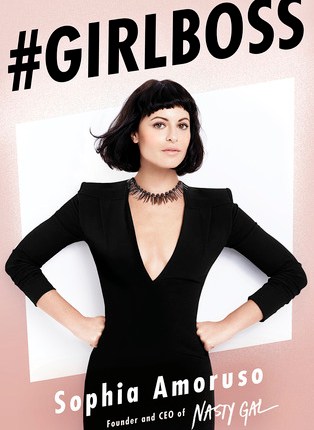
#GIRLBOSS by Sophia Amoruso

#GIRLBOSS by Sophia Amoruso

#GIRLBOSS is Sophia Amoruso’s story about her wild childhood, unlikely and extraordinarily successful business venture and her treatise on how to be yourself and bring what is unique to you to your professional life.

I googled Sophia after I finished this book and was dismayed to discover she has declared bankruptcy.

It seems she still has a successful motivational speaker program going on, but, for whatever reason, her business hasn’t worked out.

I suspect, she will land on her feet and start again. That is a large part of the philosophy contained in #GIRLBOSS.
Photo by Sam Lion from Pexels

“In about eight years, I went from a broke, anarchist ‘freegan’ dead set on smashing the system to a millionaire businesswoman who today is as at home in the boardroom as she is in the dressing room. I never intended to be a role model, but there are parts of my story, and the lessons I’ve learned from it, that I want to share.” pg 23, ebook.

Sophia believes in being yourself. Let your freak flag fly. Embrace your weirdness- because that is what ultimately makes you great.

“#GIRLBOSS is a feminist book, and Nasty Gal is a feminist brand in the sense that I encourage you, as a girl, to be who you are and do what you want. Being a Girlboss is as much about being the boss of your career as it is of your home.” pg 29, ebook.
Photo by Skylar Kang from Pexels

Between Sophia’s business tips and memoir, she includes quotations. Such as: “It was the straying that found the path direct – Austin Osman Spare.” pg 56

In her case, that was absolutely true. Sophia wanted a job where she didn’t have to work and could get paid for doing, essentially, nothing.

She found that job and surfed the internet most of the time. In doing so, she studied online communities like MySpace and eBay and concluded that she could network and sell items with the best of them.

And she did.

Photo by cottonbro from Pexels

Sophia is a believer in creating your own reality: “… there’s also the everyday kind of magic that we make for ourselves. And that’s really not magic at all. It’s just recognizing the fact that we control our thoughts and our thoughts control our lives. This is an extremely simple, totally straightforward concept, but for a lot of people, it’s so alien that it might as well be magic.” ebook, pg 109.

Sophia, like Obi Wan Kenobi, does not believe in luck. She believes in hard work, action and selective focus.

“Focus on the positive things in your life and you’ll be shocked at how many more positive things start happening. But before you start to think you just got lucky, remember that it’s magic, and you made it yourself.” ebook, pg 115.

Come bankruptcies and whatever else, I believe Sophia Amoruso will be just fine. Don’t you? 🙂

And have you watched the #GIRLBOSS series on Netflix? I did and it didn’t appeal to me as much as this book did. Not recommended.

Thanks for reading!

The Revenant by Michael Punke

The Revenant by Michael Punke
therevenant

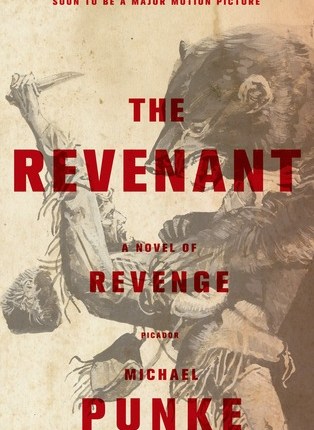
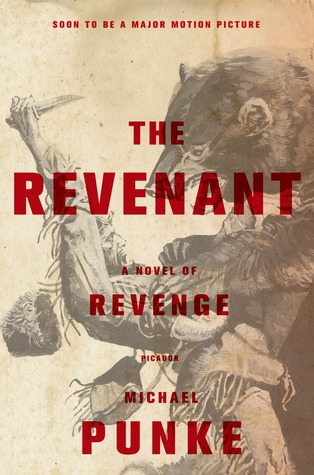
The Revenant is a fictional tale based on the real life account of Hugh Glass, a trapper who was attacked by a grizzly bear and then left for dead by the men who had been left to care for him.

This story is so gripping. From the explosive opening moments until the very last page, the reader is practically swept up into the action.

Not only are the men in The Revenant struggling with each other, but Nature herself has a huge role in this survival tale. If the characters aren’t freezing, they’re starving or looking for a safe place to sleep.

This is a particularly excellent read for a cold winter night with a cup of something hot to drink near your elbow.

This would have been a five star read except for the ridiculously unsatisfying conclusion.

It felt like The Revenant suddenly turned from a survival/adventure/revenge story into a tame morality play.

I realize that it is a morality play the whole time, but with all the action and nail-biting tension, it doesn’t “feel” like one until the ending- which I won’t ruin for you, except to say that it was very lame.

My husband read a version of this story called Lord Grizzly when he was in college so, while I was into this one, we were comparing notes on the differences between the two works.

Photo by Pixabay on Pexels.com

Although varying in small details, the major arcs were the same. I felt as if The Revenant did a better job of building the tension than Lord Grizzly but we both agreed that the ending to the story (in both books) was a let-down.

If you enjoyed reading The Revenant, you may enjoy The Knife of Never Letting Go. Though not based on a true story, it shares the traveling-through-the-wilderness feel and tension of this book.

I received a free copy of this book through Goodreads First Reads. FTC guidelines: check!

And thanks for reading!

Amish Confidential by “Lebanon” Levi Stoltzfus and Ellis Henican

Amish Confidential by “Lebanon” Levi Stoltzfus and Ellis Henican

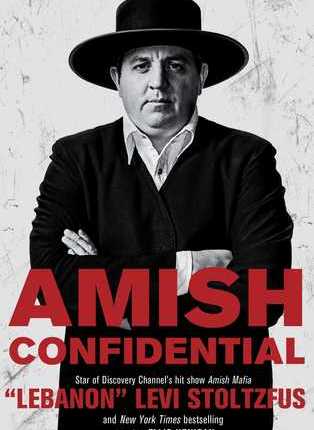
I wasn’t expecting much from Amish Confidential, a tell-all memoir, by Amish mafia reality television star, Lebanon Levi Stoltzfus. Despite my expectations, it was quite good.

I picked it up because watching The Amish Mafia is one of my guilty pleasures. It is a reality, cultural, crime-syndicate show with horses.

Photo by Pixabay on Pexels.com

The Amish, like other insular communities, have plenty to teach the outside world about they live their lives. Levi definitely has the inside scoop, having been raised Old Order Amish, a more conservative branch of the culture.

I loved learning about how the Amish were formed and the historical background of his people. I ate up the bits about Amish marriage ceremonies and the social customs surrounding the party afterwards. Celery, apparently, is huge. Who knew, right?

I wish he had talked more how he fell into the world of “Amish mafia” itself. It’s clear from his narrative that he feels the Amish are taken advantage of because of their religious pacifism. He believes that they desire to deal with potentially criminal matters among themselves rather than going to the authorities. That is the basis of the mafia. For legal reasons, he probably couldn’t be that transparent. But it would have been excellent if he had.

Photo by Brandon Randolph on Pexels.com

If you enjoy the television show, you may not like this as much because it lacks some of the moment to moment tension and drama that one gets from watching the show. But, if you go into it with an open mind to learn more about the Amish in general, it certainly accomplishes that.

If you enjoyed Amish Confidential, I’d recommend The Terrorist’s Son: A Story of Choice (a Muslim boy is raised one way but chooses to live another) or License to Pawn: Deals, Steals, and My Life at the Gold & Silver (a memoir by a pawn shop owner who has his own reality television show).

Thanks for reading!

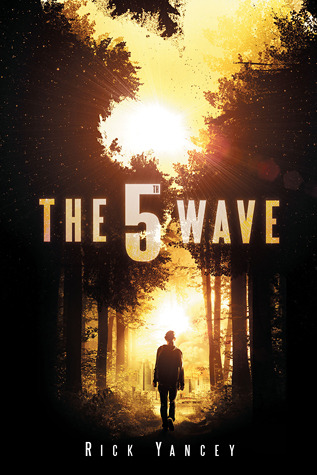
The 5th Wave (The 5th Wave, #1) by Rick Yancey

The 5th Wave (The 5th Wave, #1) by Rick Yancey
the5thwave

Major spoilers ahead. Please do not read if you haven’t read this book.

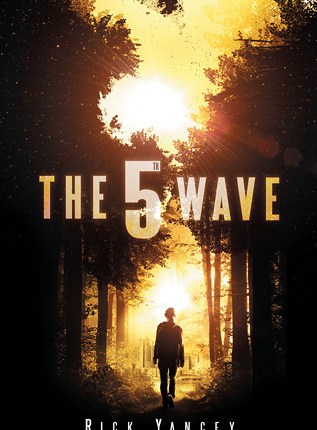
The 5th Wave is about the end of the world and aliens, yes, but it also explores why life is worth living.

Cassie didn’t know how good she had it until the alien spaceship appeared in the sky and life was never the same. First, there was chaos, but now it is clear that the aliens want to exterminate everyone. And, if they just want the planet for themselves, why are they waging war in such a sadistic manner? It is a mystery and Cassie is going to figure it out.

I was really into the narrative when Rick Yancey chose to change characters and continue the story from a different point of view. I felt that it was unnecessary and broke the flow.

Also, and this is another pet peeve of mine, must every young adult dystopian contain romance as a major part of the plot? The Hunger Games, Divergent, I could go on… and this. You’d think the teens would be far too busy staying alive to fall in love, but that’s clearly not the case from the literature.

I really liked the manner in which Yancey introduces his aliens. First, you get to see their results on humanity. Then, he drops breadcrumbs about how they got here. It’s creepy. “There will be no awakening. The sleeping woman will feel nothing the next morning, only a vague sense of unease and the unshakable feeling that someone is watching her. … And what the shadow has come for- the baby within the sleeping woman- will feel nothing. The intrusion breaks no skin, violates not a single cell of her or the baby’s body.” pg 17, ebook. So scary.

I read a few reviews in which this book was accused of being a copycat of The Host and I feel that it deserves a comment. They are similar in that they both contain aliens, both are dystopians and both have the alien consciousness inside human consciousness. But, those are very broad strokes. The details of the books are different enough and I feel that Yancey has his own plans for his story.

In The Host, the aliens feel more misunderstood and benevolent than the scary creatures in The 5th Wave. This book has a lot more action, The Host is more nuanced. To be fair, superficially, they seem too similar for that to be a coincidence. But in reality, they are as different as Star Wars and Dune. Wait a minute, bad comparison? 🙂

Here’s one of my favorite passages: “Forget about flying saucers and little green men and giant mechanical spiders spitting out death rays. Forget about epic battles with tanks and fighter jets and the final victory of us scrappy, unbroken, intrepid humans over the bug-eyed swarm. That’s about as far from the truth as their dying planet was from our living one. The truth is, once they found us, we were toast.” pg 19, ebook.

Also this one, for obvious reasons: “.. I have a thing about books. So did my father. … While the rest of us scrounged for potable water and food and stocked up on the weaponry for the last stand we were sure was coming, Daddy was out with my little brother’s Radio Flyer carting home books.” pg 33, ebook. Seriously. If the apocalypse ever comes, I’m going to camp out in the library, Station Eleven style. Who’s with me?

Recommended for people who like dystopians and intense survival scenes and aren’t annoyed by angst-y teen romance. The 5th Wave is one scary alien story. They’re here and they’re out to get you and everyone you know! And, so far, they’re doing a VERY good job.

Thanks for reading!

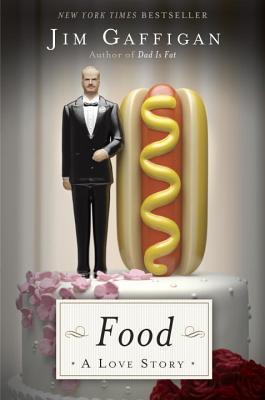
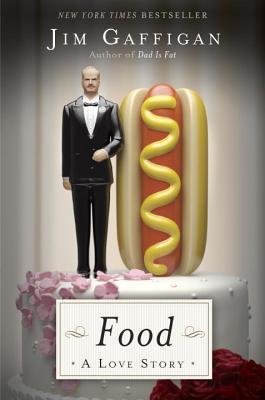
Food: A Love Story by Jim Gaffigan

Food: A Love Story by Jim Gaffigan
food a love story

In Food: A Love Story, Jim Gaffigan waxes poetic about one of his favorite topics – food.

Gaffigan is one of my favorite comics. He has clean, family-oriented humor (so I can watch his specials while my kid is awake rather than waiting for her to go to sleep) and he generally avoids political topics (so I can watch his specials without my husband getting mad and walking away).

I love his humor. However, this book was almost too much for me, even being the huge fan that I am.

At least, in his stand up, he switches topics. Gaffigan is funny in this, don’t get me wrong. But a book’s worth of jokes on just one thing… it’s a tall order. And not just of fries. 🙂

On why he doesn’t like oysters: “Once I had a friend defensively point out to me, “Pearls come from oysters.” I never really understood his reasoning, but I explained I make a rule not to eat things that also make jewelry. Diamonds come from coal, but we aren’t dipping that into cocktail sauce.” pg 60 (ebook)

On BBQ: “I’ve found barbecue to either be some of the best or the worst food I’ve eaten. There is no in between. Either it’s an amazing meal I can’t stop talking about, or I’m angry that I wasted the energy to lift the food to my mouth. Of course, I still finish the whole plate. As I mentioned before, I am not rude.” pg 72 (ebook)

On organic chips: “These potato chips are cooked with avocado oil, so I can eat ten bags. It’s good for me.” Usually the only discernible difference between a regular potato chip and a “healthy chip” is the difficulty in opening the bag. Supposedly there are good fats and bad fats. I like to think of myself as a good fat. It helps my self-esteem when I look in the mirror.” pgs 119-120 (ebook)

Photo by Edu Carvalho on Pexels.com

Kale: “People seem to bring up eating kale as if it’s something that’s going to impress me. Guy: I just ate kale. Me: I don’t care.” pg 154

Comparing different kinds of cakes: “Ice cream cakes: I never really understood the appeal of an ice cream cake. They are so temporary. They just end up stressing me out.” pg 401 (ebook)

And, finally, breakfast: You would feel guilty about eating most traditional breakfast items at any other meal during the day, but since it’s the morning, somehow these foods are considered okay.” pg 416 (ebook)

That’s a good sampling of Gaffigan’s food jokes. It goes on for pages, joke after joke.

The sheer amount of material Gaffigan had to construct about food is kind of impressive actually. Be aware though, it is a one note book.

Thanks for reading!

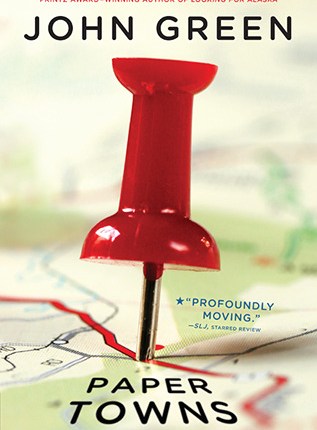
Paper Towns by John Green

Paper Towns by John Green

Warning: this is a book you either love or hate.  Consider yourself warned.

I fell more on the “hate” side of this equation but, surprisingly, enjoyed the film. This young adult, coming-of-age tale has elements of mystery to it.

Quentin has always loved Margo. One night, she wakes him up and they go on a wild tear about town, righting perceived wrongs and causing all sorts of hijinks.

Photo by David Besh on Pexels.com

The next day, Margo has disappeared. Their night out left all sorts of clues to where she went. Q decides to find her.

My negative reaction to Paper Towns surprised me because I loved John Green‘s The Fault in Our Stars so much.

Right off the bat, the reader is thrown into Margo and Quentin’s lives and we’re exposed to some of their worst traits rather than their best. Usually, people behave their best when you first get to know them and then, as they become comfortable with you, they let some of their more questionable sides out.

Photo by Alfonso Escalante on Pexels.com

The whole “rolling around the neighborhood at night and causing mayhem” takes place right at the start of Paper Towns. It isn’t fun because we don’t really know these characters yet.

It’s easier to forgive adolescent hijinks when you know and love the people who are doing them, but we’ve got almost zero time to form a connection before they’re breaking laws.

I think I would have given up on Paper Towns if I hadn’t watched John Green’s TedTalks video on the topic. If you haven’t seen it yet, here it is:https://youtu.be/NgDGlcxYrhQ

Quick summary of Green’s video: The basic idea behind a paper town (a made up town on a map) was copyright protection. The coolest part is that the mapmakers took something that wasn’t real and made it real because they presented it that way for so long.

I know that John Green can write amazing, sympathetic characters. He chose not to in this book and I’ve been rolling it around my brain, wondering why.

I think that Green wrote the characters in this story like a paper town.

At first, he presents the main characters as over-the-top clichés of what teenagers could be. The reader isn’t necessarily meant to bond with them at this point, they’re not real, they’re just “people on paper.”

Photo by Helena Lopes on Pexels.com

Then, through the second part of the book, let’s call it the “clue finding” part, Green slowly reveals more and more of the real parts of their characters just as Quentin finds more and more clues to where Margo has gone.

Through their hopes and dreams, relationships, daily struggles and hopes, they’re becoming more real.

Finally, in the last third of the book, as we join the characters on their mad rush to find Margo, they’ve become real. Real enough to have some close life-threatening moments on the road. Though they started out fake, Green built enough substance for the characters so that they have heft and dimension.

That’s my theory on why Green wrote such awful characters: he meant to. But, I still never liked any of them very much, even after they became “real.”

Photo by Buro Millennial on Pexels.com

I liked Green’s prologue: “The way I figure it, everyone gets a miracle. Like, I will probably never be struck by lightning, or win a Nobel Prize, or become the dictator of a small nation in the Pacific Islands, or contract terminal ear cancer, or spontaneously combust. … My miracle was this: out of all the houses in all the subdivisions in all of Florida, I ended up living next door to Margo Roth Spiegelman.” pg 15 ebook.

“Margo always loved mysteries. And in everything that came afterward, I could never stop thinking that maybe she loved mysteries so much that she became one.” pg 23 (ebook)

And that was the high point in this book for me. It was all downhill afterwards.

Here’s the passage that helped develop my theory about Green writing paper characters in Paper Towns: “… she looks like Margo Roth Spiegelman, this girl I have known since I was two- this girl who was an idea that I loved. And it is only now, when she closes her notebook and places it inside a backpack next to her and then stands up and walks toward us, that I realize that the idea is not only wrong but dangerous. What a treacherous thing it is to believe that a person is more than a person.” pg 406 (ebook)

Photo by Mihis Alex on Pexels.com

In conclusion, if you haven’t read any of John Green’s books, please don’t start with this one.

I highly recommend A Fault in Our Stars. It will break your heart. This one was not so good.

The film adaptation of Paper Towns was surprisingly ok. Borrow it from the library and let me know what you think.

I’m off to be more than a paper character in my own life- thanks for reading!