Artemis by Andy Weir

Artemis by Andy Weir

Jazz lives on Artemis, the first city on the moon. She delivers packages to eek out a living as well as other, more shady, methods of income.

“I live in Artemis, the first (and so far, only) city on the moon. It’s made of five huge spheres called “bubbles.” They’re half underground, so Artemis looks exactly like old sci-fi books said a moon city should look: a bunch of domes.” pg 5

Photo by Alex Andrews on Pexels.com

One day, one of the richest men on the moon makes her an offer far too lucrative for her to refuse… all she has to do is something very dangerous and illegal. No problem, right?

“I’m sorry, but this isn’t my thing,” I said. “You’ll have to find someone else.” “I’ll give you a million slugs.” “Deal.” pg 46.

Andy Weir’s follow-up to The Martian was disappointing to me.

Unlike his first book, the science is watered down. It’s not as educational and quirky. In my mind, the exceptional science was what separated The Martian from other science fiction offerings.

The characterizations are one dimensional, like The Martian, but it was less of a problem in the first book. In that one, you were mainly dealing with one person, alone.

In Artemis, Weir tries to build a city of characters and I didn’t buy into it.

Photo by murat esibatir on Pexels.com

The main character, a female narrator, is particularly problematic. She just didn’t sound like a woman to me.

“I landed like a sack of sh*t. But I landed on the other side of the alcove and didn’t break anything. … Whatever. A clumsy, awkward success is still a success.” pg 124.

But beyond those small problems, Artemis is still enjoyable.

Weir put a huge amount of thought into how an economy on the moon would work. It is the most realistic I’ve ever read.

He also nails the human condition, the drive for novelty and tourism.

Weir describes the trouble with travel: Even when it’s a once-in-a-lifetime vacation. You leak money like a sieve. You’re jet-lagged. You’re exhausted all the time. You’re homesick even though you’re on vacation.” pg 152.

Photo by SevenStorm JUHASZIMRUS on Pexels.com

Word.

Members of my book club voiced the opinion that Weir wrote this book as if he was prepping it for the screen. I agree.

If you’re going to read one Weir book, go with The Martian. Borrow this one from the library.

Thanks for reading!

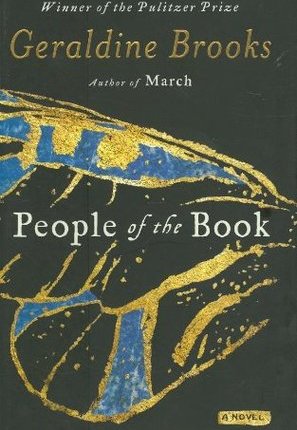
People of the Book by Geraldine Brooks

People of the Book by Geraldine Brooks

The story of an extraordinary book and the people who surround it.

And I did not enjoy it.

My reaction to this one was a huge surprise. I adored Geraldine Brook’s Year of Wonders and I thought this would be an easy hit for me.

Photo by Rachel Claire on Pexels.com

I think the problem is fairly simple- never connected with the main character. I loved Anna from Year of Wonders. I couldn’t stand Hanna.

The small details of her work that she found so absorbing, I didn’t enjoy.

I didn’t like how she treated people sometimes. I thought she seemed rather arrogant.

I also didn’t like how the timelines bounced around from character to character. I was listening to People of the Book as an audiobook. Without being able to look back and check, I found myself getting confused when I stopped in the middle of a passage and picked it up again after a work day.

Photo by Emre Can on Pexels.com

Brook’s writing is just fine. Again, I can’t believe I didn’t like this.

Highly recommend Year of Wonders. I give this a solid pass.

Thanks for reading!

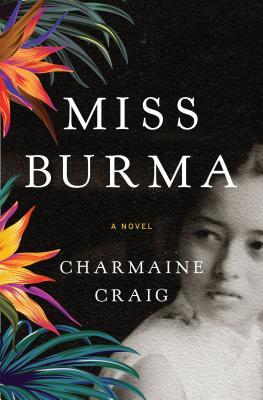
Miss Burma by Charmaine Craig

Miss Burma by Charmaine Craig

A layered and subtle historical fiction about a family in Burma and how they make it through all sorts of terrible things that happen there.

This is an incredibly dark book based on the true family history of Charmaine Craig. My book club had a tough time discussing it.

“Your problem is that you believe in right and wrong. Don’t you know evil will find you no matter what?” pg 11.

Photo by Charly Severino on Pexels.com

First of all, the introductory portion doesn’t make sense until the last half of the book. The pacing is glacially slow. A few of our club members couldn’t make it through the first couple of chapters.

Secondly, the constant warring and torture of innocents by the conquering forces is really difficult to read.

“We welcomed them because we’d been persecuted by the Burmans for centuries, we’d been their slaves – our villages perpetually attacked, our people perpetually preyed upon, stripped of everything from our clothing to our lives.” pg 37.

It is an important history, certainly, but the darkness of it made me feel sick.

A third problem club members had with Miss Burma is it feels disjointed.

Photo by Anthony Beck on Pexels.com

At first, readers thought Khin and Benny were the focus of the book. But then, the point of view drifted around to Louisa, their beautiful daughter, and her story took over.

We must find a way to rejoice in our circumstances. We must find a way to do more than endure.” pg 145

Basically, the Karen are an ethnic minority in Burma, now Myanmar. For centuries, the Karen have been enslaved by the Burmese. The underlying story is about how the Karen tried to unite against the ruling government to create a federation.

“Our modesty that runs so deep it is almost self-annihilating. But now.. our relative invisibility strikes me as very sad. … If you stand for a moment behind their eyes- behind the eyes of anyone for whom modesty is not an ultimate virtue- we appear to value our lives less than they do.” pg 168

Photo by AM wendy on Pexels.com

Against this background, the family of Khin and Benny tries to survive and do what they believe is right.

This story is full of flawed characters and whole passages where most of the action takes place in people’s minds.

There is fairly graphic torture, rape and violence. If any of those are triggers for you, beware.

Recommended for patient readers and those who can handle a very dark history. The book club certainly learned a lot about Burma from this book. And bullets still fly in Myanmar today.

Thanks for reading!

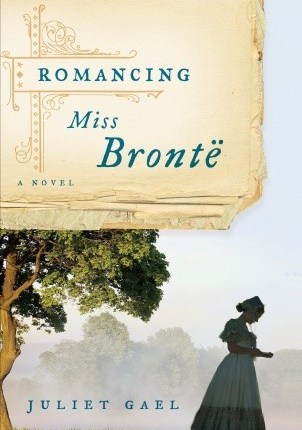
Romancing Miss Brontë by Juliet Gael

Romancing Miss Brontë by Juliet Gael

Warning: minor spoilers ahead if you don’t know the history of the Brontë family. Read with caution.

Romancing Miss Bronte is a disappointing historical fiction about Charlotte Brontë, her sisters Emily and Ann, and how they came from obscurity to write some of the most enduring fiction the West has known.

The first part of this story was the best. The reader gets a unique glimpse into the minds of the Brontës, what their lives were probably like and how unfortunate their brother’s existence turned out to be.

Photo by Suzy Hazelwood on Pexels.com

I loved hearing Juliet Gael’s vision of their character and personality quirks.

The second half of the book, focused primarily on Charlotte and her relationship with Arthur, was a drag.

Up until that point, the women were surprisingly self sufficient, considering the times in which they lived. Yes, they coddled their alcoholic and opium-addicted brother. Yes, they indulged the whims of their ailing father, but for the most part, they acted how they pleased.

Once Arthur enters her life, Charlotte centers every action around him. He tells her who she can write. He controls their social schedule.

The book enters a repetitive loop: Charlotte does something Arthur doesn’t like, he reprimands her, she writes her friend a letter about how annoying it is but she simply adores her husband so it’s ok… and repeat.

Photo by cottonbro on Pexels.com

This was probably the reality of her situation but it sucked. I can’t imagine that I would have been happy living like that. I don’t believe she was either.

The cringe-inducing letters Gael describes in the story actually exist. I also think that if I was a sensitive and reclusive person like Charlotte Brontë, having my personal letters published after my death would be a nightmare situation.

Charlotte and her sisters were forced to live a sub-par existence because they were women.

Traditional roles for women left so little room for living. It’s astonishing that the Brontës were able to write anything at all, when you consider when they lived and the disadvantages to their station.

Photo by Felix Mittermeier on Pexels.com

They were poor, lived in the middle of nowhere and had no one they could rely on except themselves.

Add to the mix a dose of religious guilt and social expectations… again, the world is fortunate to have their stories.

I suggest reading Jane Eyre or Wuthering Heights instead of this.

Thanks for reading!

Dear Girls Above Me: Inspired by a True Story by Charlie McDowell

Dear Girls Above Me: Inspired by a True Story by Charlie McDowell

Dear Girls Above Me is about Charlie McDowell’s time living beneath a loud group of gossiping young women (names have been changed to protect the innocent). He claims to have learned much about love, life and himself through his eavesdropping.

From the description, I thought this book was going to be cute. Instead, I found it very creepy.

“I most definitely did not expect to be the unwilling audience of a twenty-four-hour slumber party between the Winston Churchill and Benjamin Franklin of the 90210 generation.” pg 6, ebook.

Photo by Max Vakhtbovych on Pexels.com

But, shortly after professing his irritation for the girls, he spends an inordinate amount of time wandering around his apartment, looking for the location with the best “reception” of their voices.

“…I’m living underneath a couple of Kardashian wannabes who spend their time gossiping, starving themselves, and throwing noisy parties.” pg 21, ebook.

Instead of ignoring them or moving to a new apartment, Charlie creates a Twitter account where he mercilessly mocks the snippets of conversation he overhears. It seemed very passive-aggressive to me.

“As my Dear Girls Above Me Twitter following grew, so did my guilt and anxiety. Each day, more and more people were discovering my ‘letters’ to the girls, and I felt as if it was only a matter of time before they stumbled across it.” pg 113, ebook.

Photo by Tracy Le Blanc on Pexels.com

But not guilty enough to stop tweeting about it.

Charlie does try to build reader sympathy by sharing some fairly embarrassing stories about his own personal life, but it didn’t really work. I found myself feeling embarrassed for everyone in this book rather than amused.

The low point of this tale was this: Dear Girls Above Me, ‘The psychic said I have a serious stalker in my life!’ I much prefer ‘a friend who always listens,’ thank you very much. pg 194, ebook.

No, stalker is more appropriate. Sorry.

I don’t recommend this book.

Thanks for reading!

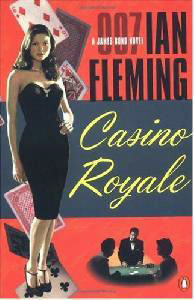
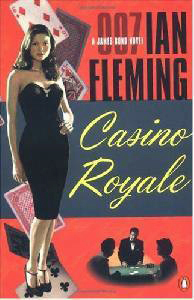
Casino Royale (James Bond #1) by Ian Fleming

Casino Royale (James Bond #1) by Ian Fleming
casino royale

The first novel about James Bond, the 00 agent, takes place at the Casino Royale. He has to outplay a French/Russian operative to take money away from the communists.

If Bond fails in his mission by losing at the card table, then British government will be directly funding communists. No pressure.

I have a thing for Bond. Cool under pressure, fast cars, looks fabulous in a tux…

I thought I would like this a lot, but I didn’t. I don’t think the story has aged well.

The best parts of the tale took place in the casino itself, the bar or the dinner table.

“Bond had always been a gambler… above all, he like that whatever happened was always one’s own fault. There was only oneself to praise or blame. Luck was a servant, not a master. Luck had to be accepted with a shrug or to be taken advantage of up to the hilt. But it had to be understood and recognized for what it was and not be confused with faulty appreciation of the odds. For, at gambling, the deadly sin is to mistake bad play for bad luck.”

Bond certainly knows how to order a drink:“A dry martini,” he said. “One, in a deep champagne goblet… three measures of Gordon’s, one of vodka, half a measure of Kina Lillet, shake it until its ice cold and then add a large thin slice of lemon peel. Got it? … I hate small portions of anything, particularly when they taste bad. This drink is my own invention. I’m going to patent it when I can think of a good name.”

His attitudes about women were particularly depressing: “As he drove, whipping the car faster and faster through the night, with the other half of his mind, he cursed Vespa and M for having sent her on the job. This was just what he had been afraid of. These blithering women who thought they could do a man’s work. Why they hell couldn’t they stay at home and mind their pots and pans and stick to their frocks and gossip and leave men’s work to the men?”

This blithering woman is going to put down the book now and back away slowly…

Recommended for… not blithering women?

I believe I’ll stick to the films from now on.

Thanks for reading!

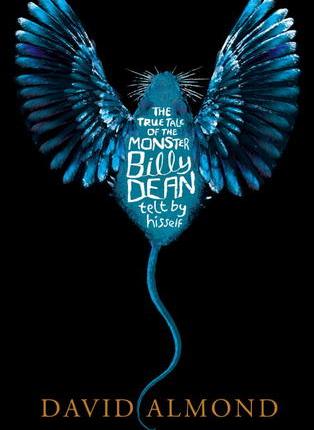
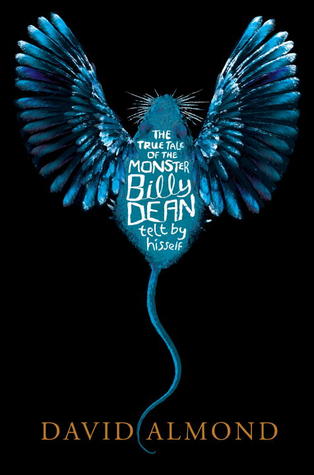
The True Tale of the Monster Billy Dean Telt by Hisself by David Almond

The True Tale of the Monster Billy Dean Telt by Hisself by David Almond
billydean

A strange story about a boy who grows up in a room by himself. Through his extreme isolation, he discovers he has powers beyond that of a normal boy. There is a mystery surrounding his parentage and also about the world outside the only room he has ever known. The boy’s name is Billy Dean and this is his tale.

This pseudo-memoir is written mostly phonetically and with intentional misspellings, which was incredibly annoying at first, but you find yourself getting used to it. “This tale is told by 1 that died at birth by 1 that came into the world in the days of endles war & at a moment of disaster. He grew in isolayshon wile the enjins of destruchshon flew & smoke rose over the sitys & wile wilderness & waste crept all acros the world.” pg 1, ebook.

David Almond was attempting to capture Billy Dean’s innocent but uneducated voice through the misshaping of the words. I get what he was going for, but felt it did a disservice to the story.

Which wasn’t that good. It could have been though and that was disappointing.

Take this intense moment when Billy Dean’s father tells him that he should have killed his son the moment he was born: “Wilfred O bliddy Wilfred shud hav killd the monster in the woom. …. He grabbd me by the throte. Shudnt he? he yelld at me. Anser me you cretin! Tel me I shud have ended it befor it had bluddy begun. Tel me yes you shud hav Daddy!” pg 32, ebook.

It just doesn’t have the impact it could have, does it.

Or this moment, when Billy Dean is comforting his mother: “Im so sory” she wispers. “It was all supposed to be so different.” … “Its lovely Mam” he grones at her. “Its byutiful.” And all this nite he wil not slepe for the aykin of his mussels & the stingin of his bones & the thumpin of his hart & the byuty & the wunder of this world. pg 87

Photo by fabio.tsu on Pexels.com

Beyond my issues with how the author chose to present his story, I felt that the magical part of the story was misshandled, especially when it comes to the child Billy Dean.

It made the timing of events feel strange. Nothing would happen, this this huge unexplained thing would roll out and the reader would be expected to accept that as the new normal and go on.

Perhaps Almond was trying to express the inexplicable nature of existence?

This book left me with a lot of unanswered questions, but not in a good way. I can’t recommend it.

Thanks for reading.

The Handmaid and the Carpenter by Elizabeth Berg

The Handmaid and the Carpenter by Elizabeth Berg
handmaid and carpenter

A re-telling of the birth of Jesus from the viewpoints of Mary and Joseph.

I picked up this audiobook thinking, ‘Oh, this’ll get me in the Christmas spirit.’ But, I was dismayed to discover I turned into the Grinch instead.

I did not connect with this at all.

I didn’t like the characters. I didn’t like the dialogue.

I found myself rolling my eyes when Joseph was talking about traditional gender roles. I realize Elizabeth Berg was beating us over the head with it because she was depicting Joseph was uber-traditional, but I had zero patience for it.

The moment the angel comes to Mary could have been something spectacular and it sounded almost exactly like the King James version of the Bible. I wanted this re-telling to bring a new dimension to the story and it didn’t.

The interactions between Mary and her cousin Elizabeth, the mother of John the Baptist, were stilted and strange.

Berg tried to bring a sacred feminine vibe into the mix by making Mary knowledgeable about herbs. It just fell flat.

I can’t recommend this one.

I’m off to steal the presents from Cindy Lou Who. The Grinch, signing off!

Thanks for reading.

The Murders of Molly Southbourne by Tade Thompson

The Murders of Molly Southbourne by Tade Thompson

The Murders of Molly Southbourne is a short story about a girl who is born with a horrifying condition. Whenever she bleeds, the blood changes into a homicidal version of herself that won’t stop until it, or Molly, is dead.

“The rules are simple. If you see a girl who looks like you, run and fight. Don’t bleed. If you bleed, blot, burn, and bleach. If you find a hole, find your parents. Molly recites the lines to herself many times.” pg 24.

I’m not sure I understood what the author was going for with this short story.

Yes, what happens to Molly is horrific. I guess I didn’t make the connection between what was happening to her and the broader meaning the story was reaching towards.

Photo by Badulescu Badulescu on Pexels.com

Because it was certainly reaching: “She cannot stand children. They remind her of the mollys, with their innocence and their half-formed personalities, and she expects them to burst into violence any minute. They never do, but they might.” pgs 63-64

Or, beyond the death-through-your-children angle, I could use this story to consider the futility of life itself. “How is it that humans bleed so much? Or maybe Molly herself bleeds more than the average human. The rule are useless, an attenuation at best. Lifeblood escapes all the time, minor hemorrhages, a little a day. Maybe that is how we age. Maybe that is how we die.” pg 91

It is creepy and could fit the bill if you’re looking for one more short and spooky pre-Halloween read. I just didn’t connect with it.

Thanks for reading!