And the Ocean Was Our Sky by Patrick Ness

And the Ocean Was Our Sky by Patrick Ness

“But now, here, once and for all, I set down my tale. I am not who I was then. I said I was ignorant, and I am not wrong, though by that point I had learned that men lived upside down from us, that for them the ocean was below, the Abyss above, our gravities only meeting at the surface.” pg 15

Photo by Emiliano Arano on Pexels.com

Patrick Ness weaves a re-telling of Moby-Dick, or, the Whale from the point of view of the whales. It falls some what short of his usual magic.

I think the trouble with re-telling major stories or fairy tales, (as I’ve discussed in previous reviews, Dorothy Must Die comes to mind) is that unless the remake is extraordinary in some way, it won’t surpass the original story. It’s exciting to revisit beloved worlds or, in this case, a classic tale and upend reader’s expectations. Using the point of view of the whales is unique, but the story seems to stall there.

The original Moby Dick gives us obsession and memorable characters. Bathsheba, the young apprentice whale in this tale, is a confused mess most of the time. That doesn’t lend itself to either greatness or memorability.

Ness is at his best when he’s describing Bathsheba’s world. I wish he had gotten more into how they respected and feared the depths of the ocean, which they considered the opposite of the ‘Abyss’ in our world. I also wish he had taken readers through one of the cities constructed by the whales. He hinted at a civilization beyond the hunt, but we never quite got there.

Photo by Andre Estevez on Pexels.com

I guess he was trying to build tension with the hunt for Toby Wick. I wanted a more layered fantasy tale.

“Maybe it takes a devil to fight a devil,” I said. “But at the end of the fight, Bathsheba,” he said, “Don’t only devils remain?” And for a moment in the ocean, there was only blackness. We were alone. Even with ourselves. And whatever devils lurked, unseen. pg 99

The artwork by Rovina Cai is beautiful and spare, utilizing very few colors or many fine details beyond shading. I think she conveys the idea that most of the story takes place underwater very well. I liked the illustrations perhaps more than I liked the story.

If you must read And the Ocean Was Our Sky, may I suggest borrowing it from your local library.

Thanks for reading!

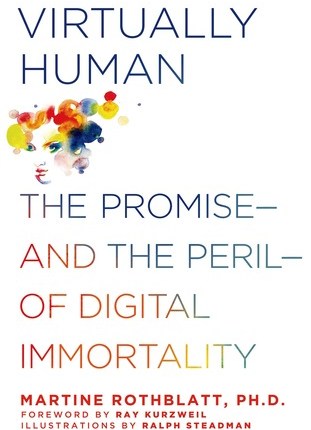
Virtually Human: The Promise and the Peril of Digital Immortality by Martine Rothblatt

Virtually Human: The Promise and the Peril of Digital Immortality by Martine Rothblatt

Dr. Martine Rothblatt, an expert in medical ethics, takes the time to imagine a future in which artificial intelligence is real and the potential problems that could arise from such interactions.

Photo by Alex Knight on Pexels.com

Unfortunately, I found Virtually Human to be virtually unreadable.

The introduction sounded promising enough — a description of the robot that Dr. Rothblatt created and its capabilities — but then Dr. Rothblatt launches into an abstract conversation about what is consciousness. She applies her definition to hypothetical artificial intelligences, which haven’t been created yet, and proceeds into a dizzying array of potential scenarios involving mindclones and “bemans”.

She talks about potential marriages between people and machines, various types of AI — some dysfunctional, some not — voting rights, reproduction rights, and more. It all reads like a discussion of very dry, very abstract human rights law mixed with a smidgen of science fiction, but not enough to be engaging.

Photo by Pixabay on Pexels.com

Dr. Rothblatt certainly knows her stuff, but is seemingly unable to impart her knowledge in an approachable manner. Perhaps, I should say, this is a book that would probably be enjoyed by scholars interested the subject.

I suppose this might be more interesting when such technology actually exists, but in the meantime, it seems rather pointless to be asking ourselves if mindclones should have the right to vote or not. I’m not convinced that by asking ourselves unanswerable questions we’ll be better prepared for when/if this sort of thing actually occurs. Maybe we’ll just have to take life as it comes.

I received a free copy of this book through Goodreads First Reads.

Thanks for reading!

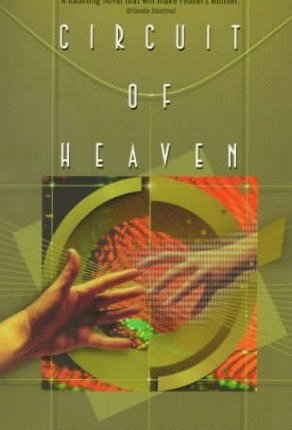
Circuit of Heaven by Dennis Danvers

Circuit of Heaven by Dennis Danvers

“Is not God in the height of heaven? And behold the height of the stars, how high they are. And thou sayest, How doth God know? Can he judge through the dark cloud? Thick clouds are a covering to him, that he seeth not; and he walketh in the circuit of heaven.”pg 14

Photo by Burst on Pexels.com

Humanity has created a computer program that can contain a person’s soul within its code. The programmers have made a new world — one without disease, violence or hunger, where those who leave their bodies behind and enter it, can live forever.

Prior to this breakthrough, programmers learned how to implant portions of people’s personalities into biological bodies, to work as laborers and earn money for the ultimate project of building the new paradise. They called these creations, “constructs”.

Not everyone, including some leftover constructs, have chosen to take advantage of this “heaven” and entered the program. Religious fundamentalists and those who have other objections to entering have remained behind. However, society has broken down without the leaders, who entered the program along with billions of other souls. Food is hard to come by and wild packs of dogs roam the streets.

Nemo, for reasons he can’t totally explain even to himself, has chosen not to enter the program (commonly called ‘the Bin’) to be with his parents. But on a recent visit, he meets a beautiful woman and his life will never be the same.

Photo by Pixabay on Pexels.com

Justine is a recent arrival to the Bin. But her memories are confused and she can’t remember where she has been for the past few weeks. Is it a programming error or indicative of a bigger problem with the Bin itself?

There were scare stories about people going into the Bin and breaking up like a virtual in a thunderstorm, that there were flaws in the crystalline structure of the Bin, and you could find yourself in nightmarish worlds that made no sense, completely alone.” pgs 12-13

I enjoyed the science fiction portions of this story and contemplating the power that humanity could one day potentially wield over life and death. With computers advancing the way they are, it’s not too hard to imagine that someone someday will figure out how to code a personality or soul. And that raises a whole host of other questions, doesn’t it.

What about the psychological effects of everything you could ever want being available at the touch of a button? What does it mean when a mother can program herself to look younger than her children? And what about children in a world without death? Should babies be uploaded immediately into the Bin or programmed from pure code without ever having existed in the real world?

Photo by Lisa Fotios on Pexels.com

The dilemmas go on and on. Beyond considering the hypothetical moral questions, I had a few problems with this book.

The characterizations were weak. A few of the major plot twists were clear well before they happened. But there was one, a big one, that I didn’t expect and it was pretty messed up. Then, the characters just seemed to get over it and move on. They had a few conversations and that was that. To be honest, it took me awhile longer. (No spoilers, but if you read this one, I’m certain you’ll know exactly what I’m talking about.)

Then the ending, when it came, was too rushed, which was rather a shame. So, that’s why I gave this a middling review. The premise was fantastic. Then it devolved into a so-so science fiction.

Thanks for reading!

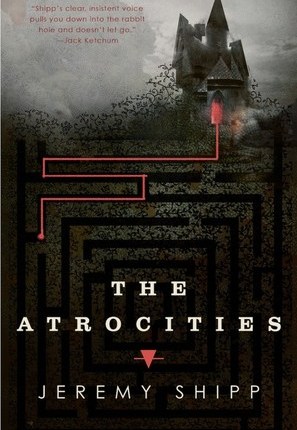
The Atrocities by Jeremy C. Shipp

The Atrocities by Jeremy C. Shipp

“You see, Ms. Valdez, we require a governess with very specific qualifications. And this goes beyond a mastery of math and science and linguistics.”

Ms. Danna Valdez is summoned to a gothic mansion filled with grotesque artwork to tutor a girl who has died.

But no one told her about the special circumstances of her pupil before she arrived.

“Isabella isn’t coping well with this new phase of her existence. A few months ago, she started breaking things. At first it was only a lamp or a vase every few weeks, but things are… escalating.” pg 29

Photo by Adrien Olichon on Pexels.com

Within the mansion lives Mr. Evers, an artist and the creator of many of the grotesques, and his wife, Mrs. Evers, a cook named Robin and a gardener/handyman named Raul.

The emotionally-charged atmosphere of the place gives Danna nightmares as soon as she arrives. And something seems to be a little off…

The premise of this story was very exciting, but I didn’t enjoy its execution or ending.

The grotesque artwork seemed to hold more meaning than I was able to glean from it.

“The parishioners would stop and reflect on each Atrocity. And what would they see? Not a hideous statue. They would look beyond the violence and suffering to the metaphysical core of the image. They would see a manifestation of God’s power.” pg 13

Photo by George Becker on Pexels.com

The artwork is creepy, disturbing and sets the scene. But it didn’t make the story.

“Each canvas houses an emaciated figure draped in tattered strips of gossamer. Wings made of human fingers spread out from their backs, and their ashen skin stretches tight over their bones like shrinkwrap.” pg 16

Recommended for readers who prefer complex imagery over plot development.

Thanks for reading!

Here’s some other horror stories I have reviewed:

The Murders of Molly Southbourne by Tade Thompson

Hyde by Daniel Levine

All Darling Children by Katrina Monroe

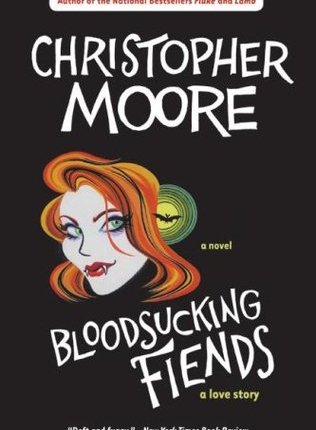
Bloodsucking Fiends (A Love Story, #1) by Christopher Moore

Bloodsucking Fiends (A Love Story, #1) by Christopher Moore

Jody was attacked by a man who bit her neck and left her for dead in an alleyway. She woke up a vampire. What is she going to do now?

“(Jody) was twenty-six and pretty in a way that made men want to tuck her into flannel sheets and kiss her on the forehead before leaving the room; cute but not beautiful.”

Photo by Mariah Green on Pexels.com

C. Thomas Flood wants to be an author, but where he comes from (Indiana) that’s not an acceptable trade for a man. He flees to San Francisco to “starve in the city.” After some misadventures with too many roommates and turkey bowling at the Safeway, he meets Jody and his life is never the same.

“Turkey bowing is not recognized by the NCAA or the Olympic Committee. There are no professional tournaments sponsored by the Poultry Farmers of America, and the footwear companies do not manufacture turkey bowling shoes. … Despite this lack of official recognition, the fine and noble tradition of ‘skidding the buzzard’ is practiced nightly by supermarket night crews all over the nation.”

Christopher Moore takes on the “vampire genre” and it’s not his best effort. If you’re going to read one of his books, I recommend Lamb: The Gospel According to Biff, Christ’s Childhood Pal.

It’s still ridiculous fictional literature, but I enjoyed the characters in Lamb more. In Blocksucking Fiends, everybody reads like one cliché after another.

Photo by cottonbro on Pexels.com

“In another time she would have called a girlfriend and spent the evening on the phone being comforted. She would have eaten a half gallon of ice cream and stayed up all night thinking about what she was going to do with her life. .. But that was another time, when she had been a person.”

And perhaps that was Moore’s point. It was as if he was mocking the sub-genre of vampire novels by his one-dimensional characters and thin plot.

Or maybe it is just a sub-par effort.

I don’t think I’ll be picking up the other books in this series.

Thanks for reading!

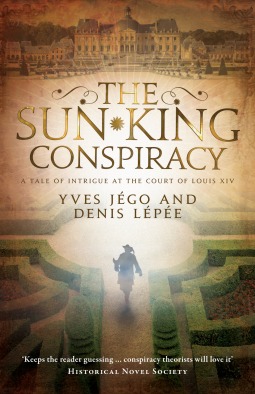
The Sun King Conspiracy by Yves Jégo

The Sun King Conspiracy by Yves Jégo

A historical fiction about a French King, his mistress, his minister, his mother, an aspiring actor with a secret past and a secret society with hidden knowledge that could change the world.

“A chief minister is dying, yet people are interested only in counting the supporters and detractors of an entertainer…” pg 9, ebook.

Unfortunately, I didn’t really care for The Sun King Conspiracy.

I felt like it was trying to be a mystery like The Da Vinci Code with the complexity of an epic historical fiction. It didn’t quite reach either pinnacle.

“According to Colbert’s report, the murderers took nothing else of any worth from my apartments. From this, I deduce that their only concern was to seize those papers.” pg 36, ebook.

It was probably just me, but I kept getting the ministers and their roles confused. Also, their alliances and reasons why they hated each other never really made sense to me.

“The truth is,” said the scholar with a sad smile, “that this question of succession seems to be the only matter that interests anyone in Paris, when the real subject that ought to occupy us, the only one worthy of any interest, is entirely different: it concerns the stability of the Kingdom.” pg 142, ebook.

Photo by Katarzyna Modrzejewska on Pexels.com

It felt like there were nuances to the court relationships that were never explicitly stated.

Maybe the author assumed a familiarity with the court of the Sun King that I don’t possess.

The whole secret society part of this story was just flat. I felt like I’d read the same conspiracy in half a dozen other books.

“I am more aware of this than anyone else. I have paid so dearly for it that my belief in its ultimate success is perhaps the only thing that still keeps me alive…” pg 229, ebook.

Photo by medium photoclub on Pexels.com

I didn’t connect with any of the cast of characters either. They were so cookie cutter.

Here’s hoping I like the next read more. 🙂

Thanks for reading!

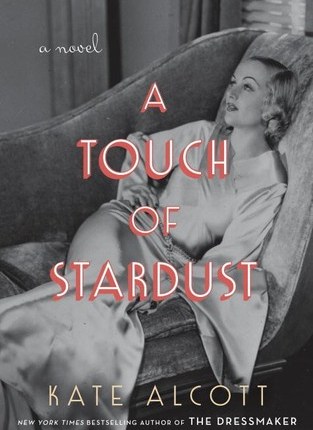
A Touch of Stardust by Kate Alcott

A Touch of Stardust by Kate Alcott

A girl from Indiana goes to Hollywood and ends up taking care of Hollywood royalty in A Touch of Stardust.

The reader gets a behind the scenes look at the making of Gone With the Wind and the private, slightly dysfunctional lives of Carol Lombard and Clarke Gable.

Photo by cottonbro on Pexels.com

It was fun learning about what went into the creation of Gone With the Wind. Those parts of the book sort of read like a Hollywood-fan magazine, but better written.

The dialogue in this book is snappy and smart, like a Bogie and Bacall film.

I loved the heroine and how she pulled herself up by the bootstraps to make it in Hollywood at a time when very few women did.

Photo by Trace Hudson on Pexels.com

Overall, it’s a great story. I absolutely loved this book up until the ending which I hated.

We discussed this read in my book club and some folks liked the ambiguous feel of the ending. I was not one of those.

Recommended for readers who can handle an ending that might make them say: “Huh?” or “No!”

Thanks for reading!

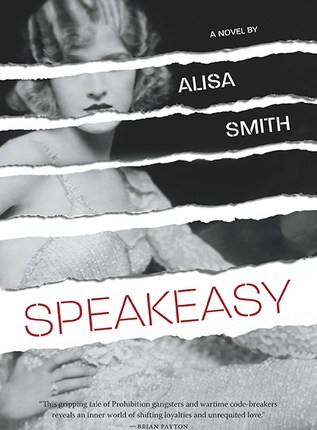
Speakeasy by Alisa Smith

Speakeasy by Alisa Smith

Lena Stillman is a codebreaker during World War II. But she hasn’t always been a hero.

During the depression, she robbed banks with Bill Bagley and the Clockwork Gang.

What is she going to do now that the past seems to have caught up with her?

Photo by Karolina Grabowska on Pexels.com

Speakeasy had some interesting elements, but the story suffered from a back and forth narrative and flat characters.

“I spread my papers out in front of me, and at first they all looked the same: a random mix of roman letters divided always into five characters with a space between each set, so no word lengths were revealed. I was searching for any repetitions.” loc 15, ebook.

The story is told from Lena’s perspective and diary entries of one of the members of her old gang.

“Bill Bagley was being punished because he had failed at something for which he possessed genius.” loc 80, ebook.

Photo by Deepak Verma on Pexels.com

The back-and-forth storytelling was jarring. I liked the stories separately, but together, it didn’t really work.

They interrupted the flow of each other. I think it might have fit together more smoothly in a Part I/Part II presentation rather than interspersed.

I think Bill Bagley, one of the central characters, didn’t have the depth required to pull off this story.

He’s supposed to be this charismatic, brilliant criminal who inspires the men to risk their lives again and again, and also captures Lena’s heart.

Bagley has some failings, but, initially, there must have been something to him to draw the gang together.

Instead, from the start, he comes off as a volatile jerk.

We meet Bagley as he’s denying the parentage of a child who looks just like him: “This un ain’t mine and don’t tell me again that it is,” he said, thrusting the baby back to a lady with burning red cheeks.” loc 80, ebook.

He doesn’t improve from there.

Photo by John-Mark Smith on Pexels.com

“I returned from a visit with Bill, received a threatening note from him, and now this. He must have a copy of it and wanted to hold it over my head.” loc 741, ebook.

I guess I just never understood what Lena saw in him.

Also, for a genius code breaker, she doesn’t seem to be able to puzzle out the people around her very well.

“My morals were just not like other people’s, because unlike the somnolent majority I saw society’s problems. In my youth I had been misguided, and picked the wrong way of lashing out against an unfair system. But I had left the gang behind, and found a greater ease in my soul.” loc 1781, ebook.

Photo by RODNAE Productions on Pexels.com

There’s a twist that occurs during Lena’s code breaking era that I saw coming from miles away. And I’m not particularly good at calling plot twists.

My favorite part of this book were the gang-era years. My heart was in my throat during most of those chapters.

Unfortunately, it couldn’t carry the rest of this novel.

Thank you to NetGalley and the publisher for a free digital copy of this book.

Thanks for reading!

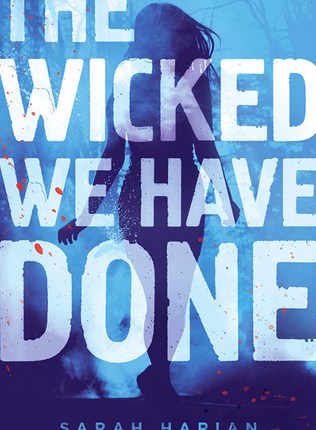
The Wicked We Have Done (Chaos Theory, #1) by Sarah Harian

The Wicked We Have Done (Chaos Theory, #1) by Sarah Harian

In a not-too-distant future, humanity has developed the technology to see inside the mind of criminals. Through simulations and tracking responses, the law claims to have the ability to measure motivation and “goodness.”

Evalyn Ibarra says she is guilty, but not of the crime she is on trial for. Rather than rely on a jury to prove her innocence, she chooses the “compass room,” the new technology, to prove her innocence.

If she is truly evil, the compass room will kill her. If she is innocent, she will walk free.

Photo by Sora Shimazaki on Pexels.com

“My throat tightens, but there is no time to reflect. I had months to imagine this moment, months to mourn. That time is over, because today is the beginning of my inevitable execution in the Compass Room.”pg 7, ebook.

I found the premise of this book to be interesting, but it suffered in its execution and characterizations. Both were rather flat.

“The tension after Stella leaves is awkward and volatile. … We’ve been given provisions, so it’s obvious that, if this is the Compass Room, we are meant to head out. It’s either that or stay in a house full of psychopaths.” pg 25, ebook.

Did I mention that the compass room tries more than one criminal at a time? Very Hunger Games-esque.

“The one thing I do know about the Compass Room is that this test is supposed to see who you truly are, despite your research. Despite good acting or the lies you tell yourself.” pg 27, ebook.

Photo by Alex Andrews on Pexels.com

Wouldn’t it be something if detecting evil was as simple as marking a chemical or hormonal response of the brain?

But then, of course, you wander into the problem: what if the technology gets it wrong? Or glitches?

“A terrorist attack finally convinced the Supreme Court. All charged in the bombing were forced to undergo the Compass Room’s exam. And they were all found to be, as reporters said on the news, ‘morally tarnished.'” pg 12, ebook.

The thing about execution is that there are no second chances or second guesses. Evalyn believes herself to be innocent. Will the room think so too?

I think if the author had fully explored the compass room and the psyches of those involved, I may have enjoyed it more.

Photo by Ignacio Palu00e9s on Pexels.com

As it was, I felt like we only skimmed the surface of what was possible. It lacked complexity because of the number of characters she wrote into the story.

Also, the author includes some half-baked romances, perhaps to prove this is in the “new adult” genre? I don’t believe it added much.

There’s also some non-spooky horror elements, that are meant to evoke the harrowing nature of the compass room. They felt overdone.

If you must read The Wicked We Have Done, I recommend borrowing it from the library.

Thanks for reading!