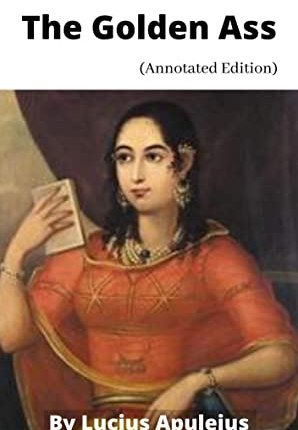
The Golden Ass by Apuleius

The Golden Ass by Apuleius

Lucian longs to experience real magic. When he discovers it, an unfortunate misstep turns him into the title character. In the shape of an ass, Lucian suffers through a series of misadventures.

Photo by Nilina on Pexels.com

I wonder when Apuleius was writing The Golden Ass, if he ever imagined this particular novel would be the only one written in Latin to have made it through his time to ours in its entirety.

Perhaps that’s an unfair question, because how could a writer imagine something like that?

But if he could have somehow foreseen it, I think that he would have written something different than this rambling, depressing, occasionally obscene adventure. Or maybe not. Maybe it summoned up his society nicely.
Photo by Mike Andrei on Pexels.com

Hypothetical ramblings aside, it didn’t make for an enjoyable reading experience.

A very large consideration for readers of The Golden Ass is the quality of the translation and how that may affect your enjoyment of the book. A friend and I read this book in tandem and this particular problem became clear quite quickly.

My edition, borrowed from the library, is a reprint of a translation by William Adlington in “Oxenford, September 1566,” and comes complete with the spelling and idiosyncrasies of his era.

“You perhappes (sic) that are of an obstinate minde (sic) and grosse (sic) eares (sic), mocke (sic) and contemme (sic) those things which are reported for truth, know you not that it is accounted untrue by the depraved opinion of men, which either is rarely seene (sic), seldome (sic) heard, or passeth the capacitie (sic) of mans reason, which if it be more narrowly scanned, you shall not onely (sic) finde (sic) it evident and plaine (sic), but also very easy to be brought to passe.” pgs 14-15, ebook

Photo by Andrea Piacquadio on Pexels.com

I found many passages “passeth the capacitie of” my reason because the nearly five hundred years between Adlington’s translation and this made so much of it nearly unintelligible.

My friend read a modern translation by Penguin Publishing and reported a more positive reading experience. If given a choice between the two, please do pick the more modern version.

“Verily shee (sic) is a Magitian (sic), which hath power to rule the heavens, to bringe (sic) downe (sic) the sky, to beare (sic) up the earth, to turne (sic) the waters into hills and the hills into running waters, to lift up the terrestrial spirits into the aire (sic), and to pull the gods out of the heavens, to extinguish the planets, and to lighten the deepe (sic) darknesse (sic) of hell.” pg 19, ebook

Translation problems aside, I found the bulk of the story to be repetitive and, on the main, depressing. Things get worse and worse for our hero.

Photo by Emmylou on Pexels.com

Yes, there is some measure of relief when we reach the end of our story and explore the mysteries of a cult whose rituals have been forgotten to history. But between the beatings and, as I mentioned, various obscene interludes, the end couldn’t come fast enough. Poor Lucian, “poore” William Adlington, and poor me!

The version I read of The Golden Ass, I recommend only for English majors, classicists or religious scholars. The appeal for modern readers just isn’t there.

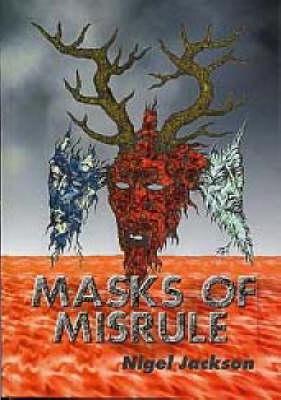
Masks of Misrule: The Horned God and His Cult in Europe by Nigel Jackson

Masks of Misrule: The Horned God and His Cult in Europe by Nigel Jackson

My mind has been going in circles as I’ve pondered, for days, how to review this book. It is a poorly organized and bewildering publication that could be tremendously important for pagans or religious scholars who are looking for information about The Horned God.

“The Knell of Inbetweenness hath been struck,
The Bell of MISRULE soundeth;
Reverberating the Thirteen Angles,
Echoing through the Nine Spheres”

Photo by Luca Paul on Pexels.com

It begins with a foreword by Michael Howard speaking of the scarcity of information about a male god within the existing neo-pagan revival movement. Then, the author, Nigel Jackson, goes into what could almost be called a tirade against established religions and the current neo-pagan movement in a chapter entitled, “In the Sign of the Horns.”

“The old time is passed away and the ‘age between the ages’ is begun: the Aionic Twilight falleth over the world and the day of the cross and the mitre is wholly done with.” pg 11

Honestly, that type of tribalism and fear-mongering is a poor look for any type of spiritual movement. Why immediately alienate readers from other spiritual paths who are coming to your materials with an open mind and a willingness to learn?

Photo by Vladyslav Dushenkovskyi on Pexels.com

Despite his initial hostility, Nigel Jackson quickly turns his attention to what he believes are different aspects of a male pagan god, throughout history, and includes various rituals to invoke this ancient being.

As I mentioned earlier, it is a bewildering hodge-podge of material with only the thinnest of connecting threads between. Newcomers to occult matters or pagan practices may lose their way within the quickly shifting time periods, places, names and associated mythologies.

However, I found information in “Chapter Three: Cycles of the Midnight Hunt” and “Chapter Seven: Wudewasa, the Knowledge of the Green Man” that was completely new to me and interesting.

“It was held that when nocturnal thunder broke over the wildwood and the forked lightning-flash clove the darkness and the night-tempest roared and tossed the boughs, that the wild host of Woodwoses came forth in primal panoply, raging through the hoary oaks and pines, their eldritch voices mingling with the storm’s tumult.” pg 107

Photo by Pixabay on Pexels.com

The printing of Masks of Misrule is a travesty for any lover of books. The font is irregular and fades, seemingly at random, within the text. The cover is ridiculous and does nothing to convey the seriousness with which the author treats his subject.

But if you set all of these concerns aside, some of the mythology contained within this book is entirely original, at least to me, and could be incredibly useful for seekers who are looking for a new movement within paganism that celebrates the male side of nature.

Thanks for reading!

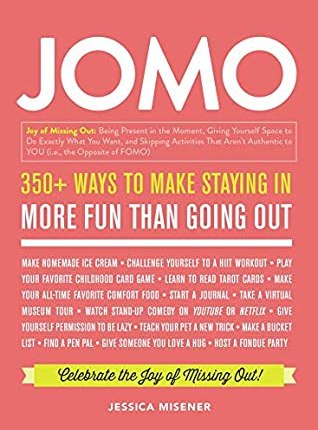
JOMO: Celebrate the Joy of Missing Out! by Jessica Misener

JOMO: Celebrate the Joy of Missing Out! by Jessica Misener

JOMO or “the joy of missing out” lists “350 plus ways to make staying in more fun than going out.” Unfortunately, a large number of these suggestions included books to read or programs to watch. In my mind, all of those fit into one of two categories, reading or watching television.

“Because skipping a night on the town doesn’t mean you’re missing out on life – you’re just missing out on someone else’s idea of what your life should look like.” pg 7

Photo by Alex Qian on Pexels.com

That being said, there were a few solid suggestions in this book for alleviating boredom. I particularly liked “shower with the lights off” pg 24, “listen to autonomous sensory meridian response videos” pg 47, and “do The New York Times’s 36 questions” pg 127.

The rest of these seemed repetitive, as I mentioned, or uninteresting.

Perhaps this book would have been more enjoyable in the pre-COVID world, when I hadn’t been quarantining at home for months, disappointed with the state of the world and feeling stymied. Maybe I could have gotten into “make a homemade pizza” or “rearrange your furniture.” But things have moved beyond expecting the completion of simplistic tasks to hold the answers to life’s problems, at least for me.

“Host a fondue party,” that appears on the cover of this book, seems like something that happened in another world. Will we ever get back there?

Photo by Laurel Natale on Pexels.com

Thanks for reading!

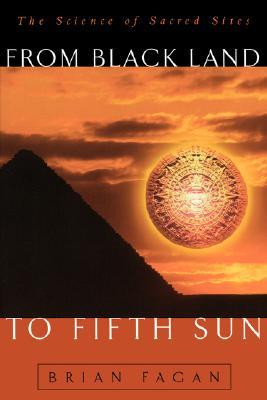
From Black Land To Fifth Sun: The Science Of Sacred Sites by Brian M. Fagan

From Black Land To Fifth Sun: The Science Of Sacred Sites by Brian M. Fagan

From Black Land to Fifth Sun is the textbook for an online course I’m taking from Oxford University about ritual and religion in prehistory.

The opening chapter to the book seems promising, offering readers a glimpse into the hidden worlds of what could be called the “archaeology of the mind.”

“The emerging ‘archaeology of mind’ is a marriage of cultural systems theory, settlement archaeology, environmental reconstruction, contextual archaeology, and the decipherment of written records.” pg 11

Photo by Samuel Wölfl on Pexels.com

Unfortunately, the text then becomes bogged down by the author’s lengthy descriptions of archaeological sites he visited during the course of his life and his interactions with some of the giants of the field, who, as he so helpfully notes, are dead now. One of my classmates described it as “perhaps the most boring travelogue ever.”

“I have not seen the Chauvet paintings: few outsiders have yet had the chance. Nor should they, for our primary concern must be to protect them from harm.” pg 50

Some of the most interesting parts of this were the author’s descriptions of rituals from modern peoples, such as the San. But there are perils galore to using any of this modern information to decipher rituals in prehistory. The culture and society is not the same. The hierarchies are not the same. The tools and materials available are not the same. The meanings assigned to the ritual movements may have changed if we even knew what those movements were, which in most cases we don’t. There may have been a charismatic figure at the center of the cult or religion, and who knows what they may have been like. I could go on and on.

“As they activated their potency, the medicine men trembled, then sweated, then bled from the nose, as the potency took hold of them – an eerie sight to behold. Many white hunters have seen dying eland, trembling with wide-open mouths, sweating profusely, with melted fat gushing like blood from their nostrils. Perhaps the San likened this phenomenon to ‘death’ in a medicine man’s trance.” pg 61

Photo by Athena on Pexels.com

The fact that I find this book so dull truly is a shame. This topic could come alive with a little updating. Perhaps if the text had a digital component, where you could digitally “walk” through the sites the author is describing as he describes it, it might hold the attention.

Also, From Black Land to Fifth Sun was published in 1998, twenty-two years ago for those keeping score. It purports to be on the cutting edge of archaeological research but I find that extremely dubious when I consider how far technology has developed since then. One need only look at the state of our handheld devices to know it couldn’t possibly be true.

In addition to the meandering yet somehow dry descriptions and outdated technology, somehow the author has managed to suck the life out of a topic I find extremely compelling. What did ritual and religion look like during prehistory? I don’t know, but I can imagine so many different scenarios. So many!

I feel like this field could use people who use their intuition and imaginations in addition to scientific techniques to bring the past to life- almost like a shamanistic version of Indiana Jones.

Photo by Navneet Shanu on Pexels.com

Instead, we have either scientists putting locks and fences around sites to maintain each dust molecule in context and then droning on for hours about when the human brain may have become capable of religious thought or arguing about whether religion developed as a societal control for hunter-gatherers or agricultural people. On the other hand, there’s the spaced-out new agers who want to camp among the ruins of Stonehenge or wherever and commune with whatever spirits they claim are living in the rock, divorced from any kind of scientific evidence whatsoever.

Can’t we have some sort of happy medium?

Only recommended for the readers who are taking the same course I am. Otherwise, seekers are advised to steer clear.

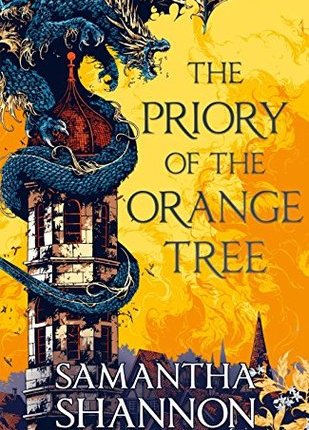
The Priory of the Orange Tree by Samantha Shannon

The Priory of the Orange Tree by Samantha Shannon

A cast of interesting and well-imagined characters stumble through poorly-written plot twists on their way to saving the world from “The Nameless One”.

“The House of Berethnet may protect us from the Nameless One, or it may not. There is no proof either way. … That is the problem with stories, child. The truth in them cannot be weighed.” pg 109

Photo by Suraphat Nuea-on on Pexels.com

I started out enjoying The Priory of the Orange Tree. The way the story builds is engaging and moves along at a fast clip.

My main quibble with this fantasy book is Samantha Shannon takes more than 800 pages to create her world with its countries, religions, magic systems, but then resolved major plot points in two to three sentences or less in some cases.

We learn about items that have been missing for a millennia and I thought, oh this is going to be interesting to figure out. But then, two pages later, through a series of ludicrous coincidences, two of the main characters have one of the items in their hands.

In one of the major confrontations of the book, Shannon doesn’t even write dialogue and played it out through the eyes of a character who had no idea what was going on. I wouldn’t have been so put off by it if she hadn’t spent literally hundreds of pages getting us to that point. That particular villain may not have been the focus of the tale, but I think she at least deserved a final monologue.

Photo by Snapwire on Pexels.com

When traveling from place to place, there aren’t tantalizing descriptions of the trip. Basically, the character gets in the conveyance and, boom, they’re at the destination. Shannon used more descriptive words when she talked about the food characters were eating than she did when her characters were moving from here-to-there.

The exception to this rule were her descriptions of “the Abyss”. The way she depicted the stars shining down from above and out of the depths was beautiful.

Complaints aside, there were plenty of things I liked about the book. I enjoyed the way Shannon took real life alchemical principles and wove them into something otherworldly for her story.

“What is below must be balanced by what is above, and in this is the precision of the universe. Fire ascends from the earth, light descends from the sky. Too much of one doth inflame the other, and in this is the extinction of the universe.” pg 150

Photo by Pixabay on Pexels.com

I also liked the secret order whose name graces the front cover of the book. The different cultures Shannon created were a treat a learn about. I thought her characters were, for the most part, quite relatable.

“So you see, Ead,” the queen said, “I do not sleep because I’m not only afraid of the monsters at my door, but also of the monsters my own mind can conjure. The ones that live within.” pg 203

The characters were diverse and, as I mentioned, well-written. A couple times in the story, particularly in the portions about the Abyss, I felt Shannon’s writing was elevated to something like prose.

“Love and fear do strange things to our souls. The dreams they bring, those dreams that leave us drenched in salt water and grasping for breath as if we might die – those, we call unquiet dreams. And only the scent of a rose can avert them.” pg 416

Photo by Irina Iriser on Pexels.com

I think this story could have been extraordinary if Shannon hadn’t been trying to fit so much into one volume. A trilogy with lingering descriptions of landscapes and nail-biting conclusions to the various story arcs would have been much more enjoyable.

Thanks for reading!

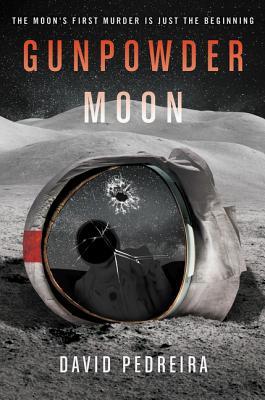
Gunpowder Moon by David Pedreira

Gunpowder Moon by David Pedreira

In a dystopian world where the once powerful countries are now scrambling for fuel, the helium3-rich fields of the moon are a godsend. But when an American miner turns up dead, it may become the new front in a war, not just for control of the Earth, but also the galaxy.

“Cold enveloped him. He opened his eyes in Moon shadow and had to blink to make sure they weren’t closed.” pg 5

Photo by Alex Andrews on Pexels.com

This is a story that could have been a thriller, but it gets bogged down in the technical aspects of life on the moon. I imagine the science is sound, but, unlike “The Martian”, I felt like it slowed the action down to a crawl rather than speeding it along.

The characters were problematic. There are half a dozen of them and I couldn’t seem to connect with any.

“Dechert wondered for the hundredth time if the people back home had any clue what it was like to live on the Moon.” pg 15

The mystery wasn’t all that mysterious and is tied up in one paragraph towards the end. I was disappointed. I like my mysteries with more twists and turns, an unexpected bump or two.

Photo by Pixabay on Pexels.com

“I’m going to catch a quick two hours,” he said. “Wake me up if something bad happens.” pg 29.

A nap was starting to sound pretty good to me too.

I read David Pedreira’s bio and it seems he’s a journalist, or was. I could tell from his writing. The sections read sort of like mini-news stories. Lede, information, kicker, repeat. Not that there’s anything wrong with that format, but I wish the story had been shaken up somewhat.

Oh well. On to the next book! Thanks for reading.

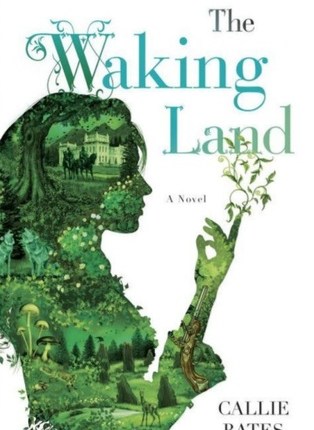
The Waking Land by Callie Bates

The Waking Land by Callie Bates

A fantasy novel about a young woman who was raised away from her home who is destined to become something greater than anyone ever imagined she could be.

There were shades of Irish mythology in this story with magic surrounding standing stones and a midnight ritual about “marrying the land”.

Overall, I just felt like I had read this book before in some form or another. It stuck to so many forms — heroine who doesn’t know her own strength, falls in love with a man who may help her or betray her, trusts everyone she shouldn’t and doesn’t trust everyone she should.

Photo by WARREN BLAKE on Pexels.com

There were so few unexpected moments. Even the big stuff is heavily foreshadowed. Take this passage:

“I can do nothing. I am a botanist, not a sorcerer. Botanists have a place in this world — a respectable place. As the emperor of Paladis likes to remind us, sorcerers are worse than nothing — their impious actions are a mockery of the gods, and their historical conviction that they could rule kingdoms presented a threat to civilization itself, a danger that had to be exterminated.” pg 22

Ok, now guess what is going to happen in this book… you’re probably right. And that blurb is from the first chapter.

I’m on to the next book… and thanks for reading!

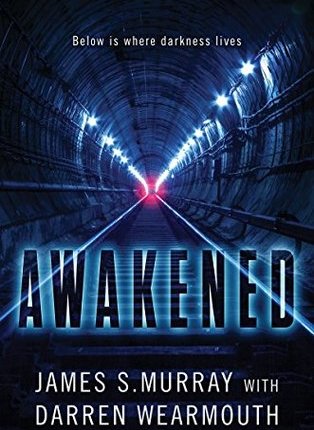
Awakened (Awakened #1) by James S. Murray, Darren Wearmouth

Awakened (Awakened #1) by James S. Murray, Darren Wearmouth

A new subway line in New York City is being unveiled with fanfare, press coverage and even a visit from the President of the United States. When something goes terribly wrong, it becomes clear that an unspeakable evil has been released from the depths.

And they all said the devil didn’t actually exist…

Photo by Anthony Macajone on Pexels.com

Plodding dialogue and clumsy character development clog what otherwise would have been an action-packed science fiction read. The set up was so classic. The line, “the dwarves delved too deep”, kept running through my head.

“The workers shouted and pointed, but the noise of splitting granite drowned out their words. The ground beneath Grady’s feet disintegrated. He lunged for the cable, clutched it in a white-knuckled grip, and dangled over the newly formed black abyss.”pgs 8-9, ebook.

And once the evil emerges, I thought everyone took far too long to figure out what the heck was going on. For goodness sake, the President was right there. I mean, maybe in the face of unexplained phenomena, response times would be slowed down. But I had a hard time believing the incompetence.

“The majority headed to the food court while shooting nervous glances toward the train. Cops, now free from the burden of chaos, helped the injured to their feet and escorted them to triage. The five dead — one from the stampede, another shredded by the cafe window, and three at the hands of the Secret Service — were placed in a line and had jackets draped over their faces.” pg 18, ebook.

Photo by Kaique Rocha on Pexels.com

On the other hand, I did enjoy some of the tense moments. I liked the way journalists were portrayed, because of course they’d be there. Unless all newspapers go under… which, let me be clear, I don’t think anybody wants. But gosh, that’d make a good horror story, wouldn’t it.

“We’re sealing the second car of the train and taking refuge inside.” “Are you mad?” the Washington Post journalist called out. “There’s not a chance in hell I’m going near that subway train.” pg 37

If you take this story for what it is, like a summer blockbuster of a book rather than a serious work of science fiction, it’s fun enough. There’s thrills, chills and moments of terror.

“He had never subscribed to conspiracy theories or the far-fetched stories about monsters, but he couldn’t deny what he just saw. It hardly seemed believable. … This wasn’t terrorism. It was pure terror.” pg 52

Photo by Lucas Pezeta on Pexels.com

Recommended for readers who are looking for a mildly entertaining book to pass the dark days of winter or the hot days of summer by a pool. This is like a “comfort food” option for horror and science fiction fans.

Thanks for reading!

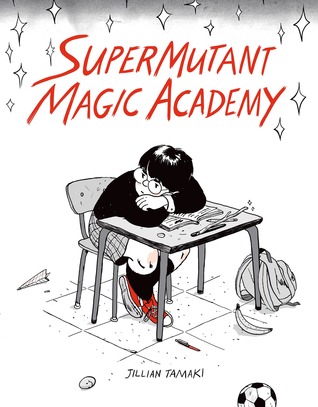
SuperMutant Magic Academy by Jillian Tamaki

SuperMutant Magic Academy by Jillian Tamaki

At the SuperMutant Magic Academy, strange things happen and everyone looks different, but teenage angst and questions about reality remain the same. There is unrequited love, hormones run amok and popularity problems. There is a young man who can’t seem to die, no matter how he tries to end his life. There’s an artist who puts herself into shocking situations to underline the pointlessness of reality.

There’s a young woman with the head of a lizard who just wants to find a boyfriend and a beautiful girl with ears like a fox who occasionally has to change into a fox and hunt prey. There’s drugs and alcohol and a host of other issues, while the poor teachers are simply trying to educate the group.

Photo by fauxels on Pexels.com

I didn’t connect well with this graphic novel and question its appropriateness for the younger end of the young adult scale. Older or more mature teens should be ok. There’s moments that make light of self harm without, what I think, is the appropriate context. There’s some sexual content that may be incredibly confusing and inappropriate for 11 and 12 year olds.

When I borrowed this from the library, I was under the impression that I could share this book with my child. After reading it, I realized I was wrong. That may have affected my opinions of SuperMutant Magic Academy. If I had just read it for enjoyment’s sake, maybe I would have thought more of its content.

Or maybe not. Jillian Tamaki gives herself, usually, just six panels to create a narrative and it isn’t enough. The jarring moments of reality left me with more questions than answers. I wanted more of a story and never really got that.

Photo by Thiago Matos on Pexels.com

It made me think maybe I was missing out on something. If this is based off of a web comic, maybe I would have enjoyed it more if I had read it in its original medium.

Thanks for reading!