The Herbal Goddess Guide: Create Radiant Well-Being Every Day with Herb-Inspired Teas, Potions, Salves, Food, Yoga, and More by Amy Jirsa

The Herbal Goddess Guide: Create Radiant Well-Being Every Day with Herb-Inspired Teas, Potions, Salves, Food, Yoga, and More by Amy Jirsa

The Herbal Goddess Guide is a beautiful little reference book in which 12 different herbs are examined for physical, mental and spiritual healing purposes.

Amy Jirsa provides recipes, yoga poses, crafts and more to utilize the healing power of the plants in various ways.

Photo by Tim Douglas on Pexels.com

This book may not be for everyone as it has a very new age feel. Jirsa discusses magical traditions, honoring a plant’s spirit and more.

However, if you’re into tapping your inner goddess, this may be the perfect book for you.

If you read it and you enjoy it, you may want to purchase The Herbal Goddess Guide for your personal collection because Jirsa suggests “getting to know” each plant for a month and there is a chapter devoted to each.

It could take you awhile to thoroughly digest the information in these pages. (And to try everything!)

My favorite chapter, probably because it is my favorite herb, is lavender. Did you know it is a member of the mint family?

Photo by Palo Cech on Pexels.com

While lavender is known for being relaxing, it can, in some cases, be stimulating, so be sure to check in with your mind, your mood, and your energy level after each recipe.” pg 131.

Some of the yoga poses Jirsa outlines are rather advanced, but she offers modifications for each. If your flexibility isn’t up to snuff, no worries.

Highly recommended for the open-minded reader and non-traditional healers.

For similar, new age/self help books I’ve reviewed, check out:

How to Be Happy, Dammit: A Cynic’s Guide to Spiritual Happiness by Karen Salmansohn

The Four Agreements: A Practical Guide to Personal Freedom by Miguel Ruiz

Trance Dancing with the Jinn by Yasmin Henkesh

And thanks for reading!

Be Here Now by Ram Dass

Be Here Now by Ram Dass

A classic exploration of spirituality and consciousness by the former Harvard professor turned drug-fueled, then clean, spiritual seeker, Ram Dass.

What a strange book.

The first part is Ram Dass‘s life story.

Photo by Alesia Kozik on Pexels.com

He has trouble relating exactly how his guru changed his life. He also has trouble expressing his life changing spiritual insights.

This could perhaps be because of all the LSD he experimented with, but no judgement here.

I think Dass could have added another couple hundred pages to the first part and still probably not fully described his experience.

The next section of the book is block text printed on, what seems to be, brown paper bags. Monty Python-esque photos are drawn in, and sometimes behind, the text.

Photo by Giftpundits.com on Pexels.com

It reads like a stream-of-consciousness, path to enlightenment, how-to lecture.

Some of it is worthwhile, but I can’t sugarcoat it: It’s pretty far out there.

My description doesn’t really do it justice. Perhaps Be Here Now is one of those books that needs to be “experienced” rather than read.

The last section was a “cook book” on how to live an enlightened lifestyle.

Photo by Mikhail Nilov on Pexels.com

If you have a question about how an enlightened person lives, it’s probably included in there.

Dass elucidates how he believes you should eat, sleep, breathe, interact with others, think, meditate, raise a family, form a commune and so on.

I didn’t like it because it felt too brain-washy, cult-ish.

Dass attempts to put the reader’s mind at ease to all of the strictures. He mentions that one needn’t be concerned about family or social responsibilities because, once you reach the ultimate level, you’ll realize that none of those things are real anyway.

Looking back on my review, it seems as if I don’t like Ram Dass, but I do.

I rather enjoyed his Polishing the Mirror: How to Live from Your Spiritual Heart and a documentary that I saw about him once called Fierce Grace.

I too have had life experiences that have led me to the belief that human kind is here to “be high” and not just to “get high.”

Photo by Tim Gouw on Pexels.com

I don’t buy into the idea that life has to be lived a certain way to get certain results.

And, perhaps because I haven’t personally had the experience yet, I don’t get the whole guru relationship thing. I know it’s my western background speaking, but there you have it.

Recommended for spiritual seekers, but don’t forget to trust your own inner guidance.

Thanks for reading!

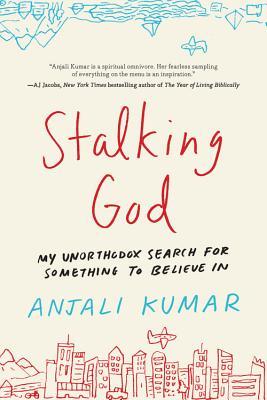
Stalking God: My Unorthodox Search for Something to Believe In by Anjali Kumar

Stalking God: My Unorthodox Search for Something to Believe In by Anjali Kumar

Anjali Kumar is a lawyer who is used to having all the answers. After she had a daughter, Anjali realized she knew very little about the big questions: why are we here? What is it all about? Is there a God?

“In 2010, when my daughter Zia was born, I decided that I needed to find God.” loc 24, ebook.

Anjali went on a quest to find out the answers, not only for the sake of her daughter, but also herself. She touches all the bases – from meditation to faith healing to Burning Man to yoni worship – Anjali leaves no stone unturned in her search to find what is real.

Photo by Artem Beliaikin on Pexels.com

“Along the way, I learned to chant, to meditate, and to marvel. I wrestled with my own identity, from my ethnic and cultural roots in India, to my femininity, to my role as a woman, daughter, mother, and wife. … I fancied myself an explorer, no different really than Magellan or Columbus. I was looking for a new world.” locs 148-163.

It’s a fascinating memoir.

Before each experience, Anjali puts in her research in an effort to find the science behind the beliefs. It’s not always as concrete as she would like it to be, but Anjali tries to engage her brain and her heart in her quest.

This is before she goes to her first “para-tan sounding”: “According to string theory, the entire universe is basically humming – all of it and all of us. Add that to the fact that the chanting of mantras has a long, compelling spiritual history, that cancer researchers are using sound- high-intensity focused ultrasound- to successfully destroy prostate cancer cells … and this whole Paramji thing starts to look like it might be grounded in a bit of hard science…” loc 500

Photo by Nataliya Vaitkevich on Pexels.com

Anjali tries to keep an open mind, even when things sound very strange: “One thing I had to be cognizant of… was how difficult it is as an outsider to come to terms with what are easy to perceive as the odd behaviors and strange beliefs of ‘other people.’ … as outsiders we have no idea what those behaviors and traditions stand for or mean.” loc 904.

She finds layers of meaning, even when particular experiences weren’t all that she hoped they would be. Anjali also experiences a few surprises along the way.

“I was looking for a theory of everything spiritual for Anjali and Zia. And yet, so far, just like those physicists had failed to find a theory of everything in the entire universe, I had failed to find a theory of everything for my own spirituality.” loc 1343.

Photo by Pixabay on Pexels.com

And she never gives up because: “A spiritual home is something that we all have to find for ourselves.” loc 2853.

Recommended for seekers everywhere. Anjali’s discoveries may not be earth-shattering, but they’re real and worth the read.

Thank you to NetGalley and Seal Press for a free advance reader copy of this book. Reminder: the short quotations in this review may change or be omitted in the final printed version.

Thanks for reading!

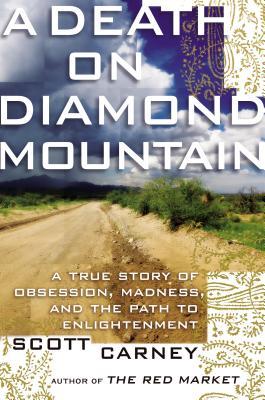
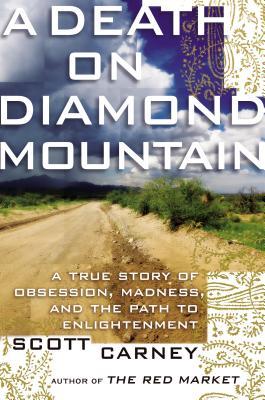
A Death on Diamond Mountain: A True Story of Obsession, Madness, and the Path to Enlightenment by Scott Carney

A Death on Diamond Mountain: A True Story of Obsession, Madness, and the Path to Enlightenment by Scott Carney
diamond mountain

In A Death on Diamond Mountain, Scott Carney has crafted an excellent examination of an untimely death, cult-like Buddhist practices, madness along the spiritual journey, and the dangers of extreme religious practices like multi-year, silent meditation retreats and fasting.

He also provides not only extensive backgrounds for all of the main actors in this tragedy, but also a dissection of the birth of Eastern philosophy in the West, including many different religions and belief systems.

This is the first non-fiction book that I’ve ever read that discusses potential negative effects of meditation.

Photo by Pixabay on Pexels.com

In this eye-opening analysis, Carney talks about potential research bias in meditation studies. He mentions researchers habitually attributing consistently positive results to meditation and reporting any negative results as pre-existing conditions in the practitioners rather than a side effect of the practice itself.

I think that this is an indication that moderation in all things, including meditation, may be the best way forward. I was unaware of the potential, catastrophic consequences of abusing traditional spiritual methods.

The sad thing is that the tragedy detailed in this book could have been prevented.

The death of Ian Thornson reads like a soap opera.

Photo by Shiva Smyth on Pexels.com

Carney has written these dysfunctional yet charismatic people with such skill that their personalities almost leap off the page.

I pitied Ian’s mother while reading about her struggles to extract her son from what she felt sure was a cult. Then, when his spiritual search eventually killed him, I can’t imagine the pain that she went through.

I’m certain that any mother would be proud for her child to exhibit the sort of spiritual drive that Ian had, however, the extremes that he took it too were obviously unhealthy. Again, it appears that moderation is the key to success.

Readers who enjoy non-fictional survival stories like Into the Wild may enjoy A Death on Diamond Mountain.

This book could also appeal to readers who enjoy learning about Buddhist philosophy or meditation methods. It is a shining example of how not to proceed on the spiritual path.

Thanks for reading! I received a free copy of this book through Goodreads First Reads.

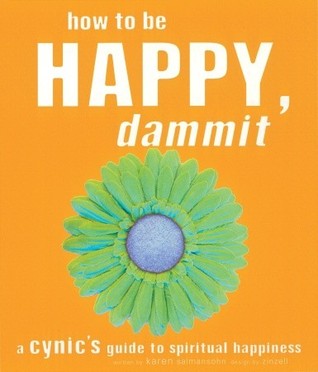
How to Be Happy, Dammit: A Cynic’s Guide to Spiritual Happiness by Karen Salmansohn

How to Be Happy, Dammit: A Cynic’s Guide to Spiritual Happiness by Karen Salmansohn

How to Be Happy, Dammit is a succinct, brightly colored treatise on enlightenment. Coming in around 230 pages with only a few words per page, this is a book that can be read over the course of a lunch hour or *ahem* during other short breaks in your life on a porcelain throne.

Photo by Andre Furtado on Pexels.com

It doesn’t use an abundance of coarse language (see title), but it does utilize a few words to get the point across.

The book is broken down into short life lessons that feed into the next. “Life Lesson 1: Pain exists. Life can hurt. Like a lot. Even when you’re good, you can get whacked. Without apology. Without explanation.” pgs 14-15.

That’s the life lesson about being born. Can’t really argue with that.

My child was born wailing before she was even entirely out. I was wailing too, for different reasons of course, but life can hurt. No doubt.

I found meaning in “Life Lesson 6: Never go shopping for kiwis in a shoe store. Some people just don’t have what you need. So why waste time, banging on their doors, ringing their bells, demanding service?” pgs 38-39.

Photo by PhotoMIX Company on Pexels.com

I think I’m still learning that one.

“Life Lesson 19: This is a world of duality: of good and bad, yin and yang, decaffeinated and caffeinated. So you must always be prepared!” pg 112. Decaffeinated? Poor souls…

In the chapter on self-programming, we get this wisdom: Life Lesson 27: The world is your mirror.” pg 174.

Photo by Mauru00edcio Mascaro on Pexels.com

I don’t think folks realize that either.

Recommended for people who are interested in spirituality, but don’t necessarily have a lot of time or patience for more touchy-feely books. How to Be Happy, Dammit delivers on its title. Now let’s all go be happy. Dammit. 🙂

Thanks for reading!

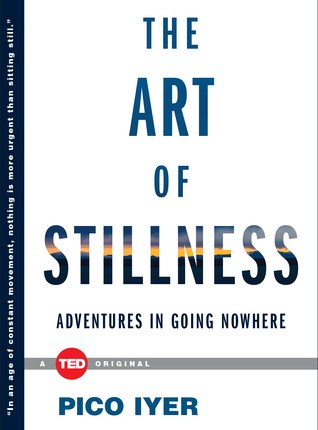
The Art of Stillness: Adventures in Going Nowhere by Pico Iyer

The Art of Stillness: Adventures in Going Nowhere by Pico Iyer
artofstillness.jpg

Pico Iyer approaches stillness from a Buddhist perspective in “The Art of Stillness.”

“And it’s only by going nowhere- by sitting still or letting my mind relax- that I find that the thoughts that come to me unbidden are far fresher and more imaginative than the ones I consciously seek out.” pg 62.

It’s not a world that most people are accustomed to experiencing, a space of being rather than an active doing. But, as Iyer so succinctly illustrates, it’s a realm that our fast-paced and technology addicted world desperately needs.

To venture into this emptiness is a restful and required experience for the health of the mind as much as inspired action is necessary for the experience of a fulfilling life.

I think that our culture has forgotten the power of stillness and the beauty of balancing our male and female energies. This book is an excellent reminder to appreciate both.

For those folks out there who haven’t heard Pico Iyer’s TED talk on this topic, I would recommend that you watch it first, then read this.

I read this and then I listened to the talk. Almost all 18 minutes of it were taken verbatim from The Art of Stillness. So, you’ll enjoy it more, I believe, if you do the opposite of what I did.

My big takeaway from this was the idea of air travel as “a retreat in the sky” pg 56. I dislike flying to the point where I tend to reach my destination exhausted and ready to return home the moment I land.

I think if I could successfully adopt the process that Iyer describes of treating the flight as a “meditative retreat” that I could change my experience of air travel from a nightmare into a restful pause.

There are many large ideas like that contained within this small book.

For the right person at the right time, The Art of Stillness could change her life. As Iyer says, The Art of Stillness doesn’t contain any “new” ideas but they are powerful and much needed ones.

Readers who are short on time, but big on stress may really love this book.

I received a free copy of this book through Goodreads First Reads. FTC guidelines: check!

Thanks for reading!

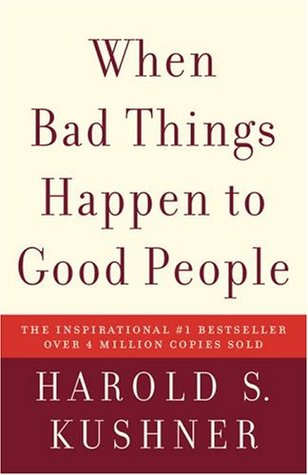
When Bad Things Happen to Good People by Harold S. Kushner

When Bad Things Happen to Good People by Harold S. Kushner
badthingshappen

When Bad Things Happen to Good People is Rabbi Harold Kushner’s examination of life, why things happen and the role of God in all of it.

Kushner wrote the book because his son was born with progeria, a disease where his body aged much faster than it should, and he died young. It shook Kushner to his core. “Tragedies like this were supposed to happen to selfish, dishonest people whom I, as a rabbi, would then try to comfort by assuring them of God’s forgiving love. How could it be happening to me, to my son, if what I believed about the world was true?” pg 3.

Kushner methodically picks apart traditional explanations for why tragedy strikes. When he’s through, none of them hold water.

“I would find it easier to believe that I experience tragedy and suffering in order to ‘repair’ that which is faulty in my personality if there were some clear connection between the fault and the punishment. A parent who disciplines a child for doing something wrong, but never tells him what he is being punished for, is hardly a model of responsible parenthood. Yet, those who explain suffering as God’s way of teaching us to change are at a loss to specify just what it is about us we are supposed to change.” pg 23.

Photo by Pixabay on Pexels.com

It’s no secret that earlier this year, I changed jobs – from a reference librarian to a writer in a newsroom. I picked up this book because I was going through a spiritual crisis of sorts.

It’s not that I’m overly-religious, but I am spiritual. I believe in things we can’t see or explain. I believe in the goodness of people and the universe.

In my job, every day, I read and hear about terrible things that happen for no reason at all. Sometimes, I write about families who lost a child to a rare disease or I read a story about someone dying in a car or motorcycle accident, and I think, “Why do things like this happen?”

I just didn’t see how a universe that was inherently good, as I believed, could have things like this happen, all the time, every day.

Photo by Snapwire on Pexels.com

Kushner says, don’t look for God or goodness in the bad things, look for the good in the response or what comes after. “For me, the earthquake is not an ‘act of God.’ The act of God is the courage of people to rebuild their lives after the earthquake and the rush of others to help them in whatever way they can.”pg 60

In the final analysis, the question why bad things happen to good people translates itself into some very different questions, no longer asking why something happened, but asking how we will respond, what we intend to do now that it has happened.” pg 147

That was a philosophy that I needed.

I now try to look for the good in the response to tragedy and, wouldn’t you know, I find it. Every day, there’s someone who’s kind or generous or brave. The goodness was always there. I just had to change where and how I was looking for it.

Thanks for reading!

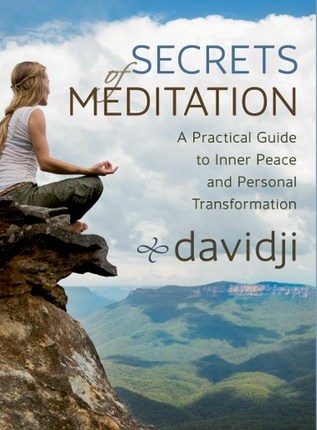
Secrets of Meditation: A Practical Guide to Inner Peace and Personal Transformation by Davidji

Secrets of Meditation: A Practical Guide to Inner Peace and Personal Transformation by Davidji

Secrets of Meditation is one of the clearest and beginner friendly meditation manuals that I’ve ever read.

Davidji breaks practices down not only into type and step-by-step instructions with examples, but also by lineage and development over time and place.

Davidji provides enough background on himself to establish his bona fides but not so much as to overpower the instruction with meaningless chatter about himself.

Photo by Spencer Selover on Pexels.com

He intersperses the text with helpful advice, additional authors to explore, and a myriad of ways to connect with him online for some meditation freebies.

Though it’s clear that he’s immersed himself in Eastern culture and practices (having traveled extensively in the East and studied under various gurus), Davidji hasn’t adopted an insider’s way of talking about meditation.

Sometimes, and maybe this is just me, it feels like meditation instructors go so far out into the “oneness” that they never come back fully into the real world. That’s not Davidji at all. I loved this text mainly because of how he could keep one foot “over there” and the other firmly planted “back here”.

Admittedly, my daily meditation practice has lately fallen somewhat on my priority list. This book makes me want to head back to the mat.

If you enjoyed Secrets of Meditation, you may want to read 10% Happier: How I Tamed the Voice in My Head, Reduced Stress Without Losing My Edge, and Found Self-Help That Actually Works which is not so much meditation instruction as a memoir from someone beginning meditation. I recommend it a lot because Dan Harris seemed so relatable to me.

And also, Seeking Heaven. Eben Alexander is a neurosurgeon who had a near death experience turned it into guided meditations. I think they’re easy enough for beginners to use.

Thanks for reading!

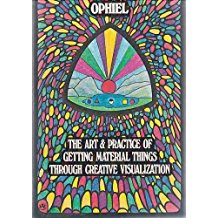
Art and Practice of Getting Material Things Through Creative Visualization by Ophiel

Art and Practice of Getting Material Things Through Creative Visualization by Ophiel

Originally published in 1967, the Art and Practice of Getting Material Things Through Creative Visualization arrived nearly three decades before The Secret.

With more of an occult than a New Age twist, the one-name author, Ophiel, talks readers through what is essentially the Law of Attraction, but he never calls it that.

Photo by Egor Kamelev on Pexels.com

Ophiel tends to write portions of the book that he thinks are most important in all caps. LIKE THIS. It can be annoying.

Another interesting quirk, Ophiel talks about him/herself in the third person, at all times.

In this passage, he’s talking about why he wrote this book, and you get to see the author’s style in action: “Ophiel’s defect consists of not being about to accept self-styled prophets’ sayings, and teachings, without raising the following awkward question- and making the following embarrassing test. The question is IS WHAT THEY SAY TRUE? and the test is DOES WHAT THEY SAY WORK, AND PRODUCE RESULTS? And if what they SAY DOES NOT WORK THEN IT IS NOT TRUE, and into the garbage can with it!!” pg iii

Ophiel claims that creative visualization techniques don’t always work for a variety of reasons. He gives the reader exercises and suggestions for improving their results.

“In Creative Visualization work all the planes involved in our cosmic existence are used, the Etheric, the Lower Astral, The Higher Astral, the Mental Plane, and the Causal Plane, AND ALL THESE PLANES HAVE DEFINITE RULES AND LAWS FROM WHICH THEY WILL NOT DEVIATE ONE IOTA.” pg 5.

Again, with the capitalization.

Photo by stein egil liland on Pexels.com

He also has interesting ideas about reasons why beginners fail out of the gate.

He cites something called “the sphere of availability”: “The new student then proceeds to visualize for LARGE THINGS. BIG THINGS. VALUABLE THINGS. Things that are far beyond his ability- not to visualize-imagine-desire, BUT FAR BEYOND HIS PRESENT ABILITY TO DEMONSTRATE-VISUALIZE.” pg 31.

Ophiel uses different words, but essentially he says, start small, celebrate the small victories and increase your “sphere of availability” in that manner. He also gives practices to improve your visualization skills.

Honestly, if asked to recommend a teacher for creative visualization, I’d say skip Ophiel and read Abraham Hicks. They’re a lot more fun.

Thanks for reading!