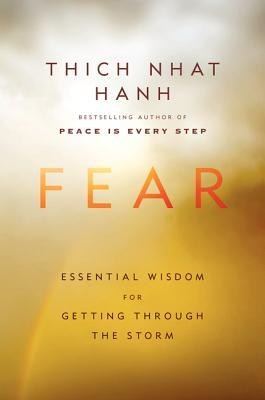
Fear: Essential Wisdom for Getting Through the Storm by Thich Nhat Hanh

Fear: Essential Wisdom for Getting Through the Storm by Thich Nhat Hanh

In Fear: Essential Wisdom for Getting Through the Storm, Thich Nhat Hanh simply and succinctly illuminates the Buddhist path beyond fear into an existence of freedom and joy.

“Nobody can give you fearlessness. Even if the Buddha were sitting right here next to you, he couldn’t give it to you. You have to practice and realize it yourself.” pg 6
Photo by Aleksandar Pasaric on Pexels.com

This book is more than theory, parables and anecdotal stories. Hanh also includes various meditations to assist in the effort.

“When the Buddha was very old, just before he died, he said, ‘My dear friends, my dear disciples, don’t take refuge in anything outside of you. In every one of us there is a very safe island we can go to. … That is a place where you can take refuge whenever you feel fearful, uncertain or confused.'” pg 71

He dissects the various forms fear can take in our lives- from fear of death, grief, anxiety about the future to reconciling with painful emotions from the past.

Photo by David Bartus on Pexels.com

My main takeaway from the book was, to deal with any kind of fear, we need only to approach it with mindfulness and compassion for ourselves and the suffering of others.

“We don’t try to grab on to the pleasant sensation, and we don’t try to push it away. We just acknowledge its existence. When a painful feeling comes, we do the same thing. … A feeling is just a feeling. And you are much more than that feeling.” pg 135

Hanh reminds readers that we are more than the temporary thoughts and feelings that cause so much havoc on their way through our minds and hearts. Our true nature is something else.

My favorite metaphor that Hanh employs to remind readers of this true nature is his comparison of a life to a wave.

“The wave is always water; it doesn’t ‘come from’ water, and it doesn’t go anywhere. It is always water; coming and going are just mental constructions. … Birth and death, coming and going, are just concepts. When we are in touch with our no-birth, no-death nature, we have no fear.” pg 50

Photo by Emiliano Arano on Pexels.com

I appreciated the reminders and found a lot of comfort in these pages. I hope other readers find the same.

Recommended for readers who are interested in learning and utilizing Buddhist philosophy and techniques to overcome any fear or other unpleasant emotion that may be in their lives.

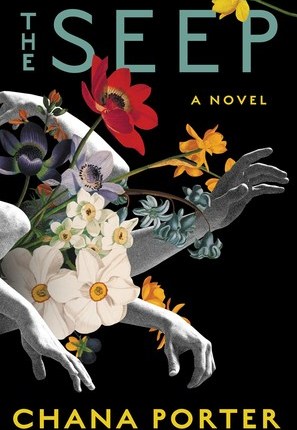
The Seep by Chana Porter

The Seep by Chana Porter

Warning: minor spoilers ahead that are listed in the book’s description on Goodreads. Do not read this review if you don’t want to know anything about the book’s plot before beginning it.

“They would soon realize that The Seep had already infiltrated their city’s water supply. They were already compromised, already bodily hosts to their new alien friends. It was through that connection they could hear one another’s thoughts, feel the same emotions, overlaid with the all-consuming adage that Everything Will Be All Right, No Matter What.” pg 10, ebook

The Seep by Chana Porter asks many questions like: what would humanity and society look like if thoughts could actually create reality, if physical material was permeated with the spiritual, if enlightenment was only a sip or two of alien-filled water away?

Photo by Arnie Watkins on Pexels.com

How would people live, work and raise their children? What would relationships look like? And how would it feel to adults who grew up with a whole other version of reality only to spend the last half of their lives in a world, that to them, feels turned upside-down?

Would they embrace it, fight against it or choose another as-yet unknown path?

Trina, a trans-woman from the time before alien technology, when humanity changed genders with surgery and hormone therapy, is in a happy and fulfilling marriage with her wife, Deeba, until the day when Deeba decides she wants to become a child and live her life again. She asks Trina to be her mother in this second life, still sharing her reality but in an entirely different way than as a lover. This desire is something that is within the realm of the possible now thanks to the alien invasion called, “The Seep”.

Trina does not take this revelation well.

“It felt akin to coming home one day to find that your wife had become a hawk, with dusty talons and a great golden eye. Your hawk-wife can’t live with you anymore. She wants to live in the sky and eat smaller birds, not drink coffee and read the newspaper in bed with you.” pg 26, ebook

Photo by Flickr on Pexels.com

The majority of this book reveals how Trina adjusts to her new reality.

“The main message I have for you today is that we don’t yet know what to call ourselves, as both human beings and symbionts of The Seep.” pg 46, ebook

I think this book does a good job, like other science fiction novels, of holding up a mirror to reality and saying, what if. It also makes a great metaphor for how older generations might feel out of touch with the generations who come after them.

Prior to the alien invasion, Trina was on the leading edge of society in both her self actualization and lifestyle. After, she feels abandoned in a landscape that no longer makes sense and unloved by the people in her life she valued the most.

There’s a palpable sense of isolation and ever-increasing paranoia in this story. If the aliens exist on a level of conscious thought, they know what you want before you even voice it. It’s disturbing, but with technology increasing the pace of life and guessing consumers’ wants and needs before they even know, how far off the mark are we from that sort of interaction, really.

Highly recommended for readers who enjoy short science fiction that makes you think.

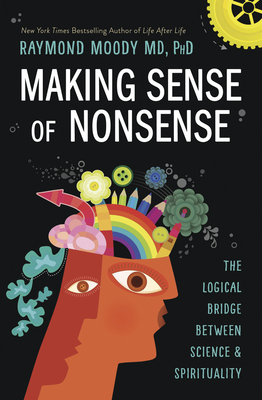
Making Sense of Nonsense: The Logical Bridge Between Science & Spirituality by Raymond Moody

Making Sense of Nonsense: The Logical Bridge Between Science & Spirituality by Raymond Moody

“A little nonsense now and then, is relished by the wisest men.” ― Anonymous

Raymond Moody, renown researcher of near death experiences (NDEs), has spent decades codifying and categorizing nonsense, proving it has a structure. Through his endeavors, Moody hopes nonsense, spoken by those who experience NDEs or upon their death beds, may be analyzed in order to provide another avenue of exploration into humanity’s experience after death.

It may sound like a load of nonsense, but I promise it is anything but. 🙂

Photo by Produtora Midtrack on Pexels.com

“Nonsense itself affects people positively, but the word ‘nonsense’ affects people negatively. That is, people like nonsense itself, but they dislike the word ‘nonsense.’ … they associate the word ‘nonsense’ with one common negative effect of involuntary nonsense: specifically, errors.” pg 13

It is not the accuracy of the utterance that researchers are examining, instead, it is the structure of the language itself.

In a class on this topic, Moody says his students learned to identify and write seventy different types of nonsense. (Who knew there were so many!) Once you know the forms, you’ll be able to do the same.

Why is this useful if you’re not a NDE researcher? Not only is nonsense regularly utilized in poetry, plays, television shows and other forms of entertainment, Moody shows examples of nonsense in religious texts, alchemical writings, advertising and more.

“My sense of nonsense has been an indispensable asset during my career as a medical doctor and psychiatrist, for it often helps me make sense of someone’s unique inner experience.” pg 105

Photo by Andrea Piacquadio on Pexels.com

And he’s right. Since finishing this book, I’ve become aware of how often nonsense is bandied about in both daily conversations I have with friends and family as well as in the Netflix shows I watch.

It’s not only used for communication and art. Moody claims nonsense goes a step further, providing a link to other mystical states of mind.

“Talking nonsense to people makes them experience a curious, hard-to-describe alternate state of consciousness. In sum, nonsense is an alternate state of language that can induce an alternate state of consciousness.” pg 125

Photo by Vinícius Vieira ft on Pexels.com

So, babble away, my friends. If anybody says anything negative about it, tell them you’re conducting a science experiment and you won’t just be talking nonsense. 🙂

“It takes a heap of sense to write good nonsense.” ― Mark Twain

Thanks for reading!

The Spiritual Gift of Madness: The Failure of Psychiatry and the Rise of the Mad Pride Movement by Seth Farber

The Spiritual Gift of Madness: The Failure of Psychiatry and the Rise of the Mad Pride Movement by Seth Farber

In The Spiritual Gift of Madness, Seth Farber interviews half a dozen people who have had negative experiences with western psychology as well as experts in mental health. His thesis is the mental health system as it is values medication over other types of therapy and, because of this misguided focus, harms the very people it is attempting to help.

He is a champion of the Mad Pride movement, a group that seeks to celebrate and assist those suffering from mental health issues to embrace who they are rather than medicating it away.

Photo by Engin Akyurt on Pexels.com

“… helping the mad does not mean drugging or coaxing them into a state of “adjustment,” but rather appreciating the state of madness for what it is: an existential clearing in the jungle of our insane modern society that potentially leads into the realm of true sanity, which, in the world today, means a state of creative maladjustment.” pg 124

I should mention that Farber doesn’t use “mad” in a negative way, rather he uses it to highlight how individuals with different viewpoints from the rest of society are marginalized and sedated into silence. He puts forward the idea that insanity is believing everyone must view the world in the same manner or be ostracized for it. He holds up society’s repeated failures to handle issues like global warming to racial and gender equality as evidence of the insanity of the world.

“Now one of the things that’s so detrimental about the hospitalization is the power impact of being treated like a patient – people end up believing they’re chronically mentally ill.” pg 44

Farber believes mental illness is a transition to a new, potentially powerful state of being that, as a modern society, we quash before it’s completed. He points out that many of the great prophets and visionaries from history had, what we would now call, complete breakdowns before their epic breakthroughs.

Photo by Ryan Millier on Pexels.com

“… a few weeks of mania could give one access to a sense of understanding that it could take ‘years of meditation’ to achieve, access to visions of ‘the wholeness’ of the universe and ‘the interconnected nature of love, access to a sense of time and space that allows one to discern what is and what is not important.'” pg 21

Instead of medication and psychiatric facilities, Farber would like to see the creation of safe havens for people going through this process so they could assimilate whatever is going on in their minds before going back to the rest of society. That would be for the experiencer’s protection as well as the public.

I think Farber brings up important issues in this book. As someone who has struggled with mental illness, I’ve viewed the system from the inside and recognize some of the problems he points out. There’s the stigma of the diagnosis and the embarrassment of feeling separated from “normal”. There’s the expectation you will take your meds from the day you’re labeled until you die, no matter the side effects.

But, worst of all, is feeling like you can’t trust what’s going on in your head because it went so spectacularly wrong before and what’s to prevent it from going sideways again.

I agree some changes need to be made to the system and, as a society, perhaps we can do a better job minimizing stigma, maximizing communication, and helping people live in a happy and healthy manner that they choose.

However, I feel like Farber goes too far in his insistence that the “mad” are the future. That somehow they hold the keys to a paradise on earth if only we’d let them share their messages unfettered.

Photo by Oliver Sjöström on Pexels.com

In the midst of my psychosis in 2009, I wouldn’t have wanted any of the nightmares in my head to permanently affect my future or my family. If there are lessons to be learned from it, maybe it’s an individual message for the people undergoing the change rather than expecting it to be universal lessons, applicable for everyone.

But, that’s my two cents. I certainly don’t have all the answers, but The Spiritual Gift of Madness asks some interesting questions.

Recommended for seekers who are interested in a different way to both approach and treat those with mental illnesses or for those who have gone “through the looking glass” and are now viewing the world from the other side, like me and the people in this book and many, many others.

Thanks for reading!

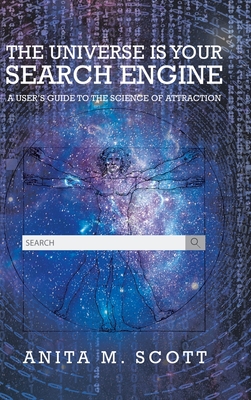
The Universe Is Your Search Engine: A User’s Guide to the Science of Attraction by Anita M Scott

The Universe Is Your Search Engine: A User’s Guide to the Science of Attraction by Anita M Scott

The Universe is Your Search Engine is a new age, metaphysical book with anecdotes, suggestions and exercises to assist readers in utilizing the law of attraction in his or her own life.

Anita Scott compares the law of attraction to a universal “search engine.” What you put in, comes back to you kind of like Google for the mind.

Photo by Pixabay on Pexels.com

“While the Universe’s Search Engine delivers real-life experiences, it is not responsible for your quality of life. You are, because no one else can use your mind to think thoughts. You alone are the thinker of your mind, and it is your thoughts alone that trigger the search and the ensuing return of life experiences.” loc 310, ebook

The book is divided into three sections: the first handles different aspects of the law of attraction from science to energy and quantum physics. The next part goes into metaphysics, the body, purpose and more. The third part is a workbook that ties the first two sections together and is also scattered throughout the text.

“Fighting against what is elongates suffering, makes an issue bigger, and squanders your valuable energy.” loc 428, ebook

Photo by Jill Wellington on Pexels.com

I’ve read quite a few books like this- new age materials that teach your thoughts create your reality. I was honestly surprised how much I enjoyed this version of the teaching.

The publisher sent me an email offering a free digital copy of this book through NetGalley, I didn’t request it. And, I’m going to be blunt here, I was feeling rather unsure about it. I simply wasn’t in the right head space to read and review a new age book. But then, I thought, why not give it a chance and I’m glad I did.

This year, 2020, has been the worst. Prior to this mega-disaster of a year, I would have described myself as someone who created her own reality sometimes successfully, other times not so much, but I felt like I always had at least a glimpse of where my life was going.

This year has changed all of that. Now, I’m not certain I create my reality at all.

Current angst aside, I liked The Universe is Your Search Engine. I liked the empowering messages it shares. I like the exercises that encourage readers to find their purpose, focus their thoughts and joyfully move into a future of their own design.

Photo by Dina Nasyrova on Pexels.com

I’m just not sure I believe in it myself anymore. Maybe I’ll get back there some day.

Recommended for readers and seekers who are looking for information on the law of attraction. Anita Scott has written a beautiful, modern book about it. Give it a shot and see if it’s for you.

Thank you to NetGalley and the publisher for a free digital copy of this book. And thanks for reading!

Pathways to Bliss: Mythology and Personal Transformation by Joseph Campbell

Pathways to Bliss: Mythology and Personal Transformation by Joseph Campbell

“Each entered the Forest Adventurous at that point which he himself had chosen, where it was darkest and there was no way or path.” You enter the forest at the darkest point, where there is no path. Where there’s a way or path, it is someone else’s path; each human being is a unique phenomenon. The idea is to find your own pathway to bliss.” pg xxvi

Pathways to Bliss is a collection of Joseph Campbell’s writings and lectures, expanding upon the theory he put together in The Hero With a Thousand Faces. Namely, that myths serve a psychological function to help individuals safely traverse the various stages of his or her life.

Photo by Elina Sazonova on Pexels.com

That statement is over simplifying Campbell’s complex and richly-developed discussions of mythology, but it’s the basic building blocks of the thing.

“If it is a living mythology, one that is actually organically relevant to the life of the people of the time, repeating the myths and enacting the rituals center you. Ritual is simply myth enacted; by participating in a rite, you are participating directly in the myth.” pg xix

Campbell talks about not only the importance of the myths throughout generations of humankind, but the idea that it is a living, breathing system. He believes there is trouble on the horizon if society’s myths don’t change and evolve to keep up with the challenges of the current day.

He also stresses the need for the individual to find their own meanings in the stories and symbols of the mythology. The pathway to that which you are here to live is something that only you can find for yourself.

Though, he does point out, you could experience your unique pathway through ritual and communion with a community of like-minded believers. Campbell applies his mythological lens to the world religions, to life stages, to everything in-between to see what universal truths he can pull out of the stories and the common experience of humanity.

“And my little sermon to the churches of the world is this: you have got the symbols right there on the altar, and you have the lessons as well. Unfortunately, when you have a dogma telling you what kind of effect the symbol is supposed to have upon you, you’re in trouble. It doesn’t affect me that way, so am I a sinner?” pg 43

Photo by Pixabay on Pexels.com

I found this book easier to understand than The Hero With a Thousand Faces, which I read a few months ago. Despite this, I suggest you read Hero first, because it’ll give you a better contextual base to understand what the heck Campbell is going on about.

I had some issues with his concluding chapter of this book, Dialogues. In an open discussion with some female attendees of one of his seminars, Campbell and the women try to define how the woman’s heroic journey is different than a man’s.

I didn’t agree with some of their conclusions. Maybe you had to be there to truly grasp the essence of what he was saying.

“The suffering overtakes women – it is part of the nature of womanhood. Whereas the man has to undertake suffering – it’s a big difference.” pg 153

Photo by João Jesus on Pexels.com

Women’s life is suffering? hmmmm…

Recommended for readers interested in more of the musings of Joseph Campbell or for people interested in mythology and its practical applications. Beware that some of the material may be somewhat dated.

Drawing Down the Moon: Witches, Druids, Goddess-Worshippers, and Other Pagans in America by Margot Adler

Drawing Down the Moon: Witches, Druids, Goddess-Worshippers, and Other Pagans in America by Margot Adler

Margot Adler talks to adherents in different traditions all across the United States, and a few in Europe, in order to banish some of the mystery and misconceptions surrounding neo-pagan groups.

“Since Pagans are a very diverse group, it is wrong to say all Pagans believe this or that, but here are some beliefs that many people in this book share: The world is holy. Nature is holy. The body is holy. Sexuality is holy. The imagination is holy. Divinity is immanent in nature; it is within you as well as without. Most spiritual paths ultimately lead people to the understanding of their own connection to the divine.” pg 11, ebook.

Photo by Gianluca Grisenti on Pexels.com

I didn’t know much of anything about pagan religions before I read this book, mainly because I am from a particularly conservative part of the country and there are very few groups of this type around. It’s hard to get to know people if there aren’t any to talk to.

In some circles, just the word “pagan” inspires fear because it’s not clear what this means or people might be threatened by how someone’s beliefs might be different from their own.

“Neo-Pagans look at religion differently; they often point out that the root of the word means “to relink” and “to connect,” and therefore refers to any philosophy that makes deep connections between human beings and the universe.” pg 24

Adler examines an extraordinary number of pagan groups, an almost bewildering amount. I liked that this book introduced me to so many different paths and ideologies, but at the same time, it began to get somewhat repetitive as she broke down all of the different groups.

Photo by Gheorghita Claudiu on Pexels.com

But as the friend who had recommended this book reminded me, Drawing Down the Moon was created in the years before the existence of the internet. It was intended not just to explain what these groups were, but also operated as a catalog of sorts, for readers who were looking for the right path for themselves.

Recommended for spiritual seekers who are looking for a tradition that fits or for anyone who is curious about the stunning variety of spiritual beliefs there are out there. I learned so much.

The Hero With a Thousand Faces by Joseph Campbell

The Hero With a Thousand Faces by Joseph Campbell

“Throughout the inhabited world, in all times and under every circumstance, myths of man have flourished; and they have been the living inspiration of whatever else may have appeared out of the activities of the human body and mind.” pg 1

Joseph Campbell presents his, now classic, thesis of comparative mythology and psychology. By examining different myths from all around the world, he outlines the hero’s journey. The journey has many different steps and elements to it, but beneath it all, Campbell believes, through all the many stories, the journey is one.

Photo by Maria Pop on Pexels.com

“Furthermore, we have not even to risk the adventure alone; for the heroes of all time have gone before us; the labyrinth is thoroughly known; we have only to follow the thread of the hero-path.” pg 18

I think in different circumstances I may have enjoyed this book very much. The topic, comparative mythology, is one I find particularly fascinating. I also like to see how humankind incorporates the mythical not just in our stories, but in the way we set up our societies.

“… every failure to cope with a life situation must be laid, in the end, to a restriction of consciousness. Wars and temper tantrums are the makeshifts of ignorance; regrets are illuminations come too late.” pg 101

Photo by Pixabay on Pexels.com

But honestly, I had trouble focusing because of certain current events. Campbell presents the different myths in pieces organized by his heroic stages rather than in one flowing story. Between the trouble focusing and the bouncing around from myth to myth, this was a difficult read for me. Perhaps I’ll try this book again in the future, when my life doesn’t feel so off-kilter.

I think it has plenty of treasures to be discovered for spiritual seekers of every kind. It also demonstrates that though we look different and live very different lifestyles, at our soul level, there are many similarities to humanity. We find these similarities mirrored through our stories, our life stages, how we live and how we dream.

“Those who know, not only that the Everlasting lives in them but that what they, and all things, really are is the Everlasting, dwell in the groves of the wish-fulfilling trees, drink the brew of immortality, and listen everywhere to the unheard music of eternal concord. These are the immortals.” pg 142

Photo by Gabriel Peter on Pexels.com

I sincerely hope you all live and dream sweetly, immortals, wherever on the hero’s journey you may be: sheltering-in-place or braving the world, and that I will live and dream sweetly, too.

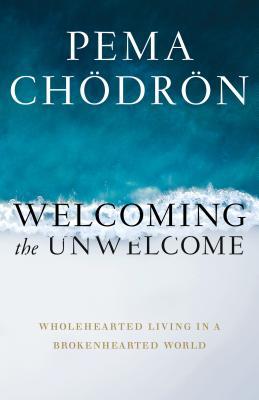
Welcoming the Unwelcome: Wholehearted Living in a Brokenhearted World by Pema Chödrön

Welcoming the Unwelcome: Wholehearted Living in a Brokenhearted World by Pema Chödrön

“We are at a time when old systems and ideas are being questioned and falling apart, and there is a great opportunity for something fresh to emerge. I have no idea what that will look like and no preconceptions about how things should turn out, but I do have a strong sense that the time we live in is a fertile ground for training in being open-minded and open-hearted.” pg 28

The incomparable Buddhist nun and teacher, Pema Chödrön, interprets the dharma and applies it in the various challenging circumstances of modern life. From polarization to living in the now, comfort zones and boredom, Chödrön challenges practitioners to question their deeply entrenched beliefs by applying new lenses of perception. Change within, she says, and you will see changes in the world.

Photo by icon0.com on Pexels.com

“Trungpa Rinpoche said that the way to arouse bodhichitta was to “begin with a broken heart.” Protecting ourselves from pain – our own and that of others – has never worked. Everybody wants to be free from their suffering, but the majority of us go about it in ways that only make things worse.” pg 4

Remembering this shared struggle to find relief from suffering is one of the many ways Chödrön breaks down the problematic mindset of us vs. them. She gives plenty of tips for remembering the sacred within oneself and everyone else. One of the simple ones that stuck with me was, when you see someone suffering, say to yourself, “just like me.”

Stuck in traffic but don’t want to be? Everyone around you is too. They’re just like you. Irritated by developments on the world stage? There are others who are just like you. Have a cold and just want to get some uninterrupted sleep? Think of the thousands out there who are just like you.

“… if we gradually increase our capacity to be present with our pain and the sufferings of the world, we will surprise ourselves with our growing sense of courage. In our practice of cultivating a broken heart, we can incrementally build the strength and skill to handle more and more.” pg 6

Photo by Pixabay on Pexels.com

What I like most about Chödrön’s books is that she isn’t afraid to talk about how she has stumbled with the various teachings in her own life. She takes a clear look at her foibles and, instead of hiding them where no one else can see them, she uses her failings to propel herself and others forward.

For example, Chödrön relates how, when she first became the director of an abbey in Nova Scotia, she thought the kitchen was a disaster. She put all of these rules in place to organize and clean the kitchen, yet it was never good enough. She confesses going down to the kitchen at night after everyone was asleep in order to organize the drawers without their knowledge. Yet even with all of those struggles, the kitchen remained as it was.

So, instead of fighting it further, she relaxed into the belief that the problem was not with the kitchen or anyone in it, but her own perception of the kitchen.

“I said to myself, “I don’t care if the whole place is a mess. I’m going to work on my propensity to label things in negative ways, such as ‘dirty’ and ‘disorganized.’ I’m going to pay more attention to how I project my own version of reality onto the world.” pg 74

Photo by Mike on Pexels.com

And this self examination altered her view of reality. “Instead of my whole being going into a knot of contraction, I felt relaxed and happy in there. It was a miracle.” pg 74

What sorts of things do you view as disorganized kitchens in your own life?

Highly recommended for readers interested in Buddhist teachings or improving the world around them by change from within.