Psychic Dreamwalking: Explorations at the Edge of Self by Michelle Belanger

Psychic Dreamwalking: Explorations at the Edge of Self by Michelle Belanger

Psychic Dreamwalking has some instruction on lucid dreaming, but it is interspersed with a lot of personal background information and some psychic vampire stuff. That didn’t bother me, even though it isn’t my particular realm of study. I’ve found that the mind is a very powerful tool for interpreting reality and people seem to believe all sorts of things that I find to not be compatible with my life experience. But, if that kind of thing annoys you, just stop reading Psychic Dreamwalking before Chapter 9 and you’ll avoid most of it.

I rather liked author Michelle Belanger’s opening dedication, “Prayer of the Dreaming”: “I commit myself to you, Lord Morpheus! Open wide the Gates of Dream. Grant me safe passage in your realm So I may return with tales to tell. -from the Introduction. She mentions that this prayer is based on The Dream King from Neil Gaiman’s Sandman series. I haven’t read that comic yet, but it has a great reputation. I’ll have to get to it sometime.

What is dreamwalking anyway?: “Dreamwalking is the art of sending forth a part of the self in order to make contact with others through the medium of dreams. Anyone can learn how to dreamwalk, and, as we explore the concept throughout this book, you will find that most people already do. … The lack of available information on dreamwalking exists in part because there is no consistent nomenclature for the technique. There are accounts of dreamwalking mixed in with experiments in astral projection, dream telepathy, and lucid dreaming, but they are rarely identified as such.” pg 1

It is so difficult in consciousness experimentation to come up with a vocabulary to discuss not only your experiences but to be able to communicate something very personal and individual with someone else who may have had completely different experiences and who are approaching the same topic from a different background. The name of the game in this book is “dreamwalking” which I find to be a rather poetic way to describe a universal phenomenon.

“But this the fundamental premise of dreamwalking: on some level, the dreamspace is real. It is not real in the sense that the physical world it (sic) real, but it is certainly as real as the astral planes described by writers like Madame Blavatsky and Dion Fortune. Like the astral planes, the dreamspace is a subjective reality. As much as it is a place we can go to, it is also a place that we shape with out (sic) hopes, desires, and fears.” pg 25

I think this is a part of the human experience that deserves a far broader investigation than experts and laypersons have given it so far. But there’s always time to get started! Who’s with me?

Belanger talks about Carl Jung a lot in this book. I wonder what he would think about dreamwalking…: “Jung’s concept of the collective unconscious, a layer of myth and symbol deep within each of our minds that connects all of us in mysterious ways, hearkens back to the ancient notions that the dreamspace is a realm unto itself, a hazy place of twilight where men can sometimes meet with gods.” pg 36

It reminds me a great deal of the Dreamtime of the First Nations of Australia. This is not a new concept but one which, as I said before, deserves more experimental research than it has yet received.

The main technique that Belanger uses to access this world within dreams is one that I am very familiar with, namely building a gate: “The Gates of Dream are an archetypal image that I return to again and again in this book. Archetypes and symbols have some objective reality within the realm of dreams, and the Gates of Dream represent the point of passage from your personal dreams to the wider territory of the dreamspace. You can harness this archetypal image in your dream haven, creating a crossing-over point that can later serve as a focus for when you seek to dreamwalk.” pg 51

If you’d like to learn about my experiences with walking through gates, I invite you to explore my blog: https://thelightcongress.com/

Belanger touches a bit on shamanic practices, but not in depth: The shamanic dreamtime, as a realm of myths and images that is peopled by animal totems and celestial teachers, can very easily be equated to Jung’s collective unconscious, the psychological repository of humanity’s collective myths, dreams, and symbols. Many of the totems and other mythic figures encountered in the shamanic realms are Jungian archetypes transported from their existence as simple concepts to vivid, potent entities. … There is a kind of travel that occurs in dreamwalking, but it is, at first, an inward journey. This inward journey, however, can lead the dreamwalker elsewhere. Traveling within can sometimes lead you out. pg 67

I’ve explored a few books about shamanism. You can read those reviews here:

In this passage, Belanger discusses the importance of lucid dreaming in various religious traditions: “From the monks of Buddhist Tibet to the 12th century Spanish Sufi Ibn El-Arabi, mystics the world over have proclaimed the benefits of lucid dreaming. For religious thinkers, lucid dreaming has long been seen as a way to illuminate both the nature of the Self and the nature of reality. Tibetan Buddhists were pursuing lucid dreams as early as the eighth century C.E. According to their philosophy, the mastery of lucid dreams was a necessary step in the pursuit of enlightenment. The ability to recognize the illusory nature of the dreamstate directly correlated to the ability to recognize the illusory nature of all things. pg 139 Fascinating in how the study of dreams can be applied to other areas of your life!

Belanger captured my feelings about psychic vampires very well in this passage: “Ultimately, you and you alone can judge the validity of your experiences. You should never surrender this right, but you should also not use it as an excuse to indulge in wish fulfillment. Make a thorough investigation of every experience and decide for yourself. pg 181. Cura te ipsum.

Though I feel that Psychic Dreamwalking contained a lot of superfluous information, there are some solid dreamwalking techniques in here. I think that the main hurdle to this practice is simply becoming lucid while dreaming in the first place. So, for now, I’ll stick with going into trance. But, for those who already have the ability to lucid dream, this may be something that you’ll want to investigate. Pick up Otherwhere by Kurt Leland for a first person account of dreamwalking or Multidimensional Man by Jurgen Ziewe.

Thanks for reading!

Archetypes on the Tree of Life: The Tarot as Pathwork by Madonna Compton

Archetypes on the Tree of Life: The Tarot as Pathwork by Madonna Compton

Archetypes on the Tree of Life is a dense spiritual text exploring the Tree of Life through the use of Tarot cards.

It’s kind of funny- I think my favorite part of this book wasn’t actually the book at all but instead the brief introduction which was written by Hans Nintzel. Nintzel was a student of the western mysteries who describes himself as “living down the street from Israel Regardie.” As I used the writings of Israel Regardie to do my own explorations into the Tree of Life, I found my mind blown right there. How cool would that have been, to have lived on the occult teacher’s own street? Too cool.

Here’s what Nintzel had to say that was so compelling:
As Qabalah evolved, it was discovered that, using this glyph or map called the Tree of Life, one could move around the geography of the consciousness, so to speak, contacting or balancing various personal energies by contemplating various aspects of the God energy using myths, legends, visions, and dreams, represented by the archetypes of the Tarot.”pg 4

I have yet to see a more concise description of what pathworking is than that. Now why Nintzel didn’t write his own book, I simply don’t know. Being the librarian that I am, I did a bit of digging into his background and it seems that he was a prolific lecturer and a translator of alchemical texts, but didn’t write his own. Disappointing. Here’s a link that I found of works that he helped to bring to the US which were listed in his obituary: https://www.alchemywebsite.com/rams.html

As for Compton’s 300 or so page contribution, I found myself to be disappointed. Archetypes on the Tree of Life is in the main, rather obscure Qabalistic/Kaballistic theory. It reads almost exactly like Regardie’s Garden of Pomegranates or Fortune’s The Mystical Qabalah. That’s not to say that it doesn’t have some gems of interest, but mostly it’s slow going and not as accessible as the publisher (Llewellyn) promised it to be in the page where it described the goals of its Spiritual Perspectives Series.

Compton’s most interesting point has nothing to do with traditional pathworking but is instead a hypothesis that she and her meditation partner have constructed about potential alternate paths across Daath. They’ve chosen a five pointed star to create the paths, but I would perhaps lean more towards a six pointed star, which still sort of works. The six pointed star is a combination of an upwards and downwards facing triangle, an ancient alchemical symbol for self actualization. Though, admittedly, the five pointed star has definite Tiphareth associations… and so the debate continues I suppose. 🙂 Anyway, if you’re interested in Compton’s theory, turn to page 304 to save yourself some time digging through the other stuff.

If you enjoyed this book, may I recommend reading either of the two books I mentioned earlier: The Garden of Pomegranates by Israel Regardie or The Mystical Qabalah by Dion Fortune. If you want more examples of modern pathworking, see my book: https://thelightcongress.com

Thanks for reading!

The Goddess and the Shaman: The Art & Science of Magical Healing by J.A. Kent

The Goddess and the Shaman: The Art & Science of Magical Healing by J.A. Kent
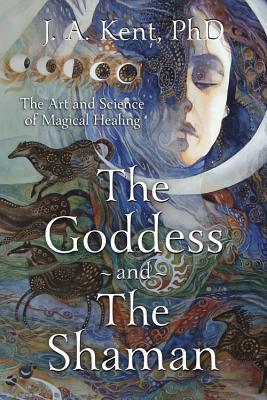
“I discovered the presence of a mystical and magical tradition that was largely concealed within our culture that had its roots in ancient pre-Christian Paganism, alchemy, Hermetic philosophy, the holy Qabalah, and elements of Greek, Egyptian, and Gnostic mysticism. It is generally referred to as the Western magical tradition. I tend to see it as the lost shaman tradition of the West.” -From the Preface

J.A. Kent, PhD, examines various occult and healing practices from a variety of traditions by interviewing practitioners as well as providing case studies of her own patients in order to present, what I can only call, her doctoral thesis of her personal magical paradigm. Her paradigm is the title of her book, The Goddess and the Shaman.

“There are strong social and medical pressures in Western-style thinking that regard those who have psychic experiences to be either fraudulent or psychotic.” pg 16

Let me briefly explain this paradigm, though I highly recommend reading the book to get it in Kent’s own words.

“The Goddess” is another name for what Kent calls the “Elphame,” essentially the other non-physical worlds that exist either alongside or on top of (depending upon who you speak to) our normal every day world. “The shaman” are the lightworkers and healers who explore these realms for various reasons including healing others of sicknesses both of the body and spirit.

I think it took a great deal of bravery to write a book like this, especially with the prevailing worldviews at work today. Well done, J.A. Kent!

The world is an enchanted, mysterious, and magical place that will reveal its many secret powers and energies to those who have the persistence and determination to unlock them.” pg 64

The trouble with spiritual healing or any type of work in the Elphame, Goddess, or whatever you want to call it, is that the practitioner exits the consensual reality of the every day world and enters non-consensual reality- the abode of the dreamers, lovers, poets, musicians, mad, etc. I have come to believe that the Western world, Western medicine especially, is not kind to those who venture outside the bounds of the normal.

Kent discusses this in depth in multiple places of this book. Suffers who could find no mundane explanation for their troubles turn to her in order to find some relief. And, encouragingly, many found healing.

“Ultimately they rejected the reductionist psychiatric explanation and embarked on their own magical journey of healing.” pg 159

Recommended for therapists and spiritual healers who are looking for more ideas about how to assist those who come to them seeking help. I enjoyed this book very much.

Thanks for reading!

I’ll Have What She’s Having by Chelsea Handler

I’ll Have What She’s Having by Chelsea Handler

In I’ll Have What She’s Having, Chelsea Handler shares amusing (often hilarious) stories and anecdotes about her family, relationships, pets and other memories from her life. The focus of the essays is all about uplifting and encouraging others through sharing the gifts and love that Chelsea has experienced throughout her life.

“This woman I’ll become, she will never be silent.” pg 4

Through the use of meditation, exercise, professional therapy, and various psychedelics, Ms. Handler has reached a relatively stable and positive stage of her life. As someone who has enjoyed her books and stand-up comedy for years, it is such a pleasure to read that she is both happy and thriving.

“None of the things other people have called me has ever really mattered. What other people say about you only matters if you believe what they are saying is true.” pg 18

She not only stands up for herself in these pages- defending her choices and lifestyle from both naysayers and judgey people of all types, but she also stands up for others. Ms. Handler has a talent for seeing how someone else is hurting and bringing them the comfort that they need most at that time.

It is a rare gift.

“Sitting around and thinking of all the people who don’t love you or don’t want to hang out with you diminishes your own light. … There are many moments in life when your own light is all you need.” pg 104

As someone who is childless by choice, Ms. Handler does not use this as an excuse to be standoffish when the young people in her life need assistance. In this book, she discusses at length how she is a matriarch/patriarch to both her family and her friends’ children. She sets an example for how to be and interact in the world- as a strong woman and parental figure.

I believe it is this type of behavior that builds strong communities, which uplifts everyone. Well done, Chelsea!

Highly recommended for readers who enjoy Ms. Handler’s comedy but also anyone who is looking for a pick-me-up in book form. I took great courage from I’ll Have What She’s Having and I hope others do too.

Thanks for reading!

The Book of Hedge Druidry: A Complete Guide for the Solitary Seeker by Joanna van der Hoeven

The Book of Hedge Druidry: A Complete Guide for the Solitary Seeker by Joanna van der Hoeven

Joanna van der Hoeven, a practicing Druid, has written an excellent introduction for anyone interested in creating their own similar spiritual path.

The book has four parts: Theory, Practice, Study, and Skills and Technique

The first part, Theory, discusses various aspects of Druidry including the mysterious Awen, the role of gods and ancestors, the three realms, the world tree, the wheel of the year, the cycles of the moon and more.

“Druidry is the quest to find our place in the world and to work in the world in balance and harmony.” pg 2

Photo by Felix Mittermeier on Pexels.com

I loved how the author presented this section, which could have been mammoth, very succinctly. She gives so many aspects of the practice because she’s encouraging readers to find the parts that work for them. You don’t have to embrace everything, only what speaks to you.

The second part, Practice, outlines various rites and rituals to incorporate one’s practice into daily life.

She talks about how the ancient practice of Druidry has been lost and how practitioners today are creating their own versions of what that might have looked like. I liked that she emphasizes that unbroken lineage doesn’t lend credence to the practice as much as personal exploration and empowerment. Again, she encourages readers to make these rituals their own.

“We don’t know what ancient Druids really did, nor do we wish to emulate them in every aspect. We seek to find out as much as we can and learn from it, thereby creating wisdom in our being.” pg 66

Photo by cottonbro studio on Pexels.com

The third part, Study, looks into herblore, ogham (a type of alphabet that can be used like runes), and spellcraft. Practitioners are encouraged to study and learn these various topics in order to deepen their knowledge.

The final part, Skills and Technique, was the most interesting to me. In it, Joanna van der Hoeven discusses ethics, peace, voice, body and movement, as well as leadership roles.

I found the topics of ethics and peace to be timely.

“We cannot control how others behave. We only have control over how we behave in the world, how we act and react to others. We can lessen our reaction to others to a more intentional way of being through mindfulness of our thoughts, our bodies, and the world around us.” pg 296

Change ultimately starts at the individual level and goes from there. Thank you, Joanna, for the reminder.

Highly recommended for spiritual seekers who may be looking for an earth-based spiritual practice.

Ecstasy Through Tantra by Jonn Mumford

Dr. Jonn Mumford takes the complex topic of tantra and attempts to translate it from its Eastern roots for the Western mind. He is somewhat successful, but gets bogged down in the history of tantra coming to the west as well as the etymology of tantric terms.

“The Tantrist seeks freedom (Moksha) through life (sensation, sentient, sensual) and not through escape (abstinence, abstaining, absence), using the body as an instrument of evolution.” pg 47

Photo by KoolShooters on Pexels.com

I think when Westerners consider tantra, they generally think about exotic sexual positions. This book tries to show that tantra is so much more than that.

Through the recognition of the divine in your partner, tantra can be a method of reaching divine states of being. I think it is more of a mindset than any particular exercise.

“The key secret of the Western tradition lies in the demonstration that the sexual function has deeper implications than procreation.” pg 30

Photo by Kristina Nor on Pexels.com

Dr. Mumford provides a few rituals in this book so that readers can choose to practice some of his interpretations of tantra if they choose. He also includes illustrations of various chakras in order to encourage meditation upon the complex symbolism they contain. Through these practices, he says, one can begin to investigate the mystery that is tantra and the self.

“Although the major topic of this book has been sex magic and Tantric sexual practices, it must not be assumed that the whole of Tantra is concerned with these aspects. Tantra is the life science concerned with producing true individuals.” pg 122

I’m dubious about the efficacy of some of the exercises described in this book, like the practice of sucking ones bodily fluids back into oneself after expulsion. Maybe some of these things were meant to be metaphorical rather than literal? Who’s to say…

If you don’t allow yourself to be caught up in the strange (at least to my mind) details, there is some wisdom to be found in these pages. But the biggest problem of this book is that it tries to tackle too much.

It begins to do a comparison of witchcraft to tantra, which I feel could fill an entire book on its own. It also touches on similarities between tantra and western sex magic. Neither of these topics receive a thorough treatment, which was rather disappointing.

He also does a brief history of tantra coming to the west which I felt was over-simplified. History buffs might find that section off-putting.

However, if you’re looking for a brief introduction to tantra written for a Western audience, this might be a good place to start.

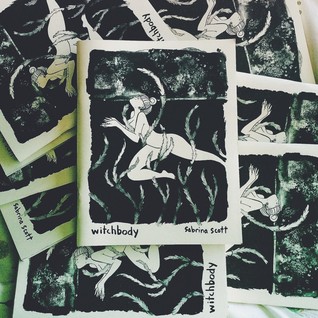
witchbody by Sabrina Scott

witchbody by Sabrina Scott

What is a “witchbody”?

Sabrina Scott defines this nebulous concept in graphic novel format.

Basically, to have a witchbody, the spiritual practitioner uses his or her senses and whole body to connect with everything in the world around her- be that a polluted parking lot or a clear mountain lake.

Scott touches on this idea that sometimes in our spiritual practices we only consider “pure” and “unpolluted” things as holy. They put forward the theory that, if we continue down this path, there may be nothing left to connect with as everything in existence mixes and mingles with everything else.

The spiritual is in the here and now, in the interaction of all things. I heartily agreed.

They wander through philosophy and other theories in the delivery of this message, which some readers may enjoy. I found myself wishing the text had a little more organization to it.

The art in this black and white graphic novel is beautiful. There is some non-graphic nudity- for librarians looking to categorize this book, I’d suggest in the adult graphic novel section.

As lovely as the art is, the lettering is close together and difficult to read in places. I think the author was going for the obviously hand drawn look, but I think they went one step too far. Otherwise, this book was enjoyable.

Highly recommended for spiritual seekers.

Ozark Folk Magic: Plants, Prayers & Healing by Brandon Weston

Ozark Folk Magic: Plants, Prayers & Healing by Brandon Weston

“There are many more folk beliefs unique to the Ozarks, some of which will be discussed in this work, but we also have to remember that much of what makes up this tradition can be traced to influencing factors from outside the region.” pg 16

Author and healer Brandon Weston takes readers through the varying histories and roles of Ozark folk magic. He discusses the different kinds of historical practices as well as following the evolution of Ozark traditions in the modern day.

Photo by Gaspar Zaldo on Pexels.com

“What worked was saved, treasured, and passed down through the generations. This process continues even today, and as a practitioner in the modern world, I’m constantly making these changes not only within my own work, but also for the culture as a whole.” pg 33

It is an illuminating look into a culture that remains fairly closed and secretive even today.

Brandon discusses the historical reasons for this secret keeping and doesn’t dismiss the darker portions of Ozark history such as racial tensions.

Also, he makes sure to talk about the dangers of overdosing on certain herbs or not seeking the help of western medicine when it is warranted. This book is fully of cautionary tales as well as educational ones.

Photo by lilartsy on Pexels.com

“There are many rituals that might be very interesting to look at but that aren’t worth using in a modern setting. Take, for instance, those rituals that involve the harming or killing of an animal, like the infamous black cat rite. I can’t stress enough that many traditions of the past need to be left in the past.” pg 247

My favorite part of this book was the chapter dealing with how different practitioners have reported receiving “the gift”. There were so many different ways and methods! It was fascinating to read Brandon’s take on all of it.

“Another unique road to power often found in the modern Ozarks comes in the form of receiving the gift through communion with nature. It might seem overly simplistic, but one of the beautiful aspects of Ozark healing is its simplicity.” pg 92

Highly recommended for anyone interested in the history and practices of Ozark folk magic.

Thanks for reading!

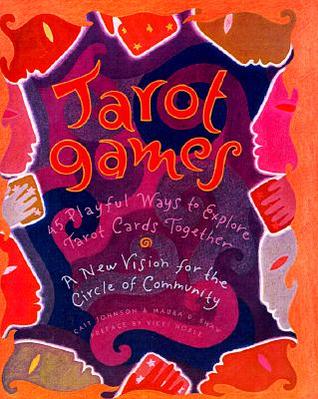
Tarot Games: 45 Playful Ways to Explore Tarot Cards Together; A New Vision for the Circle of Community by Cait Johnson

Tarot Games: 45 Playful Ways to Explore Tarot Cards Together; A New Vision for the Circle of Community by Cait Johnson

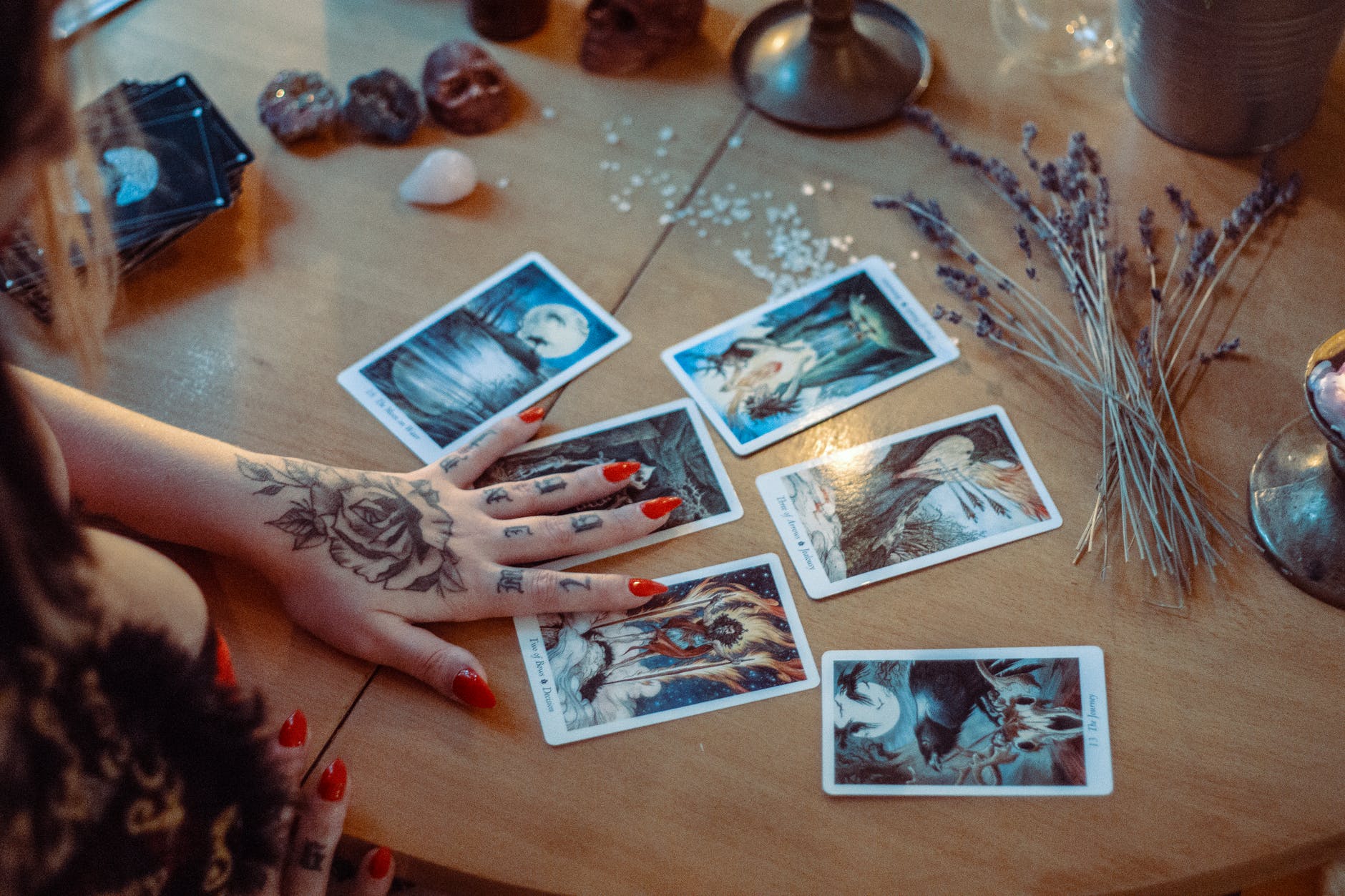
Tarot Games is a cute book about different tarot card layouts and how you can share these games with your loved ones in order to promote communication and the sharing of emotions.

“The wonderful thing about using these simple games and ‘reading layouts’ is that they catalyze the deeper processes taking place between people. This in itself is healing.” pg xii

Photo by Alina Vilchenko on Pexels.com

Throughout the text, the author has sprinkled spiritual images and spirals. It makes for a relaxing read.

“Playing this game together gave both friends a sense of being supported, understood, and protected.” pg 27

I think people take tarot cards too seriously sometimes. This book is a good reminder to allow ourselves to play and share. It doesn’t have to be as dire as all that.

Highly recommended for beginners to advanced practitioners of tarot card reading.

Thanks for reading!