Powers of Two: Finding the Essence of Innovation in Creative Pairs by Joshua Wolf Shenk

Powers of Two: Finding the Essence of Innovation in Creative Pairs by Joshua Wolf Shenk

Joshua Wolf Shenk examines creatives pairs throughout history in an effort to see why and how they work, and also why they end.

“The dyad is also the most fluid and flexible of relationships. Two people can basically make their own society on the go. When even one more person is added to the mix, the situation becomes more stable, but this stability may stifle creativity, as roles and power positions harden.” Introduction, pg xxii

Photo by Gratisography on Pexels.com

Shenk believes pairs move through six stages: Meeting, confluence, dialetics, distance, the infinite game and interruption. The stages show the development of the relationship, assumption of roles and eventual fall out of creative pairings.

“This book is written in the faith, underscored by experience, that more is possible — more intimacy, more creativity, more knowledge about this primary truth: that we make our best work, and live our best lives, by charging into the vast space between ourselves and others.” Introduction, pg xxv

I picked up this book because I’m involved in a creative partnership with my spouse (The History Guy, YouTube channel) and I was curious to see how other pairings have worked in the past. It was interesting to see how similarly we function when compared to other creative partners. I mean, everyone is different, but there are patterns that can be observed if you look closely.

“The irony is that, while our eyes naturally follow the star, a pair’s center of gravity is often with the one we see less.” pg 66

Photo by Victoria Borodinova on Pexels.com

Shenk’s chapters were interesting not only in their obscure history about some of the most famous partners in history, but also their implications for people who are looking to share their creative endeavors, and lives, with others.

“High-functioning couples commonly say that one key to a good relationship is giving each other plenty of space. But a big reason there are so many dysfunctional couples, romantic and creative, is that it’s hard for a lot of us to know what that really means or what it would look like in our lives.” pg 128

What works, what doesn’t work, and why?

“Creativity has become a broad, vague term, a kind of stand-in for universal good, even a synonym for happiness (or, as innovation, for profits). But making new, beautiful, useful things is as much about discord as it is about union.” pg 21

Photo by Tim Samuel on Pexels.com

The path isn’t always smooth, but good partners shore each other up. They may be strong where the other is weak. They challenge each other to be better than they ever would have been by themselves.

“Highly creative people have high standards and distinct sensibilities; they see the world in an unusual way (or they wouldn’t be able to make something new out of the materials of that world). Their partners must be a match — and the discovery of a shared sensibility is itself often an impetus to share work.” pg 31

I learned a lot about the Beatles, scientists, dancers, artists, screen writers, authors and more in Powers of Two. This is a book about creativity, yes, but it also looks at relationships themselves. It takes apart power dynamics, personal satisfaction and creative instincts. It is more of a rumination on creative pairs than a scientific thesis.

Recommended for readers who enjoy quirky non-fiction books. You’ll probably learn something new if you pick this one up. I did.

Thanks for reading!

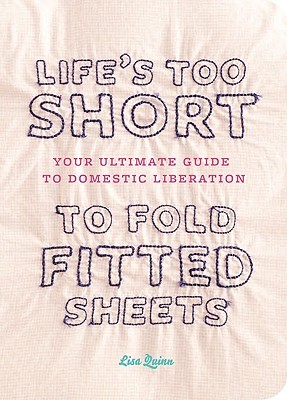
Life’s Too Short to Fold Fitted Sheets by Lisa Quinn

Life’s Too Short to Fold Fitted Sheets by Lisa Quinn

“Hello, my name is Lisa Quinn, and I am a recovering Martha Stewart junkie.” pg 7, ebook

Do you have a job, children, spouse, house, or none of those things and just want everything to look perfect all the time? Want to be the consummate host or hostess without working and stressing throughout the event? Are you wondering how they get it to look so perfect in the magazines?

Lisa Quinn, the author of this book, confesses to wanting it all. But she came to the realization that it is an impossible goal and she was losing her mind in the chase. This humorous self-help book is about embracing reality and understanding that it’s ok, really, to not be perfect.

Photo by cottonbro on Pexels.com

“It’s my assertion that the real key to happiness is getting rid of your inner control freak, redefining what’s real and important in your life, and then lowering your standards for everything else.”

I think that’s solid advice. I, like many, used to demand more of myself than I could give in my housework, from my family, from everybody really. It made me a little bit crazy for a time. But then, I realized, it wasn’t worth it. The effort, the cost — both in time and emotions — and everything else, led to these moments that were forgettable once they were done.

I realized I would much rather dwell in the imperfect moment than forever be chasing the unattainable gem of a perfect moment. Because it never really comes, does it.

This book embraces the idea that no one is perfect. And it’s a lot kinder to realize that your life doesn’t have to look perfect to be incredibly enjoyable.

Photo by medium photoclub on Pexels.com

Quinn gives easy-to-follow tips on how to decorate, host parties, clean, cook and more. My favorite tip being to spray a good smelling cleaner near the door of your home before an event. You may not have hit every surface in the house but it will smell like you have. Genius really.

“House Keeping Myths Debunked… Myth #1: You must fold your fitted sheets. The real definition of insanity is folding a fitted sheet the same way over and over again and expecting it to result in anything other than a migraine and a huge turban. Quit stressing about it. Just wad it up the best you can, and shove it in the closet.pg 39, ebook

She keeps it real with the mega-popular topic of decluttering, pointing out that the easiest way to control the mess is to think about everything you bring into your home.

“Resist the temptation to buy little knickknacks, pillows, throws, and paintings just because you like them. That is not reason enough. Each item you bring into your home should be special. It should have a purpose and a specific place in your home.” pg 64, ebook

Photo by Rachel Claire on Pexels.com

I also enjoyed her variations of recipes that can be done with a deli-cooked chicken. Talk about easy…

“Listen, if I’m able to convince just one other mom out there to take herself a little less seriously a little more often, then I’ve succeeded at what I set out to do.” pg 108, ebook

This book isn’t just for moms. It’s for everyone who needs to cut themselves some slack and just shove those dumb sheets in the closet. I won’t tell.

Thanks for reading!

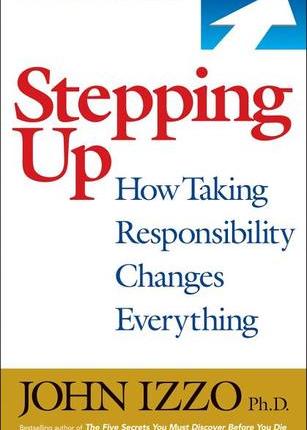
Stepping Up: How Taking Responsibility Changes Everything by John Izzo

Stepping Up: How Taking Responsibility Changes Everything by John Izzo

“You know people who accept responsibility — aren’t they great to be around?” vii, from the forward.

The focus of this book is a worthy one. The author, John Izzo, provides many real life examples of people stepping up and doing the right thing and how it has helped their lives and businesses.

Photo by Matthias Zomer on Pexels.com

Unfortunately, it just reads like one cliché after another and I had a difficult time connecting with it.

Stepping up is seeing a need and deciding YOU are the right person to do something about it.” pg x.

I do agree that all of our power lies in ourselves. Blame doesn’t fix problems. Waiting for someone else to do it doesn’t do the trick either.

“The consequence of having a seismic shift towards victim thinking means more of us feel that the future is not in our hands but in the hands of forces outside ourselves. And since internal locus of control is positively correlated with happiness, success and initiative while external locus of control is related to anxiety and depression, it’s pretty clear that most organizations and society as a whole would be better off if more of us believed we could change things.” pg 21

Photo by Aleksandar Pasaric on Pexels.com

What it comes down to is understanding that at the end of the day, the only person you can entirely control is yourself.

“Beginning where you are and doing what you can with your unique set of skills is critical.” pg 80

What are some of the methods Izzo suggests for “stepping up”? He counsels focusing on what matters, challenging your internal assumptions and find one thing, anything, that you can do immediately to address how you may have contributed to the problem.

“Think about this for a moment: everything that has EVER been accomplished began with someone taking a single step.” pg 71

It’s common sense stuff. Which is fine, but not exactly what I was expecting from this one. I suppose I’ll take responsibility for my internal assumptions about what I would learn from Stepping Up. It’s not YOU, book, it’s me.

“But here is the truth. There is a 100 percent guarantee that nothing will change if you don’t step up.” pg 33

Photo by Andrea Piacquadio on Pexels.com

What is my solution to this problem? On to the next book, my friends.

“Once you step up, somehow that act of taking initiative drives you to find the resources you need inside and outside yourself.” pg 119

To the library! 🙂

Thanks for reading!

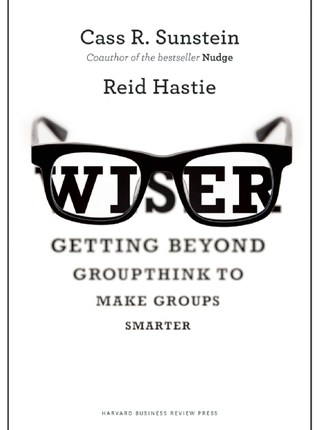
Wiser: Getting Beyond Groupthink to Make Groups Smarter by Cass R. Sunstein

Wiser: Getting Beyond Groupthink to Make Groups Smarter by Cass R. Sunstein

Authors Cass Sunstein and Reid Hastie examine many of the problems that beset groups and how to best address them for optimal group performance.

Written in a style that is more academic than approachable, Wiser uses the findings of multiple researchers to come to its conclusions. This book may be useful to managers who are desiring to set up a group at their own place of employment and want to start on the best foot.

“Do groups usually correct individual mistakes? Our simple answer is that they do not. … We also ask a second question: Can groups correct individual mistakes? Our simple answer is that they can. We aim to explain how.” pg 2

Photo by Canva Studio on Pexels.com

I picked this book up because, frankly, I wanted to know why anybody would utilize groups in a work setting. Every one that I have ever sat on has been either a disaster or inefficient. I was hoping Wiser would help me see the appeal that group-thinking seems to have for some.

And it did. But it also opened up my eyes to the myriad reasons why my experiences had been so bad. I had just assumed groups didn’t work. As it turns out, things are more complicated than that.

“The basic lesson is that people pay a lot of attention to what other group members say and do — and that they do not end up converging on the truth. In fact, they often ignore their own beliefs and say that they believe what other people believe.” pg 28

There can also be problems with authority figures in a group setting: “If the group contains one or more people who are known to be authorities or who otherwise command a lot of respect, then other group members are likely to silence themselves out of deference to the perceived or real authority.” pg 35.

I’ve seen that happen multiple times. The whole purpose of the group is thrown off. It has often frustrated me, leading me to think we may as well have saved our meeting time and had the boss issue a directive.

Photo by Andrea Piacquadio on Pexels.com

Groups also have to keep in mind the idea of “cascades” or ideas taking a hold early in the process and then taking over the rest of the group’s time: “For their part, many groups end up with a feeling of inevitability, thinking that they were bound to converge on what ultimately became their shared view. Beware of that feeling too, because it is often an illusion. The group’s conclusion might well be an accident of who spoke first…” pg 60

Groups can polarize themselves, driving their members to extremes they wouldn’t otherwise reach without members that think like them. To combat this, leaders should make sure groups are diverse.

In a perfect world, groups are equivalent to their best members, aggregate all of the information each individual brings to the table, utilizes experts properly and creates an almost mystical “synergy” where, as the authors say, “the whole is more than the sum of its parts.”

Photo by fauxels on Pexels.com

The trick is getting the group to work like that. As I said, I’ve never seen it. This book brings me hope that perhaps one day I will.

The failures of groups often have disastrous consequences — not just for group members, but for all those who are affected by those failures. The good news is that decades of empirical work, alongside recent innovations, offer a toolbox of practical safeguards, correctives, and enhancements. With a few identifiable steps, groups can get a lot wiser.” pg 214

Thanks for reading!

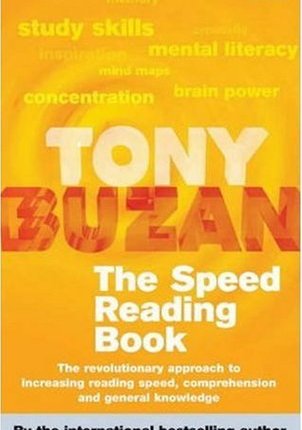
The Speed Reading Book by Tony Buzan

The Speed Reading Book by Tony Buzan

I did not speed read Tony Buzan’s The Speed Reading Book because I found it to be rather a slog. There is useful information in here about the physical capabilities of your eyes and brain, methods for training your eyes how to move, the benefits of improving your vocabulary, how to recognize patterns in the way paragraphs are structured, and the basics of logic.

However, it’s interspersed with information that I felt was better presented in Use Your Head.

“Quite apart from important improvements in the technique of learning how to read fast which are set forth in this book, what I wish to emphasize in my system is that understanding and remembering factual material is not nearly as important as knowing how to relate new material to what you already know. This is the all-important ‘integrative factor’, or if you will, learning how to learn.” pgs 12-13

Photo by fotografierende on Pexels.com

He re-hashes the proper way to make a mind-map and the importance of previewing all reading material, even mystery novels, which I felt was silly. I can’t speak for the whole world, but I read mysteries to be entertained, not create a template into which I fit important details as I go along.

“The purpose of the preview is to develop a structure into which the mind can more easily fit the smaller details of that structure. … Previewing should be applied whatever kind of material you are going to read, which it be letters, reports, novels or articles.” pg 115

Though he did backpedal on his “preview everything” stance somewhat in a chapter about reading poetry: “When reading literature and poetry, bring to bear all your knowledge and judgment, and if you feel that it is the kind of writing you wish to treasure forever, forget about speed reading through it and reserve it for those occasions when time is not so pressing.” pgs 167-168

Thank you, I will.

Photo by Mark Cruzat on Pexels.com

Perhaps part of my problem with this book is that it revealed to me just how slowly I read and assimilate non-fiction, because Buzan offers the reader information about the absolute limitlessness of human capability.

“Theoretically, the human visual system can photograph an entire page of print in one-twentieth of a second, and thus a standard length book in between six and twenty-five seconds, and the entire Encyclopaedia Britannica in less than an hour. Advanced skinning and scanning skills take you on the first step of that incredible and inevitable journey.” pg 70

Let’s say I have much room for improvement.

The book also showed its age somewhat during a chapter on the importance of organizing how you take in information from newspapers: “Newspapers are so much a part of our everyday life that we seldom stop to think that they are a very recent development.” pg 148

But are they still? I’m not so sure.

Photo by Masha Raymers on Pexels.com

The book ends on a high note and, of course, I plan to continue practicing and improving my skills: “Your continuing success in all fields of speed reading depends on your personal decision to continue the course you have begun, and on the capacity of your brain to read, assimilate, comprehend, recall, communicate and create, abilities which we know approach the infinite. Your success is therefore guaranteed.” pg 177

But if you’re only going to read one book by Tony Buzan, I recommend Use Your Head.

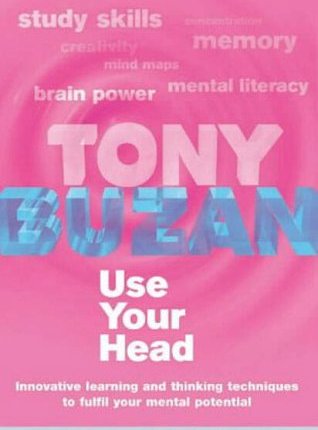
Use Your Head by Tony Buzan

Use Your Head by Tony Buzan

In “Use Your Head,” Tony Buzan teaches the reader strategies to utilize the infinite powers of your mind.

“I call it the ‘operations manual’ for your brain. It is designed to help you nurture your ‘super-biocomputer’ and unleash the natural and extraordinary range of mental skills that you possess.pg xii

Photo by Maria Orlova on Pexels.com

I’ve read a lot of non-fiction books about what the potentials of the mind and positive thinking are. This book gives more than just information about what could be, it shares tools for expanding your creative skills and organizing what goes in and comes out of our mind.

“No man yet exists or has existed who has even approached using his full brain. We accept no limitations on the power of the brain — it is limitless.” pg 24

Buzan shares the keys for maximizing your memory — imagination and association. By combining images with simple rhymes, he’s created a surprisingly easy way to remember lists and, potentially, large sections of information.

Photo by Pixabay on Pexels.com

I was intrigued by his method of organizing information and study materials with the use of “mind maps.” Basically, you start with a topic and draw branches coming out from this main theme, that relate to the information in some way. Continue to branch out, using colors and shapes to stimulate your brain while drawing conscious connections between the ideas on the paper.

It’s a fun little creative exercise, but also it helps you see associations you may not have considered before.

Personally, I do mounds of research on an almost daily basis and it helps to have a tool to organize the facts I come across. The mind map may be the most helpful tool in this book.

There’s a lot of self help advice in these pages too. It’s mainly common sense, but I found almost all of it useful as reminders of what is possible. For example, Buzan suggests considering your perspective before starting any program of study or problem solving.

Photo by Andrea Piacquadio on Pexels.com

“On average, people assume that there are theoretically infinite insoluble problems and only a relatively minor number of solutions. The fact is, every problem has a solution and there are no insoluble problems for a human brain that is properly trained, activated and aware of its creative functions.” pg 82

After a bit of research on the author, it seems Buzan is quite popular in Great Britain and has been for some time. Perhaps it’s time for the U.S. to jump on this train too.

Thanks for reading!

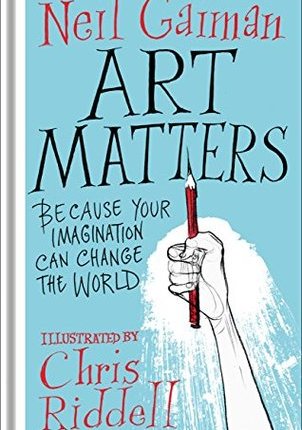
Art Matters: Because Your Imagination Can Change the World by Neil Gaiman, Illustrated by Chris Riddell

Art Matters: Because Your Imagination Can Change the World by Neil Gaiman, Illustrated by Chris Riddell

Neil Gaiman and Chris Riddell have created a manifesto for readers, librarians and content creators. This little book celebrates everything having to do with reading, freedom of information and ideas, and how to start creating the life of your dreams, even if you don’t know where to start.

It was compiled from Gaiman’s prolific back catalog of speeches, poems and various other writings about creativity.

“The world always seems brighter when you’ve just made something that wasn’t there before.”

Photo by Matt Hardy on Pexels.com

I feel like this should be required reading — especially the parts about how to respond to intellectual disagreements. I think Gaiman penned these words after the bombing at Charlie Hebdo, and they still ring true.

“I believe I have the right to think and say the wrong things. I believe your remedy for that should be to argue with me or to ignore me. And that I should have the same remedy for the wrong things that I believe you think.”

And, of course, I was partial to all of the praise directed towards librarians and libraries, having been a librarian once myself. Sometimes people ask me if I ever think libraries will be closed because “they’re just a building with books” or “they’re a waste of taxpayer money”.

This is how I wished I had replied: “Libraries are about freedom. Freedom to read, freedom of ideas, freedom of communication. They are about education, about entertainment, about making safe spaces and about access to information.” How could that ever possibly go out of style?

Photo by Zichuan Han on Pexels.com

Gaiman also gives attention to the bookworms of the world. We make it a better place through our reading and daydreaming and daydreaming about reading. Also, our epic library patronage is a good thing.

“We have an obligation to read for pleasure. If others see us reading, we show that reading is a good thing. We have an obligation to support libraries, to protest the closure of libraries. If you do not value libraries you are silencing the voices of the past and you are damaging the future.”

Gaiman shares a bit about how he became the universally beloved author he is today. Step one, you’ve just got to get started.

“If you have an idea of what you want to make, what you were put here to do, then just go and do that and that’s much harder than it sounds and, sometimes in the end, so much easier than you might imagine.”

He confesses that he lied on early resumes to get his foot in the door. But, after his later success, he went back and worked at all of the places he had claimed before. That way, he didn’t see himself as lying but as “chronologically challenged.” I loved that he took the time to make things right.

Gaiman also has some interesting views about no-start dreamers. He says the saddest thing to him are friends that say they’re too committed to follow their dreams. There’s bills to pay, mortgages and families to support and they can’t take the dive to do whatever it is they’ve always dreamed of doing.

Photo by Karolina Grabowska on Pexels.com

He said he dodged that particular roadblock by skipping a well-paying job or two early in his career, so that he didn’t get too comfortable doing something other than writing. I thought that was an interesting strategy. Creating is about having the courage to just do it, no matter what and not stopping until you’re doing it.

“Somebody on the internet thinks what you do is stupid or evil or it’s all been done before? Make good art.”

The good news is there are more platforms than ever before to get your creations in front of the people who will care about them.

“The gatekeepers are leaving their gates. You can be as creative as you need to be to get your work seen. YouTube and the web (and whatever comes after YouTube and the web) can give you more people watching than television ever did. The old rules are crumbling and nobody knows what the new rules are. So make up your own rules.”

My own life right now points to the truth of that. I left a guaranteed paycheck and employer provided health care to write for my husband’s YouTube channel. We’re not only succeeding but we’re having a lot of fun doing it.

Thank you, Gaiman and Riddell for this beautiful book. I hope it encourages creators everywhere to take the leap.

Thanks for reading!

The Astonishing Power of Emotions: Let Your Feelings be Your Guide by Esther Hicks, Jerry Hicks

The Astonishing Power of Emotions: Let Your Feelings be Your Guide by Esther Hicks, Jerry Hicks

“Beyond the five physical senses that you are actively aware of, there is another less-realized sense — the sense of emotion.” pg 20

Esther Hicks channeled this book from her “higher self,” an entity she calls Abraham. It is about how one can deliberately create their experience by being aware of their emotions. It also gives advice on how to focus on those things that make you feel good, because by doing so, Hicks believes it will “bring you into alignment” with your higher being. And, therefore, you’ll allow the goodness of creation to flow through you.

Photo by Emre Kuzu on Pexels.com

“Allowing yourself to become what life has caused you to desire is not about action. It is about the aligning of thought Energies. It is about focusing your attention in the direction of your desire rather than looking back at the current conditions that have given birth to your desire.” pg 25

My favorite part of this book was contained within the first 45 pages in which Abraham talks in a general way about emotions and their latent power. The rest of the book contained examples of how to apply this teaching to specific questions Hicks received at her various workshops.

I didn’t find the second portion as helpful because, first of all, it felt like we were focusing on current conditions. Secondly, the answer to every question was to soften the emotions by looking for things that made you feel good about in whatever subject was being discussed. Then, roll with that until the emotions shift. Honestly, it felt repetitive after the first two or three examples.

Photo by Quang Anh Ha Nguyen on Pexels.com

I suppose if one of the questions had applied directly to my life experience right now, then maybe I would have had a different view of this book. As it is, I prefer Ask and It Is Given: Learning to Manifest Your Desires to this.

Ask and It is Given deals with the topic in a more general way and I got more out of it.

I can understand the criticisms of Hicks as a life philosophy: that she teaches people to ignore their problems, to be selfish, to be utterly self absorbed. But wasn’t it a teaching of the Buddha that the first love you should attend to, before you can offer unconditional love to others, is self love. You build a base of love and everything else flows from that. I see Hick’s teachings as the same kind of thing — self love first.

I think another point to bring up before closing the discussion of this book is the idea that the Law of Attraction, so beloved of New Age teachers and authors, functions rather like gravity. You don’t have to teach someone how to utilize gravity because it just works. The Law of Attraction is the same kind of deal and isn’t that nice to know.

Photo by Mary Taylor on Pexels.com

So, no matter what you’re doing, thinking or feeling, you’re not going to float off into outer space because gravity has got both of your feet safely planted on the ground. I like to approach any teachings about the Law of Attraction the same way. I can play with ideas and techniques, but at the end of the day, it’s going to do its thing whether I’m paying attention to it or not.

Recommended for readers who like New Age materials or love the teachings of Abraham Hicks.

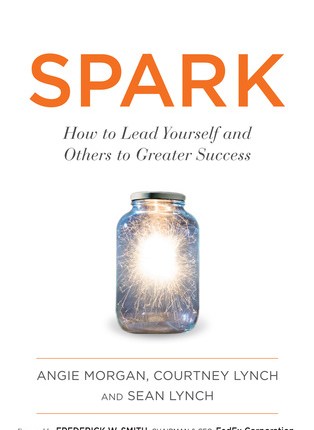
Spark: How to Lead Yourself and Others to Greater Success by Angie Morgan, Courtney Lynch, Sean Lynch

Spark: How to Lead Yourself and Others to Greater Success by Angie Morgan, Courtney Lynch, Sean Lynch

Spark is a manual to help an individual or a business develop leadership skills. The important attributes are outlined in each chapter with highlighted stories provided by the authors’ own life experiences. The salient points of the different topics are simply and clearly listed at the end of each chapter as well as further resources.

“Our society values leadership — craves it, for that matter. Yet we don’t teach it in formal education.” pg 9, ebook.

Photo by Sora Shimazaki on Pexels.com

The title itself “Spark” refers to those who know they carry the seeds of greatness within themselves and are willing to learn how to make those seeds bloom. As the authors are quick to point out, there are a lot of misconceptions about leadership.

One of them is that people are born leaders and only certain people can lead. They say, and I believe this too, that anyone can become anything they set their minds too. This book helps provide the necessary skills to make that process simpler.

“No one else can make or anoint you a leader. The only way to become a Spark is to make yourself into one.” pg 24, ebook

I thought it was an interesting that these skills are taught to our military personnel but are not stressed as much in the private sector. The main reason the authors started their leadership business was because they noticed leadership was required in business but no one was teaching it. I suppose that’s true, but I’d never considered it before because I had assumed that leaders were born that way.

“… invest the time in seeking to uncover your values, and you’ll be led to discover any misalignment between your expectations of yourself and your actions. The next step is having an honest conversation with yourself so that you not only understand where, when, and why you’ve compromised your values in the past but also recognize the changes you need to make to lead more consistently with your intentions.” pg 42, ebook

Photo by Cade Prior on Pexels.com

I think some of the suggestions in Spark might discomfort those who haven’t taken the time to look and evaluate their own character. Or accept responsibility for reoccurring issues in their experience.

“Overwhelmingly, we all seem to agree that we live in a pass-the-buck culture. Pointing to others as the reason for a problem is a typical response.” pg 69, ebook.

And, taking responsibility for a problem gives you the power to change it. Because, at the end of the day, you can’t control somebody else’s actions — despite how much we may want to.

The chapters I, personally, liked the most were about how to “build your confidence” and “demonstrate consistency”. The information in that section felt the most relatable because it deals with the humanity of leaders. We all fail sometimes or experience self doubt. What matters is how you handle that and continue onwards.

Photo by Ono Kosuki on Pexels.com

Which brings me to my last thought about this book, as I mentioned earlier, the authors insist leaders make themselves. If you want to learn these skills, you can. If you want to make change in your organization, you can. What you can’t do is force other people to become leaders if they don’t want to be.

I think the power in becoming a leader or a “spark” is the example you hold up to others who have the same aspirations. As for the rest, I suppose they can provide the background against which your brilliance shines.

Thanks for reading!