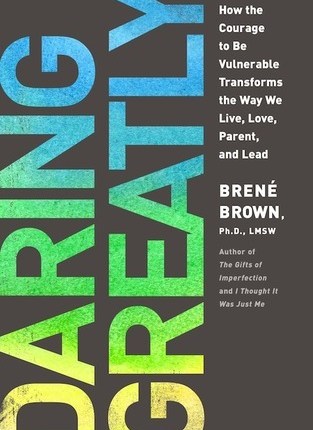
Daring Greatly: How the Courage to Be Vulnerable Transforms the Way We Live, Love, Parent, and Lead by Brené Brown

Daring Greatly: How the Courage to Be Vulnerable Transforms the Way We Live, Love, Parent, and Lead by Brené Brown

Brené Brown shares her twelve years of research into shame and gives tools on how to increase one’s vulnerability. In this way, she believes each individual can help change the culture of scarcity and pull the world back from a continual cycle of shaming.

We’ll build stronger and deeper relationships, strengthen families and have more productive work places. And, by doing this, we will each, in our own way, live in a manner that “dares greatly” every day.

“I also learned that the people who love me, the people I really depend on, were never the critics who were pointing at me while I stumbled. They weren’t in the bleachers at all. They were with me in the arena. Fighting for me and with me.” pg 56

Photo by RF._.studio on Pexels.com

I’m going to use the information in this book the most in my work life. As a writer, I attach far too much significance to my work product on the audience’s response to it rather than my own feelings about it. As Brown so clearly points out in this book, an outside response will never be good enough or big enough to fill the need that I am looking to fill with their words or their views. Or, if it is wildly praised, perhaps the next work won’t be, and then I’m right back to where I started.

“You still want folks to like, respect, and even admire what you’ve created, but your self-worth is not on the table. You know that you are far more than a painting, an innovative idea, an effective pitch, a good sermon, or a high Amazon.com ranking.” pg 64

This desire for connection and a feeling of worthiness, Brown says, comes from the need to survive by belonging to a group. Our brains have evolved to encourage us to belong and form connections. And when we don’t by not believing in our own self worth or experiencing shame, it is a physically painful emotion. People do all sorts of things to avoid feeling shame including pulling away or striking out. But, in the end, these connections are life itself.

“Buber wrote, “When two people relate to each other authentically and humanly, God is the electricity that surges between them.” pg 150

Photo by Pixabay on Pexels.com

As interesting as I found Brown’s research to be, she lost me when she began a discussion about how much vulnerability is enough or too much and walking the tightrope between extremes. So, be authentic, but don’t use it to manipulate people. A few sentences covers what Brown uses 50 pages to unpack.

“When we stop caring about what people think, we lose our capacity for connection. When we become defined by what people think, we lose our willingness to be vulnerable.” pg 169

Her message becomes a bit undefined and more general the further the book goes. That’s not to say it couldn’t be useful for readers who are looking for that type of information. I didn’t find it particularly engaging.

Like any self help book, I think sometimes authors and researchers can get lost in the weeds of the problem. I far more prefer to focus on the solution. In this case, that’s being brave enough to show up and be seen, demonstrating vulnerability and willingness to care about whatever is going on wherever we find ourselves throughout the day. As Brown reminds readers, it’s not about winning or losing, it’s about being there. And that’s a message worth spreading.

Photo by fauxels on Pexels.com

“To love ourselves and support each other in the process of becoming real is perhaps the greatest single act of daring greatly.” pg 110

I’m game. Are you?

Thanks for reading!

The 4-Hour Workweek by Timothy Ferriss

The 4-Hour Workweek by Timothy Ferriss

“I’ve spent the last three years traveling among those who live in worlds currently beyond your imagination. Rather than hating reality, I’ll show you how to bend it to your will. It’s easier than it sounds.”

Photo by Ronu00ea Ferreira on Pexels.com

Timothy Ferriss promises the stars in the sky in his new-classic business/self help book, The 4-Hour Workweek. Though he gives some good productivity tips, he fails to provide a true road map to freeing yourself from the 9-to-5 grind. Partially, this is because there is no real road map to doing this.

But he does detail how he found his way into a life of his dreams. Readers can take whatever lessons and information from that as they will.

After Ferriss relates a timeline of his life story, he begins by detailing his “DEAL” plan to a four hour work week which consists of “definition, elimination, automation and liberation”. Each step of this process, he says, helps guide the reader to a new world of free time. Though, he admits, traditional bosses may have serious problems with your new program and, perhaps, you should go more “DELA”. Yes, understatement.

“Resolve now to test the concepts as an exercise in lateral thinking. If you try it, you’ll see just how deep the rabbit hole goes, and you won’t ever go back.”

Photo by Anna Shvets on Pexels.com

He examines the concepts of “busy work” and suggests boiling your workload down to the most important tasks you complete. Then, just do those as fast as possible. Don’t allow yourself to be derailed by the internet or chatty coworkers. (Not a friendly method, but Ferriss seems to have his eyes on the prize rather than concerning himself with making friends.)

Out of everything he suggests in the first part of this book, I was most taken with the idea of only checking your email once a day or week. There is a definite time-suck there that maybe I have been blinding myself to.

After that, Ferriss enters more conceptual territory with an idea about creating a business for yourself that essentially runs itself or can be run by someone else, cheaply. For example, a website that sells something awesome. But, what exactly that something or muse is, that’s for you, the reader, to discover on your own.

It reminded me of Godin’s Purple Cow: Transform Your Business by Being Remarkable. You know an awesome product or “purple cow” when you see it, but how exactly to make one isn’t a clear thing. Interesting idea, but necessarily helpful for those looking for actionable items to improve their work life.

The most useful part of the book, in my opinion, is his encouragement to create a dream plan by “dreamlining”. Write down what you want to do. Create a timeline. Crunch the numbers. It may cost less than you thought and, with it on paper, it takes on a bit of reality already. If you don’t get started, how do you know what you might accomplish.

Photo by Negative Space on Pexels.com

“It’s lonely at the top. Ninety-nine percent of people in the world are convinced they are incapable of achieving great things, so they aim for the mediocre. The level of competition is thus fiercest for ‘realistic’ goals, paradoxically making them the most time-and energy-consuming. It is easier to raise $1,000,000 than it is $100,000.”

Ferriss’ tone in this book has been criticized by readers and I see what they mean. Some of his ideas are alienating. Sometimes he seems to say: I’ve done this-this-this and this, and it’s so easy that if you can’t figure it out too, especially with the book I’ve put in your hands, then you must be either complacent or dumb.

But I took this book to be written by someone who dared, a nod to Brené Brown, greatly. Ferriss believed his life could be something other than a slog and yours could too. He’s written down some tips to help you along the way that he discovered through real life trial and error. Read it or not. He’ll be over there, living the life of his dreams.

Photo by Alex Fu on Pexels.com

Recommended, with reservations, to folks interested in life-hacking their work/life balance. I think we can achieve whatever dreams we set our minds to while still being friendly.

Thanks for reading!

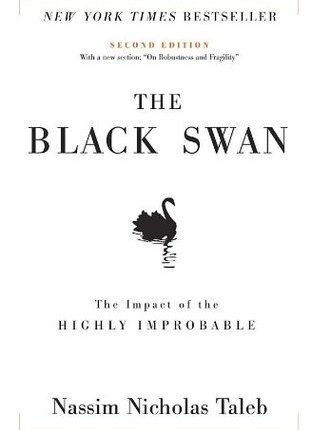
The Black Swan: The Impact of the Highly Improbable by Nassim Nicholas Taleb

The Black Swan: The Impact of the Highly Improbable by Nassim Nicholas Taleb

Nassim Nicholas Taleb discusses “black swans”, unexpected and life-changing events, and how life is far more uncertain than most believe it to be. He also examines, in-depth, how we fool ourselves into believing reality is otherwise by various means like confirmation bias (we look for evidence to support our existing beliefs) and narrative fallacies (the tendency to describe existence using linear stories when reality is far more complicated).

Mix in a heaping dose of storytelling and autobiographical information and you get The Black Swan.

Photo by Takeshi Arai on Pexels.com

“This combination of low predictability and large impact makes the Black Swan a great puzzle; but that is not yet the core concern of this book. Add to this phenomenon the fact that we tend to act as if it does not exist!” Prologue xxii

This is a dense read, full of philosophical references and terminology. Basically, beyond black swans having a larger impact on reality than we realize they do, this book can be simplified way down to “beware of because” and “know what you don’t know”.

“Beware of because” because (tee-hee) reality is far more random than most believe it to be. And we suck at predicting the future, for a variety of reasons, but partially because it is impossible to project future events from historical ones.

“Note here that I am not saying causes do not exist; do not use this argument to avoid trying to learn from history. All I am saying is that is it not so simple; be suspicious of the “because” and handle it with care — particularly in situations where you suspect silent evidence.” pgs 120-121

Photo by Karolina Grabowska on Pexels.com

“Silent evidence” is the information not readily apparent for whatever reason. Taleb gives an illustrative example of silent evidence from ancient history of a philosopher being presented an argument that a group of sailors survived a shipwreck because they prayed. The philosopher wonders how many of the sailors who drowned were also praying. The drowned sailors, you see, are the silent evidence.

Biologically, Taleb says, human beings are not set up to be deep thinkers and are fooled by a variety of logical fallacies. This is only a problem because, as time goes on, humanity has less running away to do from things trying to eat us and more dealing with the complexities of modern existence.

But by remembering “to know what we don’t know” and understanding some of the limitations built into our brains by memory and logical fallacies, we can be prepared to make better decisions than before. Or, at least, we’ll have a better grasp on how risky and unknown life is.

Photo by Marlene Leppu00e4nen on Pexels.com

Anyway, this book certainly gave me a lot to think about. The part that struck me the most is when Taleb applies his black swan idea to careers and how this uncertainty applies particularly to authors and artists. For every J.K. Rowling, there will be thousands of writers who never make that break through. I started wondering how many extraordinary books I will never get to read because of this phenomena.

The author’s tone throughout the book, slightly irreverent, didn’t annoy me as much as it seems to have bothered other readers. I enjoyed learning a new way to look at reality, but, as I mentioned before, this is a dense read and I wouldn’t consider it “fun” reading either.

It may appeal most to philosophers and anyone who wants to consider new ways to view reality.

Thanks for reading!

Purple Cow: Transform Your Business by Being Remarkable by Seth Godin

Purple Cow: Transform Your Business by Being Remarkable by Seth Godin

The world has changed. There are far more choices, but there is less and less time to sort them out.” pg 13

Seth Godin, prolific author of business blogs and books, shares his insights about why a product must be remarkable to cut through the noise and get an audience’s attention. He opines that this remarkable “Purple Cow” quality is the only way a business can succeed in the modern world, as the old methods of mass marketing through expensive television ads is going the way of the dodo.

Photo by Jan Koetsier on Pexels.com

“Something remarkable is worth talking about. Worth noticing. Exceptional. New. Interesting. It’s a Purple Cow. Boring stuff is invisible. It’s a brown cow.” pg 3

The trouble with this remarkable stuff is that there is no clear method to create it. It is a “I’ll-know-it-when-I-see-it” type situation. For businesses looking to up their Purple Cow-factor, there are very few directions in this book, other than, it’s important to be a purple cow. I could see that unclear quality being frustrating for some readers.

“The old rule was this: Create safe, ordinary products and combine them with great marketing. The new rule is: Create remarkable products that the right people seek out.” pg 21

The “right people” being the influencers or the early adoptors of whatever type of product it is that you’re selling. Marketing to the niche, rather than mass marketing to the crowd, is, according to Godin, the best strategy for the new world of marketing.

Photo by Mike Chai on Pexels.com

Take Goodreads, for example. Publishers want to get their advance reader copies into the hands of those who talk to their friends about what they’re reading and are passionate about books, the readers who exhibit “otaku”. Godin defines “otaku”: “Otaku describes something that’s more than a hobby but a little less than an obsession.” pg 94

The obsessed, passionate readers talk about what they’re reading to the extent that they start an “ideavirus”, which Godin talks about in another book. In this way, Godin says, you build momentum for whatever remarkable product you’re selling. They can’t help but talk about it because of its fascinating qualities. As this movement builds, the books end up on readers’ favorite shelves, eventually becomes a Reader’s Choice pick, and then the book sells itself.

The products that aim for the largest audience are bland and have had their remarkable edges filed off. And, that’s bad, according to Godin.

“The system is pretty simple: Go for the edges. Challenge yourself and your team to describe what those edges are (not that you’d actually go there), and then test which edge is most likely to deliver the marketing and financial results you seek.” pg 101

Photo by Christina Morillo on Pexels.com

There are definitely dated portions of this book and, as I said, it is nebulous. To get meaning out of it, readers need to distill the underlying ideas and apply them to your unique business. But, I still learned things.

The reason I read Godin is he encourages readers to think differently. He gets my creative circuits firing. I like that.

Recommended for readers who may need a creative jump-start for whatever remarkable product they’re creating. This book isn’t a road map, but it could be a compass.

Thanks for reading!

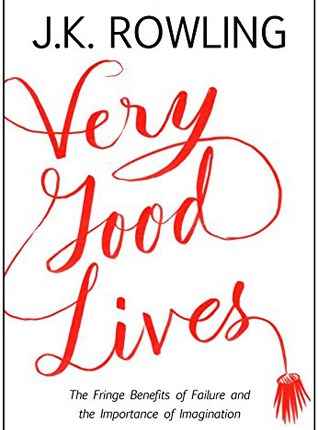
Very Good Lives: The Fringe Benefits of Failure and the Importance of Imagination by J.K. Rowling

Very Good Lives: The Fringe Benefits of Failure and the Importance of Imagination by J.K. Rowling

“It is impossible to live without failing at something, unless you live so cautiously that you might as well not have lived at all – in which case, you fail by default.”

J.K. Rowling gave the commencement speech at Harvard in 2008 and the result was a mini-masterpiece about life, the power of imagination, and failure.

Photo by Joe Digital & Co on Pexels.com

Though we all know now what a mammoth success she would go on to be, at one time, she was experiencing failure and poverty.

“Now, I am not going to stand here and tell you that failure is fun. That period of my life was a dark one, and I had no idea that there was going to be what the press has since represented as a kind of fairy tale resolution.”

I’ve had my own handful of rock bottom moments and, she’s right, it is no fun. But I too have found resilience and creativity that emerged from that darkness. It’s strange, when you’re pushed to your limits, you suddenly discover that there’s more to yourself than you ever realized.

“One of the many things I learned at the end of that Classics corridor down which I ventured at the age of 18, in search of something I could not then define, was this, written by the Greek author Plutarch: What we achieve inwardly will change outer reality.”

Photo by Pavan Maruvada on Pexels.com

Like Rowling, I studied the Classics because something about it spoke to me. When I told my dad that I was adding that course of study to my degree, he laughed and said, “Well, at least it will look impressive on your resume.” Even though I knew he was right in that there were very few jobs where I could use it, having a background in the Classics has taught me a lot about modern life.

I learned that people in antiquity, though they lacked the technology and lifestyle we enjoy today, still had the intensity of emotions and civilizations struggles that persist in the modern era. There were those who had and those who had not. There were crimes of passion, acts of kindness, politicians both corrupt and extraordinary.

Struggle, stress and failure is not something mankind invented when we produced the first smart phone. Classics gives you a long view on humanity and how far, or not far, we’ve come since.

We do not need magic to change the world, we carry all the power we need inside ourselves already: we have the power to imagine better.

Photo by josue Verdejo on Pexels.com

Brilliant. I recommend this small book as a graduation gift or for anyone who is having a bad day. It can act as a reminder that anyone can succeed at whatever their heart tells them is their path, despite any evidence to the contrary. And don’t be afraid of failure. Everyone will experience it at one time or another, but what matters most is what you chose to do next.

Thanks for reading!

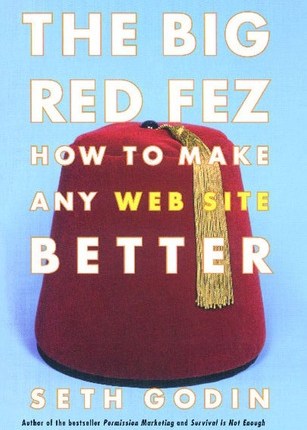
The Big Red Fez: How To Make Any Web Site Better by Seth Godin

The Big Red Fez: How To Make Any Web Site Better by Seth Godin

The premise of Seth Godin’s non-fiction book about how to improve business websites is this: imagine consumers as a monkey in a big red fez looking for a banana, i.e., whatever it is you’re selling or promoting. You want whatever the “banana” is to be as big and bright as possible because if the consumer can’t find it, like right now, they’re going to go somewhere else.

“Some people might object to the characterization of web surfers as monkeys. After all, they say, we’re smarter than that. No, actually, we’re not. We’re not smart because we’re busy, or we’re distracted, or we’ve never been to a particular site before and and we’re not mind readers.” pg 8

Photo by Junior Teixeira on Pexels.com

Yes, the specific information about how to lay out your website is outdated. (The examples he uses for newsletters are too.) But, if you take his general business advice and apply it in broad strokes to your blog or social media accounts, it is still incredibly useful.

For example, I don’t answer all of the messages my business account receives on its Facebook page because we get too many. I had a generic robot response set up that said something like “thank you for your interest, we can’t get back to you right now”. Godin pointed out that most websites lose an opportunity to further connect with the consumer by not utilizing the “thank you” portion of the interaction. The consumer has already reached out to you through a sale, or in this case, a message. Why not direct them back to other items or services your business sells when replying?

As I said, he was applying this idea to the sales portion of a website, but I started thinking about other potential applications and realized that I was missing a golden opportunity to share further information about our business.

I now use the automated message response to thank the person for contacting us AND providing the links to our YouTube page and Patreon account. I may have never come to the realization — that the person reaching out to the business wants more than just a thank you note — if Godin hadn’t pointed it out. Thanks Seth!

He also had some interesting ideas about what kinds of things to post on your website/social media accounts. Sometimes, he asserts, you just need to strike up a conversation.

“The biggest win you can create when you interact with a customer is actually not closing a sale. The biggest win is getting someone to tell ten friends, who then come do business with you.” pg 75

Photo by Negative Space on Pexels.com

Good business is about how valued you make the consumers feel. Make the interactions about them and their needs.

Don’t read this book if you’re actually interested in website design. I’m afraid you’ll be sorely disappointed.

Do read this book if you’re interested in general business principles that you can apply to your digital interactions. I’ve generated a half dozen different ideas on how to improve my online business presence, all thanks to The Big Red Fez.

Thanks for reading!

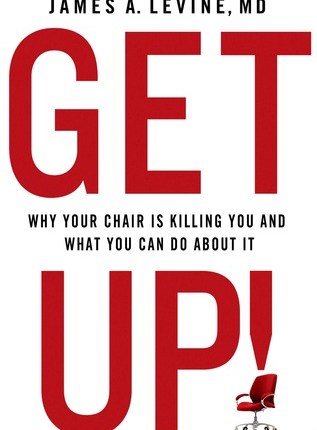
Get Up!: The Dire Health Consequences of Sitting and What We Can Do About It by James A. Levine

Get Up!: The Dire Health Consequences of Sitting and What We Can Do About It by James A. Levine

James Levine shares the disastrous consequences of a sedentary lifestyle and has created a clarion call for the modern world.

“When you first contemplate a book about the harm of sitting, you may view it as absurd. How can chairs possibly kill anyone? … However, this book summarizes 40 years of science — the work of scores of scientists and physicians from around the world. The scientific conclusion is clear: Humans are not designed to sit all day long, from a physiological, medical, creative or psychological perspective.” pg 4

Photo by Andrew Neel on Pexels.com

This book scared me. Levine provides study after study proving his hypothesis and the results are shocking.

“From birth through death there is a predictable, programmed timetable of movement. We transition from the frenetic nature of childhood, to the organized movement of adulthood, through the stillness of aging.” pg 13

But don’t worry. The body and mind are more flexible than people realize.

“Because the brain is constantly adapting, it takes about three weeks for brain change to occur. A chairaholic can become a walker in three weeks. But watch out! A walker who begins to sit can just as easily become a chairaholic.” pg 46

Photo by Daniel Reche on Pexels.com

There are concrete steps you can take to incorporate more movement into your life. The first step is to realize there’s a problem.

Next, look for ways to increase your “NEAT” energy. NEAT stands for “non exercise activity thermogenesis”. Basically, it means, make an effort to move more during your every day routine — cleaning the house, running after the kids, walking the dog, etc.

That seems to be a key for kicking the sitting problem to the curb. In Levine’s studies of urban life compared to agriculture living, that was the difference he noted between the two populations. People living the agriculture lifestyle move all the time. The urban lifestyle… not so much.

“The differences were so large that it staggered us — when you live in an urban setting, even if you are lean, you move half as much as people living in agricultural regions. The decline in calorie burn with urbanization could entirely explain the obesity epidemic worldwide.” pg 60

Photo by Maria Orlova on Pexels.com

Fear not, urban dwellers. There are solutions to upping your NEAT energy, even if you are required to be at a desk for the majority of the day. One of these, that I invested in the moment I finished reading this book, is the desk treadmill. Another option is the standing desk.

Both of these tools help you move while still getting your job done.

This book contains more helpful suggestions than simply buying new lifestyle equipment. For example, Levine also suggests a leisurely walk after every meal.

“If people sit after a meal, their blood sugar peaks like a mountain for about two hours. If, however, people take a 15-minute walk at 1 mph after a meal, the mountains become safe, gentle, rolling hills. With a 1-mph walk after a meal, blood sugar peaks are halved.” pg 68

Photo by Daria Shevtsova on Pexels.com

I think I can manage that.

The line that firmly established Levine’s hypothesis in my mind is: “If you see a saber-toothed tiger charging toward you, you don’t fire off an email, you get up and run!” pg 81

It’s that simple. Humans did not evolve to live the way that we’re living. I’m taking steps to change that now. Who’s with me?

Thanks for reading!

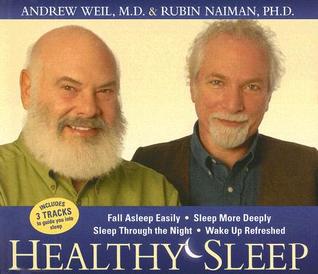
Healthy Sleep by Andrew Weil, Rubin R. Naiman

Healthy Sleep by Andrew Weil, Rubin R. Naiman

Doctors Andrew Weil and Rubin Naiman have created an audiobook to help cure the various troubles one may have while falling to sleep.

I liked their multimodality approach to a problem that everybody seems to have. They start with an exercise to help you figure out what type of sleep problem you may be facing. They discuss the differences between “rest” and “sleep”, which I had never considered. They also talk about how to structure your bedroom to give yourself the best opportunity for sleep.

Photo by Ketut Subiyanto on Pexels.com

Dr. Weil gives some natural suggestions for sleep like maintaining a consistent diet and exercise routine, going to sleep the same time every night, realigning your body with the natural rhythms of the outdoors, and more. He also discusses holistic remedies and the doses he recommends to his patients with potential side effects.

There are also multiple meditations to assist with relaxation and then sleep. As Dr. Naiman points out in the program, one does not truly “go to” sleep as it’s not a location or something you can “catch”. Sleep is more about stepping back and allowing your body to naturally do its thing.

The doctors also go into the importance of dreaming for the health of the psyche. If you’re not sleeping, there’s some underlying issues that your consciousness may not have time to deal with during the waking day. Managing your sleep is more than a benefit for your health, it is also vitally important for your mental health too.

Photo by Vecislavas Popa on Pexels.com

In addition to sleep for individuals, they talk about sleeping with a partner and the special challenges that can bring. I could see this being particularly helpful for sleep-challenged couples and is another aspect of the sleep environment that I hadn’t necessarily considered before.

Highly recommended for people who are looking to increase or improve the quality or quantity of their zzz’s.

Thanks for reading!

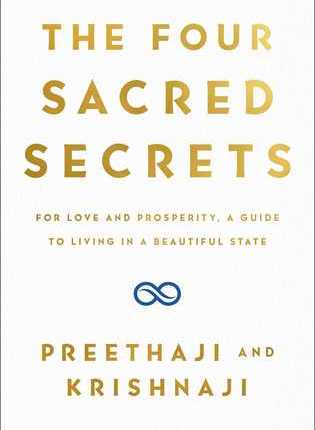
The Four Sacred Secrets: For Love and Prosperity, A Guide to Living in a Beautiful State by Krishnaji, Preethaji

The Four Sacred Secrets: For Love and Prosperity, A Guide to Living in a Beautiful State by Krishnaji, Preethaji

In The Four Sacred Secrets, Krishanaji and Preethaji, a husband and wife team, help readers understand four principles for spiritual living. Each section of the book is divided into an explanation of the principle or secret and then details corresponding transformational journeys the readers can undertake to help them internalize and live each one.

“Our goal is to help you awaken to a power that is much greater than any technique you can master — a power that is available to each and every one of us. We need only unlock it. It is the power of a transformed consciousness.” pg 2

Photo by Karan Shah on Pexels.com

The secrets aren’t really “secret” in that they’ve been discussed in spiritual texts throughout human history. But each speaks to how someone’s consciousness can move away from one’s primal state of beauty. The authors believe there are two states in life — this beautiful state of oneness or not being in this state.

The simplicity of this method of teaching is that it is easy to tell if you are in a beautiful state or not. You can feel it. You simply know. It is the state that children walk in. They are themselves, unconditioned by worldly expectations or concerns. It is a state that points to oneness with life itself.

“I want us to be free from the idea that we are separate from one another. Free from the war we feel within ourselves and the world around us. Free from the suffering that makes our lives feel small and meaningless. I knew a beautiful life lived in a beautiful state of being was everyone’s destiny.” pg 12

Photo by Jonathan Petersson on Pexels.com

The secrets include living your spiritual vision, discovering your inner truth, awakening universal intelligence and practicing right action. The journeys to these secrets are all different, but I think a similar thread runs throughout — observation of current conditions without judgment. If you can figure out where you are and then you can see clearly what’s holding you back.

“Our society places a premium on doing, with very little care to our inner state of being. Few of us truly make creating a beautiful inner experience a priority in our lives, choosing instead to live as though our career, performance, appearance, status, or financial security is all that matters.” pg 23

This book contains all of the tools one would need to completely transform their inner world, including meditation instructions and mythological allegories.

The authors also share the real-life stories of many of their students, some of whom didn’t even realize they were in a state of suffering until they stopped a minute and observed themselves. The type of freedom from suffering that seems to follow these students’ transformations is astonishing. If only we could all feel that way, what a different world this would be.

Photo by Alex Green on Pexels.com

“So many of us have been taught that we must solve our problems if we want to be free of suffering. But the truth is the inverse: If you want to become free of your problems, start by allowing your suffering to dissolve.” pg 62

Recommended for spiritual seekers who aren’t sure where to start. The Four Sacred Secrets is a good place to start looking.

Thank you to the publisher for a free advance reader’s copy of this book. The brief quotations I cited may change in the final version of the book. Expected publication date is August 2019.

Thanks for reading!