Lean In: Women, Work, and the Will to Lead by Sheryl Sandberg

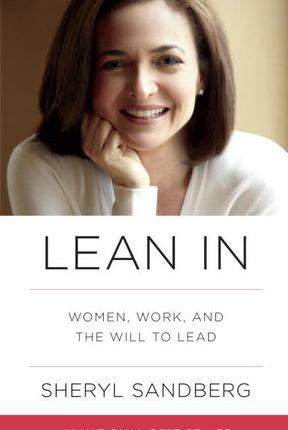
Lean In: Women, Work, and the Will to Lead by Sheryl Sandberg

Sheryl Sandberg stresses the need for collaborative approaches and teamwork because both strategies lead to greater success and gender equality in business. She then takes that idea a step further and ventures to say that if this collaborative model could be applied both on the job, in relationships, and at home that this could change the world.

It probably could. I’m certainly willing to give it a try.

Photo by RF._.studio on Pexels.com

The part of Lean In that I was most receptive to was the discussion about the Queen Bee syndrome of females in upper management and how, sometimes, women keep other women down because of the attitude that “there can only be one”.

Probably because of my background, I’ve always approached friendships with other women with the mind set of a “world family” and do my best to help others with their needs in whatever capacity I can. I have rarely found a friend or business associate who responds with the same level of support. I suspect that this tendency in life to look out for number one is caused by the lack of unconditional love that a supportive family unit provides first developmentally as a child and then into adulthood.

It is no wonder that women, if made to feel inferior to other family members at home, react in an aggressive way when “competing” with other females on the job rather than reaching out a hand in welcome.

Photo by Tima Miroshnichenko on Pexels.com

I was fortunate to grow up in an all female household (plus Dad) so gender equality wasn’t an issue that I ever had to consider until I had a child of my own and had to make decisions about work and childcare. My sisters and I weren’t compared to brothers or ever told that we couldn’t have something that we wanted or be successful simply because we were female.

In fact, my mother’s father was on the forefront of the integration of females into the Air Force. He gave his daughter a male name (Allyn) because his thinking was that gender equality was going to shift to a more equal stance during her lifetime. But, it was going to take some time for attitudes to change. In the meantime, he wanted her resume and career to be judged and advanced on its merits, which, he figured, would be smoother and avoid all the pitfalls of sexism if recruiters thought she was a man.

Photo by Maryia Plashchynskaya on Pexels.com

Clever Grandpa and hooray for me that my mother had a positive, feminist role model for a father.

I’m also lucky in that, because of my many female siblings, I have a ready-made “sisterhood” of support. Many of the issues that Sandberg discusses in Lean In, I’ve encountered, but I was lucky enough to have solutions for in the embodiment of my family. I know that not everyone has that type of support in their career and personal life, and I fully appreciate that I’m spoiled in my lifestyle.

If you enjoyed Lean In, I’d suggest Spinster: Making a Life of One’s Own (a discussion of feminist issues in relationships and marriage) and Artemis: The Indomitable Spirit in Everywoman (a feminist dissection of a few mythological archetypes to empower women through the exploration of the subconscious mind).

Thanks for reading!

Bed Yoga for Couples: Easy, Healing, Yoga Moves You Can Do in Bed by Blythe Ayne

Bed Yoga for Couples: Easy, Healing, Yoga Moves You Can Do in Bed by Blythe Ayne

“If it’s a lazy Saturday morning and you don’t feel like getting up just yet, you can ease into your day with a few shared yoga poses. It’s a great way to feel connected, to hook up your energies and get on the same wavelength.” pg 3, ebook

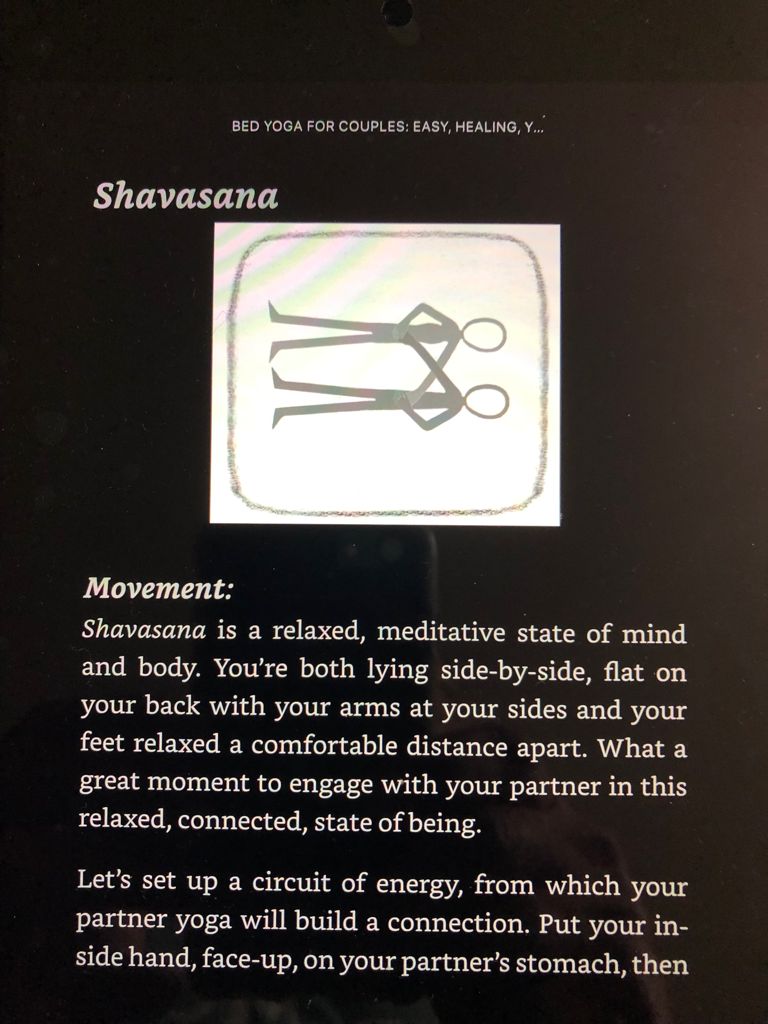
Bed Yoga for Couples is a simple yoga manual for two practitioners that includes stick figure diagrams, brief explanations of each pose, and a few basic breathing techniques.

I’ve practiced hatha yoga for nearly two decades so I was familiar with the poses in this book. However, even if you have zero experience, most are so simple that beginners shouldn’t have any problems either.

That being said, I’m not convinced of the efficacy of the moves while laying down. Part of yoga, at least for me, is experiencing gravity working on different areas of my body while holding the poses. Clearly, this will be very different while on one’s side rather than standing.

But, as the author Blythe Ayne points out, this method of practice is much easier for anyone who has trouble standing for long periods of time or other health issues that make regular yoga practice difficult.

“The most important point for the two of you to remember is that yoga is about you and for you. … Always communicate clearly with one another about any of the poses- if you’d like to go further into the movement, or if you’ve reached your ‘comfort zone.'” pg 4, ebook

Photo by u0410u043bu0435u043au043au0435 u0411u043bu0430u0436u0438u043d on Pexels.com

I could see this book being most useful for couples who are looking for creative and meditative ways to connect. However, it is not an in-depth examination of the subject. If you’re looking for a detailed history of yoga or the poses, you would be best served looking elsewhere.

Yoga has always had that centering and calming effect on me. The only thing that could possibly improve that experience would be to have it simultaneously with a loved one.

Highly recommended. Thanks for reading!

Zen in the Art of Writing by Ray Bradbury

Zen in the Art of Writing by Ray Bradbury

Ray Bradbury, a titanic author of American science fiction, shares remembrances and anecdotes from his lifetime. Within the essays, Bradbury shares both his passion for writing and the methods with which he accomplished it.

“And what, you ask, does writing teach us? First and foremost, it reminds us that we are alive and that it is a gift and a privilege, not a right. … Secondly, writing is survival.” pg 12, ebook

From his childhood days in Waukegan, Illinois, to penning screen plays in Ireland, Bradbury mined his life experiences with his subconscious mind and unearthed, so to speak, the stories that he wrote.

Ray Bradbury

“And when a man talks from his heart, in his moment of truth, he speaks poetry.” pg 32, ebook

Bradbury also highlights the importance of writing at least a little bit every day. Through his habit of writing an essay a week, Bradbury cranked out hundreds during his lifetime. Though he admits not all of them were brilliant, each one brought something to his experience, whether that was honing his craft or creating avenues towards other brighter stories.

Recommended for aspiring authors or any reader who is a fan of Bradbury. This book shines a spotlight on both the man and his creations.

Thanks for reading!

Less Doing, More Living: Make Everything in Life Easier by Ari Meisel

Less Doing, More Living: Make Everything in Life Easier by Ari Meisel

“The idea of Less Doing is to reclaim your time and- more important- your mind, so you can do the things you want to do.” pg xv

Ari Meisel, a self-professed “achievement architect”, outlines ways to streamline your chores, finances, and more in order to free up time for the activities, and people, that are most important to you.

“I don’t want you to run errands, ever ever ever again. They’re not efficient, and there’s no way to make them efficient.” pg 69

Photo by cottonbro on Pexels.com

Many of his suggestions are common now, like setting up an automatic delivery from Amazon for your regularly needed household items like toilet paper and paper towels. But when I considered that this book was published in 2014, then it seemed like a stroke of genius.

However, that won’t necessarily be useful to readers who are looking for more updated suggestions to make their lives that much more efficient- except for a few of his timeless strategies. For example, measure and monitor how much time it takes you to do things so then you can figure out where your time is going to.

Not rocket science, but helpful.

The one suggestion of his that I found most intriguing was his idea of creating an ‘external brain’. Basically, you write notes, diary entries, clip electronic articles and organize it in a program (he likes Evernote) so that you can access it again quickly if you would like.

Photo by David Cassolato on Pexels.com

“… you can create an ‘external brain’ that stores everything reliably, offers instant access, and frees your mind for more interesting work.” pg 18

I thought this approach could be very helpful for someone like me who reads and researches different topics all the time, for the fun of it, but also for professional content creators who are looking for their next blog post or YouTube video, etc.

How much easier would it be to be able to access all of your previous research rather than having to start over from scratch each time?

Photo by cottonbro on Pexels.com

On the other hand, there is a massive amount of time required to both create this external brain and keep it updated. I suppose the investment only makes sense depending on what you’re eventually going to use the database for.

Recommended with reservations for readers who are looking for ways to streamline their lives.

Thanks for reading!

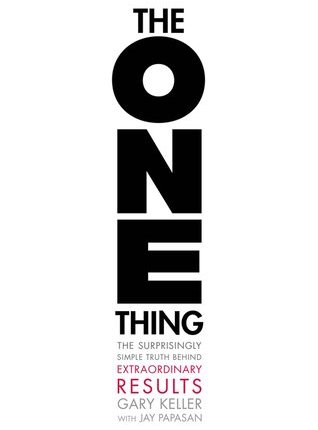
The One Thing: The Surprisingly Simple Truth Behind Extraordinary Results by Gary Keller

The One Thing: The Surprisingly Simple Truth Behind Extraordinary Results by Gary Keller

“Anyone who dreams of an uncommon life eventually discovers there is no choice but to seek an uncommon approach to living it.” pg 73, ebook

The One Thing contains simple, ridiculously obvious advice- find your passion, make time for it and live it. But, if it’s really that easy, then why aren’t more of us doing it?

Photo by Ylanite Koppens on Pexels.com

“Where I’d had huge success, I had narrowed my concentration to one thing, and where my success varied, my focus had too.” pg 8, ebook

This book has helped me to adjust my focus so that I spend more of my time on what I love, writing. That being said, there are still chores that must be done, a family business to tend to, a child to raise and numerous other responsibilities that chip away at time that I can give to my one thing.

And, as author Gary Keller points out, this isn’t a big deal. Everybody has their big ONE THING but smaller one things in other areas of their lives. You can use the same focusing principles on each to improve your life in each sphere.

What’s the one thing you can do to improve your family life? Health? Diet? etc., etc.

Photo by Maria Orlova on Pexels.com

This book also taught me that a majority of my output comes from a very small percentage of my actions, something that I had never considered before. Like I said, obvious in hindsight now that I know it, but it wasn’t something I instinctively knew.

“Happiness happens on the way to fulfillment.” pg 98, ebook

I read tons of non-fiction and self help titles. Have they all improved my life? No. Do I always learn something from them? Generally.

Photo by Wallace Chuck on Pexels.com

For me, the fun is in the search.

Read The One Thing if you want to learn some methods to narrow your focus and advance what is most important to you in your life. If you already know how to do that, this isn’t the title for you.

Thanks for reading!

Why Good People Do Bad Things: Understanding Our Darker Selves by James Hollis

Why Good People Do Bad Things: Understanding Our Darker Selves by James Hollis

“Expressed in its most functional way, the Shadow is composed of all those aspects of ourselves that have a tendency to make us uncomfortable with ourselves.” pg 9

Jungian analyst James Hollis examines “shadow work” from the perspective of an individual to couples then communities and all the way up to the collective unconscious.

He’s at his best when he’s illuminating how the Shadow works at an individual level. When he goes beyond that into couples or groups, I thought he began to generalize to the point where the book was no longer helpful on a practical level and moved more into the realm of philosophy.

Photo by Sunsetoned on Pexels.com

Hollis brought the book back into the self help genre by providing a final chapter full of questions for “reflection” by the reader. The purpose of this inner gazing is not just self knowledge, says Hollis, but also wholeness at a soul level.

“This book operates from a central thesis that is relatively unknown to the general public but is a truism for depth psychology, namely, that the human psyche is not a single, unitary, or unified thing, as the ego wants to believe. It is diverse, multiplicitous, and divided… always divided.” pg xi, preface.

I read Why Good People Do Bad Things in conjunction with a philosophy class off of The Great Courses Plus (Wondrium) called “Understanding the Dark Side of Human Nature” by Daniel Breyer. The two complemented each other quite well.

“Can the reader imagine that something inside you wishes to ‘talk’ to us? As a result of this conversation, consciousness is strengthened, new energies are available, and each person lives a richer life, one that is more authentically one’s own.” pg 192

Photo by Bianca Salgado on Pexels.com

This isn’t what I would call a ‘fun’ read. In fact, I had to take Why Good People Do Bad Things in sections, put it down for awhile, and come back to it, again and again.

I don’t mind self knowledge. I’ve done dozens of meditations where I look at aspects of myself and come back with a different understanding of who I am than before I started.

The difficulty is looking into the bits that I don’t want to see. Like I said, I can manage it in small doses. It isn’t somewhere I’d want to live.

It is understandable why so few attempt Shadow work. It is much easier to scapegoat others, blame, and feel superior to them.” pg 203

Photo by Umberto Shaw on Pexels.com

Recommended for any seekers who are looking for a psychologist’s take on Shadow work. This book might be the push that you need to brave that darkness. But beware, there’s someone in there who may have been waiting to talk to you for a long time and you might not like what they have to say.

Thanks for reading!

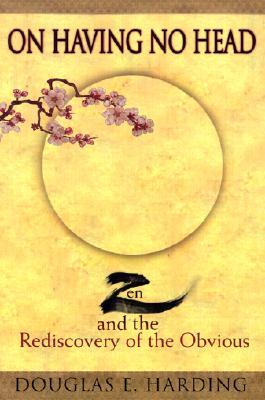
On Having No Head: Zen and the Rediscovery of the Obvious by Douglas E. Harding

On Having No Head: Zen and the Rediscovery of the Obvious by Douglas E. Harding

Douglas Harding had a strange experience when he was a young man. As he was hiking in the Himalayas, Harding had a moment he would later describe as of “no thought”, and where he perceived his body as having no head. In addition, he had a vision of his body as a house with a single window, but inside the house, there was nothing looking out at the world.

That nothingness is where Harding envisioned his consciousness resides.

Trippy, I thought. If that had happened to me, I might have been pretty freaked out.

Photo by Asep Syaeful Bahri on Pexels.com

Not necessarily so for Harding, who described the experience as incredibly peaceful and enlightening. When he came back from this experience, he applied his insight to various Eastern schools of philosophy, notably Zen.

The result is this book- a discussion of not only what happened to him, but an examination of consciousness itself. Where does consciousness reside? Where is the ‘me’ of our constant thoughts and emotions?

It’s somewhat of a winding path to get there, but Harding eventually points to the idea that consciousness is space in which reality is perceived.

When I first hopped into this book, I thought, how ridiculous. We all have heads attached to our necks. We can see them and feel them. Not only that, we can see and feel the heads of other people if we really wanted to.

Photo by Gabby K on Pexels.com

Harding takes this idea of ‘seeing’ and ‘touch,’ and questions what it is that people actually perceive. Yes, he says, you can see your head in a mirror. But that is a reflection of your head and not the head itself.

Everybody says these constructs are the thing itself. However, as Harding points out, they’re not really, are they? If you look down your own face, you can usually ‘see’ your nose as a series of splotches and shapes. Is that your nose though, or just splotches?

And he goes on from there.

By the end of the book, I was nodding my head a little and felt like I could understand something of what he was saying. But now that I’m trying to write a portion of it down, it just sounds like nonsense.

Photo by Olya Kobruseva on Pexels.com

Perhaps this is a book to be experienced rather than described. Rather, I might humbly suggest, like consciousness itself?

Recommended for spiritual seekers or anybody who enjoys pondering koans.

Thanks for reading!

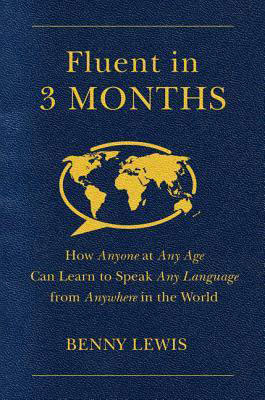
Fluent in 3 Months: How Anyone at Any Age Can Learn to Speak Any Language from Anywhere in the World by Benny Lewis

Fluent in 3 Months: How Anyone at Any Age Can Learn to Speak Any Language from Anywhere in the World by Benny Lewis

Fluent in 3 Months is a self help guide for anyone who aspires to speak more than one language.

Though it’s mainly filled with common sense ideas, I liked how the author, Benny Lewis, put it all together.

Lewis begins by sharing his own life experience with readers- that he felt he failed in his early attempts to learn another language through the traditional method of high school class. He also details how he spent six months in Spain with the idea that he’d absorb language like a sponge but then didn’t learn any Spanish.

Photo by RODNAE Productions on Pexels.com

The reasons why he feels like he was unsuccessful, because he was lacking the passion to learn and also didn’t speak the language to native speakers, are his main suggestions for language learning in this book.

“When it comes to language learning, there is no room for doubt: you decide your own success.” pg 24

Beyond those two main tips, Lewis shares shortcuts for learning tons of vocabulary quickly (visualization methods) and practicing immersion without going to the actual country. The latter, as he points out, has been made much easier since technology has brought distant countries into the comfort of your own home.

Through Skype calls or internet programs or even Netflix, language learners can interact with and immerse themselves in their target language.

Photo by Anna Nekrashevich on Pexels.com

“You must speak the language with other human beings.” pg 87

The task facing language learners has now become putting in the work to do so rather than traveling the distance for the opportunity.

I think Lewis is on to something with his insistence on speaking your target language from the start.

“As a result of speaking the language right away, students start to acquire the language rather than learn it as they would other academic subjects.” pg 6

I have a friend who’s niece majored in Spanish. But when they visited Spain together, she lacked the confidence to speak it when ordering dinner.

Photo by Adrianna Calvo on Pexels.com

If, from the first stages, learners were able to clear that initial hurdle, day-to-day use, and the successive ones of perfectionism or uncertainty, I agree that the whole language learning process would flow more easily.

Because, as Lewis points out, language is meant for communication with others. We’re rather missing the point if we acquire skills on paper that can’t be put to real life use.

Highly recommended for language learners of any age.

And thanks for reading!

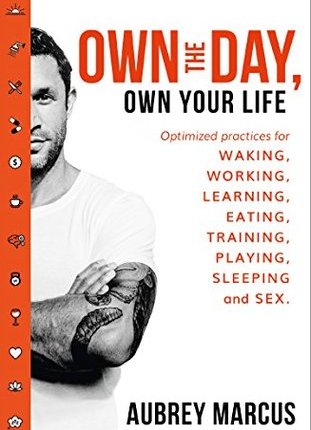
Own the Day, Own Your Life: Optimised practices for waking, working, learning, eating, training, playing, sleeping and sex by Aubrey Marcus

Own the Day, Own Your Life: Optimised practices for waking, working, learning, eating, training, playing, sleeping and sex by Aubrey Marcus

Aubrey Marcus shares different life hacks in an effort to improve your day. Because, as he reminds us: “To live one day well is the same as to live ten thousand days well. To master twenty-four hours is to master your life.” pg 7, ebook

There’s not a lot of new information here, especially not for aficionados of the self help genre. But there are some interesting strategies to try that I enjoyed.

One is to use your commute time to listen to a book or a podcast. As Aubrey points out, if you’re going to be spending the time anyway, you may as well use it to invest in yourself.

“These minutes are precious things. They are the only currency we spend every day whose value fluctuates wildly. Spend your minutes investing in your future self, filling your emotional coffers, and building value and enjoyment, or spend minutes depleting your emotional bank account.” pg 82, ebook

Photo by Stas Knop on Pexels.com

Nothing new, as I said, and also it doesn’t take too much encouragement to get me to read. 🙂 But for anybody who hasn’t tried it yet, I highly recommend incorporating this into your morning commute.

Another strategy suggested in Own the Day, Own Your Life that I attempted to hilarious, yet effective, results was a method for waking yourself up. Basically, you practice deep breathing and then stand under cold water in your shower.

The basic principle behind it, if I understand it correctly, is that our bodies have evolved to handle stress in ways that are completely outdated in the modern world. We react to an emotional email or digital comment as if a tiger was running at us. But it’s not.

All of those chemicals go into us and have no where to go, leading to chronic stress and all of the symptoms that go along with that. The deep breathing and cold water cause a stress reaction too, but it’s one that you control and can switch off at will. The exposure teaches your body how to handle it when you can’t switch it off.

Photo by Gratisography on Pexels.com

In addition to these other supposed benefits, it wakes you the heck up. I can vouch for that. Come on, Heidi, I can hear you say. You really needed a book to tell you to take a cold shower? Well, apparently I did. And that part really works as promised.

If you’ve already got your diet and exercise routines locked down, you’re already well on your way to living your best life and probably don’t need this book. But, for anybody looking for a few pointers or are willing to try new things, this could be the book you’re looking for.