Eckhart Tolle’s “The Everyday and the Transcendent”: a Podcast Review

Eckhart Tolle’s “The Everyday and the Transcendent”: a Podcast Review

While I was on my daily walk, I listened to “The Everyday and the Transcendent” a podcast on Spotify in Eckhart Tolle’s “Essential Teachings” series.

Was it worth the listen? I say yes.

I enjoy learning from Eckhart occasionally but not all the time. He has a soothing voice and his stream-of-consciousness delivery style is hypnotizing.

However, after a couple hours of his teachings, they all begin to sound exactly the same. And that’s because his core message never changes- which isn’t a bad thing.

Photo by Sebastian Voortman on Pexels.com

Beware self help or spiritual gurus who hold up a carrot of further secrets. As my hairstylist said after visiting an aura cleanser for the first time, “You can overdo stuff like that.” By which she meant, pouring piles of money into someone’s hands to “fix” something you can’t even perceive.

The cool thing about Eckhart’s teachings is you can begin practicing and perceiving what he’s talking about right this second, no matter your situation or state-of-mind.

For example, in this podcast, a practical tool he offers for spiritual insight is to simply observe what he calls your “inner body”. His focus, which he says he’s used over the years to great success, is to monitor what the energy of his hands are doing.

Photo by Meryl Merlin on Pexels.com

How do you do that? Simple- feel your hands. Act like you’re going to pick up a pencil, but don’t move. There! You can feel that can’t you.

Do this multiple times a day or just once in awhile and you’ll begin taking your focus away from what Eckhart calls “thought forms” and enter the state of “the now”.

This particular podcast deals with “the everyday” which Eckhart describes as your job, your family, your home, all of the trappings of the physical life. He says most people never move beyond the everyday. We can get lost in the world around us, which he reminds us, are simply projections that we create through our perceptions.

Photo by Ricardo Esquivel on Pexels.com

He describes the everyday as a horizontal line- a visualization that I found very helpful.

When you are lost in anxiety or fear, you’re moving either forwards or backwards on this line and not staying in the present moment, which is where the second part of his visualization comes in.

Eckhart describes “the transcendent” as a vertical line that intersects the horizontal line of daily living. He says we travel upwards and downwards on this line through our thoughts as we go about our lives.

Photo by eberhard grossgasteiger on Pexels.com

The thing is: most of humanity isn’t aware that we’re doing this. We unconsciously move about our day, responding in a kneejerk way to things we perceive as “happening to” us. And, Eckhart says, they actually are “happening to” us because we aren’t aware we are doing it.

If only we could realize our own internal processes, then, he says, we would realize that nothing really “happens to” you. It is all movement along the metaphorical everyday and the transcendent lines of our lives.

Photo by Anna Roguszczak on Pexels.com

We break the power that thoughts have over us and enter into the timeless state of the Now. The holy grail, so to speak, of spiritual experiences.

Highly recommended for spiritual seekers who are looking for practical ways to practice being present. Thanks for reading!

If you’re interested in Eckhart Tolle’s further teachings, here my book review of his “Stillness Speaks”:

And you can listen to the podcast yourself here:

The Art of True Healing: The Unlimited Power of Prayer and Visualization by Israel Regardie, Marc Allen (Editor)

The Art of True Healing: The Unlimited Power of Prayer and Visualization by Israel Regardie, Marc Allen (Editor)

Israel Regardie is a little-known thought leader of western occultism. In this book, “The Art of Healing,” Dr. Regardie explains a few meditation techniques in a way that anyone from beginners to advanced practitioners can understand.

I remember reading somewhere (not this book) about Dr. Regardie’s internship with Aleister Crowley and how he realized Crowley wasn’t teaching him anything beyond the superficial when it came to occult matters.

Photo by Luis del Ru00edo on Pexels.com

He ended up breaking away and being one of the leaders of a new approach to occultism-
which brings me back to this book.

The meditation techniques will feel quite familiar to anyone who has practiced chakra meditations or color visualizations on the body.

“By these means, the healing force is distributed to every part of the body. No single atom or cell in any organ or limb is omitted from the influence of its healing, regenerative power.”

Photo by PhotoMIX Company on Pexels.com

The curious part of this book is that Dr. Regardie uses five centers of energy down the center of the body instead of the more standard seven of eastern occultism.

Of course, as Dr. Regardie states, these exercises are in no way a substitution for competent medical care or therapy when necessary – but they are a wonderful addition to it, for they are able to aid the healing process in a great many mysterious, profound, and positive ways. intro

I’m not entirely sure why he does this though I am familiar with the Middle Pillar exercise (which is what the technique is called). Perhaps he’s basing the whole practice off of a teaching Crowley created for his occult studies.

Dr. Israel Regardie and the Middle Pillar exercise.

Whatever the reason, I think it is a noteworthy and definite change from other meditations I’ve practiced.

Highly recommended for readers looking for new meditation techniques and who are interested in western occultism. Another book you may want to pick up if you are into these topics is High Magick: A Guide to the Spiritual Practices That Saved My Life on Death Row.

Damien Echols‘s style of writing reminds me of Dr. Regardie in both its refreshing simplicity and honest assessment of the Great Work.

Thanks for reading!

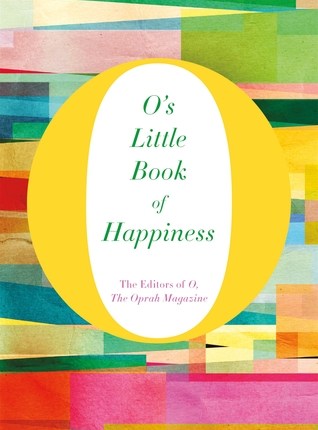
O’s Little Book of Happiness by O, The Oprah Magazine (Editor), Thelma Adams (Contributor)

O’s Little Book of Happiness by O, The Oprah Magazine (Editor), Thelma Adams (Contributor)

This collection of essays from the pages of O are wonderful. Through memories and insights, the writers of each chapter have something uplifting and inspiring to share.

My favorite was the chapter entitled “My Unplanned Adventure” by Catherine Price, pgs 88-99. It’s about an uptight traveler who planned every aspect of her trips around the world until she came to the conclusion that she was overthinking it.

Photo by Andrew Neel on Pexels.com

Once she figured this out, she walked up to a person, asked them where they would travel if they could go anywhere, and went there. I won’t ruin the essay by relating all of it here, but it resonated with me. I also have to remind myself that going with the flow is always more desirable than white-knuckling intricate plans and time tables.

I have to confess: I am not a reader of magazines. I find them to be filled to the brim with advertisements for things I neither want nor need and, after I’ve dug through the pages of stuff for sale, I find the writing to be insipid. “Six new sex positions!” “Keep your romance alive!” blah, blah, blah…

Photo by KoolShooters on Pexels.com

That being said, O’s Little Book of Happiness was totally different from my expectations of what a magazine is and introduced to me the idea of what a magazine could be. (And there were no advertisements!)

A couple of the essays felt too short- one page or one paragraph in some instances- but for the most part I enjoyed their length and the order they are arranged in.

There’s something very powerful in reading back-to-back essays about happiness and accounts of people finding their path in life. I read this through in almost one sitting but it could also be savored slowly like a-chapter-a-day devotional guide.

Photo by Andre Furtado on Pexels.com

I enjoyed this very much. And I hope you will too.

If you like O’s Little Book of Happiness, I would also recommend Happiness: A Guide to Developing Life’s Most Important Skill by Matthieu Ricard and Living Oprah: My One-Year Experiment to Live as TV’s Most Influential Guru Advises by Robyn Okrant.

I received a free copy of this book through Goodreads First Reads. FTC guidelines: check! And thank you for reading.

Work Rules!: Insights from Inside Google That Will Transform How You Live and Lead by Laszlo Bock

Work Rules!: Insights from Inside Google That Will Transform How You Live and Lead by Laszlo Bock

Work Rules!: Insights from Inside Google That Will Transform How You Live and Lead by Laszlo Bock is a behind the scenes glimpse into the “People Operations” of Google, the mammoth internet company.

Laszlo explains Google  wasn’t always a global leader. It started out like every other company- with a couple of dedicated people and a big dream.

Photo by Karolina Grabowska on Pexels.com

After some background, Laszlo gives step-by-step ways to improve your own business, whatever that may be, from the inside-out while remaining true to the mission that led to the creation of your company in the first place.

It’s clear from this book that Google is an engineer-dominated workplace. Every decision from hiring to employee perks is tested and the numbers are crunched to justify the expense, time spent, etc.

Photo by Anna Nekrashevich on Pexels.com

To be honest, psychology tests, graphs, and in-depth analysis isn’t really my thing. I enjoy a more artsy approach to the world and so the nitty-gritty of Laszlo’s work wasn’t that interesting to me.

In <i>Work Rules</i>, I was hoping for more insider stories than engineering problems, but that’s not how the book was written.

That’s not to say that there isn’t value to be had in this read. My take-away chapters were “It’s Not All Rainbows and Unicorns” and “What You Can Do Starting Tomorrow.”

Photo by Steve Johnson on Pexels.com

In ‘It’s Not All Rainbows and Unicorns,’ Laszlo gives the reader moments in Google’s history when their policies didn’t really work and how they got through the crisis. It was heavy on dramatic stories and I enjoyed it quite a lot.

In ‘What You Can Do Starting Tomorrow,’ Laszlo boils down his previous chapters into ten steps for businesses to take right now. If you don’t have time to dig through the entire book, ‘What You Can Do Starting Tomorrow’ gives you a pretty thorough overview.

If you enjoyed <i>Work Rules!</i>, you may enjoy The Happiness Advantage by Shawn Achor. Shawn explains, in an engaging manner, many of the principles that Google has adopted to improve their employees’ quality of life.

I received a free advanced reader’s copy of this book through Goodreads First Reads. FTC guidelines: check! And thank you for reading.

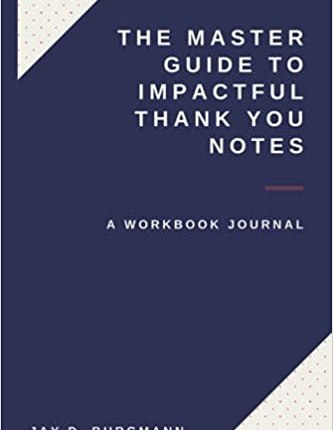
The Master Guide to Impactful Thank You Notes by Jay D. Burgmann

The Master Guide to Impactful Thank You Notes by Jay D. Burgmann

“An effective follow-up with a prospect, client, boss, work associate, friend, or even relative accomplishes two things; first, it gives you the occasion to recap your event, and second, provides the opportunity to celebrate actions or accomplishments from it.”

Photo by cottonbro on Pexels.com

Thank You notes are a big deal for me during the month of December. At the beginning of the month, I have my birthday and at the end there’s Christmas- the mother of all holidays that require thank you notes.

For full transparency, I received a free copy of this book from the author Jay D. Burgmann after his brother conducted a lovely and gratis ‘understanding Medicare’ event at my local library. Afterwards, Jay suggested I schedule an event based off his book and I just may.

The book itself is clearly self published. The author didn’t chose a font that appeals, at least to me. Occasionally, when he wants the reader to know the text is important, he goes into the faux pas of all caps.

I don’t know about you, but I personally don’t like being shouted at- even in literature form.

Photo by Andrea Piacquadio on Pexels.com

Like this: “KEY POINT- IT DOESN’T HAVE TO BE PERFECT. SAYING THANKS IS MOST IMPORTANT. A WELL WORDED MESSAGES MAKES IT EVEN MORE POWERFUL. BEAUTIFYING IT WITH GOOD STATIONARY IS A NICE TOUCH”

Beyond the superficial, this self-described “workbook journal” is very helpful, especially for younger readers who have either never been educated about the importance of saying thank you, or don’t care.

Burgmann highlights the note as an important networking tool. He recalls a visit to the office of someone he wrote a thank you note to and says the client framed his handwritten note and had it on the wall of her office.

It was that impactful. And it’s easy to understand why.

Photo by u0158aj Vaishnaw on Pexels.com

Beyond the emotional appeal which Jay focuses on, expressing gratitude is one of the great strategies in the New Age law of attraction. What you think and speak about, so the teachers say, you bring about- perhaps in ways and means you never could imagine.

Burgmann, with this short book, joins the ranks of these educators and gurus. Saying thank you is important. Knowing how to write it is important.

Highly recommended for everyone. Don’t be put off by the format, focus on his message.

Lauren Berger the ‘Intern Queen’ shares how to write an excellent Thank You note. You can find internships and read her blog at http://Internqueen.com

And thanks for reading!

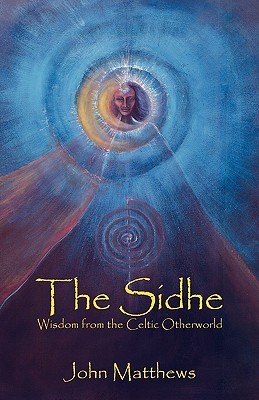
The Sidhe: Wisdom from the Celtic Otherworldby John Matthews

The Sidhe: Wisdom from the Celtic Otherworldby John Matthews

“I knew then that something was going to happen in Ireland. I had no idea then just what an enormous and irrevocable change it was going to make to my life.” pg 5, ebook

John Matthews received a call from a friend whose occupation is archaeology. The friend showed John into a barrow where he first saw the glyph that is on the cover of this book.

John claims that through meditation upon the glyph, he communicated with other beings whom he believes are ‘the Sidhe.’

“To truly know a thing is to become one with it. Just as to become one with it is to truly know it.” pg 27, ebook

Photo by cottonbro on Pexels.com

He shares the communications that he had through the glyph throughout the text. At the end, he includes six exercises that the beings gave him and encourages readers to try the practices for themselves.

Readers could potentially experience the connection John felt.

“Drawn by this feeling, I lay down beneath the branches of the old oak, and, as I had done countless times before, stared up through the branches at the patches of blue sky that showed through. As I did so a sense of stillness and peace descended upon me.” pg 36, ebook

Photo by Magda Ehlers on Pexels.com

The Sidhe: Wisdom from the Celtic Otherworld reminded me of the multiple works of Abraham Hicks or Seth Speaks: The Eternal Validity of the Soul. There’s probably a reason for that.

It could be that the channelers are tapping into a similar place. In this book, John calls it the “great net” of creation. I’ve heard it called, “Indra’s net,” among other names in other sources.

Whatever it may be, I find it interesting that the communications received are similar enough to draw comparisons.

“Among the greatest gifts we have observed in your race is the desire to know and to explore. This hunger has propelled you far along the path of the day and the path of the night. Hence, your journey is indeed one of exploration, not only in time and space, but in the dimensions of Spirit.”

Photo by Stefan Stefancik on Pexels.com

Of course, I had to try John’s method for myself. I’m always so curious about these kind of things.

Unfortunately, I fell asleep rather than having a memorable experience. I expect the fault was on my side, but perhaps I experienced something in my sleep- I just failed to remember it.

I do plan to give the meditation a try again in the future, when I’m not so sleepy.

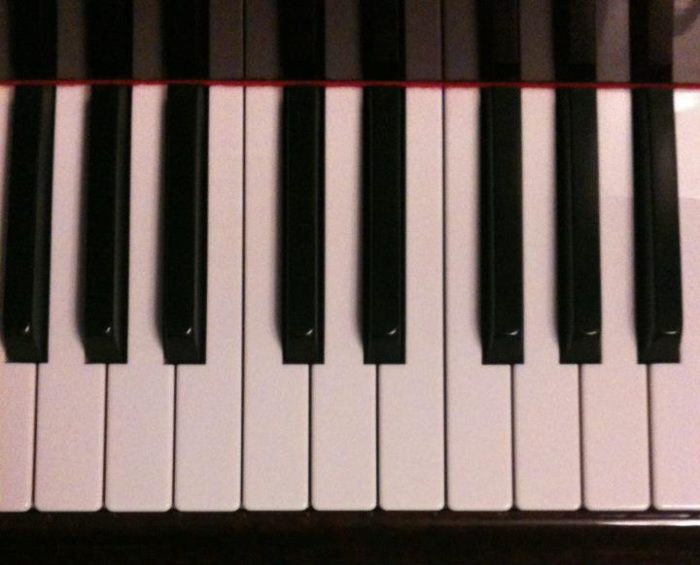
I was fascinated with the way the glyph looks like a treble clef with multiple circles. When John began to describe the Sidhe’s connection to music, I felt that comparison made sense.

“Much of our time is spent in the making of music- though for us it is more serious than a pleasant pastime, since it is part of our creative process in more than an abstract fashion.” pg 69

Playing music is one of the few activities that put me into a flow state. Perhaps I should try meditating that way.

Anyway, I recommend this book for the curious or spiritual seekers. If you try the exercises within, please do share your results. Maybe some day, the world will have more answers than questions about these ineffable things.

Or, maybe, we’ll open yet another door for endless discoveries. Either way, I’ll be interested to see what comes next.

Thanks for reading!

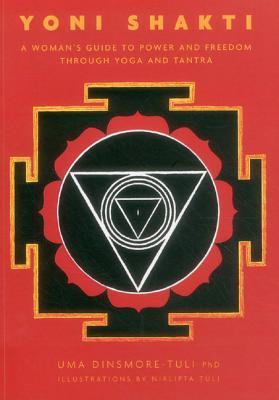
Yoni Shakti: A Woman’s Guide to Power and Freedom Through Yoga and Tantra by Uma Dinsmore-Tuli

Yoni Shakti: A Woman’s Guide to Power and Freedom Through Yoga and Tantra by Uma Dinsmore-Tuli

“When we unlock our sakti we re-connect with our capacity for inner joy and peace with ourselves: all our experiences begin to join up and make sense. Freeing our sakti in this way gives us the key back to our sexual selves, so that we may inhabit our whole being with authenticity and joy.” pg 508 ebook.

Author, yogini and tantrika, Uma Dinsmore-Tuli, shares yoga sequences, mantras, mudras and meditations to assist readers in becoming more aware of their inner selves.

Photo by Elina Fairytale on Pexels.com

What does this accomplish, you may be asking yourself. According to Dinsmore-Tuli, it’s the foundation of a mindful existence.

“All of the poses to unblock the life force energy are also very practical means to keep the creative and sexual energies in circulation so that they are available to nurture and enrich our creative, family, social and professional encounters.” pg 518, ebook

That sounds pretty good to me.

So, I tried some of the suggestions from this book which I had to cherry pick because there are dozens to try. And my results were unexpected and stunning.

Photo by Diego Madrigal on Pexels.com

After the first practice, I experienced an almost immediate increase in my sensitivity to my body’s energy and overall energy level. After the first week, this improved awareness led to some fascinating experiences during my meditations.

Apparently, practitioners of yoni shakti routinely encounter visions or spontaneous energy body knowledge. The goal is not to seek these experiences, but to be aware when they arise and dissipate, and then utilize them for greater self knowledge.

Using these teachings, I feel like I’m learning a whole new dimension to life- one that arises from practices of mindful awareness. Yoni Shakti is a good reference book for that journey.

Photo by Daniel Torobekov on Pexels.com

That being said, a majority of this book is repetitive to the point of unreadable. I realize Dinsmore-Tuli is passionate about the women’s movement in yoga, but she goes on so much about past abuses by gurus and organizations that it detracts from the delivery of the wisdom of the book.

I found myself skimming entire sections because they read the same in the previous chapter and the ones before it.

On the other hand, this book shines in its accounts of the women who were suffering and then rediscovered their power and ability to heal themselves through their yoga practice.

“There is a deep relief in knowing that other women have experienced the same losses, and a comfort in hearing others speak about what is so often unspoken. The sharing is healing.” pg 597

Recommended, with a few reservations, to spiritual seekers interested in yoga and tantra- particularly women.

Thanks for reading and namaste!

Feng Shui For Today: Arranging Your Life For Health & Wealth by Kwan Lau

Feng Shui For Today: Arranging Your Life For Health & Wealth by Kwan Lau

Feng Shui for Today was a fairly simple and succinct beginner’s guide to the art of feng shui.

What is feng shui?

“This book is concerned with the Chinese folk art of arranging objects to enhance harmony and good luck, called feng shui. This ancient knowledge enables us to seek peace and new growth through our relationship with the objects around us…” pg 11

Photo by Dan Hadley on Pexels.com

When was this art form started? No one knows! As the author points out in the section entitled, ‘A brief history of feng shui’:

“… (feng shui’s) close association with the ancient Chinese lodestone compass has led some to think it may have begun around the time the compass was invented, an accomplishment traditionally credited to the Yellow Emperor, the great mythological hero-priest-ruler of ancient China, who is supposed to have lived around 2700 b.c. There is no historical proof for this attribution…” pg 17

Despite not knowing its origins, historians can tell the art has been around for so long because so many buildings were built facing the south which is considered the “most auspicious direction.”

Photo by Zhu Peng on Pexels.com

“Traditional Chinese walled cities, temples, and other important structures were usually oriented to face the south. The Forbidden City is Beijing was built on a precise north-south axis, with all its major halls facing the south.” pg 34

Kwan Lau goes on to explain feng shui’s ties to mythology, the elements of traditional Chinese medicine, the four directions, and the stars.

It was surprisingly complex.

“Readers should not be dismayed by the complex interplay of all these symbols and associations. The folk art of feng shui draws information from a wide range of sources and a rich tradition of ancient cosmological thought, and for this reason it can be daunting for the beginning practitioner.” pg 48

There’s way too much to incorporate all of the information I learned in this book all at once. I think the aspect of feng shui I’ll start with in my own life is furniture placement.

Photo by Max Vakhtbovych on Pexels.com

I was dismayed to discover the couch I was sitting on while reading this book was in the “death” region of the feng shui layout of my front room. However, on a positive note, it faces south, which is very good and has a wall instead of a window behind it.

Perhaps some furniture moving is in order.

The world is a less threatening place with a happy, well-balanced home at the center of it. And sometimes, moving your furniture can change your life.” pg 108

Recommended to readers interested in the art- both newcomers to the topic as well as practitioners who want a reference book on the ‘Nine Stars, Eight entrances, and Bagua Combination Method’ of feng shui.

Thanks for reading!

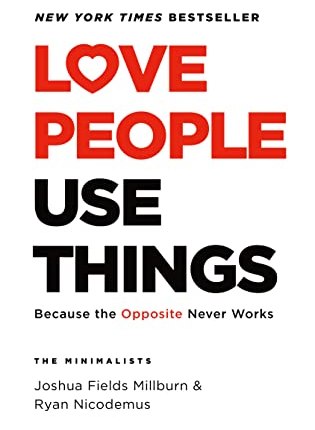
Love People, Use Things: Because the Opposite Never Works by Joshua Fields Millburn

Love People, Use Things: Because the Opposite Never Works by Joshua Fields Millburn

‘The Minimalists,’ Joshua Fields Millburn and Ryan Nicodemus, share their life journeys towards intentional living using seven different areas of focus: stuff, truth, self, values, money, creativity and people. Readers are invited to use the lessons they have learned to enact positive change in their own lives.

I, like many, had preconceived notions about what minimalism is. I thought it was about creating a living space that has like one chair, one table, and a cup with a single sharpened pencil in it. You can see the room, can’t you. In my mind, that was minimalism- bare to the point of ridiculousness.

Photo by Waldemar Nowak on Pexels.com

Millburn addresses this misconception early on in the book.

“Minimalists don’t focus on having less, less, less; they focus on making room for more: more time, more passion, more creativity, more experiences, more contribution, more contentment, more freedom.” pgs 35-36

Sounds pretty good to me, Josh. So how do we get there?

“Minimalism is a practice of intentional living. While it starts with the stuff, it’s ultimately a stewardship program for one’s life.” pg 124-125

I’ve recently experienced some major changes in my life, which include relocating to a new home and moving almost a decade’s worth of stuff. During the process, I took the time to try on every piece of clothing in my wardrobe and, to my not-unexpected dismay, about three-quarters of the clothing no longer fit.

Photo by Tembela Bohle on Pexels.com

It was simply a matter of donating the old clothes then. But I found myself hesitating to do so. I’ve lived a lot of life in those clothes and just holding them brought back so many memories.

I realize the memories aren’t in the items, they’re in me. Millburn points out that it’s easy to make that mistake.

“While it’s true that our memories are not in our things, it is also true that sometimes our things can trigger memories inside us.” pg 20

He recommends taking pictures of these treasured items so you can continue to access the memories at will while still making room for growth.

Because that’s what all of this minimalism stuff is geared towards: Living an intentional life so you can grow with the values that you’ve chosen for yourself. What you’re aiming for is growing like a cultivated flower about to bloom rather than a tumor that spills out uncontrolled in all directions.

Photo by Jess Bailey Designs on Pexels.com

“Growth is a critical component of a meaningful life- as long as it’s responsible growth- because continual improvement makes us feel alive and brings purpose to our actions.” pg 170

To do so, we must first confront the reasons why we’re holding on to all these items in the first place.

Fear is a common theme with people who are starting to confront their stuff. We’re afraid to pull back the curtain because we’re afraid not of the stuff itself, but of the work that must be done to live a more rewarding life after getting rid of it.” pg 102

And for me that’s the crux of the issue- fear. What am I afraid of? I’m afraid of living a life that doesn’t match up with my values. I fear change, not because it might be negative but because it pulls me out of my little routines into a place of uncomfortable uncertainty.

Your fears are probably quite different from mine, but the point is that you have them. Do you know what yours are?

Highly recommended for readers interested in self improvement, self help or the minimalist movement. Thank you to the publisher for a free advance reader’s copy of this book.

And thanks for reading!