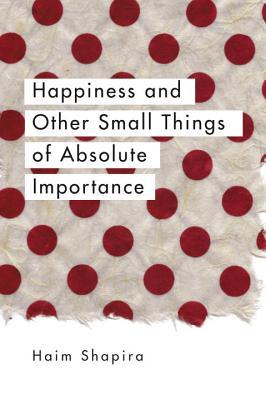
Happiness and Other Small Things of Absolute Importance by Haim Shapira

Happiness and Other Small Things of Absolute Importance by Haim Shapira
haimshapira

Happiness and Other Small Things of Absolute Importance does not resemble a self help book as much as it does a long, meandering lecture by your favorite professor.

Shapira talks about happiness, the passage of time, love, death, money, and so much more by tying it to classic literature and his own musings. I loved it.

There is little that Shapira doesn’t cover in these pages and, when you’re done, you feel as if you’ve just had a long discussion with a very dear friend.

“This little book is meant to change your perspective on almost everything in your life- and primarily the concept of happiness. … As serious and life-changing as the voyage to the land of the Things That Matter may be, it’s no less important to enjoy the ride.” loc 27, ebook. Shapira succeeds with flying colors.

His humor shines through his words. There aren’t any laugh-out-loud moments, but I found myself grinning throughout: “There’s empirical proof that How-To-Be-Happy Books are useless. If just a shred of the promises made in many of those books came true, the world would be knee-deep in incomprehensible quantities of bliss. We all know that this is not the case.” loc 73, ebook. True story.

My favorite parts were about the importance of a positive mind-set and love.

Photo by Sharon McCutcheon on Pexels.com

This passage is about being positive: “Anyone who has lived on this planet long enough knows that pessimism is the natural way to think. It requires no effort, like a rock rolling downhill. It’s much harder to push the rock up the hill, to think positively. Just see the effort it takes to think like (Winnie the) Pooh, to find a bit of magic and grace in everything. That is a mission worthy of the wise.” loc 387 I agree.

I also found the sections on anger and forgiveness to be very meaningful.

Here, Shapira is talking about the futility of being angry and how we can learn to control our tempers, rather than have them control us: “My wife, a chemical engineer by profession, has reached an important understanding. In nature, she told me, each substance has a typical, unique and fixed boiling point. We can artificially change it, however, by using other substances that act as inhibitors, thereby raising the boiling point. For example, anyone who cooks knows that salted water takes longer to boil than water alone. The same applies to people. Their boiling points can be raised. Wisdom can be salt for our water…” loc 610, ebook.

Recommended for spiritual seekers, happiness chasers, and anyone who wants to learn more about themselves. This book is a gem.

Some similar reading, if you liked this: How to Talk About Places You’ve Never Been: On the Importance of Armchair Travel, The End of Self-Help: Discovering Peace and Happiness Right at the Heart of Your Messy, Scary, Brilliant Life, or The Power of the Heart: Finding Your True Purpose in Life.

Thank you to NetGalley and Watkins Publishing for a free digital copy of this book.  And, thank you for reading!

How The Secret Changed My Life: Real People. Real Stories. by Rhonda Byrne

How The Secret Changed My Life: Real People. Real Stories. by Rhonda Byrne
secretchangemylife

How the Secret Changed My Life adds nothing new to the Secret franchise, but it’s still fun to read if you enjoy hearing success stories about people who utilized the Law of Attraction.

The criticisms of it have been voiced elsewhere and more eloquently: that it is predominantly focused on material things and that it stresses being happy at any cost.

That being said, I liked the stories.

I liked hearing about how people hit rock bottom and then changed their lives for the better. I really liked hearing that you can do or have or be anything that you want. Who wouldn’t?

Here’s Rhonda in the introduction: “I want you to know how easily you can change your life, and it’s not by running around trying to force it into the shape you want. You change your life in the only way you can ever change it: change your mind, and then your life will change.” loc 47, ebook.

All true change comes from within, I do believe that. Until I typed this out, I didn’t realize just how many times she used the word “change” in those two sentences. Counting back I see… five times? That’s a lot of change, people.

I feel like this book warns the reader away from negative emotions, but they serve a purpose too. It gives you a starting point- if you know what you don’t want, then you know what you do.

I’m not suggesting that you wallow in negative emotion, but feeling it, acknowledging it, then moving on isn’t as bad as this book makes it out to be.

Photo by Andre Furtado on Pexels.com

In this passage, Rhonda is suggesting the use of “Secret Shifters” to control your mood: “The Secret Shifters… are things you can focus on whenever you find yourself feeling angry, frustrated, or any other negative emotion, in order to change those negative feelings in an instant. They might be beautiful memories, future events, funny moments, nature, a person you love, or your favorite music.” loc 409, ebook.

I say: feel whatever you’re feeling and trust that your emotions will eventually rise again like a cork in water. Helping yourself along with “Secret Shifters” or gratitude lists or whatever is fine, but for goodness sake, don’t force it. “What you resist, persists.”

I really agreed with this next passage: “Most of us have the wrong idea about happiness. We believe that if we get everything we want, and if life continually goes our way, we will be happy. And from that belief, we create all the excuses in the world for why we can’t be happy right now. … It’s those very excuses that are preventing you from being happy now.” loc 457, ebook.

I used to do that- looking forward to circumstances or events and ignoring where I was. The journey really is the point, so why not be happy now?

Recommended for readers who are looking for a quick, uplifting read about the Law of Attraction or for those who are interested in getting started but don’t necessarily believe or know how it works. The latter, in particular, may find a great deal of worth in these pages.

As I said, I liked it, but I’d also recommend reading Abraham Hick’s books too: to learn the value of negative emotion, not be afraid of feeling your full emotions, and to learn not to practice affirmations unless you’re feeling “in the zone” so to speak.

Additional reading: The Vortex: Where the Law of Attraction Assembles All Cooperative Relationships and Co-creating at Its Best: A Conversation Between Master Teachers.

Thank you to NetGalley and Atria Books publishing for a free copy of this book!  And, thank you for reading.

Uncharted: The Journey through Uncertainty to Infinite Possibility by Colette Baron-Reid

Uncharted: The Journey through Uncertainty to Infinite Possibility by Colette Baron-Reid
uncharted

In Uncharted, Colette Baron-Reid guides the reader with journaling, visualization, personal stories, and meditation exercises through unexplored realms of the spirit as a method for greater self knowing and actualization.

I enjoyed this book, but it felt a bit all over the place. Let me explain what I mean by examining some of the many subjects discussed:

In the introduction, Colette begins by giving some background information into what’s been going on with her for the past couple of years.

One of those big changes is that she is now channeling an group of beings, whereas, prior to this, she wasn’t.

In this passage, she’s talking about the entity helping her to write Uncharted: “It’s like “they” had the puzzle pieces, and when I was ready for them, they dropped them down on the page for me to discover. I’m not realizing that this is, in essence, what channeling an “entity” is. It’s something I never quite understood, and I’m afraid I didn’t respect its power as I should have. So I hereby surrender my inner critical cynic who doubted others when they shared their channeling stories. I get it now.” loc 55, ebook.

She calls this/these entities, Fred. Throughout the book, Fred pops up and shares a message or clarifies something. I felt as if the channeled messages could have composed a whole other book in addition to this one.

Plus, it’s clear that she’s still honing her ability to talk and understand to this inner knowing. Anyway, it “muddied the waters,” so to speak, of Uncharted from nearly the first page.

Colette doesn’t think much of the ego or what she calls the “small self”:“When you view the world through the limits of your small self, you see only the separated parts of the material world. You are guided by your personal narratives that tell you who you are based on your past experience, ambitions, and goals that were set within the Realm of Form. You’re oblivious to being part of one big matrix of interconnectedness. You forget where home is, and you feel lost.” loc 634, ebook.

Photo by Sachin C Nair on Pexels.com

I’ve read all sorts of different teachings about the ego, but I’ve started to lean towards Abraham Hick’s thoughts on the matter. They teach that the ego is the lens through which the divine within you perceives reality and that our desires are breadcrumbs along the path to eternal joy if we allow ourselves to realize them.

Hicks also says that (paraphrasing): “If you only remembered how much you wanted to be in these bodies, you wouldn’t be so quick to fault yourself and your desires. You are the leading edge of thought- you take spirit beyond which it has ever been before.”

In my mind, that is the function of ego: to express our unique personality. Isn’t the desire to be free of ego also a desire driven by the ego?

I did like Colette’s definition of co-creation, which is one I’d never heard before: “Here’s how it works between you and Spirit. You, as an individual, are always cocreating. The divine creative force is always there with you, along with spirits and allies who enthusiastically join in as you co-create reality. And you are never alone.” loc 712, ebook. Encouraging, I think.

Photo by Mayu on Pexels.com

I also liked the lesson on fate, our internal “stories” and the subconscious mind: “Listen, it’s not fun to admit that while your story about yourself has been influenced by other people and things that just seemed to happen “to” you, it was also co-written by you personally to a large degree. Fate played a role, to be sure, but you can take much greater control over your “fate.” As Carl Jung is supposed to have said, “Whatever is not brought from the unconscious into the awareness seemingly comes to us as fate.” loc 1568, ebook.

The fact that shadow dwells hand in hand with light is something that I’ve learned through my own meditation practice.

Here’s what Colette has to say about it: “In the Realm of Light, we recognize that light always exists in duality with a shadow- there’s no avoiding it. There is always a dark side to everything, a contrast between what is nourishing and loving and what is draining and entangled in fear, anger, or hatred. Those emotions will always exist, but they don’t have to overwhelm you or scare you away from the process of co-creation and transformation.” loc 1892, ebook. I believe that is true.

As for the movement through Colette’s “realms”, it reminded me of shamanistic work by Robert Moss. I’m not sure about the order in which she explores things (seems like every teacher has a different way to do it), but I think that, if your intention is greater self knowledge and if you practice what Colette teaches, you will find it.

In fact, if you try just a fraction of what she suggests in Uncharted, you will learn something about yourself. She gives plenty of exercises to attempt in here if one particular method doesn’t speak to you.

Recommended mainly for the New Age enthusiasts because of the subject matter, methods, and channeled material, but also for anyone who is curious about finding and embodying one’s authentic power.

Some similar reads: Thank & Grow Rich: A 30-Day Experiment in Shameless Gratitude and Unabashed Joy by Pam Grout, Ask and It Is Given: Learning to Manifest Your Desires by Esther Hicks, and Active Dreaming: Journeying Beyond Self-Limitation to a Life of Wild Freedom by Robert Moss.

A big thank you to Hay House and NetGalley for a free digital copy of this book!  And thank you for reading.

How to Relax by Thich Nhat Hanh

How to Relax by Thich Nhat Hanh

There are very few spiritual leaders who can communicate with the simplicity and succinctness of Thich Nhat Hanh.

As wise as the Dalai Lama is, I’ve only been able to really understand one of the books he’s written and I think that was because he had a co-author. It seems like he contemplates this stuff so much, you know, like it’s his job, that when he’s just trying to talk to a regular person about it, there’s a gap that can’t be crossed.

Photo by Mikhail Nilov on Pexels.com

That isn’t a problem in Thich’s Mindfulness Series.

Thich encourages the reader to find the quiet within. He says: “We already have calmness in us; we just need to know how to make it manifest.” pg 14, ebook.

How do we do this? Through focus, breathing, mindfulness, and relaxation.

One of Thich’s methods for connecting with inner peace that really resonated with me was that we should take “lazy days”: “A lazy day is a day for us to be without any scheduled activities. We just let the day unfold naturally, timelessly. … When we have unscheduled time, we tend to get bored, seek entertainment, or cast about for something to do. A lazy day is a chance to train ourselves not to be afraid of doing nothing. You might think that not doing anything is a waste of time. But that’s not true.” pg 32, ebook.

Not to brag, but I rather excel at “lazy days”.

Photo by Rachel Claire on Pexels.com

Anyone out there have a partner who snores? I do. Thich invites us to incorporate the snores into our relaxation practice.

“Sometimes you have to share a room with someone who snores. You may get irritated. But with mindfulness you can bring about compassion. You can lean on the sound of snoring in order to go to sleep. Listen and say that this brings you home to the here and now.” pg 42, ebook.

I think this could be a difficult exercise, but I’m willing to give it a try. 🙂

Ever tell yourself that relaxation/meditation is too hard? Thich addresses that concern too: “When you sit and watch television, you don’t make any effort. That’s why you can sit there for a long time. When you sit in meditation, if you struggle, you won’t be able to sit for very long. Please imitate the way you sit in your living room. Effortlessness is the key to success. pg 76 ebook.

If you can watch tv, you can meditate. It’s silly but it reminds me of that line from Dodgeball: “if you can dodge a wrench, you can dodge a ball”.

Highly recommended for anyone looking to introduce more relaxation into their lives and isn’t that everybody?

Some read alikes: Relax RX: A Self-Hypnosis Program for Health and Well-Being by Steven Gurgevich (very relaxing, all you have to do is listen), Guided Mindfulness Meditation by Jon Kabat-Zinn (simple and relaxing), or 10% Happier: How I Tamed the Voice in My Head, Reduced Stress Without Losing My Edge, and Found Self-Help That Actually Works by Dan Harris (a regular guy teaches himself to meditate- a light hearted memoir).

Thanks for reading!

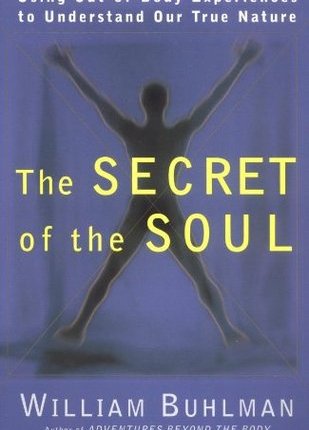
The Secret of the Soul: Using Out-of-Body Experiences to Understand Our True Nature by William Buhlman

The Secret of the Soul: Using Out-of-Body Experiences to Understand Our True Nature by William Buhlman

The Secret of the Soul is a great title for beginners who are looking to understand this, sometimes confusing, other times frightening, skill that we all seem to possess — the ability to exit our bodies in a kind of vision or trance.

Some call this the “out of body experience” or OBE.

Photo by Joshua Abner on Pexels.com

The first half of the book, Buhlman discusses OBEs, why they are important, and gives countless examples of actual OBEs that folks have had. The second part of the book gives concrete techniques and problem solving tips to assist readers in having their own OBEs.

One of my friends is a long distance runner who has had some OBEs during his ultra marathons. I thought of him in the section entitled “Combat and Trauma-Induced Experiences”: “It was while I was running in a marathon last year that I had a very strange experience. I was at about the eighteen-mile marker when I looked beside me and saw myself running. At first I thought it was someone who was my build and wearing the same shoes, but then I realized it was me!” pg 55

Buhlman has story after story like that.

Photo by anouar olh on Pexels.com

If you’ve never had an out of body experience of your own, the sheer variety and number of people who have fills you with confidence that you can.

I also liked Chapter 4, “Transformational Experiences”: For thousands of years spiritual masters have taught that the act of withdrawing from the senses is essential in order to consciously experience our spiritual self. pg 61

And the testimony from that chapter: “This is bigger then anything I can imagine; how can I tell people without sounding like a nutcase? This changes everything I ever thought I knew or thought was true.” pg 68

That’s the thing about powerful transformational experiences. Until someone has one him or herself, there’s not really anyway to explain it.

Chapter 6, “Extraterrestrial Contact and Abduction,” was the first time that I’ve read about aliens alongside traditional OBEs. Buhlman writes: “After reading more than two hundred such letters (from his OBE survey), I noticed a startling similarity: The letters describing extraterrestrial contacts and abductions were almost identical to the thousands of letters I have received describing out of body experiences. In fact, I often could not distinguish between letters.” pg 89

Photo by Francesco Ungaro on Pexels.com

In Chapter 7, A Brief History of Out-of-Body Experiences, the reader is given cultures from different time periods, all over the planet, that support and confirm the existence of out of body experiences.

These seem to suggest that OBEs are a “human” experience rather than a culturally specific one.

Take Emanuel Swedenborg’s words: “It has pleased the Lord to… open the interiors of my mind or spirit, whereby I have been permitted to be in the spiritual world with angels, and at the same time in the natural world with people, and this now (has happened for) twenty-seven years.” pg 113

I was surprised at how many of the historical figures presented here as having OBEs were scientists… I guess in my mind I’ve always drawn a line between the artsy/mystic types and the scientists. Line erased. 🙂

I’ll conclude with a few statements from the Appendix of the book, which was compiled from Buhlman’s extensive survey of people who had had OBE’s: “Self-initiated out-of-body exploration is a direct and powerful method to experience our true spiritual essence. It is an effective method to accelerate our personal growth and evolution. … This is achieved by personal spiritual experience and exploration beyond the physical limits.” Appendix pg 253.

Photo by Enrique Hoyos on Pexels.com

Couldn’t have said it better myself.

If you’re looking for more books on the topic of out-of-body experiences, check out Otherwhere by Kurt Leland, Journeys Out of the Body by Robert Monroe, or Multidimensional Man by Jurgen Ziewe.

Thank you for reading!

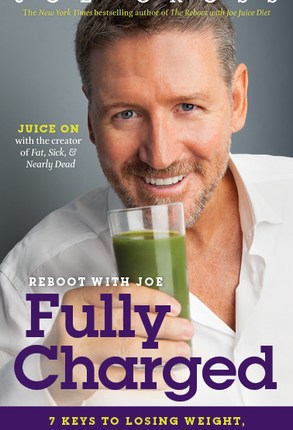
Reboot with Joe: Fully Charged: 7 Keys to Losing Weight, Staying Healthy and Thriving by Joe Cross

Reboot with Joe: Fully Charged: 7 Keys to Losing Weight, Staying Healthy and Thriving by Joe Cross

Fat, Sick, and Nearly Dead is one of the main reasons why I bought a juicer and have attempted to incorporate more plants into my diet. I’m not hardcore about it, but I try.

I didn’t know that Joe from that documentary is named Joe Cross and that he’s written multiple companion books for that film. This one, Reboot with Joe: Fully Charged, is excellent.

What I love about Joe is that he’s realistic. He doesn’t expect that he will eat perfectly for the rest of his life- he just wants to do the best that he can today then repeat the process tomorrow.

Photo by Wendy Wei on Pexels.com

He pushes the big lifestyle changers: diet, exercise, and rest but not in an extreme, unobtainable manner. In addition to common sense ideas about health and diet, Joe has spent years building an online community to support those who are working on major life changes. http://www.rebootwithjoe.com/weight-loss/

When you read this book, you also read examples of people who have turned their lives around with juicing and exercise. It’s inspiring and could be life changing for many people.

I also like that Joe included some of his go-to juicing recipes towards the back of the book. I’ve tried quite a few different juices, but I haven’t found any that I particularly liked. It’s always nice to have some new options that have appealed to other people in the past.

If you enjoyed Reboot with Joe: Fully Charged, I highly recommend his two documentaries: Fat, Sick, and Nearly Dead & Fat, Sick, and Nearly Dead 2. Also, I’d recommend the documentary Forks Over Knives which has a couple companion cookbooks out now.

A big thank you to the Goodreads First Reads program and NetGalley for free copies of this book.  And, thank you for reading!

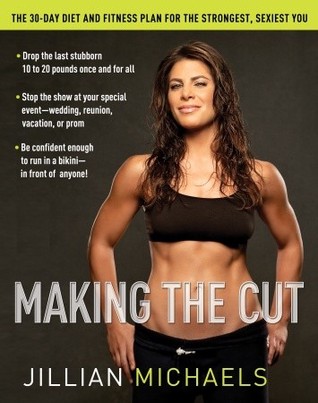
Making the Cut: The 30-Day Diet and Fitness Plan for the Strongest, Sexiest You by Jillian Michaels

Making the Cut: The 30-Day Diet and Fitness Plan for the Strongest, Sexiest You by Jillian Michaels

“Making the Cut” is a collection of recipes, workout tips, and insider training techniques from Jill Michaels, one of the trainers of the television program: The Biggest Loser. She’s hardcore and this book is a reflection of that.

Definitely not for everyone, myself included, I’d only recommend it to those who are already in very good shape. Let me make one thing clear, I’m not in “bad” shape, but I am not at the level required to complete these exercises.

Photo by Pixabay on Pexels.com

So, I nearly killed myself trying to do Day 1 of the circuit training. I have a predictable cycle with fitness books. I read them, get all fired up about changing my diet and amping up my workouts, try it for awhile, then give up.

This one, at least, was so hard and I was hurting so bad that I gave it up right away rather than drawing it out to its inevitable conclusion. Her clean eating tips are solid and I’ve added a lot more fresh fruits and veg to my table, but, the workouts are just too hard.

I had my husband helping with the timer and figuring out what I was supposed to do at each step because her descriptions of the exercises are all gathered together in an index at the end. He was encouraging me to stop after the first two minutes, but I insisted on doing at least ten- silly me.

The weird frog push-ups were an impossibility from the start. I almost broke my nose when I tried to lower my face to the floor. I had to laugh, it was ridiculous.

My only saving grace was that I was using the equipment at my home rather than the gym. If I had humiliated myself like that in public, I might not have been able to give this book the “liked it” three stars.

Some read alikes, for those fitness buffs who just can’t get enough! : This Is Why You’re Sick and Tired: by Jackie Warner, Get Me Skinny by Tony Arreola or, if you’re tired of the exercise and diet merry-go-round: Down Size: 12 Truths for Turning Pants-Splitting Frustration into Pants-Fitting Success by Ted Spiker or Confessions of an Unlikely Runner: A Guide to Racing and Obstacle Courses for the Averagely Fit and Halfway Dedicated by Dana L. Ayers.

Thanks for reading!

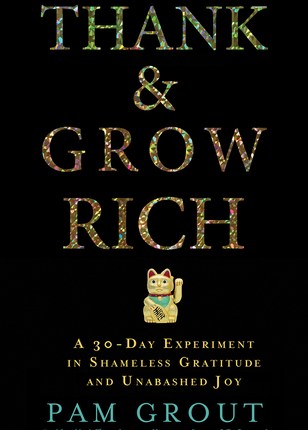
Thank & Grow Rich: A 30-Day Experiment in Shameless Gratitude and Unabashed Joy by Pam Grout

Thank & Grow Rich: A 30-Day Experiment in Shameless Gratitude and Unabashed Joy by Pam Grout

There is a disclaimer written in the description of this book on Goodreads that states it is not for everyone, but it was awesome in my opinion. I am going to admit that I am incredibly biased.

Photo by cottonbro on Pexels.com

I absolutely adored Pam’s other books on New Age thought and had some unbelievable experiences with the experiments recommended in them: E-Squared: Nine Do-It-Yourself Energy Experiments That Prove Your Thoughts Create Your Reality and E-Cubed: Nine More Energy Experiments That Prove Manifesting Magic and Miracles Is Your Full-Time Gig.

However, I couldn’t convince my public library to buy them because, I was told, they are “too fringe”.

Perhaps this book, which focuses on adopting an attitude of gratitude to improve your life, will be mainstream enough to make the cut.

Pam addresses the metaphorical elephant contained in her title early in the book: “No offense to Napoleon Hill, the author of the self help classic on which my title riffs, but the real power is in not thinking. If you want to override your brain’s unfortunate habit of leafing through your past and creating a present hologram to match, forget thinking. And start thanking.” Loc 108, ebook.

I read Think and Grow Rich last year and I could see how other people have beef with the classic. Napoleon Hill focuses on money, making connections, and doing the internal work to shoot yourself into the stratosphere of life success.

There’s very little in there about feeling your way to the same place.

Photo by fauxels on Pexels.com

Pam takes a different approach: “I should get this out on the table right now. This book won’t do a thing for your 401(k) or help you secure the McMansion you pasted onto your vision board. It’s not about getting rich in the traditional sense. … There’s nothing wrong with financial capital, but let me be very clear. It’s incapable of bringing any measure of real happiness.” Locs 324-337 ebook.

She gets to the heart of why seekers chase anything- because we believe that it will bring happiness. Pam suggests getting happy and then the success will come.

And, how does she say that we should “get happy”? By being thankful for what we already have.

“Be astonished by useless things. It’s easy to be thankful for the obvious- healthy kids, public libraries, strong marriages. But in this game we’re going to take it a step further. We’re going to build our gratitude muscle by also appreciating the insignificant and impractical…” Loc 856 ebook.

I had to include that passage for the library mention. Yay libraries!

Photo by Janko Ferlic on Pexels.com

Pam backs up her claims with scientific studies such as: “According to Richard Wiseman, psychology professor at the University of Hertfordshire in England and creator of Luck School, people who think they’re lucky actually are. After eight years of studying hundreds of self-identified exceptionally lucky and exceptionally unlucky people, he concluded that getting good breaks has nothing to do with karma or kismet and everything to do with how we see ourselves.” Loc 991 ebook.

I would like to state for the record that I am one of the luckiest people that I know. 🙂

She also includes a bunch of information from happiness researchers: “When it comes to success, research shows that while IQ, education, and training play cameo roles, the starring role, the headliner on the success stage, is “Do you have a vision? Do you believe it’s possible?” Shawn Achor, author of The Happiness Advantage: The Seven Principles of Positive Psychology That Fuel Success and Performance at Work… claims that predicting success using any other factor (say, your IQ or number of degrees) is about as effective as flipping a coin. What is effective, Achor and Frederickson and other happiness researchers have proven, is creating a happy brain that anticipates accomplishment, that knows success is just a matter of time.” Loc 1876 ebook.

I know that I have a pretty open mind when it comes to these types of books, but my thought is, what’s the harm in it? If it works for you, great! You’ve just discovered a new tool to use for living the best life for you.

If it doesn’t work, no harm done. At the very least, you would know for yourself.

Photo by Belle Co on Pexels.com

I recommend this book for readers of the Abraham Hicks materials because there are quite a few similarities in the philosophies contained within.

Some additional read-alikes for seekers like me who can’t get enough information about the law of attraction: The Power of the Heart: Finding Your True Purpose in Life, Happiness: A Guide to Developing Life’s Most Important Skill, or Dr. Quantum Presents: Meet the Real Creator–You!.

The opinions contained within this review are entirely my own. Thank you to NetGalley and Hay House for a free advance reader’s copy of this book for review purposes!  And, thank you for reading.

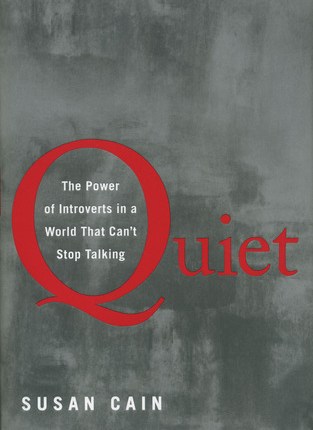
Quiet: the Power of Introverts in a World that Can’t Stop Talking by Susan Cain

Quiet: the Power of Introverts in a World that Can’t Stop Talking by Susan Cain

Quiet: The Power of Introverts in a World That Can’t Stop Talking entered my life at a particularly low moment.

Allow me to set the scene: I had been on vacation for a week and a half. We were in Colorado, visiting my husband’s family, some of whom I had met before, others whom I had not. I knew I wasn’t going to be entirely comfortable being around people the whole trip- I’m a huge introvert and I’m self aware enough to know that I need downtime, and quite a bit of it, to feel as if I’m functioning normally.

But I didn’t realize that my husband, who is just as introverted as I am and who I was counting on to help me through all of the introductions, dinners, conversations, etc, was going to immerse himself in Pokemon Go a majority of the time and essentially leave me to my own devices.

As Susan Cain would say, he found a “restorative niche” for himself in a digital world. It was hard on me as I didn’t have that escape.

Photo by ROMAN ODINTSOV on Pexels.com

So, here we are, visiting a friend’s home and my daughter, who strangely enough is a huge extrovert (the exact opposite of her parents), is struggling. She’s tired, out-of-sorts, and throwing a sulk every ten minutes.

I’m meeting yet more people, trying to hold trite conversations, and steer my child, all the while just wanting to retreat into a cave and not talk to anyone for a very long time. Honestly, I felt that way before we reached the party, but things seemed to get much, much worse the moment we arrived.

It had been building over the course of the vacation, but that day, my internal clamor reached a boiling point. My husband was oblivious to my growing discomfort as he’s catching Pokemon, again. (I don’t mean to sound bitter here, but I suppose that I am.)

I had forced myself for ten days to be social, keep the smile on my face, keep everything flowing smoothly. To my horror, I realize that I am about to have a panic attack in the middle of this crowd of people, more than half of whom I don’t even know. I grab my keys and leave.

I drive a couple blocks away, castigating myself for not being able to handle it and just pissed because, once again, like many times in my childhood, adolescence, and adulthood, I feel like I’m failing at life because I’m not a social butterfly.

Photo by Ryanniel Masucol on Pexels.com

I can’t stand to be around strangers for extended periods of time. I’ve always been this way- overly sensitive to others, noise, motion, events. I really dislike groups, parties, places where I have to circulate with a bunch of people who don’t know me or care about anything that I have to say.

The tears fell down my cheeks as I opened up my tablet and began reading this book. And I discovered that about half of all people are just like me.

Thank you, Susan Cain. Your book gave me the courage to drive back to my friend’s house and face the rest of the evening. I am not a pariah. I am an introvert and perhaps I can do a better job figuring out when I’ve reached my socializing limits before I meltdown.

Many of the positive attributes of introverts which Susan describes, I have, I’ve just never considered them as worth the trade-off of the extroverted personality.

I notice small details, have a great memory for conversations and events, long past the time when others forget such things. I think carefully about problems and people, devoting time to taking apart small nuances of books and movies, that other people don’t even consider, which makes me a good reviewer of media- perfect for my job as a librarian.

Susan nailed my general feeling about myself in the introduction: “Introverts living under the Extrovert Ideal are like women in a man’s world, discounted because of a trait that goes to the core of who they are. Extroversion is an enormously appealing personality style, but we’ve turned it into an oppressive standard to which most of us feel we must conform.” pg 34 ebook. Yes!

My role at the reference desk calls for an extroverted personality but I muddle through it, because I care about the job and helping others. Usually, I come home from work, totally worn out and in need of quiet time to unwind.

Susan helped me understand that sometimes “faking it” is worth it, if it for a cause that means something to you and that others do the exact same thing that I do.

Pull out the mask for the job, but then allow yourself the freedom to be who you really are at home: “According to Free Trait Theory, we are born and culturally endowed with certain personality traits- introversion, for example- but we can and do act out of character in the service of “core personal projects.” In other words, introverts are capable of acting like extroverts for the sake of work they consider important, people they love, or anything they value highly.” pg 391 ebook.

My favorite parts of the book were about sensitivity and social situations. Take this passage: “…maybe we didn’t choose … social accessories at random. Maybe we’ve adopted dark glasses, relaxed body language, and alcohol as signifiers precisely because they camouflage signs of a nervous system on overdrive. Sunglasses prevent others from seeing our eyes dilate with surprise or fear; we know from Kagan’s work that a relaxed torso is a hallmark of low reactivity; and alcohol removes our inhibitions and lowers our arousal levels. When you go to a football game and someone offers you a beer, says the personality psychologist Brian Little, “they’re really saying hi, have a glass of extroversion.” pg 277 ebook.

I may use that in my life. “Please hand me that glass of extroversion.”

I also really enjoyed learning the differences in thinking: “Introverts and extroverts also direct their attention differently: if you leave them to their own devices, the introverts tend to sit around wondering about things, imagining things, recalling events from their past, and making plans for the future. The extroverts are more likely to focus on what’s happening around them. It’s as if extroverts are seeing “what is” while their introverted peers are asking “what if.”pg 323 ebook. Yeah, I do that too.

I can’t recommend this book highly enough. It saved an evening for me, but more importantly, it changed the way that I view myself. There is power in knowing that you’re not alone. Again, thank you, Susan Cain. Some read-alikes: The Introvert’s Way: Living a Quiet Life in a Noisy World by Sophia Dembling (for introversion) or Furiously Happy: A Funny Book About Horrible Things by Jenny Lawson (for more instances of social anxiety).

Thank you for reading!